Key Takeaways
Our Verdict
Buying new online is the more straightforward digital transaction — pricing is transparent, documentation is cleaner, and manufacturer warranties eliminate most condition risk. Buying used online can deliver exceptional value but demands far more due diligence: vehicle history checks, independent inspections, careful title review, and sharper financing instincts. Neither approach is inherently superior, but they are not interchangeable — and treating them as the same process is exactly how buyers get burned.
| Best for | Recommended |
|---|---|
| Buyers who want the simplest online transaction with minimal risk | Online New Car Buying |
| Budget-conscious buyers willing to do extra homework | Online Used Car Buying |
| First-time online car buyers with limited vehicle inspection knowledge | Online New Car Buying |
| Experienced buyers seeking a specific make, model, or rare trim | Online Used Car Buying |
Why the Online Process Feels Similar but Isn't
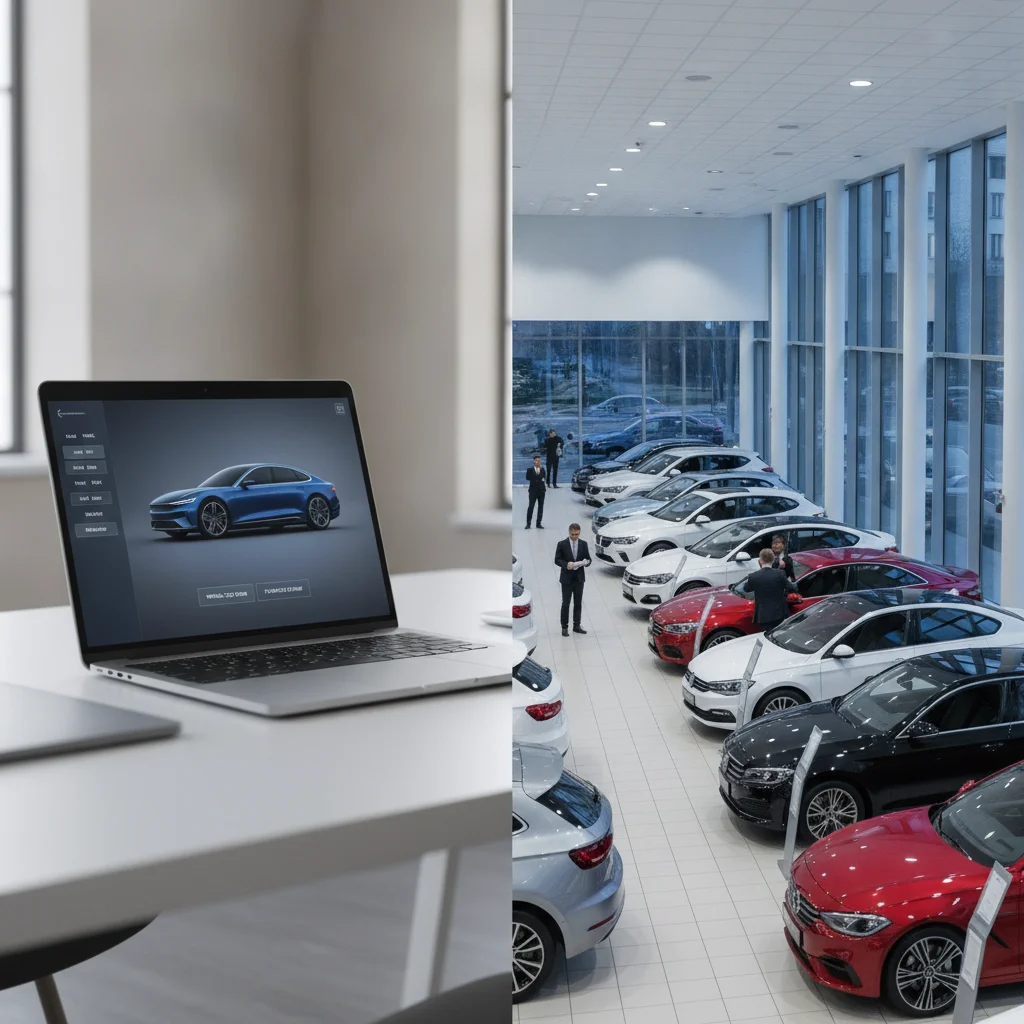
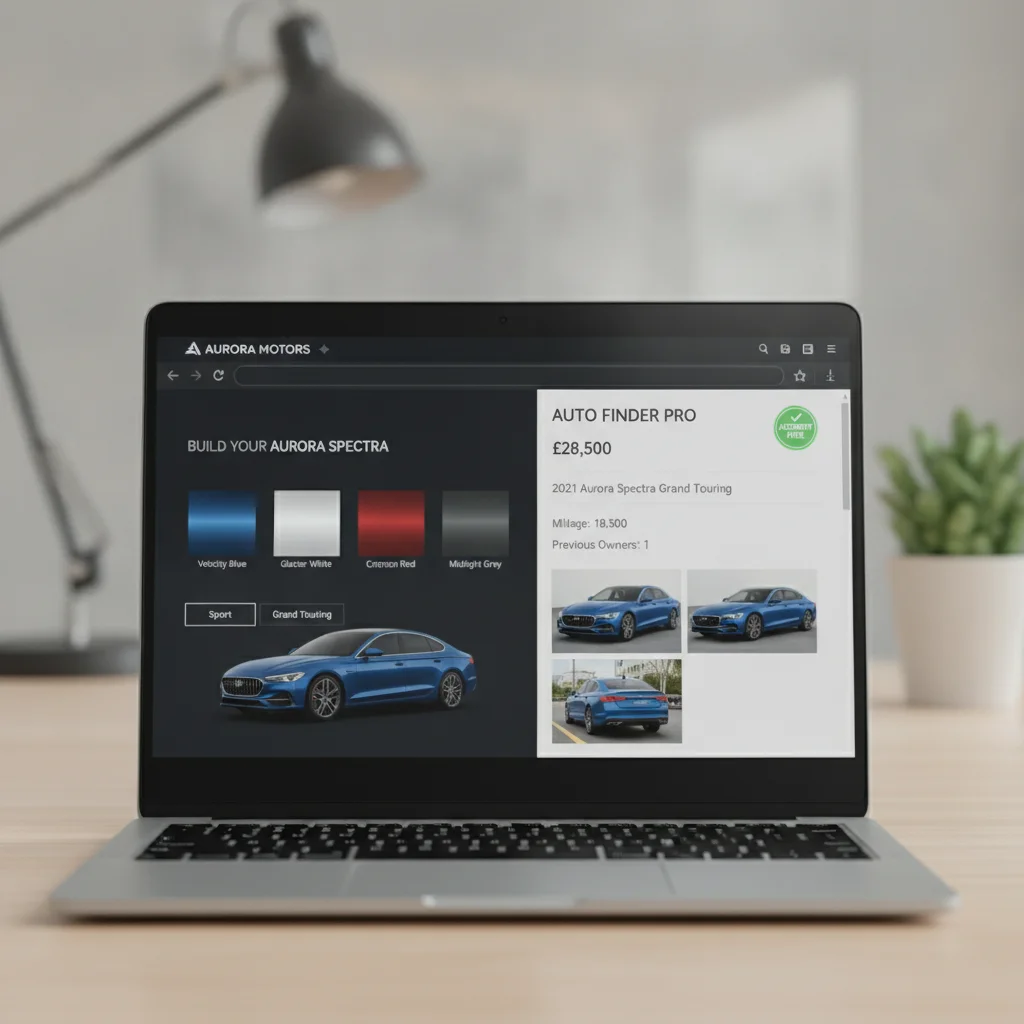
Browse, configure, finance, sign — the online car buying funnel looks nearly identical whether you're shopping for a brand-new SUV or a three-year-old sedan. Platforms like Carvana, Vroom, and dealer websites have deliberately engineered that similarity. It makes the experience feel reassuringly familiar. But underneath the polished UX, the actual transaction you're entering is fundamentally different depending on whether the vehicle has zero miles or 40,000 on the odometer.
I spent years in dealership finance offices watching buyers make assumptions that cost them — not because they were careless, but because no one told them the rules changed depending on what they were buying. The stakes online are just as real. A misunderstood warranty clause or a missed lien on a used title can turn a great deal into a six-month headache.
This guide breaks down where the two processes genuinely diverge: vehicle risk, pricing dynamics, financing realities, and the documentation that seals — or unravels — the deal.
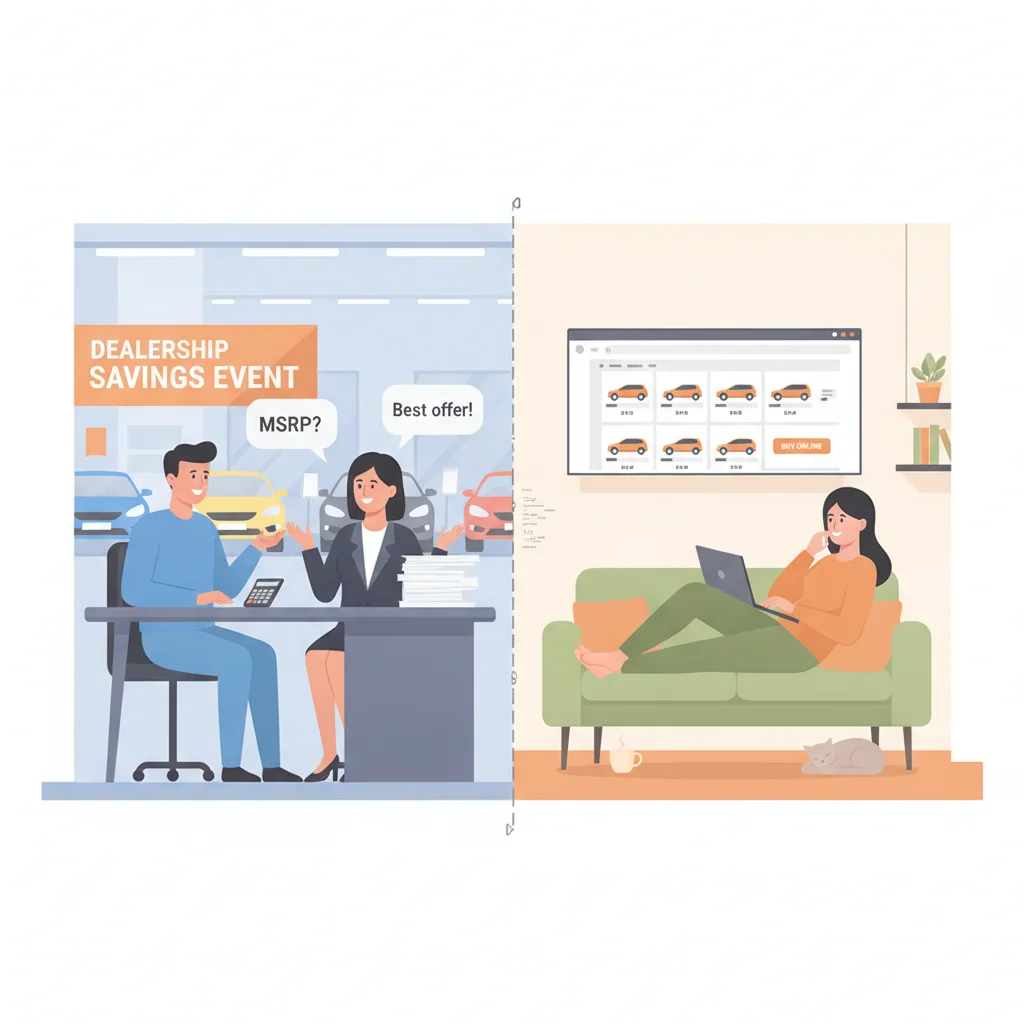
For a broader look at how the online and in-person experiences compare overall, see Online Dealerships vs. Traditional Dealerships.
Vehicle Risk: Known vs. Unknown Condition
This is the single biggest difference between buying new and used online, and it shapes every other part of the transaction.
New Car: Risk Is Essentially Zero
When you configure and purchase a new vehicle online, you know exactly what you're getting. The VIN corresponds to a specific unit, dealer photos are largely irrelevant to condition, and a full manufacturer warranty — typically 3 years/36,000 miles bumper-to-bumper and 5 years/60,000 miles powertrain — covers virtually any mechanical defect that surfaces. There's no prior owner, no hidden accident history, no mystery fluid leak under the rear differential.
Used Car: You're Buying Someone Else's Decisions
Every used car carries the fingerprints of its previous owners. Online, you can't smell the interior, feel the panel gaps, or notice the slight shimmy in the steering wheel during a test drive. You're relying on photos — often professionally lit — and a vehicle history report that captures reported incidents, not all incidents.
Key risks specific to online used car purchases:
- Undisclosed accident damage that wasn't reported to insurance or police
- Deferred maintenance the seller didn't disclose and the listing photos don't reveal
- Odometer discrepancies more common with private-party and auction-sourced inventory
- Frame or flood damage that cosmetic reconditioning can temporarily mask
Always Request the Full Inspection Checklist
For any online used car purchase, request the pre-sale inspection report in writing before signing. Reputable platforms like Carvana and CarMax conduct multi-point inspections and will provide documentation. If a seller — platform or private — refuses to share inspection results, treat that as a red flag. CPO buyers should ask for the manufacturer-specific inspection form, not just the CPO badge.
CPO Means Manufacturer-Backed, Not Just Dealer-Certified
When shopping CPO vehicles online, confirm whether the certification is manufacturer-backed or dealer-certified. Manufacturer CPO programs (e.g., Toyota Certified, Honda Certified) carry standardized inspection criteria and warranty terms. Dealer-certified programs vary wildly and often offer far less protection. The price premium for manufacturer CPO is usually justified; dealer-only certification frequently isn't.
For any used car purchase above $10,000, a pre-purchase inspection (PPI) by an independent mechanic is non-negotiable. Most reputable online platforms — and any seller worth dealing with — will accommodate a third-party inspection or allow a vehicle to be inspected at a local shop before you finalize. Budget $100–$200 for this. It's the cheapest insurance you'll buy.
For a deep dive on vetting remote listings, Buying a Used Car Online covers the inspection request process in detail.
| Factor | Online New Car | Online Used Car | |
|---|---|---|---|
| Vehicle condition risk | Minimal — factory condition | Significant — requires inspection | |
| Pricing transparency | High — MSRP and incentives public | Low — negotiation often required | |
| Financing rates | Lower — captive lender promos available | Higher — 2–4% above new car rates typically | |
| Title complexity | Low — clean MCO from dealer | High — liens, brands, state variations | |
| Warranty coverage | Full manufacturer warranty | As-is or limited CPO warranty | |
| Platform options | OEM sites, franchise dealer portals | Carvana, CarMax, CarGurus, Marketplace | |
| Return/cancellation policies | Varies by dealer | 3–7 day return windows on major platforms | |
| Negotiation opportunity | Limited — mostly OTD fees | Meaningful — price, add-ons, fees | |
| Documentation steps | Streamlined — dealer handles most | Complex — lien checks, title review required | |
| Overall buyer skill required | Basic — process is guided | Advanced — due diligence is on you |
Pricing Dynamics: Transparent vs. Negotiable
Online car buying is often marketed as a no-haggle experience. That's largely true for new vehicles — and largely a fiction for used ones.
New Car Pricing Online
Manufacturer MSRP is publicly posted. Invoice pricing is a Google search away. Online new car platforms typically show market-adjusted prices, and tools like TrueCar, Edmunds, and CarGurus give you a defensible benchmark before you ever engage a dealer. Incentives — cash-back offers, low-APR deals, lease subventions — are published monthly and apply uniformly across franchised dealers.
That said, online new car buying still has pricing landmines: dealer-added accessories, market adjustment fees baked into the listed price, and documentation fees that vary wildly by state. Read the out-the-door price breakdown carefully before clicking confirm.
Used Car Pricing Online
Used car pricing is far less standardized. Even on Carvana or CarMax, which use fixed-price models, the price reflects the platform's margin on top of what they acquired the vehicle for. That price may or may not be competitive for that specific VIN, mileage, and condition combination.
Private-party listings on Facebook Marketplace or AutoTrader involve explicit negotiation. Even platform-sold used cars often have room to negotiate on add-ons, delivery fees, or extended warranties. The listed price is a starting point, not a verdict.
$3,000–$6,000
Average new-vs-used price savings per vehicle
According to Edmunds data, buyers who purchase used vehicles typically save $3,000–$6,000 off comparable new vehicle transaction prices, before factoring in higher financing costs.
2–4%
Used car loan rate premium over new
Experian's State of the Automotive Finance Market reports consistently show used auto loan rates averaging 2–4 percentage points above new vehicle rates across credit tiers.
77%
Used car buyers who skip independent inspection
A 2023 CarGurus survey found that approximately 77% of online used car buyers did not obtain a third-party pre-purchase inspection before completing their transaction.
1 in 4
Used vehicles with undisclosed prior damage
Carfax estimates that roughly one in four used vehicles on the market has accident history that was never reported to insurance, meaning it won't appear on standard vehicle history reports.
The practical implication: before making any offer on a used vehicle online, run the VIN through at least two valuation tools — Kelley Blue Book and Edmunds — and compare the condition-adjusted private-party and dealer retail values. Know the spread before you engage.
See Negotiating at the Dealership vs. Buying Online for a breakdown of how pricing leverage shifts in digital transactions.
Financing: Rate Gaps You Can't Afford to Ignore
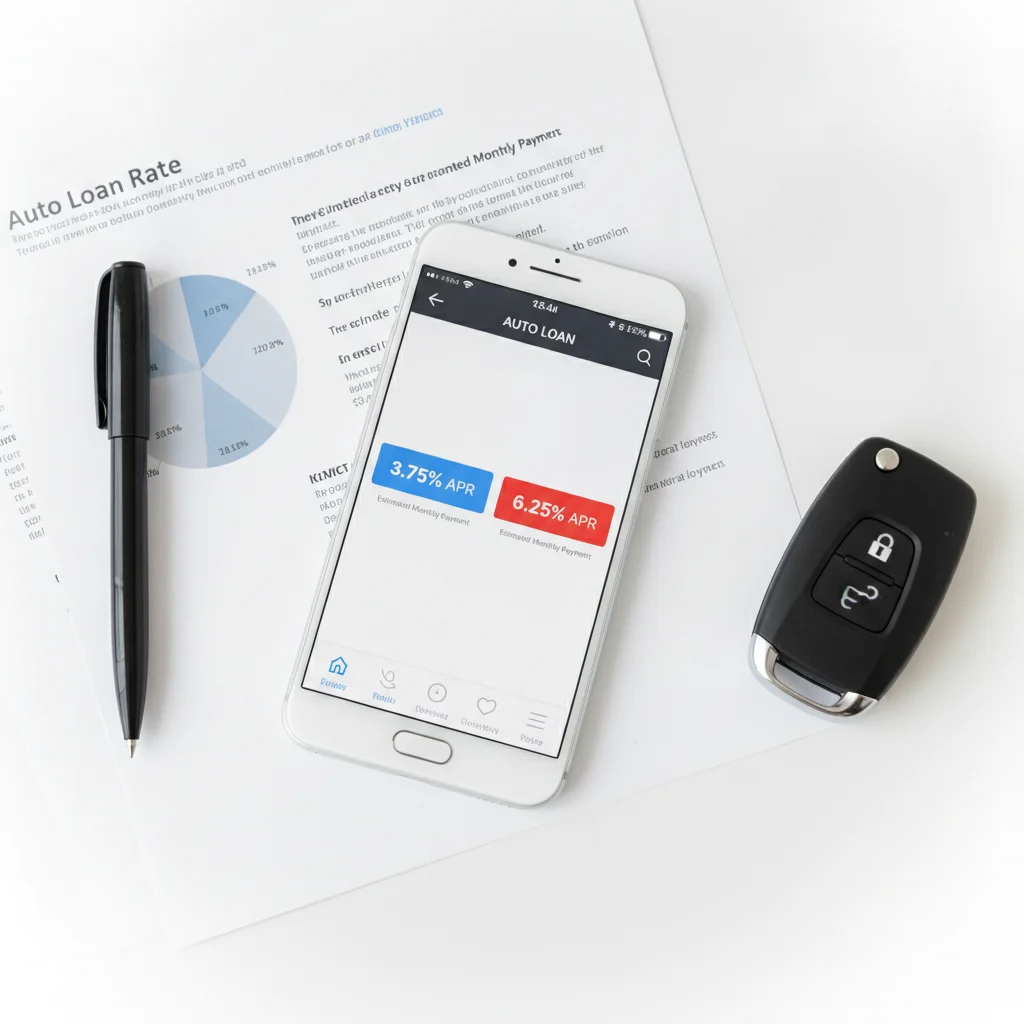
Auto loan rates for used cars are structurally higher than for new cars — not because lenders think used car buyers are less creditworthy, but because used vehicles represent greater collateral risk. A lender holding a loan on a new car knows the depreciation curve reasonably well. A five-year-old vehicle with 70,000 miles is far harder to value if it needs to be repossessed and resold.
What This Means in Practice
As of recent market data, the average interest rate spread between new and used auto loans is roughly 2–4 percentage points for borrowers with good credit, and wider for those with challenged credit. On a $25,000 loan over 60 months, a 3-point rate difference adds roughly $1,900 in total interest. That's real money that erodes the price advantage you thought you were getting by buying used.
Preapproval Is More Critical for Used
When you buy new online through a franchised dealer or manufacturer-affiliated platform, you often have access to captive lender financing — the manufacturer's own finance arm offering below-market promotional rates. These deals exist specifically to move new metal, and they're often the lowest-cost financing available to qualified buyers.
No such captive lender exists for used cars. You're working with banks, credit unions, and third-party lenders — and the online platform's in-house financing desk, which may mark up rates just like a traditional F&I office would.
- Get preapproved from your bank or credit union before you start shopping for a used vehicle online
- Treat the platform's financing offer as a competitor to beat, not a default to accept
- For used vehicles over 100,000 miles or older than 8 years, expect some lenders to decline or impose shorter loan terms
For the full picture on how digital auto financing works, Financing a Car You've Never Seen walks through the approval and funding process step by step.
Never Skip Lien Verification on Used Vehicles
Buying a used vehicle online without confirming a clear title is one of the most expensive mistakes a buyer can make. If the previous owner still has an outstanding auto loan, their lender holds a lien on the vehicle — and that lien transfers with the car, not the seller. Use the NMVTIS database or your state DMV to verify lien status independently, even if the seller provides a vehicle history report.
Platform Financing Desks Mark Up Rates
Online used car platforms often present their in-house financing as a seamless convenience — and it is convenient. But convenience has a cost. Just like a traditional F&I office, platform finance desks typically mark up the rate above what the underlying lender approved you for. The spread goes to the platform. Always have a competing preapproval in hand before you let any platform run your credit.
Documentation and Title Complexity
Nothing separates new and used online purchases more clearly than the paperwork. New car transactions are comparatively clean. Used car transactions — especially remote ones — can get complicated fast.
New Car Documentation Online
The dealer generates a clean Manufacturer's Certificate of Origin (MCO) or Certificate of Title if it's a demo/loaner. Dealer and DMV fees are standard. Most online platforms that sell new vehicles handle title transfer electronically or via overnight mail, and the process is well-established.
Used Car Documentation Online
Used car titles carry history — and sometimes problems. Critical issues to verify before completing any online used purchase:
- Lien release: If the previous owner financed the car, that lender may still hold a lien. Confirm a lien-free title before funds transfer.
- Title brands: Salvage, rebuilt, flood, and odometer rollback brands must be disclosed. Check the title itself and the vehicle history report.
- Out-of-state titles: Different states have different title transfer laws, processing times, and fee structures. An out-of-state purchase can delay your registration by weeks.
- Private-party title transfer: If you're buying from an individual, you're responsible for ensuring the seller signs the title correctly. A botched signature can void the document.

The contract itself also differs significantly. New car purchase agreements are standardized by franchise agreements and manufacturer requirements. Used car contracts vary widely — especially as-is disclosures, which carry significant legal weight. For a direct comparison of what's in each contract type, see New Car vs. Used Car Purchase Contracts.
Platforms and Where to Buy
The platforms optimized for new car buying and those optimized for used are mostly separate ecosystems, though there's some overlap.
Best Platforms for Buying New Online
- Manufacturer websites (e.g., Tesla, Rivian, GM's Shop.Click.Drive): Best for direct OEM purchases, especially for EVs
- TrueCar / Edmunds dealer pricing tools: Connect you to franchise dealers with pre-negotiated pricing windows
- Dealer websites with remote delivery: Many franchise dealers now offer full online checkout with delivery
Best Platforms for Buying Used Online
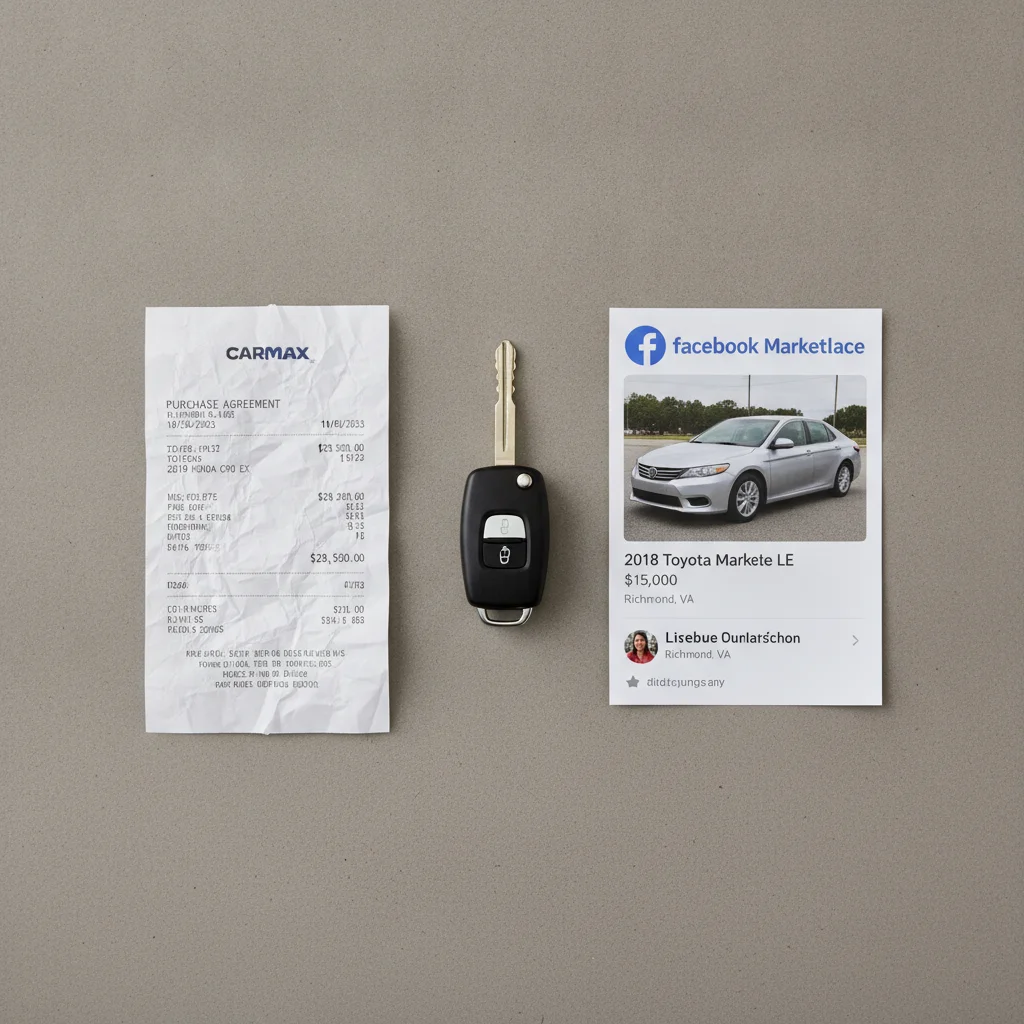
- Carvana / CarMax: Fixed-price, inspected inventory with return windows — best for buyers who want certainty over price flexibility
- Vroom / Shift: Similar model to Carvana with nationwide inventory
- CarGurus / AutoTrader / Cars.com: Aggregators pulling dealer and private-party listings — require more buyer due diligence
- Facebook Marketplace: Highest risk, highest potential value — private sellers, cash transactions, no platform protection
Buying Used Cars covers how to evaluate and vet inventory across these platforms, including what CPO programs actually cover versus what they leave out.
For perspective on how instant-offer and online platforms compare on payout and convenience from the seller side, Instant Offer Platforms is worth reviewing — it reveals the same platform economics buyers are on the other end of.
The CPO Middle Ground
Certified Pre-Owned programs deserve their own mention because they're frequently misunderstood as being equivalent to buying new. They're not — but they do meaningfully reduce several of the risks outlined above.
A manufacturer-backed CPO vehicle (not a dealer-certified vehicle, which is a weaker designation) typically includes:
- A multi-point inspection with documented results
- An extended powertrain warranty, sometimes exceeding the original new-car coverage
- A clean title requirement — salvage titles are disqualified
- Roadside assistance and sometimes free loaner vehicles during service
What CPO doesn't eliminate: the vehicle's history before certification, any pre-existing wear items not covered under the powertrain warranty (brakes, tires, interior), and the higher price premium compared to non-CPO used vehicles of the same spec.
Always Request the Full Inspection Checklist
For any online used car purchase, request the pre-sale inspection report in writing before signing. Reputable platforms like Carvana and CarMax conduct multi-point inspections and will provide documentation. If a seller — platform or private — refuses to share inspection results, treat that as a red flag. CPO buyers should ask for the manufacturer-specific inspection form, not just the CPO badge.
CPO Means Manufacturer-Backed, Not Just Dealer-Certified
When shopping CPO vehicles online, confirm whether the certification is manufacturer-backed or dealer-certified. Manufacturer CPO programs (e.g., Toyota Certified, Honda Certified) carry standardized inspection criteria and warranty terms. Dealer-certified programs vary wildly and often offer far less protection. The price premium for manufacturer CPO is usually justified; dealer-only certification frequently isn't.
Online CPO purchases from franchise dealers carry most of the same documentation and title benefits as buying new — the dealer handles the paperwork the same way. Where CPO online purchases differ is in inspection transparency: ask the dealer to send you the actual inspection checklist, not just the CPO badge. Most will comply if you ask directly.
Making the Right Call for Your Situation
The decision between buying new or used online shouldn't be driven by which experience feels smoother. It should be driven by what you actually need from the vehicle and what risk you're equipped to manage.
Choose Online New Car Buying If:
- You want the lowest-friction transaction with the fewest unknowns
- You're financing and want access to manufacturer promotional rates
- You're not comfortable evaluating vehicle condition remotely
- The total cost of ownership (warranty, potential repairs) matters as much as purchase price
Choose Online Used Car Buying If:
- You've done your homework on the specific make, model, and common failure points
- You're willing to pay for an independent pre-purchase inspection
- You've secured competitive financing preapproval before shopping
- You understand title transfer requirements in your state
Never Skip Lien Verification on Used Vehicles
Buying a used vehicle online without confirming a clear title is one of the most expensive mistakes a buyer can make. If the previous owner still has an outstanding auto loan, their lender holds a lien on the vehicle — and that lien transfers with the car, not the seller. Use the NMVTIS database or your state DMV to verify lien status independently, even if the seller provides a vehicle history report.
Platform Financing Desks Mark Up Rates
Online used car platforms often present their in-house financing as a seamless convenience — and it is convenient. But convenience has a cost. Just like a traditional F&I office, platform finance desks typically mark up the rate above what the underlying lender approved you for. The spread goes to the platform. Always have a competing preapproval in hand before you let any platform run your credit.
For an honest assessment of what you gain and what you give up in any online purchase — new or used — Convenience vs. Control: The Real Tradeoffs of Buying a Car Online lays out both sides without the marketing spin.

All claims are backed by peer-reviewed research. Sources on request.