Key Takeaways
Online Auto Loan
An online auto loan is a vehicle financing arrangement where the entire process — from application to funding — happens digitally, without stepping into a bank branch or dealership finance office. You apply through a lender's website or a third-party platform, receive approval electronically, and sign loan documents via e-signature. The lender then sends funds directly to the seller, whether that's a private party, an online retailer like Carvana, or a traditional dealership.
Online auto loans can be either direct (lender pays you or the seller directly) or indirect (originated through a dealership's digital platform). The distinction matters for rate negotiation and who controls the loan terms.
Why Remote Car Financing Is Now Mainstream
Five years ago, financing a car without sitting across from a finance manager felt exotic. Today it's routine. Online auto loan originations have surged as buyers realized that the dealership finance office — with its four-square sheets and high-pressure add-on sales — is entirely skippable. Platforms like Carvana, CarMax's online arm, Vroom, and dozens of direct lenders have rebuilt the lending pipeline so that a buyer in Phoenix can finance a car sitting on a lot in Atlanta without either party shaking hands.
The shift isn't just about convenience. It's about information asymmetry. When you walk into a dealership, the finance manager knows your credit score, the bank's buy rate, and exactly how much markup they can add before you bolt. When you come in with a preapproved loan offer, that information gap closes dramatically. Online financing forces lenders to compete for your business upfront instead of after you've already fallen in love with the car.
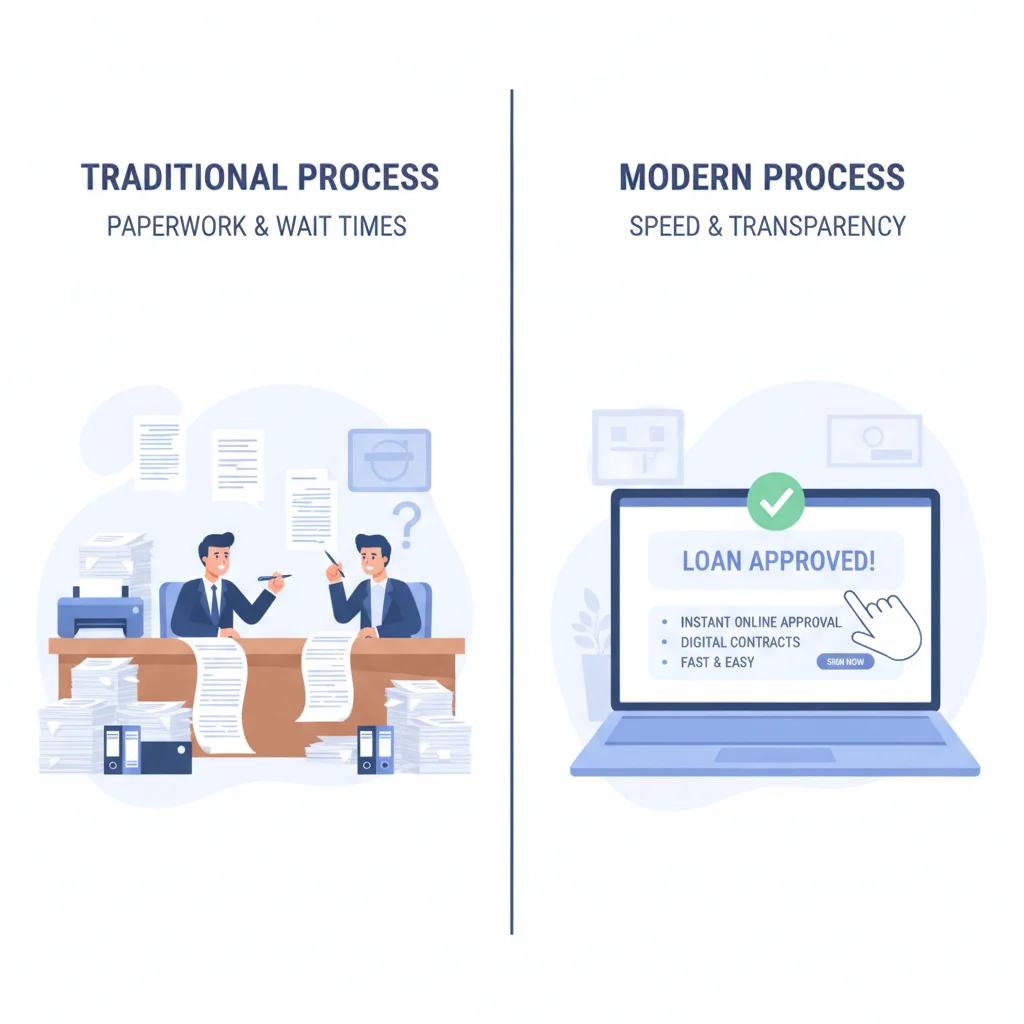
For a complete walkthrough of the entire remote purchase process, see Buying a Car Online From Start to Title. This article focuses specifically on how the financing piece works — what happens to your application, how the money moves, and where the process can break down.
Direct vs. Indirect Online Lending: The Structural Difference
Before applying anywhere, you need to understand the two models, because they produce different rates and different levels of control.
Direct Online Lenders
These are lenders — banks, credit unions, fintech companies — that you approach directly. You apply, they approve you for a specific loan amount and rate, and they issue a draft or wire you can use to buy a car from virtually any seller. You negotiate the car price separately, and the financing is already locked. Examples include LightStream, PenFed Credit Union, Consumers Credit Union, and Autopay (a marketplace that shops multiple lenders simultaneously).
Indirect Online Lenders (Platform Financing)
When you buy through Carvana, Vroom, or CarMax and use their built-in financing, you're using indirect lending. The platform originates the loan and then typically sells it to a third-party lender. The convenience is real, but the rates are often higher than what a direct lender would offer — because the platform earns a fee on your loan, just like a dealership does.
“The single biggest mistake buyers make is waiting until they've found the car to think about financing. By then, the dealer already knows you're emotionally committed — and that's exactly when the rate markup happens.”
— Desmond Kimathi, Former dealership finance manager and auto lending advocate
Which Model Should You Use?
Use a direct lender when you want the best rate and maximum flexibility. Use platform financing when speed and simplicity matter more — or when the platform offers promotional rates (sometimes 0% or near-0% on certified vehicles). Always compare both. The few minutes it takes to get a direct preapproval could save you hundreds of dollars over the loan term.
For a deeper comparison of lender types based on your credit profile, see how online subprime lenders stack up against traditional bank financing.
Direct Loans vs. Platform Financing: A Rate Reminder
Platform-arranged financing (Carvana, Vroom, CarMax Finance) functions like indirect dealership lending — the platform earns a fee on your loan. This doesn't make it bad, but it does mean the rate won't be as competitive as what a direct lender offers. Always have a preapproval in hand before using platform financing so you have a reference point.
GAP Insurance: Buy It Elsewhere
If your loan amount exceeds the vehicle's actual cash value — common when you finance a depreciating asset with a small down payment — GAP insurance makes sense. But buying it through the financing platform can cost $400–$800 when your auto insurer might offer the same coverage for $20–$40 per year. Add it to your existing policy before your loan funds.
The Online Auto Loan Application Process, Step by Step
Here's what actually happens when you submit an online application — not the marketing version, the real version.
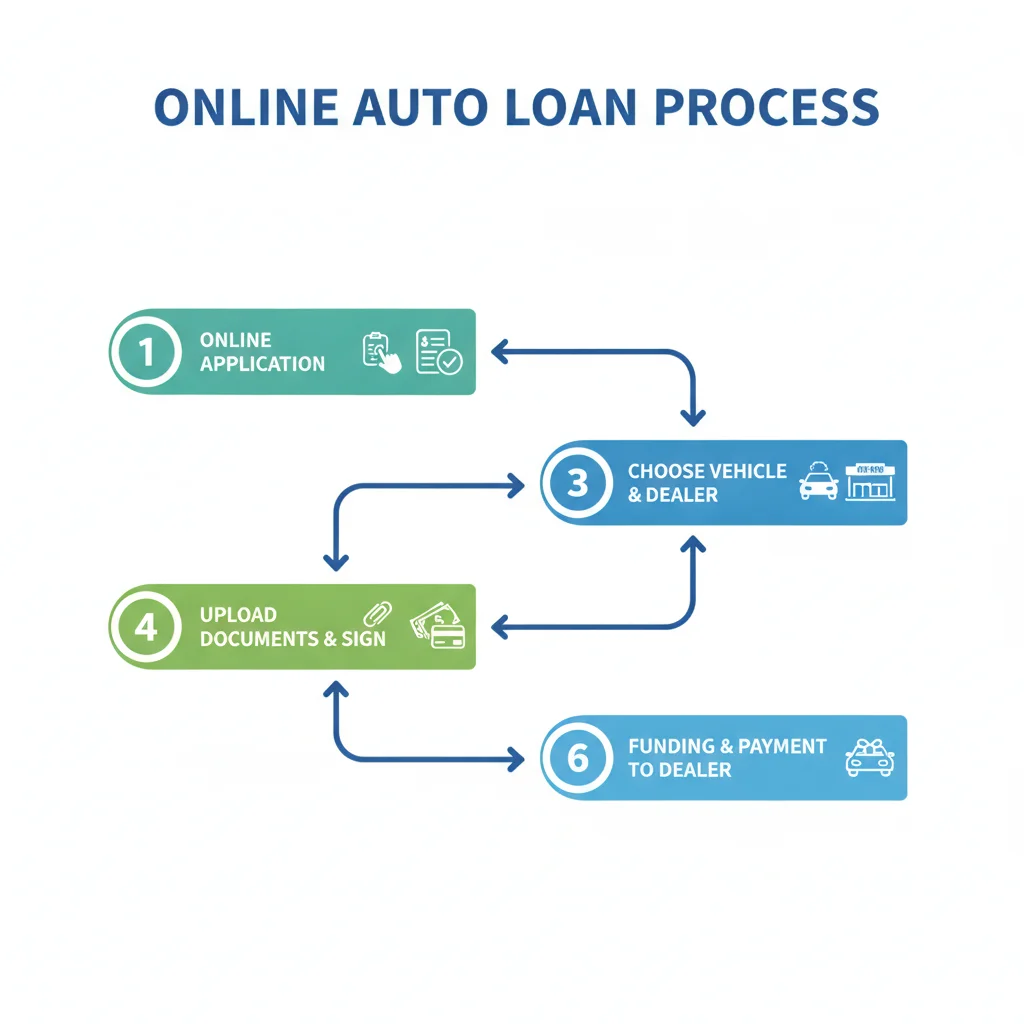
- Pre-qualification (soft pull): Most lenders offer a soft-credit check that shows you estimated rates without dinging your score. This is not approval. It's a preview. Use it to shortlist 2–3 lenders before you submit full applications.
- Full application (hard pull): You'll provide your SSN, income, employment, housing costs, and the loan amount you want. This triggers a hard inquiry. Rate-shopping multiple lenders within a 14-day window counts as a single inquiry under FICO scoring models — so don't spread applications over several weeks.
- Document verification: Online lenders are stricter here than dealerships because they can't verify your identity in person. Expect to upload: a government-issued ID, proof of income (last two pay stubs or two years of tax returns if self-employed), proof of insurance, and proof of residence. Some lenders use Plaid or similar tools to verify income directly from your bank account.
- Conditional approval: You'll receive an approval letter specifying the maximum loan amount, APR, and loan term. This is conditional on the vehicle meeting the lender's criteria — typically a maximum age (often 10 years), mileage cap (often 100,000–150,000 miles), and a minimum loan amount (usually $5,000–$8,000).
- Vehicle verification: Submit the VIN. The lender will run a value check (using JD Power, Black Book, or NADA) to confirm the loan-to-value ratio is acceptable. Most lenders won't finance a vehicle worth less than the loan amount.
- Final loan documents: E-signed via platforms like DocuSign. Read every page. Add-ons like GAP insurance and extended warranties show up here — in digital form, not a hard sell, but they're still priced to generate margin.
- Funding: The lender sends payment directly to the seller via wire transfer, ACH, or a certified check mailed to you. Private sellers often require a cashier's check, which may add a day or two.
76%
Buyers open to completing financing online
According to Cox Automotive's 2023 Car Buyer Journey study, three-quarters of buyers said they would complete all or most of the financing process online if given the option.
1–3%
Typical dealer reserve markup on APR
The Consumer Financial Protection Bureau has documented that indirect auto lending markups regularly add 1 to 3 percentage points to a buyer's approved rate — profit that goes directly to the dealership.
$150
Average cost of pre-purchase inspection
Third-party inspection services typically charge $100–$200 to send a certified mechanic to evaluate a vehicle at any location in the continental U.S., according to industry service providers.
14 days
FICO rate-shopping window
FICO's scoring model treats multiple auto loan hard inquiries within a 14-day period as a single inquiry, allowing buyers to shop multiple lenders without compounding credit score damage.
35%
Share of new car loans originated digitally
Experian's 2023 State of the Automotive Finance Market report indicated that more than one-third of new vehicle loans now involve a significant digital origination component.
Vehicle Restrictions: What Online Lenders Won't Finance
This is where a lot of remote purchases stall. You've been approved for a loan, you've found a car you like, and then the lender declines to fund it. Here are the most common vehicle-level restrictions to check before you fall in love with a listing:
- Age limits: Most prime lenders cap vehicle age at 7–10 model years. A 2014 vehicle in 2025 is right at the edge for many lenders. Subprime lenders may go older, but at sharply higher rates.
- Mileage caps: Standard cap is 100,000–150,000 miles. Some lenders go lower. High-mileage vehicles often qualify only for personal loans (not auto loans), which carry higher rates because they're unsecured.
- Minimum loan amounts: Most lenders won't write a loan below $5,000. Financing a $3,500 beater? You may need a personal loan instead.
- Salvage or rebuilt titles: Almost universally rejected by prime lenders. A handful of subprime lenders will finance salvage-title vehicles at steep APRs.
- Commercial or fleet vehicles: Many lenders exclude vehicles with prior fleet, rental, or commercial use — or they discount the vehicle's value significantly.
- Private party vs. dealer: Some lenders only fund purchases through licensed dealers. If you're buying from a private seller, confirm the lender accepts that transaction type before applying.
If you're comparing a used vehicle purchase online against buying new, these key differences between online used and new car buying will help you anticipate the additional hurdles used vehicles present.
Check Vehicle Eligibility Before You Apply
Before submitting a full application to any lender, ask directly about their vehicle age, mileage, and minimum loan amount restrictions. Most lenders publish these in their FAQ or will confirm them via chat. Knowing this upfront prevents wasted hard inquiries when the vehicle would have been declined regardless of your credit profile.
Shop Rates Within the 14-Day Window
Submit all your loan applications within a 14-day period to minimize credit score impact. FICO treats all auto loan inquiries during this window as a single inquiry. Use this window strategically: apply to your credit union, one or two direct online lenders, and an aggregator platform like Autopay — then compare the four to five offers you receive side by side on APR, not monthly payment.
How the Money Actually Moves
Understanding fund flow prevents nasty surprises — especially for first-time remote buyers who expect the process to mirror a simple online purchase.
Dealer Purchases
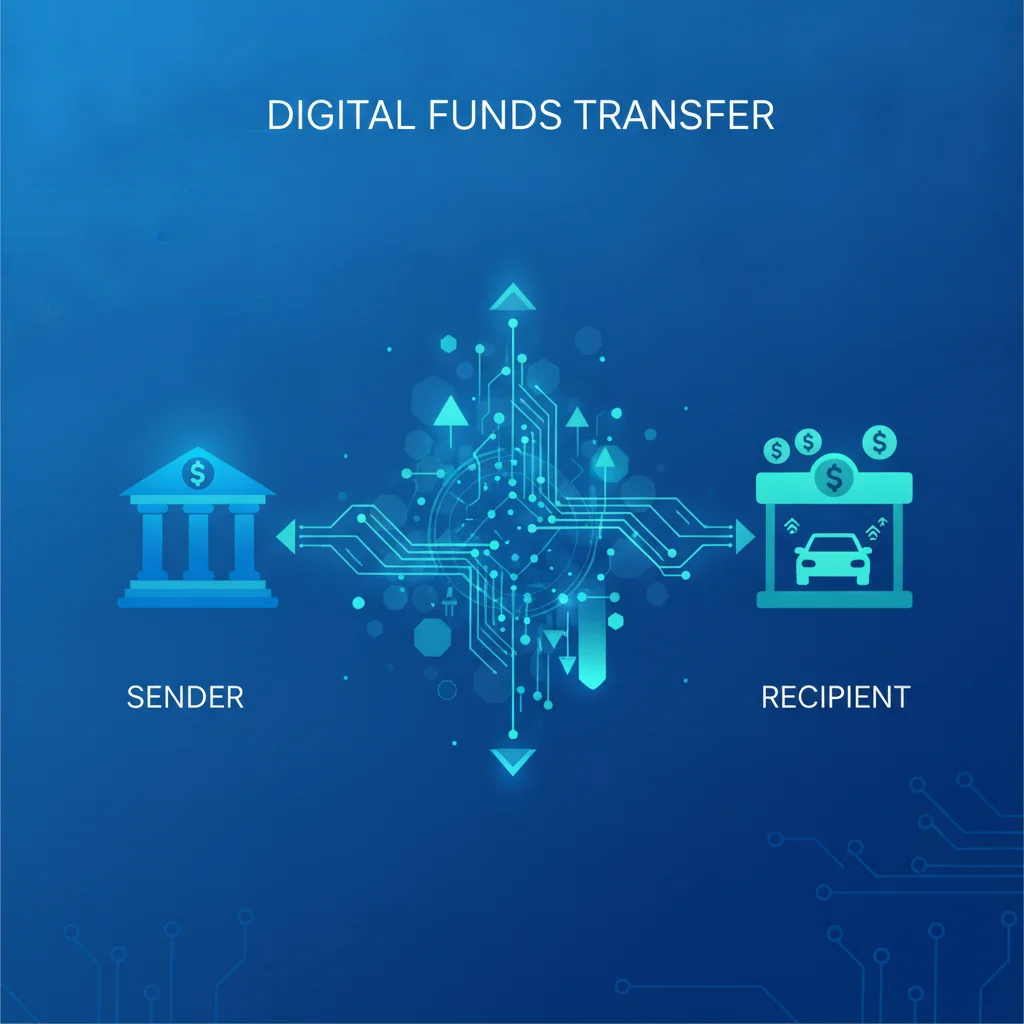
If you're buying from a licensed dealership (even fully online), the lender typically sends payment directly to the dealer after you've e-signed the loan documents and the vehicle's title information has been verified. You won't touch the money. The dealer receives the loan proceeds plus your down payment, releases the vehicle for delivery, and the title is processed in the lender's name as the lienholder.
Private Party Purchases
Private-party transactions are messier. Some lenders issue a check to you, which you then hand to the seller. Others issue a two-party check requiring both signatures. Some will wire directly to the seller's bank account. Coordinate this process with both your lender and the seller before the transaction — miscommunication here causes deals to fall apart.
Online Platform Purchases (Carvana, Vroom, etc.)
Platform transactions are the most seamless. The platform owns the inventory, the financing is handled within their system, and vehicle release happens automatically once the loan is funded. Delivery is scheduled simultaneously. The tradeoff: as noted earlier, platform financing often carries a higher rate than a direct lender would offer.
Down Payments and Trade-Ins
Down payments for online loans work the same as in-person — wire transfer, ACH, or credit card (some lenders). Trade-ins complicate remote purchases because the lender needs the payoff amount on any existing loan before they can calculate net equity. If you're trading in a vehicle to an online platform, they'll often use instant offer tools to value your trade remotely before the deal closes.
Rate Factors That Are Different in Online Lending
The same credit factors that matter in a dealership — score, debt-to-income ratio, loan term, down payment — matter online. But a few dynamics differ.
No Dealer Reserve Markup
When a dealership arranges financing, the bank approves you at a buy rate — say, 6.5% — and the dealer is allowed to mark that up (typically up to 2.5 percentage points) and keep the difference. That's dealer reserve, and it's pure margin extracted from your loan. Direct online lenders eliminate this. The rate you're quoted is the rate.
Loan-to-Value Sensitivity
Online lenders are often more conservative about LTV because they can't see the car in person. If you're financing a vehicle at 110% of its appraised value (common when rolling in a previous loan balance), expect either a higher rate or an outright denial. A larger down payment solves this — and it's a stronger signal of creditworthiness in a remote transaction.
Rate Shopping Windows
Online lenders make it easier to shop multiple offers simultaneously, and FICO's 14-day rate-shopping window makes it safe. Use an aggregator like Autopay or LendingTree Auto alongside 1–2 direct lenders (your credit union, for example). This parallel approach consistently produces better outcomes than accepting the first offer.
When you're ready to begin the application process, this preapproval walkthrough covers exactly what documents to gather and how to compare competing offers systematically.
Check Vehicle Eligibility Before You Apply
Before submitting a full application to any lender, ask directly about their vehicle age, mileage, and minimum loan amount restrictions. Most lenders publish these in their FAQ or will confirm them via chat. Knowing this upfront prevents wasted hard inquiries when the vehicle would have been declined regardless of your credit profile.
Shop Rates Within the 14-Day Window
Submit all your loan applications within a 14-day period to minimize credit score impact. FICO treats all auto loan inquiries during this window as a single inquiry. Use this window strategically: apply to your credit union, one or two direct online lenders, and an aggregator platform like Autopay — then compare the four to five offers you receive side by side on APR, not monthly payment.
Red Flags and Risks Specific to Remote Financing
Online car financing is legitimate and safe when you use established lenders and platforms. But the remote format creates specific vulnerabilities that don't exist in person.
Title Fraud and Lien Misrepresentation
A private seller may claim a vehicle is lien-free when it isn't. Your lender will typically catch this during title verification, but not always before you've wired a down payment. Always run a title search independently — your state's DMV website or a service like VehicleHistory.com — before sending any money.
Phantom Listings
Scammers post vehicles at below-market prices on Craigslist, Facebook Marketplace, and even AutoTrader. They push buyers to wire funds before seeing the car. No legitimate seller requires payment before the loan is officially funded and the title is in transit. If a seller is pressuring you to send money independently of your lender's wire, stop immediately.
Digital Add-On Pressure
Online purchase flows embed GAP insurance, extended warranties, and paint protection into checkout screens. These products aren't inherently bad — GAP insurance especially is worth considering if your loan exceeds the vehicle's depreciated value — but the prices are often inflated. You can typically buy GAP through your auto insurer for a fraction of what the financing platform charges.
Direct Loans vs. Platform Financing: A Rate Reminder
Platform-arranged financing (Carvana, Vroom, CarMax Finance) functions like indirect dealership lending — the platform earns a fee on your loan. This doesn't make it bad, but it does mean the rate won't be as competitive as what a direct lender offers. Always have a preapproval in hand before using platform financing so you have a reference point.
GAP Insurance: Buy It Elsewhere
If your loan amount exceeds the vehicle's actual cash value — common when you finance a depreciating asset with a small down payment — GAP insurance makes sense. But buying it through the financing platform can cost $400–$800 when your auto insurer might offer the same coverage for $20–$40 per year. Add it to your existing policy before your loan funds.
Unseen Condition Risk
This is the core risk of remote buying: you're lending against a vehicle you haven't inspected. Mitigate it by ordering a pre-purchase inspection from a service like Lemon Squad or DEKRA, which sends a certified mechanic to the vehicle's location. Cost: $100–$200. Potential savings: thousands. If the platform or seller refuses an independent inspection, that's a hard stop.
If you're approaching this for the first time, this guide for first-time online car buyers covers the full process and helps you recognize legitimate sellers from bad actors.
Making Online Auto Financing Work in Your Favor
The buyers who get the best outcomes from online auto loans treat the process the same way they'd treat any large financial decision: methodically, with multiple data points before committing to anything.
Start with your credit union or bank — institutions that already hold your money will often extend better rates to existing members, and their digital application processes have improved significantly. Then pull one or two competing offers from direct online lenders. Compare the APR, not the monthly payment — dealers and platforms know that a longer loan term can make a worse rate look affordable by spreading it thinner.
Lock your financing before you start seriously shopping for the car. A preapproval letter gives you a firm budget, prevents you from being upsold on a more expensive vehicle to hit a monthly payment target, and tells every seller you're a serious buyer who isn't dependent on their financing. That shifts negotiating power measurably in your favor.
Finally, treat the digital document-signing step with the same attention you'd give a stack of paper contracts in a finance office. The fact that it's on a screen doesn't make the terms any less binding. Scroll past the accept-all-terms button and read what you're agreeing to — every fee, every add-on, every rate lock condition. That habit alone separates buyers who get good deals from buyers who just got a convenient process.

All claims are backed by peer-reviewed research. Sources on request.