
Key Takeaways
Online Car Return Policy
An online car return policy is a seller's written promise to accept a vehicle back and refund your money within a specified time window if you're not satisfied with the purchase. These policies are advertised by digital-first dealerships and platforms as a way to reduce the risk of buying a car you've never driven. The terms — including how many days you have, what mileage limits apply, and who pays return shipping — vary significantly from one seller to the next.
Unlike traditional retail, auto return policies are not governed by a uniform federal law; they are contractual agreements set at the platform or dealer level, so the specific language in your purchase contract controls your rights.
Why Return Policies Became a Selling Point for Online Car Platforms
When Carvana launched its '7-day money-back guarantee' in 2013, it wasn't just a customer service feature — it was a competitive weapon designed to neutralize the biggest objection to buying a car without a test drive. The promise of a painless return removed enough anxiety to move inventory at scale, and every other online platform eventually followed suit with some version of the same pitch.
That's useful context for buyers: these policies exist primarily to get you to purchase, not to make returns easy. That doesn't mean they're useless — a well-structured return policy is genuinely valuable protection. But you need to read past the marketing language to understand what you're actually agreeing to.
Online dealerships vs. traditional dealerships each carry different after-sale risks. Traditional dealers rarely offer formal return policies at all, but they do let you test drive before committing. Online platforms flip that equation — they give you a return window but charge you for exercising it if you're not careful.

The growth of online car buying has made return policy literacy an essential skill. Before you click 'buy,' knowing exactly what the policy does and doesn't cover is just as important as knowing the vehicle's history report.
The Anatomy of an Online Car Return Policy
Return policies across platforms share a common structure, but the details within each element are where buyers get surprised. Here's what to examine in every clause:
Time Window
The return period starts the moment you take delivery — not the day you purchase. A 7-day window means seven calendar days from the moment the transporter hands over the keys, including weekends. If delivery is delayed, that cuts into your evaluation time. Some platforms restart the clock if you report a problem within the original window, but you'll need to document that in writing.
Mileage Cap
This is the clause that catches more buyers off guard than any other. A 7-day return window sounds generous until you realize the mileage cap is 400 miles. If you commute 50 miles a day, you've hit your limit in eight commuting days. Carvana's cap sits at 400 miles; CarMax's 30-day policy allows up to 1,500 miles. Know your cap before your first drive.
7 days
Most common online car return window
Carvana and Vroom both use 7-day windows; CarMax offers 30 days, making it an outlier among major platforms.
400 miles
Carvana's mileage cap for returns
At average U.S. daily driving of 37 miles, buyers exhaust this cap in roughly 10–11 days — faster than the time window alone suggests.
~38%
U.S. car buyers open to fully online purchase
According to a 2023 Cox Automotive study, 38% of car buyers said they would be comfortable completing a vehicle purchase entirely online.
$300–$600
Typical return transport fee
Fees vary by platform and distance; buyers returning vehicles to platforms without free pickup should budget this amount against any refund.
1–2%
Common restocking fee on online car returns
On a $35,000 vehicle, a 2% restocking fee costs the buyer $700 before any transport charges are applied.
Condition Requirements
The car must be returned in the same condition it arrived. Any damage, however minor, can void the return or trigger a deduction from your refund. Before accepting delivery, photograph every panel, every interior surface, and every mechanical component you can access. That documentation protects you if the seller tries to claim damage was yours.
Return Logistics and Costs
Some platforms dispatch a driver to pick up the car; others require you to arrange transport to a designated lot. The fee for return shipping — if there is one — typically runs $300 to $600. Read whether that fee is deducted from your refund or billed separately, and whether it's waived if the return is the seller's fault.
Restocking and Reconditioning Fees
A growing number of platforms charge a restocking or reconditioning fee, often 1–2% of the purchase price, deducted before your refund is processed. On a $30,000 car, that's $300–$600 off the top — before any transport charges. These fees aren't always disclosed prominently in the marketing copy; they're in the purchase agreement.
State Lemon Laws Don't Apply Here
Most people assume state lemon laws backstop any car purchase. They don't apply to used vehicles in most states — they cover new cars with repeated, unfixable defects. If you're buying a used car online, your primary protection is the platform's contractual return policy and any express warranties offered. Don't count on lemon law coverage to save you if you're unhappy with a used purchase.
Website Terms Are Not Contracts
A return policy published on a platform's website is a general statement of business practice, not a contract with you specifically. Platforms update website terms regularly. The only legally binding version of the return policy is the one referenced or attached to your signed purchase agreement. Before signing anything, ask for the current return policy to be incorporated by reference into your contract.
International Buyers Face Additional Complications
If you're purchasing from a U.S.-based online platform but having the vehicle shipped internationally, return policies typically do not apply once a vehicle leaves the country. Some platforms explicitly void return rights upon export. Confirm international purchase terms separately before committing to a cross-border online car buy.
How the Biggest Platforms Compare
Platform-specific policies change more frequently than buyers realize — always verify current terms directly with the seller. That said, the major players have established baseline approaches worth knowing:
| Platform | Return Window | Mileage Cap | Return Cost |
|---|---|---|---|
| Carvana | 7 days | 400 miles | Free pickup |
| CarMax | 30 days | 1,500 miles | Free (at store) |
| Vroom | 7 days | 250 miles | Free pickup |
| Private sellers / small dealers | Usually none | N/A | N/A |
CarMax's 30-day, 1,500-mile policy is objectively the most buyer-friendly among major platforms — but CarMax is a brick-and-mortar hybrid model that requires you to bring the car to a store, which limits its utility if you live far from a location. Purely digital platforms offer convenience but tighter windows.
For a thorough look at what you're trading away and gaining with each model, see the real tradeoffs of buying a car online.
What 'No Questions Asked' Actually Means — and Doesn't
'No questions asked' is one of the most effective phrases in online car marketing. It implies total flexibility. In practice, it means the platform won't demand a reason — but you still have to meet every other condition: the time window, the mileage cap, the condition requirements, and the fee structure.
Think of it this way: 'no questions asked' eliminates the burden of proof on your dissatisfaction. You don't have to prove the engine sounds wrong or that the seat doesn't fit your frame. That's valuable. But it doesn't override the contractual obligations you agreed to at signing.
“The language 'no questions asked' is strategically vague. It tells you the seller won't argue about your reason — it says nothing about waiving the mileage cap, the condition requirement, or the restocking fee. Buyers who don't read the contract find out what 'no questions asked' doesn't cover at exactly the wrong moment.”
— Desmond Kimathi, Former dealership finance manager and auto financing analyst
There's also a category of returns that go beyond buyer's remorse: material misrepresentation. If the vehicle's condition, mileage, accident history, or features were materially misrepresented in the listing, most platforms are contractually required to accept a return regardless of the standard window — and to absorb transport costs. Documenting discrepancies immediately upon delivery is how you invoke this protection.
How online car buying platforms handle fraud and buyer protection explains how major platforms respond to misrepresentation claims and what evidence you'll need to file a successful dispute.
Create a Timestamped Delivery Record
The moment the car arrives, shoot a continuous video walkthrough of every exterior panel, all four tires, the interior, the trunk, and the undercarriage if accessible. Send that video to the platform via their official messaging system immediately — creating a timestamped, documented baseline condition. This single step resolves most disputes about who caused what damage.
Use a Credit Card for the Down Payment If Possible
Many online platforms allow a credit card for the down payment portion even when financing the balance. Using a card gives you a chargeback option if the platform refuses a legitimate return claim and becomes unresponsive. Wire transfers and ACH payments offer no such recourse. Even a partial payment on card adds a layer of leverage.
The Title and Financing Complications Nobody Warns You About
Here's where online car returns get legally messy fast. In a traditional dealership return — rare as they are — the dealer never transferred title. In an online purchase, title transfer timelines vary by state and platform. Some platforms transfer title within days of delivery; others wait until the return window closes. If your state has processed the title transfer before you attempt a return, both you and the seller are unwinding a recorded ownership change, which requires additional paperwork and sometimes a state DMV filing.
Financing adds another layer. When you finance an online car purchase and then return the vehicle, the loan is typically reversed — but your lender may have already reported the account to credit bureaus, and interest accrued during your possession period may not be refunded. Call your lender the same day you initiate a return to understand exactly how the payoff and refund sequence works.
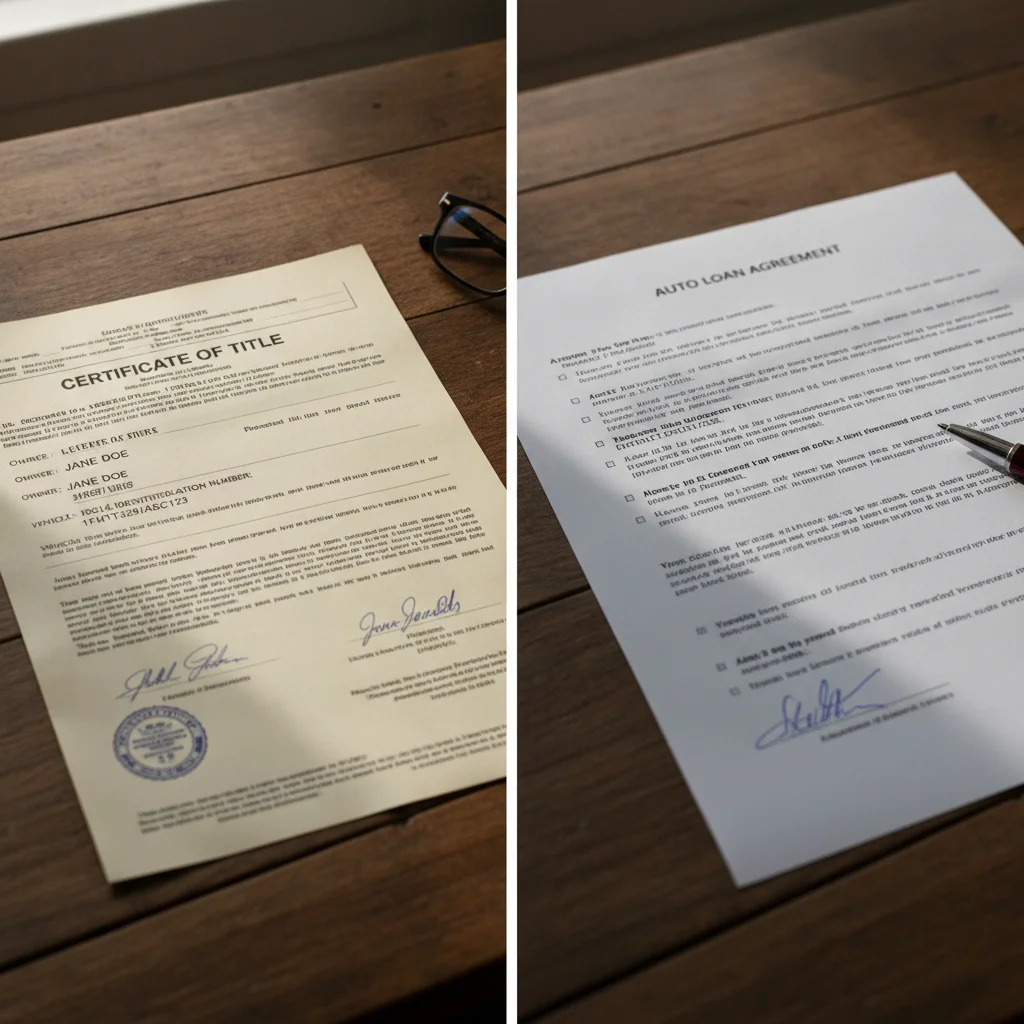
For context on all the paperwork flowing through an online transaction, understanding car purchase contracts and paperwork walks through the documents you'll encounter and what each one means for your legal position.
The practical takeaway: don't wait until day six of a seven-day window to decide you want to return. Initiating the process as soon as you're certain gives the platform, the lender, and the DMV enough time to unwind everything cleanly.
How to Protect Yourself Before You Buy
The best time to understand a return policy is before you sign — not after the car is parked in your driveway. Here's the pre-purchase due diligence that actually matters:
- Request the full return policy in writing — not a marketing summary, the actual contractual language. If the platform can't provide it before purchase, that's a red flag.
- Confirm the policy is in your purchase agreement — website terms can be updated at any time; only what's in your signed contract is enforceable against the seller.
- Calculate your realistic mileage usage — if your daily commute is 40 miles each way, a 400-mile cap gives you exactly five round trips before it expires.
- Document delivery condition immediately — photograph and video everything before accepting the keys. Send copies to the platform via their documented communication channel (email or in-app messaging), creating a timestamped record.
- Clarify the refund timeline — some platforms take 5–10 business days to process refunds after a return is accepted. If you're rolling a trade-in's payoff into the transaction, the timing matters.
- Ask about financing reversal specifically — get the lender's process in writing before the loan is funded.
Your pre-purchase checklist for buying a car online covers the full sequence of steps to verify before you complete any remote vehicle purchase, including how to cross-check return policy language against a platform's standard terms.
Also review how to protect yourself when paying for a car online — payment method matters because credit card chargebacks can serve as a fallback if a platform refuses a legitimate return claim.
Create a Timestamped Delivery Record
The moment the car arrives, shoot a continuous video walkthrough of every exterior panel, all four tires, the interior, the trunk, and the undercarriage if accessible. Send that video to the platform via their official messaging system immediately — creating a timestamped, documented baseline condition. This single step resolves most disputes about who caused what damage.
Use a Credit Card for the Down Payment If Possible
Many online platforms allow a credit card for the down payment portion even when financing the balance. Using a card gives you a chargeback option if the platform refuses a legitimate return claim and becomes unresponsive. Wire transfers and ACH payments offer no such recourse. Even a partial payment on card adds a layer of leverage.
When a Return Policy Isn't Enough Protection
A return policy addresses dissatisfaction after delivery. It doesn't protect you from fraud during the transaction itself — wire transfer scams, title washing, odometer tampering, or misrepresented flood damage that's invisible until months later. These risks require separate protections: verified payment methods, independent pre-purchase inspections, and platform fraud coverage.
For vehicles sold through instant offer platforms, the return dynamic is also different — these platforms buy your car from you rather than selling to you, so buyer protections don't apply in the same way. If you're considering one of these services to sell, understand that the offer is typically final and non-negotiable once accepted.
Return policies are one layer of a multi-layer protection strategy for online car buying. Used correctly — with proper documentation, timely action, and a clear understanding of the contractual terms — they're genuinely useful. Used as a substitute for due diligence, they leave buyers exposed in ways that are difficult and expensive to remedy after the fact.
State Lemon Laws Don't Apply Here
Most people assume state lemon laws backstop any car purchase. They don't apply to used vehicles in most states — they cover new cars with repeated, unfixable defects. If you're buying a used car online, your primary protection is the platform's contractual return policy and any express warranties offered. Don't count on lemon law coverage to save you if you're unhappy with a used purchase.
Website Terms Are Not Contracts
A return policy published on a platform's website is a general statement of business practice, not a contract with you specifically. Platforms update website terms regularly. The only legally binding version of the return policy is the one referenced or attached to your signed purchase agreement. Before signing anything, ask for the current return policy to be incorporated by reference into your contract.
International Buyers Face Additional Complications
If you're purchasing from a U.S.-based online platform but having the vehicle shipped internationally, return policies typically do not apply once a vehicle leaves the country. Some platforms explicitly void return rights upon export. Confirm international purchase terms separately before committing to a cross-border online car buy.

All claims are backed by peer-reviewed research. Sources on request.