Key Takeaways
Why Timing Is Everything in Auto Loan Refinancing
Most borrowers think of refinancing as a straightforward swap — you find a lower interest rate, sign some new paperwork, and walk away paying less each month. That logic holds, but only if you apply it at the right moment in your loan's life. Apply it too late, and you're restructuring a debt that's already been largely paid down in the most expensive way possible.
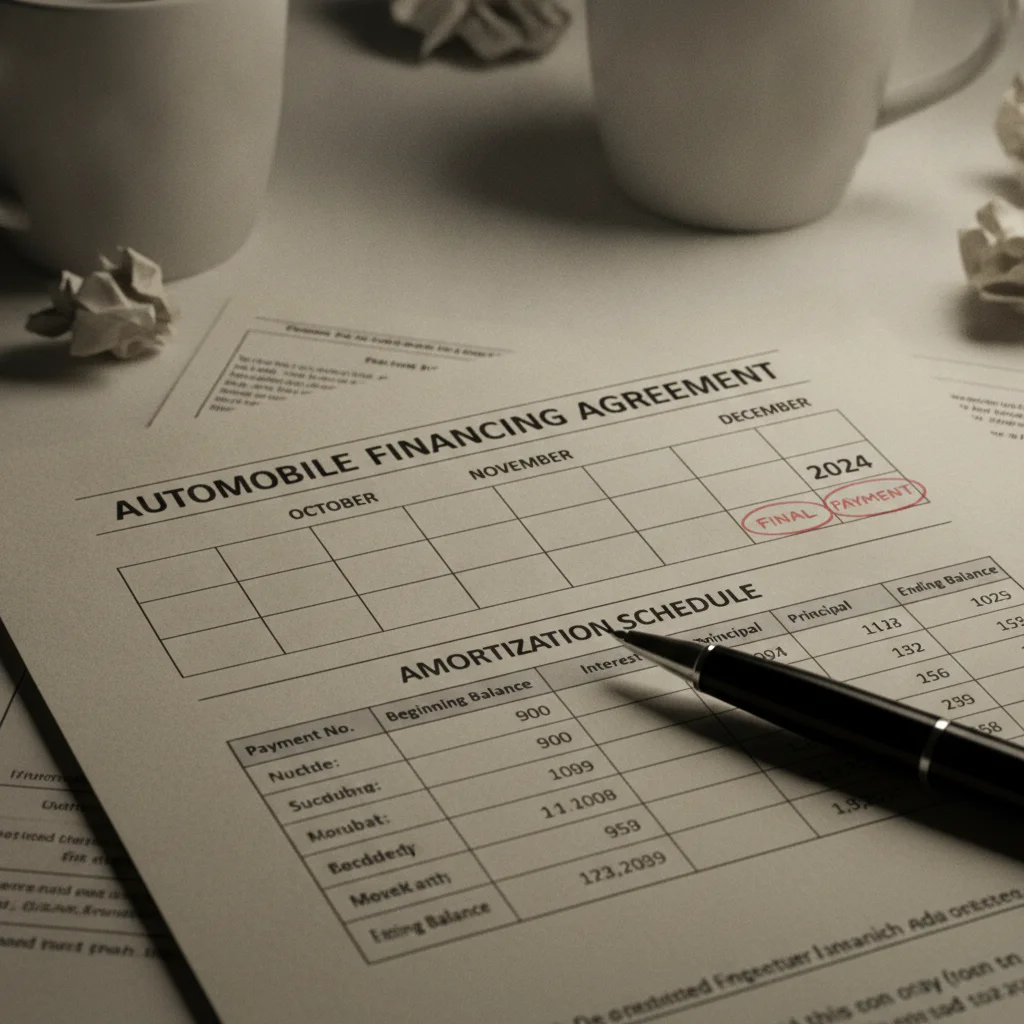
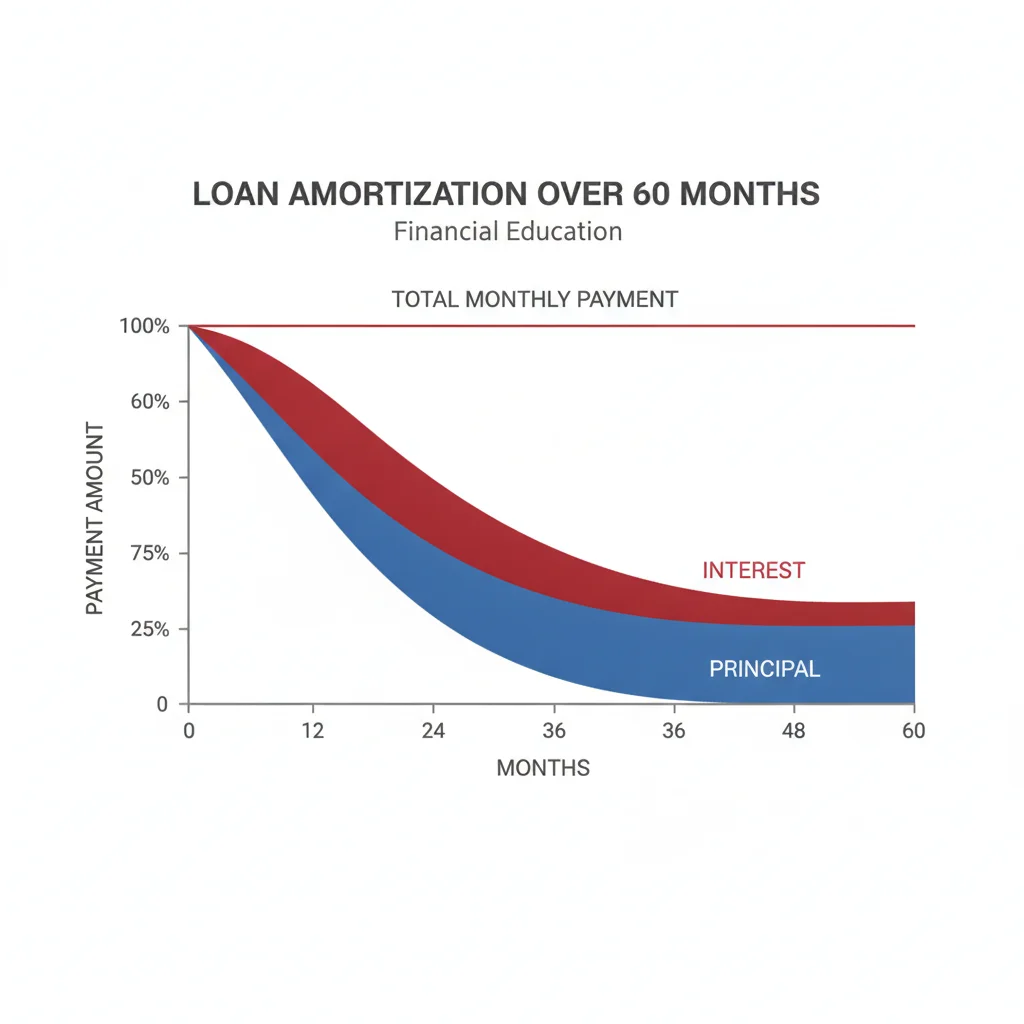
Here's the fundamental mechanic at work: auto loans are amortized, which means each monthly payment is split between interest and principal according to a predetermined schedule. Early in the loan, the split heavily favors the lender — a large chunk of your payment goes toward interest. As time passes and your balance falls, the interest portion shrinks and more of each payment chips away at the principal. By the time you're in the final 12 months, you're paying almost pure principal.
This front-loaded structure is why refinancing early is so powerful and refinancing late is so rarely worth it. When you refinance, you reset the amortization clock. A new lender calculates interest on your remaining balance — which, by year four or five of a five-year loan, may only be a few thousand dollars. The interest savings on that reduced balance are minimal. Meanwhile, you're absorbing new loan origination fees, taking a credit inquiry hit, and potentially extending your total payoff timeline.
Understanding the basics of how loan terms work is essential before deciding whether a refinance makes sense at any stage — but especially near the end of repayment.
This article walks through the most common mistakes borrowers make when they refinance too late, why those mistakes happen, and what you should do instead if you're nearing the finish line on your current loan.
The Amortization Trap: How Interest Front-Loading Works Against You
To make the problem concrete, consider a simple example. You took out a $28,000 auto loan at 7% APR for 60 months. Your monthly payment is approximately $554. Here's how the interest-vs.-principal split looks at different points in that loan:
| Month | Payment | Interest Portion | Principal Portion | Remaining Balance |
|---|---|---|---|---|
| 1 | $554 | $163 | $391 | $27,609 |
| 12 | $554 | $136 | $418 | $23,271 |
| 24 | $554 | $102 | $452 | $17,369 |
| 36 | $554 | $65 | $489 | $11,041 |
| 48 | $554 | $28 | $526 | $4,355 |
| 60 | $554 | $3 | $551 | $0 |
Notice what happens by month 48 — the interest component has dropped to just $28 per payment. If you refinanced at this point with a remaining balance of roughly $4,400, even dropping your rate to 4% would save you only a handful of dollars in total interest over the remaining year. Meanwhile, the lender who issues that refinance loan still needs to run a credit check, process paperwork, and potentially charge a loan origination fee.
~67%
Interest paid in first half of a 60-month loan
On a standard amortized 60-month auto loan at 7% APR, roughly two-thirds of total interest is paid during the first 30 months — leaving very little to save by refinancing in the final year.
$150–$500
Typical auto refinance origination fees
According to lender disclosures and consumer finance data, most auto refinance loans carry origination or processing fees between $150 and $500, which must be offset by interest savings to break even.
18–24 months
Average break-even timeline for auto refinance
Financial planning analyses suggest the typical auto loan refinance takes 18 to 24 months to break even on fees — a window that exceeds the remaining term in most late-stage refinancing scenarios.
11 points
Average credit score drop from hard inquiry
FICO data indicates that a single hard credit inquiry typically reduces a credit score by up to 5 to 11 points — a meaningful consideration for borrowers planning future borrowing within six to twelve months.
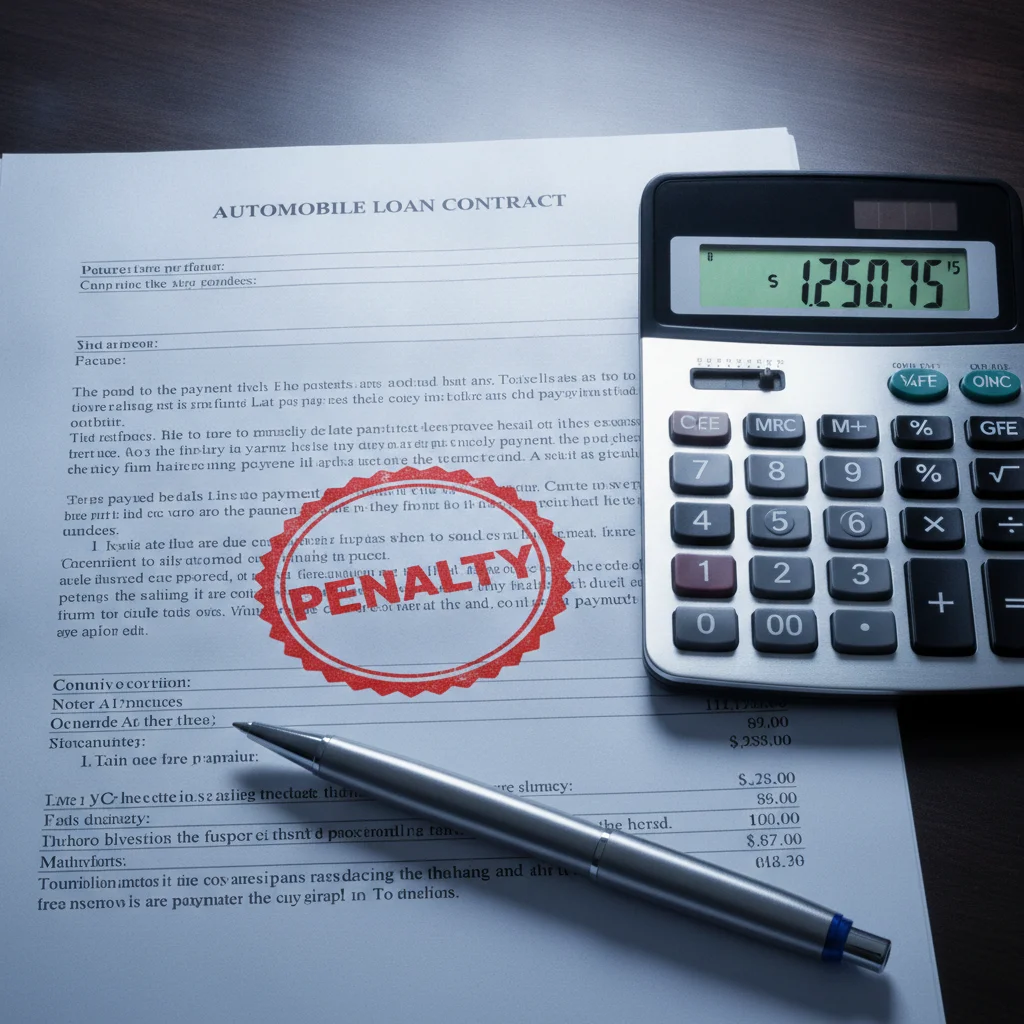
The math rarely pencils out. The interest you'd save is simply too small to justify the friction of a new loan — and that's before accounting for any fees your existing lender might charge for early payoff. See how prepayment penalties can further erode refinancing savings on a loan you're about to close out.
Refinancing Resets Your Amortization Clock
Every time you refinance, the new lender recalculates your payment schedule from scratch. This means the early months of your new loan will again be interest-heavy — even if your remaining balance is small. In the final year of a loan, this reset effectively causes you to pay a second layer of front-loaded interest on a balance you were nearly done eliminating. The monthly payment may look lower, but the total cost almost always goes up.
Common Mistakes Borrowers Make When Refinancing Too Late
Even borrowers who understand amortization in the abstract still fall into predictable traps when they're near the end of a loan. These aren't failures of intelligence — they're the result of misleading marketing, surface-level payment comparisons, and optimism about savings that don't materialize. Here are the most common errors, why they happen, and what to do instead.
Focusing only on the lower monthly payment rather than total interest paid over the life of both loans.
Why it happens: Lenders and loan comparison tools often lead with monthly payment figures because they look more attractive. A borrower with 11 months left sees a $100/month reduction and assumes they're saving $1,100 — without accounting for fees or the fact that the new loan may run 24 more months.
Ignoring loan origination fees and failing to calculate the break-even point on those costs.
Why it happens: Fees are often buried in the fine print or folded into the new loan balance, making them easy to overlook. Borrowers focused on rate comparisons tend to treat fees as negligible without running the actual math.
Refinancing to extend the loan term in order to lower monthly payments, without realizing this adds significant interest cost.
Why it happens: When cash flow is tight, a lower monthly number feels like relief. Extending from 11 remaining months to a new 24- or 36-month loan can drop the payment substantially — but it keeps interest accruing on a balance that was almost gone.
Treating a refinance as a solution to financial stress without addressing the underlying budget problem.
Why it happens: When monthly expenses are strained, any option that lowers a single bill looks appealing. Refinancing feels like a financial fix, but late-stage refinancing on an auto loan doesn't generate enough savings to solve a budget shortfall — it delays the end of the loan while adding costs.
Failing to account for the credit score impact of a hard inquiry and new account opening near the end of repayment.
Why it happens: Borrowers often assume the credit impact of a refinance is minor or temporary. While that's true over a long horizon, opening a new account close to a major purchase — such as a home or next vehicle — can affect approval odds and rate offers at the worst possible time.
Assuming that a lower interest rate always means a better deal, regardless of the remaining balance or timeline.
Why it happens: Rate comparisons are intuitive — 4% feels better than 7%. But the rate only matters in proportion to the balance it applies to and the time over which it compounds. A 3-point rate improvement on a $4,000 balance over 12 months saves roughly $65 in interest. That rarely justifies the effort.

If you recognize yourself in any of these scenarios, you're not alone. The good news is that awareness alone puts you ahead of most borrowers facing the same decision. For a broader look at how these errors fit into the refinancing picture, see common mistakes that undercut an otherwise good refinancing decision.
What to Do Instead: Better Moves in the Final Year
If you're 10 to 14 months from paying off your auto loan, refinancing is almost certainly the wrong tool. But that doesn't mean you're stuck doing nothing. There are smarter alternatives that genuinely improve your financial position without the cost and complexity of a new loan.
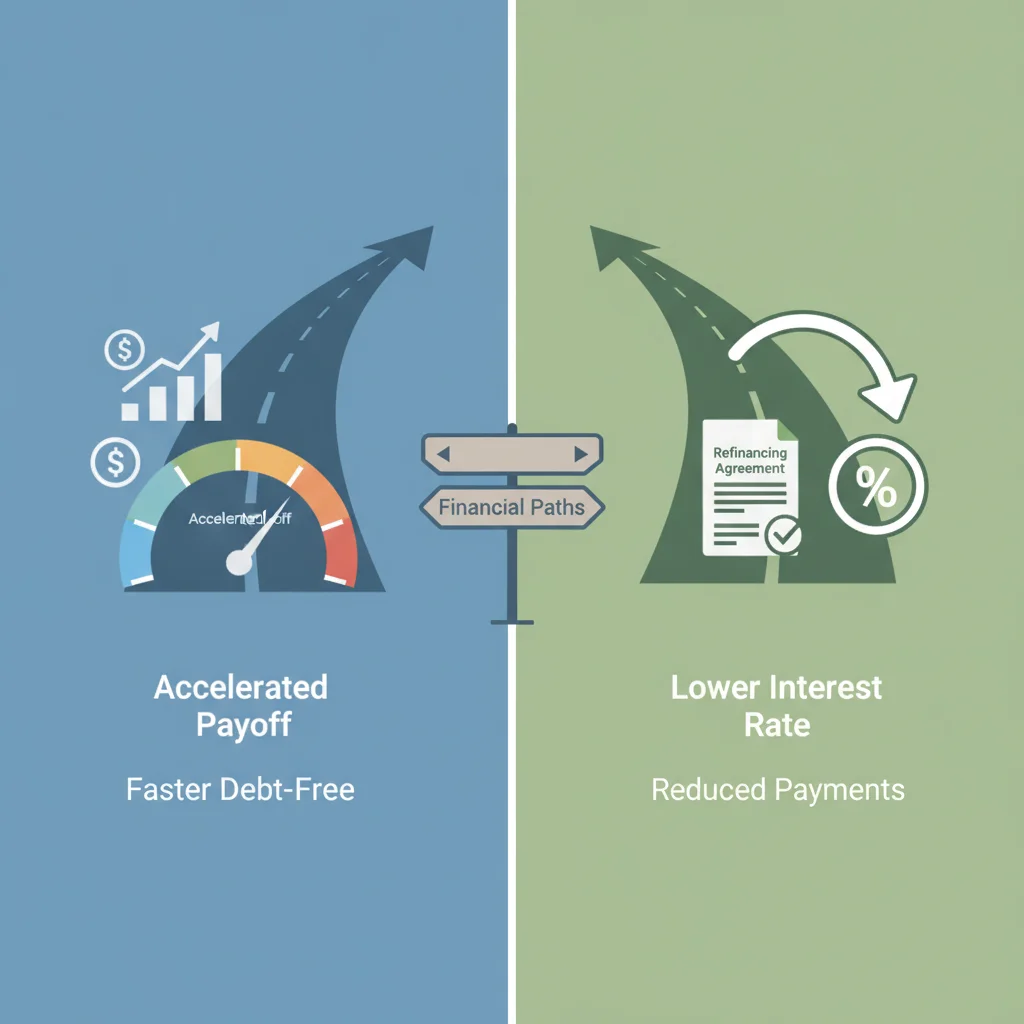
Make Accelerated Payments on Your Existing Loan
The most powerful move available to you is also the simplest: pay more than your monthly minimum. In the final year of a loan, your balance is largely principal, so extra payments reduce what you owe dollar for dollar. There's no new application, no credit inquiry, and no fees. Even an extra $100 to $200 per month could shave one to three months off your remaining term, saving you a few hundred dollars in residual interest and freeing up your monthly cash flow sooner.
This approach is explored in detail through the early payoff tips hub, which covers practical methods for eliminating an auto loan ahead of schedule.

Redirect Your Energy Toward Your Next Loan
If you've been considering refinancing because your credit has improved significantly since you took out the original loan, that's genuinely good news — but channel that improved credit score toward your next vehicle purchase rather than a late-stage refinance on your current one. A better credit profile means you'll qualify for a lower rate when you need a new loan, which is where the big savings live.
Use This Period to Build a Down Payment Reserve
Instead of rolling refinancing fees into a new loan, use the cash you would have spent on those costs — plus the same monthly payment you've been making — to build up savings for your next vehicle purchase. A larger down payment on your next car reduces the loan principal, which directly lowers the total interest you'll pay over the life of that loan. That's a much more efficient use of money than restructuring a nearly-paid debt.
Watch for "No Fee" Refinance Offers
Some lenders advertise refinancing with no origination fees, which sounds like it removes the break-even problem. Look closely at the fine print: many of these offers fold fees into the loan balance or compensate with a slightly higher rate. A truly fee-free refinance at a meaningfully lower rate is rare. Always request a full loan disclosure and calculate total repayment cost before signing.
Compare This to the Accelerated Payoff Alternative
If you're genuinely torn between refinancing and paying off faster, run the numbers on both paths side by side. The accelerated payoff vs. refinancing comparison walks through exactly how these two strategies stack up — including scenarios where one clearly outperforms the other based on your remaining balance, rate, and timeline.
How to Recognize the Right Time to Have Refinanced
Understanding why late refinancing fails also teaches you when refinancing actually works. The sweet spot for most borrowers is roughly 12 to 36 months into a loan — early enough that a meaningful amount of interest remains unpaid, but far enough in that your credit has had time to improve (if it needed to) and the vehicle's value hasn't collapsed below the loan balance.
Three conditions generally need to be true for refinancing to make financial sense:
- Your rate drops by at least 1.5 to 2 percentage points. Smaller drops rarely generate enough savings to clear the break-even threshold after fees.
- You have at least 18 to 24 months remaining on the loan. This gives the interest savings enough time to compound and outpace the cost of opening a new loan.
- Your credit profile has meaningfully improved. If your score is similar to what it was when you took out the original loan, you may not qualify for a rate that justifies the effort.
The contrast between refinancing early versus deep into repayment is stark. The article early in your loan vs. deep into repayment breaks down this comparison clearly, with specific guidance on which stage makes the most financial sense for different borrowers.
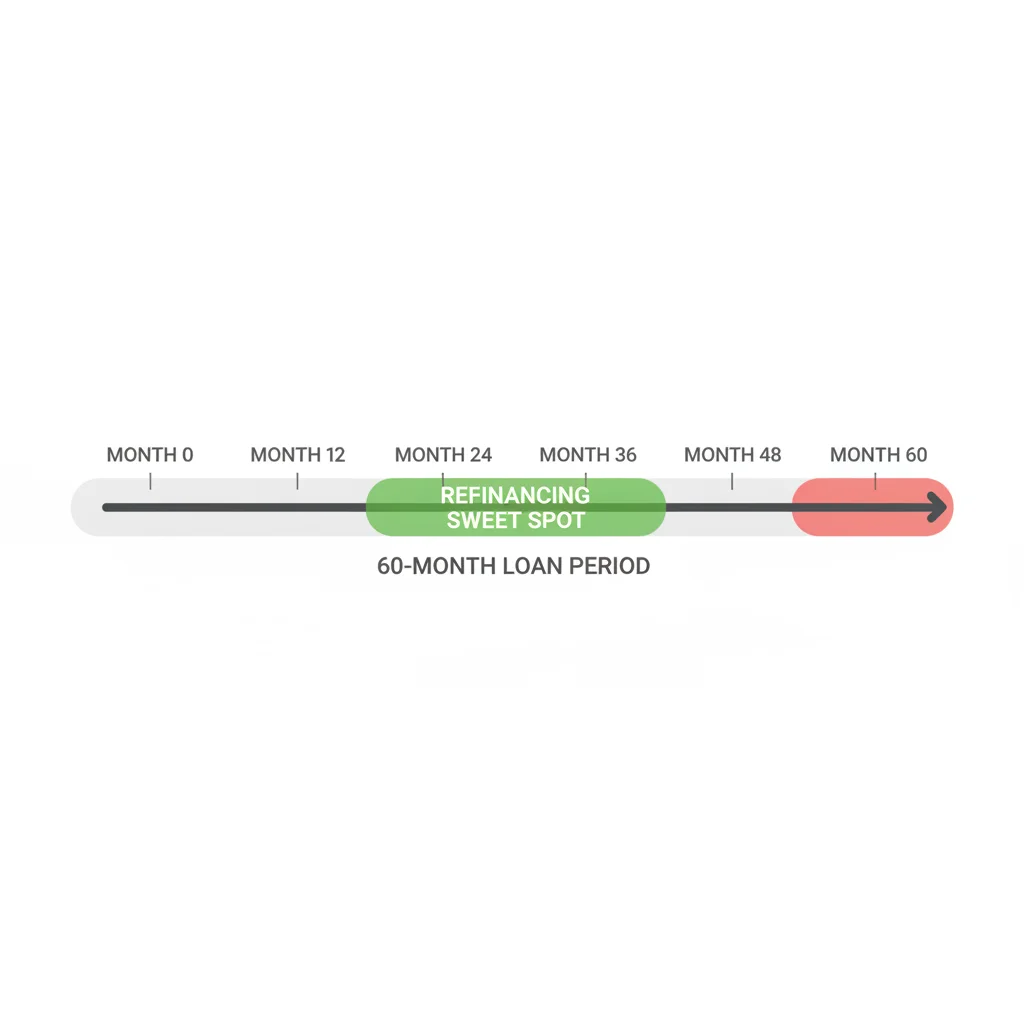
It's also worth examining whether hesitation earlier in your loan was based on misconceptions rather than real financial risk. Many borrowers who would have benefited from refinancing at month 18 or 24 talked themselves out of it for the wrong reasons. The article on refinancing myths that cause borrowers to wait too long addresses those hesitations directly — including fears about credit score damage, lender loyalty, and minimum savings requirements that simply aren't accurate.
If you're reading this article with 10 months left on your loan, that information won't help you this time around — but it will help you make a smarter, better-timed decision on your next vehicle loan. Set a calendar reminder for 18 months into your next loan to revisit the refinancing question. That one small habit could save you hundreds or even thousands of dollars.
The Bottom Line: Know When to Stop Optimizing
There's a particular kind of financial frustration that comes from learning about a better option just after the optimal window has closed. If that's where you are with your auto loan refinance, the most important thing to take away is this: finishing out your current loan is not a failure. It's the right move.
Refinancing in the last year of a loan is almost never a net positive. The math doesn't support it, the fees work against it, and the disruption to your financial life — another credit inquiry, more loan paperwork, a new payment schedule — isn't worth the marginal savings on a nearly-retired debt. The better play is to close out this loan cleanly, take stock of what your improved credit score now makes possible, and enter your next borrowing decision armed with a clearer understanding of how amortization and rate timing interact.
Being a savvy borrower isn't about constantly refinancing — it's about knowing when to act and when to let the plan play out. In the final year of an auto loan, the plan is already winning. Let it finish.

All claims are backed by peer-reviewed research. Sources on request.