
Key Takeaways
Why Most Borrowers Leave Money on the Table
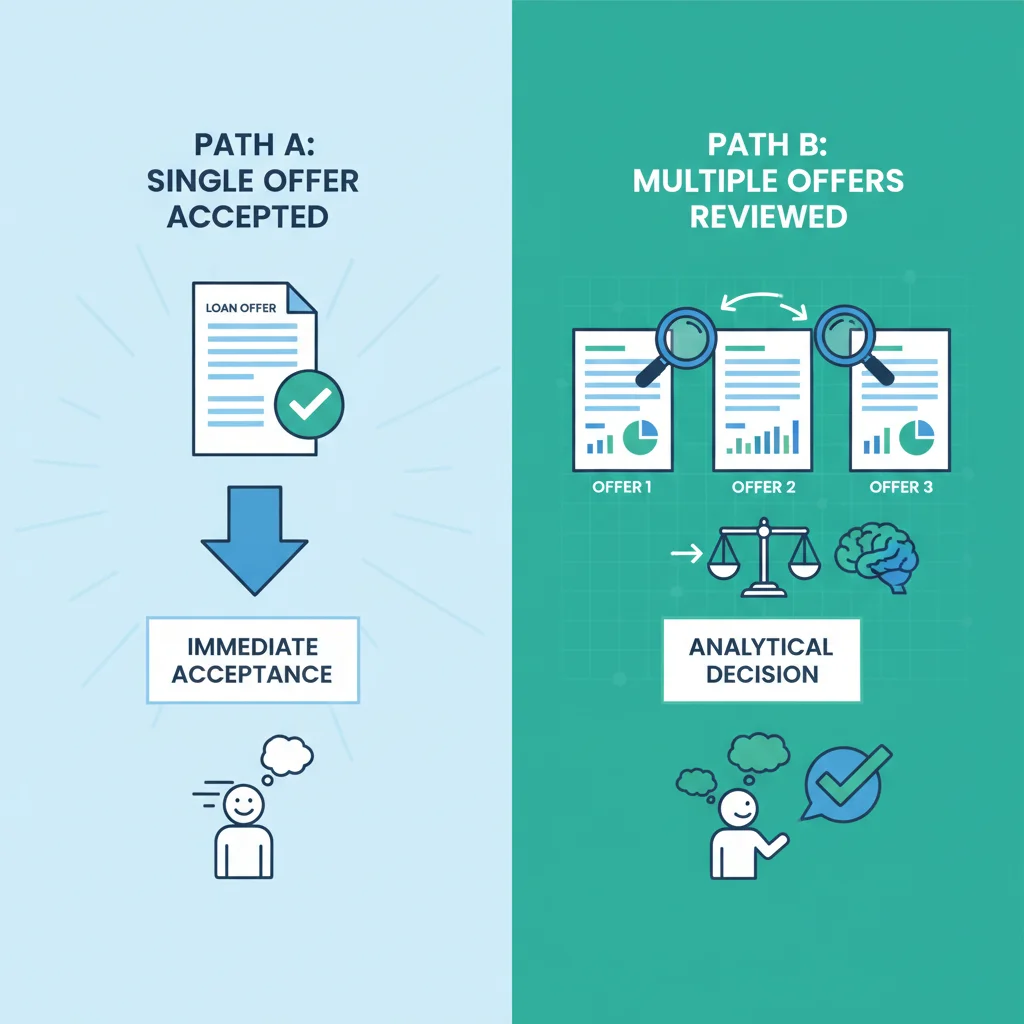
Here's a scenario that plays out constantly: a buyer finds a car they love, the dealer offers financing, and the buyer — worried that applying elsewhere will hurt their credit — accepts the first offer without comparison shopping. Months later, they discover a credit union or online lender would have offered a rate a full two percentage points lower. On a $30,000 loan over 60 months, that difference costs roughly $1,600 in extra interest.
The fear of damaging their credit score by applying to multiple lenders is the primary reason borrowers skip comparison shopping. And while that fear isn't entirely irrational — hard credit inquiries do temporarily lower your score — it's largely overblown when it comes to auto loans, thanks to a specific rule built into how credit bureaus score loan-shopping behavior.
Understanding that rule is the foundation of smart rate shopping. Once you know how it works, the calculus changes completely: shopping multiple lenders stops being a risk to manage and becomes a straightforward strategy for saving money. This guide walks you through that rule, explains how to use it to your advantage, and gives you a concrete playbook for getting the best rate without paying a credit score penalty for trying.
How the Rate-Shopping Window Actually Works
When a lender checks your credit to evaluate a loan application, that action is recorded as a hard inquiry on your credit report. Hard inquiries typically reduce your score by a few points and remain visible for two years, though their scoring impact fades after about 12 months. The concern, understandably, is that applying to five lenders means five hard inquiries — and five separate score drops.
But credit bureaus anticipated this problem. They don't want borrowers to avoid comparison shopping for loans, because comparison shopping leads to better loan terms and more sustainable debt. So they built in what's commonly called the rate-shopping window: a defined period during which multiple credit pulls from lenders in the same loan category are treated as a single inquiry for scoring purposes.
Here's how it breaks down by scoring model:
- FICO Score (older versions 2, 4, 5): Any auto loan inquiries made within a 14-day window are counted as one.
- FICO Score 8 and newer: The window extends to 45 days.
- VantageScore: Also uses a 14-day deduplication window for installment loan inquiries.
Since most auto lenders use FICO scores — and many use FICO 8 or later — the practical window for most borrowers is 45 days. That's plenty of time to gather quotes from banks, credit unions, online lenders, and dealership finance departments without incurring multiple scoring penalties.
For a deeper look at how credit bureaus handle auto loan inquiry clusters, see how rate shopping for auto loans affects your credit score.
45 days
FICO rate-shopping deduplication window
Under FICO Score 8 and newer versions, all auto loan hard inquiries within a 45-day window count as a single inquiry for scoring purposes.
$1,600+
Potential savings from rate comparison
On a $30,000 loan over 60 months, a two-percentage-point rate difference — common between the best and worst lender offers — adds up to over $1,600 in additional interest paid.
1 in 5
Consumers with credit report errors
The FTC found that roughly 20% of consumers have at least one error on their credit reports that could affect their scores and the loan rates they're offered.
Pre-Qualification vs. Pre-Approval: Start With the Soft Pull
Before you trigger any hard inquiries at all, there's a smarter first step: pre-qualification. Most online lenders, banks, and credit unions now offer a pre-qualification tool that estimates your rate and loan amount based on a soft credit pull. Soft pulls are invisible to scoring models — they do not affect your credit score at all, regardless of how many you do.
Pre-qualification lets you:
- Get a realistic sense of the rate range you qualify for before committing to applications
- Quickly identify lenders whose rates are clearly uncompetitive
- Understand whether your credit profile is strong enough for prime rates, or whether you need to prepare for higher-rate offers
- Narrow your list to the most promising lenders before making any hard inquiries
Think of pre-qualification as your reconnaissance phase. You're gathering intelligence without putting anything on the line. Once you've identified the three to five lenders with the most competitive pre-qualified rates, you move into formal applications — all within your rate-shopping window.
Start With Soft Pulls — Always
Pre-qualification with a soft pull is completely score-neutral and takes less than five minutes at most lenders. Make it your first step with every lender you're considering. There is no downside and no credit risk — you're simply gathering market data to make a smarter decision. Only escalate to a formal hard-pull application with lenders whose pre-qualified rates are genuinely competitive.
Pre-approval is a step beyond pre-qualification. With pre-approval, the lender makes a conditional commitment to lend you a specific amount at a specific rate, typically after a hard pull. This is what you want in hand when you walk into a dealership — it gives you negotiating leverage and a concrete benchmark for any dealer financing offer.
Worried about how applying to several lenders at once could affect your score? multiple preapproval applications and their effect on your credit covers this in plain terms.
Best Practices for Rate Shopping Without Credit Damage
Knowing the rate-shopping window exists is one thing. Using it effectively requires a specific sequence of actions. The following practices will help you get the most competitive rate available to you — without unnecessary credit score damage.
Check your credit reports and score before starting any applications.
You need to know your starting position before you can evaluate whether the rates lenders quote are appropriate for your profile. Errors on your credit report — which affect roughly one in five consumers, according to the FTC — can suppress your score and lead lenders to quote you higher rates than you deserve.
Do all your soft-pull pre-qualifications before submitting any formal applications.
Pre-qualification is free and score-safe, so there's no reason not to cast a wide net at this stage. Doing pre-qualifications first gives you a rough rate map of the market before any hard inquiry is triggered, so you can focus your formal applications on lenders already showing competitive offers.
Submit all formal loan applications within a 14-day window — ideally within 45 days.
This is the core mechanic of the rate-shopping window. When you cluster your applications, credit bureaus treat them as one inquiry. Spreading applications out over two or three months eliminates that protection and results in multiple scoring impacts.
Always apply to at least three lenders, and ideally four or five.
Research consistently shows that consumers who get multiple loan quotes pay significantly less interest than those who accept the first offer. One lender is a price-taker position; three or more creates competitive pressure and gives you real market data to evaluate.
Use competing offers to negotiate — including with the dealer.
A dealer's finance department often has discretion to match or beat outside financing offers, especially when they want to retain the financing business. A pre-approved offer from a credit union is a powerful negotiating tool that most buyers never use.
Evaluate total loan cost, not just monthly payment, when comparing offers.
Monthly payment is the least meaningful comparison point between loan offers because it's easily manipulated by extending the term. A $50/month savings on a 72-month loan versus a 60-month loan can easily cost $800–1,200 more in total interest paid.
How Your Credit Score Tier Changes the Strategy
Not all borrowers face the same rate-shopping landscape. Your credit score tier significantly affects both how much variation you'll see between lender offers and how critical it is to shop aggressively.
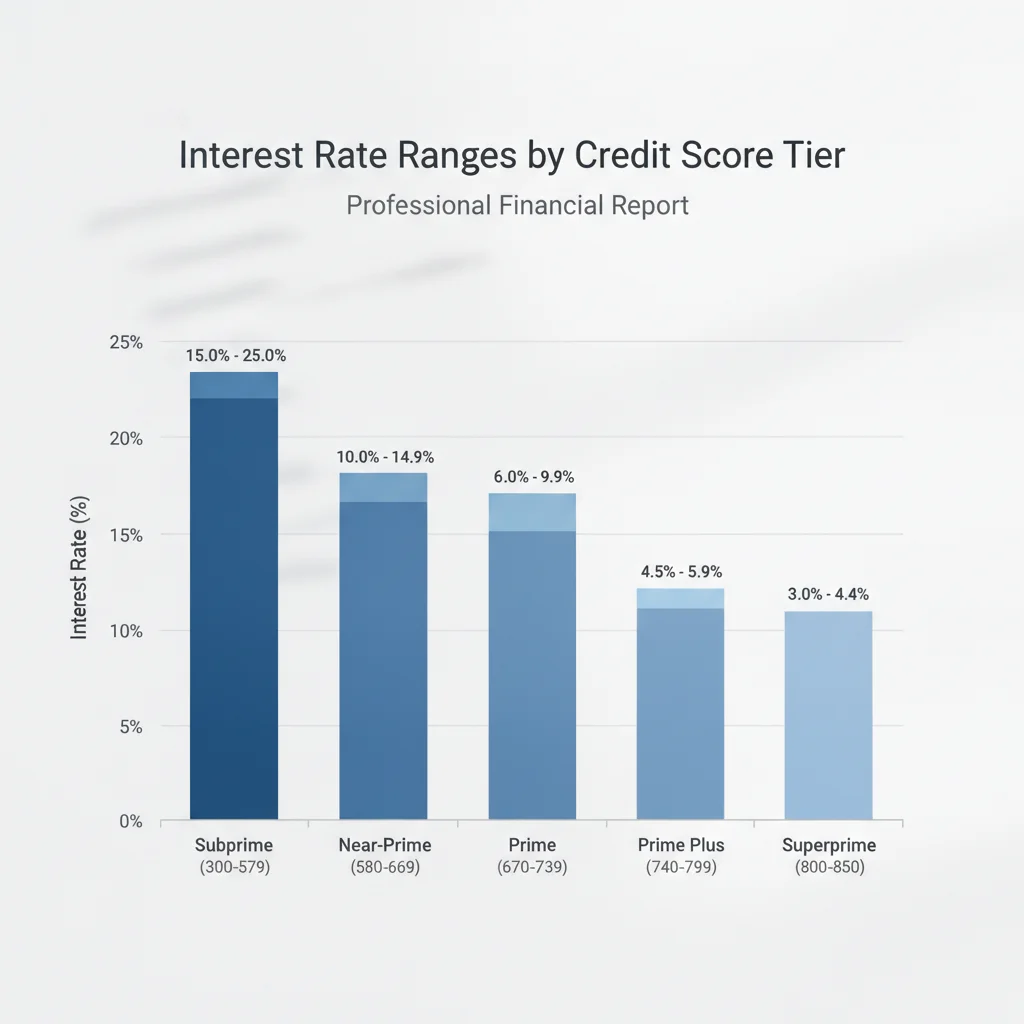
Superprime borrowers (720+): You'll see the smallest spread between lenders — perhaps half a percentage point or less separating the best and worst offers. Rate shopping still saves money, but the stakes per lender are lower. Focus on comparing total loan costs, fees, and terms rather than just the APR headline.
Prime borrowers (660–719): Rate spreads begin to widen. The difference between a bank's standard rate and a credit union's best offer can be one to two percentage points, which translates to meaningful monthly payment differences on larger loans. Shopping at least three to four lenders is strongly advisable.
Near-prime borrowers (580–659): This is where rate shopping becomes especially critical. Lenders in this tier vary significantly in their risk pricing, and some specialize in near-prime borrowers with more favorable terms than others. The spread between your best and worst offer could exceed three to four percentage points.
Subprime borrowers (below 580): Rate shopping is hardest here because fewer lenders will approve you at all, and those that do often charge high rates. However, the variation between subprime lenders is enormous — the difference between a predatory buy-here-pay-here dealer and a legitimate online subprime lender could be five to ten percentage points. Shopping every legitimate option available to you is essential. See our resources on bad credit auto loans and how multiple loan applications affect your credit when shopping lenders for tailored guidance.
For a full breakdown of what rates borrowers in each tier typically pay, see auto loan rates by credit score — a range-by-range breakdown.
“The single most powerful thing a car buyer can do to lower the cost of their loan is to apply to multiple lenders. The credit score impact is temporary and minimal. The savings from getting a better rate are permanent.”
— Pamela Foohey, Consumer Finance Law Professor, George Washington University Law School
What to Compare Beyond the Interest Rate
When you receive multiple loan offers, the temptation is to compare only the APR. But the annual percentage rate, while important, doesn't tell the full story of what each loan actually costs you.
Here's what to evaluate across every offer you receive:
- APR (Annual Percentage Rate)
- The most important number. Unlike a simple interest rate, APR incorporates fees into the cost calculation, making it a more accurate comparison across lenders. Always use APR — not the nominal interest rate — to compare offers.
- Loan term
- A lower monthly payment achieved by extending the loan from 48 to 72 months often costs significantly more in total interest. Run the total interest calculation, not just the monthly payment.
- Origination and documentation fees
- Some lenders charge flat origination fees that can range from $0 to several hundred dollars. These are sometimes negotiable.
- Prepayment penalties
- If there's any chance you'll pay the loan off early — or refinance — a loan with prepayment penalties will cost you for doing so. Avoid them where possible.
- Payment flexibility
- Some lenders allow you to adjust your payment due date, skip a payment in hardship situations, or make bi-weekly payments without penalty. These features have real value.
The 45-Day Window Has One Important Caveat
The rate-shopping deduplication window applies specifically when the credit pull is coded as an auto loan inquiry. If a lender codes your application differently — for example, as a personal loan — it may not be grouped with other auto inquiries. This is rare but worth confirming. When in doubt, ask the lender how the inquiry will be categorized on your credit report before authorizing a hard pull.
Total Cost vs. Monthly Payment: Do the Math
Lenders and dealerships often frame loan comparisons around monthly payment because lower monthly numbers feel like a better deal. But a longer term almost always means more total interest — sometimes thousands of dollars more. Before accepting any offer, calculate: (monthly payment × number of months) − loan principal = total interest paid. That single calculation changes how you evaluate every offer you receive.
Once you've gathered all your offers and understand these dimensions, you're in a position to make a genuinely informed decision — not just accept whichever number sounds lowest at first glance.
Quick Wins: Actions You Can Take Today
If you're preparing to shop for an auto loan in the near future, the actions below will put you in the strongest possible position before a single application is submitted.
Rate shopping is one of the highest-return activities available to any car buyer. The combination of understanding the rate-shopping window, sequencing your applications correctly, and knowing what to compare across offers gives you real leverage — the same leverage that informed borrowers use to save thousands over the life of a loan. The credit score impact, managed correctly, is minimal and temporary. The savings are permanent.
To understand exactly how your credit score affects the loan rates lenders offer you, explore our full credit score impact hub.

All claims are backed by peer-reviewed research. Sources on request.