
Key Takeaways
Rate-Shopping Window
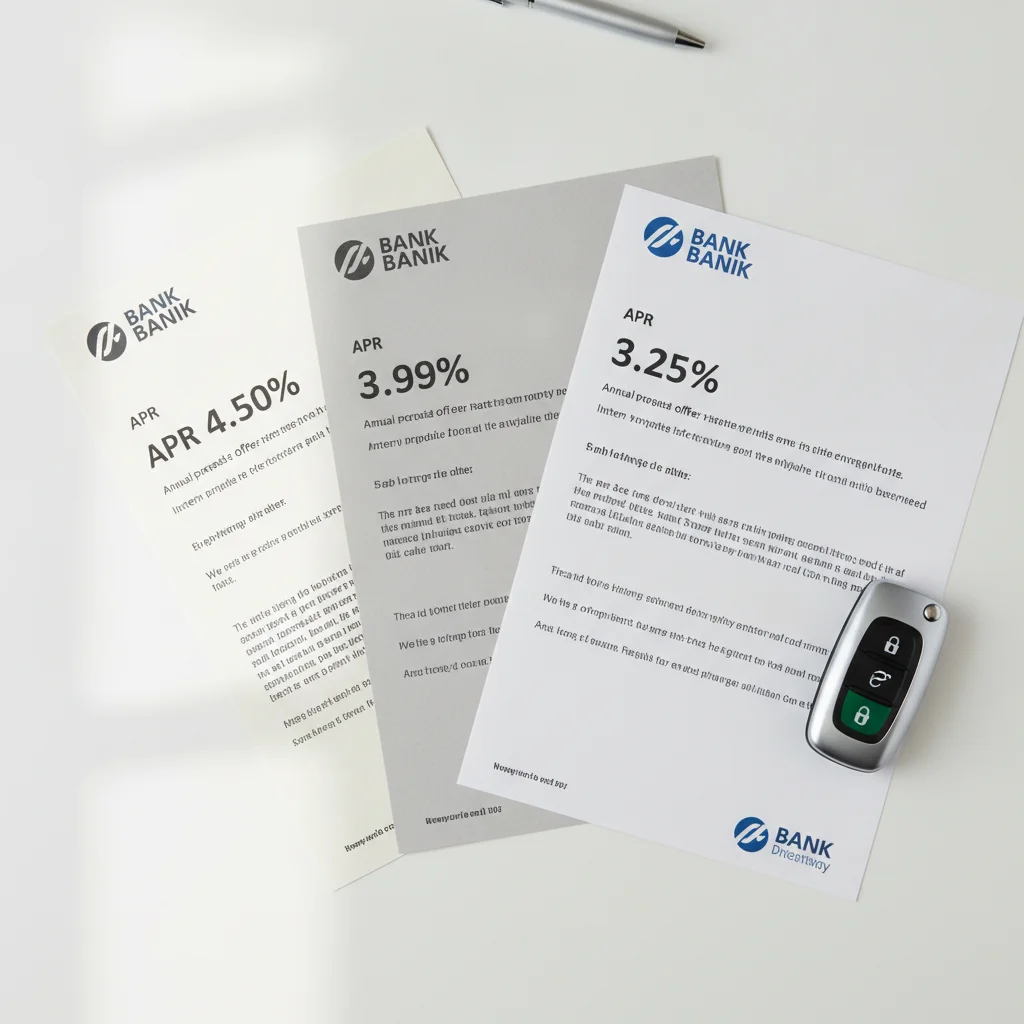
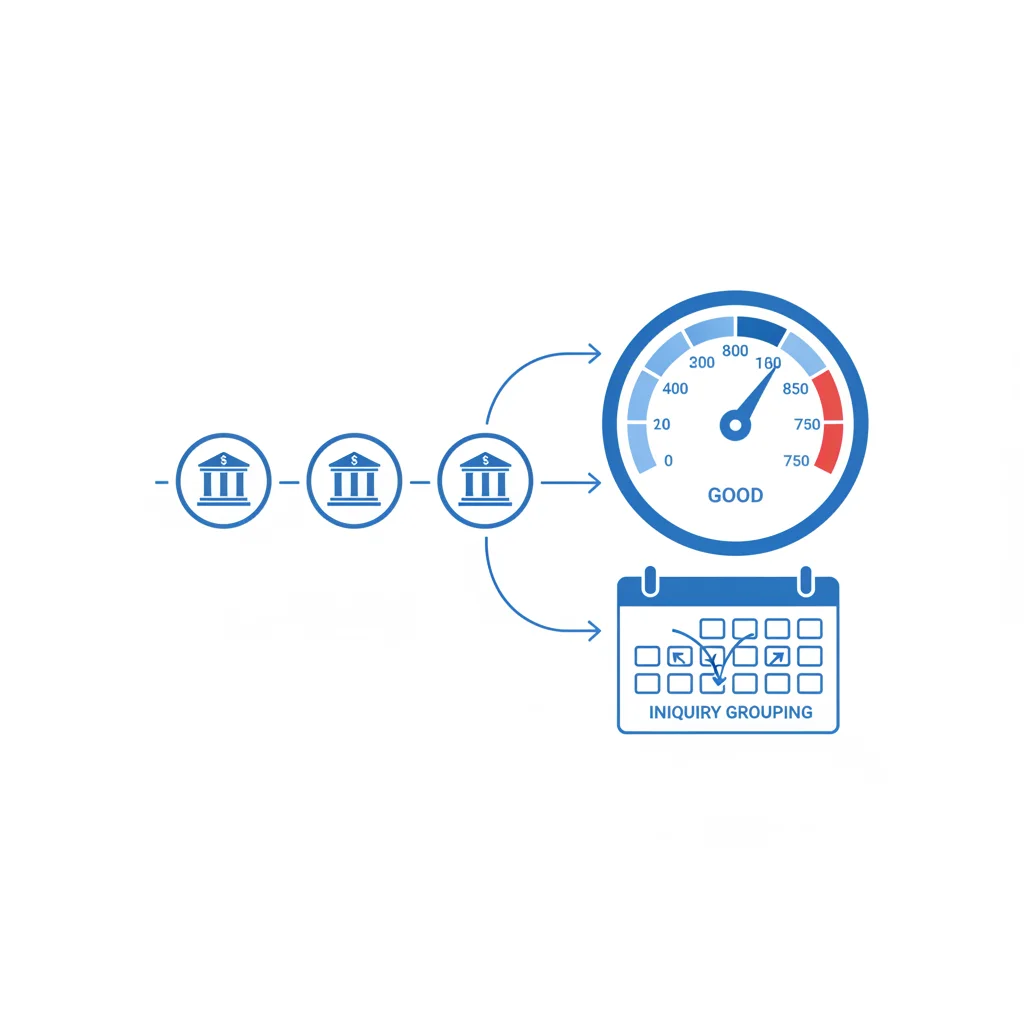
When you apply for an auto loan at multiple lenders within a short period, credit scoring models are designed to group those inquiries together and count them as a single event — not a series of separate credit hits. This is called the rate-shopping window, and it exists precisely so consumers can comparison-shop without being penalized. Depending on which scoring model your lender uses, that window spans 14 to 45 days.
FICO 8 and FICO 9 use a 45-day deduplication window for auto loan inquiries. Older FICO models and some VantageScore versions use a shorter 14-day window. The inquiry still appears on your report; only the scoring impact is compressed.
The Fear That Keeps Buyers From Shopping Around
I've watched it happen hundreds of times from the finance office side of the desk. A buyer comes in genuinely nervous about their credit, says they only applied at one place because they didn't want to "mess up" their score by applying to more lenders. The finance manager hears that and knows the game is already won. Without a competing offer, the dealer's rate is the only rate — and it's almost never the best one.
That fear of multiple inquiries is one of the most expensive misconceptions in auto financing. The credit scoring system was specifically designed to handle rate shopping, and buyers who understand how it works use it as a weapon. Those who don't leave real money on the table every single time.
This article breaks down exactly what happens to your credit score when you apply to multiple lenders, why the impact is far smaller than most people assume, and how to use the preapproval process as genuine negotiating leverage at the dealership. If you want to understand the broader mechanics of how rate shopping affects your credit score, that's worth reading alongside this guide.

What Actually Happens When You Apply for Preapproval
When you formally apply for an auto loan preapproval, the lender requests your full credit report from one or more of the three major bureaus — Equifax, Experian, or TransUnion. This is called a hard inquiry (also called a hard pull). It is logged on your credit report and is visible to any other lender who checks your file afterward.
A hard inquiry has a real but limited effect on your credit score. For most people with established credit histories, a single hard inquiry lowers a FICO score by fewer than 5 points. That dip is temporary — the scoring impact diminishes after about 12 months and the inquiry drops off your report entirely after two years.
Here's what that looks like in practice: if your credit score is 720, applying for preapproval at one lender might move it to 716 or 717. That's unlikely to change the rate tier you qualify for. The fear of a catastrophic score drop from a preapproval application is, in virtually every case, disproportionate to the actual risk.
Your Own Credit Check Never Hurts Your Score
Pulling your own credit report — through AnnualCreditReport.com or a credit monitoring service — is always a soft pull and has zero impact on your score. You can check your own report as many times as you like. Doing this before shopping lenders lets you spot and dispute errors before they affect your preapproval terms.
Inquiries Stay Visible Even When They Don't Score
The rate-shopping window collapses multiple inquiries into one scoring event, but the individual inquiries remain visible on your credit report for two years. A manual underwriter reviewing your file will see them. This is generally fine — it's recognizable rate-shopping behavior — but be aware that your file does show the activity even when your score doesn't reflect it fully.
Subprime Lenders May Have Stricter Inquiry Policies
Some buy-here-pay-here lots and deep-subprime lenders operate outside traditional scoring models and may have internal policies about inquiry counts that override FICO's deduplication logic. If you're working with specialized subprime lenders, ask their loan officers directly whether multiple applications within a window affect their underwriting decision — don't assume the standard rules apply.
To understand everything a lender evaluates beyond your score when making a preapproval decision, see everything your lender looks at before issuing a preapproval.
<5 pts
Typical score drop from one hard inquiry
According to FICO, a single hard inquiry reduces most consumers' scores by fewer than 5 points, with no impact at all for some profiles.
45 days
Rate-shopping deduplication window (FICO 8/9)
FICO 8 and FICO 9 — the most widely deployed scoring models — collapse auto loan inquiries within a 45-day window into a single scoring event.
$1,900+
Cost of a 2% dealer rate markup
On a $35,000 auto loan at 60 months, a 2-percentage-point markup above the lender's buy rate costs the buyer approximately $1,900 in additional interest.
60–100 pts
Score drop from one missed payment
A single 30-day late payment on any account can reduce a score with a clean history by 60 to 100 points — far more than any rate-shopping inquiry cluster.
5–10%
APR spread for subprime borrowers across lenders
Consumer Financial Protection Bureau data indicates subprime auto borrowers often see rate variation of 5 to 10 percentage points between lenders for similar loan profiles.
The Rate-Shopping Window: How Multiple Inquiries Get Collapsed
The critical protection for loan shoppers is built directly into the FICO scoring algorithm. When multiple hard inquiries for the same type of credit — auto loans, specifically — appear within a defined window, the model treats them as a single inquiry for scoring purposes. This is called inquiry deduplication or the rate-shopping window.
Which window applies to you?
- FICO 8 and FICO 9 (the most widely used models today): 45-day window
- FICO 2, 4, and 5 (older models still used by some mortgage lenders): 14-day window
- VantageScore 3.0 and 4.0: 14-day window
Because you typically won't know in advance which model a given lender is using, the safest strategy is to complete all your preapproval applications within a 14-day window. That keeps you protected regardless of the scoring model pulling your file.
One important nuance: the inquiries all still appear on your credit report as individual entries. Lenders can see them. The deduplication only affects your score — the inquiries themselves are visible and do tell a story to a manual underwriter. But for the vast majority of consumers doing straightforward auto loan shopping, this is not a problem. It's expected behavior. A lender who sees five auto loan inquiries in one week recognizes a consumer doing their homework — not a desperate borrower hunting for any approval they can get.
Use the 14-Day Rule as Your Default
Even though FICO 8 allows a 45-day window, you won't always know which scoring model a lender is pulling. Completing all your preapproval applications within 14 days guarantees protection under every major scoring model currently in use. Treat it as your hard deadline once you start the formal application phase.
Always Negotiate the Rate, Not Just the Payment
Finance managers prefer to discuss monthly payments because it obscures the total cost of the loan. When you come in with a preapproval, frame every conversation around the APR — not the monthly payment. A lower payment achieved by extending the loan term can cost you significantly more in total interest than a slightly higher payment on a shorter term.
Let the Dealer Know You Have Outside Financing Early
Mention your preapproval at the beginning of the finance office conversation, not at the end. Revealing it late can feel like a bait-and-switch to the finance manager and sometimes hardens their position. Disclosing it upfront signals that you're a prepared buyer and gives the manager time to genuinely try to beat your rate — which benefits you.
Prequalification vs. Preapproval: The Soft-Pull Strategy
Before you trigger any hard inquiries, use prequalification to do your first round of filtering. Prequalification relies on a soft pull — the lender checks enough of your credit data to give you an estimated rate range, but this type of inquiry has zero impact on your credit score. It doesn't appear to other lenders at all.
Most major banks, credit unions, and online lenders now offer online prequalification in under five minutes. Use this step to immediately eliminate lenders whose estimated rates aren't competitive. Then take the two or three most promising offers and submit full preapproval applications — the ones that trigger hard pulls — all within the same two-week window.
This two-step approach is optimal: you do real comparison shopping at no credit cost during prequalification, then concentrate the unavoidable hard inquiries at the end, within the deduplication window, only for lenders you're actually considering. The reasons your preapproval offers will vary across lenders are worth understanding so you know what to look for when the offers come back.
How Preapproval Shifts Power at the Dealership
This is where rate shopping pays off beyond just finding a lower APR. Walking into a dealership with a written preapproval changes the entire negotiation structure in ways most buyers don't appreciate until they've experienced it.
Without a preapproval, the dealer's finance office controls the conversation. They quote you a monthly payment. They control which lender gets the loan and at what markup. Dealers are legally permitted to mark up your interest rate above what the lender actually requires — this is called the dealer reserve — and pocket the difference as profit. On a five-year, $35,000 loan, a 2% rate markup costs the buyer roughly $1,900 in extra interest.
With a preapproval in hand, you've already secured a rate. The dealer now has to beat it or match it to earn your financing business. That's a fundamentally different conversation. You're not asking what rate they can get you — you're telling them what rate they have to improve on. The finance manager still has tools to compete, but the floor is already set.
“The best negotiating position you can walk into a dealership with is a competing offer. A preapproval letter in your hand is proof you have options — and dealers respond very differently to someone who clearly has options.”
— Desmond Kimathi, Former dealership finance manager and auto financing advocate
For buyers who want to get the most out of their preapproval timing, the timing of your preapproval application matters more than most people realize — from Fed rate cycles to end-of-month dealer incentives.
What Genuinely Hurts Your Credit (And It's Not Rate Shopping)
I want to be direct here because this is where buyers misdirect their anxiety. Rate shopping — done correctly within the deduplication window — is among the least damaging things you can do to your credit score during a car purchase. The real risks lie elsewhere.
The actual credit threats during a car purchase:
- Opening new credit cards or other loans between preapproval and loan closing. Every new account lowers your average account age and adds another inquiry.
- Missing a payment on any existing account. Even a single 30-day late payment can drop a good score by 60–100 points. This dwarfs any rate-shopping impact entirely.
- Maxing out or significantly increasing utilization on existing cards. Credit utilization above 30% of your available limit hurts scores substantially.
- Co-signing for someone else's loan. That liability appears on your report and affects your debt-to-income ratio.
The inquiry from preapproval applications is a minor, predictable, temporary event. The behaviors above are capable of derailing a financing deal entirely. For a detailed breakdown of what to avoid between applying and signing, see how to keep your credit score stable between preapproval and closing.
Your Own Credit Check Never Hurts Your Score
Pulling your own credit report — through AnnualCreditReport.com or a credit monitoring service — is always a soft pull and has zero impact on your score. You can check your own report as many times as you like. Doing this before shopping lenders lets you spot and dispute errors before they affect your preapproval terms.
Inquiries Stay Visible Even When They Don't Score
The rate-shopping window collapses multiple inquiries into one scoring event, but the individual inquiries remain visible on your credit report for two years. A manual underwriter reviewing your file will see them. This is generally fine — it's recognizable rate-shopping behavior — but be aware that your file does show the activity even when your score doesn't reflect it fully.
Subprime Lenders May Have Stricter Inquiry Policies
Some buy-here-pay-here lots and deep-subprime lenders operate outside traditional scoring models and may have internal policies about inquiry counts that override FICO's deduplication logic. If you're working with specialized subprime lenders, ask their loan officers directly whether multiple applications within a window affect their underwriting decision — don't assume the standard rules apply.
A Practical Preapproval Checklist: Maximize Offers, Minimize Impact
Put this into action with a straightforward process. The goal is to generate real competing offers without scattering hard inquiries across weeks or months.
Step 1: Pull your own credit report first
Visit AnnualCreditReport.com for free reports from all three bureaus. Look for errors — incorrect balances, accounts that aren't yours, outdated derogatory marks — and dispute them before lenders see your file. This costs nothing and has no credit impact. Your own report check is a soft pull.
Step 2: Run prequalification at 4–6 lenders simultaneously
Target a mix: your existing bank or credit union (often offer loyalty discounts), at least two online lenders (LightStream, PenFed, Capital One Auto, etc.), and one or two regional credit unions. Prequalification at all of them is free and impact-free.
Step 3: Identify your top two or three offers and apply within a 14-day window
Submit full applications — with hard pulls — only at the lenders whose prequalification estimates were most competitive. Do this all within 14 days. You'll receive written preapproval letters with specific rate and amount offers.
Step 4: Take your best offer to the dealership
Bring the physical preapproval letter. Tell the finance manager you have financing arranged and ask if they can beat the rate. You are now negotiating from a position of genuine information rather than hope. The full picture of how auto loan rate shopping affects your credit is worth a read if you want to go even deeper on the scoring mechanics before you start.

Use the 14-Day Rule as Your Default
Even though FICO 8 allows a 45-day window, you won't always know which scoring model a lender is pulling. Completing all your preapproval applications within 14 days guarantees protection under every major scoring model currently in use. Treat it as your hard deadline once you start the formal application phase.
Always Negotiate the Rate, Not Just the Payment
Finance managers prefer to discuss monthly payments because it obscures the total cost of the loan. When you come in with a preapproval, frame every conversation around the APR — not the monthly payment. A lower payment achieved by extending the loan term can cost you significantly more in total interest than a slightly higher payment on a shorter term.
Let the Dealer Know You Have Outside Financing Early
Mention your preapproval at the beginning of the finance office conversation, not at the end. Revealing it late can feel like a bait-and-switch to the finance manager and sometimes hardens their position. Disclosing it upfront signals that you're a prepared buyer and gives the manager time to genuinely try to beat your rate — which benefits you.
Special Considerations for Buyers With Lower Credit Scores
If your credit score is in the subprime range — generally below 620 — the rate-shopping window matters even more, not less. Rates for subprime borrowers can vary by 5 to 10 percentage points between lenders, which translates to thousands of dollars over a loan term. There is no scenario where settling for the first offer makes sense.
The inquiry concern is also relatively less significant for subprime borrowers. If your score is already reflecting derogatory items, a 3–5 point inquiry dip is noise compared to the financial cost of a high-rate loan. The financing options available to borrowers with poor credit are broader than many buyers expect — but finding the best one requires doing the shopping.
One additional caution for buyers with thin or damaged credit: some lenders in the subprime space do manual underwriting, meaning a human looks at the inquiry cluster and makes a judgment call. To pre-empt concern, be prepared to explain briefly that you were rate shopping within a concentrated window — most underwriters will recognize and accept that. For a deeper look at how inquiry clusters are handled on damaged-credit applications, how multiple loan applications affect your credit when shopping lenders covers the mechanics in detail.
Your Own Credit Check Never Hurts Your Score
Pulling your own credit report — through AnnualCreditReport.com or a credit monitoring service — is always a soft pull and has zero impact on your score. You can check your own report as many times as you like. Doing this before shopping lenders lets you spot and dispute errors before they affect your preapproval terms.
Inquiries Stay Visible Even When They Don't Score
The rate-shopping window collapses multiple inquiries into one scoring event, but the individual inquiries remain visible on your credit report for two years. A manual underwriter reviewing your file will see them. This is generally fine — it's recognizable rate-shopping behavior — but be aware that your file does show the activity even when your score doesn't reflect it fully.
Subprime Lenders May Have Stricter Inquiry Policies
Some buy-here-pay-here lots and deep-subprime lenders operate outside traditional scoring models and may have internal policies about inquiry counts that override FICO's deduplication logic. If you're working with specialized subprime lenders, ask their loan officers directly whether multiple applications within a window affect their underwriting decision — don't assume the standard rules apply.

All claims are backed by peer-reviewed research. Sources on request.