| Savings on $30K loan (9% → 7%, 60 months) | ~$1,696 in total interest (Standard amortization calculation) |
| Monthly payment difference (same scenario) | ~$29 less per month (Standard amortization calculation) |
| Break-even calculation method | Total fees ÷ monthly savings = months to break even |
| Rate shopping window (single credit inquiry) | 14 days (FICO and VantageScore scoring models) |
| Credit score improvement that often unlocks a lower tier | 30–40 points (General lender practice; varies by institution) |
| Loan phase where refinancing saves most | First half of loan term (Due to front-loaded amortization interest structure) |
| Credit unions' typical rate advantage over banks | 1–2 percentage points (Industry average; varies by lender and profile) |
| Minimum rate reduction generally worth pursuing | 0.5% or more (depends on balance) (Rule of thumb; always verify with actual break-even math) |
Why a Lower Rate Is Worth More Than It Looks
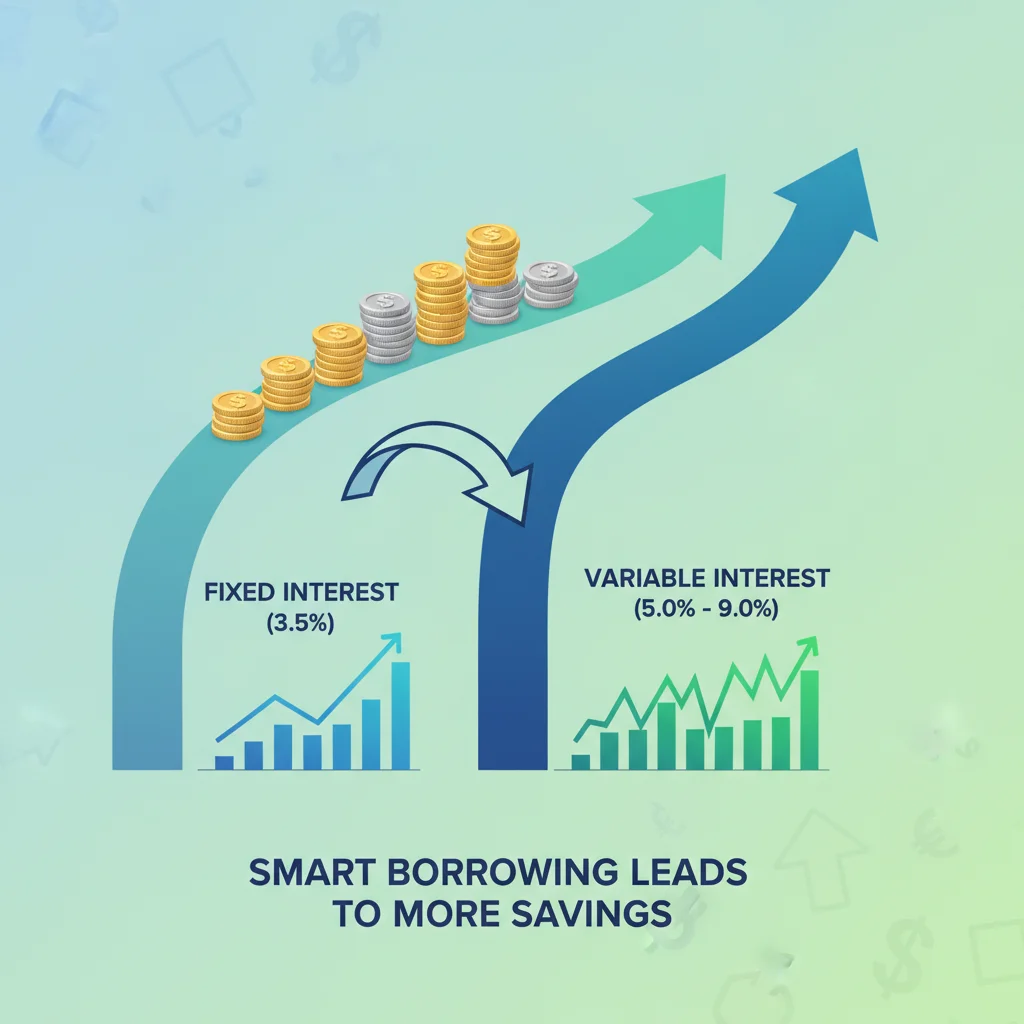
When a lender quotes you a rate 1% lower than your current loan, it can feel like a minor win — almost too small to matter. But interest doesn't work in a straight line. It compounds month after month against your remaining balance, which means the savings from a lower rate keep accumulating every single payment cycle for the entire life of the loan.
Think of it this way: your interest rate is applied to your outstanding principal, not to the original loan amount alone. Early in the loan, when your balance is highest, every fraction of a percent has the most leverage. That's exactly why refinancing earlier in a loan term tends to produce more savings than refinancing in the final year.
This article gives you the concrete numbers — across multiple loan balances, rates, and terms — so you can look at your own situation and know whether a rate reduction is actually worth pursuing. We'll also cover the market and personal conditions that tend to make a refinance genuinely worthwhile versus merely tempting.
| Savings on $30K loan (9% → 7%, 60 months) | ~$1,696 in total interest (Standard amortization calculation) |
| Monthly payment difference (same scenario) | ~$29 less per month (Standard amortization calculation) |
| Break-even calculation method | Total fees ÷ monthly savings = months to break even |
| Rate shopping window (single credit inquiry) | 14 days (FICO and VantageScore scoring models) |
| Credit score improvement that often unlocks a lower tier | 30–40 points (General lender practice; varies by institution) |
| Loan phase where refinancing saves most | First half of loan term (Due to front-loaded amortization interest structure) |
| Credit unions' typical rate advantage over banks | 1–2 percentage points (Industry average; varies by lender and profile) |
| Minimum rate reduction generally worth pursuing | 0.5% or more (depends on balance) (Rule of thumb; always verify with actual break-even math) |
The Savings Math: Rate Reductions Across Common Loan Scenarios
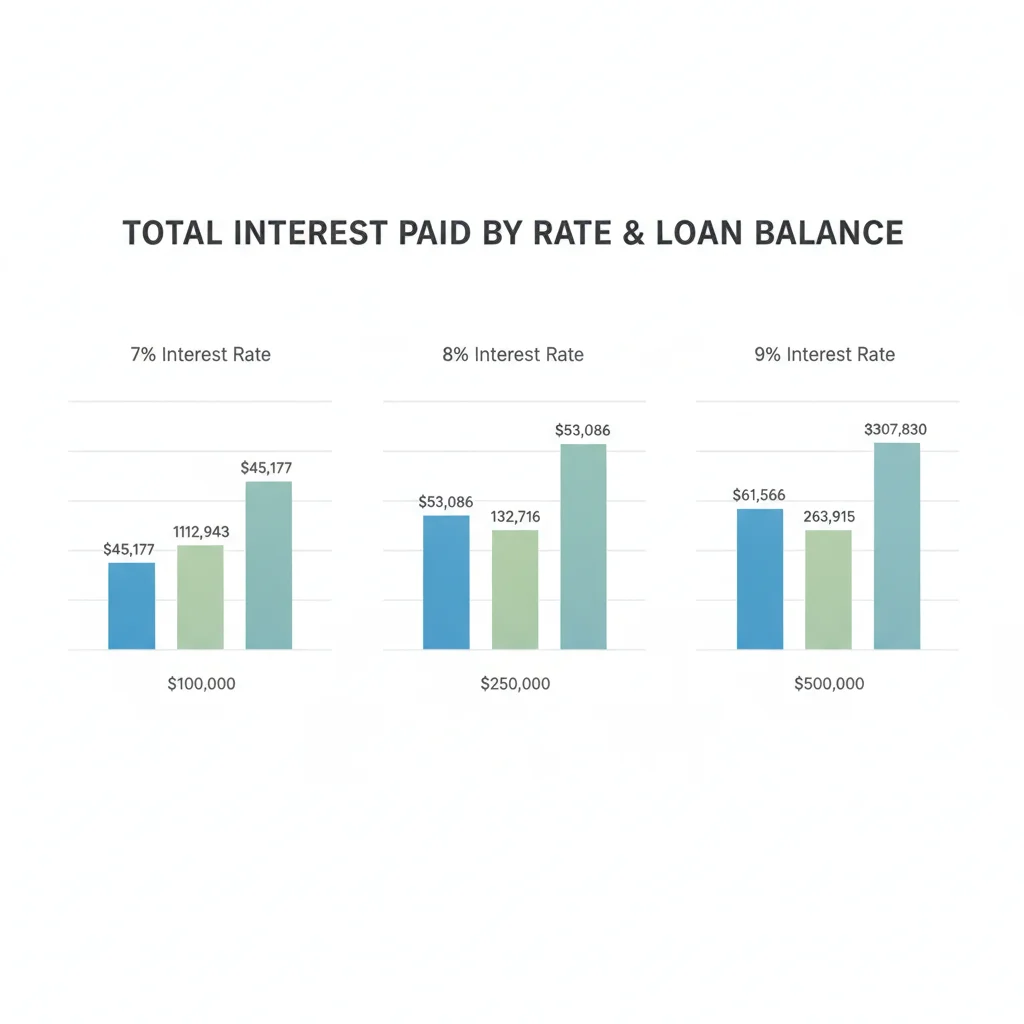
The table below shows the total interest paid at different rates on three common loan balances over 60-month (5-year) terms. Every number is calculated using standard amortization — the same math your lender uses.
| Loan Balance | Rate | Monthly Payment | Total Interest Paid |
|---|---|---|---|
| $20,000 | 9.00% | $415 | $4,900 |
| $20,000 | 8.00% | $405 | $4,332 |
| $20,000 | 7.00% | $396 | $3,769 |
| $30,000 | 9.00% | $623 | $7,350 |
| $30,000 | 8.00% | $608 | $6,497 |
| $30,000 | 7.00% | $594 | $5,654 |
| $40,000 | 9.00% | $830 | $9,800 |
| $40,000 | 8.00% | $811 | $8,663 |
| $40,000 | 7.00% | $792 | $7,538 |
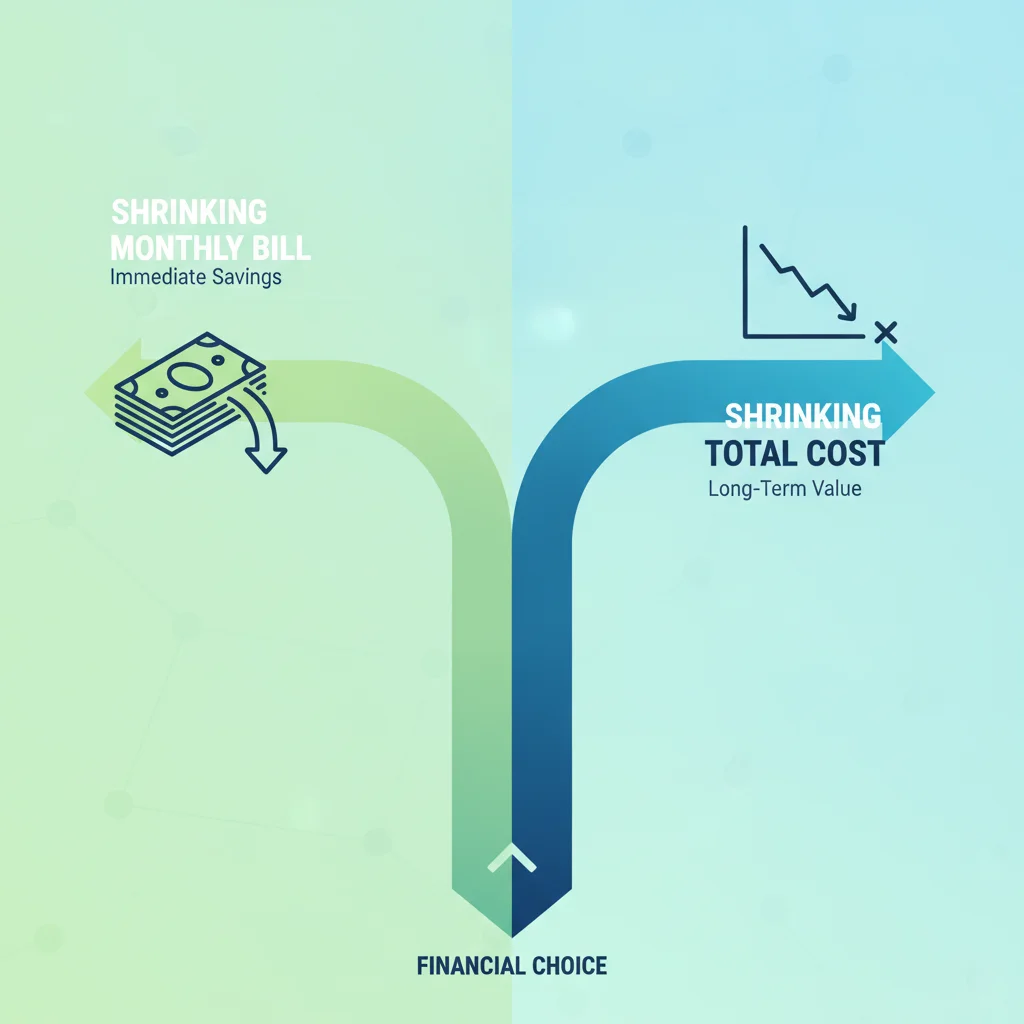
On a $30,000 loan, dropping from 9% to 7% saves you roughly $1,696 in total interest and cuts your monthly payment by $29. That $29 per month might not sound dramatic, but over 60 months it adds up to real money — and if you redirect those savings toward the principal, you can accelerate payoff even further. See how extra payments compound those savings in a related breakdown.
$1,696
Interest saved on $30K loan dropping 2 percentage points
Based on a 60-month term at 9% vs. 7% using standard amortization.
2%+
Typical rate difference between credit score tiers
Moving from a 620 to a 680 credit score can unlock 2 or more percentage points lower rate at many lenders.
$720
Savings on $35K loan from a 1% rate cut (48 months remaining)
Calculated using standard amortization on remaining balance and term.
14 days
Rate-shopping window for single credit inquiry treatment
FICO scoring models consolidate multiple auto loan inquiries within 14 days into one.
60%+
Share of early payments that go to interest on a new loan
Amortization front-loads interest, meaning refinancing earlier in a loan captures the most savings.
Loan term also amplifies or dampens rate savings. On a 72-month (6-year) loan, each percentage point costs more in absolute dollars because interest has more months to accumulate. Borrowers who stretched their term to lower monthly payments often find that refinancing to a shorter term at a lower rate is the most powerful double move available to them. But that involves a real trade-off — see the monthly payment vs. total interest trade-off before deciding.
What Drives Your Rate — and How Low You Can Realistically Go
Rate reductions don't fall from the sky. They come from two sources: market conditions (what lenders are charging borrowers in general right now) and personal conditions (what your credit profile, income, and loan-to-value ratio earn you specifically). Understanding both gives you a realistic target before you apply.
Amortization
The process of spreading loan payments over time so that each payment covers both interest and principal. Early payments are weighted heavily toward interest; later payments shift toward principal.
Annual Percentage Rate (APR)
The true yearly cost of a loan, expressed as a percentage. APR includes the interest rate plus any lender fees, making it the most accurate figure for comparing loan offers.
Loan-to-Value Ratio (LTV)
The ratio of your loan balance to the current market value of your car. A lower LTV means less lender risk and often qualifies you for better rates when refinancing.
Break-Even Period
The number of months it takes for your monthly savings from refinancing to offset the upfront costs of the refinance. If you keep the loan longer than this period, refinancing is financially beneficial.
Prepayment Penalty
A fee some lenders charge if you pay off or refinance your loan before the scheduled end date. Always check your original loan agreement for this clause before refinancing.
Rate Tier
A credit score band that lenders use to assign interest rates. Borrowers in higher tiers (better credit) receive lower rates; moving up even one tier can meaningfully reduce your rate.
Market Conditions That Signal a Refinance Window
When the Federal Reserve cuts the federal funds rate, auto loan rates typically follow within a few months — though lenders don't move in lockstep. If you originated your loan during a high-rate environment and rates have since dropped meaningfully (say, 1.5% or more), the market alone may have opened a profitable refinance window for you even if your personal credit hasn't changed at all.
Watch for: Fed rate cuts, lender promotional offers, and credit union specials targeted at refinance customers. Credit unions in particular often undercut banks by 1–2 percentage points on identical profiles.
Personal Conditions That Earn You a Better Rate
Your credit score is the single biggest personal lever. The impact of your credit score on loan rates is direct and measurable — lenders tier their rate sheets by score band. Moving from a 620 to a 680 can drop your offered rate by 2 full percentage points or more at many lenders.
- Credit score improvement: Even gaining 30–40 points since your original loan may qualify you for a meaningfully lower tier.
- Reduced loan-to-value (LTV): If your car has held its value and you've paid down principal, your LTV may now qualify you for better terms. Lenders reward lower risk.
- Stable income and employment: If your income has increased or your debt-to-income ratio improved, lenders see you as less risky.
- On-time payment history: Demonstrating 12+ months of clean payments on the existing loan is one of the most compelling signals you can show a refinance lender.
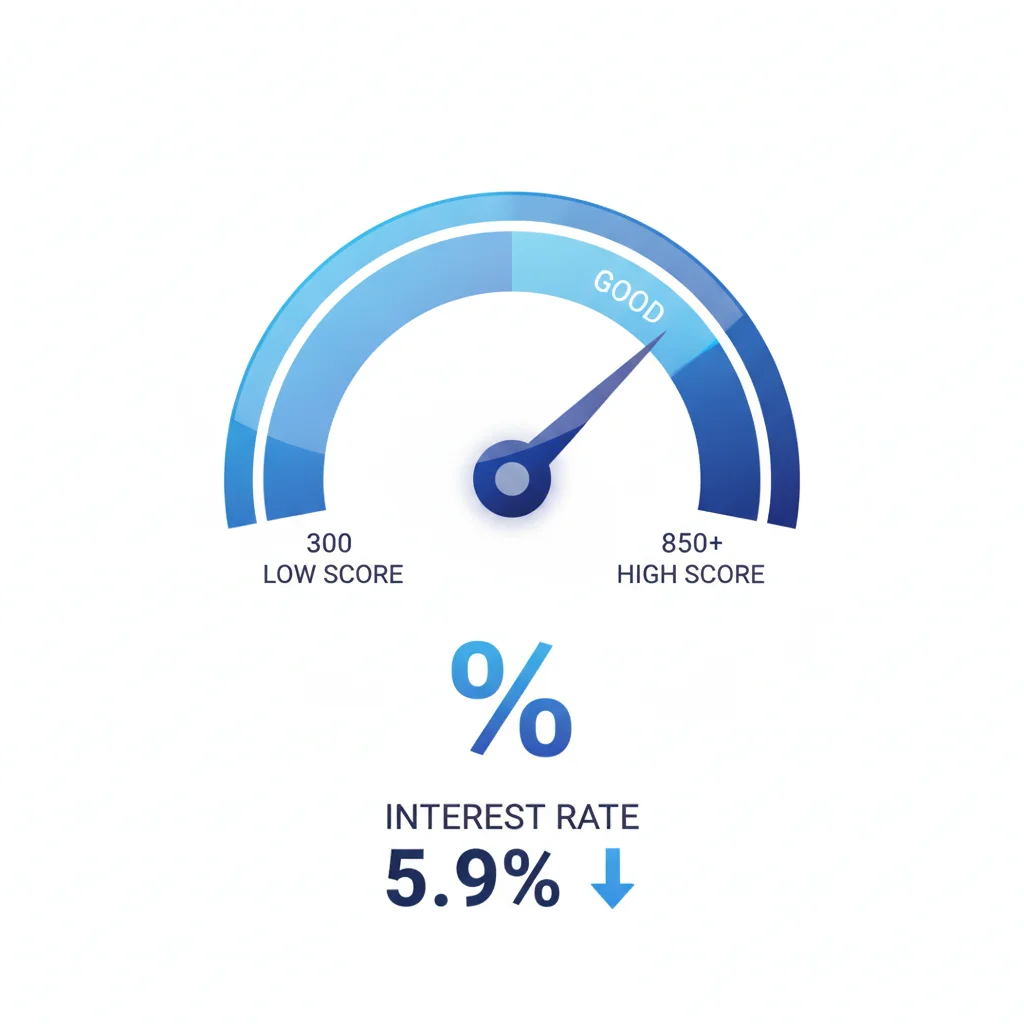
Understanding how interest rates and APR work together is essential before comparing offers. APR includes lender fees and is always the true cost comparison point — don't compare a quoted rate on one offer to the APR on another.
When a Rate Reduction Doesn't Make Sense
Not every rate drop is worth chasing. There are real scenarios where the math works against you even if the rate looks attractive on paper.
Don't Confuse Interest Rate With APR
Lenders sometimes advertise a low interest rate that doesn't include origination or documentation fees. The APR folds those costs in and reflects the true annual cost. Always ask for the APR — and compare APR to APR across lenders, never rate to APR. A loan with a 6.9% rate and $500 in fees may cost more than a 7.2% loan with no fees, depending on your term.
Negative Equity Can Block Refinancing
If you owe more on the car than it's worth — a situation called being 'underwater' or having negative equity — most lenders won't refinance at standard rates. This is especially common with long original terms and small down payments. Check your current balance against your car's current market value (using Kelley Blue Book or a similar tool) before applying, so you're not caught off guard.
You're Too Far Into the Loan
Amortization schedules front-load interest. In the first half of your loan, the majority of each payment goes toward interest. In the second half, that flips — more goes to principal. If you're in month 48 of a 60-month loan, there simply isn't enough remaining interest to save a meaningful amount. The break-even on refinancing fees may never arrive.
Fees Eat the Savings
Some lenders charge origination fees, title transfer fees, and prepayment penalties on the original loan. Always calculate a simple break-even: divide total refinancing costs by your monthly savings. If you plan to keep the car for fewer months than the break-even period, the refinance costs you money.
Example: You pay $400 in fees to save $22 per month. Break-even is 18 months. If you're planning to trade in the car in 12 months, you lose $136 net. If you're keeping it 36 more months, you net $392 ahead.
Extending the Term Offsets the Rate Savings
Refinancing from a 5-year loan (with 3 years left) into a new 5-year loan cuts your monthly payment but resets the clock. You'll likely pay more total interest than if you'd stayed the course — even at the lower rate. This is the most common trap borrowers fall into. The monthly number looks better; the lifetime number does not. Compare both before you sign anything.
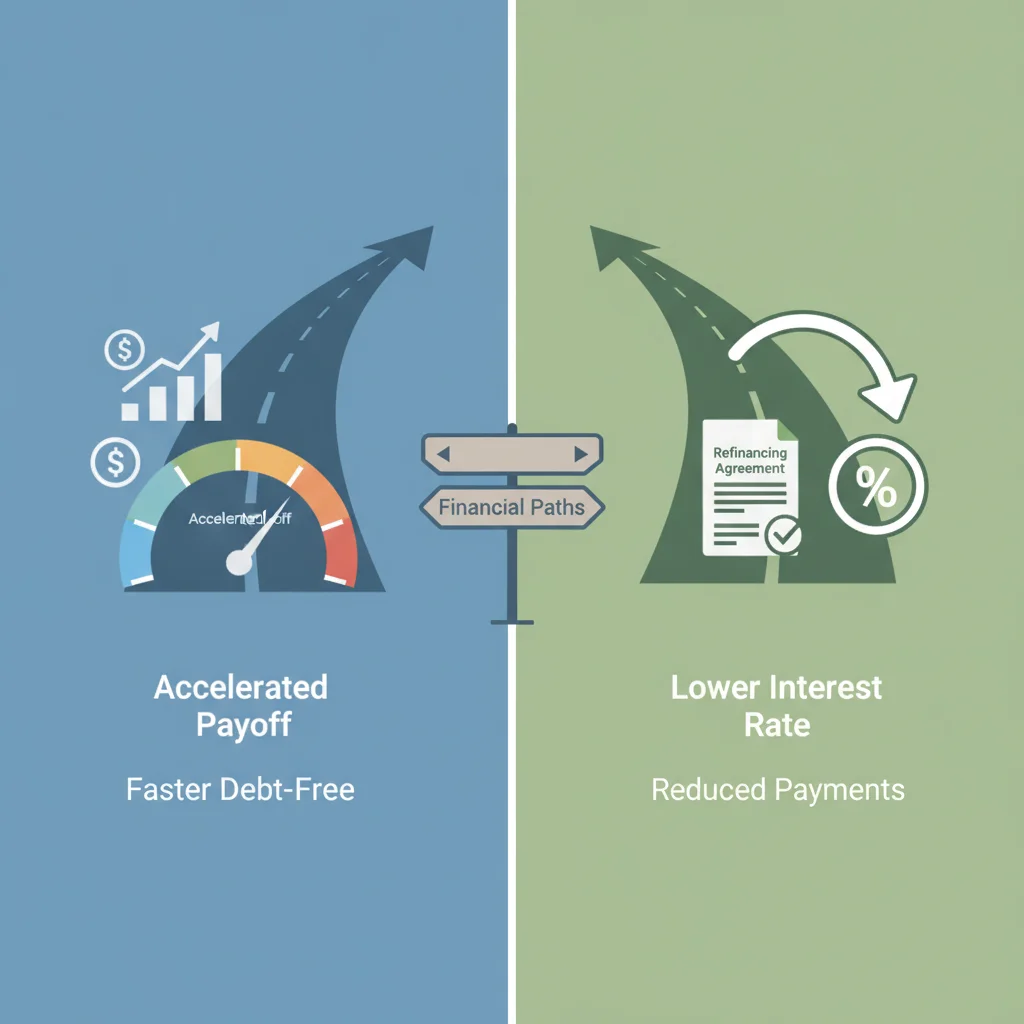
For a side-by-side comparison of accelerating payoff versus refinancing, see which path costs less in your situation.
How to Calculate Your Actual Savings Before You Apply
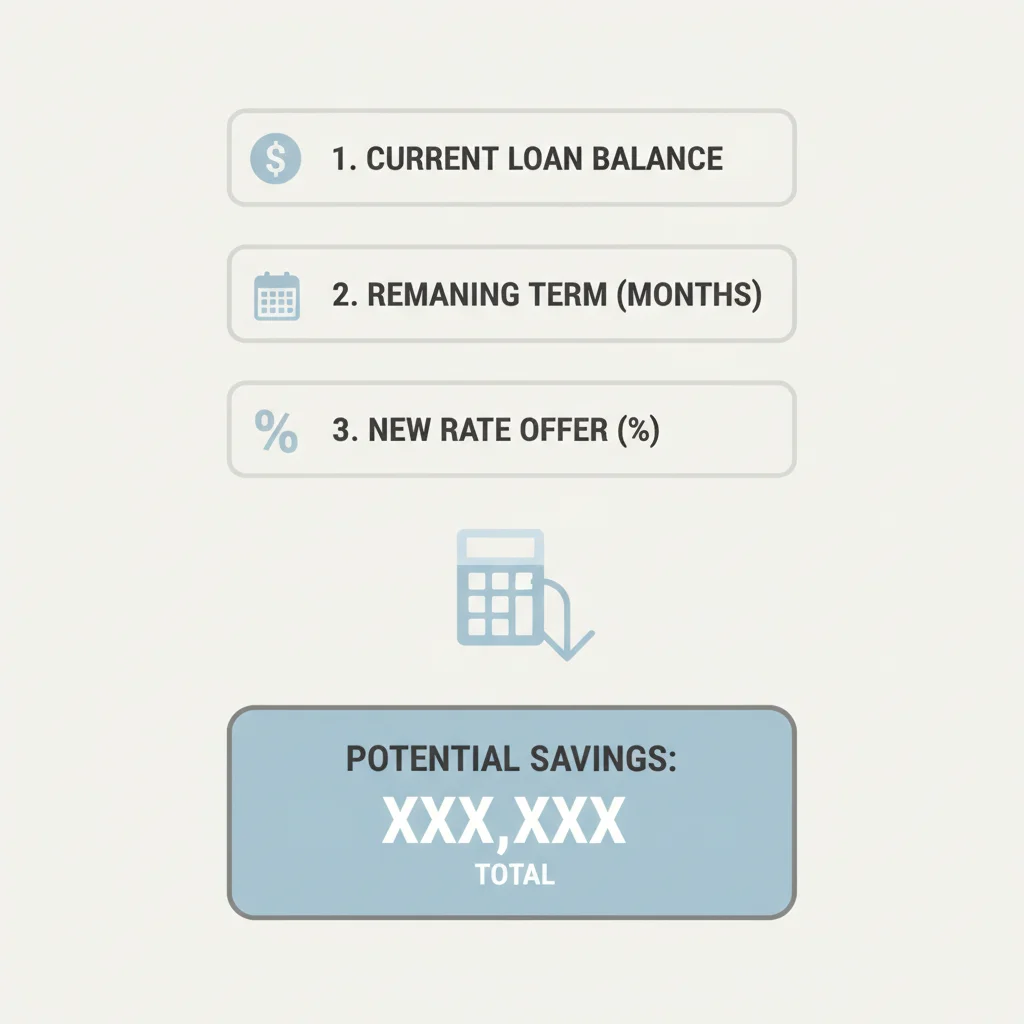
Before approaching any lender, run your own numbers. You don't need a finance degree — just three inputs and a free online amortization calculator.
- Your current payoff balance: Call your lender or check your online account. This is not your original loan amount; it's what you owe today.
- Your remaining term: How many months are left on your existing loan.
- The new rate being offered: Get a real pre-qualification quote — not a teaser rate — so you're comparing apples to apples.
Plug these into an amortization calculator twice: once with your current rate and once with the new rate, both set to your remaining balance and remaining term. The difference in total interest is your gross savings. Subtract any refinancing fees to get your net savings.
Also consider your down payment position and equity if you recently purchased. Borrowers who put less down upfront may be in a negative equity situation, which complicates refinancing. How much you put down shapes your refinancing options more than most buyers realize.
Don't Confuse Interest Rate With APR
Lenders sometimes advertise a low interest rate that doesn't include origination or documentation fees. The APR folds those costs in and reflects the true annual cost. Always ask for the APR — and compare APR to APR across lenders, never rate to APR. A loan with a 6.9% rate and $500 in fees may cost more than a 7.2% loan with no fees, depending on your term.
Negative Equity Can Block Refinancing
If you owe more on the car than it's worth — a situation called being 'underwater' or having negative equity — most lenders won't refinance at standard rates. This is especially common with long original terms and small down payments. Check your current balance against your car's current market value (using Kelley Blue Book or a similar tool) before applying, so you're not caught off guard.
One Rate Point vs. Half a Point: Does the Difference Matter?
Yes — and it scales with your balance. On a $15,000 loan with 36 months remaining, a 1% rate reduction saves roughly $230 total. On a $35,000 loan with 48 months remaining, that same 1% reduction saves closer to $720. Even a 0.5% improvement produces real money at higher balances. See the detailed half-point APR breakdown with specific scenarios across common loan sizes.
Taking Action: What to Do With This Information
The readers who extract the most value from a rate reduction are the ones who treat it as a system, not a lucky break. Here's what that looks like in practice.
Step 1: Know Your Current Rate and Balance Today
Pull your loan statement. Write down your current APR, remaining balance, and months left. This becomes your baseline. Every offer you receive gets compared to this baseline — not to what you originally borrowed or what you originally paid.
Step 2: Check Your Credit Score Before Shopping
Your score determines which rate tier you'll qualify for. Check it through your bank or a free monitoring service. If your score has improved 40+ points since you originated the loan, you likely qualify for a better rate tier today. If it's declined, focus on improving it before applying — a hard inquiry at a lower score tier can lock you into a worse rate than you have now.
Step 3: Get at Least Three Quotes
Rate shopping for auto loans within a 14-day window typically counts as a single inquiry with most credit scoring models, so there's no reason not to compare. Contact your current lender, a credit union, and at least one online lender. Present each with the same information and compare APRs — not quoted rates.
Step 4: Run the Break-Even Before You Sign
Total fees ÷ monthly savings = months to break even. If you'll own the car longer than the break-even period, refinancing is mathematically in your favor. If not, walk away and revisit when conditions change.
Auto Loan Amortization Calculator
Enter your balance, rate, and term to see a full payment schedule showing exactly how much of each payment goes to interest vs. principal — and how a lower rate changes those numbers.
Kelley Blue Book Vehicle Valuation
Check your car's current market value before refinancing. Knowing your LTV helps you understand whether you qualify for standard refinance terms and which lenders to approach.
Annual Credit Report (AnnualCreditReport.com)
Pull your free credit report from all three bureaus before rate shopping. Errors on your report can suppress your score and cost you a better rate tier.
Credit Union Rate Comparison Guide
Credit unions routinely offer lower auto loan rates than banks for the same borrower profile. This guide explains how to find and join a credit union that offers competitive refinance rates in your area.
Rate reductions are rarely life-changing in isolation — but combined with disciplined payoff behavior, even modest additional payments on your newly refinanced loan can compound the savings further. The goal isn't just a lower rate — it's the lowest total cost of ownership over the time you hold the loan.

All claims are backed by peer-reviewed research. Sources on request.