| Shortest common term | 36 months |
| Longest common term | 84 months |
| Most popular term (new cars) | 72 months (Experian State of the Automotive Finance Market, Q4 2023) |
| Average new car APR (all credit tiers) | ~7.1% (Experian State of the Automotive Finance Market, Q4 2023) |
| Average used car APR (all credit tiers) | ~11.6% (Experian State of the Automotive Finance Market, Q4 2023) |
| Interest calculation method | Simple interest (standard for U.S. auto loans) |
Why Loan Term Length Changes Everything
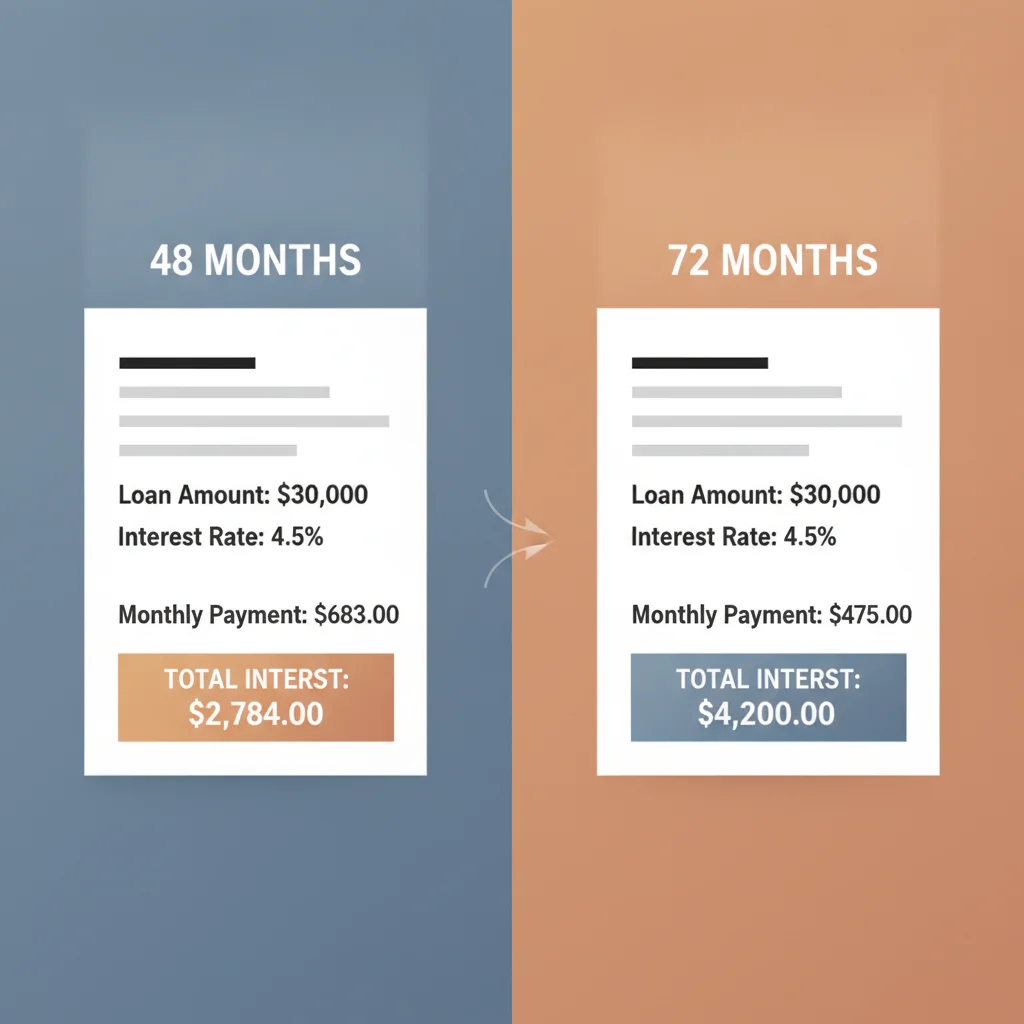
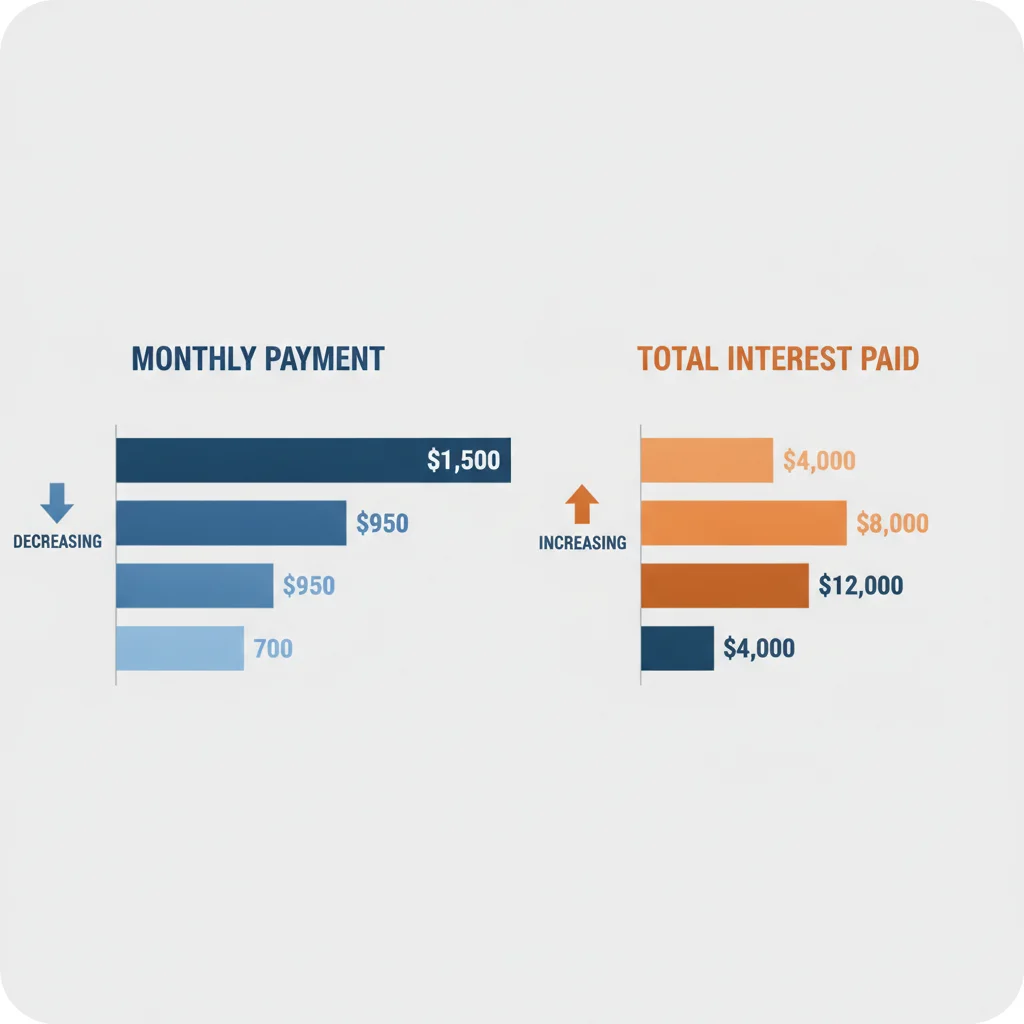
When you finance a car, the monthly payment gets most of the attention. But the loan term — how many months you take to pay it off — quietly determines how much you hand over to the lender in total. Stretching a loan from 36 months to 84 months can cut your monthly payment by hundreds of dollars while doubling your total interest paid. That trade-off deserves a hard look before you sign.
This reference page gives you the actual numbers. Below you'll find lookup tables covering the most common loan amounts ($15,000 to $45,000), standard loan terms (36, 48, 60, 72, and 84 months), and a range of APRs (4% to 12%). Every figure is calculated using standard amortization — no rounding tricks, no teaser rates.
Before diving in, two quick definitions that anchor everything on this page:
Loan Term
The number of months you agree to repay a loan. Common auto loan terms are 36, 48, 60, 72, and 84 months. Longer terms lower monthly payments but increase the total interest you pay.
APR (Annual Percentage Rate)
The yearly cost of borrowing expressed as a percentage, including interest and certain fees. APR is the standard comparison metric between loan offers — a higher APR means a more expensive loan.
Total Interest Paid
The sum of all interest charges over the entire loan term. Calculated as (monthly payment × number of months) minus the original loan principal.
Amortization
The process of spreading loan repayments across scheduled installments. In early payments, most of each payment covers interest; over time, more of each payment goes toward reducing the principal balance.
Principal
The original amount of money borrowed, before any interest is added. A larger down payment reduces principal, which directly reduces the total interest you will pay.
Finance Charge
The total dollar amount a loan costs you above the principal — essentially the total interest paid. Lenders are required to disclose this figure under the Truth in Lending Act.
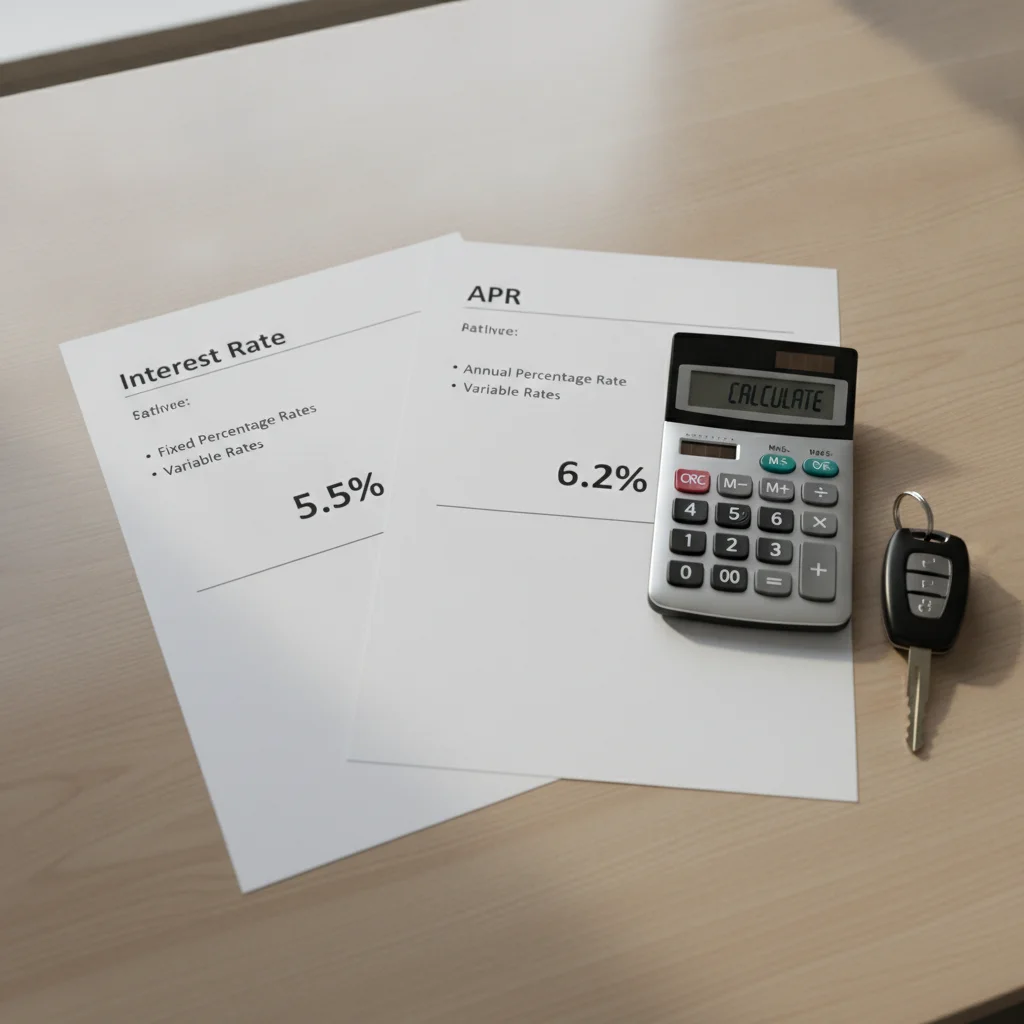
If you're unsure how APR differs from the interest rate quoted on your loan offer, see our plain-English breakdown of APR vs. interest rate — it's the more accurate cost comparison tool between competing offers.
Reference Tables: Total Interest Paid by Term, APR, and Loan Amount
Each table below shows total interest paid over the life of the loan for a given principal balance. Monthly payments appear in parentheses. Use these tables to find your loan amount, then scan across terms and down APR rows to see the full cost picture.
| Shortest common term | 36 months |
| Longest common term | 84 months |
| Most popular term (new cars) | 72 months (Experian State of the Automotive Finance Market, Q4 2023) |
| Average new car APR (all credit tiers) | ~7.1% (Experian State of the Automotive Finance Market, Q4 2023) |
| Average used car APR (all credit tiers) | ~11.6% (Experian State of the Automotive Finance Market, Q4 2023) |
| Interest calculation method | Simple interest (standard for U.S. auto loans) |
$15,000 Loan Amount
| APR | 36 months | 48 months | 60 months | 72 months | 84 months |
|---|---|---|---|---|---|
| 4% | $938 ($443/mo) | $1,252 ($336/mo) | $1,572 ($276/mo) | $1,899 ($248/mo) | $2,232 ($205/mo) |
| 6% | $1,422 ($456/mo) | $1,901 ($352/mo) | $2,399 ($290/mo) | $2,916 ($249/mo) | $3,451 ($220/mo) |
| 8% | $1,918 ($469/mo) | $2,573 ($368/mo) | $3,254 ($305/mo) | $3,963 ($276/mo) | $4,699 ($235/mo) |
| 10% | $2,424 ($484/mo) | $3,258 ($384/mo) | $4,122 ($319/mo) | $5,019 ($279/mo) | $5,947 ($249/mo) |
| 12% | $2,940 ($498/mo) | $3,956 ($415/mo) | $5,006 ($334/mo) | $6,094 ($293/mo) | $7,218 ($264/mo) |
$25,000 Loan Amount
| APR | 36 months | 48 months | 60 months | 72 months | 84 months |
|---|---|---|---|---|---|
| 4% | $1,563 ($738/mo) | $2,087 ($564/mo) | $2,620 ($460/mo) | $3,165 ($392/mo) | $3,720 ($341/mo) |
| 6% | $2,371 ($760/mo) | $3,168 ($585/mo) | $3,998 ($483/mo) | $4,860 ($415/mo) | $5,752 ($366/mo) |
| 8% | $3,197 ($784/mo) | $4,288 ($613/mo) | $5,425 ($509/mo) | $6,604 ($444/mo) | $7,826 ($392/mo) |
| 10% | $4,040 ($808/mo) | $5,430 ($640/mo) | $6,870 ($531/mo) | $8,365 ($450/mo) | $9,912 ($416/mo) |
| 12% | $4,899 ($833/mo) | $6,594 ($680/mo) | $8,344 ($556/mo) | $10,157 ($502/mo) | $12,030 ($476/mo) |
$35,000 Loan Amount
| APR | 36 months | 48 months | 60 months | 72 months | 84 months |
|---|---|---|---|---|---|
| 4% | $2,188 ($1,033/mo) | $2,921 ($790/mo) | $3,668 ($644/mo) | $4,430 ($549/mo) | $5,208 ($478/mo) |
| 6% | $3,319 ($1,064/mo) | $4,435 ($819/mo) | $5,597 ($676/mo) | $6,804 ($582/mo) | $8,053 ($513/mo) |
| 8% | $4,475 ($1,097/mo) | $6,003 ($858/mo) | $7,595 ($713/mo) | $9,246 ($622/mo) | $10,956 ($548/mo) |
| 10% | $5,656 ($1,131/mo) | $7,602 ($896/mo) | $9,618 ($743/mo) | $11,711 ($630/mo) | $13,877 ($582/mo) |
| 12% | $6,858 ($1,166/mo) | $9,232 ($942/mo) | $11,682 ($779/mo) | $14,219 ($703/mo) | $16,842 ($666/mo) |
$45,000 Loan Amount
| APR | 36 months | 48 months | 60 months | 72 months | 84 months |
|---|---|---|---|---|---|
| 4% | $2,813 ($1,328/mo) | $3,756 ($1,016/mo) | $4,716 ($828/mo) | $5,696 ($706/mo) | $6,696 ($614/mo) |
| 6% | $4,268 ($1,369/mo) | $5,703 ($1,053/mo) | $7,197 ($870/mo) | $8,748 ($748/mo) | $10,354 ($659/mo) |
| 8% | $5,754 ($1,410/mo) | $7,718 ($1,102/mo) | $9,764 ($916/mo) | $11,888 ($797/mo) | $14,086 ($703/mo) |
| 10% | $7,272 ($1,453/mo) | $9,774 ($1,148/mo) | $12,366 ($956/mo) | $15,057 ($810/mo) | $17,843 ($748/mo) |
| 12% | $8,817 ($1,499/mo) | $11,870 ($1,206/mo) | $15,019 ($1,001/mo) | $18,281 ($903/mo) | $21,653 ($855/mo) |
To understand the mechanics behind these totals — specifically how each payment splits between principal and interest over time — see our guide on reading an auto loan amortization schedule.
What the Numbers Actually Mean for Your Decision
The tables above make one pattern impossible to ignore: extending your loan term reduces monthly payments but dramatically increases total interest paid. Here's how to interpret what you're seeing.
$6,481
Extra interest on 84-month vs. 36-month term
Based on a $35,000 loan at 8% APR — the cost of choosing the longest common term over the shortest.
72 months
Most common new car loan term in 2023
According to Experian's State of the Automotive Finance Market report, Q4 2023.
2.4x
Interest cost multiplier from 36 to 84 months at 10% APR
On a $25,000 loan, total interest grows from $4,040 to $9,912 as the term extends from 36 to 84 months.
$549/mo
Monthly payment savings from 36 to 84 months at 8%
On a $35,000 loan at 8% APR — but that saving comes at the cost of $6,481 more in total interest.
The Monthly Payment Illusion
Consider a $35,000 loan at 8% APR. On a 36-month term, you pay $1,097 per month and $4,475 in total interest. On an 84-month term, the payment drops to $548 — a savings of $549 per month — but total interest climbs to $10,956. That's an extra $6,481 paid to the lender simply for the privilege of smaller monthly checks.
This is why monthly payment shopping is one of the most expensive habits a car buyer can develop. Dealers and lenders know buyers focus on what feels affordable right now. The tables above let you see past that frame.
APR Amplifies the Term Effect
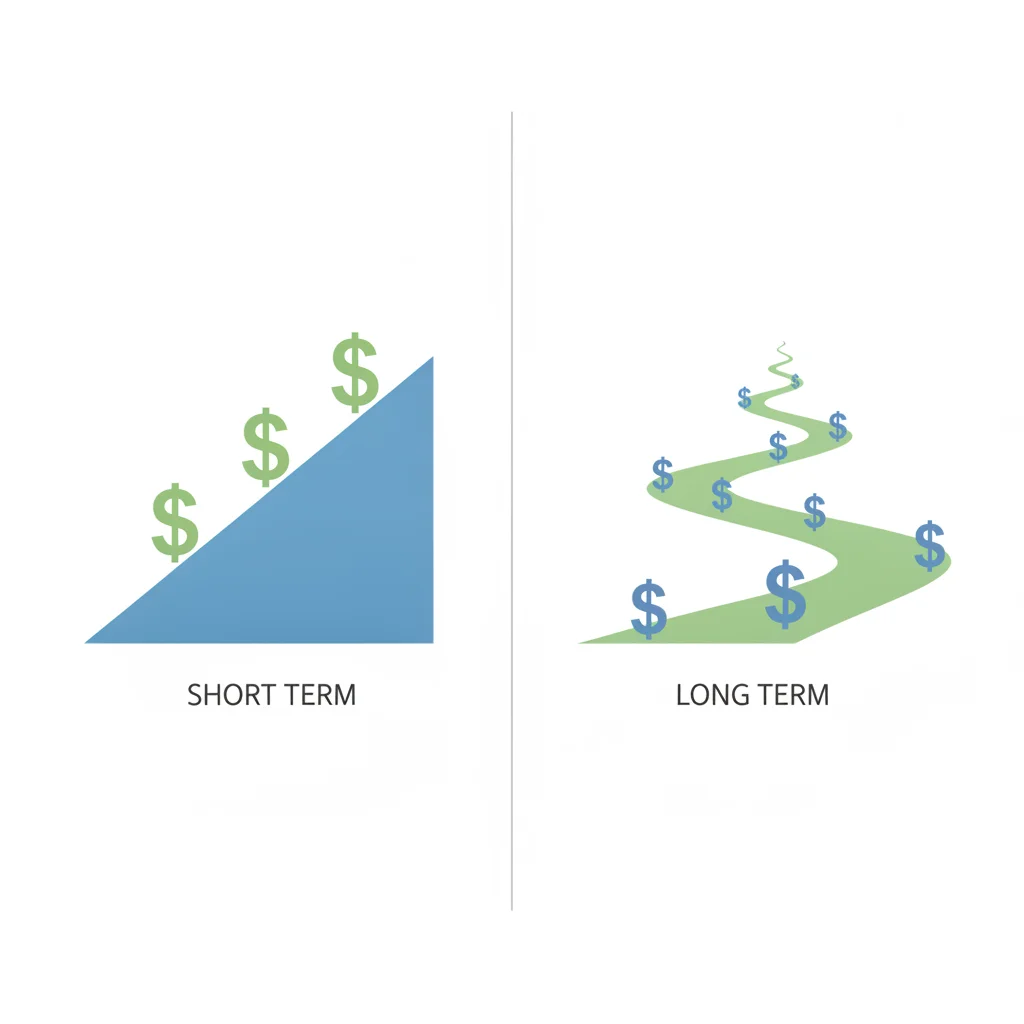
The higher your APR, the more painfully the term length compounds. At 4% APR on a $25,000 loan, going from 36 to 84 months costs you an additional $2,157 in interest. At 12% APR on the same balance, that same term extension costs you an additional $7,131. Higher rates make longer terms even more expensive — a dynamic our article on the trade-off between loan term length and APR covers in depth.
The 60-Month Sweet Spot
For most buyers, the 60-month term tends to balance affordability with reasonable interest cost. It's not the cheapest option (36 months is), and it's not the lowest monthly payment (84 months is), but it sits close to the middle on both axes. That said, "sweet spot" is personal. If you're financing a used car at a higher rate, or you're worried about being underwater on the loan, shorter is almost always better. For a deeper look at how to weigh each term option, see 36, 48, 60, 72, 84 Months: Choosing the Right Auto Loan Length.
How Your Down Payment Changes These Totals
Every dollar you put down upfront is a dollar you don't pay interest on. A $5,000 down payment on a $35,000 purchase turns this into a $30,000 loan — shifting you to a lower row in every table above. If you're on the fence between a 60- and 72-month term, a larger down payment can make the shorter term affordable. Learn more about how down payment size shapes your overall loan structure at our Down Payments hub.
These Tables Assume No Fees or Add-Ons
All interest totals shown are calculated on the stated principal at the listed APR, with no additional fees, dealer reserve, or financed add-ons included. If you roll GAP insurance, an extended warranty, or a documentation fee into your loan, your actual principal — and therefore your total interest — will be higher than what appears here. Always confirm your financed amount before signing.
How to Use These Tables as a Negotiating Tool
Most buyers walk into financing negotiations knowing only their target monthly payment. Armed with these tables, you can flip that dynamic. Here's a practical approach:
- Find your loan amount. Subtract your down payment (and trade-in value, if applicable) from the vehicle price. That's your principal.
- Get your APR range. Check your credit score before shopping — most lenders pre-qualify without a hard inquiry. Your credit tier will roughly correspond to an APR range. Our auto loan interest glossary defines key terms you'll see on any loan offer.
- Look up two or three term options in the table matching your principal and APR. Write down the total interest figure for each.
- Calculate the break-even on a shorter term. If the 60-month payment is $60 more per month than the 72-month payment, but saves you $1,800 in total interest, that $60/month is working hard. Conversely, if cash flow is genuinely tight, knowing the exact cost of going longer helps you make a conscious choice rather than an uninformed one.
- Push back on term extensions at the dealer. If a finance manager suggests stretching to 72 or 84 months to hit a monthly payment target, you now have the total interest cost in front of you. Ask directly: "What does that cost me in total interest versus 60 months?" Lenders who resist that question deserve skepticism.

One final note: the tables on this page assume a fixed APR with no fees rolled in. Real-world loans sometimes include origination fees, dealer reserve markups, or add-on products (extended warranties, GAP insurance) that inflate the effective cost. Always confirm that the APR you're quoted reflects all finance charges — not just the base interest rate. See our companion article on APR vs. interest rate on a car loan to understand why this distinction matters.
36–84 Month Loan Term Guide
A detailed walkthrough of how each standard auto loan term affects monthly payments, total cost, and your financial flexibility. Essential reading before choosing a term.
Auto Loan Interest Glossary
Plain-English definitions of every term you'll encounter on a loan offer — APR, amortization, finance charge, and more. Use it to decode any contract.
Auto Loan Amortization Schedule Guide
Learn to read your amortization table payment by payment so you always know how much is going to principal vs. interest at any point in your loan.
Down Payments Hub
Understand how your down payment size directly reduces the principal you finance — and therefore every interest total in these tables.

All claims are backed by peer-reviewed research. Sources on request.