Key Takeaways
Preserves cash for emergencies or investments
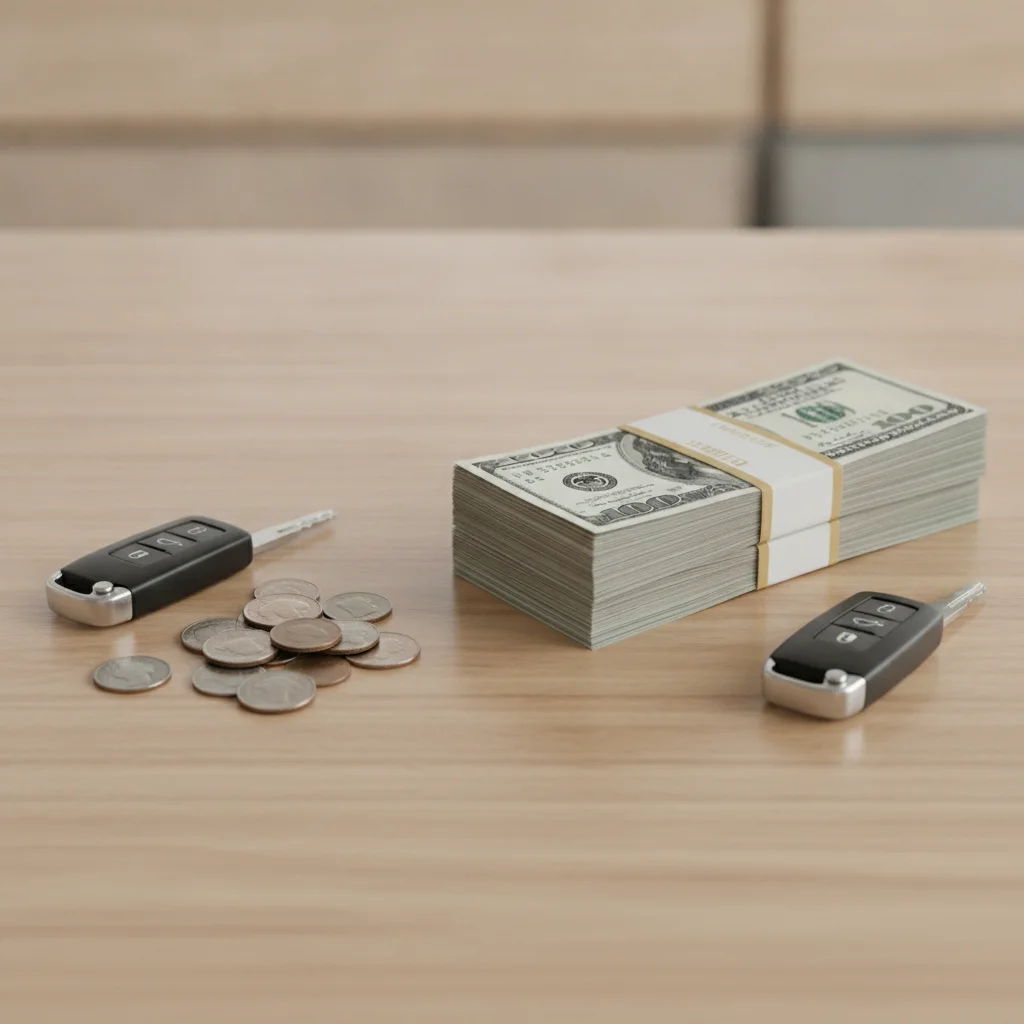
Keeping $3,000–$6,000 liquid means you have a financial cushion for unexpected expenses, which can matter more than reducing a car loan if your savings are modest.
Allows purchase when ready, not when saved up
For buyers who need a reliable vehicle now — for a new job or to replace a failed car — waiting 6–12 months to save a down payment may not be practical.
Works well with 0% APR manufacturer promotions
When a manufacturer offers genuine 0% financing, putting money down only reduces the principal without earning you any rate benefit — your dollars may work harder elsewhere.
Avoids tying capital to a depreciating asset
If your loan rate is lower than the return you could earn on savings or investments, keeping cash deployed elsewhere is a rational financial decision.
Accessible with strong credit and short terms
Borrowers with credit scores above 720 who choose 36–48 month terms can limit the negative equity window and keep total interest costs relatively contained.
Higher total interest paid over loan life
Financing the full purchase price — plus taxes and fees — means interest accrues on a larger principal from day one, adding hundreds to thousands of dollars in total cost.
Lenders often charge higher APRs
With no borrower equity as a cushion, lenders price in additional risk, frequently raising the interest rate by 0.5–1.5 percentage points compared to a loan with a standard down payment.
Immediate negative equity on new vehicles
New cars lose 15–25% of value in the first year. With zero equity at signing, borrowers are almost certainly upside down within months, sometimes by thousands of dollars.
Insurance gap risk if the car is totaled
Standard auto insurance pays market value at the time of loss — not your loan balance. Without GAP coverage, borrowers can owe thousands after a total loss.
Rolling fees in further inflates the loan
Taxes, title, and documentation fees often get bundled into a zero-down deal, meaning the financed amount can exceed the vehicle's actual sale price by $1,500–$3,000 or more.
Tempts buyers toward longer, costlier loan terms
Without a down payment to lower the principal, monthly payments on shorter terms can feel unaffordable, pushing buyers toward 72- or 84-month loans that dramatically increase total cost.
Creates a trade-in trap if plans change
Buyers who trade in before the loan is paid off while carrying negative equity must roll that deficit into the next loan, compounding their financial exposure with each vehicle switch.
Our Verdict
Zero-down auto loans are a genuine option for buyers with excellent credit, stable income, and a plan to either keep the car long-term or pay it off quickly. For everyone else — particularly those with limited credit history, tight budgets, or a tendency to trade in early — skipping the down payment trades short-term convenience for long-term financial exposure. The monthly payment looks manageable until you factor in a higher rate, a longer payoff timeline, and the real risk of owing more than the car is worth.
Best for borrowers with a credit score above 720 who qualify for a competitive rate, choose a loan term of 48 months or fewer, and plan to keep the vehicle until it's fully paid off.
What Zero-Down Financing Actually Means
A zero-down auto loan is exactly what it sounds like: you finance 100% of the vehicle's purchase price — and sometimes more, once taxes, title, registration, and dealer fees are rolled in. You leave the dealership without writing a check, and the lender covers everything upfront.
That sounds simple, but there's a mechanical reality underneath it. When you put money down on a car, you're immediately reducing the principal — the amount the lender has to cover. That lower principal means less interest accrues over the life of the loan, and it also means the lender faces less risk if the car loses value and you default. Without that buffer, the lender is exposed from day one.
To understand the full picture, it helps to know what a car down payment actually does to your loan — because it isn't just about the monthly payment. It reshapes the risk profile, the interest calculation, and your equity position from the moment you sign.
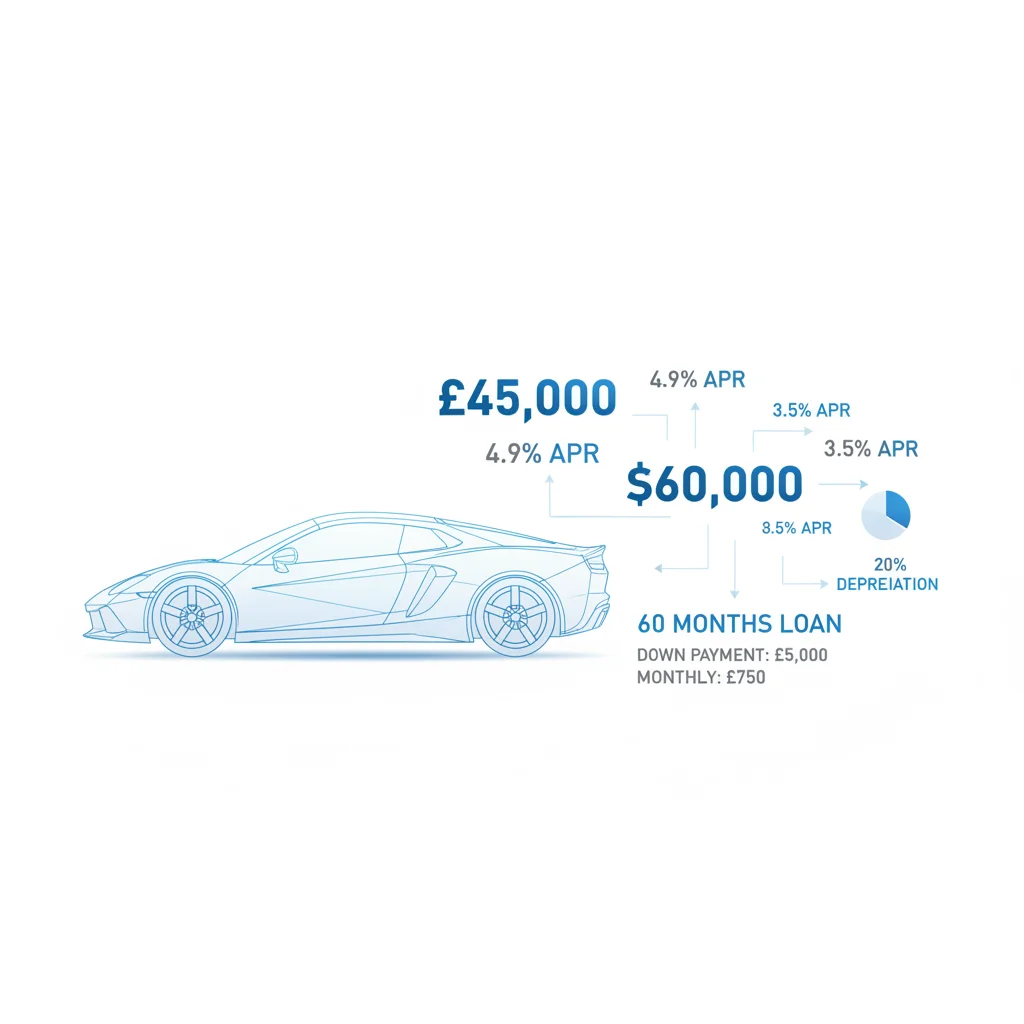
Zero-down loans are widely advertised, especially during manufacturer-sponsored sales events. But availability doesn't mean suitability. The question isn't whether you can get one — it's whether the terms you'll actually receive justify skipping the upfront payment.
The Real Cost of Borrowing More
Let's use concrete numbers. Say you're buying a $32,000 vehicle. With a $5,000 down payment and a 6.5% APR on a 60-month loan, your principal is $27,000. Your monthly payment comes to roughly $528, and you'll pay about $4,680 in total interest.
Now remove that $5,000 down payment. Your principal jumps to $32,000 — plus let's say $1,800 in taxes and fees that also get rolled in, bringing your financed amount to $33,800. At the same 6.5% APR over 60 months, your monthly payment is about $660, and your total interest climbs to nearly $5,860. That's roughly $1,180 more in interest alone — not counting the $5,000 you didn't put down.
20%
Average new car depreciation in year one
Edmunds data consistently shows new vehicles lose roughly 15–25% of their value within the first 12 months of ownership, depending on the make and model.
32%
Share of new car loans with negative equity at signing
According to Edmunds' 2023 industry analysis, nearly one in three new vehicle buyers carried negative equity from a trade-in into their new loan, amplifying the risk of zero-down financing.
$6,000+
Average negative equity rolled into new loans
Among buyers who had negative equity in their trade-in, Edmunds found the average deficit carried forward exceeded $6,000 — a figure that worsens considerably when no down payment is made.
84 months
Longest common auto loan term now offered
Seven-year auto loans have become increasingly common as lenders work to make high-priced, zero-down deals appear affordable on a monthly basis, according to Experian's State of the Automotive Finance Market.
Now add the rate increase. Lenders view zero-down loans as higher risk, so many will bump your APR — sometimes by 0.5 to 1.5 percentage points — if you're not putting anything down. If your rate moves from 6.5% to 7.5% on that same $33,800, total interest rises to about $6,785. You can see how fast the gap widens.
For a side-by-side breakdown, no down payment vs. 20% down: a real-world cost comparison maps out these differences in precise detail. The numbers make the argument more clearly than any general principle can.
The Negative Equity Trap
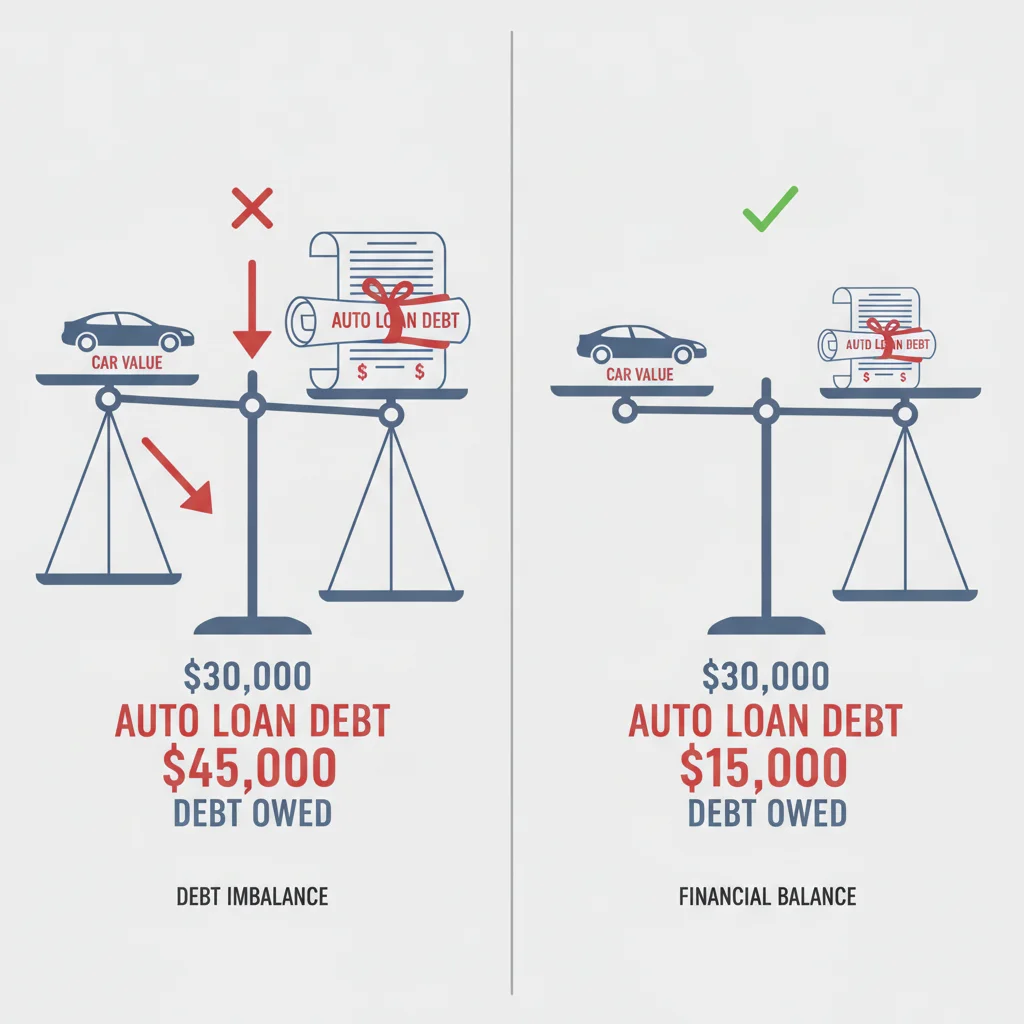
Here's the risk most buyers underestimate: a new car depreciates roughly 15–25% in its first year of ownership. On a $32,000 car, that's a loss of $4,800 to $8,000 in value — just in year one. If you financed the entire purchase price, you almost certainly owe more than the car is worth before the first 12 months are up. That's called being upside down, or carrying negative equity.
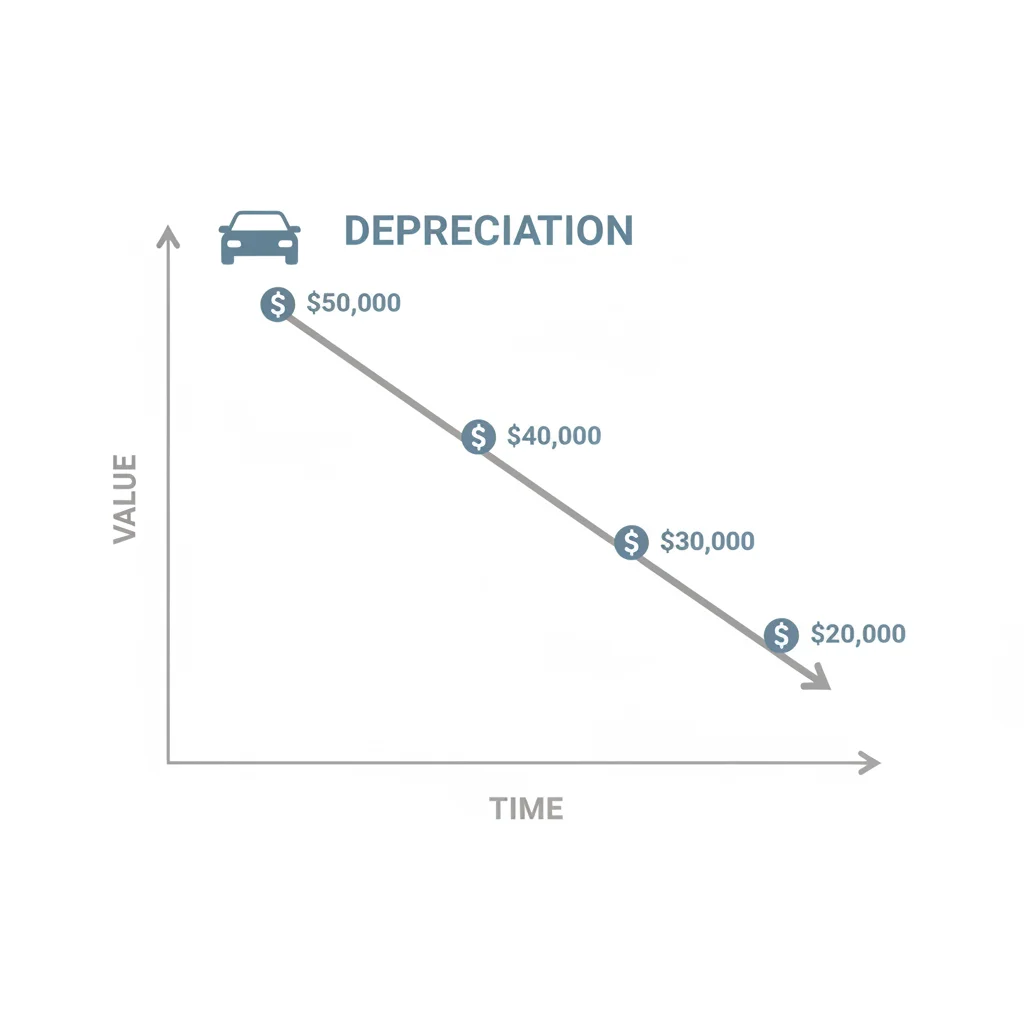
Negative equity becomes a real problem in three scenarios:
- Your car is totaled or stolen. Your insurer pays market value — not your loan balance. If you owe $28,000 and the car is worth $22,000, you're still on the hook for $6,000.
- You need to trade in early. Dealers don't absorb your negative equity — they roll it into your next loan, compounding the problem.
- You can no longer afford the payments. Selling the car won't cover the loan, so you're stuck paying the difference out of pocket or damaging your credit through default.
The upside-down car loan problem and how down payments prevent it explains in detail how equity works as a buffer — and why a down payment of even 10% can keep you above water through the steepest part of the depreciation curve.
GAP Insurance: Buy It Separately
GAP insurance offered at the dealership is often marked up 200–400% over what you'd pay through your auto insurer or a credit union. If you're financing without a down payment, call your insurance provider before you sign and ask what GAP coverage costs on your policy. In most cases, it's $20–$40 per year added to your premium — versus $400–$800 rolled into the dealer's loan.
When Zero Down Makes Mathematical Sense
The math occasionally does favor zero-down financing — specifically when a manufacturer's 0% APR promotion is genuine and no cash-back incentive is being sacrificed to access it. In those cases, putting money down only reduces the principal without improving your rate, so your dollars may genuinely work harder sitting in a high-yield savings account. Always confirm whether accepting the 0% rate means forgoing a rebate, which can easily be worth $1,500–$3,000.
Pros of Zero-Down Auto Loans
Zero-down financing isn't automatically a bad deal. There are specific circumstances where it makes legitimate sense, and it's worth understanding why buyers — and sometimes financial advisors — consider it a viable tool.
Preserves cash for emergencies or investments
Keeping $3,000–$6,000 liquid means you have a financial cushion for unexpected expenses, which can matter more than reducing a car loan if your savings are modest.
Allows purchase when ready, not when saved up
For buyers who need a reliable vehicle now — for a new job or to replace a failed car — waiting 6–12 months to save a down payment may not be practical.
Works well with 0% APR manufacturer promotions
When a manufacturer offers genuine 0% financing, putting money down only reduces the principal without earning you any rate benefit — your dollars may work harder elsewhere.
Avoids tying capital to a depreciating asset
If your loan rate is lower than the return you could earn on savings or investments, keeping cash deployed elsewhere is a rational financial decision.
Accessible with strong credit and short terms
Borrowers with credit scores above 720 who choose 36–48 month terms can limit the negative equity window and keep total interest costs relatively contained.
The strongest case for zero-down financing involves opportunity cost. If you have $5,000 in savings but it's earning 5% in a high-yield savings account, depleting it for a car down payment might not be the most efficient use of that money — especially if you can qualify for a low rate on the loan itself. That logic works when the numbers genuinely favor it, not as a rationalization for spending beyond your means.
Manufacturer deals are worth scrutinizing carefully. A 0% APR offer combined with zero down can be a genuinely good deal — what a 0% APR car loan offer really means walks through when these promotions are worth taking and when the fine print undermines the headline.
Cons of Zero-Down Auto Loans
For most buyers in most situations, the drawbacks outweigh the advantages. Here's where zero-down financing consistently creates problems:
Higher total interest paid over loan life
Financing the full purchase price — plus taxes and fees — means interest accrues on a larger principal from day one, adding hundreds to thousands of dollars in total cost.
Lenders often charge higher APRs
With no borrower equity as a cushion, lenders price in additional risk, frequently raising the interest rate by 0.5–1.5 percentage points compared to a loan with a standard down payment.
Immediate negative equity on new vehicles
New cars lose 15–25% of value in the first year. With zero equity at signing, borrowers are almost certainly upside down within months, sometimes by thousands of dollars.
Insurance gap risk if the car is totaled
Standard auto insurance pays market value at the time of loss — not your loan balance. Without GAP coverage, borrowers can owe thousands after a total loss.
Rolling fees in further inflates the loan
Taxes, title, and documentation fees often get bundled into a zero-down deal, meaning the financed amount can exceed the vehicle's actual sale price by $1,500–$3,000 or more.
Tempts buyers toward longer, costlier loan terms
Without a down payment to lower the principal, monthly payments on shorter terms can feel unaffordable, pushing buyers toward 72- or 84-month loans that dramatically increase total cost.
Creates a trade-in trap if plans change
Buyers who trade in before the loan is paid off while carrying negative equity must roll that deficit into the next loan, compounding their financial exposure with each vehicle switch.
The monthly payment focus is especially dangerous. Dealers and lenders know that buyers anchor on monthly affordability, not total cost. Extending a loan to 72 or 84 months makes zero-down payments look manageable — but you're paying interest for six to seven years on a depreciating asset. By the time the loan is paid off, you may have spent significantly more than the car's original sticker price.
For first-time buyers especially, understanding the full landscape before signing anything is critical. Auto Loan Down Payments: A Complete Guide for First-Time Buyers lays out realistic expectations for what lenders look for and how to structure a loan that won't leave you exposed.
Who Zero-Down Loans Work For (And Who They Don't)
The honest answer is that zero-down financing works for a narrow slice of borrowers. Here's how to assess which side of that line you're on.
Zero-down can work if:
- Your credit score is 720 or higher, qualifying you for the lender's best rates
- You're choosing a loan term of 48 months or fewer, limiting interest accumulation and time spent in negative equity
- You plan to keep the vehicle until the loan is paid off, eliminating early trade-in risk
- You're taking advantage of a genuine 0% APR manufacturer promotion where no cash incentive is being sacrificed
- Your savings would earn a return that measurably exceeds the loan's interest rate
Zero-down is a risk if:
- Your credit score is below 680, meaning your rate will be elevated to begin with
- You need a 60, 72, or 84-month term to make the payment affordable
- You tend to trade in vehicles every 3–4 years before the loan ends
- You're rolling negative equity from a previous vehicle into the new loan
- Your savings account is already thin and you're one unexpected expense away from missing payments
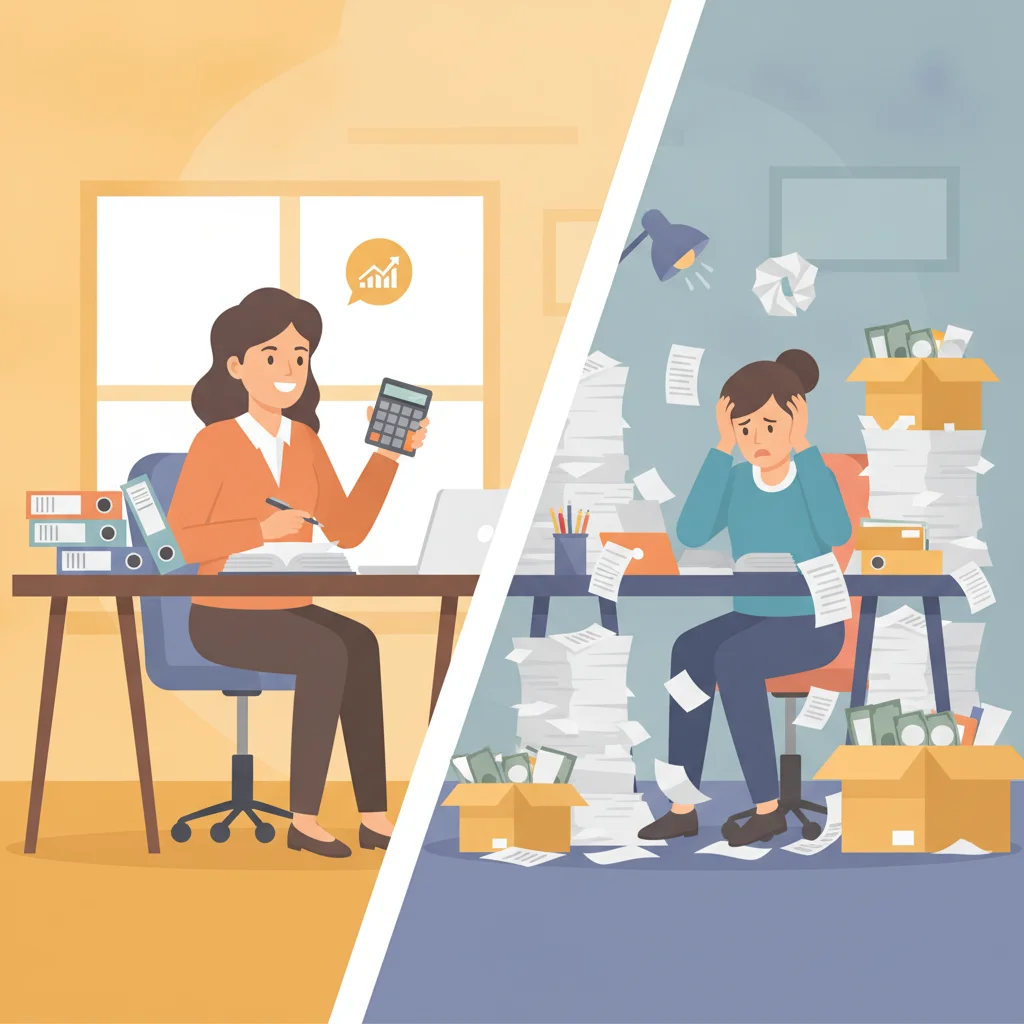
Getting preapproved for an auto loan before you step into a dealership is one of the most effective ways to understand what rate you'll actually receive. That number changes everything about whether zero-down makes mathematical sense for your situation.
Protecting Yourself If You Go Zero Down
If you decide zero-down financing is the right move, a few protective steps can significantly reduce your exposure.
1. Buy GAP Insurance
GAP (Guaranteed Asset Protection) insurance covers the difference between what your insurer pays and what you still owe on the loan if your car is totaled or stolen. With zero equity at the start, this coverage isn't optional — it's essential. Shop it independently rather than rolling it into the dealer's financing, where it's often marked up substantially.
2. Make an Extra Payment in Year One
The depreciation curve is steepest in the first 12 months. Making one or two additional principal payments in that window can close the gap between what you owe and what the car is worth much faster than the standard amortization schedule.
3. Avoid Rolling Fees Into the Loan
Taxes, title, registration, and dealer documentation fees can add $1,500–$3,000 to a transaction. If you can pay these at signing — even if you don't put anything toward the purchase price — you meaningfully reduce the amount you're financing.
4. Keep the Term Short
Every extra year on a loan term costs you interest and keeps you underwater longer. If the only way a zero-down loan is affordable is with a 72-month term, that's a signal the vehicle may be priced beyond your current budget.
GAP Insurance: Buy It Separately
GAP insurance offered at the dealership is often marked up 200–400% over what you'd pay through your auto insurer or a credit union. If you're financing without a down payment, call your insurance provider before you sign and ask what GAP coverage costs on your policy. In most cases, it's $20–$40 per year added to your premium — versus $400–$800 rolled into the dealer's loan.
When Zero Down Makes Mathematical Sense
The math occasionally does favor zero-down financing — specifically when a manufacturer's 0% APR promotion is genuine and no cash-back incentive is being sacrificed to access it. In those cases, putting money down only reduces the principal without improving your rate, so your dollars may genuinely work harder sitting in a high-yield savings account. Always confirm whether accepting the 0% rate means forgoing a rebate, which can easily be worth $1,500–$3,000.
For a comprehensive view of how all these pieces fit together — down payment strategy, loan math, lender expectations — Auto Loan Down Payments: The Complete Breakdown is a useful end-to-end reference before you finalize any deal.
The Bottom Line on Zero-Down Deals
Zero-down auto loans are a financing tool — not a financing strategy. They exist because lenders and dealers benefit from making purchase barriers as low as possible. That doesn't make them predatory by default, but it does mean the incentives at the table aren't necessarily aligned with yours.
The questions to ask before signing are straightforward: What is my actual APR — not the monthly payment? What is the total amount I'll pay over the life of the loan? How long will I be upside down, and what happens if something changes before then? Understanding how loan terms affect your total cost is the foundation of any honest answer to those questions.
If you walk out of the dealership knowing the total cost, your equity timeline, and exactly when your loan balance will drop below the car's market value — you've made an informed decision. That's the goal, regardless of whether you put money down or not.

All claims are backed by peer-reviewed research. Sources on request.