Key Takeaways
Why the Down Payment Decision Matters More Than Most Buyers Realize
Most car buyers focus on the monthly payment. They negotiate the sticker price, maybe push back on the interest rate, and then settle into a number that fits their monthly budget. What gets far less scrutiny is the down payment — the upfront chunk of money that quietly determines almost everything else about the loan's true cost.
Here's the core mechanic: your down payment directly reduces the amount you borrow. The less you borrow, the less interest you pay. That sounds simple, but the downstream effects of putting down too little are surprisingly far-reaching. They show up in your interest rate, your equity position, your monthly payment, your exposure to financial loss, and even your ability to sell or trade in the car without drama.
This article walks through the most common mistakes buyers make when deciding how much to put down — why each mistake happens, what it actually costs, and exactly how to sidestep it. If you want a deeper look at the fundamental mechanics first, what a car down payment actually does to your loan is a good starting point.

The Most Damaging Down Payment Mistakes
The mistakes below aren't rare edge cases. They happen regularly — often to buyers who are otherwise careful with money — because the consequences aren't immediately visible at the dealership. They reveal themselves gradually, through monthly statements and trade-in negotiations, sometimes years after the purchase.
Optimizing only for the monthly payment while ignoring total cost.
Why it happens: Dealerships and lenders frame car affordability almost entirely in monthly terms, so buyers naturally evaluate deals that way. A lower monthly payment feels like a win, even if it's achieved by stretching the loan term or financing more of the purchase.
Treating the minimum required down payment as the recommended down payment.
Why it happens: Many lenders advertise $0 down or ask for as little as 5% to qualify, which buyers interpret as a signal that these amounts are financially sound. The minimum is set by lender risk tolerance, not by what's best for the borrower.
Failing to account for depreciation when sizing the down payment.
Why it happens: Buyers think about the purchase price, not the car's value trajectory. Because a new car can lose 15–25% of its value in the first 12 months, a small down payment leaves little cushion before the loan balance exceeds the vehicle's market worth.
Rolling negative equity from an old loan into the new one.
Why it happens: When trading in a vehicle that's underwater, the easiest path is to let the dealer roll the remaining balance into the new loan. It eliminates the immediate cash shortfall, but it inflates the new loan with debt that has nothing to do with the new car's value.
Accepting a higher interest rate without realizing the down payment triggered it.
Why it happens: Most buyers assume the interest rate they're quoted is purely a function of their credit score. In reality, lenders also consider the loan-to-value (LTV) ratio — how much you're borrowing relative to the car's value. A low down payment raises LTV, which can push the offered rate higher even for borrowers with decent credit.
Skipping GAP coverage when financing with a minimal down payment.
Why it happens: GAP insurance is an add-on cost that buyers often decline to save money. But without it, a totaled or stolen vehicle with a low down payment can leave the buyer owing thousands after insurance pays out only the depreciated market value.
Watch Out for Zero-Down Promotions
Manufacturer and dealer promotions that advertise zero down payment are designed to move inventory, not to protect your financial interests. These offers often come with longer loan terms — 72 or 84 months — that minimize the monthly payment while dramatically increasing total interest paid. Always read the full loan terms before accepting a promotional offer, and model what the same car would cost with a realistic down payment.
Don't Confuse a Low Monthly Payment With a Good Deal
A dealer who stretches your loan to 84 months can make almost any car seem affordable month to month. But an 84-month loan means you're paying interest for seven years on a vehicle that may only be worth a fraction of its original price by year five. Focus on total cost of ownership, not the monthly figure, when evaluating financing options.
Understanding where each mistake originates, and what specifically it costs, is the fastest way to avoid repeating it.
The Real Math: How a Small Down Payment Compounds Into Big Interest
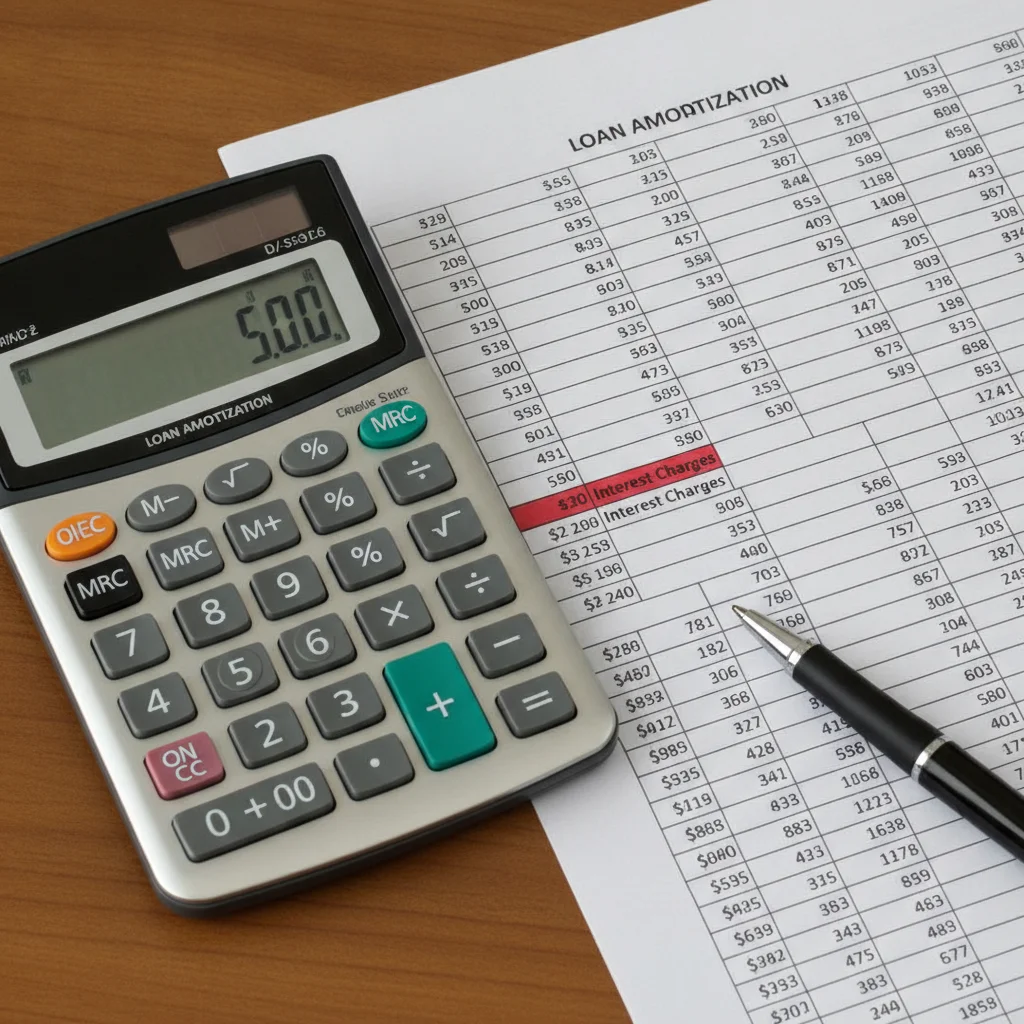
Let's make the numbers concrete. Suppose you're buying a $35,000 vehicle and financing it for 60 months at 7% APR.
| Down Payment | Loan Amount | Monthly Payment | Total Interest Paid |
|---|---|---|---|
| $0 (0%) | $35,000 | $693 | $6,580 |
| $3,500 (10%) | $31,500 | $624 | $5,922 |
| $7,000 (20%) | $28,000 | $554 | $5,264 |
The difference between putting nothing down and putting 20% down is $1,316 in interest savings — and a $139 lower monthly payment — over the life of the loan. That's money that stays in your pocket simply by adjusting what you pay upfront.
But the savings get even larger when you account for a higher interest rate. Borrowers with thin down payments are often offered worse APRs because the lender faces more risk. If a low down payment bumps your rate from 7% to 9%, you're now paying hundreds more in interest on top of the larger principal. For a deeper breakdown of how each additional dollar down plays out mathematically, see the math behind putting more money down on a car.
20–25%
First-year depreciation on a new car
According to Edmunds and industry data, most new vehicles lose 20–25% of their value within the first 12 months of ownership.
31%
Borrowers with negative equity at trade-in
Edmunds reported that approximately 31% of trade-ins involved negative equity, with the average amount owed exceeding the trade-in value by around $6,000.
0.5–1.5%
Rate increase tied to high LTV ratios
Auto lenders commonly adjust offered APRs upward by 0.5 to 1.5 percentage points for borrowers with loan-to-value ratios above 100%, according to lender risk-pricing models.
$1,300+
Interest saved by going from 0% to 20% down
On a $35,000 vehicle financed at 7% APR over 60 months, moving from no down payment to a 20% down payment saves more than $1,300 in total interest charges.
Equity, Depreciation, and the Underwater Trap
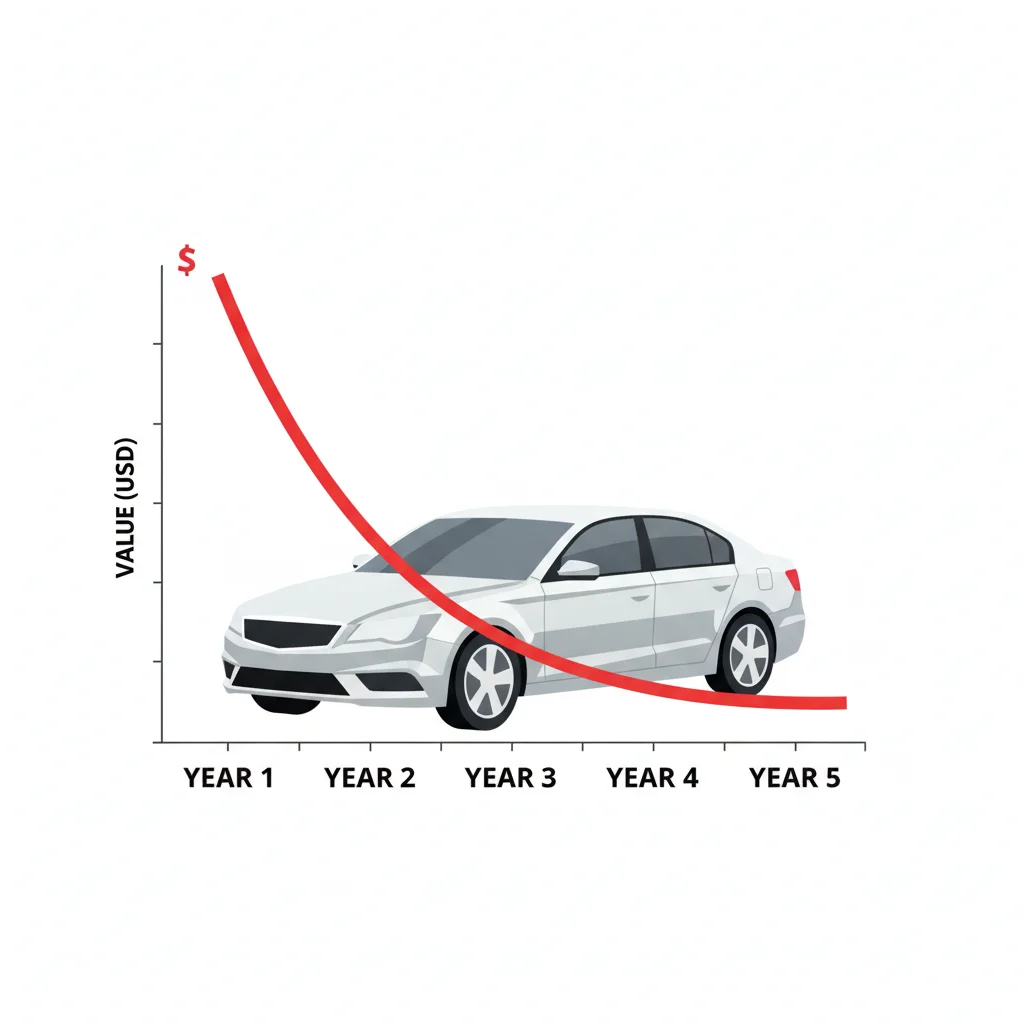
New cars lose value fast. A typical new vehicle depreciates roughly 20–30% in the first year alone, and another 10–15% each year after that. If you finance 90–100% of the purchase price, your loan balance drops slowly in the early months — most of your payments are going toward interest, not principal — while the car's market value is falling quickly.
That gap is called negative equity, or being "underwater." It means you owe more than the vehicle is currently worth.
Negative Equity Can Follow You Into Your Next Loan
If you trade in a car while underwater and roll the shortfall into a new loan, you start the new financing already owing more than the new car is worth. This cycle compounds with each vehicle purchase, steadily increasing your debt load. Breaking the cycle requires either paying off the difference in cash at trade-in or staying in the vehicle until your equity turns positive.
Your Down Payment Affects More Than Just Your Balance
A thin down payment can simultaneously raise your interest rate, leave you in negative equity, and increase your monthly payment — three separate financial penalties triggered by one decision made at signing. Understanding how these factors interact is essential to making a down payment decision that actually serves your long-term financial health. For a full picture of what's at stake, <a href="/auto-loans/loan-basics/interest-and-apr">understanding interest and APR</a> explains how lenders price the risk they take on.
Being underwater creates a cascade of problems. You can't sell the car without covering the difference out-of-pocket. If the car is totaled, your insurance pays market value — not your loan balance — leaving you on the hook for the shortfall unless you have GAP coverage. And if you want to trade in and upgrade, the negative equity often gets rolled into your next loan, making the new loan even more expensive.
A meaningful down payment — typically 10–20% on a new car, slightly more on a used one — puts you on the right side of that gap from day one. You enter the loan in a positive equity position, meaning the car is worth more than you owe, even as depreciation sets in.
Smarter Alternatives and How to Build a Better Down Payment
If you don't have 10–20% saved right now, you have options that don't require putting yourself at financial risk with a thin down payment.
- Delay the purchase and save aggressively. Even three to six months of dedicated saving can meaningfully close the gap. The cost of waiting is usually far less than the cost of a larger loan at a worse rate.
- Trade in a current vehicle. If you're replacing a car, its trade-in value counts as part of your down payment. Get multiple offers — dealers, CarMax, private buyers — to maximize what you receive.
- Use a cash windfall strategically. A tax refund, bonus, or inheritance can be a powerful source of down payment funds. Dropping a lump sum upfront pays dividends in interest savings for years.
- Consider a less expensive vehicle. A car that costs $5,000 less requires $500–$1,000 less to reach a 10–20% down payment target. Adjusting your target purchase price can make the right down payment achievable much sooner.
It's worth noting that putting more down isn't always optimal in every situation. If tapping your savings leaves you with no emergency fund, or if you have high-interest debt that should be paid first, the calculus changes. weighing savings versus financing more walks through exactly that trade-off. And if you're comparing specific benchmarks, putting down 10% vs. 20% shows where the real differences emerge.

For most buyers in most situations, though, a thin down payment is not the bargain it appears to be at the dealership. The interest you'll pay, the rate you'll receive, and the equity risk you'll carry make a compelling case for saving a little more before you sign.
The monthly payment you're offered might look manageable. But to understand whether it truly is, you need to see how the down payment shaped it — and what it would look like with more money down. the relationship between down payment size and monthly payment breaks that connection down clearly.

All claims are backed by peer-reviewed research. Sources on request.