Key Takeaways
Why Credit Report Errors Hit Harder on Auto Loans Than Almost Anywhere Else
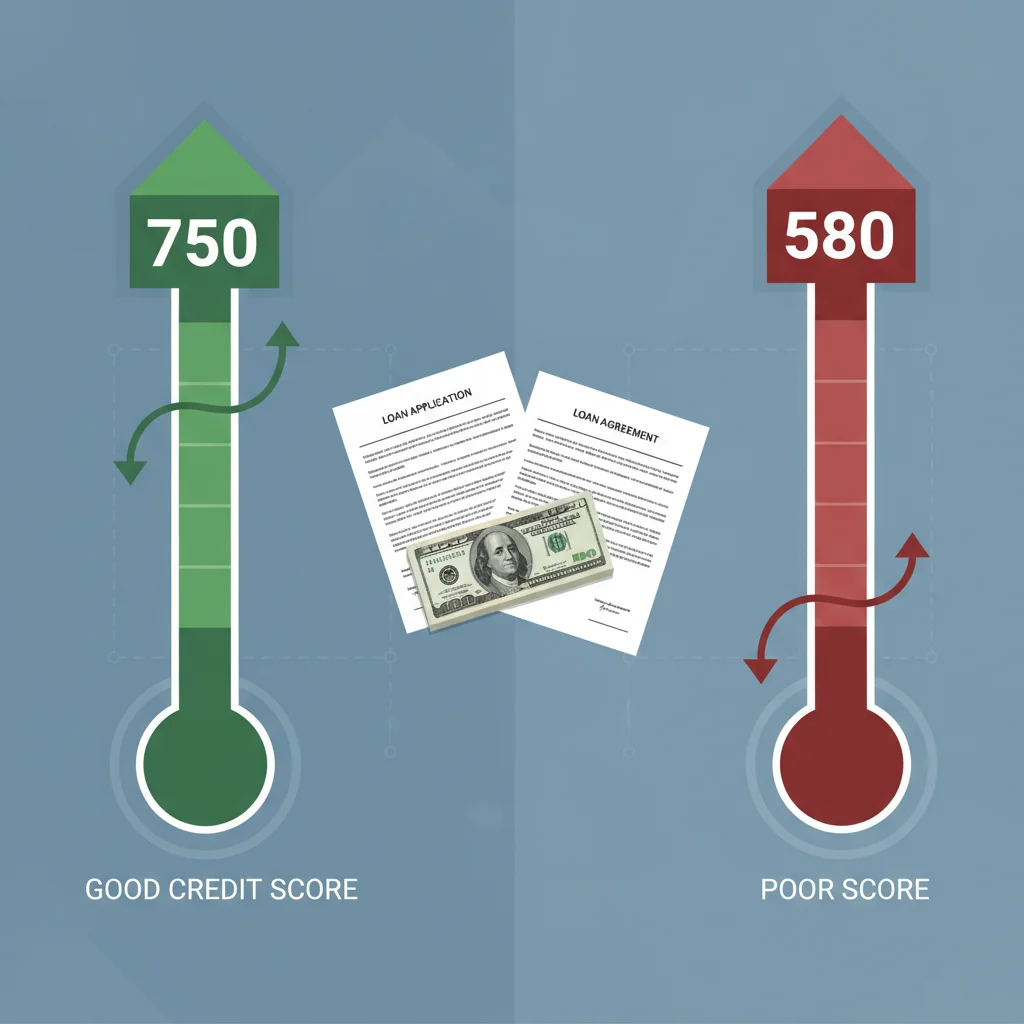
Auto lenders use risk-based pricing in a very aggressive way. Unlike a mortgage — where underwriting takes weeks and there's room to explain anomalies — a car loan decision is often made in minutes based almost entirely on your credit score and debt-to-income ratio. That means a single inaccurate tradeline, a wrongly reported late payment, or a fraudulent account you didn't open can silently move you from one rate tier to another without you ever knowing it happened.
Here's what that means in practice. On a $35,000 vehicle financed over 60 months, the difference between a Tier 1 rate (say, 5.9% APR) and a Tier 2 rate (8.4% APR) is roughly $2,800 in extra interest. Drop to a Tier 3 rate at 12% and you're paying nearly $7,000 more than the buyer with clean credit who sat at the same desk an hour earlier. See our full breakdown of what a low credit score actually costs to run the numbers on your specific loan amount.
The brutal irony is that many of those lower-tier borrowers have perfectly responsible payment histories — they just have wrong information sitting on their report. This article is about finding that wrong information before you apply.

The Most Damaging Credit Report Mistakes Car Buyers Encounter
After years in dealership finance offices, I've seen buyers who came in convinced they were prime borrowers, only to find out the bank was looking at something completely different. The mistakes below are the ones I saw hurt buyers the most — and the ones that are most frequently disputed successfully.
Accepting a late payment notation that was actually paid on time.
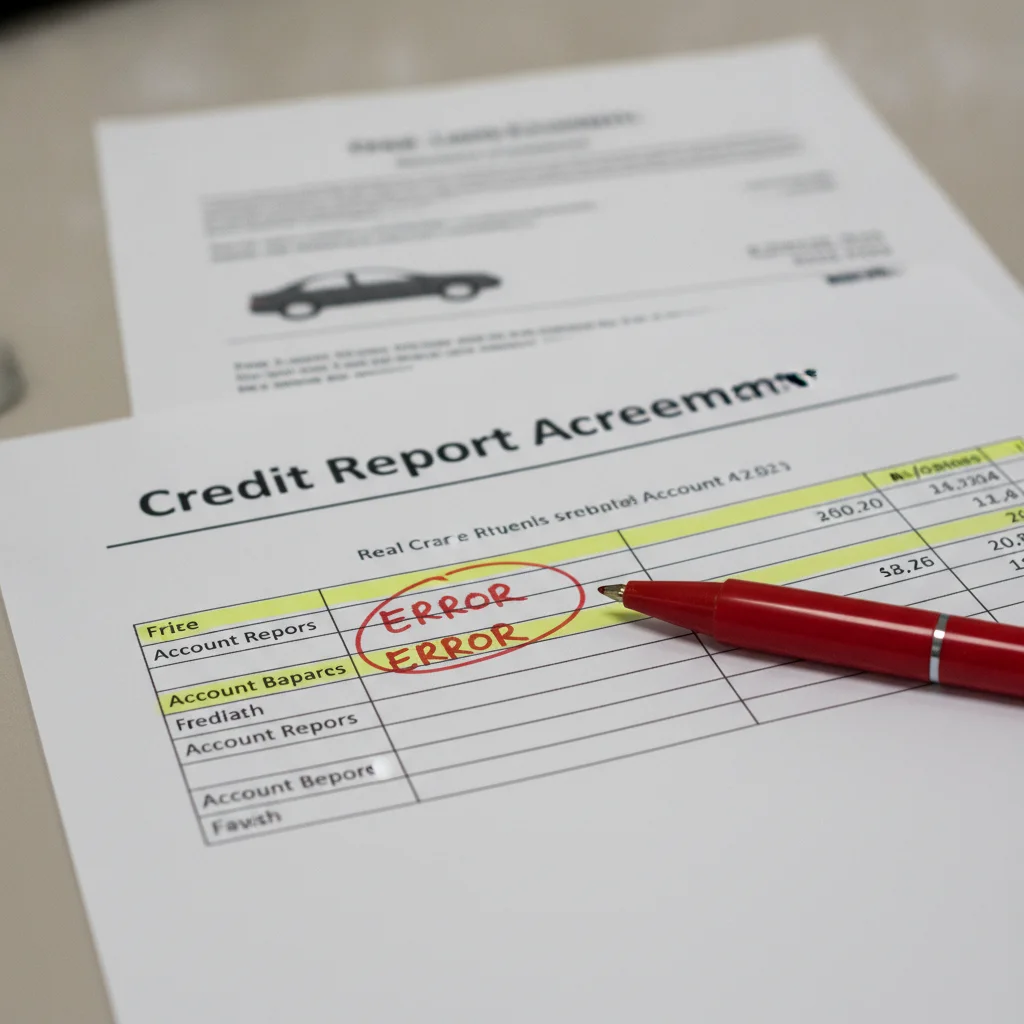
Why it happens: Creditors sometimes miscode payment dates, and if you never review the report you never know the notation is there. A single 30-day late can cost 60–110 points depending on your credit profile.
Carrying accounts that belong to someone else due to a mixed credit file.
Why it happens: Mixed files occur when two people have similar names or Social Security Numbers that differ by one digit. The bureaus merge their files, and suddenly you're carrying another person's collections or charge-offs.
Leaving discharged bankruptcy accounts still showing as open balances.
Why it happens: After a bankruptcy discharge, creditors are supposed to update the accounts to show a zero balance and 'included in bankruptcy' status. Many don't do it promptly, or at all, and the bureau doesn't catch it automatically.
Ignoring negative items that are past their reporting time limit.
Why it happens: Most negative information must be removed after seven years from the date of first delinquency. Bureaus sometimes fail to purge these on schedule, particularly for collections that have been sold between multiple agencies.
Failing to check for unauthorized hard inquiries from dealer 'shotgun' financing.
Why it happens: When a dealer submits your application to multiple lenders simultaneously to find the best rate, each submission creates a separate hard inquiry. Rate-shopping inquiries within a 14–45 day window typically count as one for scoring purposes, but inquiries from different shopping events can each ding your score.
Overlooking identity theft accounts opened in your name without your knowledge.
Why it happens: Fraudulent accounts can sit on a report for years if the victim never checks. These show up as new accounts with rapidly escalating balances, high utilization, and eventually derogatory marks — all in your name.
1 in 5
Americans with a material credit report error
A 2021 FTC study found approximately 20% of consumers had at least one error on a credit report that affected their score.
$2,800+
Extra interest from one rate tier drop on a $35K loan
Moving from a 5.9% to an 8.4% APR on a $35,000, 60-month loan adds approximately $2,800 in total interest paid.
79%
Dispute success rate for factual errors
The CFPB reports that the majority of disputes involving documented factual inaccuracies result in modification or deletion of the item.
30 days
Bureau investigation window required by law
Under the Fair Credit Reporting Act, credit bureaus must complete investigations within 30 days of receiving a dispute (45 days with supplemental documents).
60–110 pts
Score drop from a single 30-day late payment
FICO research shows a single 30-day late payment can drop a score between 60 and 110 points depending on the consumer's baseline score and account history.
How to Pull Your Reports and Know What You're Looking At
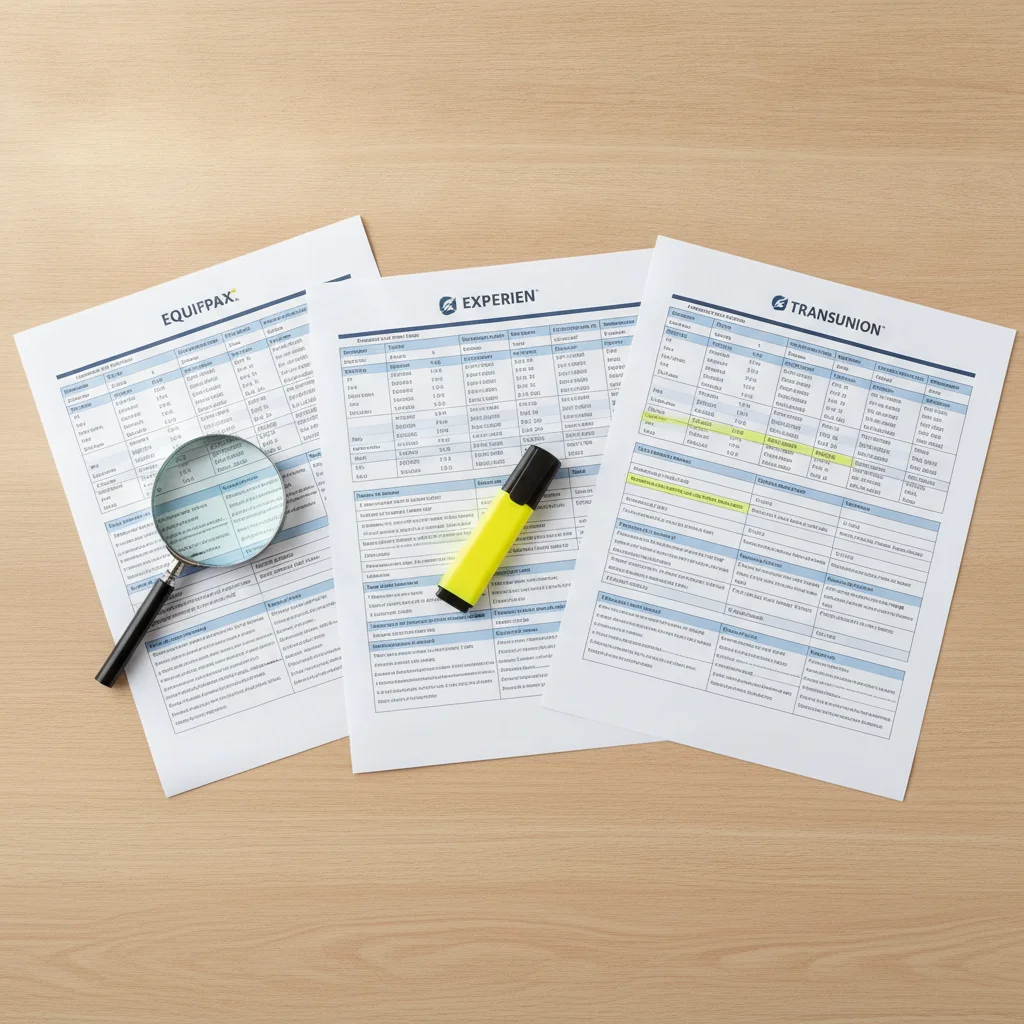
The only legitimate free source is AnnualCreditReport.com, which is operated jointly by Equifax, Experian, and TransUnion under federal law. You're entitled to one free report from each bureau every 12 months — though during and after the COVID-19 pandemic, weekly free access was extended and as of 2023 remains available at no cost.
Pull all three at once. Errors frequently appear on only one bureau's file, because not every creditor reports to all three. If you only check Experian and your dealer pulls TransUnion, you could still get blindsided.
Only Use AnnualCreditReport.com
Many sites mimic the look of the official free report portal and charge subscription fees after a 'free trial.' The only federally mandated free source is AnnualCreditReport.com. Do not enter your Social Security Number on any other site claiming to offer free reports without thoroughly verifying its legitimacy. The CFPB and FTC both reference only this single official source.
Dispute Active Errors Before Applying — Not After
Once a lender has pulled your credit and issued a rate, disputing errors after the fact will not automatically change your loan terms. The time to correct errors is before you apply. Some lenders will reconsider a rate if you can prove a significant error was present at the time of the pull, but this is not guaranteed and requires significant documentation and negotiation. Prevention is the only reliable strategy.
What to look for line by line
- Personal information: Wrong addresses and name variations are usually harmless, but a wrong Social Security Number variant or date of birth can indicate a mixed file.
- Account status: Each open and closed account should show the correct balance, credit limit, payment history, and open/close dates.
- Payment history markers: Look for any 30-, 60-, or 90-day late notations. A single 30-day late on a large account can drop your score 60–110 points depending on your overall profile.
- Negative items and their age: Most negative information must be removed after seven years. Bankruptcies are 10 years. If you see anything older than that, it's a violation of the Fair Credit Reporting Act and must come off.
- Hard inquiries: You should recognize every hard inquiry. Unauthorized inquiries — which sometimes occur with dealer "shotgun" financing submissions — can be disputed.
- Public records: Judgments, liens, and collections that don't belong to you are red flags for either a mixed file or identity theft.
Cross-reference each account against your own records. The goal isn't to find reasons to dispute legitimate negative items — it's to catch factual inaccuracies. Disputing accurate negative information is a waste of time and can sometimes make your situation more visible to lenders.
How to File a Dispute That Actually Gets Results
Filing online at each bureau's website is the fastest path, but sending a certified letter gives you a paper trail that's harder to dismiss if you need to escalate. The Consumer Financial Protection Bureau (CFPB) provides dispute letter templates that cite the relevant FCRA sections — use them.
Avoid Credit Repair Companies Charging Upfront Fees
Credit repair companies that charge fees before completing any services are illegal under the Credit Repair Organizations Act. Everything a legitimate credit repair firm does — disputing inaccurate information, writing letters to bureaus — you can do yourself for free. Any company promising to remove accurate negative information is making a false claim. Save your money and file disputes directly.
Don't Apply for Credit While a Dispute Is Pending
Some lenders treat an active dispute flag on your report as a red flag and will decline the application outright. Others will ignore the flag and use the disputed score anyway, which could work in your favor or against you. The cleanest approach is to wait until your disputes are fully resolved and your updated score is reflected before submitting any loan applications.
Disputing Accurate Negative Items Can Backfire
Filing disputes on legitimate negative accounts — genuine late payments, actual charge-offs — rarely results in removal and can sometimes draw renewed attention to the account from collectors. Reserve your dispute energy for factually incorrect information you can document. Attempting to game the dispute system typically wastes time and may not improve your score at all.
The dispute process step by step
- Identify the specific error with account name, account number, and the exact field that's wrong (e.g., "This account shows a 30-day late in March 2022 — I have bank statements showing payment cleared on March 18, 2022").
- Gather supporting documentation: bank statements, creditor receipts, court documents for discharged debts, or police/FTC reports for identity theft.
- Submit to the bureau reporting the error — not necessarily all three. If the same error appears on multiple reports, file separately with each.
- Wait for the investigation. The bureau must investigate within 30 days (45 if you submit additional documentation after filing). They contact the furnisher — the original creditor — who must verify the information or it gets deleted.
- Review the outcome. If the bureau sides with the furnisher and keeps the item, you can request the furnisher's contact information and dispute directly with them, or file a complaint with the CFPB.
One thing that surprises most people: if a furnisher fails to respond to the bureau within the investigation window, the disputed item is supposed to be removed by default. That doesn't always happen automatically — follow up if you don't receive a result letter.
If you find errors in your loan paperwork after signing rather than on your credit report, the process is different. See what to do when you find an error in a signed car contract for that scenario.

Timing Your Credit Cleanup Around Your Loan Application
Disputes take time to resolve, and applying for a loan while a dispute is pending can create complications. Some lenders will not approve a loan when a dispute flag is active on your report because it makes the score less predictable. Others will simply ignore the dispute and use the score as-is.
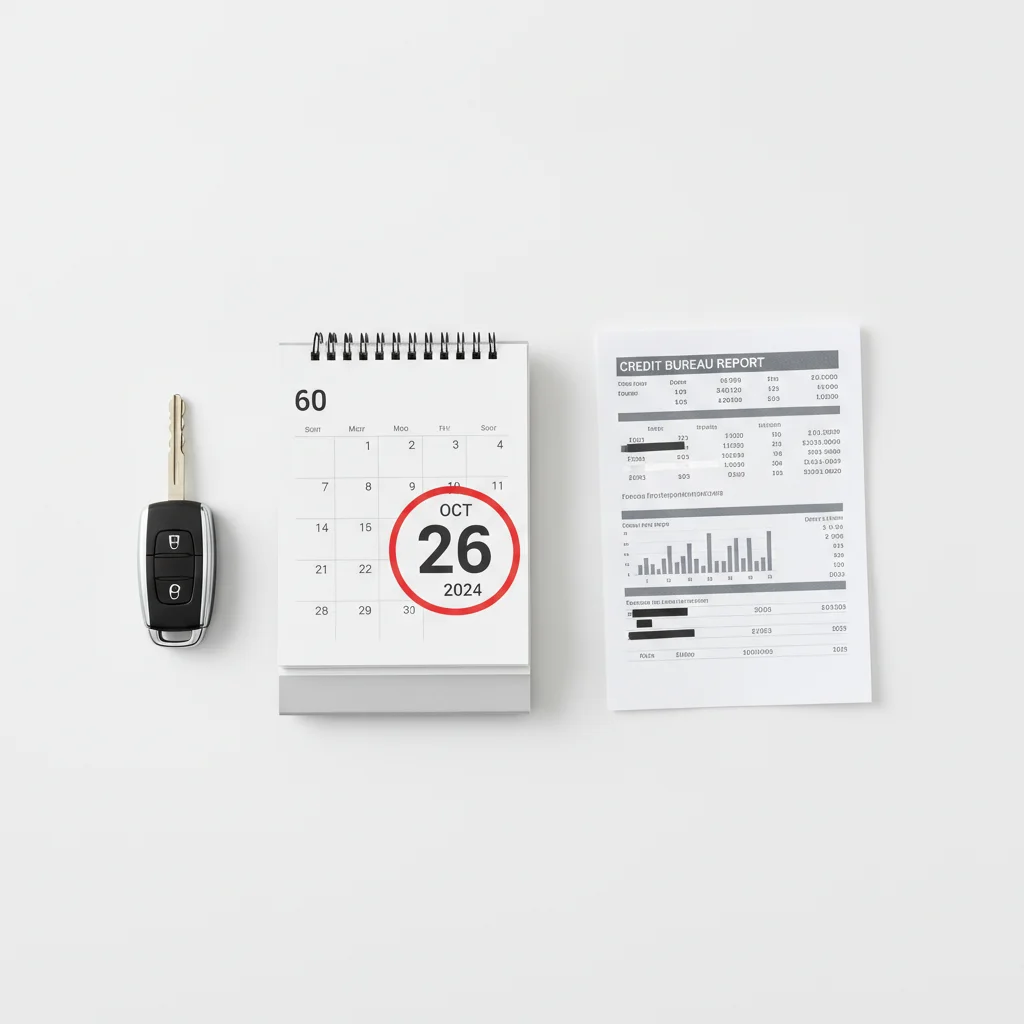
The practical rule: start the process at least 60 days before you plan to apply. That gives you one full dispute cycle plus time to pull updated reports and confirm the corrections landed. If your issue is serious — a completely wrong account or a mixed file — budget 90 to 120 days, because you may need to escalate beyond the initial dispute.
After errors are resolved, keep your credit profile stable between pre-approval and loan closing — a new credit application or a missed payment in that window can undo your work.
Also be aware that your credit score can vary significantly depending on which scoring model a lender uses. Auto lenders frequently use FICO Auto Score 8 or FICO Auto Score 2, which weight auto loan payment history more heavily than the generic FICO 8 score you see on most consumer apps. Correcting an error on a previous auto loan tradeline can have an outsized effect under these industry-specific models.
If after cleanup your score is still lower than you'd like, review the financing options available to borrowers with poor credit before assuming you're out of options. And if you're still uncertain about how APR and rate tiers actually work, the interest and APR hub explains the mechanics without the finance-office spin.
Common Misconceptions That Stop Buyers From Even Checking
A lot of buyers simply don't look at their credit reports before applying. Some are afraid of what they'll find. Others believe myths that make checking seem pointless or risky. Before you fall into that trap, see our guide to credit score myths that trip up car buyers — particularly the ones about pulling your own report and what dealers can actually see.
The single most expensive assumption I saw buyers make in the finance office was this: "My credit is probably fine." That assumption — made without actually checking — handed the lender all the leverage. When you walk in knowing your exact scores from all three bureaus and knowing there are no surprises, you negotiate from a position of information rather than hope.
If your score is still below prime after corrections, don't skip the pre-application review checklist. Run through the verification checklist before submitting a bad credit car loan application — every hard inquiry you avoid until you're truly ready is a small protection for the score you've worked to improve. The same logic applies in other lending categories: errors in your driving record can inflate your insurance premium just as quietly, and disputing rating factors on your insurance policy follows a similar escalation path.
The bottom line: your credit report is not a finished document — it's a living file that contains errors for roughly one in five Americans. Treat it that way. Check it, correct it, and only then go shopping.
All claims are backed by peer-reviewed research. Sources on request.