


Key Takeaways
Why the Window Between Pre-Approval and Signing Is Dangerous
You got pre-approved. Congratulations — but don't relax yet. That approval letter has an expiration date, usually 30 to 60 days, and the rate attached to it is conditional. Most buyers don't realize that lenders reserve the right to repull their credit before funding the loan. If your score has dropped even modestly in the interim, you can be bumped to a higher rate tier — or declined entirely.
I spent years in the finance office at two different dealerships. The calls I dreaded most were the ones from lenders on the day of signing: "The customer's score came back lower than the application. We need to restructure." That almost always meant a higher APR, a larger down payment demand, or a shorter loan term. I watched buyers lose good deals because they opened a store credit card the week before picking up their car, or because they financed a new refrigerator thinking it wouldn't show up in time.
It shows up. And it matters.
Before we get into what to avoid, it helps to understand exactly what your lender evaluated when they issued that pre-approval. See everything your lender looks at before issuing a preapproval for the full picture — because protecting that profile means knowing what was in it.
The Five Things That Will Move Your Score During This Period
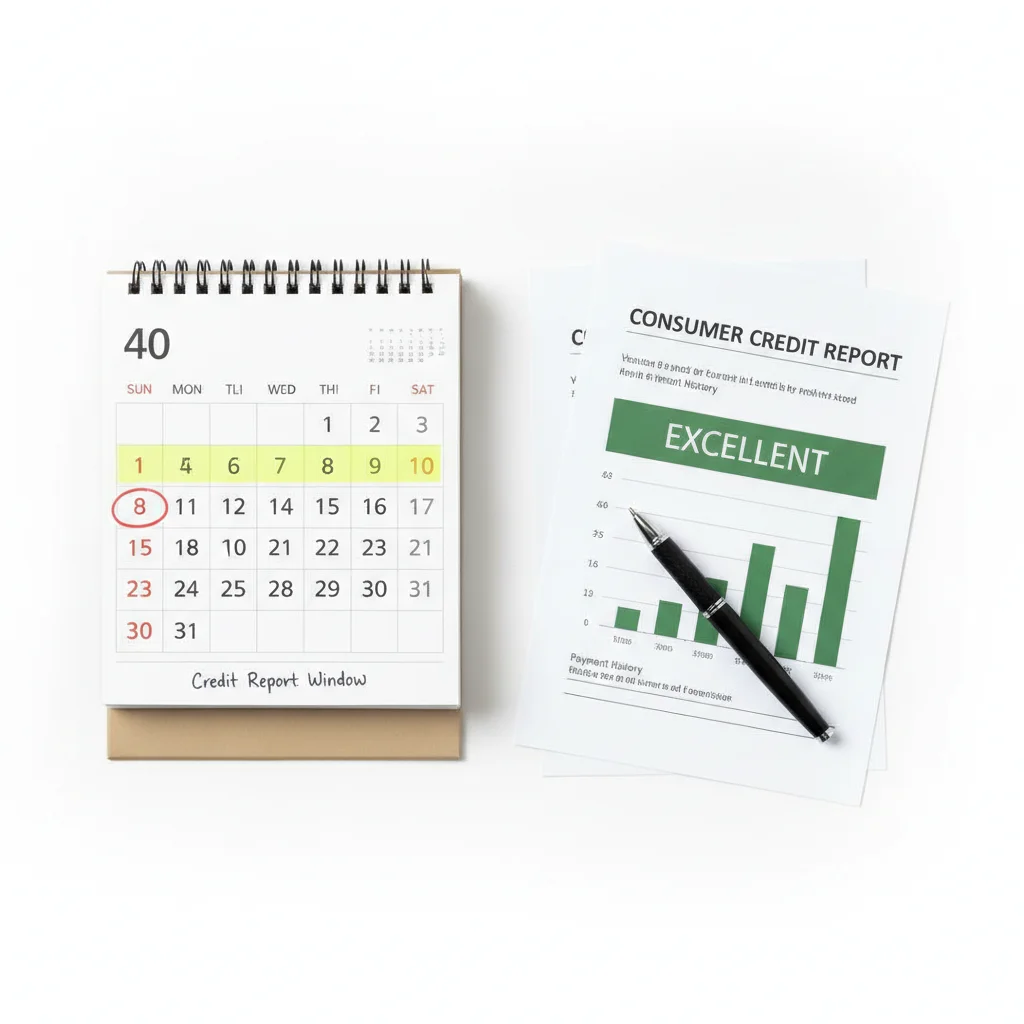
Credit scores are not static. They recalculate every time a bureau receives updated information from a creditor. During the weeks between pre-approval and closing, five specific actions carry the most risk.
1. Opening New Credit Accounts
Every new credit application triggers a hard inquiry, which can subtract 5 to 10 points from your score immediately. But the bigger damage comes from the new account itself: it reduces the average age of your accounts and introduces an unknown payment pattern. Most scoring models penalize new accounts heavily in the first 12 months.
2. Maxing Out or Heavily Using Existing Cards
Credit utilization — the ratio of your balance to your credit limit — accounts for roughly 30% of your FICO score. If you charge a $3,000 vacation on a card with a $5,000 limit, your utilization on that card jumps to 60%. Scores typically prefer utilization below 30%, and some lenders underwriting auto loans want to see it below 10% on individual cards.
3. Missing Any Payment
Payment history is the single largest factor in your FICO score — about 35%. A payment that goes 30 days past due creates a derogatory mark that can drop your score by 50 to 100 points. That kind of drop doesn't just affect your rate; it can shift you from a prime borrower to a subprime borrower overnight.
4. Closing Old Accounts
Closing a credit card reduces your total available credit, which mechanically raises your utilization ratio. It also shortens your effective credit history. Don't close anything — even cards you never use — until after the loan funds.
5. Co-Signing for Someone Else
When you co-sign a loan, that debt appears on your credit report as if it were your own. It adds to your total debt load, raises your debt-to-income ratio, and can affect your score if the primary borrower misses payments. This is a common trap for buyers helping a family member during the same window they're closing their own deal.
35%
FICO weight of payment history
Payment history is the single largest component of a FICO score, per MyFICO.com — making any missed payment during the pre-approval window disproportionately damaging.
30%
FICO weight of credit utilization
Credit utilization accounts for roughly 30% of a FICO score, meaning a large charge on a low-limit card can move your score meaningfully before the lender's second pull.
$2,800+
Extra interest from one rate tier drop
On a $35,000, 60-month loan, moving from a 5.9% to an 8.4% APR — a single tier shift — adds approximately $2,800 in total interest over the loan term.
5–10 pts
Score impact of a single hard inquiry
According to FICO, a new hard inquiry typically lowers a score by fewer than 5 points on average, but the impact can reach 10 points depending on the depth of the credit file.
30–60 days
Typical pre-approval validity window
Most bank and credit union pre-approvals are valid for 30 to 60 days, creating a defined but finite period during which credit stability is critical.
The Second Pull: What It Is and When It Happens
The "second pull" is exactly what it sounds like: a second hard credit inquiry run by the lender — or the dealership's finance department — close to the time of funding. Not every lender does this, but enough do that you should assume it will happen. Banks and credit unions that hold their own paper are particularly consistent about running a second pull within 24 to 48 hours of funding.
This second inquiry serves two purposes. First, it verifies that your credit profile hasn't changed materially since the pre-approval. Second, it checks for any new accounts or inquiries that appeared after the initial pull — both of which can signal that you've taken on additional debt or are planning to.
Not Every Lender Runs a Second Pull
Some lenders — particularly captive finance arms of automakers — do not run a second hard inquiry before funding. However, you typically won't know which practice your lender follows unless you ask directly. The safest assumption is always that a second pull will happen. Behaving as if it will costs you nothing; assuming it won't can cost you your rate.
The practical implication: even if you applied for a credit card but haven't received it yet, that hard inquiry will appear on your report. The lender will see it. They will ask about it. And if the new account itself has already been opened and reported, it will factor into the revised assessment.
If you're worried about how multiple pre-approval applications affected your score going into this process, the rate-shopping window rule explains what actually counts against you and what doesn't — it's a useful baseline for understanding how hard inquiries work.
Best Practices: Protecting Your Credit Profile Through Closing
The following practices are not theoretical. Each one addresses a specific mechanism by which buyers lose their approved rate between pre-approval and signing. Apply all of them, not just the ones that feel easy.
Freeze all new credit applications the moment you receive pre-approval.
Every hard inquiry and new account that appears between pre-approval and closing is visible to the lender on the second pull. New credit accounts reduce average account age and introduce utilization unknowns — both of which depress your score. Even a 15-point drop can push you across a tier boundary.
Keep credit card balances at or below 15% of each card's limit during the window.
Utilization is recalculated every time your statement closes, and most issuers report balances to the bureaus monthly. A spike in utilization — even temporary — will appear on your report if it coincides with the second pull. Paying balances down before the statement date, not just the due date, controls what gets reported.
Set up autopay on every existing credit account before your pre-approval closes.
A single 30-day late payment can drop a prime borrower's score by 50 to 100 points — enough to disqualify an approved rate tier completely. The risk is highest during a period when you're distracted by car-buying logistics and may lose track of due dates. Autopay eliminates that risk entirely.
Do not co-sign any loans or credit agreements during the window.
Co-signed debt appears on your credit report as your own obligation. It increases your debt-to-income ratio, can raise your utilization depending on the account type, and creates payment risk if the primary borrower is late. Lenders evaluating your auto loan will see the new co-signed account and may recalculate your debt load.
Avoid large cash withdrawals or significant account balance changes that could affect a lender's asset verification.
Some lenders verify bank account balances near the time of closing, particularly if a down payment is involved. Large unexplained withdrawals can trigger documentation requests that delay closing or raise underwriting concerns about undisclosed debt obligations.
Monitor your credit report at least once during the window and dispute any errors immediately.
Errors on credit reports are more common than most buyers realize, and a single incorrect derogatory item can suppress your score significantly. The dispute process can take 30 days, so catching an error early gives you a narrow window to correct it before the lender's second pull. Free monitoring through your bank or a service like Credit Karma provides near-real-time alerts.
Quick Wins You Can Do Right Now
If you're already pre-approved and the closing is weeks away, these are the highest-leverage actions you can take immediately to reduce your exposure.
If your credit file is thin to begin with — meaning you have a limited history rather than a damaged one — the stakes during this window are even higher. A thin file has less cushion to absorb new inquiries or utilization changes. Building enough credit credibility before you apply is the right first step for buyers who haven't yet applied.
Confirm Your Rate Lock Terms in Writing
Before leaving the pre-approval stage, ask your lender for written confirmation of what conditions must remain true to hold your approved rate. Some lenders specify a minimum score threshold; others lock rate based on the application snapshot regardless of what happens afterward. Getting this in writing gives you a reference point if the lender tries to revise terms at closing.
Time Large Purchases Around the Loan Closing
If you know you'll need to make a major purchase — appliances, furniture, home repairs — schedule it for after the auto loan funds. Even paying cash for large purchases can indirectly affect a lender's view of your cash reserves if they request updated bank statements near closing. Two weeks of patience can preserve thousands of dollars in interest savings.
What Happens If Your Score Drops Before Closing
Let's be concrete about the cost. Auto loan rates are tiered by credit score, and those tiers are not gradual — they're step-function jumps. A buyer who pre-qualified at 720 and drops to 698 may move from a Tier 1 to a Tier 2 rate. On a $35,000, 60-month loan, the difference between 5.9% and 8.4% APR is approximately $48 per month and over $2,800 in total interest paid over the life of the loan.
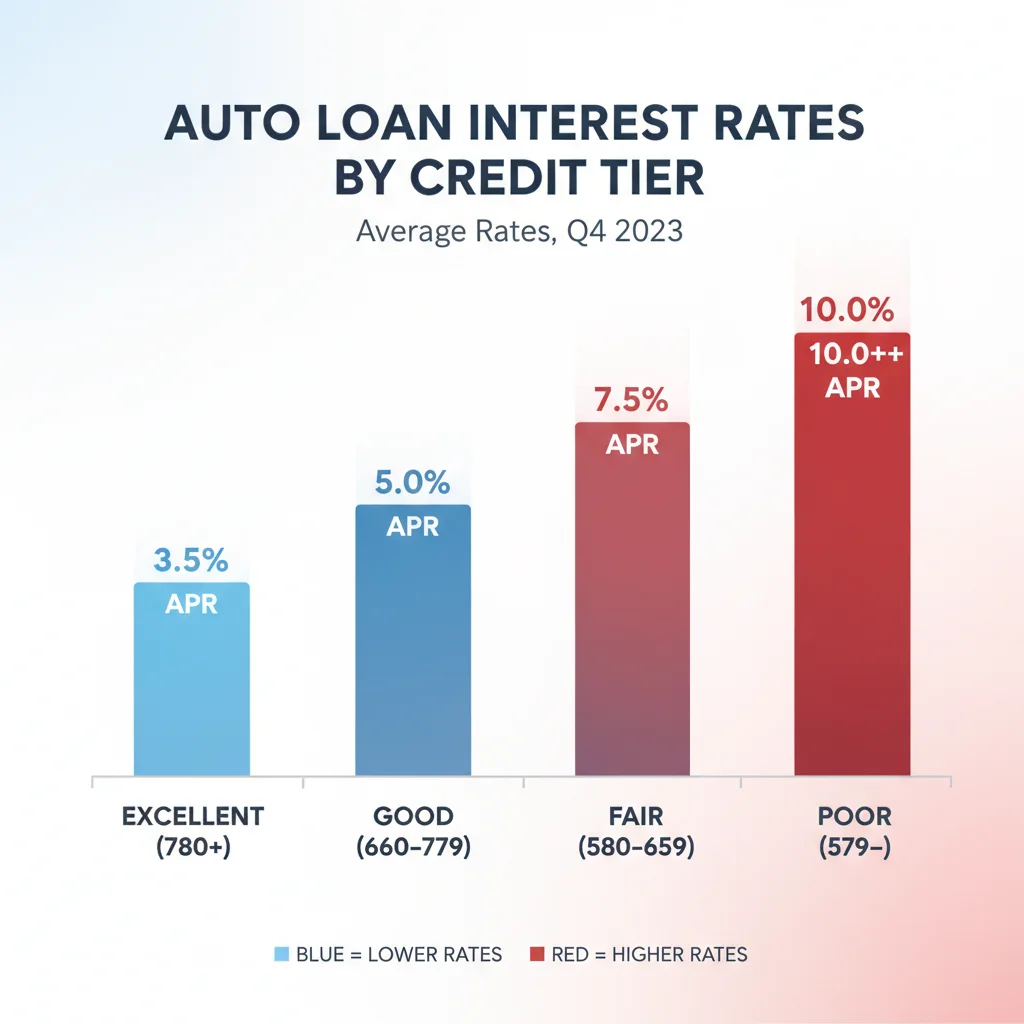
Here's how that rate-to-tier relationship typically looks across lenders (approximate ranges — your lender's exact thresholds will vary):
| Credit Score Range | Typical Tier | Approximate APR Range |
|---|---|---|
| 750+ | Tier 1 (Prime) | 4.5% – 6.5% |
| 700–749 | Tier 2 | 6.5% – 9.0% |
| 660–699 | Tier 3 | 9.0% – 13.0% |
| 620–659 | Tier 4 (Near-Prime) | 13.0% – 18.0% |
| Below 620 | Subprime | 18.0% and above |
If the lender revises your rate upward, you have options — but they're not great. You can accept the revised terms, renegotiate the purchase price to offset the higher rate, increase your down payment to reduce the financed amount, or walk away entirely. None of these feel good when you've already mentally moved into the car.
The cleanest solution is prevention. The second cleanest is catching errors early. If your score dropped due to a credit report error — not something you actually did — you have a narrow path to dispute it before closing. Credit report errors can silently inflate your rate — here's what to look for and how to escalate quickly.
“Your credit score is like a photograph taken at the moment of application. But lenders don't always frame it and hang it on the wall — sometimes they take a second photo at closing. If the subject has changed, so might the deal.”
— Melinda Opperman, Executive Vice President at Credit.org, nonprofit credit counseling agency
Managing the Timeline to Minimize Exposure
The shorter the time between pre-approval and signing, the smaller the window in which something can go wrong. This sounds obvious, but most buyers don't optimize for it. They get pre-approved, then take three weeks to decide on a trim level, then another week negotiating the trade-in value, all while their financial life continues normally — new charges on credit cards, other financial obligations moving through the system.
A disciplined approach looks like this: get pre-approved, finalize your vehicle choice within a week, negotiate all terms within days of that, and close as quickly as the paperwork allows. If your pre-approval is through a bank or credit union, confirm how long the rate is guaranteed and what triggers a re-evaluation.
Also: don't assume the dealer's financing timeline aligns with yours. Dealers have relationships with multiple lenders and will sometimes resubmit your application to a different lender during the process — which can trigger additional inquiries if you haven't already done your rate shopping in a concentrated window. Pre-approval itself is one of the smartest moves you can make — understanding exactly what the inquiry impact looks like before you start protects you from surprises later.
Finally, if you close successfully and want to pay down the loan faster to reduce total interest paid, that's a separate but worthwhile conversation. The early payoff tips hub covers practical methods for retiring the debt ahead of schedule once you're in the loan.

The bottom line: the period between pre-approval and signing is a financial freeze zone. Treat it that way. Every financial decision you defer until after the loan funds is one fewer variable that can cost you your rate.
All claims are backed by peer-reviewed research. Sources on request.