Key Takeaways
Our Verdict
For borrowers with credit scores below 620, online subprime lenders are the more realistic and accessible starting point — but that accessibility comes at a cost in the form of higher rates and less flexible terms. Traditional banks remain worth a phone call if your score sits above 620 or you have an existing relationship with the institution, but they should not be your primary strategy when credit is damaged. The smartest move is to use online prequalification tools to establish a baseline offer, then use that offer as leverage in any bank conversation.
| Best for | Recommended |
|---|---|
| Borrowers with credit scores below 580 who need fast approval | Online Subprime Lender |
| Borrowers with scores between 580–680 who have an existing bank relationship | Traditional Bank |
| Those who want to compare multiple offers with minimal credit score impact | Online Subprime Lender |
| Borrowers prioritizing lowest possible interest rate over speed | Traditional Bank |
The Core Difference: Who They're Actually Built For
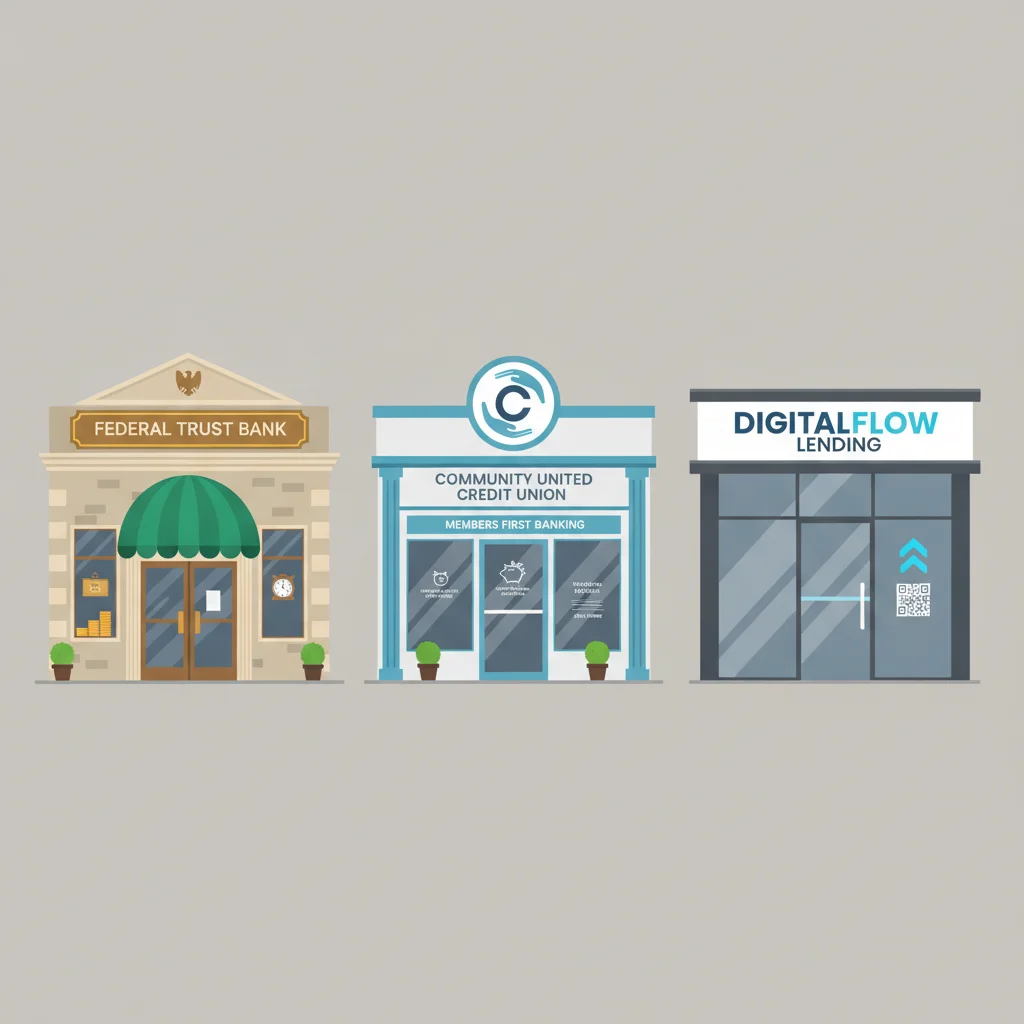
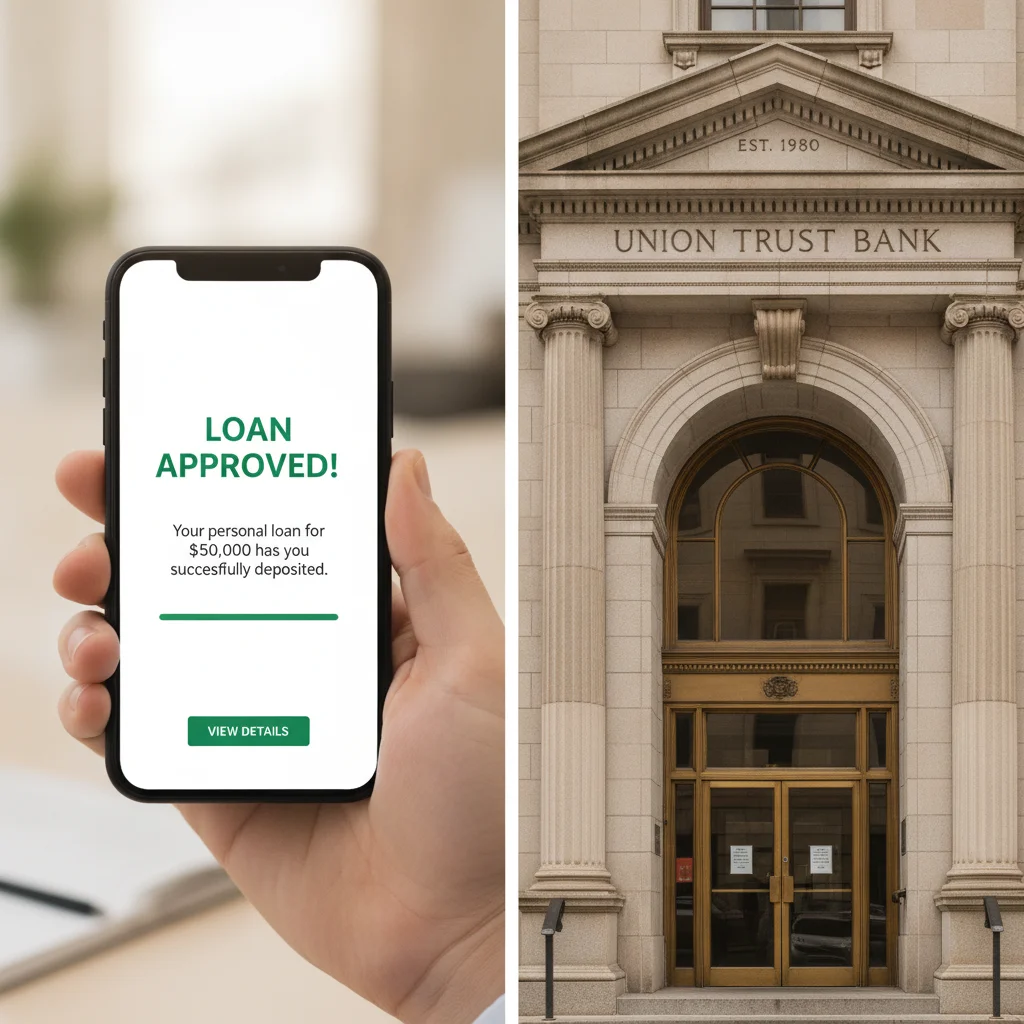
When your credit score is damaged — whether from missed payments, a repossession, or a period of financial hardship — the auto financing market splits into two very different worlds. Traditional banks, the kind with physical branches and established reputations, generally set minimum credit score thresholds that exclude most subprime borrowers. Online subprime lenders, by contrast, have built their entire business model around borrowers that banks turn away.
That structural difference shapes everything: who will approve you, how fast you'll hear back, what rate you'll pay, and what conditions come attached to the loan. Understanding which side of that divide you're on before you apply saves time, protects your credit score from unnecessary hard inquiries, and keeps you from walking into a bank meeting with unrealistic expectations.
For context, subprime borrowers are generally defined as those with FICO scores below 620, though some lenders set the threshold at 580 or even 640. Deep subprime refers to scores below 580. If you're unsure where you fall, pull your free credit reports from AnnualCreditReport.com and check your score before reading any further — that single number will shape nearly every decision in this comparison.
It's also worth knowing that this comparison focuses specifically on direct lenders — institutions you approach yourself. Dealer-arranged financing is a separate channel with its own mechanics. For a side-by-side look at that path, see dealer financing vs. direct lending for bad-credit borrowers.
Online Subprime Lenders: What You Actually Get
Online subprime lenders — companies like Capital One Auto Finance, Westlake Financial, DriveTime's affiliated lenders, and marketplace platforms like Auto Credit Express — have made speed and accessibility their primary selling points. Here's what that means in practice:
Approval Odds
Approval odds for subprime borrowers are substantially higher through online lenders. Many advertise approval rates for borrowers with scores as low as 500, and some work with borrowers who have recent bankruptcies or active collections — situations that would result in automatic rejections at most banks. This isn't charity; these lenders price the additional risk into their interest rates.
Speed
Most online subprime lenders offer decisions within minutes to 24 hours. Funding can follow within one to three business days after you identify a vehicle. For borrowers in urgent situations — a car breakdown, a sudden job change requiring transportation — this speed has real value.
Interest Rates
Here's where the tradeoff becomes stark. According to Experian's State of the Automotive Finance Market data, borrowers in the subprime tier (scores 501–600) paid average new-car APRs exceeding 11%, with deep subprime borrowers averaging over 14% in recent reporting periods. Some online subprime lenders charge significantly higher — rates between 18% and 29% are not uncommon for the lowest credit tiers. On a $15,000 loan over 60 months, the difference between a 10% rate and a 22% rate is roughly $6,000 in additional interest paid over the life of the loan.
14.18%
Average APR for deep subprime auto loans
According to Experian's State of the Automotive Finance Market, borrowers with scores below 501 paid an average of 14.18% on new vehicles — and considerably more on used cars — in recent quarters.
~$6,000
Extra interest cost: 10% vs. 22% on $15K loan
On a $15,000 used-car loan over 60 months, the difference between a 10% and a 22% APR translates to approximately $6,000 in additional total interest paid.
36%
Share of auto loans originated by nonbank lenders
Nonbank and online lenders now originate over a third of all auto loans in the U.S., reflecting the growing role of fintech and specialist lenders in the market.
45 days
Rate-shopping window for multiple hard inquiries
FICO and VantageScore models treat multiple auto loan hard inquiries made within a 14–45 day window as a single inquiry for scoring purposes, protecting active shoppers.
Loan Terms and Vehicle Restrictions
Online subprime lenders frequently impose restrictions that mainstream lenders don't: maximum vehicle age (often 7–10 years), mileage caps (commonly 100,000–125,000 miles), and minimum loan amounts. They may also require GPS tracking devices or starter interrupt systems installed in the financed vehicle — a condition designed to make repossession easier if you miss payments. Read the fine print carefully before signing.
Use Prequalification Before Committing
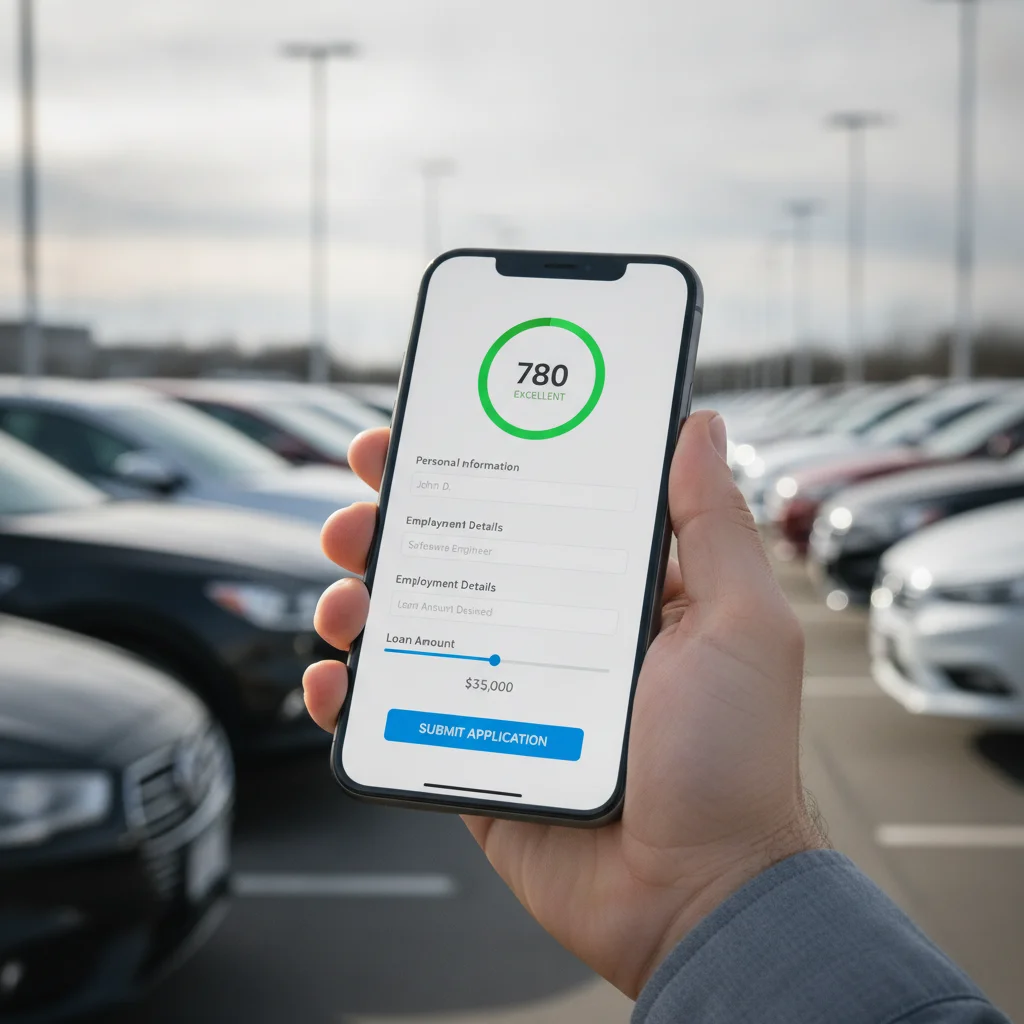
Most reputable online subprime lenders now offer soft-pull prequalification that shows you estimated rates and loan amounts without affecting your credit score. Always start here before submitting a full application. Collect two or three prequalification offers so you have a real comparison, not just a single data point. This also gives you documented leverage when approaching other lenders.
Time Your Applications Strategically
Once you're ready to move from prequalification to formal applications, submit them within a two-week window. Credit scoring models treat multiple auto loan hard inquiries within a short period as a single inquiry, minimizing the score impact of rate shopping. Spreading applications out over several months does more damage than batching them.
Read the Full Loan Agreement Before Signing
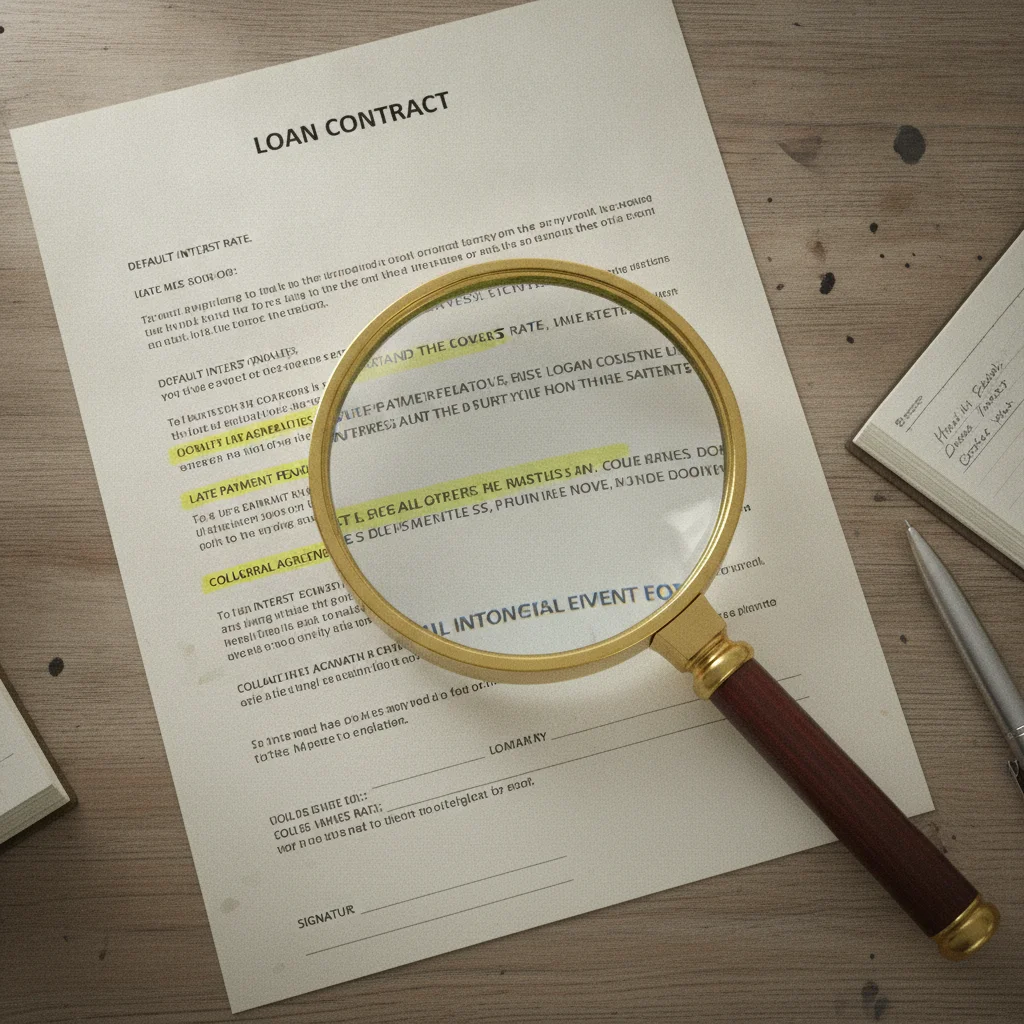
With online lenders especially, the final loan agreement may include conditions — GPS tracking, starter interrupt devices, mandatory add-ons — that weren't prominent in the prequalification summary. Never sign a loan agreement without reading the full document. If a lender won't give you time to review the terms, that itself is a red flag worth acting on.
Prequalification Without Hard Inquiries
One genuine advantage of online lenders is that many offer soft-pull prequalification, meaning you can see estimated rates and terms without triggering a hard credit inquiry. This lets you comparison-shop without damaging your score. Learn more about how this works in the loan preapproval process overview.
Traditional Bank Financing: What You Actually Get
Traditional banks — national institutions like Chase, Bank of America, and Wells Fargo, as well as regional and community banks — offer auto loans as part of a broader suite of financial products. Their approach to lending reflects their institutional risk tolerance, which is considerably lower than that of specialized subprime lenders.
Approval Odds for Subprime Borrowers
Bluntly: most traditional banks will not approve auto loan applications from borrowers with scores below 620, and many prefer scores of 660 or higher for competitive rates. If your credit falls below that threshold, applying cold to a major bank is likely to result in a rejection and an unnecessary hard inquiry on your credit report. There is one important exception: if you have an existing relationship with the bank — a checking account, savings account, or a previously paid-off loan — some community banks and credit departments will consider your overall financial history rather than relying solely on your score.
Interest Rates
For borrowers who do qualify, bank rates are meaningfully lower than what subprime online lenders offer. Prime borrowers (scores 661–780) typically receive APRs between 5% and 8% for used vehicles, according to Experian data. Even near-prime borrowers (scores 601–660) can sometimes access rates in the 9%–12% range at banks, which compares favorably with many online subprime offers for the same credit tier.

Loan Terms
Banks tend to offer more standardized loan terms — typically 36, 48, 60, or 72 months — without the vehicle-age restrictions or GPS requirements that subprime lenders attach. They also generally do not require starter interrupt devices, and their loan servicing practices are subject to more rigorous regulatory oversight.
Speed and Process
Bank approvals are slower. Expect one to three business days for a decision, and potentially a week or more before funds are disbursed. Some banks require you to visit a branch to complete paperwork, which adds friction. If you need financing quickly, this process timeline can be a dealbreaker.
Applying Cold to a Bank Can Hurt Your Score
Submitting a formal auto loan application to a traditional bank results in a hard credit inquiry regardless of whether you're approved. If you have a subprime score and apply to a bank without prior research into their credit requirements, you risk a rejection plus a credit score hit — a lose-lose outcome. Always research minimum score requirements or call ahead before formally applying to any bank with damaged credit.
Long Loan Terms Can Trap You in Negative Equity
Online subprime lenders frequently offer 72- or 84-month loan terms to make monthly payments appear manageable. But longer terms mean you'll owe more than the car is worth — negative equity — for a longer period. If the vehicle is damaged, stolen, or needs to be traded in early, negative equity creates a serious financial problem. Aim for the shortest term you can genuinely afford, even if the monthly payment is higher.
Where Banks Fall Short for Subprime Borrowers
Beyond the approval threshold issue, banks often have limited appetite to work with borrowers on exceptions. Their underwriting is largely automated, and appeals processes are bureaucratic. Online lenders — particularly specialized subprime platforms — may have human underwriters who can consider factors like employment stability, income growth, or a pattern of recent on-time payments that automated systems miss.
Side-by-Side Comparison
The table below captures the key differences across the criteria that matter most to subprime borrowers. Use it as a reference when evaluating specific offers.
| Online Subprime Lenders | Traditional Banks | |
|---|---|---|
| Minimum credit score | Often 500–580 or none | Typically 620–660+ |
| Approval speed | Minutes to 24 hours | 1–5 business days |
| Typical subprime APR range | 12%–29%+ | 9%–15% (if approved) |
| Soft-pull prequalification | Usually available | Rarely available |
| Vehicle age/mileage restrictions | Common (7–10 yr / 125k mi) | Minimal restrictions |
| GPS / starter interrupt requirements | Sometimes required | Not required |
| Human underwriting flexibility | Available at some lenders | Limited; largely automated |
| Existing relationship benefit | Not applicable | Can improve approval odds |
| Regulatory oversight | Varies by lender type | High (OCC, FDIC, CFPB) |
| Best suited for | Scores below 620, fast need | Scores above 620, lower rate priority |
One dimension the table can't fully capture is the variation within each category. Online subprime lenders range from predatory-rate operations to legitimate national institutions with responsible lending practices. Traditional banks range from rigid national chains to flexible community banks. Always evaluate the specific institution, not just the category.
For a parallel comparison that includes credit unions — which often outperform both categories for subprime borrowers — see subprime lenders vs. credit unions: who to apply to first.
The Strategy: How to Use Both Lender Types Together
The most effective approach for a subprime borrower isn't to pick one lender type and commit to it — it's to use online lenders as your baseline and banks as your stretch target. Here's how that plays out in practice:
- Start with soft-pull prequalification from two or three online subprime lenders. This establishes what you can realistically get approved for and at what rate, without any credit score impact. Keep records of these offers.
- Contact your existing bank or credit union — specifically one where you've maintained a positive account history. Mention that you're shopping for an auto loan and ask whether they have programs for borrowers with your credit profile. Sometimes the answer is yes, especially at community banks.
- Use your online offer as a negotiating anchor. If a bank can beat the online offer by even one or two percentage points, the savings over a 60-month loan can be substantial. If the bank can't compete, you already have an approved offer in hand.
- Apply formally (hard pull) only after you've identified your best offer. Multiple hard inquiries within a 14–45 day window are typically treated as a single inquiry by scoring models for rate-shopping purposes — so don't be afraid to finalize a few applications in quick succession once you've narrowed your options.
For a more detailed breakdown of which lender type to approach first based on your specific credit profile, this preapproval sequencing guide walks through the decision step by step.
Also consider what kind of loan structure you're agreeing to. Nearly all auto loans — whether from online or bank lenders — are secured by the vehicle itself. But understanding the implications of that structure matters, especially if you're borrowing with a damaged credit history. See secured vs. unsecured auto loans for poor-credit borrowers for a full explanation.
Red Flags to Watch For With Each Lender Type
Not every lender in either category operates ethically. Subprime borrowers are disproportionately targeted by predatory practices, so knowing what to watch for is part of protecting yourself.
Online Subprime Lender Red Flags
- APRs above 25% on a standard used-car loan (not a buy-here-pay-here arrangement) should prompt serious scrutiny. Rates above 29% are effectively predatory for vehicle financing.
- Mandatory add-ons bundled into the loan without clear disclosure — extended warranties, credit insurance, GAP coverage rolled in without your explicit agreement.
- No soft-pull option at all. Legitimate lenders generally offer prequalification. A lender that insists on a hard pull before showing you any terms is prioritizing their data collection over your interests.
- Starter interrupt devices as a non-negotiable condition on newer vehicles or moderate loan amounts — this is an aggressive risk mitigation tactic that warrants extra due diligence.
Traditional Bank Red Flags
- Pressure to open additional accounts (savings, checking, credit cards) as a condition of loan approval is a cross-selling tactic, not a legitimate underwriting requirement.
- Vague prepayment penalty language. Ask explicitly whether there are penalties for paying off your loan early. Some banks include these clauses in fine print.
- Rate-and-switch behavior — being quoted one rate during pre-screening and presented with a higher rate at closing. This happens more than borrowers expect, especially when credit is borderline.
If you're financing a vehicle you haven't physically inspected — a situation increasingly common with online purchases — the lender relationship carries additional complexity. Financing a car you've never seen covers how online auto loans work in fully digital transactions and where the risks concentrate.
When Neither Option Is Right: Alternatives Worth Considering
If online subprime lenders are quoting rates above 20% and traditional banks have declined your application, stepping back and reassessing might produce a better long-term outcome than accepting any available offer.
Credit Unions
Credit unions consistently offer lower rates than both online subprime lenders and traditional banks for members across all credit tiers. If you're not already a member of a credit union, many have open membership criteria — community-based unions, employer-based unions, or national options like PenFed. The application process is slower, but the rate differential can be worth it.
A Larger Down Payment
Increasing your down payment reduces the loan-to-value ratio, which directly improves your approval odds and can drop you into a lower rate tier. A borrower putting 20% down on a used vehicle is a materially different risk proposition than one putting 5% down — even with identical credit scores. If you're six months from a purchase, saving aggressively toward a larger down payment often beats rushing into a high-rate loan today.
A Co-Signer
A creditworthy co-signer — a family member or close friend with a score above 680 — can unlock bank financing that would otherwise be unavailable. The co-signer is equally responsible for the debt, so this arrangement carries relational risk. Be honest about your repayment plan before asking anyone to co-sign.
Targeted Credit Repair
If your score is within striking distance of a meaningful threshold — say, 590 and aiming for 620 — targeted credit repair steps (disputing errors, paying down revolving balances, avoiding new inquiries) can shift your position within a few months. The rate improvement from crossing a credit tier boundary can easily justify a brief delay in purchase.

All claims are backed by peer-reviewed research. Sources on request.