Key Takeaways
Bad Credit Auto Loan as a Credit-Building Tool
A bad credit auto loan — often called a subprime auto loan — is financing issued to borrowers with low credit scores, typically below 580. While these loans carry higher interest rates, they report to the major credit bureaus just like any other installment loan. That means every on-time payment you make gets recorded on your credit report and, over time, can meaningfully raise your score.
Payment history accounts for 35% of your FICO score — the single largest factor. An installment loan with consistent on-time payments builds what scoring models call a positive payment track record, which has an outsized effect on subprime borrowers who often lack recent positive credit activity.
Why a Subprime Loan Shows Up on Your Credit Report — and Why That Matters
Most people in a tough credit situation focus entirely on the downside of a subprime auto loan: the high interest rate, the stricter terms, the feeling of being penalized for past financial missteps. That's understandable. But there's a structural benefit to these loans that often gets overlooked — they report to the three major credit bureaus (Equifax, Experian, and TransUnion) exactly the same way a prime loan does.
Your lender submits a monthly report to each bureau showing your loan balance, your payment due date, and whether you paid on time. Credit scoring models — especially FICO, which most auto lenders use — place enormous weight on this data. Payment history represents 35% of your FICO score, making it the single most influential factor in how your score is calculated.
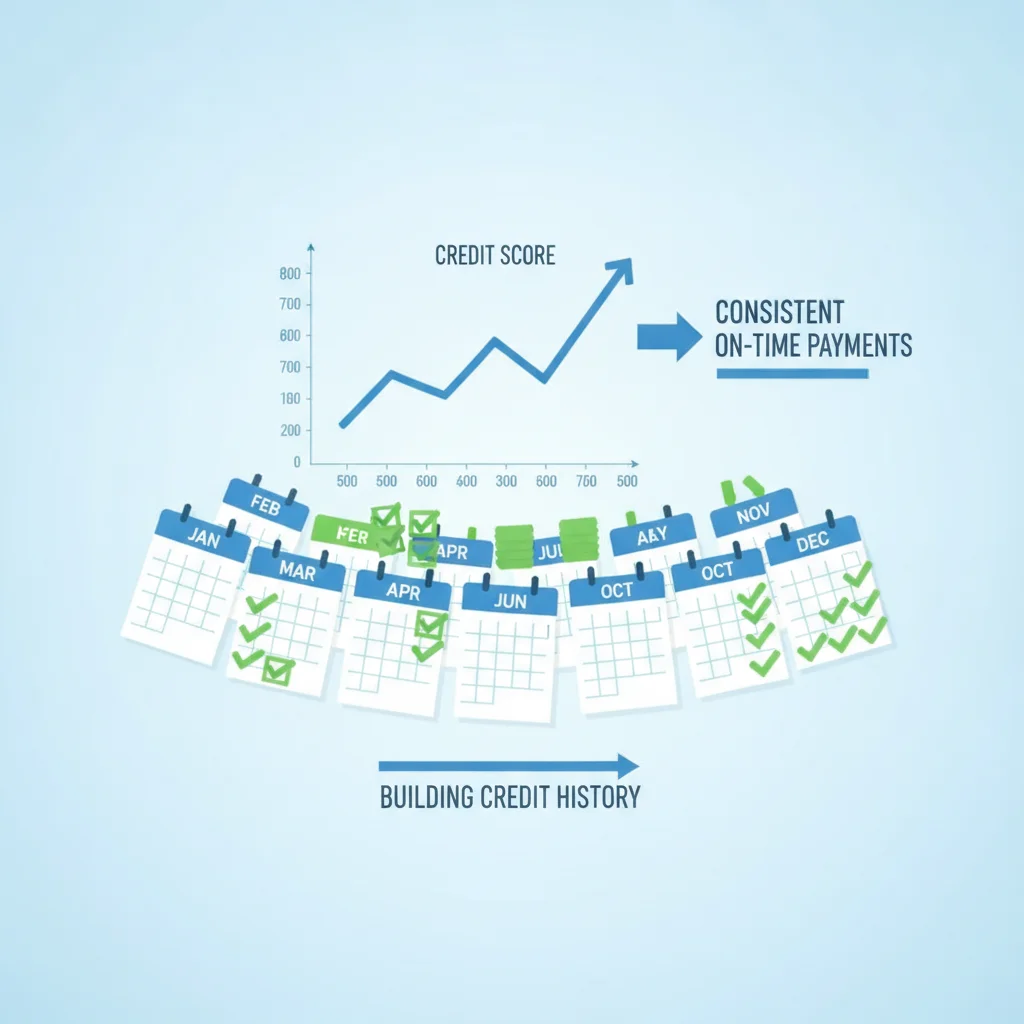
For someone with damaged credit, that reporting pipeline is actually an opportunity. Here's the logic: if your score is low because of past missed payments, collections, or a thin credit file, the fastest way to counteract that history is to build a competing record of positive activity. A subprime auto loan does exactly that — it gives you a structured, monthly opportunity to demonstrate responsible repayment behavior to the bureaus.
The key word is structured. Unlike paying rent or utilities — which typically don't appear on your credit report unless you enroll in specific reporting services — a car loan is automatically reported every month without any extra steps on your part. That automatic reporting is what makes it such a reliable credit-building mechanism.
Not All Subprime Lenders Report to All Bureaus
Before signing any subprime auto loan, confirm that the lender reports to all three major credit bureaus — Equifax, Experian, and TransUnion. Some buy-here-pay-here dealerships only report to one bureau, or none at all, which significantly limits the credit-building impact of your on-time payments. Ask the lender directly and get it confirmed in writing if possible.
Autopay Reduces the Risk of Accidental Missed Payments
Setting up automatic payments through your bank or the lender's payment portal removes the most common cause of missed payments: forgetting. Even if you intend to pay manually, scheduling a backup autopay ensures the minimum payment is always made on time. Most lenders offer this feature at no cost, and some even offer a small APR discount for enrolling.
Hard Inquiries From Loan Shopping Are Grouped
If you apply to multiple auto lenders within a 14–45 day window (depending on which FICO version the lender uses), the credit bureaus typically count all those inquiries as a single inquiry for scoring purposes. This means you can and should shop around for the best subprime rate without worrying that multiple applications will compound the damage to your score.
The Credit Score Mechanics: What Actually Changes
To understand how a subprime auto loan rebuilds your score, it helps to know which specific credit scoring factors it influences — and how much.
Payment History (35% of FICO)
This is the big one. Every on-time payment you make adds a positive data point to your report. Over 12–24 months, a string of on-time payments can visibly move your score, especially if your report currently has gaps or past-due accounts that have since been resolved. The effect compounds: the longer your streak of on-time payments, the more the older negative marks get diluted by newer positive activity.
Credit Mix (10% of FICO)
Credit scoring models reward borrowers who can handle more than one type of credit responsibly. There are two main types: revolving credit (credit cards, lines of credit) and installment credit (car loans, mortgages, personal loans). If you currently only have credit cards — or no credit at all — adding an installment loan to your profile improves your credit mix, which can give your score a modest but meaningful lift.
Credit Utilization (30% of FICO) — Indirect Effect
An auto loan doesn't directly affect your utilization ratio the way a credit card does, because installment loans aren't factored into revolving utilization. However, if getting a car loan reduces your financial pressure and allows you to pay down credit card balances more consistently, you'll see indirect benefits on the utilization front.
35%
FICO weight given to payment history
Payment history is the single largest factor in your FICO score, according to myFICO.com — making consistent on-time payments the most direct lever a borrower can pull.
+40 to +80
Typical score gain after 12–24 months of on-time payments
Subprime borrowers who maintain consistent installment loan payments over two years typically see this cumulative score increase, though results vary by individual credit profile.
580
Common threshold between subprime and near-prime classification
FICO scores below 580 are generally classified as subprime by most auto lenders, resulting in significantly higher interest rates than borrowers above this threshold receive.
$3,000+
Potential extra interest cost on a subprime vs. prime loan
On a $15,000 auto loan, the difference between a 6% prime APR and a 20% subprime APR can exceed $3,000 in additional interest over a 48-month term.
22%
Average APR for deep subprime auto borrowers
According to Experian's State of the Automotive Finance Market report, borrowers with scores below 580 face average new-vehicle APRs near or above 22%, highlighting the cost of entry into this lending tier.
Account Age (15%) and New Accounts (10%)
Opening a new loan temporarily lowers your average account age and triggers a hard inquiry, which can drop your score by a few points short-term. Most borrowers see this recover within three to six months as the new account ages and payment history accumulates. It's a short-term cost that's typically outweighed by the long-term benefit.
Set a Payment Reminder Before Autopay Clears
Even with autopay enabled, set a calendar reminder two days before your payment due date to verify that the funds are available in your account. A returned payment due to insufficient funds can trigger a late payment report just like a missed manual payment — and your lender may charge an additional returned-payment fee. Thirty seconds of verification can protect months of credit-building progress.
Track Your Score Every 3–6 Months
Use a free credit monitoring service — many banks and credit card issuers offer this at no cost — to check your score regularly throughout your loan term. Tracking your progress helps you know when your score has improved enough to shop for a refinance, and it also alerts you to any errors or unexpected changes on your report that could be slowing your progress.
What Borrowers Most Commonly Get Wrong
The credit-rebuilding benefit of a subprime auto loan isn't automatic — it only materializes if you manage the loan correctly. These are the mistakes that most often derail borrowers who take this approach.
Missing Even One Payment
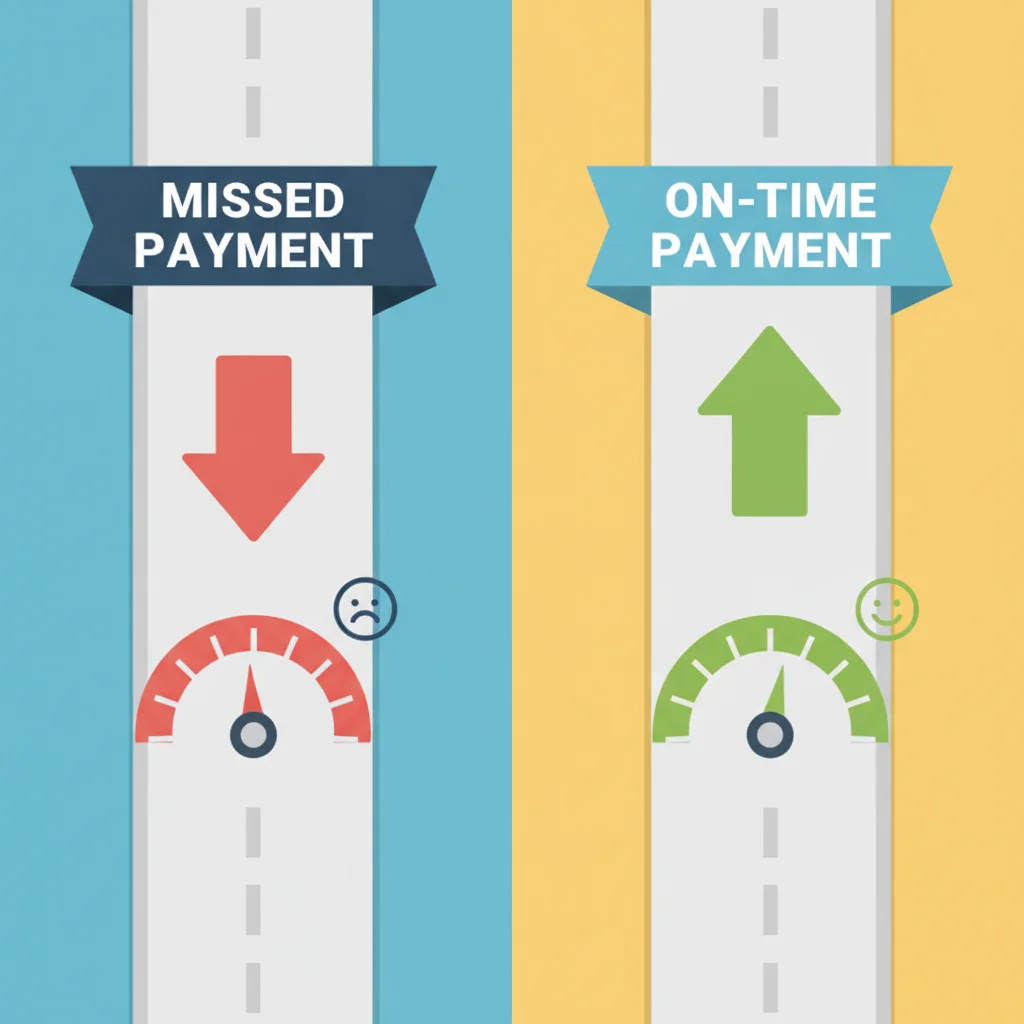
A single missed payment can drop your FICO score by 60–110 points depending on where your score currently sits. For a subprime borrower trying to climb out of a low score, that kind of setback can take over a year to recover from. The math is brutal: you could make 18 consecutive on-time payments, miss one, and find yourself in a worse position than when you started. What happens when you miss a payment on a subprime loan goes deeper into the timeline — from grace period to potential repossession — and it's worth reading before you sign.
Borrowing More Than the Budget Can Support
Subprime lenders sometimes approve borrowers for more than they can realistically afford. A larger loan means a larger monthly payment — which increases the odds of eventually missing one. A good rule of thumb: your total monthly car costs (loan payment + insurance + fuel + maintenance) shouldn't exceed 15–20% of your gross monthly income. Run that calculation before you agree to any loan amount.
Accepting the First Offer Without Shopping
Many subprime borrowers assume they have no leverage and accept the first loan offer they receive. That's rarely true. Rates vary significantly across subprime lenders, credit unions, and buy-here-pay-here dealerships. Even a one or two percentage point reduction on a $15,000 loan can save you $500–$1,000 over a 48-month term. See getting preapproved for a loan to understand how to shop without racking up multiple hard inquiries.
Ignoring the Exit Strategy
A subprime loan shouldn't be a permanent arrangement. Once you've built 12–24 months of positive payment history, you should actively evaluate whether refinancing makes sense. Staying in a 20%+ APR loan longer than necessary is an expensive mistake. We'll cover this exit strategy in more detail below.
The Timeline: What to Realistically Expect Month by Month
Credit improvement isn't instant, but it does follow a recognizable pattern for most subprime borrowers. Here's a realistic month-by-month picture of what to expect.
| Timeframe | What's Happening | Typical Score Change |
|---|---|---|
| Month 1–3 | Hard inquiry posts; new account lowers average age | −5 to −15 points (temporary) |
| Month 3–6 | Positive payment history starts accumulating; initial dip reverses | Back to baseline or slight gain |
| Month 6–12 | Consistent on-time payments building a positive track record | +20 to +40 points (typical range) |
| Month 12–24 | Payment history strengthening; older negatives losing weight | +40 to +80 points (cumulative) |
| Month 24+ | Potentially eligible for refinancing at a lower rate | Score may qualify for near-prime products |
These ranges are general estimates — your actual results will depend on what else is on your credit report, how many accounts you have, and whether you manage any other debt responsibly during this period. But the trajectory is consistent: sustained on-time payments on an installment loan reliably move scores upward for most borrowers starting from a low baseline.
“For borrowers with damaged credit, a responsibly managed installment loan can be one of the most efficient credit-building tools available — but only if the payment is affordable enough that missing one is never a realistic outcome.”
— Rod Griffin, Senior Director of Consumer Education and Advocacy, Experian
For a fuller picture of how credit scores respond to auto loan behavior, see our Credit Score Impact hub, which covers how lenders interpret your score and how different loan actions affect it over time.
The Exit Strategy: Refinancing Once Your Score Recovers
The goal of using a subprime loan to rebuild credit isn't to stay in that loan forever. It's to use the loan as a ladder — borrow at a high rate now, build a track record, and then refinance into a better rate once your score has improved enough to qualify.
Here's what that exit strategy typically looks like in practice:
- Make 12–24 months of on-time payments on your current loan.
- Check your credit score every three to six months using a free monitoring service to track your progress.
- Target a score above 620 before approaching lenders for refinancing — many near-prime and prime lenders start their most competitive rates around this threshold.
- Shop refinance offers from at least three lenders — your bank, a credit union, and an online lender — to compare APRs without automatically accepting the first offer.
- Calculate the break-even point — if there are prepayment penalties on your current loan, make sure the savings from a lower rate actually outweigh the cost of exiting early.
The interest savings from refinancing can be substantial. A borrower who started at 22% APR on a $14,000 loan and refinances to 9% APR after 18 months could save well over $2,000 in remaining interest charges. That's a meaningful financial outcome — not just a score improvement. See refinancing out of a high-rate subprime loan for a detailed breakdown of when and how to make this move.
Set a Payment Reminder Before Autopay Clears
Even with autopay enabled, set a calendar reminder two days before your payment due date to verify that the funds are available in your account. A returned payment due to insufficient funds can trigger a late payment report just like a missed manual payment — and your lender may charge an additional returned-payment fee. Thirty seconds of verification can protect months of credit-building progress.
Track Your Score Every 3–6 Months
Use a free credit monitoring service — many banks and credit card issuers offer this at no cost — to check your score regularly throughout your loan term. Tracking your progress helps you know when your score has improved enough to shop for a refinance, and it also alerts you to any errors or unexpected changes on your report that could be slowing your progress.
Is This Strategy Right for Your Situation?
Taking on a subprime auto loan specifically to rebuild your credit is a legitimate strategy — but it's not without tradeoffs, and it's not the right move for everyone. Before you commit, ask yourself these questions honestly.
Do You Actually Need the Car?
The strongest case for this approach is when you genuinely need reliable transportation and bad credit is your only obstacle to getting it. In that scenario, you're not taking on debt purely as a financial strategy — you're solving a real problem and building credit as a secondary benefit. If you don't need a car, there are lower-cost ways to build credit, such as a secured credit card or a credit-builder loan.
Can You Afford the Monthly Payment Comfortably?
Not comfortably in a stretch-budget way — comfortably meaning that even if you have an unexpected expense one month, you can still make the car payment without missing it. If the payment is at the outer edge of what you can manage, the risk of a missed payment (and the credit damage that follows) is too high to make this worthwhile.
Have You Compared Enough Lenders?
The interest rate you pay on a subprime loan directly determines how much this strategy costs you. There's a meaningful difference between a 15% APR loan and a 24% APR loan — and both may be accessible to you depending on where you shop. What to realistically expect when getting a car loan with bad credit walks through the options in detail, including credit unions and community banks that often offer better rates than dealer-arranged financing.
Is Your Credit Situation Stable?
If you're still dealing with active financial stress — ongoing collection accounts accumulating, income instability, or an unresolved bankruptcy — adding an auto loan to the mix may not improve your situation. This strategy works best for borrowers whose financial life has stabilized and who are ready to be consistent about payments for the next 24+ months. If your credit damage came from past events that are now resolved, you're in a much better position to execute this approach effectively.
For context on just how much the interest rate premium can cost over a loan's lifetime, see the real cost of borrowing with a low credit score — it's a useful reality check before committing to any subprime loan.

All claims are backed by peer-reviewed research. Sources on request.