Key Takeaways
Detailing ROI
Detailing ROI (return on investment) refers to how much extra money you recover from a car sale compared to what you spent getting it cleaned and polished. When you detail a car before selling it privately, the goal is simple: spend a little to make a lot more. The key is knowing which detailing tasks actually move the needle on price versus which ones just cost you time and money.
ROI in this context is calculated as: (sale price increase − detailing cost) ÷ detailing cost × 100. A positive ROI means you netted more than you spent; a negative ROI means detailing hurt your bottom line.
Why Presentation Price Is a Real Thing
When a buyer scrolls through a dozen listings, the first filter is visual. A car that looks cared-for triggers an instinctive assumption: if the owner looked after the appearance, they probably looked after the mechanics. That psychological shortcut — fair or not — directly affects how much a buyer is willing to pay before they've even seen the car in person.
This is what sellers mean when they talk about presentation price: the ceiling a buyer places on their offer based purely on first impressions. A dirty, cluttered interior or oxidized paint can silently push that ceiling down by hundreds of dollars, even if the car runs perfectly. Detailing is one of the few prep steps that actively raises that ceiling rather than just preventing a discount.
The math matters here. If you're listing a $12,000 car and a buyer mentally anchors at $11,200 because the interior looks rough, you've lost $800 before you've said a single word. Detailing is essentially an argument — delivered without speaking — that your car is worth what you're asking.
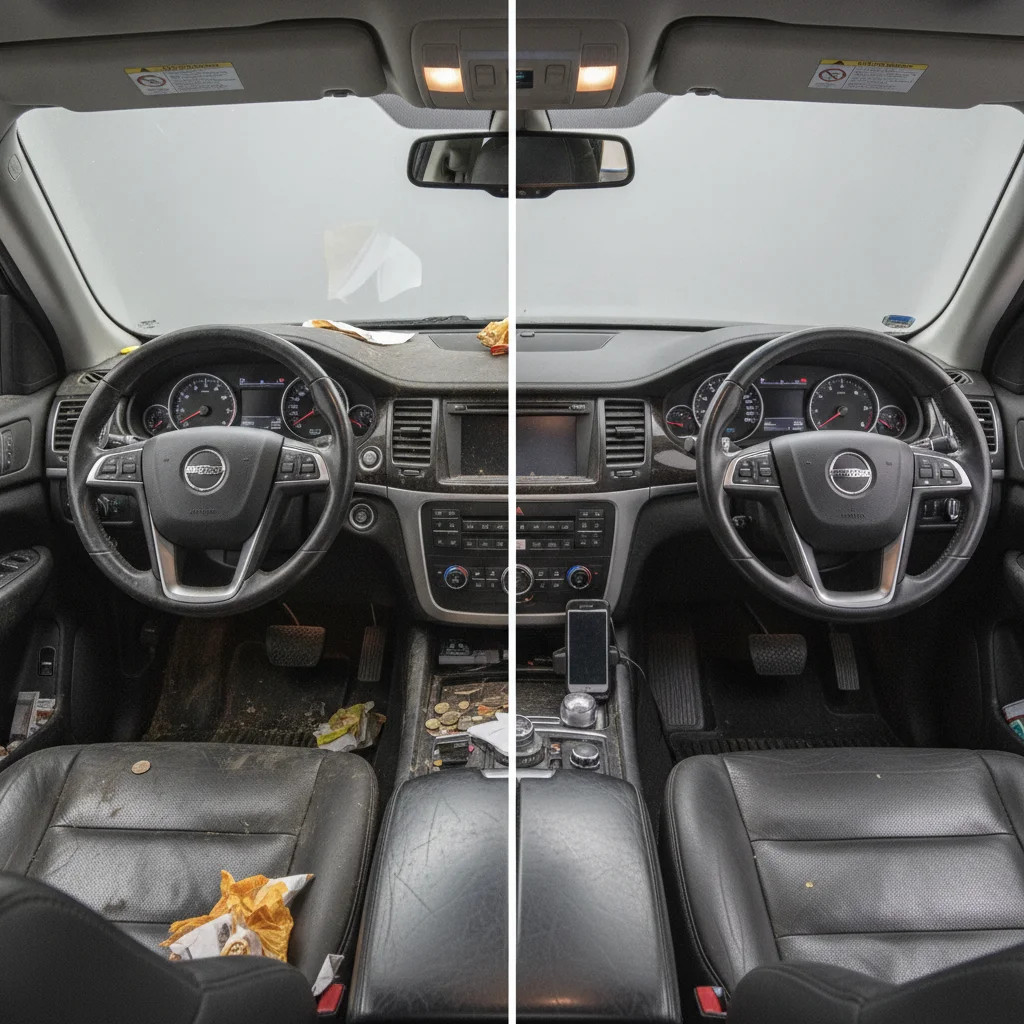
This doesn't mean you need to spend a fortune. But it does mean that understanding where presentation matters most is the difference between a detailing expense and a detailing investment. The private party sales process rewards sellers who understand buyer psychology, and presentation is the first chapter of that story.
What the Numbers Actually Show
Hard data on detailing ROI is harder to pin down than used-car pricing guides, but industry surveys and resale market analysis paint a consistent picture. iSeeCars and similar platforms have found that well-presented used vehicles sell faster and for measurably more than comparable cars in poor cosmetic condition — the gap averaging between 5% and 10% of asking price in private sales.
5–10%
Typical private sale price premium for well-presented vehicles
Based on resale market analysis from iSeeCars and similar used-car pricing platforms comparing comparable vehicles in clean vs. poor cosmetic condition.
$500–$2,000
Realistic price increase from a thorough pre-sale detail
Range reflects vehicle price tier and starting condition; higher-value and more neglected vehicles see the greatest absolute gains.
$50–$150
Typical DIY detailing supply cost
Covers wash supplies, clay bar, interior cleaner, microfiber cloths, and tire dressing for a mid-size vehicle starting with minimal supplies on hand.
11 days
Average reduction in days-on-market for detailed cars
Faster sales reduce ongoing costs like insurance premiums and registration, adding to the effective return of pre-sale detailing investment.
68%
Buyers citing interior condition as a top purchase factor
According to Cox Automotive's 2023 Car Buyer Journey survey, interior cleanliness and odor rank among the most frequently cited deal-breakers during in-person viewings.
For a vehicle listed at $15,000, a 5% presentation premium equals $750. A professional detail in most U.S. markets costs $150–$400. That's a net gain of $350–$600 — even before accounting for the fact that a cleaner car typically sells faster, saving you holding costs like insurance and registration renewal.
The ROI curve isn't flat across all price points, though. On a $4,000 beater, a $300 detail might recover $200 in price — a net loss. On a $20,000 late-model SUV, the same service could recover $800 or more. This is why understanding your vehicle's market position matters before you open your wallet. Tools like Kelley Blue Book and Edmunds — explored in depth in our valuation tools guide — can help you benchmark where your car stands before deciding how much to invest in prep.
“A clean car sells itself. Buyers aren't just purchasing transportation — they're buying a feeling. When a car looks and smells fresh, buyers assume the whole vehicle has been treated that way.”
— Brian Moody, Executive Editor, Autotrader
The bottom line: detailing ROI is real, but it's not guaranteed. The return depends on your car's price tier, its starting condition, and which specific tasks you choose to invest in.
DIY vs. Professional: Where the Math Diverges
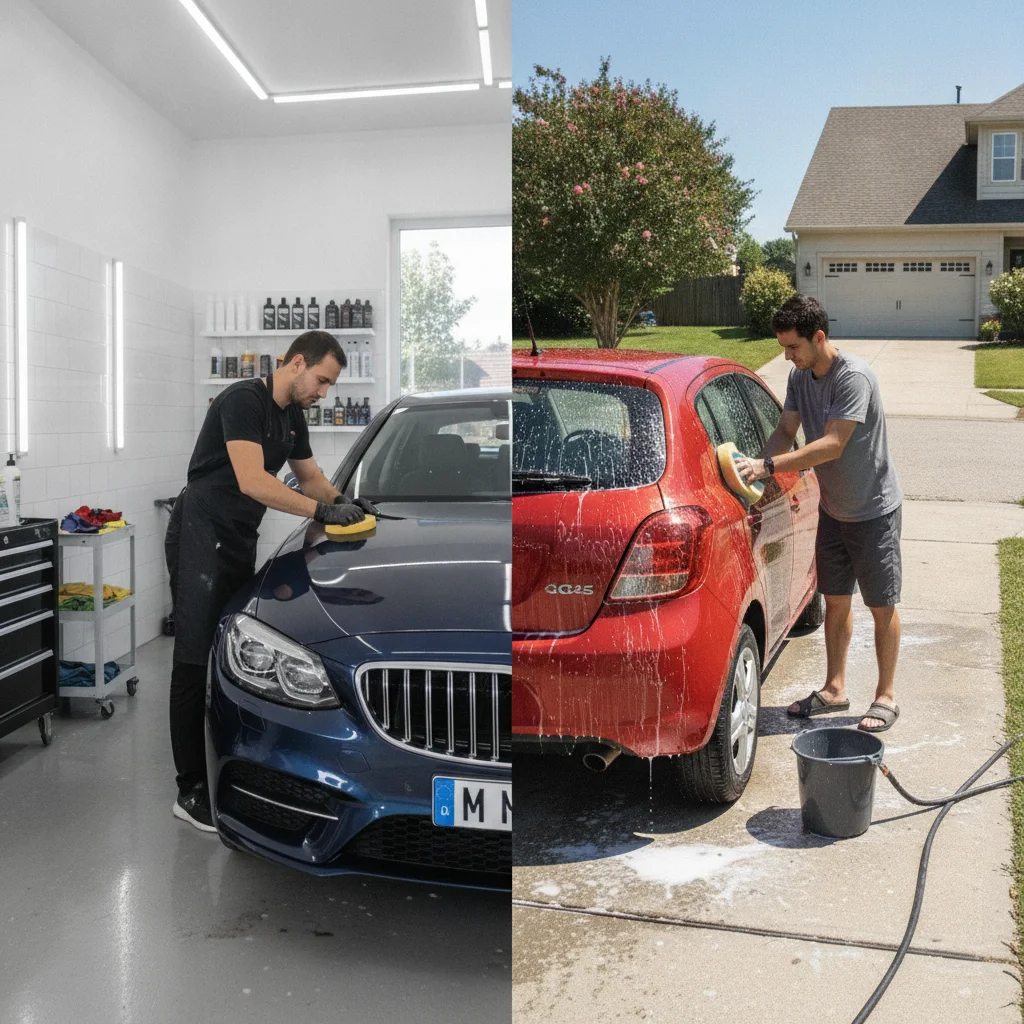
One of the most important decisions sellers face is whether to hire a professional detailer or handle it themselves. The answer isn't the same for everyone, and it hinges on three variables: your vehicle's value, your available time, and your tolerance for physical work.
DIY Detailing Costs and Returns
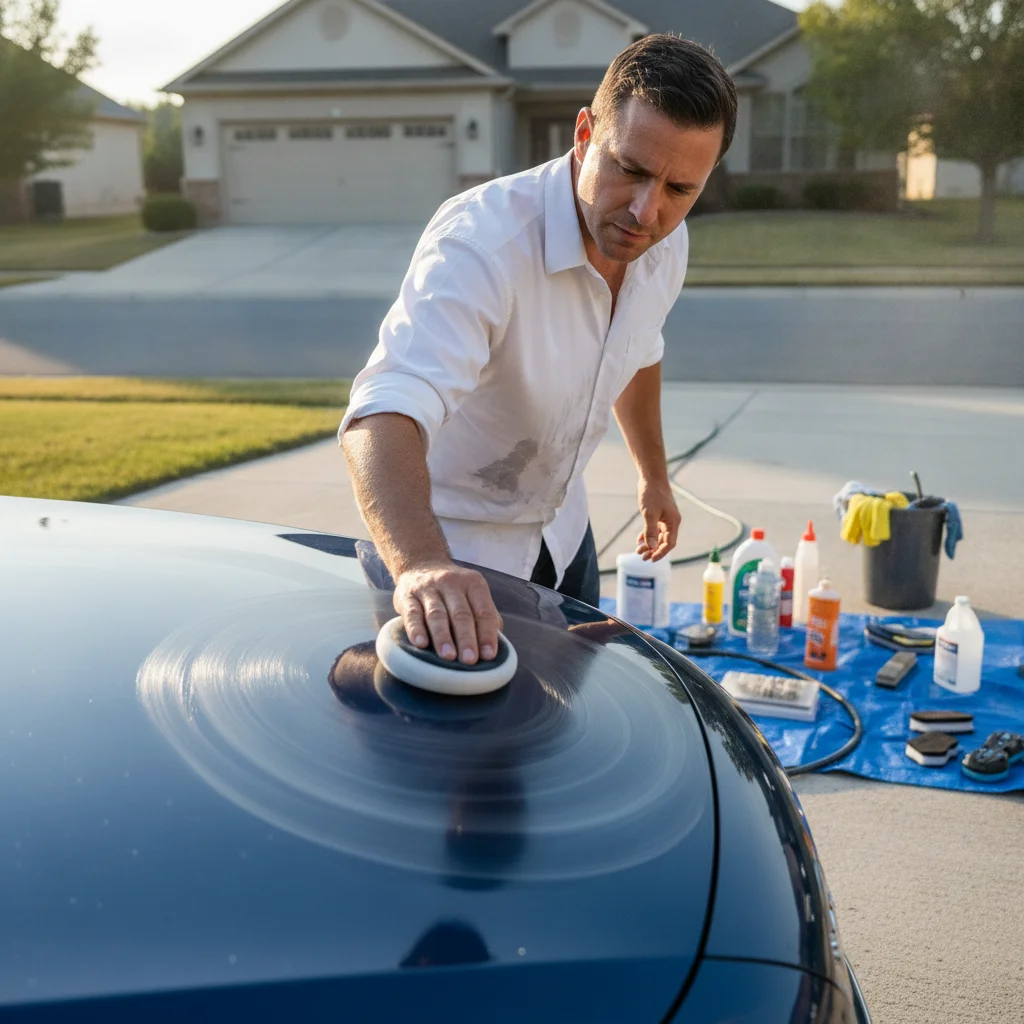
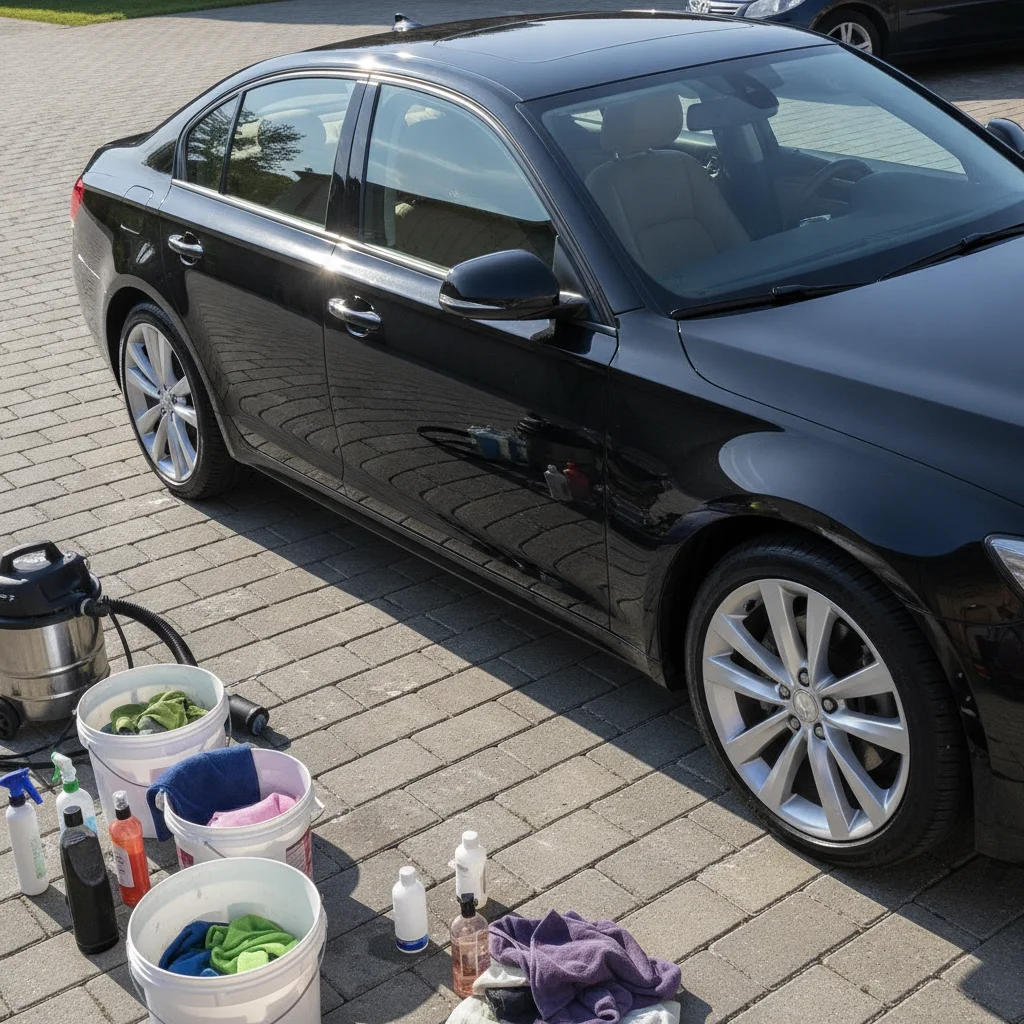
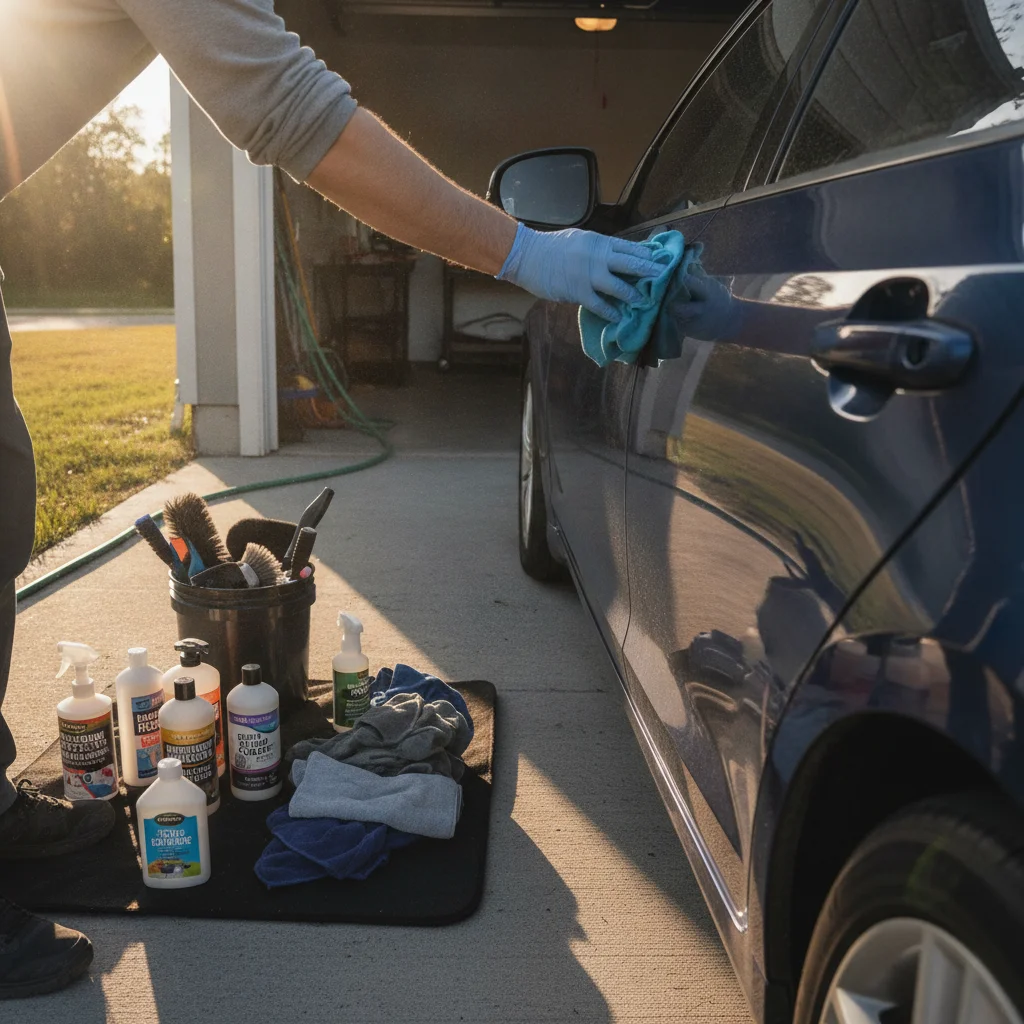
A solid DIY detail — including a wash, clay bar, interior vacuum, surface wipe-down, glass cleaning, and tire dressing — costs roughly $50–$150 in supplies if you're starting from scratch. If you already own basic supplies, that drops to nearly zero. The time investment is real: expect 4–8 hours for a thorough job on a mid-size vehicle.
The payoff is substantial. On a vehicle priced between $6,000 and $18,000, a high-quality DIY detail can realistically support $400–$900 in price premium, making it one of the highest-ROI activities available to any seller. For our full breakdown of how DIY compares to professional services, see Professional Detailing vs. DIY.
Professional Detailing Costs and Returns
A professional full detail typically runs $150–$500 depending on vehicle size, location, and package. Add-ons like paint correction or ceramic coating can push that to $800–$1,500. The quality is generally higher and more consistent — especially for paint polishing, engine bay cleaning, and odor elimination — but the cost narrows your margin significantly.
Professional detailing makes the most financial sense when:
- Your vehicle is priced above $10,000
- The car has specific issues (pet odor, heavy swirl marks) that require specialized equipment
- You lack the time or physical ability to do a thorough job yourself
- The car has been neglected and needs more than a basic clean
Start with the Interior, Always
When budget or time forces you to prioritize, put interior cleaning first. Buyers spend the test drive inside the car — smelling it, touching surfaces, and forming their strongest impressions. A spotless exterior paired with a grimy cabin almost always kills the deal faster than the reverse scenario.
Don't Detail and Then Drive It Daily
It sounds obvious, but many sellers detail a week before their listing and then continue using the car as their daily driver. Commuting puts bird droppings, dust, and interior grime back within days. If you must keep driving it, do a quick maintenance wipe-down every 2–3 days and schedule your detail for the 48-hour window before photos and showings.
The sweet spot for most sellers is a hybrid approach: DIY the wash, interior, and glass; hire a pro for paint polishing or odor treatment if those are specific problem areas. This approach keeps costs controlled while targeting the tasks where professional skill genuinely adds value.
High-ROI Tasks vs. Low-ROI Splurges
Not all detailing tasks are created equal. Some deliver outsized buyer impact for minimal cost. Others are genuinely impressive but don't translate into higher offers from real-world used car buyers. Knowing the difference protects your wallet.
High-ROI Detailing Tasks
- Interior deep clean
- Vacuuming, shampooing carpets and seats, wiping all surfaces, cleaning vents and cup holders. This is the single highest-impact task because interior condition is the first thing buyers physically experience during a test drive. Odor elimination in particular is a non-negotiable — one whiff of pet, smoke, or mildew can kill an offer instantly.
- Exterior hand wash and clay bar
- Removes embedded contaminants and leaves paint feeling smooth. Combined with a basic polish and sealant, this restores luster that buyers notice in photos and in person. Cost: $20–$60 in DIY supplies.
- Glass cleaning (inside and out)
- Streaky windows are disproportionately noticeable. Clean glass signals attention to detail and improves both listing photos and the in-person impression dramatically for minimal effort.
- Tire and trim dressing
- Fresh-looking tires and trim make a car look newer than it is. This costs under $15 and takes 20 minutes.
Low-ROI Splurges to Think Twice About
- Full paint correction
- On vehicles under $10,000, the $400–$800 cost rarely returns fully at sale. Buyers in that price range expect some paint wear. Consider a light machine polish instead.
- Ceramic coating
- An excellent long-term investment for a keeper vehicle — a poor one for a car you're about to sell. Most buyers don't know what it is and won't pay more for it.
- Engine bay detailing
- A clean engine bay impresses enthusiasts and some cautious buyers, but it's rarely the deciding factor in a sale. Worth doing only if the bay is visibly filthy or oily.
Condition Ratings Affect More Than You Think
Valuation tools like Kelley Blue Book and Edmunds ask you to self-report your vehicle's condition as Excellent, Good, Fair, or Poor. A car that qualifies as 'Good' after detailing versus 'Fair' beforehand can represent a $400–$800 difference in the estimated private party value — before a single buyer negotiates. Detailing doesn't just affect buyer perception; it can directly shift which condition tier your car legitimately falls into.
Transparency Builds Buyer Trust
A thoroughly detailed car can inadvertently raise buyer suspicion if they wonder what's being hidden. Counter this by being upfront about the car's actual condition, sharing a vehicle history report, and welcoming a pre-purchase inspection. Cleanliness paired with transparency is far more powerful than cleanliness alone — it removes every reason for a buyer to discount their offer.
Detailing Doesn't Fix Mechanical Problems
A gleaming exterior can generate buyer excitement, but that excitement turns to frustration fast if a PPI reveals deferred maintenance or hidden damage. Budget your prep dollars with mechanical condition as the foundation. A $150 pre-sale inspection from a trusted mechanic can tell you what actually needs attention before you spend a dollar on cosmetics.
One more thing to watch: popular prep tips that sound smart but can actually damage your car's value. Before trying anything unconventional, check Detailing Myths That Cost Sellers Time and Money — it separates the genuinely useful from the harmful.
Timing Your Detail for Maximum Payoff
Even a perfect detail can lose its impact if the timing is off. Detailing too early means your car collects dust, bird droppings, and fingerprints before a single buyer sees it. Detailing too close to a last-minute showing means wet surfaces, lingering chemical smells, or missed spots.
The optimal window is 1–3 days before your listing goes live for photos, and within 48–72 hours of scheduled viewings. This gives the car time to air out any chemical odors from interior products while staying clean enough to impress.
Here's something sellers often overlook: detailing for listing photos and detailing for in-person viewings are actually two slightly different goals. Photos reward high-gloss finishes and dramatic reflections. In-person viewings reward tactile cleanliness — how surfaces feel, how the interior smells, whether there's grime in the door jambs a camera wouldn't catch. Our article on Detailing for Photos vs. Detailing for Viewings walks through exactly how to prep differently for each stage.
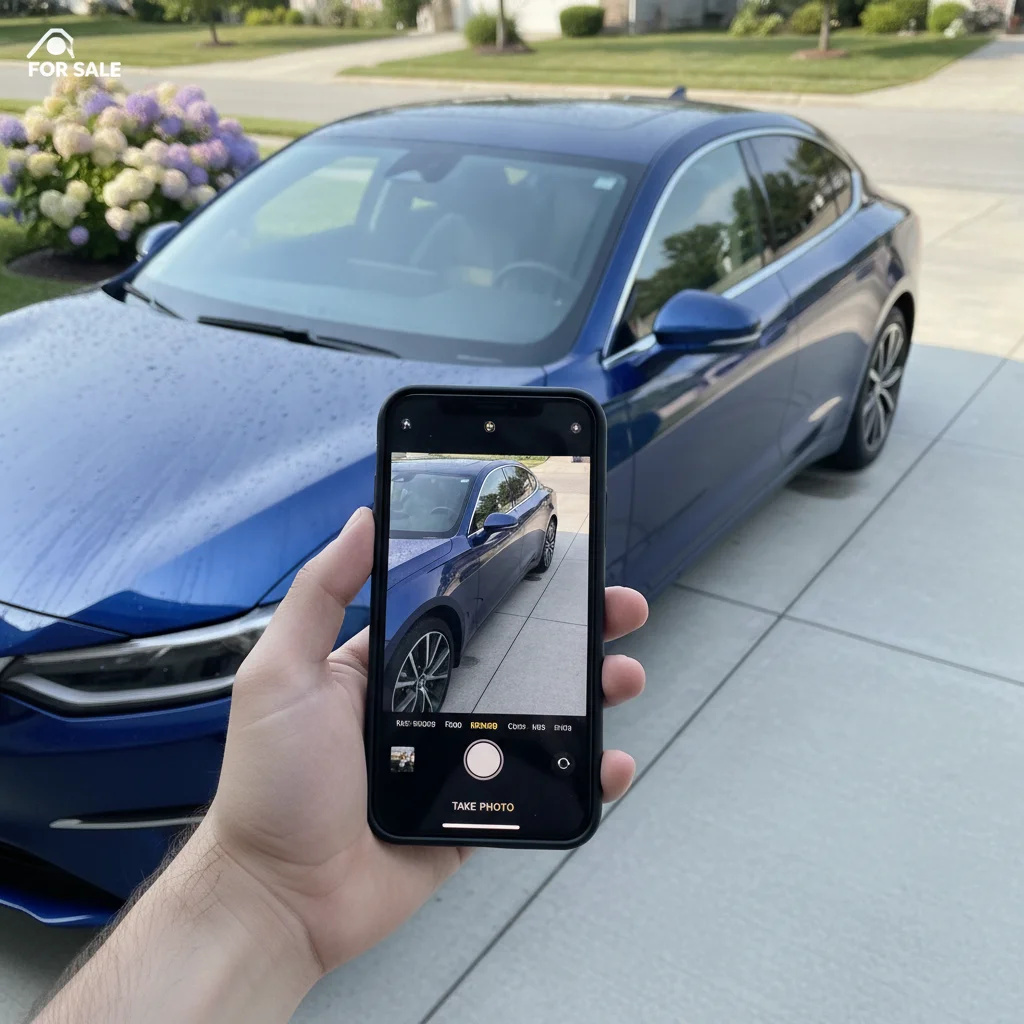
One practical tip: after your listing photos are taken, do a quick 20-minute touch-up before each viewing. Wipe down interior surfaces, re-dress the tires, and run a microfiber over exterior panels. This five-dollar effort maintains the impression of a freshly detailed car without requiring a full redo between every showing.
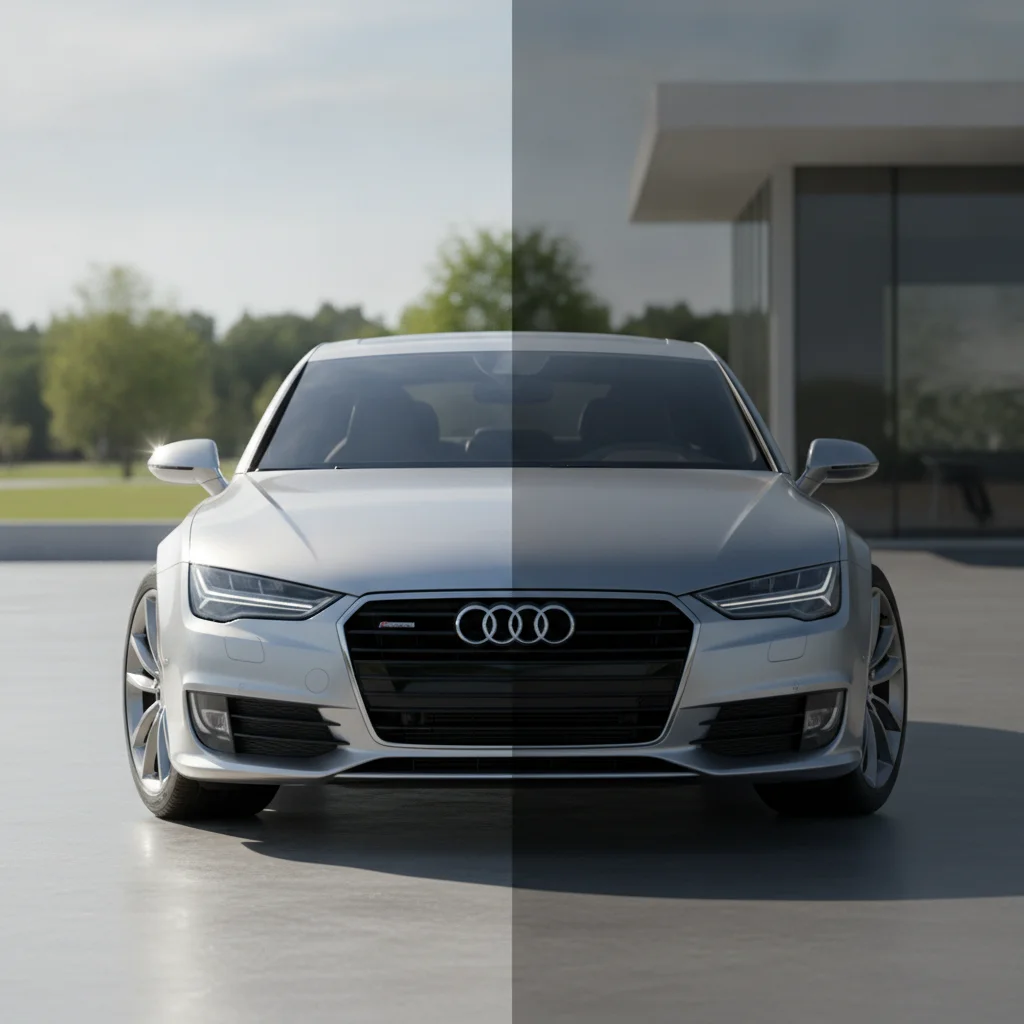
Also consider your car's color when timing and prioritizing tasks. Dark-colored vehicles show water spots and swirl marks far more readily than light ones — which means the window between a fresh detail and a noticeable decline is shorter. Light cars hide swirls but show dust and pollen easily. The Pre-Sale Detailing for Dark vs. Light Colored Cars guide covers how to tailor your prep to your specific paint color for consistently better results.
Detailing in the Context of Your Full Prep Budget
Detailing doesn't exist in a vacuum. It's one piece of a broader set of decisions about how to prepare a car for sale — and the interaction between cosmetic prep and mechanical condition matters more than many sellers realize.
The general principle is this: detailing amplifies a car that's already mechanically solid, but it can't compensate for a car that has genuine problems. A buyer who falls in love with a gleaming interior and then discovers during a pre-purchase inspection that the transmission is slipping will walk away — or demand a price cut that erases your entire detailing investment and then some.
This means your prep budget needs to be allocated thoughtfully. If you have $600 to spend, the split between detailing and minor repairs should reflect your car's specific situation. For a nuanced breakdown of how to make that call, Detailing vs. Minor Repairs Before a Private Sale offers a practical framework that covers when to prioritize cosmetics, when to fix mechanical issues first, and when to do neither.
Start with the Interior, Always
When budget or time forces you to prioritize, put interior cleaning first. Buyers spend the test drive inside the car — smelling it, touching surfaces, and forming their strongest impressions. A spotless exterior paired with a grimy cabin almost always kills the deal faster than the reverse scenario.
Don't Detail and Then Drive It Daily
It sounds obvious, but many sellers detail a week before their listing and then continue using the car as their daily driver. Commuting puts bird droppings, dust, and interior grime back within days. If you must keep driving it, do a quick maintenance wipe-down every 2–3 days and schedule your detail for the 48-hour window before photos and showings.
The smartest sellers approach detailing as part of a coherent sales strategy — not a standalone task. When presentation, pricing, and mechanical transparency are all aligned, buyers feel confident, negotiations go smoother, and the final sale price reflects the true condition of the vehicle rather than a buyer's worst-case assumptions.
Condition Ratings Affect More Than You Think
Valuation tools like Kelley Blue Book and Edmunds ask you to self-report your vehicle's condition as Excellent, Good, Fair, or Poor. A car that qualifies as 'Good' after detailing versus 'Fair' beforehand can represent a $400–$800 difference in the estimated private party value — before a single buyer negotiates. Detailing doesn't just affect buyer perception; it can directly shift which condition tier your car legitimately falls into.
Transparency Builds Buyer Trust
A thoroughly detailed car can inadvertently raise buyer suspicion if they wonder what's being hidden. Counter this by being upfront about the car's actual condition, sharing a vehicle history report, and welcoming a pre-purchase inspection. Cleanliness paired with transparency is far more powerful than cleanliness alone — it removes every reason for a buyer to discount their offer.
Detailing Doesn't Fix Mechanical Problems
A gleaming exterior can generate buyer excitement, but that excitement turns to frustration fast if a PPI reveals deferred maintenance or hidden damage. Budget your prep dollars with mechanical condition as the foundation. A $150 pre-sale inspection from a trusted mechanic can tell you what actually needs attention before you spend a dollar on cosmetics.

All claims are backed by peer-reviewed research. Sources on request.