Key Takeaways
Cashier's Check Scam
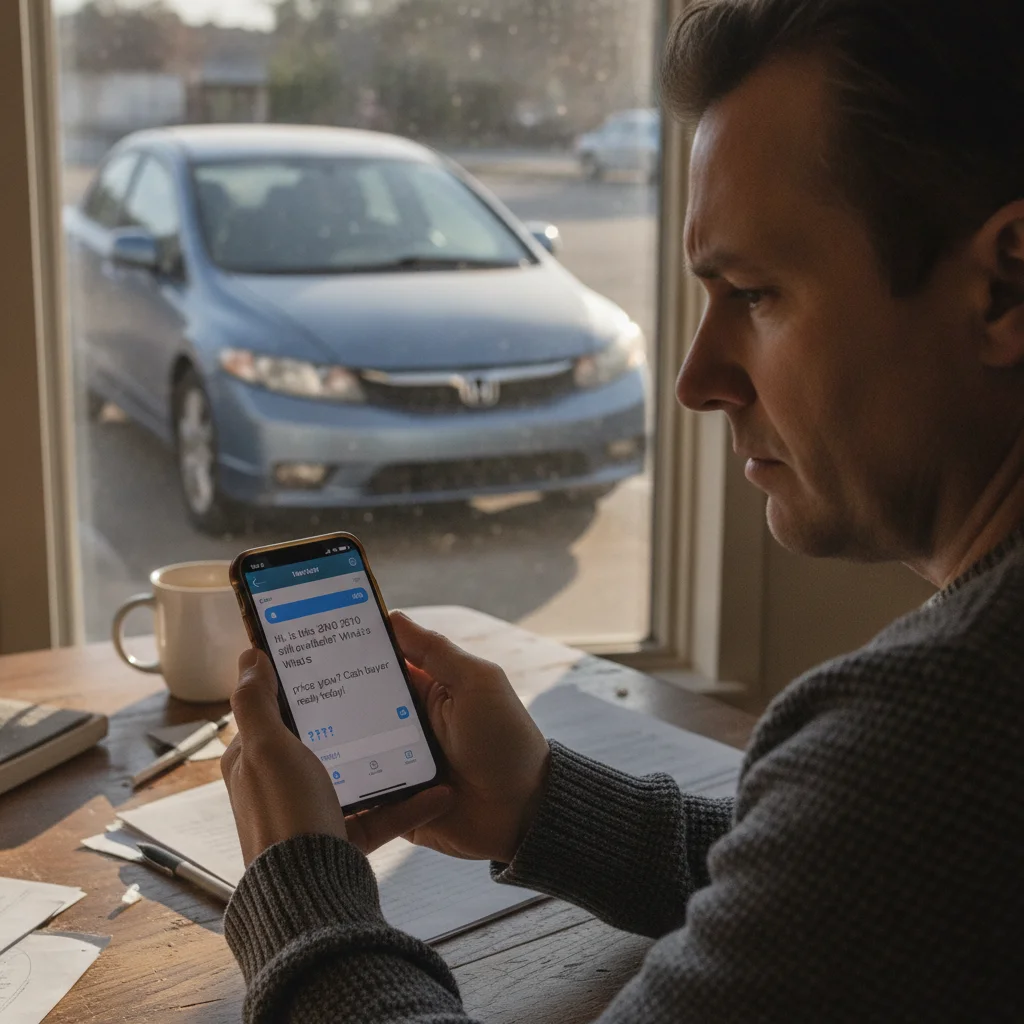
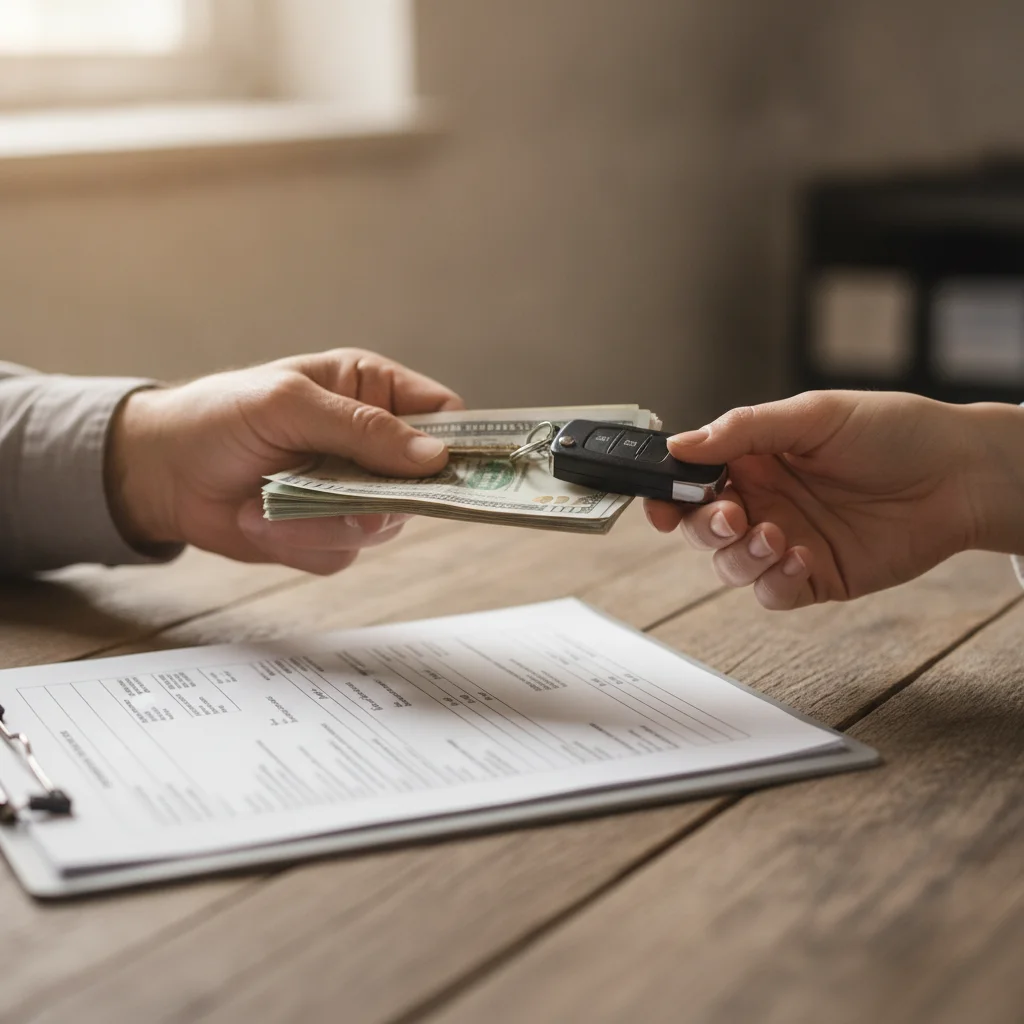
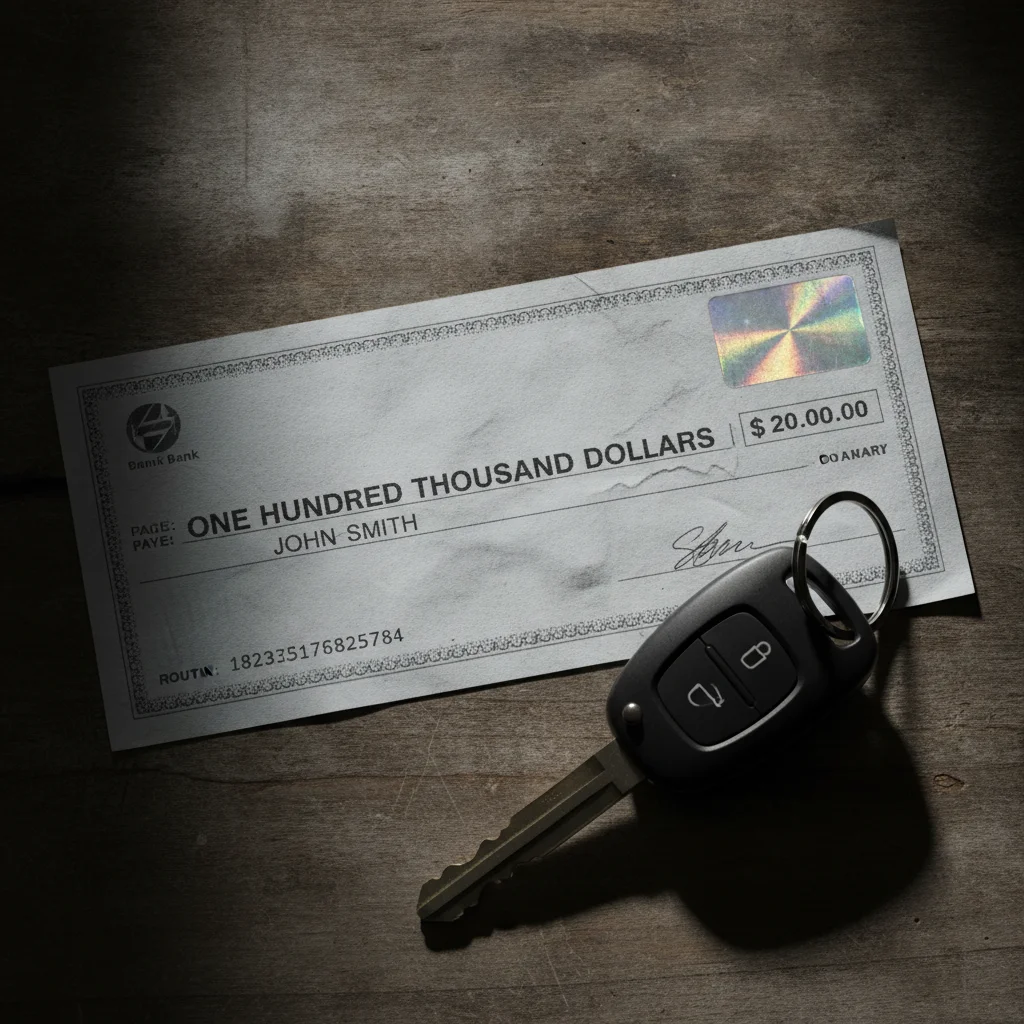
A cashier's check scam is a form of payment fraud where a buyer sends a counterfeit or fraudulently obtained cashier's check as payment for a vehicle. The check appears legitimate and may even clear initially at your bank, but it eventually bounces — leaving you responsible for the full amount. By the time the fraud is discovered, the scammer has already taken the car or received a cash refund for an 'overpayment.'
Under U.S. banking law, banks are required to make funds available within 1–5 business days even if the check hasn't fully cleared — meaning your balance may show the deposit before the fraud is detected, sometimes weeks later.
How the Scam Works — Step by Step
The cashier's check scam follows a predictable pattern, which is exactly why knowing it in advance is your best defense. Here's how it typically unfolds in a private car sale:
- Contact: A buyer reaches out — often by email or text — expressing strong interest in your vehicle. They may say they're out of state, in the military, or otherwise unable to view the car in person.
- Offer accepted: The buyer agrees to your asking price quickly, sometimes without negotiating. They explain they'll pay by cashier's check, which sounds legitimate.
- Overpayment: The check arrives for more than the agreed price. The buyer explains this is a mistake or that the extra funds are for shipping, a middleman, or transport costs — and asks you to wire back the difference.
- You deposit the check: Your bank shows the funds as available within a few days. You feel confident and wire the overpayment back to the buyer, or hand over the car.
- The check bounces: Days or weeks later, your bank notifies you the check was fraudulent. The funds are reversed. You're out the car, the wired money, or both — and your bank holds you responsible for the full amount.
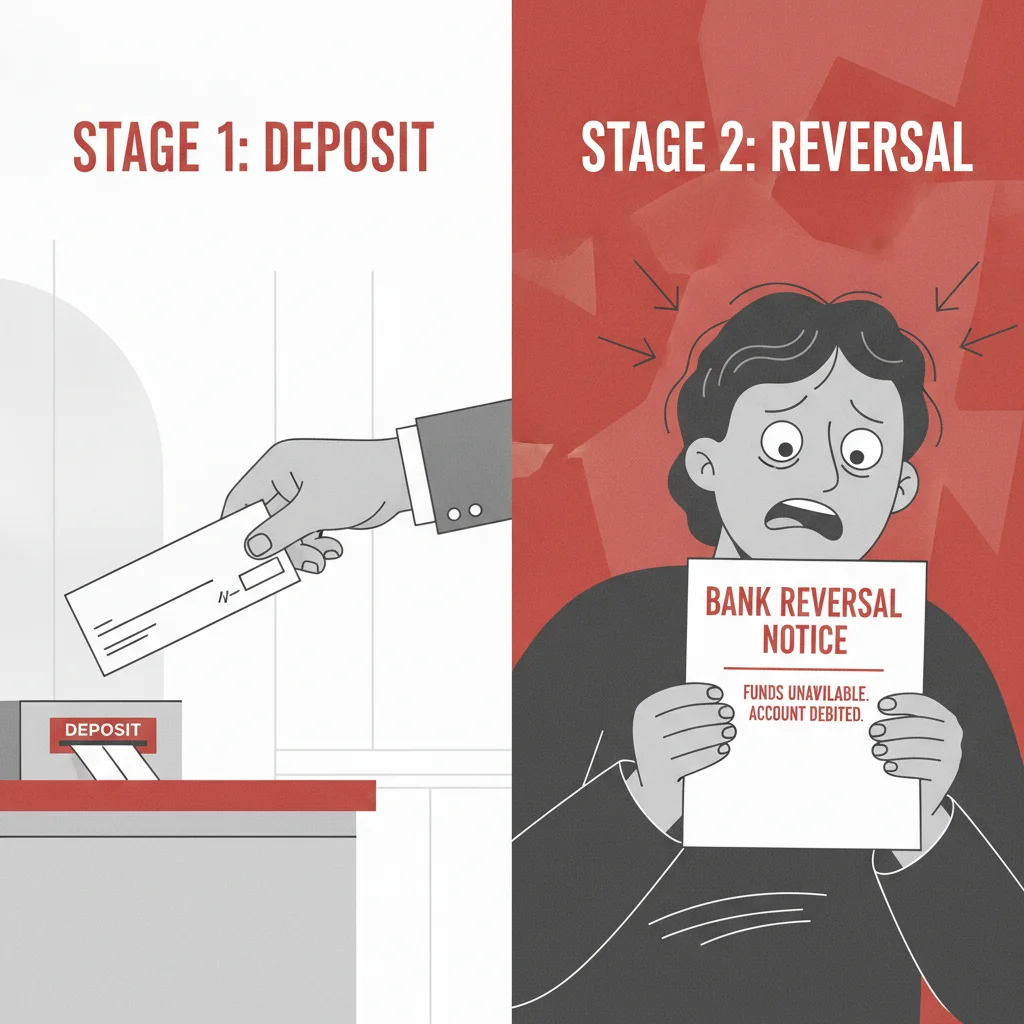
The scam works because it exploits the gap between when your bank posts a deposit and when it actually collects the funds from the issuing bank. That window can be 1 to 5 days by law — enough time for a scammer to vanish.
Funds Available ≠ Funds Verified
Under Regulation CC, U.S. banks must make deposited funds available within 1–5 business days regardless of whether the check has cleared. This is a legal availability window, not a fraud guarantee. Your bank can — and will — reverse the funds weeks later if the check is returned as fraudulent, leaving you liable for the full amount plus any fees.
Your Bank Will Not Cover Your Loss
If you withdraw or transfer funds from a fraudulent check deposit, your bank will hold you responsible for repaying the full amount — even if you acted in good faith. FDIC insurance does not cover losses from check fraud. Victims can be pursued for the debt, and the account may be sent to collections or reported to ChexSystems.
Why Cashier's Checks Feel So Trustworthy
Most people associate cashier's checks with legitimacy. Unlike personal checks, a cashier's check is issued by a bank and drawn on the bank's own funds — which is why they're often required for large transactions like real estate closings. Scammers know this reputation, and they exploit it deliberately.
Modern counterfeit cashier's checks are sophisticated. They typically include:
- Realistic bank logos, routing numbers, and check numbers
- Security features like watermarks and microprint that mimic real instruments
- Correct MICR encoding at the bottom that can pass automated bank scanners
Some fraudulent checks are not counterfeits at all — they're drawn on real accounts that have been compromised or belong to shell entities. These can pass initial verification before being reversed weeks later.
“The moment a check is deposited, many people assume the money is theirs. But 'available' and 'cleared' are two very different things — and scammers have built entire fraud operations around that gap in public understanding.”
— Frank Abagnale, Fraud prevention consultant and former check forger turned FBI consultant
Even trained bank tellers can miss a convincing forgery. That's why the burden of caution falls entirely on you as the seller. The bank's verification process is not a guarantee of legitimacy — it's a procedural step that takes time the scammer is counting on you not to wait for.
Red Flags Every Seller Should Recognize
Scam buyers follow identifiable scripts. If you see more than one of these warning signs in a transaction, stop and reassess before going any further.
$337M+
Lost to check fraud annually in the U.S.
According to the Federal Trade Commission's consumer fraud reports, check-related scams — including fake cashier's checks — account for hundreds of millions in annual losses.
#1
Most reported scam in online vehicle sales
The FBI's Internet Crime Complaint Center (IC3) consistently ranks overpayment and fake check scams as the top fraud type reported in private vehicle sale transactions.
7–10 days
Time for a cashier's check to fully clear
Despite funds appearing available in 1–5 business days under Regulation CC, full verification and collection of a cashier's check from an out-of-state bank can take 7–10 days or longer.
< 10%
Recovery rate for wired funds in check scams
Once a wire transfer is sent as part of a check scam, less than 10% of victims recover those funds, according to consumer fraud attorneys and FTC guidance.
Communication Red Flags
- No phone call, only texts or email: Scammers avoid voice calls because they're harder to fake and easier to record.
- Overseas or military backstory: Claims of being deployed, working abroad, or unable to meet in person are extremely common pretexts.
- Excessive urgency: Phrases like "I need to finalize this today" or "my agent will pick it up" are designed to short-circuit your judgment.
Payment Red Flags
- Cashier's check for more than the asking price: This is the defining signature of the overpayment scam. Legitimate buyers don't overpay and ask for change back.
- Request to wire the difference: Once you wire money, it's gone. Wire transfers are nearly impossible to reverse.
- Reluctance to pay cash in person: A serious local buyer will almost always be willing to meet at a bank or public location with cash or a verified transfer.
For a deeper look at how these patterns show up before a check is ever mentioned, see our article on red flags in private car sale inquiries.
State It Clearly in Your Listing
Add a line to your vehicle listing that reads: "Cash or verified wire transfer only — no cashier's checks, money orders, or third-party payments." This filters out most scam attempts before they reach your inbox. Serious buyers expect sellers to have payment requirements and won't be put off by clear terms.
Use a Counterfeit Detector Before You Trust Any Check
If you do accept a cashier's check, bring it to your bank before the buyer leaves and ask a teller to inspect it with a counterfeit detection tool. Many bank branches have UV lights and verification scanners available. This won't catch every fake, but it adds a critical layer before you proceed.
How to Verify a Cashier's Check Before Releasing Your Car
If you've agreed to accept a cashier's check — maybe because the buyer is local and seems credible — here are the concrete steps to verify it before you sign over the title or hand over the keys.
Step 1: Call the Issuing Bank Directly
Find the bank's phone number from their official website — never from the check itself or from contact information the buyer gives you. Call and provide the check number, routing number, and amount. Ask specifically: "Can you confirm this check was issued by your institution and has not been stopped or canceled?"
Step 2: Deposit and Wait — Don't Spend
Deposit the check and explicitly ask your bank how long it will take to fully collect — not just be posted. "Available" does not mean verified. Wait until your bank confirms the funds have been collected from the issuing bank. This may take 7–10 business days or longer for out-of-state checks.
Step 3: Don't Agree to Any Refund or Wire
If the check is for more than the agreed price, do not wire or refund the difference under any circumstances. Cancel the sale and return the check uncashed. No legitimate buyer will ever structure a deal this way.
Step 4: Complete the Transaction in Person
Meet at your bank branch, deposit the check together, and ask the branch manager to call and verify the funds with the issuing institution. This creates a real-time verification chain that's much harder to exploit.

For a full comparison of which payment methods genuinely protect you as a seller, read our guide on accepted payment methods in private car sales.
Safer Alternatives to Cashier's Checks
The simplest way to avoid cashier's check fraud is to refuse cashier's checks entirely and require a safer method. Here's how each alternative stacks up for private car sales:
| Payment Method | Safety Level | Notes |
|---|---|---|
| Cash in person | Highest | No reversal risk. Verify bills with a counterfeit detector pen. Best for transactions under $10,000. |
| Wire transfer | High | Confirm receipt in your account before signing over the title. Irreversible once sent — which protects you as the receiver. |
| Zelle | Moderate | Instant and bank-to-bank, but scammers can use compromised accounts. Best for buyers you've met in person. |
| PayPal / Venmo | Low for sellers | Buyers can dispute transactions and reverse payments. Avoid for vehicle sales. |
| Cashier's check | Low without verification | Only safe if personally verified with the issuing bank AND you wait for full collection — not just posting. |
If you want to understand the full risk profile of each method in context, our guide on which payment methods to avoid breaks it down step by step. And if you're wondering how buyers can protect themselves on their end, see how to protect yourself when paying for a car online.
State It Clearly in Your Listing
Add a line to your vehicle listing that reads: "Cash or verified wire transfer only — no cashier's checks, money orders, or third-party payments." This filters out most scam attempts before they reach your inbox. Serious buyers expect sellers to have payment requirements and won't be put off by clear terms.
Use a Counterfeit Detector Before You Trust Any Check
If you do accept a cashier's check, bring it to your bank before the buyer leaves and ask a teller to inspect it with a counterfeit detection tool. Many bank branches have UV lights and verification scanners available. This won't catch every fake, but it adds a critical layer before you proceed.
What to Do If You've Already Been Scammed
If you realize you've deposited a fraudulent check and the buyer has disappeared — with your car, a wired refund, or both — act immediately. Speed is critical.
- Call your bank: Report the fraudulent check and ask them to freeze any outgoing transactions related to it. Ask whether the wire transfer can be recalled — this is possible within a narrow window, sometimes 24–48 hours.
- File a police report: Go to your local police department in person. You'll need a case number for insurance and bank disputes. Provide all communication records — texts, emails, addresses.
- Report to the FTC: File at ReportFraud.ftc.gov. The FTC tracks these scam patterns nationally and your report contributes to enforcement actions.
- Report to the Internet Crime Complaint Center (IC3): If the buyer communicated online, file at ic3.gov. The FBI's IC3 specifically investigates internet-based financial fraud.
- Contact your state DMV: If you've already signed over the title, notify your DMV immediately. Some states can flag a title as disputed before a fraudulent transfer is completed.
Funds Available ≠ Funds Verified
Under Regulation CC, U.S. banks must make deposited funds available within 1–5 business days regardless of whether the check has cleared. This is a legal availability window, not a fraud guarantee. Your bank can — and will — reverse the funds weeks later if the check is returned as fraudulent, leaving you liable for the full amount plus any fees.
Your Bank Will Not Cover Your Loss
If you withdraw or transfer funds from a fraudulent check deposit, your bank will hold you responsible for repaying the full amount — even if you acted in good faith. FDIC insurance does not cover losses from check fraud. Victims can be pursued for the debt, and the account may be sent to collections or reported to ChexSystems.
Recovery rates for cashier's check fraud are low, especially once money has been wired. The most effective protection is prevention — which is why understanding the scam mechanics before a buyer contacts you is so valuable. Before any stranger comes to see your vehicle, review the seller's safety checklist to make sure your process is locked down from the start.

All claims are backed by peer-reviewed research. Sources on request.