| Safest payment method | Cash (in-person, verified) or confirmed wire transfer |
| Riskiest method to accept | Personal check or PayPal/Venmo for full payment |
| Cashier's check fraud prevalence | Among the top 3 fraud types targeting private car sellers (FTC Consumer Sentinel Network, 2023) |
| Wire transfer settlement time | Same business day to 24 hours (domestic) |
| Typical Zelle per-transaction limit | $2,500–$5,000 (varies by bank) |
| IRS cash reporting threshold | $10,000+ triggers Form 8300 (IRS Publication 1544) |
| Recommended deposit amount (hold) | $200–$500 non-refundable |
| Escrow suitable for | Out-of-state or high-value transactions ($10,000+) |
Why Payment Method Is the Highest-Stakes Decision in a Private Sale
Private party car sales net sellers an average of $1,000–$3,000 more than dealer trade-ins — but that premium comes with a catch: you're responsible for collecting payment safely, and there's no dealership back office or financing department to catch mistakes. Once you hand over the title and keys, reversing a bad transaction is extremely difficult.
The payment method you accept determines your exposure to fraud, your timeline to access funds, and how much legal recourse you have if something goes wrong. This reference covers every major payment option used in private sales today — what each one offers, what it risks, and a clear verdict on whether to accept it.
For a full walkthrough of the private sale process from listing to handshake, see our complete seller's roadmap.
| Safest payment method | Cash (in-person, verified) or confirmed wire transfer |
| Riskiest method to accept | Personal check or PayPal/Venmo for full payment |
| Cashier's check fraud prevalence | Among the top 3 fraud types targeting private car sellers (FTC Consumer Sentinel Network, 2023) |
| Wire transfer settlement time | Same business day to 24 hours (domestic) |
| Typical Zelle per-transaction limit | $2,500–$5,000 (varies by bank) |
| IRS cash reporting threshold | $10,000+ triggers Form 8300 (IRS Publication 1544) |
| Recommended deposit amount (hold) | $200–$500 non-refundable |
| Escrow suitable for | Out-of-state or high-value transactions ($10,000+) |
Payment Methods Ranked: From Safest to Riskiest
Here's a direct breakdown of every common payment method you'll encounter as a private seller, assessed by security, speed, and practical friction.
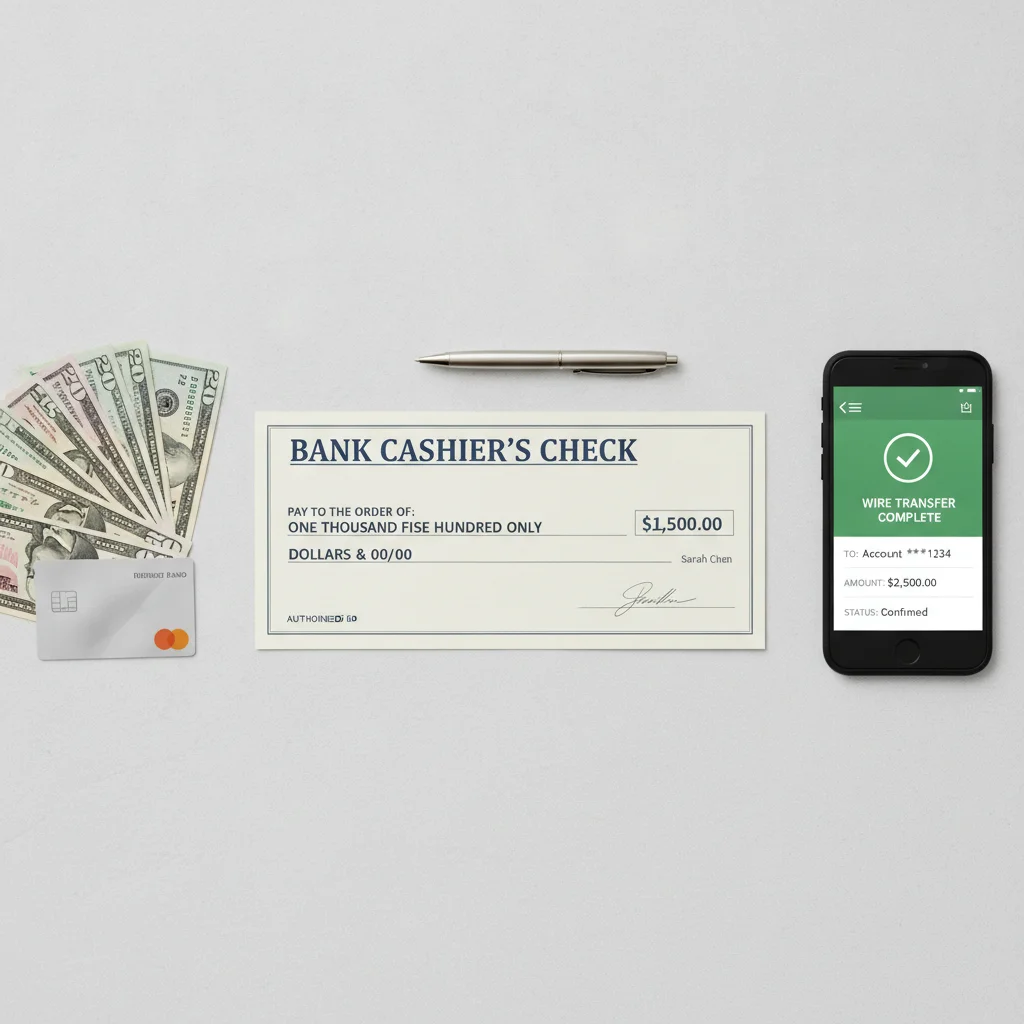
Cash (Physical Currency)
Verdict: Accept — with precautions.
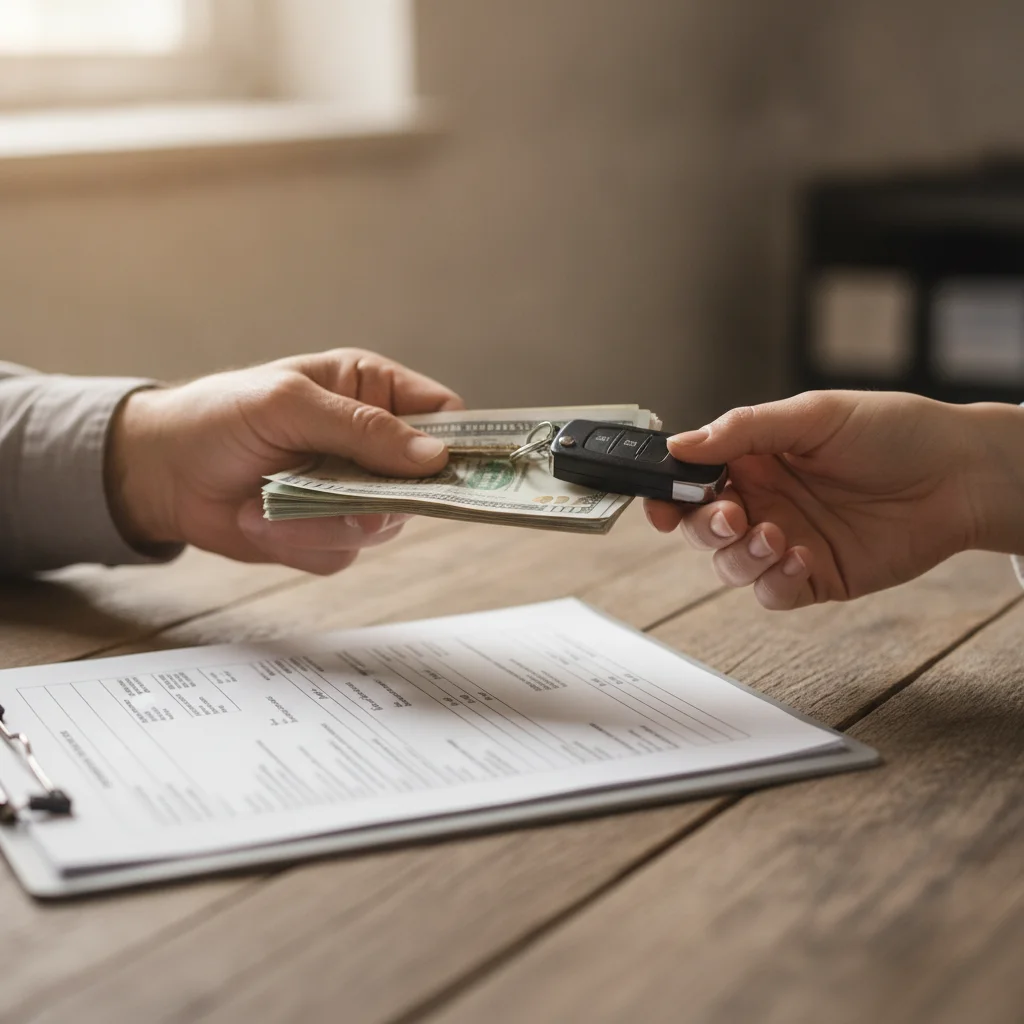
Cash is immediate, irreversible, and requires no bank intermediary. For transactions under $5,000–$7,000, it's often the cleanest option. Above that threshold, transporting large sums creates its own risks — both for you and the buyer.
- Count the bills before handing over anything. Use a counterfeit detection pen or UV light for large amounts.
- Conduct the exchange at a bank branch where a teller can verify funds on the spot.
- Be aware: cash deposits over $10,000 trigger IRS Form 8300 reporting. This is routine but worth knowing.
Cashier's Check (Bank-Issued)
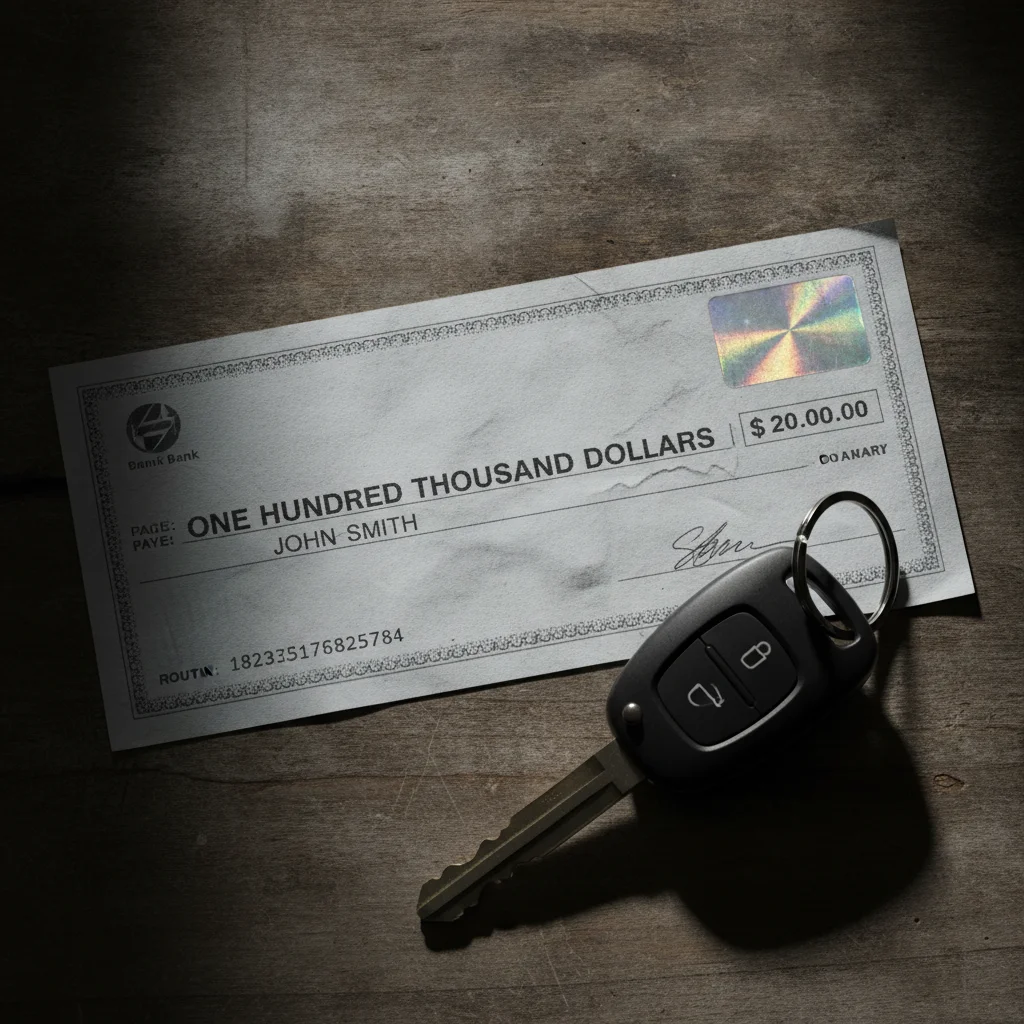
Verdict: Accept only if verified directly with the issuing bank before transferring title.
A legitimate cashier's check is drawn against the bank's own funds, not the buyer's personal account — making it one of the most reliable non-cash instruments available. The problem is that fake cashier's checks are rampant in private car sales. A convincing counterfeit can clear your bank's mobile deposit within 24–48 hours, then be reversed days later after the funds were never real.
- Call the issuing bank directly using a number from their official website — not a number printed on the check.
- Verify the check number, amount, and payee name before the transaction completes.
- Ideally, go to the issuing bank together and cash it in person before signing over the title.
This is one of the most exploited fraud vectors in private sales. See our full breakdown in Cashier's Check Scams Targeting Private Car Sellers for step-by-step scam mechanics and how to protect yourself.
Wire Transfer (Bank-to-Bank)
Verdict: Accept — but only after confirming funds have fully settled.
A wire transfer is initiated from the buyer's bank directly to yours, usually arriving within 24 hours on business days. Once a wire lands and is confirmed by your bank as settled (not just pending), it is extremely difficult to reverse — unlike ACH transfers, which can be clawed back for several days.
- Provide your wire instructions in writing: bank name, routing number, account number, and your name as it appears on the account.
- Confirm with your bank that the wire has settled, not just posted, before signing the title.
- Be aware of fraud: scammers sometimes send fake wire confirmation emails. Always verify with your bank directly.
Zelle
Verdict: Use cautiously — appropriate for deposits only, not full payment on high-value cars.
Zelle transfers are instant and bank-backed, which sounds ideal. The serious downside: Zelle payments are designed to be non-reversible, but fraud claims can result in your bank reversing a transaction under certain conditions — leaving you holding the loss. Additionally, most Zelle accounts have per-transaction limits of $2,500–$5,000, making them impractical for full payment on anything over $5,000.
- Acceptable use: a good-faith deposit of $200–$500 to hold the car while the buyer arranges final payment.
- Avoid: accepting full vehicle payment via Zelle for cars priced above $4,000.
- Confirm the sender's name matches their ID before sending any receipt or paperwork.
Venmo, PayPal, and Cash App
Verdict: Avoid for vehicle transactions.
All three platforms explicitly prohibit using their services for vehicle sales in their terms of service. Beyond ToS violations, each allows buyer-initiated disputes or chargebacks — meaning a buyer can receive your car and dispute the payment, leaving you without the car or the money while the platform investigates. These apps are built for splitting dinner bills, not protecting four- and five-figure asset transfers.
Personal Check
Verdict: Do not accept.
A personal check carries the highest fraud risk of any "legitimate" payment method. It can bounce days after you've signed over the title, the account may be closed or have insufficient funds, and stop-payment orders are trivially easy to place. There is almost no scenario where accepting a personal check is appropriate in a private car sale.
Escrow Services
Verdict: Good option for remote or high-value transactions — but vet the escrow company carefully.
Legitimate escrow services (such as Escrow.com) act as a neutral third party: the buyer deposits funds into escrow, you ship the title or arrange transfer, the buyer inspects the vehicle, and the escrow releases funds to you. This is particularly useful for out-of-state or high-value transactions.
- Only use escrow services recommended by established platforms or verifiable by state licensing databases.
- Be alert to scammers who "suggest" a fake escrow site they control. You should choose the escrow provider, not the buyer.

Out-of-State Buyers Change the Rules
If a buyer is purchasing your car remotely and arranging transport, cash isn't an option. In these cases, a settled wire transfer or a legitimate escrow service are your safest paths. Never release a title or sign paperwork until funds are fully confirmed. Remote transactions also make it much easier for scammers to operate — treat any out-of-state inquiry with extra scrutiny. See <a href="/selling-your-car/sale-channels/private-party-sales/red-flags-in-private-car-sale-inquiries-and-how-to-spot-them-early">how to spot red flags early</a> before engaging further.
Setting Your Payment Terms Before You List
The best time to establish payment terms is before you ever talk to a buyer. State your accepted methods clearly in your listing — this filters out time-wasters and sets expectations from the first message. Buyers who push back hard on your stated terms are often a red flag in themselves.
$3,000+
Average premium private sellers earn vs. trade-in
Based on average trade-in vs. private sale price differentials tracked by Edmunds and CarGurus, 2023.
1 in 3
Private sale fraud attempts involve fake cashier's checks
According to FTC consumer fraud reports, counterfeit payment instruments are consistently among the top fraud vectors in peer-to-peer vehicle sales.
24–72 hrs
Time for a fraudulent check to appear cleared before reversal
Banks are required by Regulation CC to make funds available quickly, even before a check is fully verified — a window fraudsters exploit.
86%
Of Zelle fraud victims receive no reimbursement
Per a 2022 U.S. Senate Permanent Subcommittee on Investigations report on bank fraud reimbursement practices.
Sample Payment Language for Your Listing
"Accepted payment: cash or verified cashier's check (in-person bank verification required). Wire transfer accepted for out-of-state buyers. No personal checks, Venmo, PayPal, or Cash App."
Negotiating Deposits
If a buyer wants to hold the car while they arrange financing or travel, a deposit is reasonable — but structure it correctly:
- Collect a non-refundable deposit of $200–$500 to take the car off the market.
- Put the deposit terms in writing: amount, date collected, refund conditions (or lack thereof), and the sale price locked in.
- Zelle or Venmo are acceptable for deposits of this size, since the dollar risk is limited.
Completing the Transaction at the Right Venue
Where you handle the exchange matters almost as much as how. The safest options:
- Your bank or the buyer's bank — allows immediate cash-out or wire verification in person.
- A DMV or notary office — witnesses the title transfer and provides a paper trail.
- A public police department parking lot — many departments specifically designate these as "safe exchange zones."
Avoid completing the exchange at your home address if at all possible. If that's not feasible, at minimum have another person present.
For a broader look at warning signs that a buyer may not be legitimate, see Red Flags in Private Car Sale Inquiries.
Cashier's Check
A check issued and guaranteed by a bank, drawn against the bank's own funds rather than a personal account. While more secure than a personal check, counterfeit versions are common in private car sale fraud.
Wire Transfer
An electronic transfer of funds directly between bank accounts, typically settling within one business day. Once confirmed as settled by your bank, a domestic wire is very difficult to reverse.
ACH Transfer
Automated Clearing House transfer — an electronic bank-to-bank payment that typically takes 1–3 business days and can be reversed for several days after posting. Not recommended for private car sales.
Escrow Service
A neutral third-party service that holds a buyer's funds until both parties fulfill their transaction obligations. Legitimate escrow protects both buyer and seller in high-value or remote transactions.
Notice of Transfer
A form filed with your state DMV after selling a vehicle that releases the previous owner from liability for the car once it changes hands.
Bill of Sale
A written document signed by both buyer and seller that records the terms of a vehicle sale, including price, date, vehicle details, and both parties' information. Serves as the primary legal record of the transaction.
Non-Refundable Deposit
An upfront payment made by a buyer to reserve a vehicle, which the seller keeps if the buyer does not complete the purchase. Should always be documented in a written agreement.
Regulation CC
A Federal Reserve rule requiring banks to make deposited funds available within 1–2 business days, even before the underlying check has fully cleared — the timing gap that counterfeit check scams exploit.
After Payment: Protecting Yourself on the Paperwork Side
Collecting payment safely is only half the job. The paperwork you complete at the time of sale is what legally protects you after the buyer drives away.
Bill of Sale
A signed bill of sale is essential. It should include: buyer and seller names, addresses, and signatures; the vehicle's VIN, make, model, year, mileage, and color; the sale price; and the date of transfer. Most states have a free downloadable template on the DMV website. Keep a copy for yourself.
Title Transfer
Sign the title over at the time of payment — not before, not after. Never pre-sign a title and hand it to a buyer before you have confirmed, cleared funds in your possession. A signed title in someone else's hands is effectively a transferred vehicle whether or not you've been paid.
Notify Your Insurer and the DMV
Immediately after the sale:
- File a Notice of Transfer with your state DMV. This releases you from liability if the buyer gets into an accident before re-registering.
- Contact your insurance company to remove the vehicle from your policy, or adjust coverage if you're replacing it.
Keep Records for Tax Purposes
In most states, private car sales are not subject to income tax if sold below your original purchase price (a personal-use loss). However, if you're selling multiple vehicles or at a profit, consult a tax professional. Keep your bill of sale, title copy, and any payment receipts for at least three years.
If you're weighing whether a private sale is worth the effort versus using an instant offer platform, our comparison at Instant Offer vs. Private Sale lays out the trade-offs honestly.
Escrow.com
A licensed escrow service for high-value transactions. Holds buyer funds until vehicle transfer is confirmed — especially useful for out-of-state private car sales.
Cashier's Check Scams Targeting Private Car Sellers
Our in-depth guide explains exactly how counterfeit cashier's check scams work, what the warning signs look like, and how to verify any check before completing a sale.
State DMV Bill of Sale Templates
Most state DMV websites offer free, state-approved bill of sale forms. Search your state's DMV site for a legally compliant template you can print and complete on the day of sale.
FTC Consumer Sentinel Fraud Reports
The Federal Trade Commission publishes annual data on the most common consumer fraud types, including payment fraud in peer-to-peer vehicle sales. Useful for understanding current scam patterns.
Selling Your Car Privately: The Complete Seller's Roadmap
End-to-end guidance on every stage of a private car sale, from setting your asking price and writing your listing to negotiating and closing the deal safely.

All claims are backed by peer-reviewed research. Sources on request.