Key Takeaways
The Number Isn't Random — But It's Not Generous Either
When an instant offer comes back lower than you expected, the natural reaction is to assume the platform made a mistake or that your car is simply worth less than you thought. Neither is usually true. The number is the result of a deliberate pricing model designed to leave room for reconditioning costs, auction risk, and — most importantly — profit. Understanding that structure is the first step to knowing whether you're being lowballed or just seeing reality clearly.
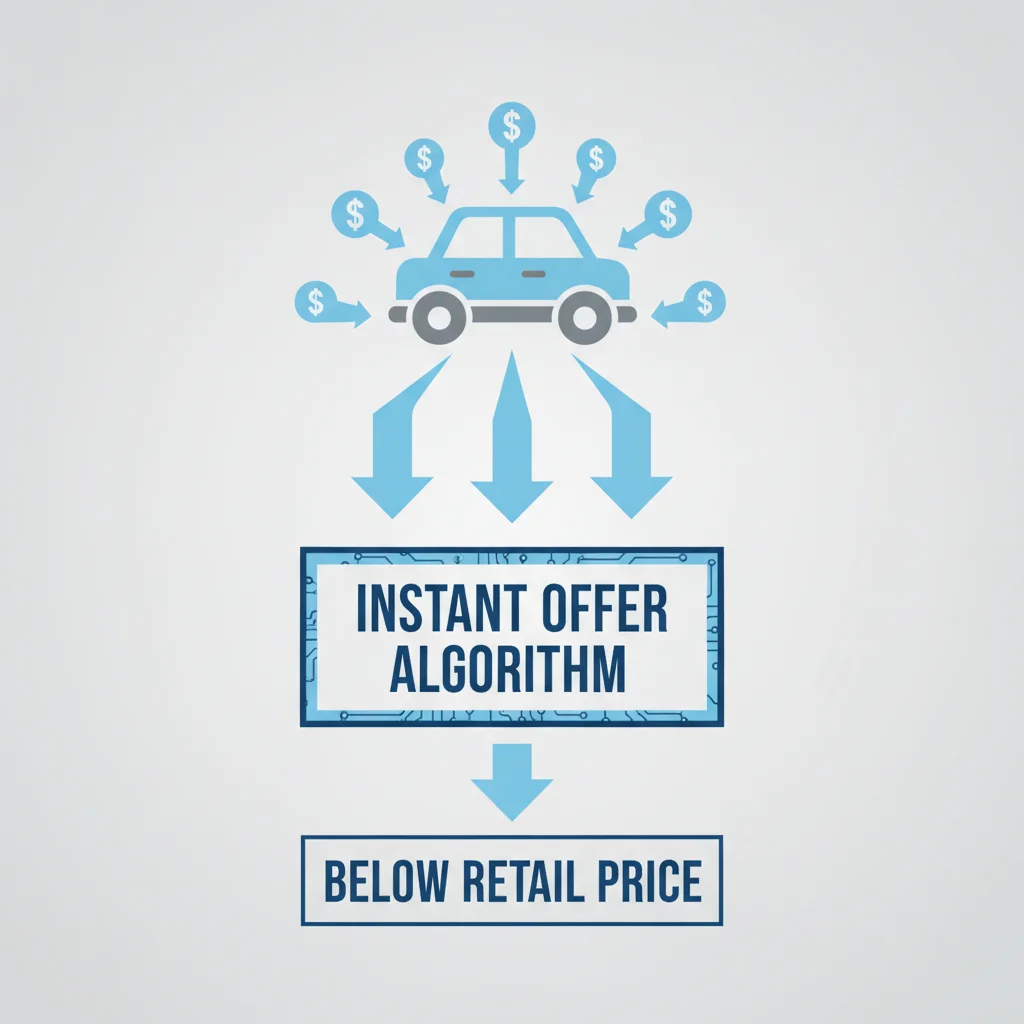
Platforms like CarMax, Carvana, Vroom, and their regional competitors aren't charities. They acquire your vehicle, recondition it, and resell it at a markup. The instant offer is their acquisition price, not a reflection of what the car will sell for on their lot. To understand exactly how these platforms price vehicles, it helps to know they typically work backward from projected retail — subtracting estimated reconditioning, holding costs, and their target margin before presenting you a number.
That math alone explains a significant portion of any gap between your expectations and the actual offer. But there are also mistakes sellers make — before and during the process — that push that number down even further. Those are fixable.
Mistakes That Drive Your Offer Down Before You Even Submit
A surprising number of sellers hand platforms a reason to discount before the process even starts. These mistakes happen at the data-entry stage, and because the algorithm is working with incomplete or inaccurate information, it defaults to conservative assumptions — which always means a lower offer.
Entering the wrong trim level when submitting vehicle information.
Why it happens: Many sellers don't know their exact trim designation — they know the make and model but not whether it's an EX, EX-L, Touring, or Sport. Guessing down is common.
Skipping the optional features and packages checklist because it feels tedious.
Why it happens: The feature entry screens on most platforms are long and granular, and sellers often click through quickly. Unreported options simply aren't factored into the offer.
Self-reporting condition as 'Good' when it's realistically 'Fair' to avoid a lower initial offer.
Why it happens: Sellers want to see the highest possible number and assume they can talk their way through any discrepancies at inspection. It's optimistic but counterproductive.
Accepting the first offer from a single platform without checking competitors.
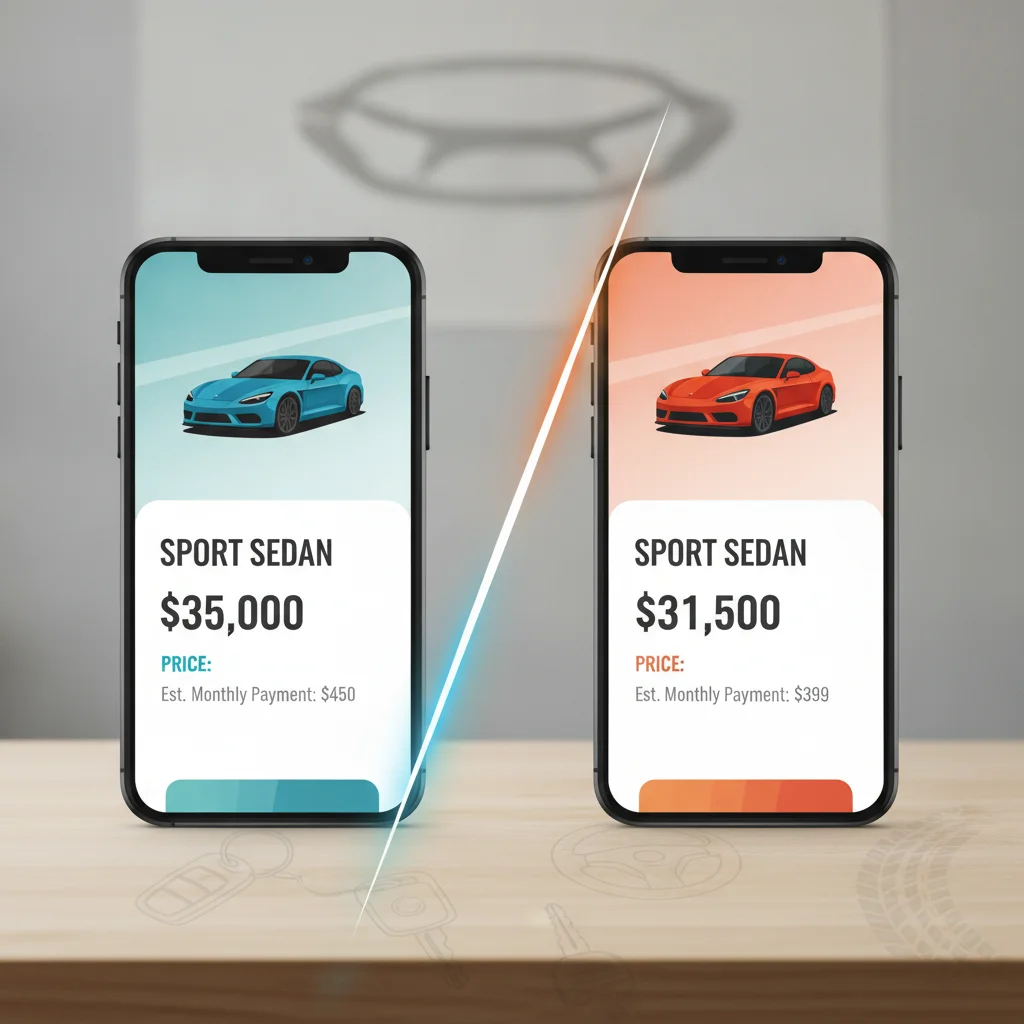
Why it happens: The offer feels official and time-limited. Sellers assume platforms use similar pricing and don't realize spreads of $1,000–$3,000 between platforms are common for the same vehicle.
Not pulling your own vehicle history report before the inspection.
Why it happens: Sellers assume they know their car's history, especially if they've owned it from new. But minor insurance claims from previous owners or service record gaps can appear without the current owner's knowledge.
Waiting until the offer expires before going to the in-person inspection, then being surprised the price changed.
Why it happens: Life gets busy. Sellers get the offer, intend to act quickly, and then let a week slip by. By the time they show up, the market has moved or the offer has lapsed.
15–25%
Typical discount below retail value
Industry analysts consistently find instant offer payouts land 15–25% below comparable retail listings, reflecting reconditioning costs and platform margin.
$1,500–$3,000
Average spread between best and worst platform offer
Consumer advocacy research has found that the same vehicle submitted to multiple instant offer platforms on the same day routinely produces a spread of $1,500–$3,000.
73%
Sellers who accept the first offer received
According to a Cox Automotive survey, nearly three in four private sellers accept the first offer they receive without shopping competing buyers or platforms.
The pattern I saw repeatedly when I worked in dealership finance: sellers would come in with a printed instant offer that was $1,800 lower than what we could justify on the same car. Nine times out of ten, they had entered the wrong trim level, missed options that added value, or selected a condition tier that didn't match the actual vehicle. The algorithm had no choice but to price for the worst-case version of what they described.
For a deeper look at which specific vehicle details move the needle most, see how mileage, condition, and trim level affect instant offer payouts. Getting those inputs right before you submit costs you nothing and can recover hundreds to thousands of dollars in your initial quote.
How Platform Inventory Needs Quietly Shape Your Offer
Here's something most sellers never consider: the offer you receive on a Tuesday in March may be meaningfully different from the same offer on a Friday in October — for the exact same car. Instant offer platforms are running real-time inventory models. When they're oversupplied with mid-size sedans, the acquisition price they're willing to pay for another one drops. When a specific truck configuration is moving fast on their lots, they'll pay above their normal range to restock it.
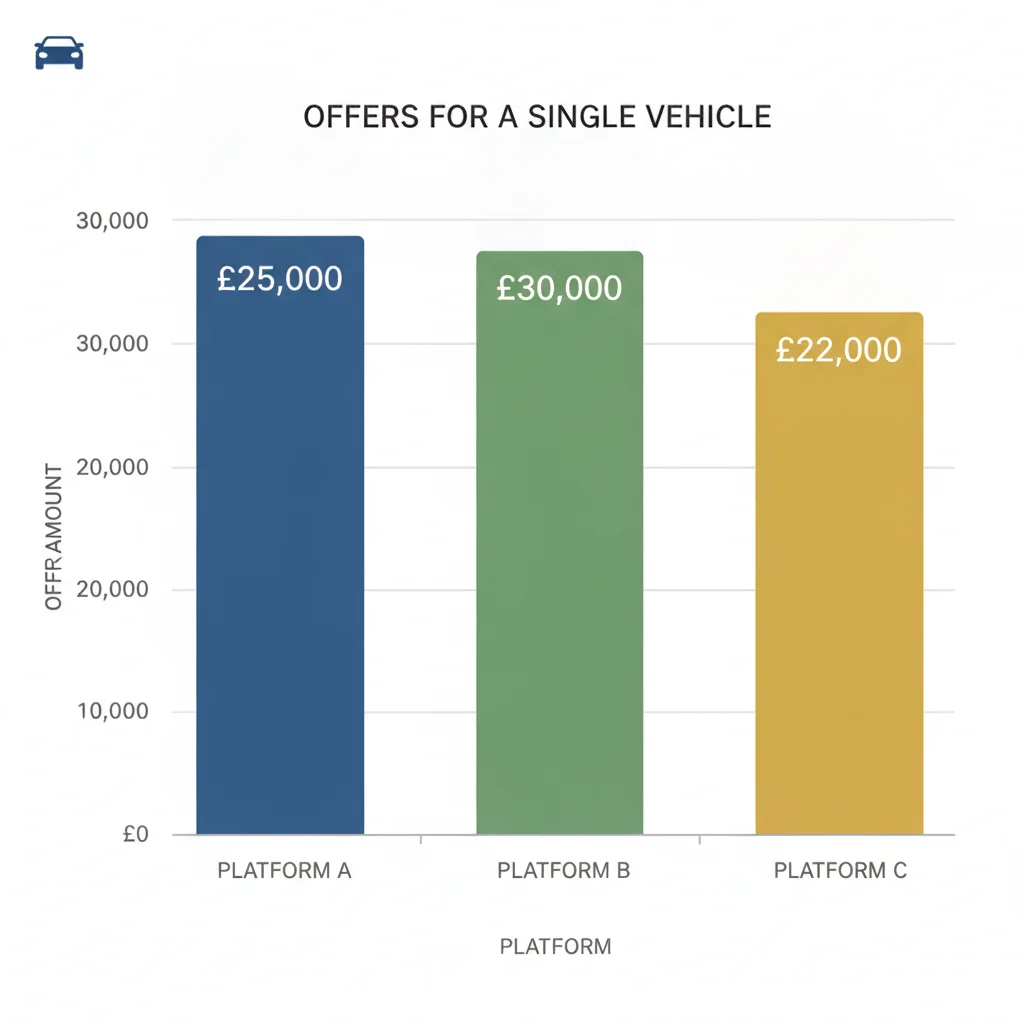
This dynamic is rarely explained to sellers, but it's one of the key reasons two platforms can offer wildly different prices for the same car. Platform A may have just wholesaled a large batch of your vehicle's segment and is actively buying. Platform B might be sitting on ten of them. The $2,000 spread between offers isn't necessarily about one platform being fairer — it's about inventory timing.
Timing Your Submission Matters More Than You Think
Platform inventory models update continuously, and the same car can fetch noticeably different prices depending on when you submit. End-of-month periods, when platforms are hitting acquisition targets, and seasonal demand peaks for specific vehicle types like trucks in spring or AWD vehicles in fall, tend to produce more competitive offers. If you're not in a rush, paying attention to timing is a free way to improve your result.
Offers Are Not Guaranteed After Market Shifts
Most platforms include language allowing them to adjust the final offer at inspection if wholesale market conditions have changed materially since the initial quote was generated. In volatile used-car markets, a seven-day-old offer can legally be revised downward at the inspection site. This isn't fraud — it's in the terms — but it catches sellers off guard. Always read the offer terms before scheduling your inspection.
The practical implication: never treat your first offer on a single platform as a definitive market signal. It's one data point from one buyer with specific, constantly shifting inventory needs. Shopping at least two to three platforms within the same 48-hour window gives you a much more accurate picture of what the market will actually pay.
The Inspection Gap: Why Your Final Offer Drops After You Arrive
One of the most frustrating experiences in the instant-offer process is showing up for an in-person inspection and leaving with a number that's hundreds — sometimes thousands — lower than the initial quote. This isn't a bait-and-switch in the illegal sense, but it is a structural feature of how these platforms operate, and it catches unprepared sellers constantly.
The initial offer is generated algorithmically from what you self-report. The inspection is conducted by a trained appraiser who is specifically looking for anything that justifies a price reduction. A windshield chip you didn't mention. Tire wear that falls below acceptable thresholds. An undisclosed minor accident on the Carfax. A worn driver's seat bolster. Each of these items becomes a line-item deduction, and they compound quickly.
Inspection Deductions Are Structural, Not Arbitrary
Every instant offer platform trains its appraisers to identify condition items that weren't disclosed in the initial submission. Those items become deductions from your offer, and they are designed to be applied systematically. The only reliable defense is a thorough, honest self-disclosure before you submit. Any detail you omit becomes ammunition for the inspector. Going in with full disclosure removes that leverage entirely and makes your inspection a confirmation rather than a negotiation you didn't prepare for.
A Low Offer Doesn't Mean You Have to Accept It
Instant offer platforms rely on the psychological weight of a written number to create acceptance inertia. A low offer is not a final verdict on your car's value — it's one buyer's acquisition price on one specific day. You are never obligated to accept, and walking away costs you nothing. The combination of competitor quotes, dealer trade-in comparisons, and private party estimates gives you a real market picture that no single platform offer can replicate on its own.
The way to protect yourself is to be more thorough in your self-disclosure than you think you need to be. Walk around your car before submitting and note every imperfection honestly. If the platform's condition tool doesn't have a specific category for an issue, default to the lower condition tier rather than the higher one. You want the inspection to confirm your self-assessment — not find things you missed. An appraiser who finds surprises will always apply those deductions; an appraiser who finds nothing to add is just confirming the offer you already accepted.
If a final offer comes in significantly below the initial quote, ask the appraiser to walk you through each deduction line by line. Some of those deductions are negotiable, particularly if you can demonstrate the item was already priced into your initial submission.

What You Should Do With a Low Offer Instead of Just Accepting It
A low instant offer is information, not a verdict. Here's a disciplined approach to using it correctly rather than reacting to it emotionally in either direction — either accepting out of frustration or dismissing the channel entirely.
- Benchmark it against at least two other platforms. Submit your vehicle information to two or three competing platforms within the same day or two. Offers expire, and the market shifts, so a stale comparison from a week ago is not reliable. Platforms with different regional distribution networks may value your specific vehicle very differently.
- Check the retail comparable. Look at what your vehicle is actually listed for at retail on platforms like AutoTrader or Cars.com. The instant offer should be roughly 15–25% below retail depending on condition and segment. If it's 35–40% below, something in your submission or their current inventory model is working against you.
- Run a dealer trade-in comparison. Walk your instant offer into one or two franchised dealers and ask what they'd give you on trade. Dealers operating in a competitive market often match or beat instant offers on vehicles they need for their certified pre-owned inventory — especially if you're also considering a purchase.
- Verify your vehicle history report first. Pull your own Carfax or AutoCheck before any platform does. If there are items on it you weren't aware of — minor accidents, service gaps, title issues — you need to know before an appraiser uses them as deductions during inspection.
- Consider what the convenience is actually worth to you. Instant-offer platforms provide speed, certainty, and zero negotiation hassle. If the best offer you can get privately is $1,500 more, factor in the time, risk of no-show buyers, and safety considerations of selling to a stranger. Sometimes the platform's price is the right price given everything.

Before committing to any platform, review warning signs that a specific platform or offer deserves a second look. Not every low offer is an honest one, and the terms in the fine print can affect your net payout in ways the headline number doesn't reflect.
The Bottom Line on Instant Offer Pricing
Instant offer platforms are a legitimate and often efficient way to sell a vehicle — but they are wholesale buyers, not retail buyers, and their pricing reflects that reality. A lower-than-expected offer doesn't mean you made a mistake by using the channel. It means you need to understand what's driving the gap before you decide whether to accept, negotiate, or walk away.
Inspection Deductions Are Structural, Not Arbitrary
Every instant offer platform trains its appraisers to identify condition items that weren't disclosed in the initial submission. Those items become deductions from your offer, and they are designed to be applied systematically. The only reliable defense is a thorough, honest self-disclosure before you submit. Any detail you omit becomes ammunition for the inspector. Going in with full disclosure removes that leverage entirely and makes your inspection a confirmation rather than a negotiation you didn't prepare for.
A Low Offer Doesn't Mean You Have to Accept It
Instant offer platforms rely on the psychological weight of a written number to create acceptance inertia. A low offer is not a final verdict on your car's value — it's one buyer's acquisition price on one specific day. You are never obligated to accept, and walking away costs you nothing. The combination of competitor quotes, dealer trade-in comparisons, and private party estimates gives you a real market picture that no single platform offer can replicate on its own.
The sellers who come out best on these platforms are the ones who enter with accurate vehicle data, understand the inventory dynamics at play, disclose condition issues honestly before inspection, and comparison-shop at least two platforms before making a decision. None of that takes more than a few hours, and it routinely makes a $1,000–$3,000 difference in what you walk away with.
If you want to go deeper on the mechanics of how these services operate before your next submission, this breakdown of how instant offer platforms actually work covers the algorithmic pricing logic in detail. The more you understand their model, the better positioned you are to work within it — or decide it's not the right channel for your vehicle.

All claims are backed by peer-reviewed research. Sources on request.