Key Takeaways
High-Mileage Trade-In
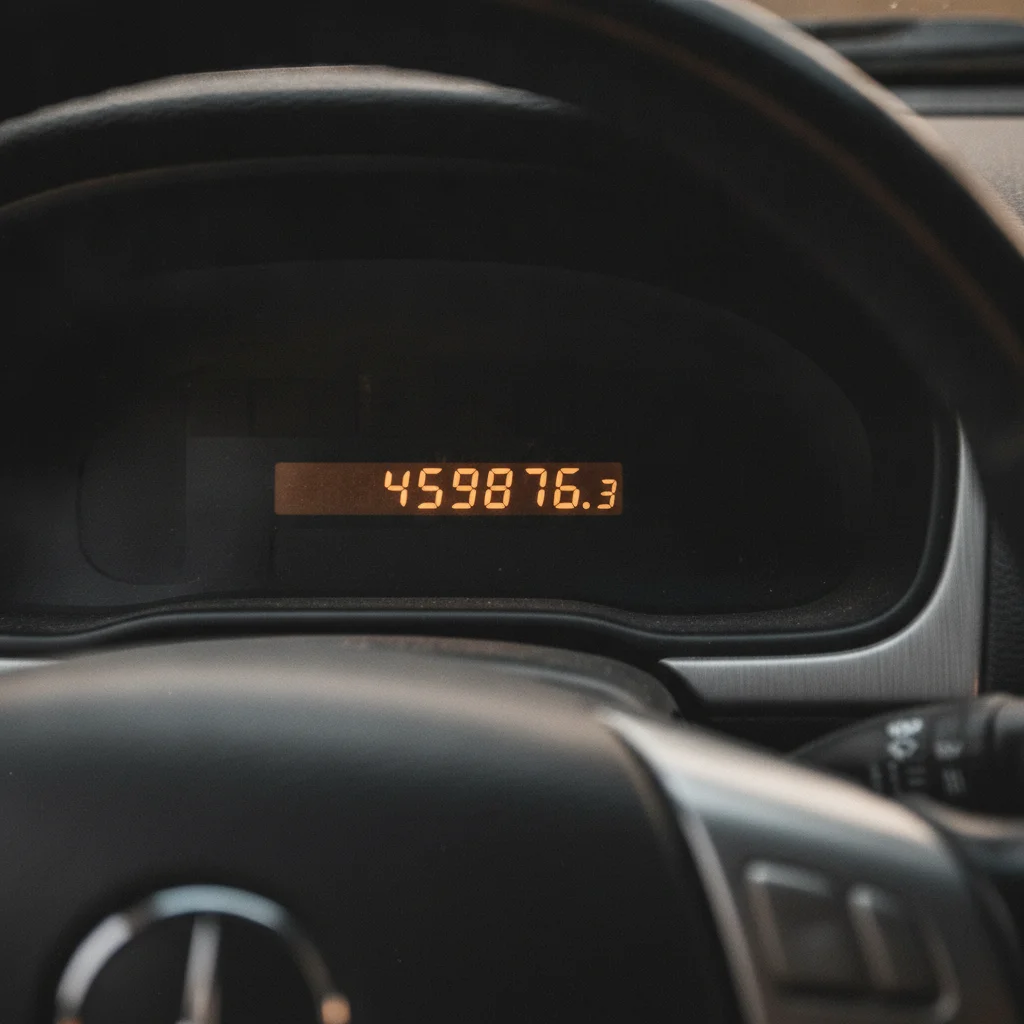
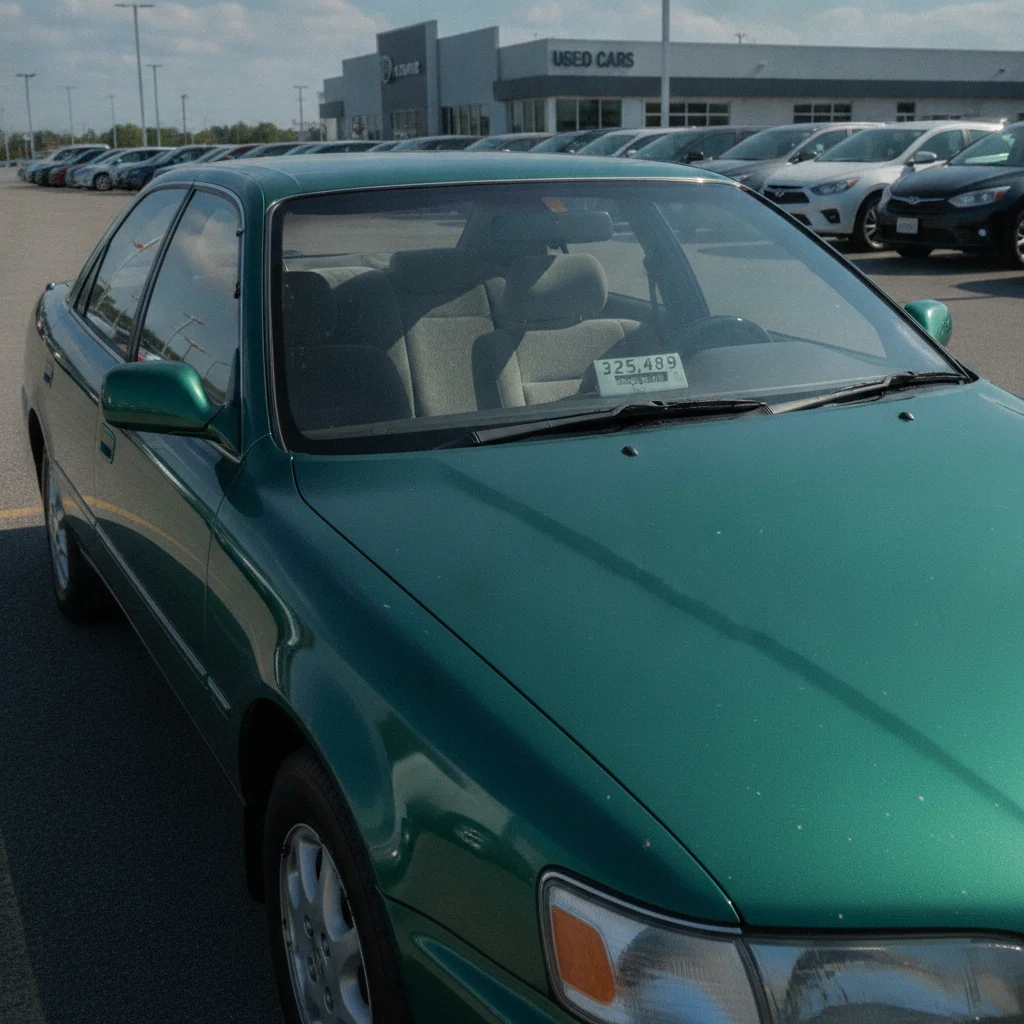
A high-mileage trade-in is when you hand over a vehicle with significantly above-average odometer readings to a dealership as partial payment toward another car. In the U.S., "high mileage" typically means anything above 100,000 miles, though some dealers apply that label to cars over 75,000–80,000 miles depending on vehicle age and segment. The dealer subtracts the trade-in allowance from the price of your new or used purchase, which can simplify the transaction and reduce the sales tax you owe in most states.
Dealers assess high-mileage trades against wholesale auction data, not retail book values. The gap between what a dealer offers and what you see on consumer pricing sites like KBB or Edmunds is almost always wider on high-mileage vehicles because retail resale risk is higher.
Why High Mileage Changes the Dealer's Math
When a dealer's appraiser pulls up on your car, the first two things they're calculating are resell channel and reconditioning cost. For a vehicle with 120,000 miles, both of those numbers shift dramatically compared to one with 45,000 miles. Understanding this internal math is the first step to negotiating a fair number.
Most dealers have a hard cut-off — often around 100,000 miles — above which they will not put a vehicle on their own retail lot. The reasons are straightforward: lender financing restrictions (many banks and credit unions won't finance cars over 100,000 miles), warranty liability concerns, and slower turn times. A car that sits on the lot costs the dealer money every day in floorplan interest and overhead.
Instead, high-mileage trades typically get sent to wholesale auction. The dealer will run your car through Manheim or a similar regional auction, or sell it directly to an independent used-car dealer. When they're buying to send to auction, they need to buy cheap enough to cover auction fees (typically $250–$500), transportation, and still leave margin for the buyer on the other end. That's why the gap between private-party value and trade-in offer widens so sharply on high-mileage vehicles.

High mileage triggers sharper depreciation than most owners realize — and dealers know exactly where those threshold drops occur. Crossing from 99,000 to 101,000 miles isn't just one more tank of gas; it can mean a $1,500–$3,000 swing in what a dealer is willing to offer.
Tax Savings Vary Significantly by State
In most U.S. states, you only pay sales tax on the difference between the new car price and your trade-in value — not the full purchase price. On a $5,000 trade in a state with 8% sales tax, that's $400 in savings. However, some states (like California) do not offer this offset, and others cap the benefit. Check your state's DMV rules before deciding whether the tax angle strengthens the case for trading in.
Dealer Appraisal Doesn't Require a Purchase
You can get a trade-in appraisal from any dealer without any obligation to buy a car from them. Walking in and saying "I'm considering trading in my vehicle and want to understand its current market value" is a perfectly normal request. Use multiple appraisals from non-competing dealers to triangulate a realistic range before you negotiate in earnest.
Disclosed Mechanical Issues Are Legal to Trade
Selling a car with known mechanical problems privately without disclosure can expose you to legal liability. Trading it in to a dealer is different — dealers buy vehicles "as-is" and conduct their own inspection. You are not required to volunteer every problem, but outright misrepresentation on a written trade-in disclosure form is fraud. When in doubt, disclose in writing and let the dealer's offer reflect the condition.
What Appraisers Actually Look For
An experienced appraiser can walk a high-mileage car in about eight minutes and form a number that's usually within $500 of what they'll offer. Here's what they're tallying:
- Mechanical condition: A compression test or scan tool reading tells them far more than a visual inspection. OBD-II codes, even cleared ones, often leave a footprint. If they drive it and feel rough shifting or engine hesitation, the number drops fast.
- Cosmetic condition: Interior wear on a 120,000-mile car is expected. But torn seats, cracked dashboards, or heavy door-panel scuffing add to their reconditioning estimate, which comes directly off your trade value.
- Tire condition: Worn tires cost $600–$1,200 to replace. Appraisers notice and they discount accordingly.
- Maintenance history: A folder of service records — even printed receipts from an oil change chain — signals a cared-for vehicle. Appraisers don't verify every record, but documentation creates a favorable impression that can shift the offer by $300–$800.
- Frame and accident history: They'll pull a vehicle history report (usually Carfax or AutoCheck) and run a paint meter on panels to check for prior body work. Accidents hurt. Multiple accidents on a high-mileage car can make it nearly impossible to retail locally and drops the offer to scrap-adjacent territory.
Trade-in appraisers weigh more factors than just the odometer — condition, color, and regional demand all factor into that final number. The more you understand their checklist, the better you can prepare.
~$2,000
Average trade-in loss vs. private sale on high-mileage vehicles
Industry estimates from Edmunds and iSeeCars consistently show a $1,500–$2,500 gap between dealer trade-in offers and private-party sale prices on vehicles over 100,000 miles.
100,000 mi
Common dealer retail cut-off threshold
Many franchise dealers will not place a vehicle on their retail lot once it exceeds 100,000 miles, instead routing it to wholesale auction channels.
$350–$500
Typical wholesale auction fees per vehicle
Manheim and similar wholesale auction platforms charge sellers per-vehicle fees that dealers factor into their maximum trade-in bid on high-mileage vehicles.
15%–25%
Additional depreciation hit at 100K-mile threshold
According to iSeeCars research, vehicles crossing the 100,000-mile mark depreciate an additional 15–25% beyond the standard mileage-based depreciation curve.
7 days
Validity window on instant written offers
Both CarMax and Carvana provide written offers valid for approximately seven days — enough time to use them as leverage in a dealer trade-in negotiation.
How to Establish Your Real Floor Price
The single most effective thing you can do before walking into a dealer with a high-mileage trade is collect competing written offers. Not online estimates — actual offers with a dollar amount attached to your specific VIN.
- Get an instant offer from CarMax or Carvana. Both will give you a firm written offer valid for 7 days (CarMax) or 7 days (Carvana). These are wholesale-adjacent prices, not retail, but they're real money someone will actually hand you. Take the higher of the two as your floor.
- Try a second franchise dealer. If you're buying a Toyota, get an appraisal at a Honda dealer nearby. They have nothing to gain by playing games on your trade because they're not selling you a car — they're just buying a used vehicle.
- Check Manheim Market Report if you can access it. Manheim is a dealer-only auction. Some independent dealers or mechanics with dealer licenses can pull this data. It shows what cars like yours actually sold for at auction in the last 30–90 days. This is the number a franchise dealer will be working from.
Once you have two or three real offers, you've turned the trade-in from a guessing game into a negotiation with a defined bottom. Any dealer offering you less than your lowest competing offer needs to explain why — and if they can't, you can walk.
Use Written Offers as Negotiating Leverage
Print or screenshot your CarMax and Carvana offers before sitting down with a dealer. Physically showing a competing written offer changes the negotiation dynamic — you're no longer asking them to be fair, you're asking them to beat a real number. Most dealers will match or come close to a legitimate outside offer rather than lose the sale of a new vehicle.
Time Your Trade-In for Seasonal Demand
High-mileage trucks and SUVs fetch better trade-in offers in spring and early summer when auction demand peaks. Convertibles trade better in late winter when dealers are stocking up. Trading in a Honda Civic in October versus April can mean a few hundred dollars' difference — it's a small optimization but a real one.
High mileage doesn't have to mean a throwaway price — these strategies help you position a well-maintained vehicle more effectively at the negotiating table.
Preparing Your High-Mileage Car to Maximize the Offer
You're not going to turn a 130,000-mile sedan into a premium trade-in with a detail job. But you can absolutely avoid unnecessary discounts by making sure your car doesn't look neglected. Here's where to focus your pre-trade budget:
High-ROI Prep Steps
- Fresh oil change: Clean, full oil on the dipstick tells an appraiser the engine is cared for. A dark, gritty dipstick says the opposite. Cost: $30–$80.
- Clean the interior thoroughly: Vacuuming, wiping down surfaces, and removing personal items takes two hours and $0–$40 in supplies. A dirty interior invites the appraiser to imagine other deferred maintenance.
- Fix cheap broken items: A cracked mirror, a missing interior trim piece, or a burned-out light can cost $20–$100 to fix and removes an easy justification for a lower offer.
- Check tire tread: If you're already under 4/32" of tread, buyers see tire replacement as part of the deal. If you're borderline, check whether new tires would cost less than the discount they'd otherwise take.
What Not to Spend Money On
Do not invest in major mechanical repairs — a new transmission, engine work, or expensive sensor replacements — with the assumption you'll recoup it in trade value. Dealers wholesale high-mileage cars based on auction data, not your receipts. You will almost never get dollar-for-dollar back on major repairs. Sell privately if the car needs significant work and you want to capture that value.
Focus your prep budget on the areas that reassure rather than impress — that principle applies equally to private sales and dealer trade-ins.

Negotiating the Trade Separately from the New Car
This is the most tactically important rule in any trade-in negotiation, and it matters even more with a high-mileage vehicle: keep the trade-in number separate from the purchase price negotiation.
Dealers are trained to blend these numbers. They'll quote you a "payment" or a "difference to pay" that obscures whether you're winning or losing on the trade. When you negotiate both at once, it's easy for a dealer to give you $500 more on your trade while quietly adding $700 to the price of the car — and you walk away thinking you won.
The correct sequence:
- Agree on the out-the-door price of the car you're buying before you introduce your trade.
- Then negotiate the trade-in value as a completely separate transaction.
- Finally, apply the trade credit to your agreed purchase price.
If a salesperson insists on working with both numbers together, say: "I'd like to settle on the price of this car first, then we'll talk about my trade. What's your best out-the-door price?" That's a reasonable request that honest dealers will accommodate.
Learn how to negotiate effectively with dealerships to make sure the new car side of the deal doesn't give back what you gained on the trade.
“The worst thing a consumer can do is walk in and say 'I have a trade.' That number becomes the anchor for everything else. Settle the purchase price first, then talk trade — always.”
— Ron Montoya, Senior Consumer Advice Editor, Edmunds
Also be honest with yourself about whether trading in actually makes sense. On a very high-mileage vehicle worth $3,000–$5,000, the tax savings from a trade-in (typically 5–10% of the trade value, depending on your state) might only amount to $150–$500. If a private-party buyer would pay $1,500 more, the math often favors selling it yourself despite the added hassle.
When to Trade vs. When to Sell Privately
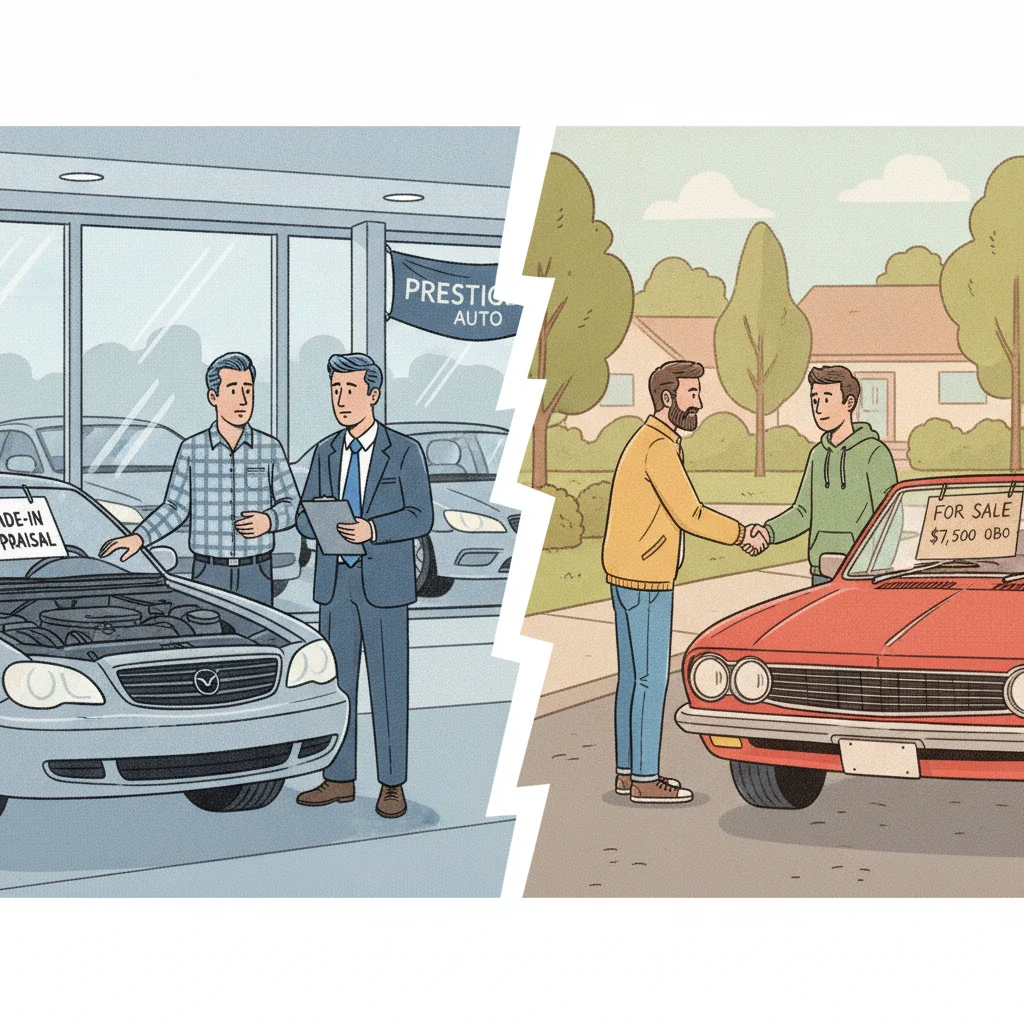
The right choice depends on three factors: the value gap, your time, and the condition of the car.
Trade-In Makes Sense When:
- The car is worth less than $5,000 — private-party transactions at this price point carry more hassle and fraud risk relative to the value difference.
- The vehicle has serious mechanical issues. Trading in a car with a known problem is legal and common; selling it privately without disclosure is not.
- You're in a time crunch. A dealer can close your trade in an hour. Private sales take days to weeks.
- Your state offers meaningful sales tax savings on trades — check your state's DMV rules, as some states cap the taxable benefit while others allow a full offset.
Private Sale Makes Sense When:
- The value gap between trade and private sale exceeds $2,000 — common on high-mileage trucks, SUVs, and reliable Japanese brands that retain buyer demand even at high miles.
- You have documentation showing strong maintenance history that a private buyer will value but a dealer will discount.
- The car is in clean condition with no major mechanical issues, making it easy for a buyer to take on without fear.
See our full guide to trade-in strategies for a deeper breakdown of how to approach the decision and maximize your outcome either way.
It's worth noting that high-mileage cars remain in demand among buyers who are looking to save money — which means there's a real private market for them if you're willing to put in the effort.

All claims are backed by peer-reviewed research. Sources on request.