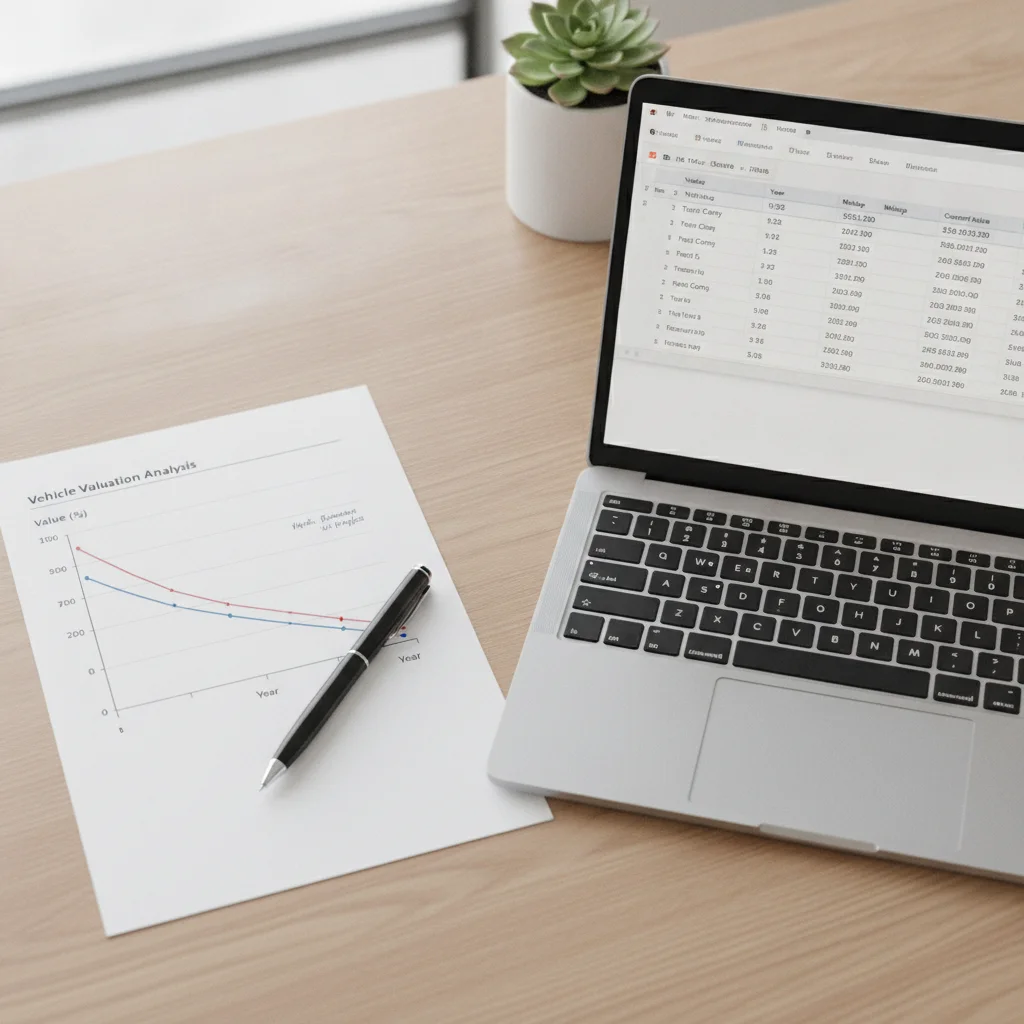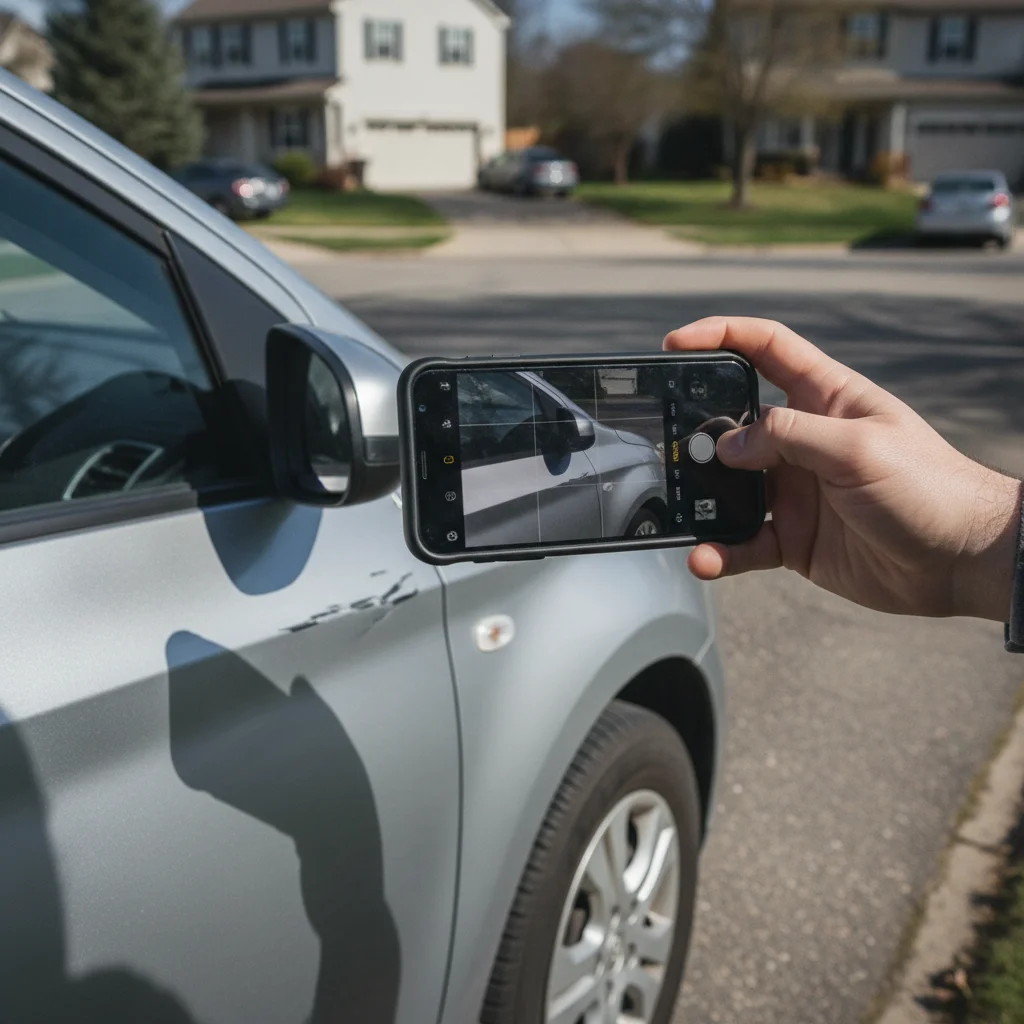
Key Takeaways
Start here
What a Valuation Report Actually Is
Next
The Major Valuation Sources — and What They're Each Good For
Then
Breaking Down a Report Section by Section
Key insight
Why Your Number Looks Different from the Listing You Just Saw Online
Put it to use
How to Reconcile Multiple Reports into a Single Asking Price
Avoid pitfalls
Common Mistakes First-Timers Make Reading These Reports
What a Valuation Report Actually Is
A valuation report is a data-driven estimate of what a specific vehicle is worth under specific conditions. It is not a price guarantee, an appraisal, or a binding offer. It's a reference point — one that's only useful if you understand what went into producing it.
Every major valuation tool — Kelley Blue Book, Edmunds, NADA Guides, and others — builds its estimates from a mix of sources: dealer transaction data, wholesale auction results, private sale listings, and historical price trends. The exact weighting of those inputs varies by provider, which is why two reputable tools can give you numbers that are $1,000 apart for the same vehicle.
Before you put any stock in a report, understand the three contexts it's built around:
- Trade-in value: What a dealer might offer you if you're selling your car to them directly. This is the lowest of the three values because the dealer needs room to recondition and resell at a profit.
- Private party value: What you can reasonably expect to get selling directly to another individual. Typically $1,500–$3,000 higher than trade-in, depending on the vehicle.
- Dealer retail value: What a dealer charges customers buying that car off their lot. This is the ceiling — you should not expect to command dealer retail in a private sale.
If you're pricing a car to sell it yourself, the only number that matters to you right now is private party value. Keep that in mind every time you pull a report.
Private party value
The estimated price a vehicle would sell for in a direct sale between two private individuals, without a dealership involved. This is the most relevant number for someone selling their own car.
Trade-in value
The amount a dealership estimates it will pay you for your vehicle when you bring it in. It's lower than private party value because the dealer factors in reconditioning costs and resale profit margin.
Dealer retail value
The price a dealership lists a used vehicle for on their lot. This is the highest of the three standard values and is not a realistic benchmark for private sellers.
Condition grade
A category (usually Excellent, Good, Fair, or Poor) that describes the physical and mechanical state of a vehicle. It is one of the biggest factors in determining estimated value.
True Market Value (TMV)
Edmunds' proprietary estimate of what a vehicle actually sells for in real transactions in a given region. It's based on reported sale data rather than listing prices.
Wholesale value
What a vehicle is worth at a dealer auction — the price dealers pay each other to buy inventory. It represents the true floor of a car's value and is usually lower than any retail estimate.
Trim level
A specific configuration or package within a vehicle model line. Different trim levels on the same model can vary significantly in features and resale value, so entering the correct trim in a valuation tool is essential.
Valuation range
The low-to-high spread of estimated prices a valuation tool provides. Real-world sale prices fall somewhere within this range depending on the specific vehicle's condition, history, and local market.
The Major Valuation Sources — and What They're Each Good For
There are four tools you'll encounter repeatedly. Here's what each one actually does well — and where its blind spots are.
Kelley Blue Book (KBB)
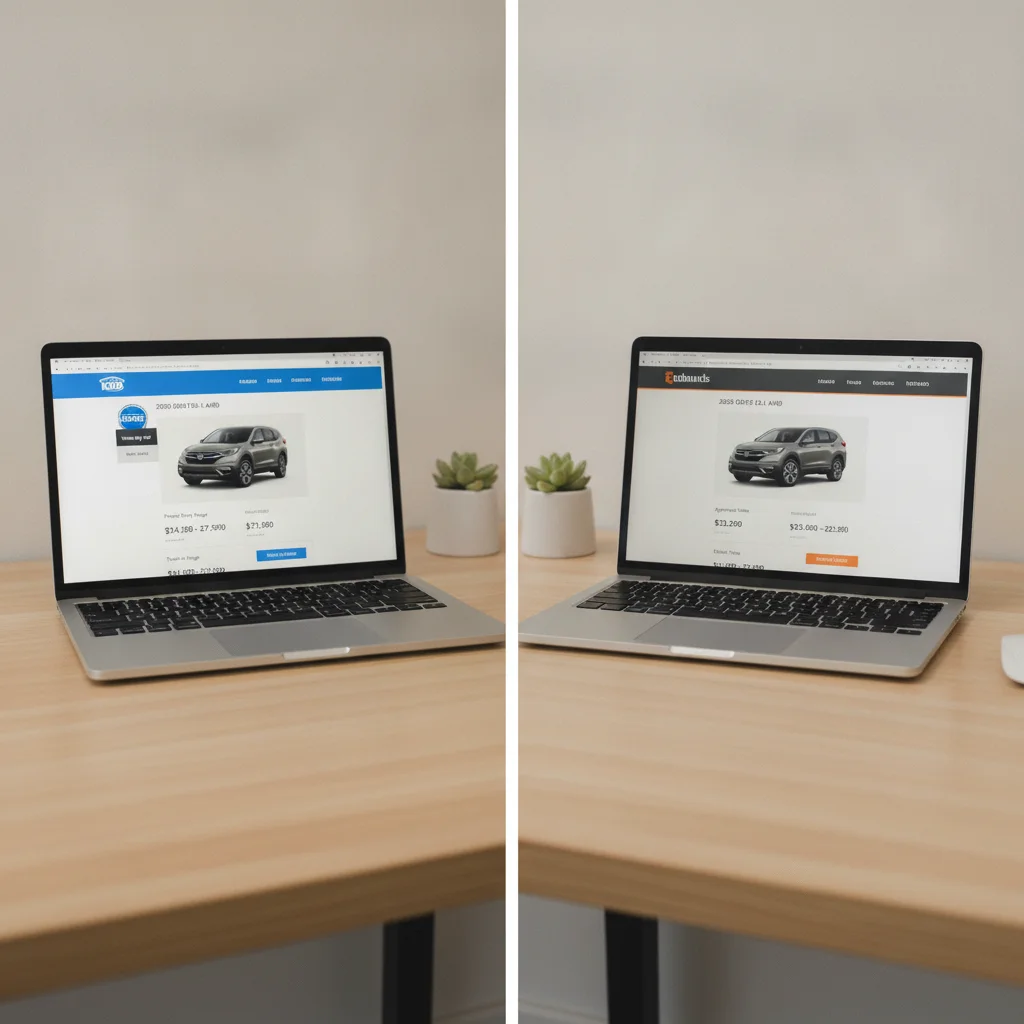
KBB is the most recognizable name in vehicle valuation and carries significant consumer trust. It's strong for mainstream vehicles — sedans, trucks, and SUVs from major domestic and Japanese brands. Its private party estimates tend to run slightly optimistic (on the high side), which makes it useful for setting an initial asking price but less reliable as a floor. KBB also has an instant cash offer product called KBB Instant Cash Offer, which gives you a real dealer bid — a useful sanity check against the estimated values.
Edmunds
Edmunds is generally considered more conservative and data-driven than KBB. Its True Market Value (TMV) pricing is based on actual transaction data in your region, which makes it particularly useful for understanding what cars are actually selling for — not just being listed for. If you want to understand the realistic price a motivated buyer will pay, start with Edmunds.
NADA Guides
NADA (now published by J.D. Power) is the reference of choice for lenders and dealers. It tends to value vehicles slightly higher than KBB in many categories, particularly for trucks and work vehicles. If a buyer is getting a loan, their lender may use NADA to determine how much they'll finance — which makes it worth checking so you know what ceiling a lender might set on your buyer's financing.
Black Book
Black Book focuses on wholesale and auction data, updated weekly. It's less useful for private sellers setting retail prices, but it's a strong indicator of what dealers are actually paying for cars at auction — effectively the true wholesale floor. If your KBB and Edmunds numbers feel high, Black Book will give you a grounded reality check.
Run Two Tools, Not One
Always pull both KBB and Edmunds before settling on a price. KBB tends to run slightly high, Edmunds slightly conservative — the truth is usually somewhere between them. Two data points give you a range you can defend; one data point gives you a number you might be wrong about.
Build a Simple Price Comparison Spreadsheet
Before listing, jot down your KBB range, your Edmunds range, and the 5 most comparable local listings with how many days they've been posted. This 10-minute exercise gives you a clear, data-backed asking price and talking points for negotiation. Buyers respect sellers who can show their math.
For most private sellers, running KBB and Edmunds is sufficient. If the two numbers are within $500 of each other, you have a solid range. If they diverge by more than $1,500, dig into why — usually it comes down to condition inputs or regional data differences.
See also: Reading a Depreciation Chart: A Practical Guide for Private Sellers — that article pairs well with this one for understanding the longer-term price trajectory of your vehicle.
Breaking Down a Report Section by Section
Let's walk through what you'll actually see when you pull a KBB or Edmunds report. The interface differs between providers, but the underlying sections are consistent.
Vehicle Identification
At the top, you'll confirm the year, make, model, trim level, and body style. Trim level is critical. A base model and a fully loaded version of the same nameplate can differ by $4,000–$8,000 in value. If you're unsure of your trim, check your window sticker (if you have it), your owner's manual cover, or the badge on the trunk lid. You can also look up your VIN — the 8th character often encodes engine type, and several free VIN decoders will return full trim details.
Mileage Input
You'll enter your current odometer reading. Tools calculate an adjustment relative to average annual mileage (typically 12,000–15,000 miles per year). A car with 30,000 miles on a 3-year-old vehicle is above average — expect a slight positive adjustment. A car with 60,000 miles on a 3-year-old vehicle will take a meaningful hit. Each 10,000 miles above average typically reduces private party value by $500–$1,200 depending on the vehicle.
Condition Grade
This is the section most first-timers get wrong. There are usually four or five condition tiers:
- Excellent / Outstanding: Essentially flawless inside and out, full service history, no accidents. Very few privately sold vehicles genuinely qualify.
- Good / Very Good: Minor cosmetic wear consistent with age, all mechanical systems functioning properly. This is where most well-maintained vehicles land.
- Fair: Noticeable wear, some mechanical issues, or a prior accident on record. Price drops meaningfully here.
- Poor / Rough: Significant mechanical or cosmetic issues. Usually a wholesale-only vehicle.
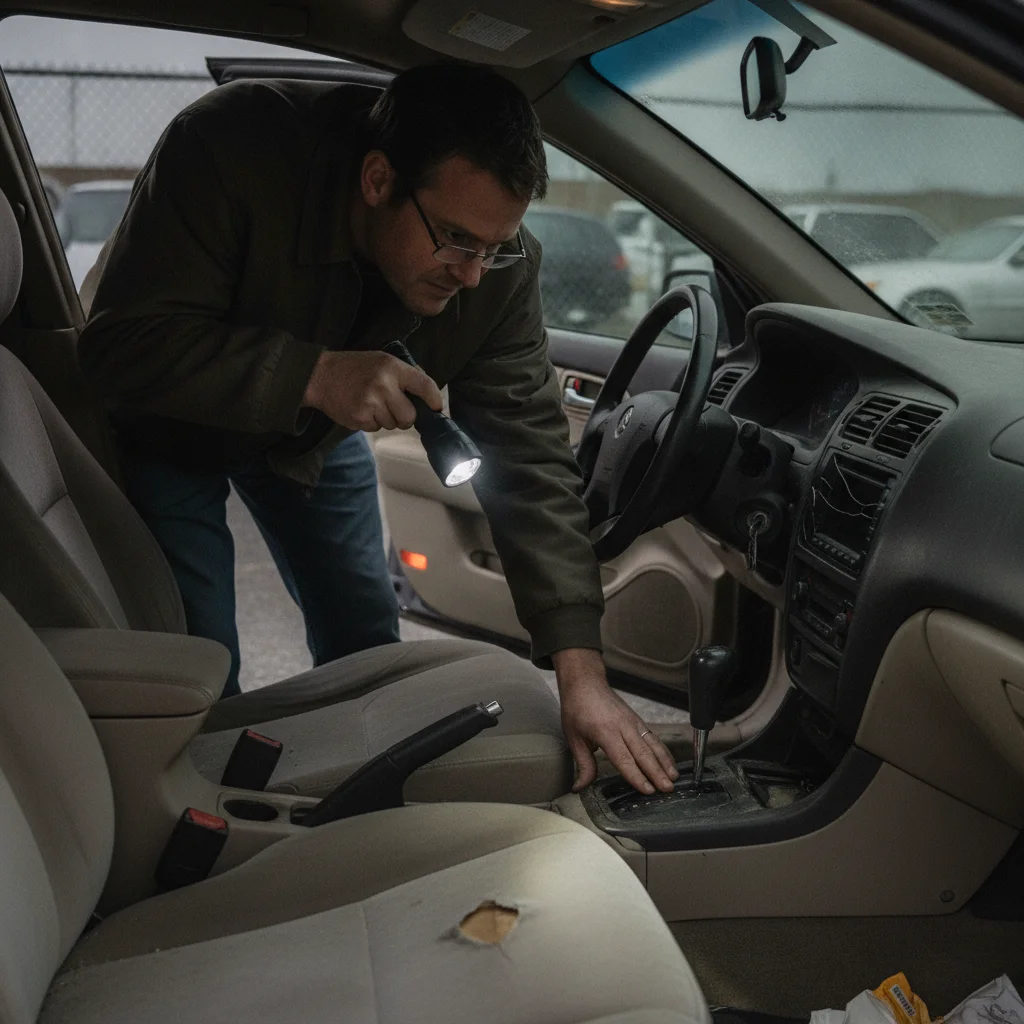
Most sellers overgrade their vehicles. If your car has a door ding, worn driver's seat bolster, or a chip in the windshield, it is not in excellent condition. Be honest — an overpriced listing based on an inflated condition grade wastes everyone's time, including yours.
Before you run any report, make sure you've properly documented your vehicle's condition. Best Practices for Documenting Your Car's Condition Before Running a Valuation walks through exactly how to do that honestly and systematically.
Optional Equipment / Packages
Most tools allow you to add factory-installed options — sunroof, leather seats, navigation, premium audio, towing package, etc. Add-ons do increase value, but not dollar-for-dollar. A $2,000 factory sunroof might add $400–$800 to your valuation. Buyers value options less than sellers do. Check your original window sticker or use your VIN to confirm what was factory-installed versus dealer-added (dealer-added accessories often have zero resale value).
The Price Range Output
The final output is typically a range — low, average, and high — not a single number. The spread between low and high on a $15,000 vehicle might be $1,500–$2,500. That range reflects real-world transaction variability. Your job is to figure out where in that range your specific car belongs based on condition, options, and local demand.
Lender Valuation Matters for Your Buyer
If your buyer is financing, their lender will run their own valuation — often using NADA or Black Book — to determine how much they'll lend against the vehicle. If your asking price exceeds what the lender considers the car worth, your buyer may not be able to get full financing. This is particularly relevant for older vehicles or high-mileage cars. It doesn't mean you can't sell at your price, but expect cash buyers to have more flexibility than financed buyers.
Why Your Number Looks Different from the Listing You Just Saw Online
This is the single most common source of confusion for first-time sellers. You run a report and get a private party value of $14,500. You then search for comparable listings online and see three similar cars listed at $16,800, $17,200, and $15,900. What's going on?
Listing prices are not sale prices. Sellers list high hoping buyers will negotiate them down. The cars listed at $17,200 may have been sitting for 60 days with no offers. Valuation tools are calibrated to reflect what cars actually transact for — not the optimistic asking price a seller posts on day one.
Research consistently shows that private party car sales close at 5–15% below the original asking price. A listing at $16,000 often sells for $14,500–$15,200. That puts it right in line with what your report is showing.
Don't Anchor on Listing Prices
Seeing a similar car listed at $18,000 does not mean your car is worth $18,000. Listing prices reflect seller optimism, not market reality. Focus on what comparable cars are actually selling for — and valuation reports are calibrated to that actual transaction data, not hopeful asking prices.
Stale Valuations Can Cost You
Used car prices can shift 3–8% in a matter of months depending on fuel prices, economic conditions, and inventory levels. A valuation you pulled six months ago may no longer reflect reality. Always re-run your estimate within 7 days of listing and adjust if market conditions have changed.
There are also regional factors at play. A pickup truck in rural Montana commands a premium over the national average. The same truck in a dense urban market with low demand might sit for weeks. Valuation tools adjust for ZIP code but only partially. Check active local listings on Facebook Marketplace and Craigslist as a secondary data source — they'll tell you what real buyers in your area are actually willing to pay right now.
If you're buying rather than selling, this same logic applies. The used car buying process involves understanding the gap between asking price and real market value — a skill valuation reports directly support.
How to Reconcile Multiple Reports into a Single Asking Price
Here's the practical process I'd use if I were pricing a car today:
- Run KBB and Edmunds private party estimates with the same inputs — same mileage, same condition grade, same options, same ZIP code.
- Note the range each tool gives you, not just the midpoint. You now have two ranges.
- Find the overlap. If KBB says $13,500–$15,200 and Edmunds says $12,800–$14,600, your realistic market range is roughly $13,500–$14,600.
- Check 5–10 comparable local listings on Facebook Marketplace and Craigslist. Filter for the same year, trim, and mileage band. Note where similar cars are listed and how long they've been sitting.
- Set your asking price near the top of your reconciled range. This leaves room to negotiate while keeping you in a defensible position. If you list at $14,800 when the market says $13,500–$14,600, you'll get low offers and friction. If you list at $14,500, you're credible.
- Prepare your justification. Screenshot your valuation reports. Buyers will negotiate — having data to show them is more persuasive than arguing from opinion.
Run Two Tools, Not One
Always pull both KBB and Edmunds before settling on a price. KBB tends to run slightly high, Edmunds slightly conservative — the truth is usually somewhere between them. Two data points give you a range you can defend; one data point gives you a number you might be wrong about.
Build a Simple Price Comparison Spreadsheet
Before listing, jot down your KBB range, your Edmunds range, and the 5 most comparable local listings with how many days they've been posted. This 10-minute exercise gives you a clear, data-backed asking price and talking points for negotiation. Buyers respect sellers who can show their math.
Once you have a price, the next step is actually getting it in front of buyers. Selling Your Car Online: A Complete Walkthrough for First-Timers covers the full listing-to-sale process if you haven't been through it before.
Kelley Blue Book
The most widely recognized vehicle valuation tool in the U.S. Use it to generate private party value estimates and get a real dealer cash offer through KBB Instant Cash Offer.
Edmunds True Market Value
Edmunds TMV pricing is based on actual regional transaction data, making it one of the most reliable estimates of what a car will realistically sell for in your area.
NADA Guides (J.D. Power)
The valuation standard used by lenders and dealers. Useful for understanding how a buyer's lender might assess your vehicle's worth when financing is involved.
Facebook Marketplace
Browse active local listings to compare your vehicle against what similar cars are actually being listed for in your specific market — a critical complement to national valuation tools.
VIN Decoder (NHTSA)
Free government VIN decoder that confirms your vehicle's exact trim level, equipment, and recall history — essential for entering accurate data into any valuation tool.
Common Mistakes First-Timers Make Reading These Reports
These are the errors I see repeatedly when first-time sellers price their cars:
Using trade-in value as a baseline for a private sale
Trade-in value is what a dealer will give you — it's the lowest number on the page. If you price your private sale at trade-in value, you're giving away money. Always use private party value as your reference.
Selecting 'Excellent' condition without meeting the criteria
Valuation tools define 'excellent' very strictly. If your car has more than minimal wear, it doesn't qualify. Inflating condition produces a number you can't defend to a buyer who walks around the car and finds dings, stains, or worn pedals.
Ignoring the geographic adjustment
Entering the wrong ZIP code — or leaving it defaulted to a generic location — can produce estimates that are meaningfully off for your actual market. Always enter your real ZIP code and then verify against local listings.
Treating the report as the ceiling instead of a range
The midpoint of a valuation range is not your ceiling — it's roughly where an average car in average condition in an average market should sell. A car with full service records, new tires, and a clean history report can legitimately sit toward the top of that range. Know what your car's specific strengths are.
Running the report once and never updating it
The used car market moves. A valuation from three months ago may be stale — especially in a period of shifting inventory or economic pressure on used car prices. Re-run your estimates within a week of listing and again if your car hasn't sold in 30 days.
Don't Anchor on Listing Prices
Seeing a similar car listed at $18,000 does not mean your car is worth $18,000. Listing prices reflect seller optimism, not market reality. Focus on what comparable cars are actually selling for — and valuation reports are calibrated to that actual transaction data, not hopeful asking prices.
Stale Valuations Can Cost You
Used car prices can shift 3–8% in a matter of months depending on fuel prices, economic conditions, and inventory levels. A valuation you pulled six months ago may no longer reflect reality. Always re-run your estimate within 7 days of listing and adjust if market conditions have changed.
One more thing worth checking before you finalize your price: the vehicle history report. A prior accident, title issue, or service gap affects your car's value regardless of what the valuation tool says. Buyers will pull a report — you should look at yours first. See Reading a Vehicle History Report Without Getting Misled for a full walkthrough of how to interpret what you find.

All claims are backed by peer-reviewed research. Sources on request.