Key Takeaways
Accident History Valuation Impact
When a vehicle has a recorded accident on its history report, valuation tools automatically reduce its estimated market value — sometimes before you enter a single detail about condition. This reduction reflects the real-world reality that buyers pay less for cars with reported incidents, regardless of repair quality. The penalty varies by accident severity, vehicle type, and which valuation tool you're using.
In industry terms, this is called 'stigma loss' or 'diminished value' — the residual price discount a vehicle carries solely because of its accident record, separate from any actual mechanical or structural deficiency.
Why Accident History Doesn't Stay Between You and the Body Shop
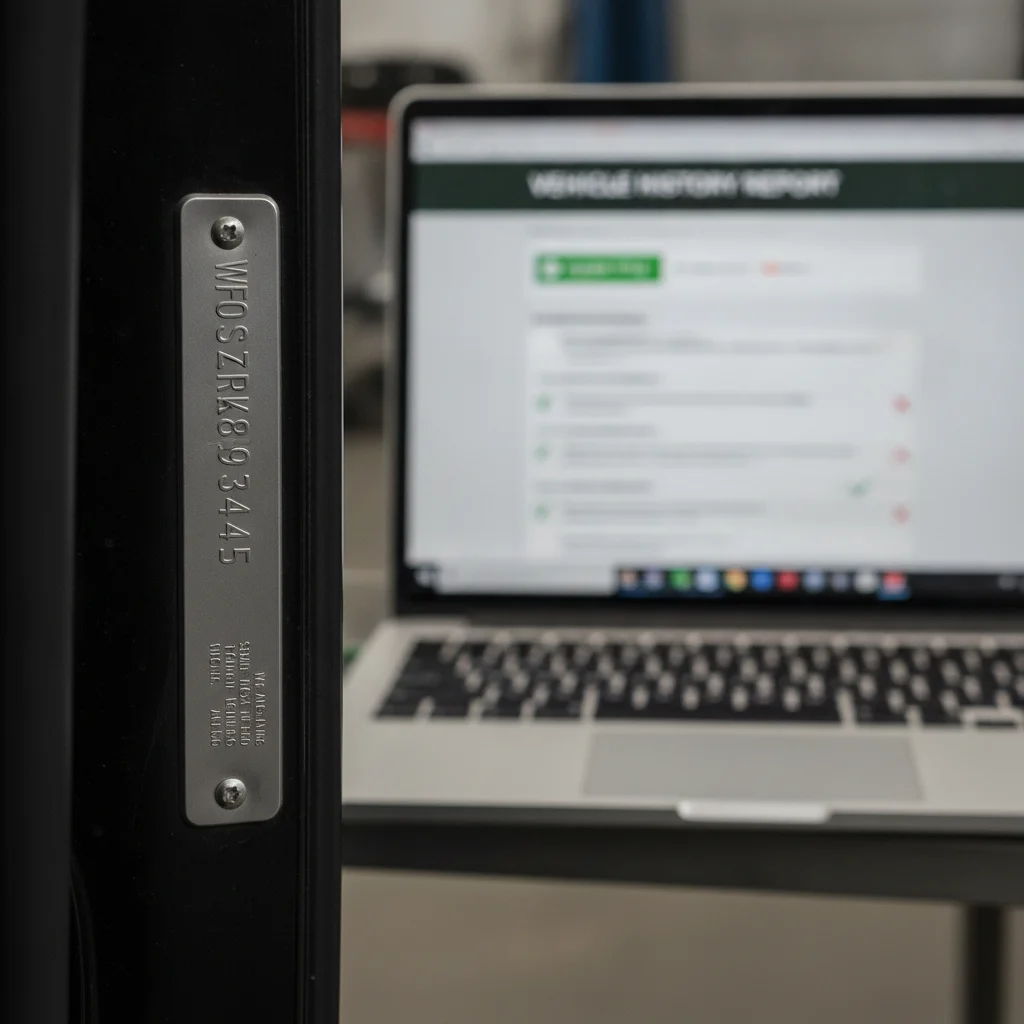
Every time a collision claim is filed with an insurer, or a vehicle is repaired through a licensed facility reporting to a data aggregator, that event gets attached to the car's VIN. From that point forward, the incident travels with the car through every ownership transfer, every dealer appraisal, and every automated valuation estimate a potential buyer runs.
This isn't a flaw in the system — it's the system working as intended. Buyers use history reports and valuation tools to price risk. A car with a reported accident carries more uncertainty than an identical car without one, and the market prices that uncertainty accordingly. The problem for sellers is that the discount applies even when the repair was done flawlessly and the car performs perfectly today.
Understanding exactly how each major valuation tool handles accident data — and what inputs you can actually control — is the starting point for pricing your car realistically and avoiding a negotiation ambush.
How the Major Valuation Tools Handle Accident Records
Not all valuation platforms treat accident history the same way. Here's a direct comparison of the three tools most buyers and sellers actually use:
Carfax Instant Market Value
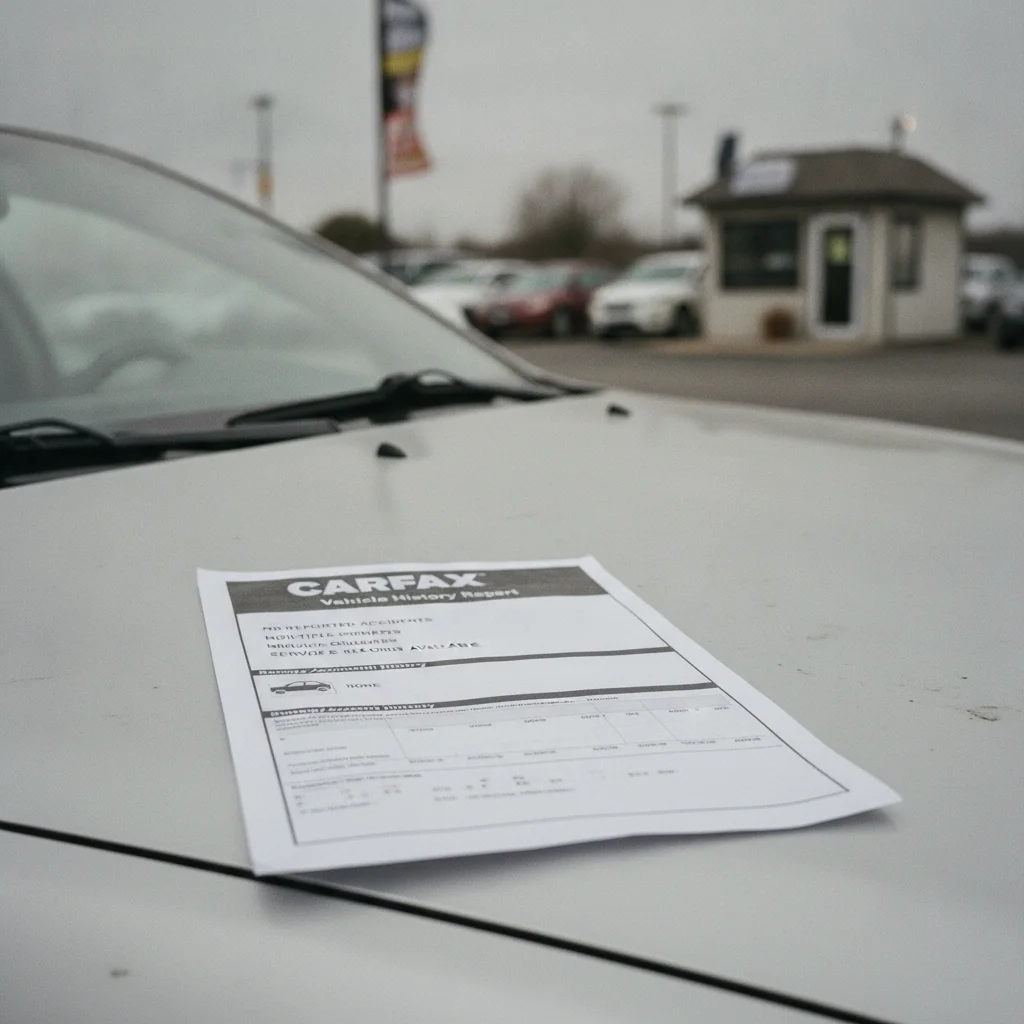
Carfax pulls its own history data directly into the valuation model. Because Carfax is both the history-report provider and the valuation tool, its estimate is the most tightly integrated with accident records. Reported incidents automatically pull down the estimate — you don't self-report anything. The tool knows what's on the report before you do, and the price reflects it. For sellers, this means you can't finesse the condition inputs to offset an accident flag; the data is locked in on the back end.
Kelley Blue Book (KBB)
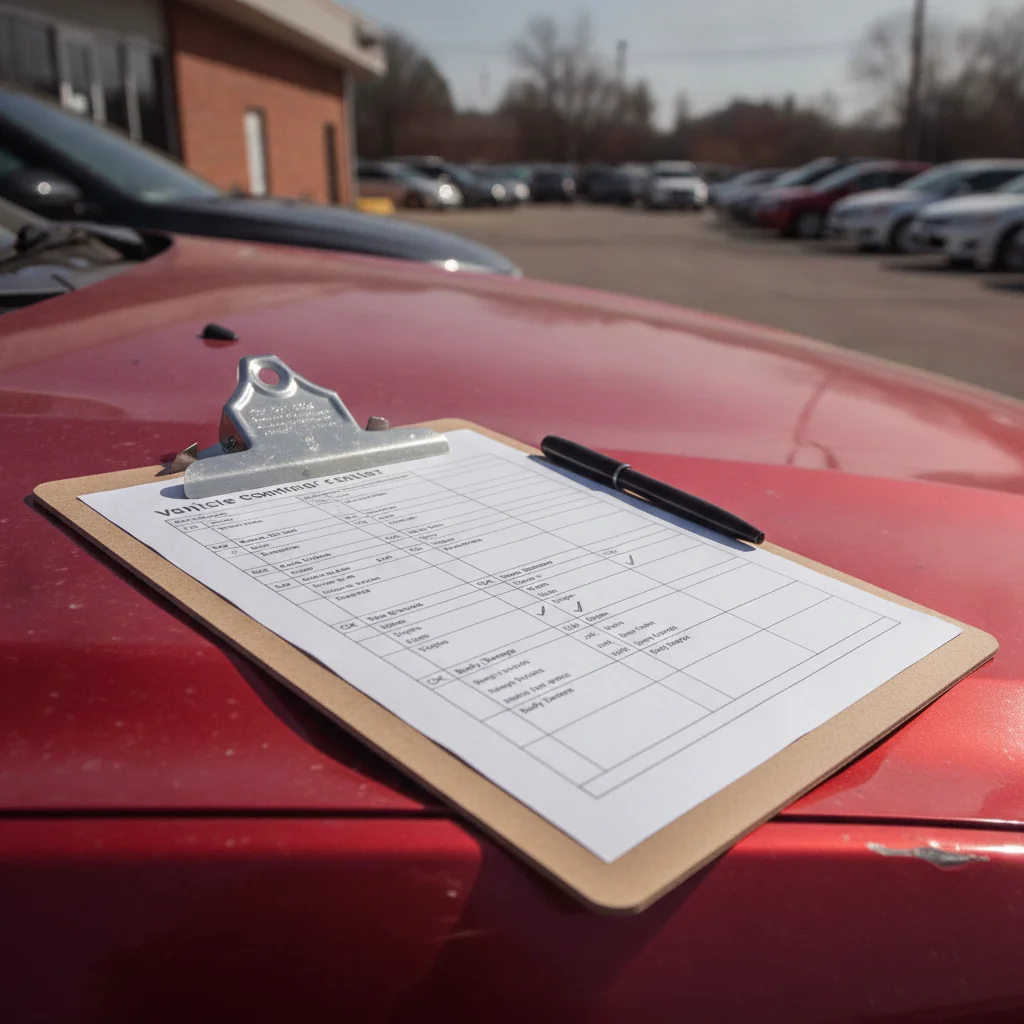
KBB's private party value and trade-in estimate rely heavily on the condition rating you self-select: Excellent, Good, Fair, or Poor. Accident history isn't pulled automatically from a VIN database during the standard valuation flow. However, KBB's condition definitions explicitly state that a vehicle with accident history — even if repaired — generally cannot qualify for Excellent condition. If you rate a car with reported accidents as Excellent and a dealer or buyer later runs the Carfax, the mismatch damages your credibility. Rate accurately: a well-repaired single-incident car usually lands in Good, and a car with structural damage history belongs in Fair at best.
Edmunds True Market Value (TMV)
Edmunds uses a market-data approach, pulling real transaction prices from dealers in your region. For private party estimates, Edmunds also incorporates condition ratings and, in its more detailed instant offer tools, VIN-based history data. Their algorithm weighs accident history as a separate negative adjustment on top of condition, which means two cars rated identically on condition but differing on accident history will receive different estimates. The gap typically runs 10–20% depending on accident severity.
10–25%
Typical value reduction for a single reported accident
Industry diminished value research and valuation tool comparisons consistently show this range for non-total-loss incidents on vehicles under 5 years old.
40–60%
Value reduction for salvage or rebuilt title vehicles
Vehicles branded as salvage or rebuilt typically trade at this discount relative to clean-title equivalents due to lender restrictions and buyer risk perception.
1 in 4
Used vehicles have a reported accident on record
Carfax data estimates roughly 25% of used vehicles in the U.S. have at least one reported accident on their history report.
$2,100
Average diminished value claim for a moderate collision
According to diminished value specialists, the average payout on a first-party diminished value claim for moderate damage runs approximately $2,100 before depreciation adjustments.
For a deeper look at how reported accidents translate into specific dollar penalties, see how accident history affects depreciation at sale.
What 'Accident Severity' Actually Means to a Valuation Algorithm
Valuation tools don't just flag accident/no accident — they weight incidents by severity. Here's how the categories typically shake out:
- Minor incidents (airbags intact, no structural codes): Bumper damage, door dings repaired through insurance. These carry the smallest discount — often 5–10% off comparable clean-history vehicles in the same market.
- Moderate incidents (deployed airbags, significant panel damage): These trigger larger automatic penalties, typically 15–20%. Even after repair, buyers assume frame-adjacent work or alignment issues.
- Major incidents (structural damage codes, frame repair, total-loss branding): Rebuilt or salvage-titled vehicles take the largest hit — often 40–60% below clean-title comparable value. Many lenders won't finance them, which further limits your buyer pool.
The number of incidents stacks. A car with three minor reported accidents often takes a larger combined penalty than a car with one moderate incident, because the frequency signals patterns of use or neglect to buyers and algorithms alike.
“The stigma penalty attached to accident history is often larger than the actual repair cost. Buyers aren't just pricing the damage — they're pricing their uncertainty about what else might have happened to that car.”
— Tom McParland, Automotive journalist and vehicle negotiation consultant
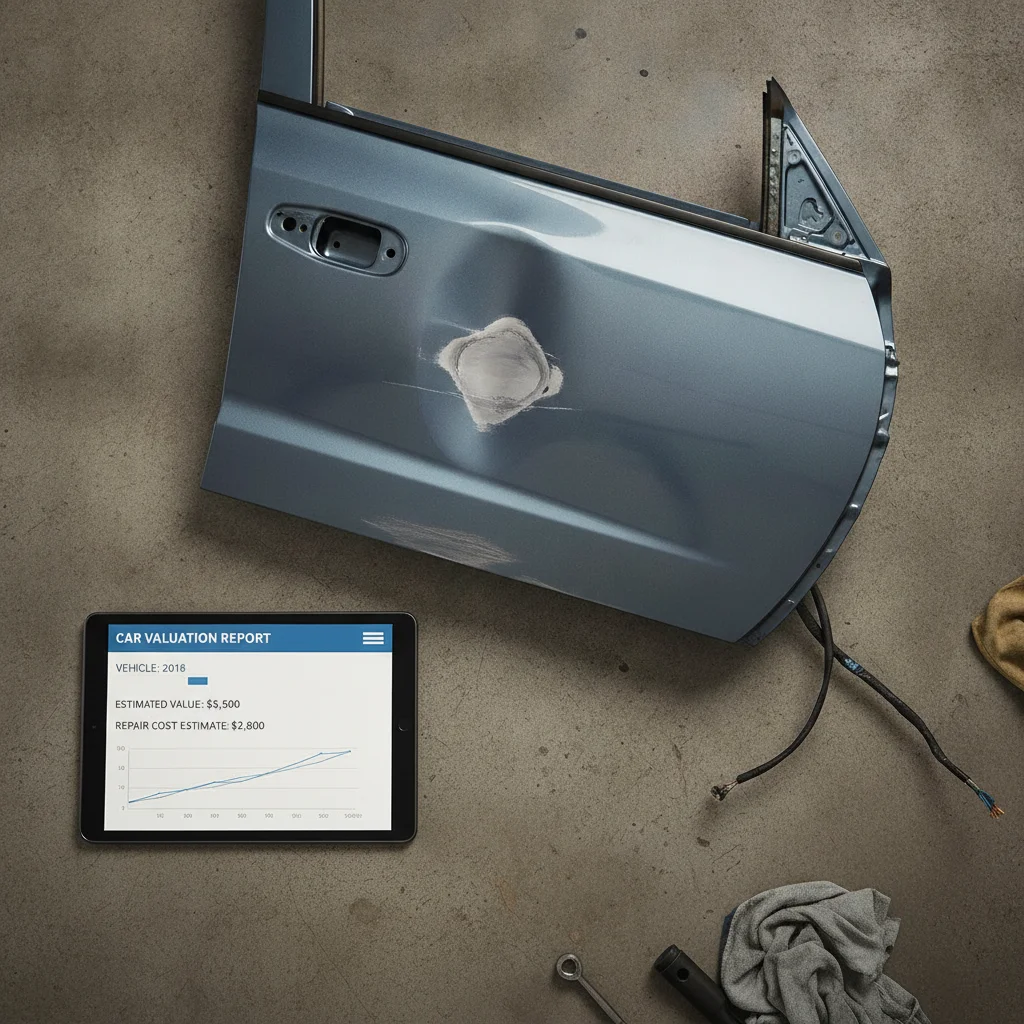
It's also worth noting that the valuation penalty is separate from any actual repair cost. A $4,000 repair on a $30,000 car doesn't produce a $4,000 value reduction — it can produce a $5,000–$8,000 reduction because of the stigma attached to the record itself. This is the core concept behind diminished value and depreciation.

What Sellers Can — and Cannot — Control
Sellers often ask whether they can do anything to neutralize an accident history entry. The honest answer: you can influence how buyers perceive it, but you cannot change what the algorithms see.
What you cannot change
Once an incident is reported to a data aggregator like Carfax or AutoCheck, the record is permanent. There is no legitimate process for removing it. Any service claiming to erase history-report entries is either fraudulent or exploiting temporary data delays. Automatic valuation penalties in tools that pull VIN data directly will apply regardless.
What you can do
Documentation is your primary lever. Gather the following before listing your vehicle:
- Original repair estimate and final invoice from the shop — ideally showing OEM parts used where applicable.
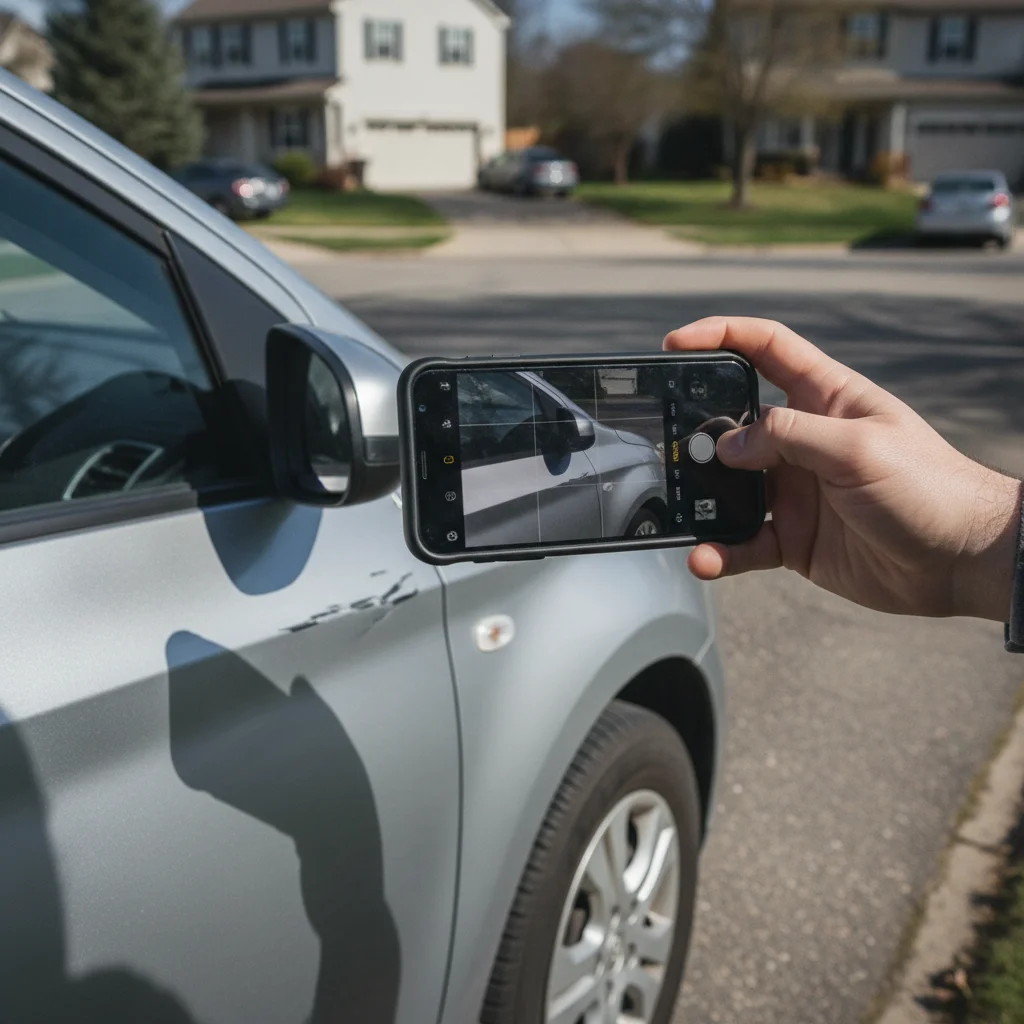
- Photos from during and after the repair — body shops often have these on file.
- A post-repair inspection report from a third-party mechanic confirming no structural, alignment, or mechanical issues.
- The actual Carfax or AutoCheck report — run it yourself, read it, and be ready to walk a buyer through it rather than letting them discover it unassisted.
This documentation won't change the automated estimate, but it gives you credibility in negotiation. A buyer who sees organized repair records and a clean post-repair inspection is far less likely to demand a $3,000 discount than one who has only the history flag with no supporting context.
Run Your Own History Report First
Before listing your car, spend the $20–$40 to run a Carfax or AutoCheck report on your own VIN. You'll see exactly what every buyer will see — including incidents you may not have been aware of. Going into negotiations with full knowledge of your own car's record is a significant tactical advantage. Surprises during a buyer's due diligence are almost always expensive.
Get a Post-Repair Inspection in Writing
If your car was in an accident and repaired, a third-party mechanic inspection — not just the body shop's sign-off — carries far more weight with buyers. A $100–$150 pre-sale inspection report from a neutral mechanic confirming no structural or mechanical concerns can offset several hundred dollars of buyer discount demands. It also signals that you're a seller who has nothing to hide.
For guidance on accurately rating your vehicle's condition before running any estimate, see best practices for documenting your car's condition. And when you're ready to input that condition rating into a tool, how to adjust a valuation estimate for your car's actual condition walks through the calibration process honestly.
Disclosure: The Legal and Practical Reality
Sellers sometimes consider not mentioning an accident, particularly if it wasn't severe or if the repair looks pristine. This is a high-risk strategy on multiple fronts.
Legal exposure: Most states require sellers to disclose known material defects in a vehicle sale. Courts have consistently ruled that prior accidents — especially those involving structural damage or airbag deployment — qualify as material. A buyer who discovers undisclosed history post-sale can pursue rescission of the deal or a fraud claim. Private party sellers are not protected by 'as-is' language the way licensed dealers sometimes are.
Practical risk: Nearly every serious buyer today runs a VIN check before completing a purchase. If your car has a history entry and you claimed it was accident-free, you've handed the buyer a negotiating weapon and destroyed your credibility simultaneously. The conversation shifts from a price discussion to a trust discussion — and you won't win it.
Not All Accidents Show Up on Reports
Incidents that go through a private cash repair — where no insurance claim is filed and the shop doesn't report to a data aggregator — often don't appear on history reports at all. This works in the seller's favor in the short term (no automatic valuation penalty), but creates legal risk if the seller knows about the damage and fails to disclose it. A thorough pre-purchase inspection by a buyer can still surface evidence of prior repairs even without a history entry. See <a href="/buying-a-car/new-vs-used-cars/buying-used-cars/why-a-clean-vehicle-history-report-doesnt-guarantee-a-trouble-free-car">why a clean history report doesn't guarantee a trouble-free car</a> for more on what reports miss.
Diminished Value Claims Work Differently Than Resale Adjustments
Diminished value is a formal insurance claim process — it's what you file with the at-fault driver's insurer to recover the market value your car lost due to their negligence. It's separate from the resale penalty you absorb when selling privately. Some sellers confuse the two: successfully collecting a diminished value payout from an insurer does not remove the accident entry from the history report or change what valuation tools show.
State Laws on Seller Disclosure Vary
While most states require disclosure of known material defects, the specific thresholds vary. Some states specifically require disclosure of accidents over a certain dollar amount. Others have broader language covering any known issue that would affect a buyer's decision. Check your state's DMV or attorney general's consumer protection guidelines before listing, particularly if the incident involved structural damage or airbag deployment.
The smarter approach: disclose the accident proactively, present your documentation, and set your asking price to reflect the realistic market value for a car with that history. You control the narrative when you lead with transparency instead of being cornered by it.
It's also worth understanding that history reports, even when they do show accidents, don't capture everything. For the buyer's perspective on what reports miss, see why a clean vehicle history report doesn't guarantee a trouble-free car.
Setting a Realistic Asking Price with Accident History
Once you understand what the tools are showing, pricing the car correctly is straightforward math with a negotiation buffer built in.
- Run all three tools — Carfax Instant Market Value, KBB private party value, and Edmunds TMV. For KBB, select Good condition unless you have a specific reason to rate otherwise, and read the condition definitions carefully rather than guessing.
- Average the estimates or use the range as your floor-to-ceiling. These tools already bake in the accident penalty for tools that pull VIN data, and your condition rating handles it for KBB.
- Set your asking price at 5–8% above the average to leave negotiation room. Buyers with accident-history cars almost always negotiate; expect it.
- List the repair documentation in your ad — not just mentioned, but actually described specifically. 'Repaired at certified body shop, OEM parts, post-repair inspection completed' is more credible than 'runs great, nothing to hide.'
- Be willing to walk a buyer through the history report rather than handing it over cold. Explain each entry, show the repair invoice that corresponds to it, and let the documentation do the trust-building.
If the accident involved the car's structural components, frame, or if airbags deployed, price more aggressively — closer to the low end of the tool range. Buyers in those situations are taking on more uncertainty, and the market price will reflect that regardless of your asking number.
Also note that accident history can affect more than just resale — it can complicate future insurance claims on the vehicle. See how prior accidents on a vehicle's history affect your claim for details.


All claims are backed by peer-reviewed research. Sources on request.