Key Takeaways
Accident-Related Depreciation
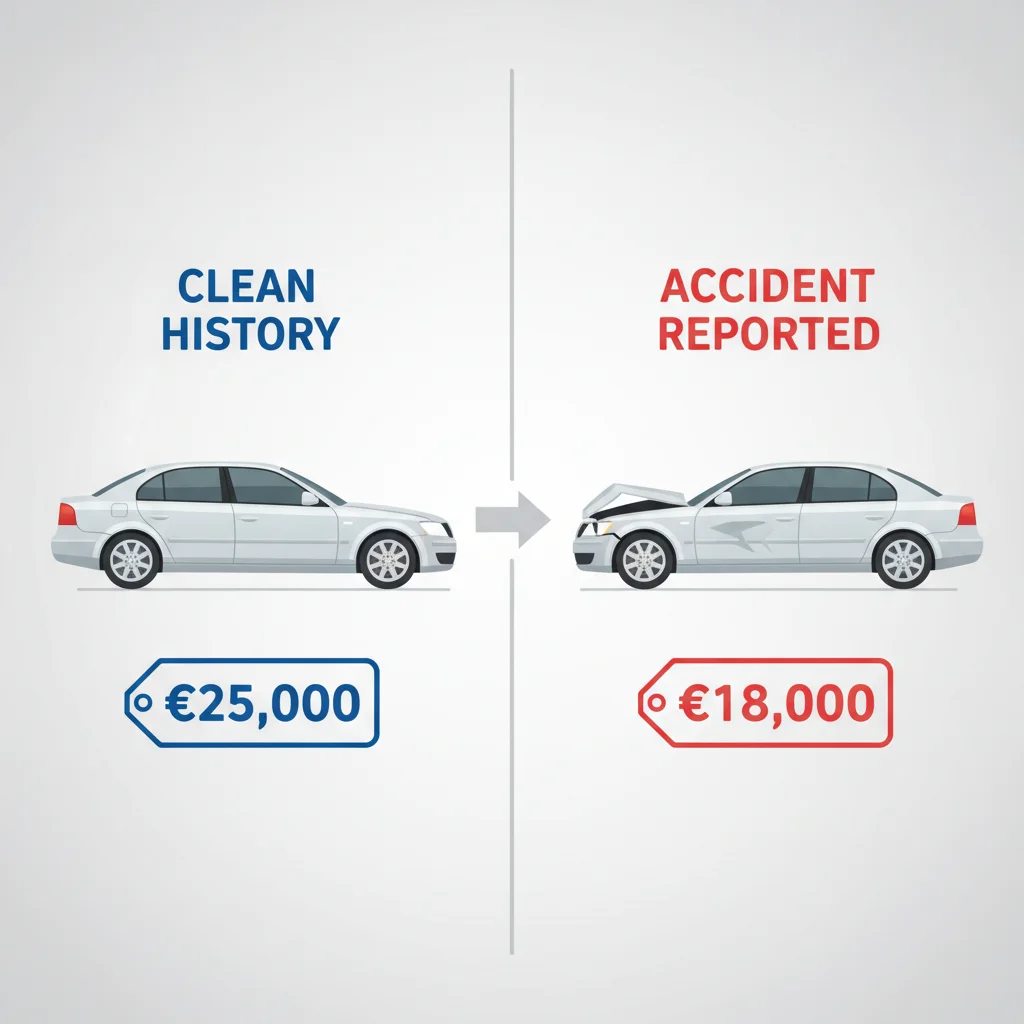
Accident-related depreciation is the additional drop in a vehicle's resale value caused specifically by a reported collision history — separate from normal age and mileage depreciation. When a Carfax or AutoCheck report shows an accident, buyers typically offer less money because they perceive higher risk, even if the car was repaired perfectly. This value penalty can range from a few hundred dollars to several thousand, depending on accident severity and the vehicle's age.
Appraisal professionals sometimes call this 'diminished value' — a legally recognized concept in many states that quantifies the difference between a vehicle's pre-accident and post-accident worth, regardless of repair quality.
Why a Carfax Entry Is More Than a Footnote
Most sellers focus on mileage, trim level, and cosmetic condition when setting a price. Accident history sits in a different category — it's the single most powerful negotiating tool a buyer has, and it shows up before they ever touch the car. The moment a prospective buyer pulls a Carfax report and sees an accident entry, their mental price drops automatically, often by more than the actual damage ever warranted.
This happens because buyers aren't just evaluating what the car is today. They're pricing in risk: the possibility of hidden structural weakness, premature rust at repair seams, paint that doesn't hold up, or diminished safety in a future collision. That risk premium comes straight out of your asking price.
Understanding how much it costs — and why — lets you set a realistic number from the start, respond intelligently when buyers negotiate, and decide whether any pre-sale steps (like obtaining a diminished value appraisal) are worth your time.
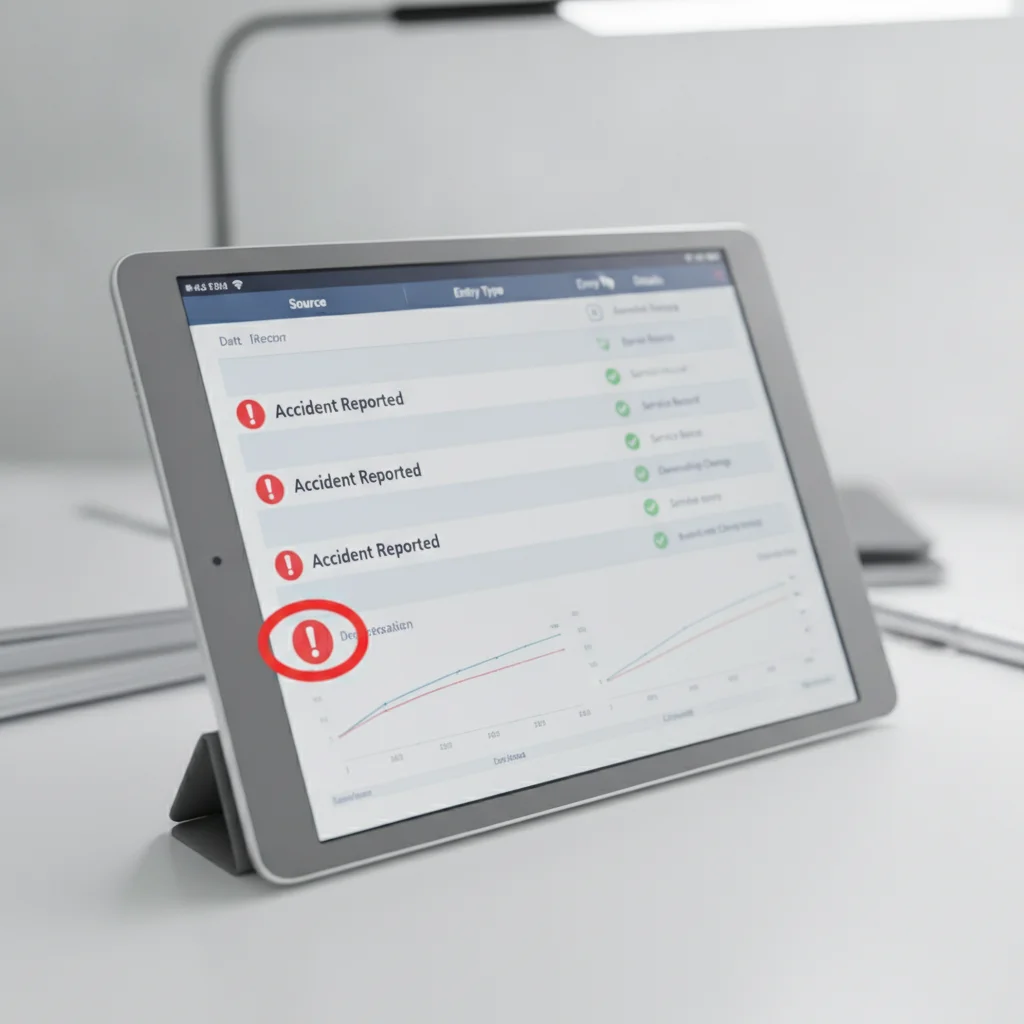
For sellers who want to understand the full picture of what drives value loss beyond accidents, The Hidden Depreciation Triggers Most Sellers Don't See Coming covers the broader landscape of factors buyers weigh at the negotiating table.
The Dollar Ranges: How Severity Determines the Penalty
Not every accident entry carries the same financial weight. Carfax categorizes reported incidents by severity level, and buyers — along with professional appraisers — discount accordingly. Here's how to think about the realistic value impact at each tier:
Minor/Cosmetic Damage
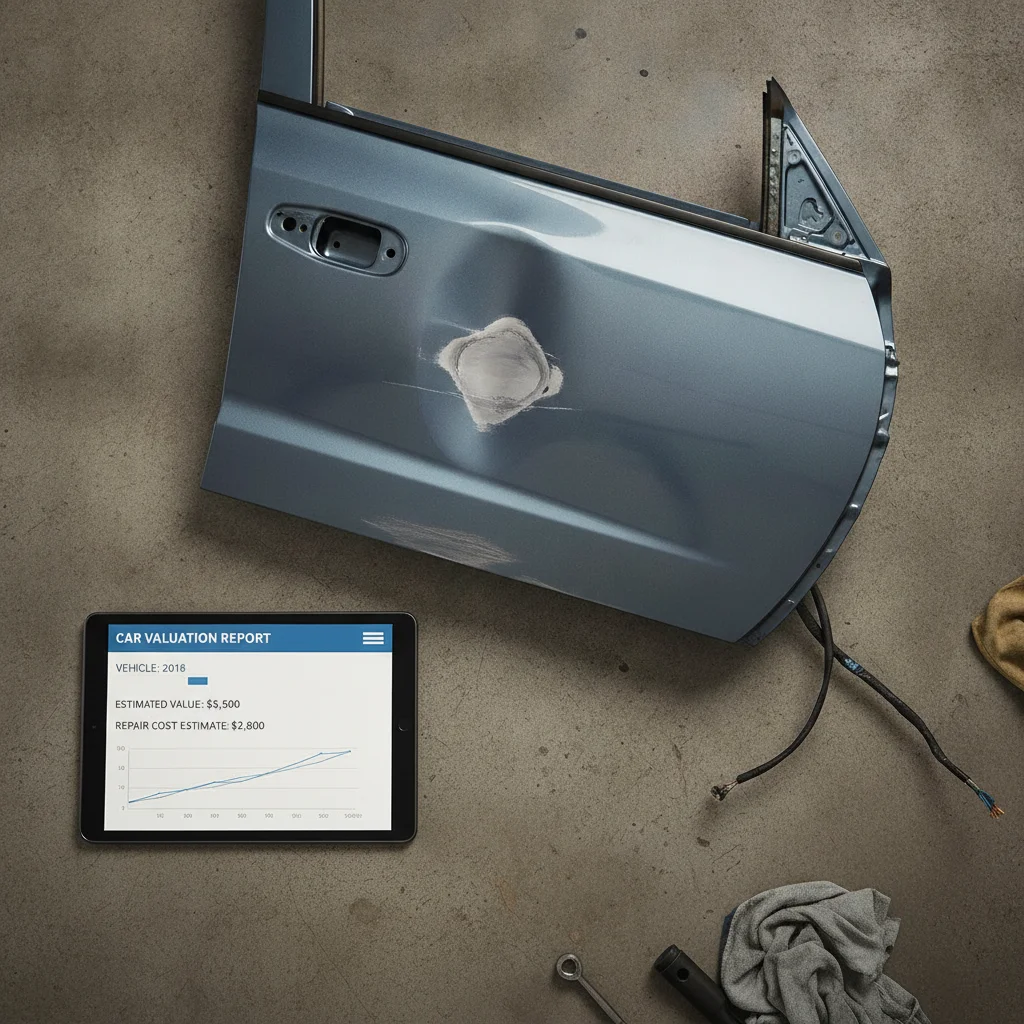
A bumper scuff, a door ding, or a single-panel repaint that was insurance-reported typically produces a 5–10% value penalty. On a $20,000 car, that's $1,000–$2,000. Buyers can see the quality of the repair, the paint match is usually verifiable, and the structural risk is low. These deals still close — just with a modest haircut.
Moderate Damage
Multi-panel repairs, significant front or rear-end collisions, or incidents involving deployed side curtains fall into moderate territory. Expect a 15–20% penalty. On that same $20,000 car, you're looking at $3,000–$4,000 less than an identical clean-history vehicle. This tier is where many sellers are genuinely surprised — they spent $4,500 on a quality repair and still can't recoup it at sale.
Severe/Structural Damage
Any time the Carfax report mentions frame damage, structural repair, or airbag deployment, the penalty becomes steep and often permanent. Discounts of 20–30% or more are common. Some buyers — particularly those financing through lenders — won't touch structurally damaged vehicles at all, which shrinks your buyer pool in addition to cutting your price.
10–25%
Typical resale value penalty for accident history
Carfax and independent appraisal data consistently show this range across vehicle types and model years.
$1,800
Average dollar loss on minor accident-history vehicles
Based on Carfax transaction data analysis comparing otherwise equivalent vehicles in the $18,000–$25,000 price range.
1 in 4
Used vehicles with at least one accident on record
According to Carfax's annual Used Car Market Report, roughly 25% of used vehicles have a reported accident history.
30%+
Value reduction for vehicles with structural damage reported
Professional appraisers note that frame or structural damage flags routinely produce penalties exceeding 30% in competitive markets.
$275
Average cost of a diminished value appraisal
Licensed diminished value appraisers typically charge $150–$400, depending on vehicle value and report complexity.
It's also worth knowing that these penalties compound with age differently than standard depreciation. A three-year-old vehicle loses far more in percentage terms from an accident flag than a ten-year-old one, because clean-history comparables in that age bracket are still plentiful and buyers have alternatives.
How Valuation Tools Factor In Accident History
When you enter your vehicle's details into KBB, Edmunds, or Carfax Instant Cash Offer, there's typically a question about accident history. Most sellers skip it or underreport it — which creates a gap between the tool's estimate and what the market will actually offer.
Here's what happens when you report accurately: the tool's algorithm applies a downward adjustment based on its historical transaction data for similar vehicles with similar histories. That adjusted figure is a closer approximation of what informed buyers in your market will pay. Sellers who ignore this step get surprised when dealer trade-in offers come in sharply lower than the online estimate they were banking on.
The Valuation Tools hub explains how KBB, Edmunds, and other platforms build their estimates — and why inputting accurate condition data, including accident history, produces a number you can actually use. For a deeper look at exactly how accident flags translate into specific valuation adjustments, see How Accident History Shows Up in Valuation Estimates.
Not All Carfax Accident Entries Are Equal
Carfax uses terms like 'minor damage reported,' 'airbag deployment,' and 'structural damage' — each carrying different buyer and lender responses. Read the exact language on your report carefully. A 'minor damage' notation for a bumper scuff is very different from a 'structural damage' flag, even though both appear under the same 'Accidents' section of the report.
Online Estimates Assume You Report Honestly
KBB and Edmunds estimate generators only produce accurate results when you input accurate data. If you report 'no accidents' on a vehicle with a Carfax entry, the estimate will be higher than what the market will actually pay. Use the honest figure as your planning baseline and the inflated figure as a ceiling you'll never reach — not as a target.
Days-on-Market Costs Are Real Too
Overpricing an accident-history vehicle doesn't just mean a lower eventual sale price — it means more weeks carrying insurance, registration, and opportunity cost on your money. A realistic price from the start typically sells faster, netting you more in total than a high-priced listing that lingers and eventually sells at the same or lower number after multiple cuts.
Private party sales typically recover more value than dealer trade-ins for accident-history vehicles because you're dealing directly with an individual buyer who can inspect the repair quality in person. Dealers, by contrast, apply a blanket algorithmic deduction and have to factor in auction risk if they can't retail the vehicle themselves.
The Diminished Value Concept Every Seller Should Know
Diminished value is the formal, legally recognized difference between what your car was worth immediately before an accident and what it's worth after — even after a perfect repair. It's the reason you can't simply say "I fixed it, so it should be worth what it was before."
There are three types worth understanding:
- Inherent diminished value: The automatic market stigma from the accident record. This exists regardless of repair quality and is what we've been discussing throughout this article.
- Repair-related diminished value: Additional loss from a repair that wasn't done to OEM standards — mismatched paint, non-original parts, structural welds that don't match factory spec.
- Immediate diminished value: The difference between pre- and post-accident value before any repairs. Relevant mostly for total-loss calculations.
For sellers, the actionable concept is inherent diminished value. In many states, if someone else caused the accident, you may be entitled to claim this loss from their insurance company. An appraisal from a licensed diminished value appraiser — typically costing $150–$400 — can document the precise dollar impact and support a claim or, at minimum, give you a credible data point to show buyers who question your pricing.
“Diminished value is real money. A car that sold for $28,000 before an accident may only command $22,000 after — even with a flawless repair — because the market is pricing in uncertainty, not just damage.”
— Tony Rached, Licensed Diminished Value Appraiser and Author on Auto Valuation
This concept also matters when you're evaluating whether to sell privately versus trading in. If you've never filed a diminished value claim after a not-at-fault accident, you may be leaving money on the table that has nothing to do with your sale price.
What the Carfax Report Actually Tells Buyers (And What It Doesn't)
Buyers treat Carfax reports as ground truth, but the report has real limitations that sellers should understand — not to hide anything, but to have an honest conversation about what the data means.
Carfax aggregates data from insurance companies, repair shops enrolled in their network, police reports, and state DMV records. That means:
- Not every accident shows up. A minor dent repaired privately, paid out of pocket, and never filed with insurance won't appear. This is legal and common.
- Severity is often underreported. Carfax typically shows damage categories based on claims data, not actual repair invoices. A moderate structural repair might appear as a single accident entry with limited detail.
- The report doesn't grade repair quality. A poor repair and an excellent one look identical on the report. This is actually an opening for sellers with documented, quality repairs from reputable shops.
Reading a Vehicle History Report Without Getting Misled walks through every section of a vehicle history report and explains how to interpret the data accurately — essential reading if you want to anticipate every question a buyer will raise.
Get the Carfax Before the Buyer Does
Pull your own Carfax report before listing. Carfax sells single reports directly to consumers, or you may be able to access one free through your insurer or dealer. Knowing exactly what the report says — including how severity is categorized — lets you get ahead of buyer questions and price accordingly from day one.
Let Repair Documentation Do the Negotiating
When a buyer tries to negotiate aggressively based on the accident entry, respond with documentation rather than words. A complete repair file from a reputable shop — showing OEM parts, certified technicians, and post-repair inspections — changes the conversation from 'this car had an accident' to 'this car was repaired to a documented standard.' Most buyers will moderate their discount when evidence is on the table.
The practical takeaway: if your repair was excellent, show documentation. Provide the repair order, photos from before and after, and any post-repair alignment or frame straightness certifications. This doesn't erase the Carfax flag, but it gives buyers concrete evidence that the risk they're pricing in is lower than a blind discount would suggest.
Strategies for Sellers With an Accident on Record
Knowing the penalty is real doesn't mean you're powerless. Sellers who approach accident history strategically consistently get better outcomes than those who either ignore it or panic.
Price Accurately From the Start
Pull the Carfax yourself — buyers certainly will. Enter your vehicle information honestly into at least two valuation tools and use the accident-adjusted figure as your floor. Setting your initial ask at the clean-history price and then getting hammered down by informed buyers is a worse experience than starting at a realistic number and holding it confidently.
Build a Repair Documentation Package
Gather the original repair estimate, the final invoice, the shop's certifications (I-CAR, ASE), and any post-repair inspection records. A written statement from the body shop attesting to OEM parts and factory repair specifications is valuable. This package won't eliminate the discount, but it shrinks it — particularly for buyers who do their homework.
Target the Right Buyer
Buyers who are financing through major lenders, particularly for structurally damaged vehicles, may hit lender roadblocks. Focus your marketing on cash buyers or buyers who have already spoken to their lender about accident-history vehicles. Being explicit in your listing — "accident reported, full documentation available, priced accordingly" — filters out buyers who will waste your time and attract serious ones.
Consider a Pre-Sale Inspection
An independent pre-sale inspection from a neutral mechanic, documented in writing, gives buyers third-party confirmation that the car is mechanically sound. It's a $100–$150 investment that can close the credibility gap and help you defend your price.

If your accident involved another driver's fault and you haven't yet filed a diminished value claim, consider doing so before listing. The window for claims is often tied to the statute of limitations in your state. How Prior Accidents on a Vehicle's History Affect Your Claim explains how past accident records interact with insurance claims and what sellers need to know before going to market.
Get the Carfax Before the Buyer Does
Pull your own Carfax report before listing. Carfax sells single reports directly to consumers, or you may be able to access one free through your insurer or dealer. Knowing exactly what the report says — including how severity is categorized — lets you get ahead of buyer questions and price accordingly from day one.
Let Repair Documentation Do the Negotiating
When a buyer tries to negotiate aggressively based on the accident entry, respond with documentation rather than words. A complete repair file from a reputable shop — showing OEM parts, certified technicians, and post-repair inspections — changes the conversation from 'this car had an accident' to 'this car was repaired to a documented standard.' Most buyers will moderate their discount when evidence is on the table.
Setting Realistic Expectations Before You List
The most common mistake sellers with accident history make is emotional pricing — anchoring to what the car would be worth without the incident, and resenting buyers for not agreeing. That resentment leads to overpricing, long days on market, and eventual price cuts that signal desperation.
Here's a simple framework for calibrating your expectation:
- Find three to five comparable listings — same year, make, model, trim, and similar mileage — in your local market. Note their asking prices.
- Identify which have clean history and which have reported accidents (many listings disclose this, or you can run Carfax on their VINs).
- Calculate the actual spread between clean-history and accident-history comps. That spread, adjusted for your specific damage severity, is your realistic penalty range.
- Price to the lower end of accident-history comps if your repair documentation is strong. Price to mid-range if it's average. Leave room to negotiate, but not so much that you invite lowball anchoring.
Understanding depreciation basics — how vehicles lose value systematically over time — helps you separate normal age-related loss from accident-specific penalties. Both are happening simultaneously to your car's value, and confusing them leads to mispricing in either direction.
Not All Carfax Accident Entries Are Equal
Carfax uses terms like 'minor damage reported,' 'airbag deployment,' and 'structural damage' — each carrying different buyer and lender responses. Read the exact language on your report carefully. A 'minor damage' notation for a bumper scuff is very different from a 'structural damage' flag, even though both appear under the same 'Accidents' section of the report.
Online Estimates Assume You Report Honestly
KBB and Edmunds estimate generators only produce accurate results when you input accurate data. If you report 'no accidents' on a vehicle with a Carfax entry, the estimate will be higher than what the market will actually pay. Use the honest figure as your planning baseline and the inflated figure as a ceiling you'll never reach — not as a target.
Days-on-Market Costs Are Real Too
Overpricing an accident-history vehicle doesn't just mean a lower eventual sale price — it means more weeks carrying insurance, registration, and opportunity cost on your money. A realistic price from the start typically sells faster, netting you more in total than a high-priced listing that lingers and eventually sells at the same or lower number after multiple cuts.
Selling with accident history is a solvable problem. The sellers who do it well are the ones who go in with accurate data, honest disclosure, and documentation that supports their price. Buyers aren't trying to steal your car — they're managing their own risk. Show them the risk is smaller than the flag suggests, and you'll close faster and closer to your target number.

All claims are backed by peer-reviewed research. Sources on request.