Key Takeaways
Year-End Clearance Sales
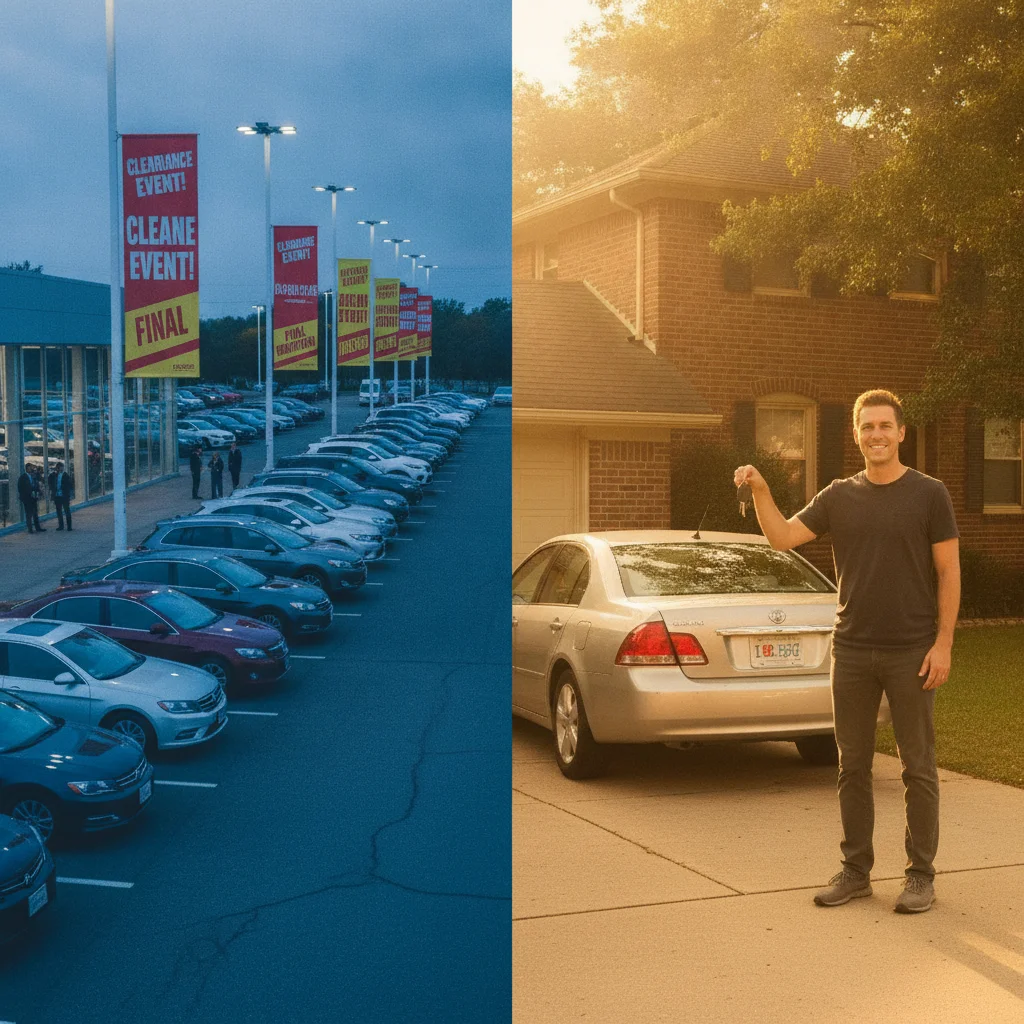
Year-end clearance sales are promotional events dealerships run in November and December to move remaining current-model-year inventory before the new year. Manufacturers push deep incentives — cash-back offers, low APR financing, and dealer-to-dealer rebates — to clear lots for incoming model-year stock. For buyers, this can mean significant discounts on new vehicles. For private sellers, it means your used car is suddenly competing against a new one at an unusually low price.
Manufacturer incentive programs are typically tied to model-year production calendars, not the calendar year, so clearance pressure often begins as early as October when new model-year vehicles start arriving on lots.
Why Dealership Clearance Events Matter to Private Sellers
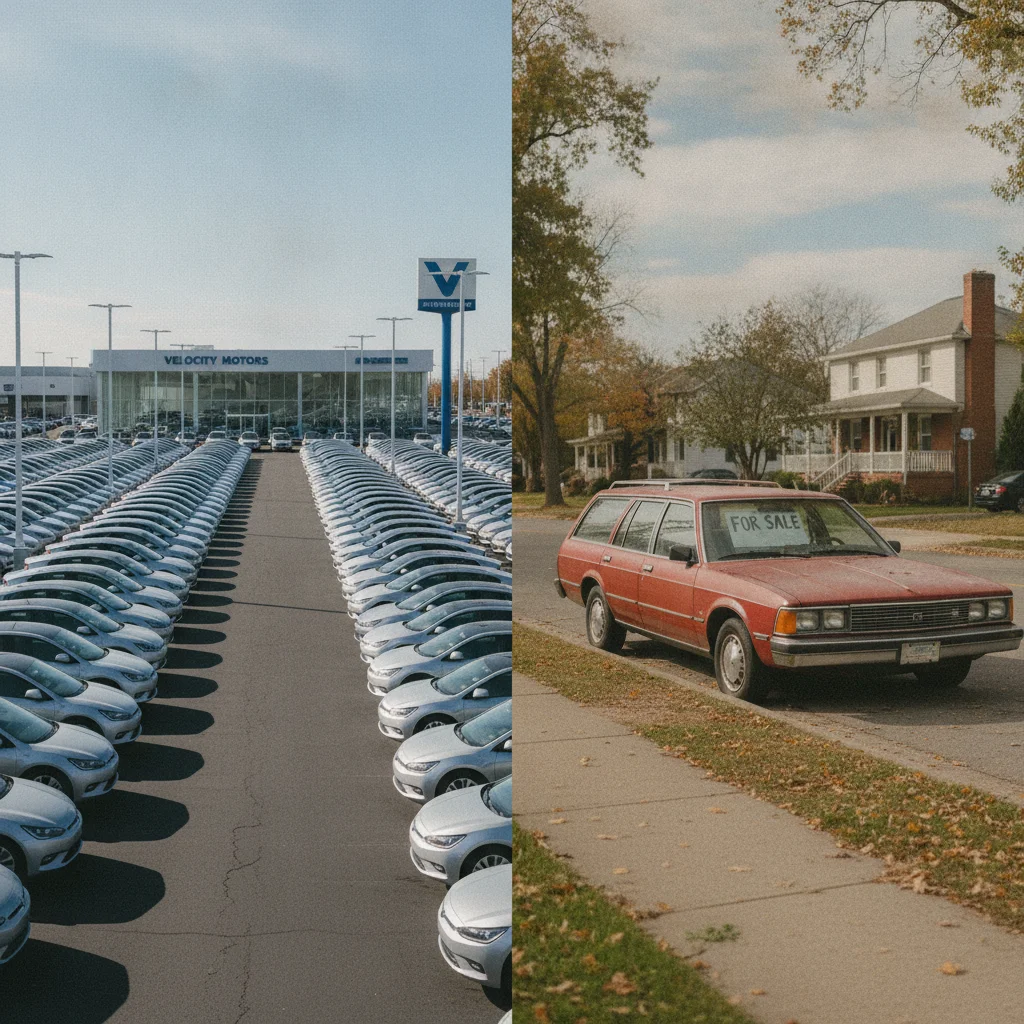
Most private sellers think of dealerships as irrelevant to their listing. That's a mistake. The two markets aren't separate — they compete for the same pool of buyers. When a dealership is advertising a current-model-year sedan for $3,000 below MSRP with 0% financing for 60 months, that buyer who was browsing your three-year-old version of the same car just got a very compelling reason to walk into a showroom instead.
That's the core problem with selling privately during November and December. You're not just competing against other used cars — you're competing against an artificial price floor created by manufacturer money. And unlike you, the dealer isn't losing profit; the manufacturer is absorbing it through rebates and incentive programs.
Understanding this dynamic is the first step to protecting your sale. Once you see how clearance pricing shifts buyer behavior, you can time your listing, price your car, and frame your pitch in ways that actually work — even in a market tilted toward new-car deals.
For context on how buyers think about this same calendar, see our article on why December is the most powerful month to negotiate a car deal. Reading it from the buyer's side tells you exactly what you're up against.
How Year-End Incentives Work (And Why They're So Powerful)
Manufacturer incentives aren't a random act of generosity. They're a calculated response to a logistical problem: new model-year vehicles are arriving on dealer lots, and there's no room for last year's stock. Manufacturers have monthly sales quotas, dealers have floor plan financing costs on unsold inventory, and everyone wants a clean slate for January.
The result is a layered incentive structure that can add up fast:
- Cash-back rebates — paid directly to the buyer or applied as a down payment, often $1,500–$5,000 depending on the model
- Low or zero APR financing — manufacturer-subsidized rates, sometimes as low as 0% for qualified buyers, which dramatically lowers the real cost of a new car
- Dealer-to-dealer incentives — volume bonuses paid to dealers who hit unit targets, giving dealers room to discount further without losing margin
- Lease specials — inflated residual values and subsidized money factors that make monthly payments artificially low
Taken together, these programs can make a $35,000 new car feel like a $29,000 purchase when you factor in the rebate, the low-rate financing savings, and the reduced monthly cost. That's the competitor your used car listing is up against in December.
$3,000+
Average year-end manufacturer incentive per new vehicle
Industry data from Cox Automotive shows average incentive spending per unit spikes in November–December, often reaching $3,000–$5,000 on high-inventory models.
23%
of annual new car sales happen in Q4
According to Edmunds annual data, the final quarter consistently accounts for roughly a quarter of yearly new vehicle sales, concentrated by year-end clearance activity.
18–34 days
Average private listing time-on-market in Q4 vs. Q2
Market timing analyses from platforms like CarGurus show used car private listings in November–December typically sit longer than equivalent summer listings.
0% APR
Financing offered on many new vehicles in December
Manufacturer-subsidized financing at 0% APR is commonly available for qualified buyers during year-end events, dramatically narrowing the cost gap between new and used.
Up to $2,500
Typical dealer documentation and add-on fees on new cars
Consumer Reports and Edmunds buyer guides consistently note that dealer-added fees can add $800–$2,500 to new car transactions — an advantage private sellers can highlight.
It's also worth knowing that these clearance pressures often start earlier than people expect. End-of-month vs. end-of-year incentives can actually stack on each other during the fourth quarter, compounding the buyer pull toward new cars throughout October, November, and December — not just on December 31st.
Incentives Vary Significantly by Region
Manufacturer incentive programs aren't uniform across the country. A model heavily discounted in the Midwest may carry lighter incentives in the Pacific Northwest due to regional demand patterns. Before assuming clearance competition is fierce in your market, check your local dealer's published offers — not just national headlines about year-end sales events.
Trade-In Values Don't Always Drop With Private Demand
Here's a nuance worth knowing: while private-party demand softens in December, dealer trade-in offers sometimes hold up better than expected. Dealers need used car inventory to sell alongside their new vehicles, and some will pay reasonable trade-in value to keep their used lot stocked. This doesn't close the gap between trade-in and private-sale value, but it means the trade-in option is worth a quote during clearance season.
Your Car's Segment Matters More Than the Calendar
Timing advice is most relevant for vehicles that compete directly with heavily incentivized new-car segments — mainstream sedans, compact crossovers, and family SUVs. If you're selling a vehicle in a niche that lacks a direct new-car competitor, clearance season may affect you far less than these general guidelines suggest. Do the segment-specific research before assuming you're in the same boat as a Camry or CR-V seller.
The Ripple Effect on Used Car Demand
When new-car incentives spike, used car demand doesn't just slow — it softens in a specific pattern. Buyers who were on the fence between new and used get pulled toward new. Buyers who were firmly in the used market get more aggressive on price because they know the market is slow. And buyers who need financing often find that dealer-arranged new-car loans beat private-party used-car rates from their bank or credit union.
This ripple effect is most pronounced in a few segments:
- Mainstream sedans and crossovers — heavily incentivized by volume manufacturers, the new-vs-used math shifts most dramatically here
- Two- to four-year-old vehicles — close enough in age to a new car that buyers start questioning why they'd buy used
- High-inventory models — if dealers have a lot of a specific model, incentives run deep and the private seller of the same model gets squeezed hardest
On the other side of that coin: trucks, specialty vehicles, older classics, and anything with limited new-market competition tend to hold their private demand better. Manufacturers don't run the same clearance incentives on niche products, so the used-vs-new math doesn't shift as dramatically.
If you want to understand the broader inventory cycle driving these patterns, how new car inventory levels affect used vehicle pricing lays out exactly how lot fullness translates to private-seller leverage — or the lack of it.
“Used car values are deeply tied to new car affordability. When manufacturers make new vehicles cheaper through incentives, they're indirectly repricing the used market at the same time. Private sellers who ignore that connection are working blind.”
— Ivan Drury, Director of Insights at Edmunds
The Best Windows for Private Sellers to List
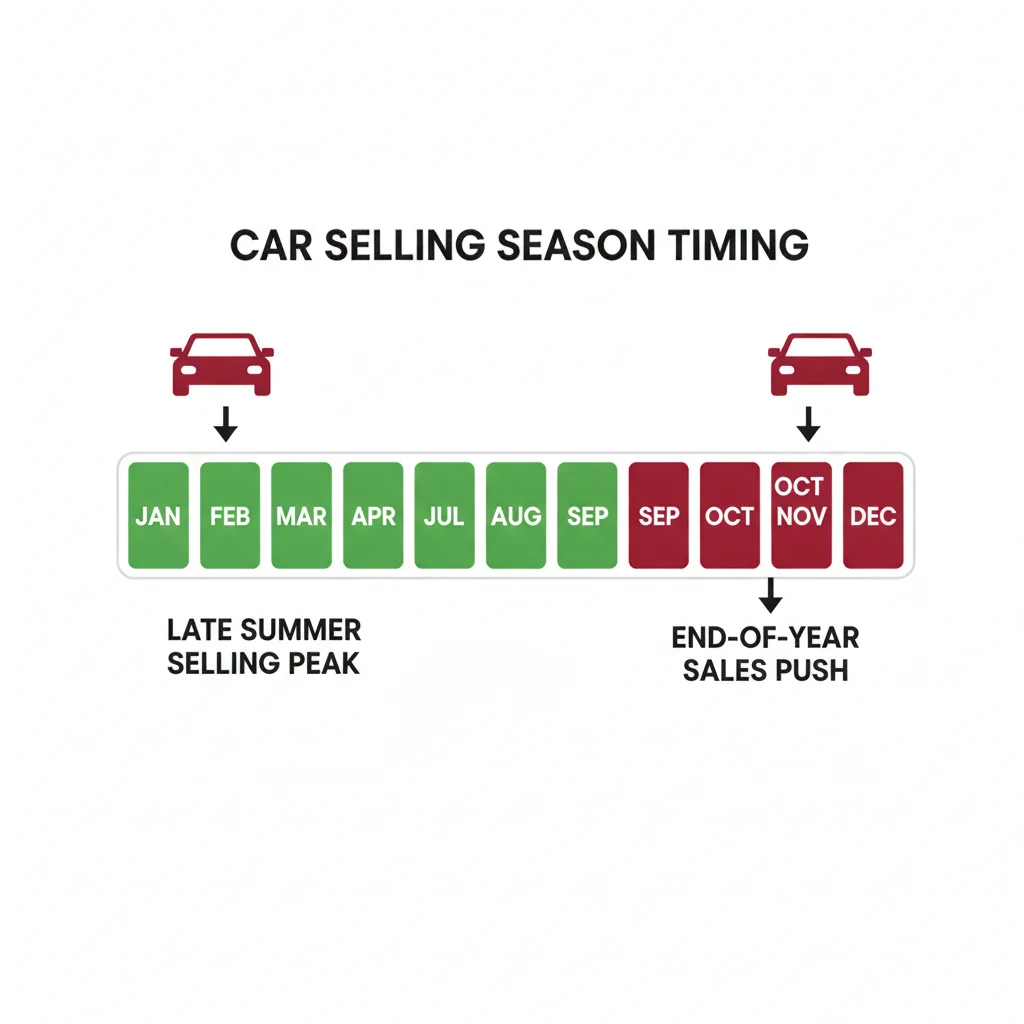
Timing a private sale isn't about finding a perfect moment — it's about avoiding the worst ones while hitting the reasonably good ones. Here's how the calendar actually breaks down from a seller's standpoint:
Strong Windows
- Late August through early October
- Clearance incentives are just beginning to ramp, buyer demand is still solid from the summer, and back-to-school car purchases are winding down. This is the sweet spot for most private sellers — you get to list before clearance peaks without the summer slowdown of July.
- February through March
- Tax refund season pushes real cash-in-hand buyers into the used market. Manufacturer incentives are lighter compared to year-end, and demand for affordable private listings tends to rise. This window is especially strong for trucks, SUVs, and family haulers.
Softer Windows
- November and December
- Clearance season. If you don't need to sell, this is not the time. Buyer leverage is at its peak in dealerships, and private listings sit longer.
- January
- Post-holiday cash crunch for most buyers. Demand drops. Incentive carryover from December can still pull buyers toward new cars.
- July
- Midsummer slowdown — families on vacation, not buying cars. Not terrible, but not strong either.
See our piece on timing a new car purchase for the buyer-side view of these same windows. Their best time to buy is often your worst time to sell.
List Before October If You Can
If your selling timeline is flexible, aim to have your listing live by mid-September. You'll catch end-of-summer buyers, avoid the steepest part of clearance competition, and give yourself a full six weeks before incentives peak. Even a 30-day shift in your listing date can make a measurable difference in how long your car sits and what you ultimately accept.
Price to the Current Market, Not Your Expectations
One of the most common mistakes private sellers make in December is anchoring to what their car was worth six months ago. Used car values shift with new-car incentive cycles. Pull a fresh Kelley Blue Book or Edmunds Private Party Value estimate the week you list — not the week you started thinking about selling. If the number surprises you, the market is telling you something worth hearing.
Lead With What a Dealer Can't Offer
Your listing should lead with the things a dealership can't replicate: a personal maintenance history, flexibility on terms, no doc fees, and a direct conversation with the actual owner. Buyers who prefer private sales do so for these reasons. Speak directly to that preference in your listing description rather than trying to compete on features or spec sheets.
What to Do If You Have to Sell in November or December
Sometimes you don't get to choose the timing. Job change, new baby, financial need — life doesn't wait for optimal market conditions. If you have to list privately during clearance season, here's how to work with the headwinds rather than pretend they don't exist.
Price Aggressively from Day One
The instinct is to list high and negotiate down. In a slow market, that burns time. Price at or just below clean private-party value from the start — Kelley Blue Book and Edmunds True Market Value are your benchmarks. A price that looks fair on first glance gets more inquiries and fewer lowball offers than a price that looks like you're fishing.
Highlight Total Cost of Ownership
A new car with a $3,000 rebate still comes with registration fees, dealer doc fees, and the first year of steeper depreciation. Make sure your listing makes this clear. A well-maintained three-year-old car that's already past its sharpest depreciation cliff is a legitimate financial win for buyers who can see past the clearance sticker.
Have Documentation Ready
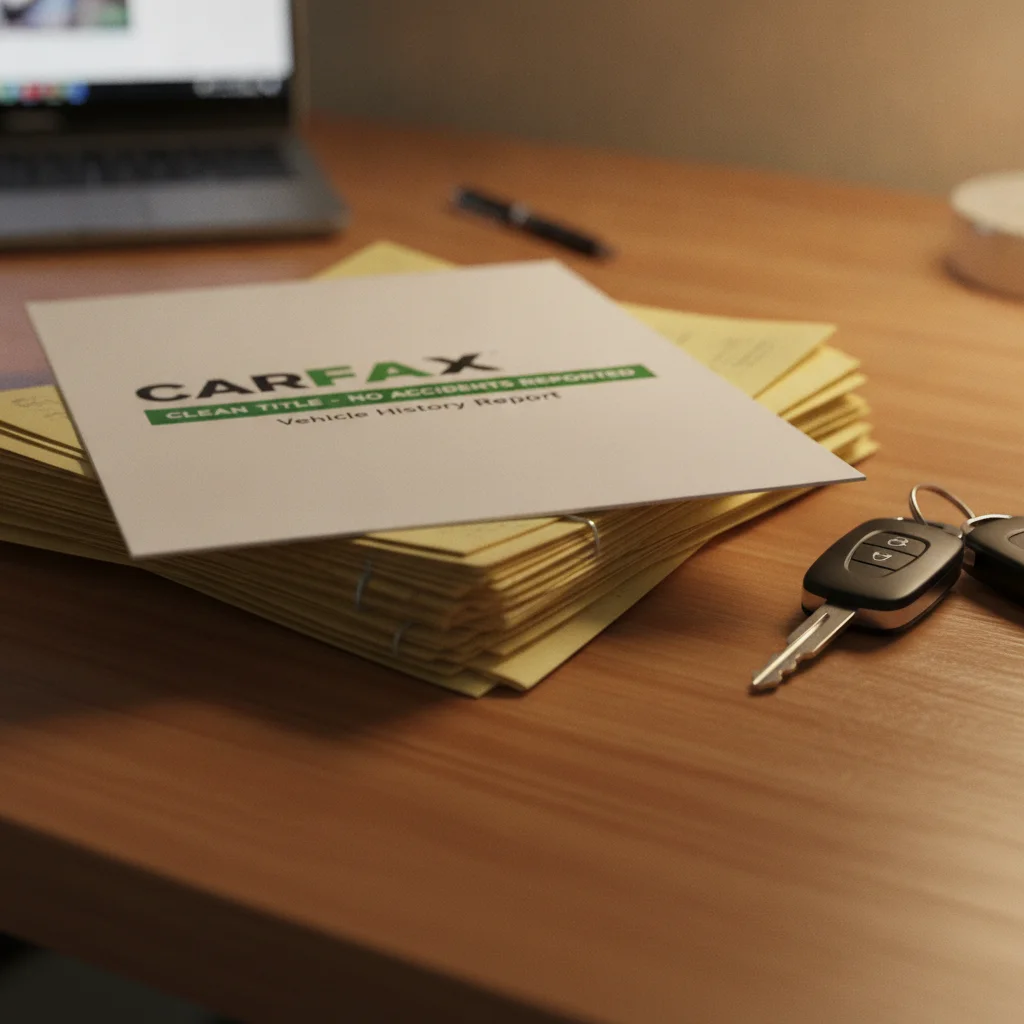
Buyers in December are skeptical. They know the used market is slower and assume private sellers are desperate or hiding something. Counter that with a clean vehicle history report, recent maintenance records, and any receipts for repairs or upgrades. Transparency builds trust faster than any amount of listing polish.
Don't Compete on Features You Can't Win
Don't try to sell a 2021 sedan by arguing it's as good as the new model with the dealer discount. Instead, lean into what makes your car specifically appealing — low mileage, specific trim level, aftermarket additions, or a clean history that a three-month-old new car simply can't offer yet.
If you're weighing whether a trade-in might make more sense in this environment, our comparison of dealer trade-ins versus private party sales walks through the real financial trade-offs. In some December scenarios, the convenience and speed of a dealer trade may be worth the money left on the table.
List Before October If You Can
If your selling timeline is flexible, aim to have your listing live by mid-September. You'll catch end-of-summer buyers, avoid the steepest part of clearance competition, and give yourself a full six weeks before incentives peak. Even a 30-day shift in your listing date can make a measurable difference in how long your car sits and what you ultimately accept.
Price to the Current Market, Not Your Expectations
One of the most common mistakes private sellers make in December is anchoring to what their car was worth six months ago. Used car values shift with new-car incentive cycles. Pull a fresh Kelley Blue Book or Edmunds Private Party Value estimate the week you list — not the week you started thinking about selling. If the number surprises you, the market is telling you something worth hearing.
Lead With What a Dealer Can't Offer
Your listing should lead with the things a dealership can't replicate: a personal maintenance history, flexibility on terms, no doc fees, and a direct conversation with the actual owner. Buyers who prefer private sales do so for these reasons. Speak directly to that preference in your listing description rather than trying to compete on features or spec sheets.
Private Sellers vs. Dealerships: What's Actually Different
It's easy to feel like dealerships have all the advantages during clearance season — and for mainstream segments, they largely do. But private sellers have a few structural advantages that don't disappear in December.
No Transaction Fees
Dealer doc fees, destination charges, and dealer-added accessories can add $800–$2,000 to a new car purchase before you even sit down to negotiate. A private sale doesn't have that overhead. That's real money a buyer can redirect toward their purchase price, and it's worth pointing out explicitly.
Negotiation Without the F&I Office
Dealership negotiations often end at the sales desk only to continue in the finance office, where products like extended warranties, gap insurance, and protection packages add margin back in. Private buyers know they're dealing with exactly one person with exactly one agenda. Many buyers — especially experienced ones — actually prefer that clarity.
More Flexible Terms
Private sellers can accept partial trades, split payment arrangements, or creative deal structures that dealerships won't touch. If a buyer is working with limited cash but has a vehicle to offer, a private seller can work with that in ways no F&I manager will.
For a deeper dive into the financial comparison between these two channels, trading in vs. selling privately gives you the numbers-first breakdown. And if you want to explore the full private-sale process from listing to close, the private party sales hub covers it all in one place.
Incentives Vary Significantly by Region
Manufacturer incentive programs aren't uniform across the country. A model heavily discounted in the Midwest may carry lighter incentives in the Pacific Northwest due to regional demand patterns. Before assuming clearance competition is fierce in your market, check your local dealer's published offers — not just national headlines about year-end sales events.
Trade-In Values Don't Always Drop With Private Demand
Here's a nuance worth knowing: while private-party demand softens in December, dealer trade-in offers sometimes hold up better than expected. Dealers need used car inventory to sell alongside their new vehicles, and some will pay reasonable trade-in value to keep their used lot stocked. This doesn't close the gap between trade-in and private-sale value, but it means the trade-in option is worth a quote during clearance season.
Your Car's Segment Matters More Than the Calendar
Timing advice is most relevant for vehicles that compete directly with heavily incentivized new-car segments — mainstream sedans, compact crossovers, and family SUVs. If you're selling a vehicle in a niche that lacks a direct new-car competitor, clearance season may affect you far less than these general guidelines suggest. Do the segment-specific research before assuming you're in the same boat as a Camry or CR-V seller.
Reading the Market Before You List
Before you put up a listing, spend 20 minutes doing a simple market read. This doesn't require any special tools — just a little discipline.
- Check manufacturer incentive pages — Automaker websites publish current rebates and financing offers publicly. Search for your model year's equivalent new car and see what incentives are active. If there's a $2,500 rebate and 0.9% APR, that's the context your listing is competing in.
- Run your model on Autotrader and Cars.com — Look at listings for your same model, year, and condition within 100 miles. How many are sitting? How long have they been listed? Price-drop history (visible on some platforms) tells you whether sellers are having trouble moving inventory.
- Check dealer inventory levels — If local dealers have lots of new vehicles equivalent to yours, incentives are likely higher. Thin inventory means less clearance pressure and, often, a stronger used market. The inventory level and used car pricing relationship works in both directions.
- Time your listing to mid-week — Regardless of season, listings posted Tuesday through Thursday tend to get more views before the weekend buying window than listings posted on Friday or Monday.
None of this is complicated. It's just doing the same homework that smart buyers do before they walk onto a lot — except you're doing it from the seller's chair.
Incentives Vary Significantly by Region
Manufacturer incentive programs aren't uniform across the country. A model heavily discounted in the Midwest may carry lighter incentives in the Pacific Northwest due to regional demand patterns. Before assuming clearance competition is fierce in your market, check your local dealer's published offers — not just national headlines about year-end sales events.
Trade-In Values Don't Always Drop With Private Demand
Here's a nuance worth knowing: while private-party demand softens in December, dealer trade-in offers sometimes hold up better than expected. Dealers need used car inventory to sell alongside their new vehicles, and some will pay reasonable trade-in value to keep their used lot stocked. This doesn't close the gap between trade-in and private-sale value, but it means the trade-in option is worth a quote during clearance season.
Your Car's Segment Matters More Than the Calendar
Timing advice is most relevant for vehicles that compete directly with heavily incentivized new-car segments — mainstream sedans, compact crossovers, and family SUVs. If you're selling a vehicle in a niche that lacks a direct new-car competitor, clearance season may affect you far less than these general guidelines suggest. Do the segment-specific research before assuming you're in the same boat as a Camry or CR-V seller.

All claims are backed by peer-reviewed research. Sources on request.