Key Takeaways
December Car Buying Advantage
The December car buying advantage refers to the combination of dealer pressures — expiring annual sales quotas, model-year inventory clearance, and manufacturer incentive deadlines — that converge at the end of the calendar year, giving buyers significantly more negotiating power than at almost any other time. Dealers become highly motivated to move units before December 31, often accepting lower margins to hit their numbers. This makes December the single month when a prepared buyer can extract the deepest discounts.
The pricing leverage stems from two distinct bonus structures: manufacturer-to-dealer volume bonuses (stair-step incentives) that reset January 1, and floor-plan financing costs that dealers pay monthly to hold unsold inventory — both of which push dealers to close deals aggressively in the final days of December.
The Year-End Quota Deadline: Why Dealers Need You More Than Usual
Every new-car dealership operates under a sales quota system established by the manufacturer. Meet the annual target, and the dealer earns significant bonus money — sometimes tens of thousands of dollars in what the industry calls stair-step incentives. Miss the target by even a handful of units, and those bonuses evaporate entirely.
Here's the critical detail: that quota clock resets to zero on January 1. It doesn't carry over. So as December 31 approaches, a dealer who is five vehicles short of a bonus tier isn't thinking about protecting margin — they're thinking about closing five more deals at almost any price that makes the math work.
This dynamic shifts the negotiating table in a way that almost no other month replicates. In March or July, a dealer can afford to hold firm on price and wait for the next customer. In late December, every customer who walks out the door is a lost opportunity that cannot be recovered before the deadline.
Year-End vs. Month-End: They're Not the Same
End-of-month pressure happens every month — dealers want to hit their 30-day targets and will sometimes deal to get there. But year-end pressure is categorically different because the quota clock doesn't reset in 30 days — it resets once a year. That permanence makes December's last week the most pressured selling environment dealers face all year. The two forces overlap in December, compounding your leverage.
Not Every Model Benefits Equally
December discounts are deepest on high-inventory, slow-selling models. A vehicle that's been in short supply all year — due to limited production or strong demand — won't see the same price cuts regardless of month. Focus your December shopping on mainstream sedans, midsize trucks, and family SUVs where dealers tend to hold significant stock and face the most pressure to clear units.
To understand how this year-end pressure compares to the monthly quota pressure that builds at the end of every month, see our breakdown in End-of-Month vs. End-of-Year Car Buying: Which Timing Advantage Is Bigger?. The short answer: both help, but December stacks them.
Stair-Step Incentives Explained: How One Sale Can Be Worth Thousands
Most car buyers have never heard of stair-step incentives, but understanding them is the key to grasping why December deals get so aggressive. Here's how the system works in practice:
- Manufacturers set volume tiers. A manufacturer might tell a dealer: sell 80 units this year and earn a $400 per-vehicle bonus on every unit sold. Sell 90 units and that bonus jumps to $700 per vehicle — retroactively applied to all 90 units, not just the last 10.
- The math becomes extreme near the tier boundary. If a dealer has sold 88 cars and is two units from the 90-unit tier, those final two sales are worth far more than their sticker price. Closing them unlocks an extra $300 per vehicle across all 90 cars — a $27,000 windfall from two deals.
- Dealers will discount heavily to unlock the tier. If discounting a car by $2,000 closes a deal that triggers $27,000 in bonus revenue, that is a straightforward business decision.

This is why experienced buyers specifically target dealers who appear close to — but not yet at — a volume threshold. You can get a rough sense of this by checking how a dealer's inventory has moved over the year, or simply by negotiating in late December when the math is most likely in your favor regardless of where exactly they sit.
6–8%
Typical discount below MSRP in December
Industry analysts at Edmunds have tracked December transaction prices consistently landing 6–8% below MSRP for high-inventory segments, compared to 3–4% in spring months.
$3,000+
Average manufacturer cash rebates in December
According to J.D. Power data, average incentive spending per unit peaks in December, with cash rebates on slow-selling models frequently exceeding $3,000.
0%
APR offered on select models in December
Multiple major manufacturers routinely offer 0% financing on select new models during December sales events to accelerate year-end inventory clearance.
$200+
Monthly floor-plan cost per unsold vehicle
A $35,000 vehicle financed at 7% floor-plan rate costs a dealer approximately $204 per month in carrying interest — a cost that accumulates on every unit sitting unsold.
Dec 31
Annual quota reset date for most manufacturers
Virtually all major automaker dealer incentive programs reset on January 1, making December 31 the hard deadline that drives late-month dealer urgency.
Model-Year Clearance: The Inventory Cost Dealers Pay Every Month
The second major force working in your favor in December is model-year inventory clearance. New model-year vehicles typically begin arriving at dealerships in late summer and fall. That means a 2024 model sitting on the lot in December is being displaced — physically and financially — by incoming 2025 inventory.
Dealers don't own their showroom vehicles outright. They borrow money from a bank or the manufacturer's captive lender to finance each unit on the lot, paying interest on that loan every month the vehicle sits unsold. This is called floor-plan financing. A vehicle that costs $35,000 at an interest rate of 7% is costing the dealer roughly $204 per month in floor-plan interest alone — every month it doesn't sell.
A car that arrived in September and is still on the lot in late December has already cost the dealer several hundred dollars in carrying costs beyond its invoice price. Combine that with the incoming new inventory taking up physical space, and you can see why a dealer is highly motivated to move aged units at aggressive prices rather than carry them into the next year.
Know the Invoice Price Before You Walk In
Your negotiating anchor in December should be the dealer invoice price, not the MSRP. Invoice is what the dealer paid the manufacturer for the vehicle. With year-end incentives, it's realistic to negotiate at or even below invoice on many models. Use resources like Edmunds, TrueCar, or Consumer Reports to look up invoice pricing before your first conversation with a dealer.
Ask How Long the Car Has Been on the Lot
Days-on-lot is one of the most useful negotiating data points you can have. A vehicle that's been sitting for 90 days or more has cost the dealer real money in floor-plan interest. Most dealers will tell you directly if you ask, and many listing sites show this information. Use it to frame your offer — the older the car on the lot, the more the dealer has already paid to hold it.
December Leverage Works on CPO Vehicles Too
Certified pre-owned vehicles at franchise dealerships often count toward volume metrics in manufacturer CPO programs. That means a sales manager trying to hit an annual CPO unit target faces similar end-of-year pressure to the new-car side of the business. Apply the same December timing strategy to CPO shopping — especially at brand-specific franchises — and you may find similar negotiating room.
When you're negotiating in December, ask the dealer how long a specific vehicle has been on the lot. This is public information and many dealers will tell you directly. A car that's been sitting for 90+ days has accumulated meaningful floor-plan costs — which is additional negotiating leverage on top of the year-end quota pressure.
When Exactly in December Should You Shop?
Not all of December is equally powerful. The leverage increases as you move through the month, peaking in the final days before December 31. Here's how to think about the timeline:
- December 1–14 (Early Month)
- Quota pressure is building but dealers still have time. Incentives from manufacturers are often announced, which is worth tracking. Good deals are available, but dealers are less desperate than they'll be later.
- December 15–26 (Mid-to-Late Month)
- This is the sweet spot for most buyers. Dealers are highly motivated but showrooms are still adequately staffed and inventory selection is at its fullest. If you want a specific vehicle configuration, shop here rather than waiting.
- December 27–31 (Final Days)
- Maximum dealer desperation. Sales managers are watching unit counts daily. These are the days when a dealer might accept a deal they'd have refused two weeks earlier. The tradeoff: inventory is thinner, and you may not find your preferred trim or color combination.

The final consideration is that December also coincides with month-end — another quota pressure point that layers on top of year-end pressure. The last business day of December carries both forces simultaneously, making it arguably the single most powerful negotiating moment in the entire calendar year. For a full walkthrough of how to sequence your shopping from November through late December, see the Year-End Car Buying: A Complete Timing Playbook.
Manufacturer Rebates and Special Financing Stack on Top
Dealer-level pressure is only half the story. Manufacturers also run their most aggressive consumer-facing incentives in December. These come in two primary forms:
- Cash rebates: Direct reductions off the purchase price, typically ranging from $500 to $4,000+ depending on the vehicle and how motivated the manufacturer is to clear that model year. These are stackable with your own negotiated discount from the dealer.
- Special APR financing: Manufacturers often offer 0% or low-rate financing in December to stimulate purchases. A buyer who qualifies for 0% APR on a $35,000 vehicle financed over 60 months saves roughly $4,600 compared to a market rate of 7%.
The important nuance: you typically have to choose between a cash rebate and special financing — not both. Do the math before you walk in. At a 7% loan rate, the breakeven point where the 0% APR becomes more valuable than a $2,500 rebate on a $35,000, 60-month loan is usually in your favor to take the financing. But if your loan term is short or your negotiated rate is already low, the cash rebate may win.
“The best time to buy a car is when the dealer needs the sale more than you need the car. In December, that condition is nearly always true.”
— Philip Reed, Senior Consumer Advice Editor, Edmunds
For perspective on months when this leverage completely reverses, see The Worst Months to Buy a Car — and What Makes Them So Expensive — the contrast will make December's advantages even clearer.
How to Prepare So You Can Actually Capture the Savings
December's favorable conditions don't deliver themselves automatically. A buyer who walks into a dealership on December 29 unprepared will still be at a disadvantage against a skilled sales team. Here's how to be ready:
- Get pre-approved for financing before you go. Walking in with a pre-approval from a bank or credit union gives you a baseline rate to beat and removes the dealer's ability to use financing confusion to obscure the vehicle price negotiation.
- Know the invoice price of your target vehicle. Invoice price — what the dealer paid the manufacturer — is your anchor. Sites like Edmunds and TrueCar publish this. Your target purchase price should be at or below invoice once you account for dealer holdback and incentives.
- Identify multiple dealers competing for your business. Get quotes from at least two or three dealers. In December, the willingness to walk to a competitor is a credible threat — make sure the dealer knows you're shopping actively.
- Negotiate the out-the-door price, not the monthly payment. Monthly payment negotiation obscures total cost. Always confirm the exact selling price, then calculate the payment yourself.
- Time your visit to late afternoon on a weekday. Traffic is lower, sales managers are more available to approve deals, and the pressure of making the day's numbers tends to favor buyers.
Know the Invoice Price Before You Walk In
Your negotiating anchor in December should be the dealer invoice price, not the MSRP. Invoice is what the dealer paid the manufacturer for the vehicle. With year-end incentives, it's realistic to negotiate at or even below invoice on many models. Use resources like Edmunds, TrueCar, or Consumer Reports to look up invoice pricing before your first conversation with a dealer.
Ask How Long the Car Has Been on the Lot
Days-on-lot is one of the most useful negotiating data points you can have. A vehicle that's been sitting for 90 days or more has cost the dealer real money in floor-plan interest. Most dealers will tell you directly if you ask, and many listing sites show this information. Use it to frame your offer — the older the car on the lot, the more the dealer has already paid to hold it.
December Leverage Works on CPO Vehicles Too
Certified pre-owned vehicles at franchise dealerships often count toward volume metrics in manufacturer CPO programs. That means a sales manager trying to hit an annual CPO unit target faces similar end-of-year pressure to the new-car side of the business. Apply the same December timing strategy to CPO shopping — especially at brand-specific franchises — and you may find similar negotiating room.
December's advantage extends beyond new cars. The dealer negotiation strategies that work in December apply to certified pre-owned vehicles at franchise dealerships as well — those units also count toward volume targets in some programs.
What December Means for Sellers — and How It Affects Used-Car Values
December's buyer advantage has a mirror image effect on the used-car and private-seller market. When manufacturers and dealers flood the market with aggressive new-car deals — zero-percent financing, $3,000 rebates, steep discounts off MSRP — some buyers who might have considered a used car get pulled toward new. That shift reduces demand for private-party used vehicles in November and December.
If you're planning to sell a vehicle privately during this window, understanding the competitive landscape matters. Your $22,000 used sedan is competing not just against other used sedans, but against new-car deals that have narrowed the price gap significantly. For a deeper look at how this plays out, Year-End Clearance Sales at Dealerships: What They Mean for Private Sellers breaks down how to price and position a private listing in this environment.
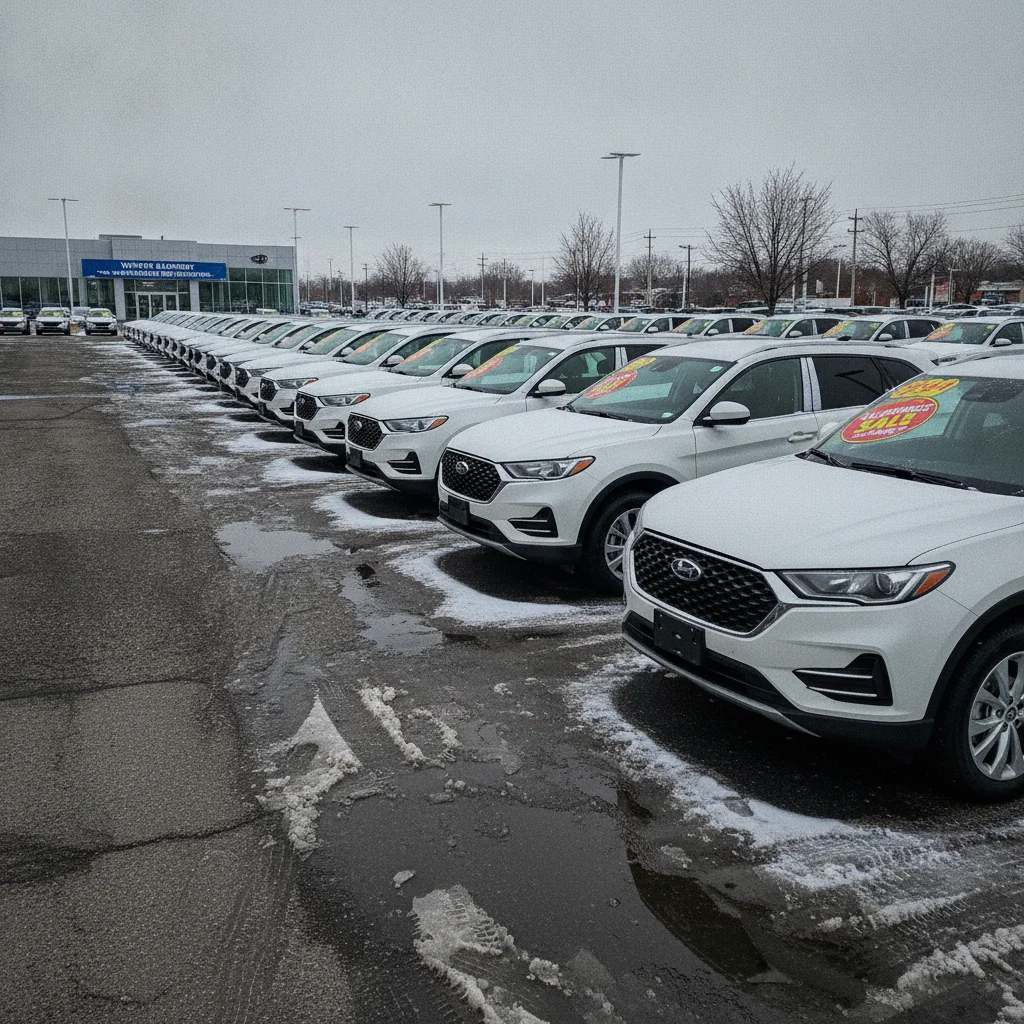
The broader point is that December's market dynamics are interconnected. Dealer desperation to sell new cars creates ripple effects through used-car pricing, trade-in values, and private-seller competitiveness — all of which are worth understanding whether you're buying, selling, or both.
For a broader perspective on timing strategy across the entire calendar year, the market timing hub provides context on how seasonal and economic factors interact with both buying and selling decisions throughout the year.

All claims are backed by peer-reviewed research. Sources on request.