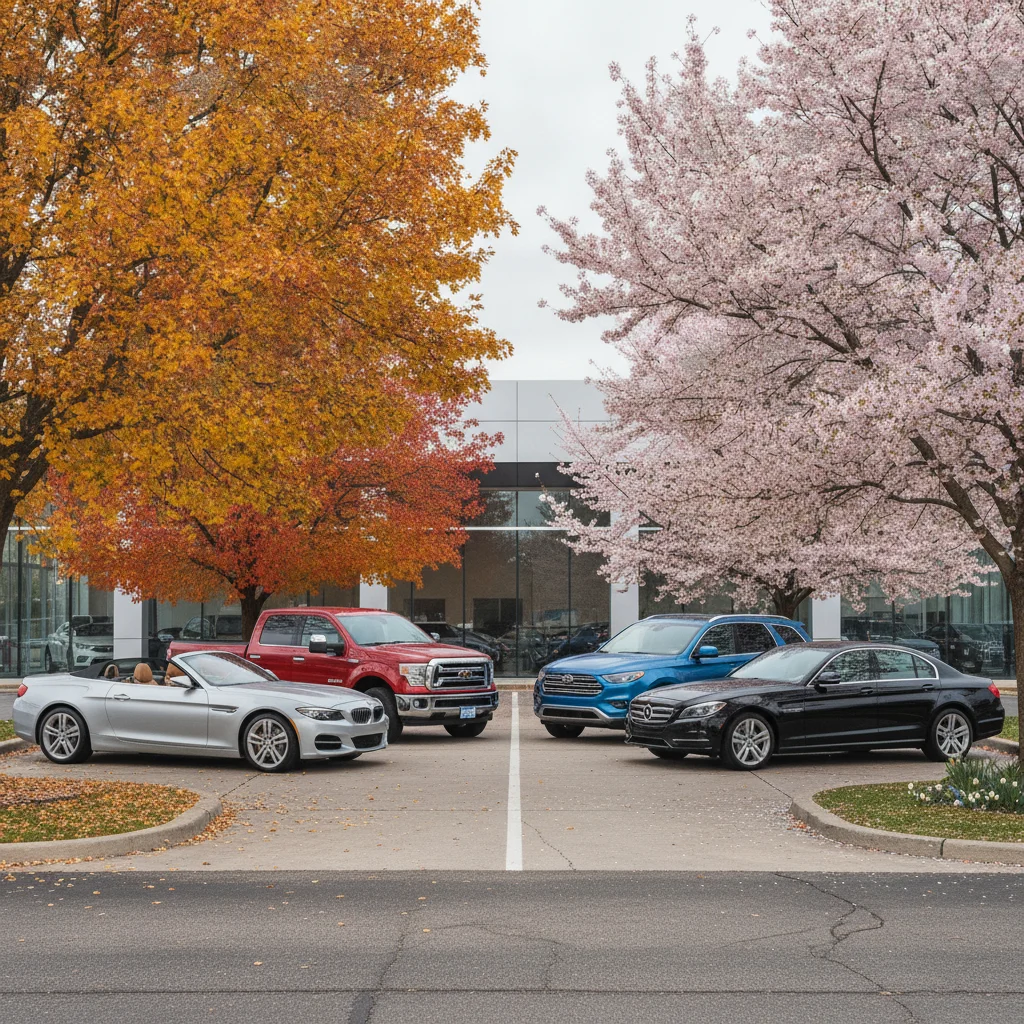
Key Takeaways
Regional Peak Selling Season
A regional peak selling season is the time of year when buyer demand for a specific type of vehicle is highest in a given geographic area. Unlike a national average, it accounts for local climate, driving habits, and seasonal lifestyle patterns. Selling during this window typically means more buyers, faster transactions, and stronger final prices.
Peak demand shifts are measurable in listing views, days-on-market averages, and private-party transaction prices tracked by platforms like CarGurus and iSeeCars across different metro areas.
Why National Timing Averages Miss the Point
Every year you'll read some version of the same headline: Spring is the best time to sell your car. And broadly, that's not wrong. Buyer activity does pick up nationally around March and April. Tax refunds hit. People start thinking about road trips. Dealerships tighten used inventory as new model hires arrive.
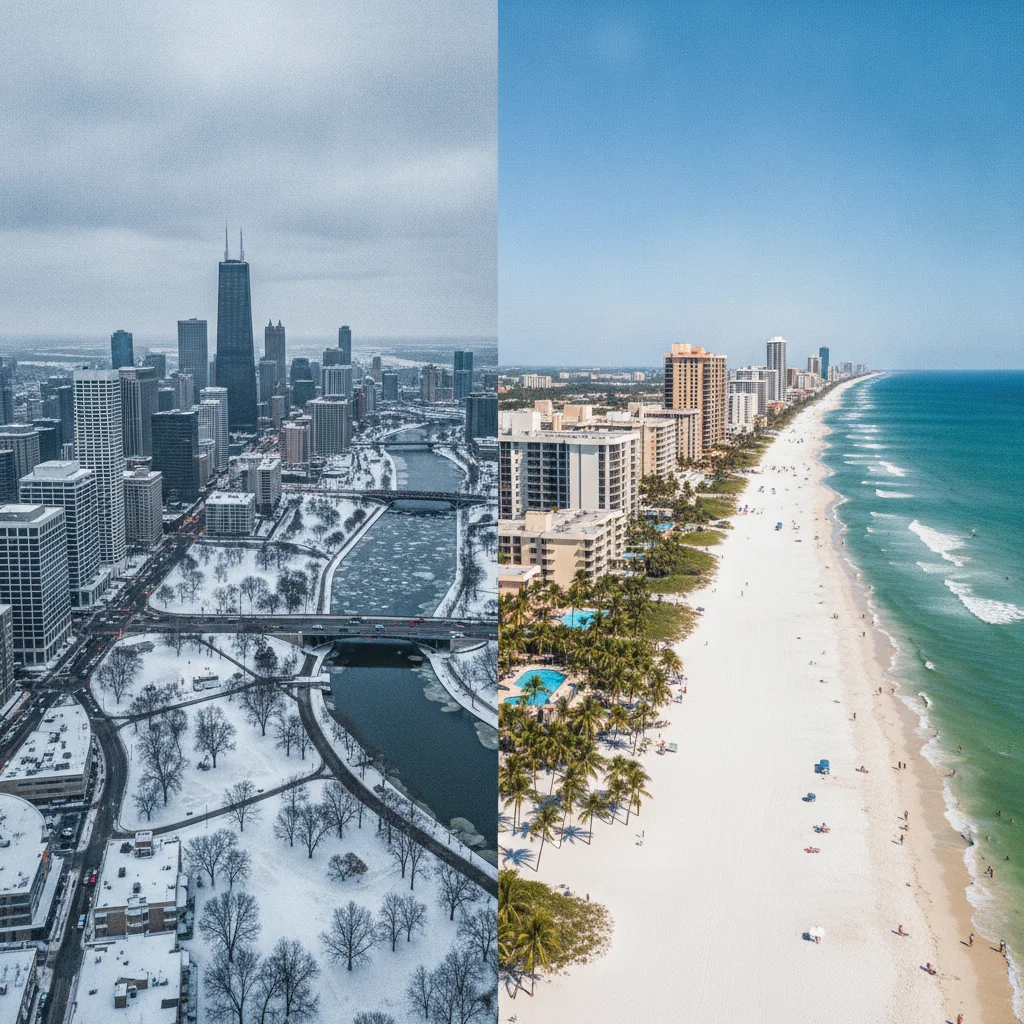
But "nationally" is doing a lot of heavy lifting in that sentence. The United States spans seven distinct climate zones and thousands of micro-markets where seasonal behavior looks completely different. A rear-wheel-drive sports car in Seattle has a very different demand curve than the exact same car in Scottsdale. A diesel pickup in Montana follows a completely different seasonal rhythm than a diesel pickup in South Florida.
When you rely on national averages to time your listing, you're essentially using someone else's weather forecast for your zip code. It might be close. It might also be off by two or three months — and that gap costs real money.
This is the core idea behind regional peak selling seasons: local geography and climate shape buyer behavior more than the calendar does. Understanding where your market falls on that spectrum lets you list with intention rather than guesswork.
For a broader foundation on how timing interacts with vehicle type and economic cycles, the complete market timing guide for sellers is worth reading alongside this one.
The Four Climate Zones That Shape Selling Windows
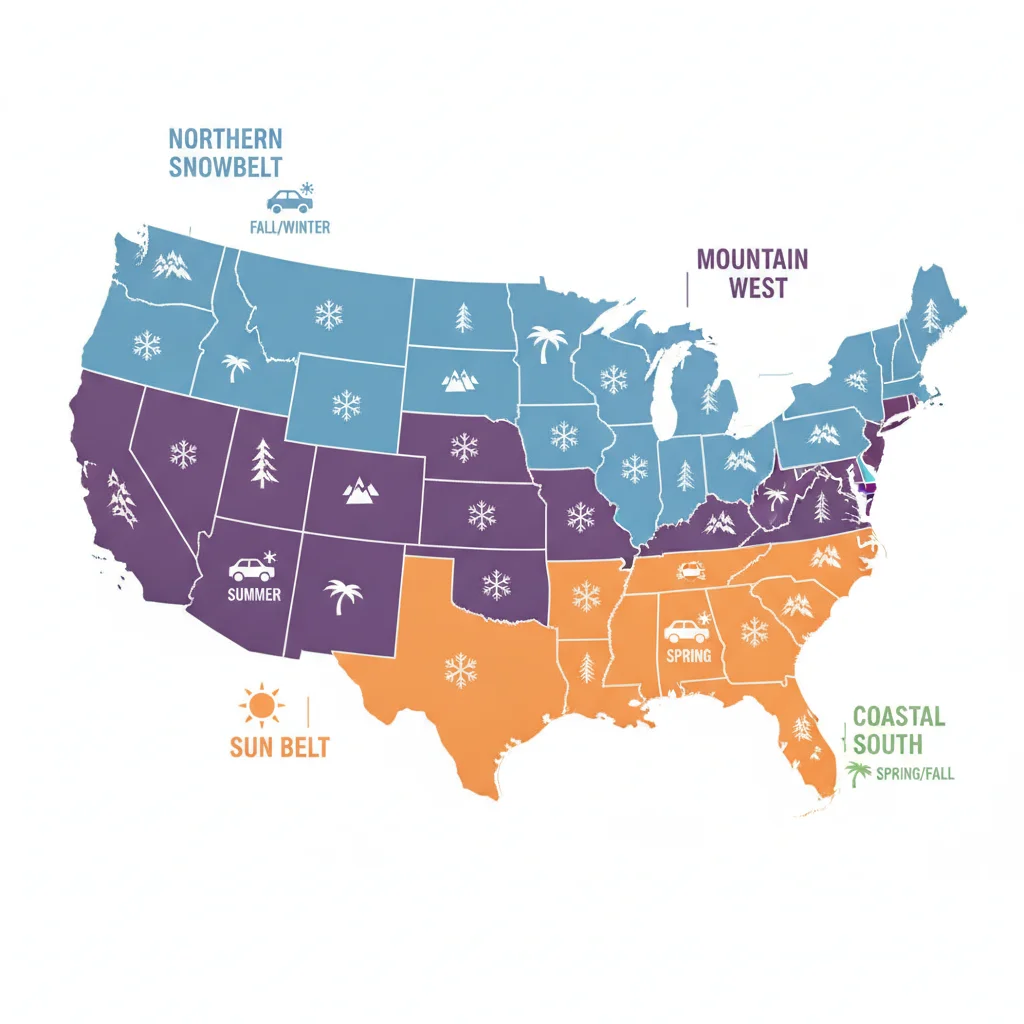
Rather than listing every state, it helps to think in climate-based categories. Most of the country falls into one of four broad profiles, each with its own seasonal demand pattern.
1. Four-Season Northern Markets
Think Chicago, Detroit, Minneapolis, Cleveland, Buffalo, and most of New England. These markets have the most dramatic seasonal swings in buyer behavior. Winter genuinely suppresses demand across most vehicle categories — not just because buyers don't want to deal with the cold, but because cars are harder to inspect, test drive, and photograph convincingly in February slush.
In these markets, the spring surge is real and sharp. Listings that go up in late March through April see meaningfully more views and faster sales than identical listings posted in January. Convertibles, motorcycles, and sports cars are extreme examples — demand can be 3x to 4x higher in April than December in a city like Minneapolis.
The practical takeaway: list two to three weeks before the weather obviously turns. By the time the first 55-degree weekend hits, buyers are already searching. Beat them to the market.
2. Mountain West Markets
Denver, Salt Lake City, Boise, Reno, and similar elevation markets follow a different script. AWD and 4WD vehicles — especially capable trucks and SUVs — peak in late summer as buyers prepare for ski season and early-fall snow. August and September are often stronger for 4WD listings than March.
Convertibles and sports cars still follow a spring peak, but it arrives slightly later than in lower-elevation cities because spring itself arrives later. May through July is the sweet spot. And because summer outdoor recreation drives demand for utility vehicles, a capable pickup can stay strong well into October.
3. Sun Belt Markets
Phoenix, Las Vegas, Tucson, and the inland Southwest compress seasonality significantly. Summer heat actually suppresses some outdoor activity, which is the inverse of northern markets. Convertibles are counterintuitively weaker in July and August in Phoenix — nobody wants to test drive a topless car in 112-degree heat.
In these markets, fall through early spring (October through April) tends to be the stronger window for most vehicles, especially vehicles with strong appeal to snowbirds and winter visitors. The overall swings are smaller, but timing still matters at the margins.
4. Coastal South and Tropical Markets
Miami, Tampa, Houston, and New Orleans sit in this category. Demand is the most consistent of any region — seasonality is real but muted. Spring still shows a modest lift tied to tax season. December can slow as buyers defer. But a convertible listed in January in Miami will find buyers in a way that the same car in January in Buffalo simply won't.
In these markets, vehicle type and price point matter more than month of year. Focus your energy on competitive pricing and listing quality rather than waiting for a specific seasonal window.
“Seasonality in used-car markets isn't just a national phenomenon — it's hyperlocal. A pickup truck in Colorado follows a completely different demand curve than the same truck in Louisiana. Sellers who understand that distinction consistently outperform those who rely on generic timing advice.”
— Ivan Drury, Director of Insights, Edmunds

Vehicle Types and How Their Peaks Shift by Region
Regional climate interacts with vehicle type in specific ways. Here's how to think through the combination for your situation.
3–4×
Convertible demand spike in northern markets, spring vs. winter
Analysis of listing view data from CarGurus shows convertible search volume in northern metro areas is 3 to 4 times higher in April than in December.
~$1,200
Typical price premium from well-timed 4WD listing in Mountain West
Regional dealer surveys and iSeeCars data suggest AWD/4WD vehicles listed in August in mountain states command roughly $1,000–$1,500 more than identical January listings.
11 days
Median days on market for spring listings vs. 34 days in winter
According to iSeeCars seasonal analysis, vehicles listed during regional peak windows sell in roughly one-third the time of off-season listings.
15–20%
Average first-year vehicle depreciation rate
Edmunds depreciation data consistently shows vehicles lose 15–20% of value in year one, making prolonged holds to chase timing often counterproductive.
2–3 weeks
Optimal early-listing lead time before local peak season
Experienced private sellers and dealer operators consistently report the best outcomes come from listing two to three weeks before the expected seasonal demand peak.
Convertibles and Sports Cars
This is the clearest example of regional timing divergence. In four-season northern markets, convertibles have a compressed peak: roughly late March through May. Miss it, and you're looking at a slow summer and a dead fall. In the Sun Belt and coastal South, convertibles are viable listings essentially year-round, with a mild spring lift.
If you own a convertible and live in a northern climate, listing in late March — even before the weather is reliably warm — puts you ahead of competing inventory that floods the market in April and May. See how vehicle type intersects with timing in this breakdown of convertibles, trucks, and SUVs by season.
4WD Trucks and Capable SUVs
In northern markets, these vehicles have a late-summer-to-fall peak as buyers start thinking about winter capability. In mountain markets, that peak shifts slightly earlier — August is often the strongest month. In the Sun Belt, 4WD capability is less of a selling point, so these vehicles track more general demand patterns rather than weather-specific ones.
Fuel-Efficient Sedans and Hybrids
These follow national gas price trends more than climate. Spring typically brings both rising gas prices and tax refund cash, which is a strong combination for efficient-vehicle demand across most regions. The regional variation here is smaller — spring is the peak almost everywhere. The exception is markets with mild winters where January and February buyers are more active, compressing the spring spike.
Minivans and Family SUVs
These track school calendars more than weather. The summer transition period — late May through mid-July — is when families make major vehicle changes before the next school year. This pattern holds across most of the country, with only modest regional variation. Back-to-school timing is national.
How to Find Your Local Peak (Without Guessing)
You don't have to rely on general categories. There are practical ways to read your specific local market before you commit to a listing date.
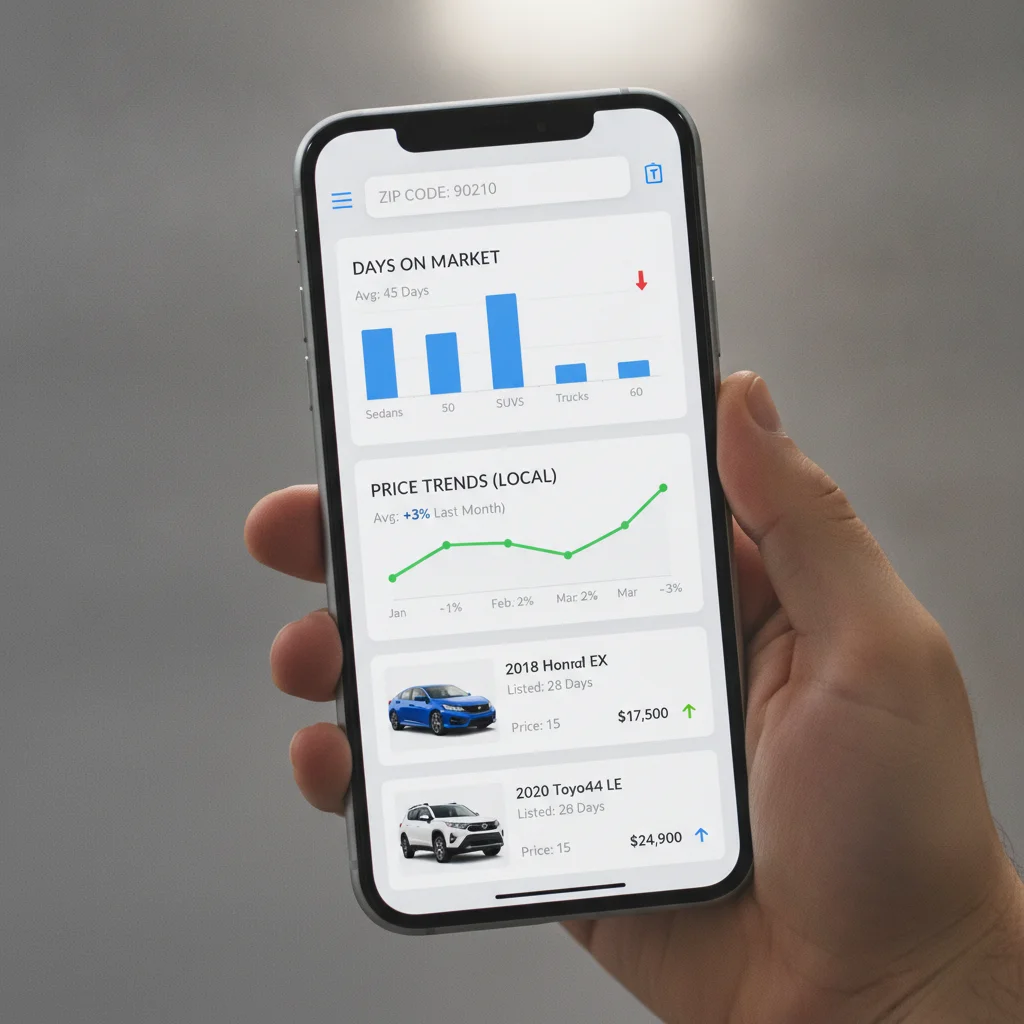
- Search your vehicle on listing platforms by zip code. On CarGurus or Autotrader, filter listings to your metro area and sort by days on market. Listings sitting for 60+ days signal a slow period or overpricing. When you see strong volume with short days-on-market, that's your local peak.
- Check Facebook Marketplace activity. It's unscientific but fast. Search your vehicle type in your area and look at how many active listings exist versus how many have "Sold" stamps on them. In peak periods, the sold-to-listed ratio climbs noticeably.
- Map your city's seasonal activity calendar. If your town is known for skiing, the AWD demand peak arrives before first snow. If summer boating is the local lifestyle, trucks with tow packages peak in April. Local recreation patterns almost always map to local vehicle demand patterns.
- Talk to a local independent dealer. Not to sell to them — just to ask. A used-car dealer who's been in your market for a decade has a good feel for when their lot moves fast. That knowledge is usually freely shared if you're upfront that you're a private seller trying to time things right.
List Before the Rush, Not During It
The best moment to post your listing is two to three weeks before your local peak typically arrives. Early-season buyers are motivated and face limited competition from other listings. By the time peak month hits, supply has usually caught up to demand and your negotiating leverage shrinks. Beat the crowd by a few weeks and you'll likely be sold before it even gets crowded.
Photograph Before the Seasons Clash
If you're planning a spring listing, take your photos on the first genuinely clear, dry day — even if that's in late February or early March. Snow in the background, muddy wheel wells, or overcast winter lighting all make buyers unconsciously skeptical. A car photographed in clean, bright conditions converts more inquiries into actual showings. Get ahead of it.
Once you've identified your local peak window, remember that the goal is to list before the peak, not at its height. By the time your market's strongest month arrives, competing inventory has already accumulated. Listing two to three weeks early lets you capture motivated early-season buyers before supply catches up to demand.
This same principle applies when you're trading in — dealers adjust their trade-in offers based on what's moving on their lot. Understanding regional timing from the dealer's perspective is covered in the trade-in timing guide.
The Risk of Waiting Too Long for 'Perfect' Timing
Here's the honest counterpoint to everything above: regional timing is a tool, not a mandate. Sellers who understand it use it to their advantage. Sellers who become obsessed with it sometimes talk themselves into holding a depreciating asset for months longer than makes financial sense.
A car loses roughly 15 to 20 percent of its value in the first year and continues depreciating from there. Every month you hold it, you're absorbing that cost plus insurance, potential maintenance, and opportunity cost. If your local peak season is six months away, waiting is almost certainly a losing calculation.
The math changes when your peak is four to eight weeks out. A modest wait with minimal carrying costs, timed to a meaningful demand lift, can realistically net you $500 to $1,500 more on a mid-range vehicle. That's worth planning for.
Depreciation Doesn't Wait for Peak Season
Every month a car sits unsold, it depreciates — typically at a rate of $100 to $300 per month on a mid-range vehicle, sometimes more. If your ideal regional timing window is more than two months away, the carrying cost almost always exceeds the expected premium from waiting. Use timing as a tool within a reasonable planning horizon, not as a reason to hold indefinitely.
Regional Timing Works Both Ways
The same regional demand patterns that benefit sellers create predictable windows when buyers have more leverage. If you're simultaneously shopping for your next vehicle, understanding local buyer timing — covered in the <a href="/buying-a-car/negotiating-and-deals/timing-your-purchase/regional-market-timing-why-the-best-month-to-buy-varies-by-location">regional market timing guide for buyers</a> — can help you sequence a sale and purchase to maximize both transactions.
Think of regional timing as one variable in a multi-factor decision, not the whole decision. The other variables — your vehicle's condition, your asking price relative to market comps, your listing quality — each matter as much or more. A well-priced, well-photographed listing in a slow month will outperform an overpriced listing in a peak month, every time.
For a balanced look at what peak season actually delivers — and where it can work against you — the pros and cons of selling during peak demand season lays it out plainly.
Quick Regional Reference: When to List by Vehicle Type
This table is a starting-point reference — not gospel. Your specific city and vehicle condition will refine these windows, but this gives you a working framework to plan against.
| Region | Convertibles / Sports Cars | 4WD Trucks / AWD SUVs | Hybrids / Efficient Sedans | Minivans / Family SUVs |
|---|---|---|---|---|
| Northern Four-Season | Late March – May | August – October | March – May | May – July |
| Mountain West | May – July | July – September | April – June | May – July |
| Sun Belt / Desert | Oct – April (avoid July–Aug) | Year-round, mild peaks | March – May | Year-round, mild peaks |
| Coastal South / Tropical | Year-round (spring lift) | Year-round | February – April | Year-round (May–July lift) |
| Pacific Northwest | April – June | April – June, Oct secondary | March – May | May – July |
One nuance worth noting for Pacific Northwest sellers: the October secondary peak for trucks and AWD vehicles is driven by the return of rainy season driving, not snow preparation. Buyers in Seattle know all-weather capability matters differently than it does in Denver, but they're motivated by the same calendar cue: the weather is about to get worse.
If you want to understand how regional timing interacts with when buyers in your area are also looking for deals, the regional market timing guide for buyers gives you the other side of that equation — useful for understanding who your competition is and when they're most motivated.
Putting It Into Practice Before You List
Once you understand the regional frame, here's how to turn it into an actual listing plan.
Step 1: Identify Your Climate Zone
Place yourself in one of the four broad categories above. If you're on the border — say, a city like Kansas City or Nashville that sees real winters but not extreme ones — lean toward the northern four-season model for winter-sensitive vehicles and use your judgment for trucks and family haulers.
Step 2: Match Your Vehicle Type to the Regional Peak
Use the table above as a starting point, then refine it based on what you know about your local lifestyle calendar. If your town revolves around summer lake activity, trucks and tow-capable SUVs will peak around Memorial Day weekend.
Step 3: Back-Calculate Your Prep Window
Good listings take time. Budget two weeks for detailing, minor repairs, photography, and writing the listing description. If your peak window opens April 1, you should be doing prep work in mid-March. Rushing the listing hurts conversion even if your timing is right.
Step 4: Price Against Local Comps, Not National Averages
Pull comparable listings within 100 miles of your zip code. National KBB and Edmunds values are useful anchors, but local supply and demand will move your real clearing price in either direction. In a thin local market with few comps, you may be able to price above national average. In a saturated market, you may need to be below it to move.
List Before the Rush, Not During It
The best moment to post your listing is two to three weeks before your local peak typically arrives. Early-season buyers are motivated and face limited competition from other listings. By the time peak month hits, supply has usually caught up to demand and your negotiating leverage shrinks. Beat the crowd by a few weeks and you'll likely be sold before it even gets crowded.
Photograph Before the Seasons Clash
If you're planning a spring listing, take your photos on the first genuinely clear, dry day — even if that's in late February or early March. Snow in the background, muddy wheel wells, or overcast winter lighting all make buyers unconsciously skeptical. A car photographed in clean, bright conditions converts more inquiries into actual showings. Get ahead of it.
Step 5: Monitor and Adjust
List at your target price, then watch engagement over the first two weeks. If you're getting consistent inquiries and showings, hold the price. If the listing goes quiet after a week, the market is telling you something — either the price or the timing needs adjustment. Don't let it sit for months out of stubbornness; every week of inactivity is depreciation you're eating.

All claims are backed by peer-reviewed research. Sources on request.