| Documents always required | Signed title, bill of sale, odometer disclosure, release of liability, valid ID |
| Lien clearance timeline | 10–30 days from loan payoff (varies by lender) |
| Odometer disclosure federal threshold | Required for most vehicles under 10 model years old (Truth in Mileage Act (49 U.S.C. § 32705)) |
| California release of liability deadline | Within 5 days of sale (California DMV) |
| Smog certificate validity (CA) | Must be obtained within 90 days of sale (California BAR) |
| Vehicle history report cost | $40–$50 (Carfax or AutoCheck) |
| Replacement smart key cost | $200–$500+ depending on make/model |
| States requiring safety inspection at transfer | Includes Missouri, Virginia, Pennsylvania (and others) |
The Core Documents Every Private Seller Needs
Selling a car privately is not complicated, but missing even one document can unravel the deal or expose you to liability weeks after you've cashed the check. Before you post an ad or schedule a test drive, gather these items and keep them in a folder. A buyer who sees organized paperwork gains confidence; one who watches you scramble for the title walks away.
| Documents always required | Signed title, bill of sale, odometer disclosure, release of liability, valid ID |
| Lien clearance timeline | 10–30 days from loan payoff (varies by lender) |
| Odometer disclosure federal threshold | Required for most vehicles under 10 model years old (Truth in Mileage Act (49 U.S.C. § 32705)) |
| California release of liability deadline | Within 5 days of sale (California DMV) |
| Smog certificate validity (CA) | Must be obtained within 90 days of sale (California BAR) |
| Vehicle history report cost | $40–$50 (Carfax or AutoCheck) |
| Replacement smart key cost | $200–$500+ depending on make/model |
| States requiring safety inspection at transfer | Includes Missouri, Virginia, Pennsylvania (and others) |
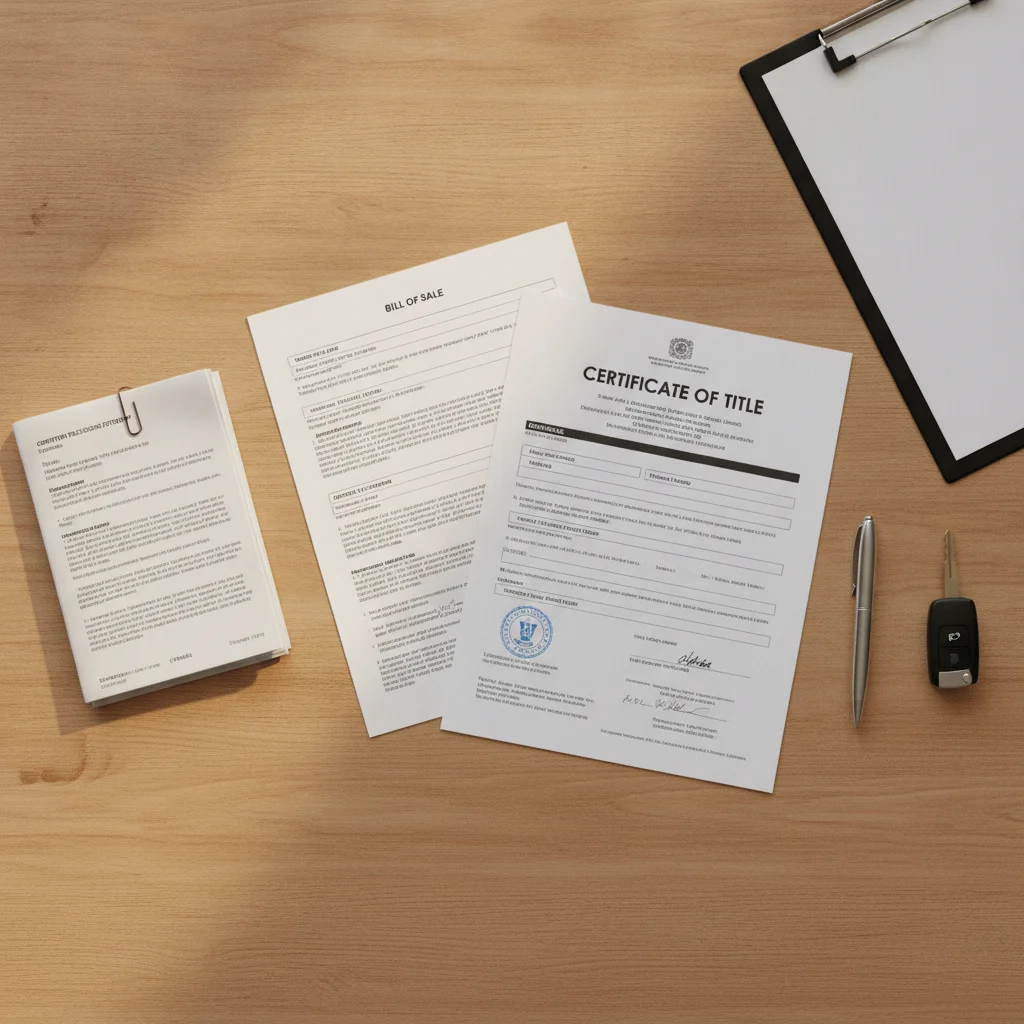
Here is the non-negotiable paperwork stack for a legal private party vehicle transfer in most U.S. states:
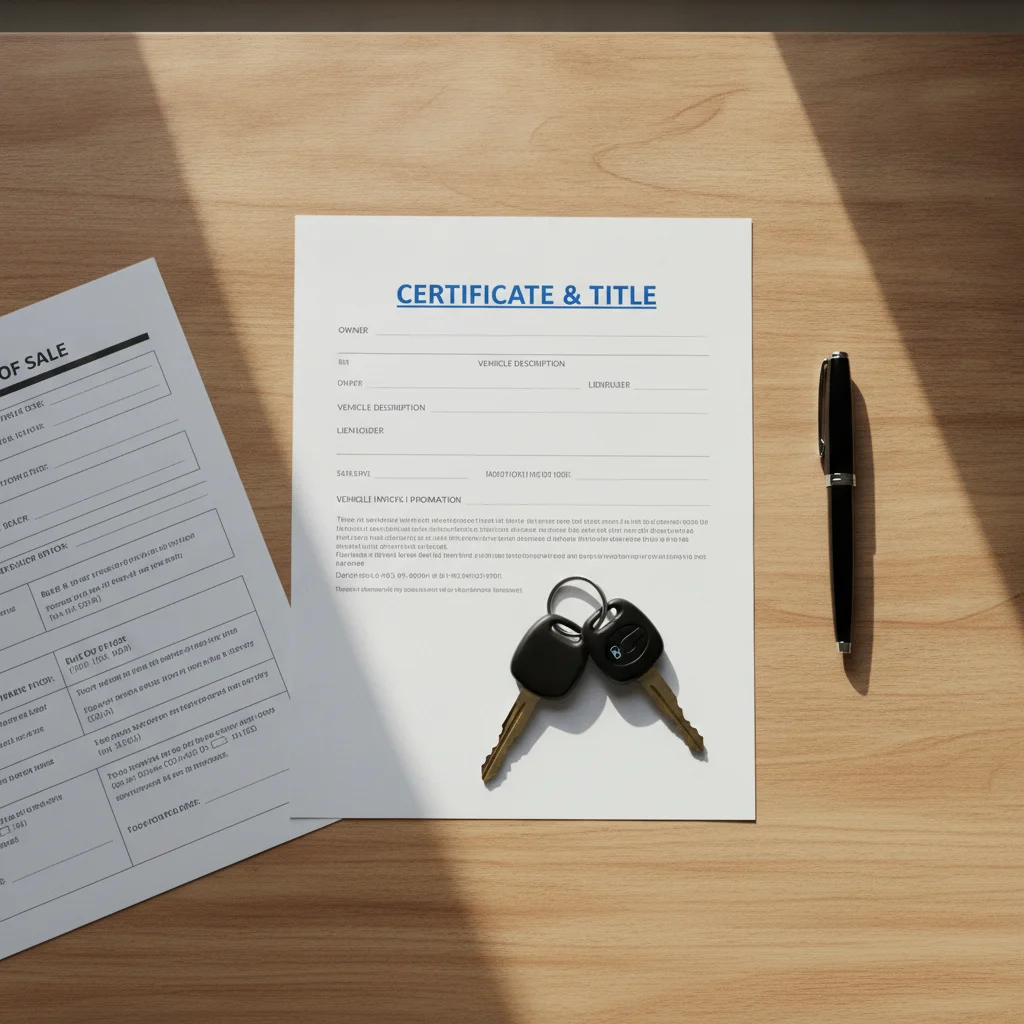
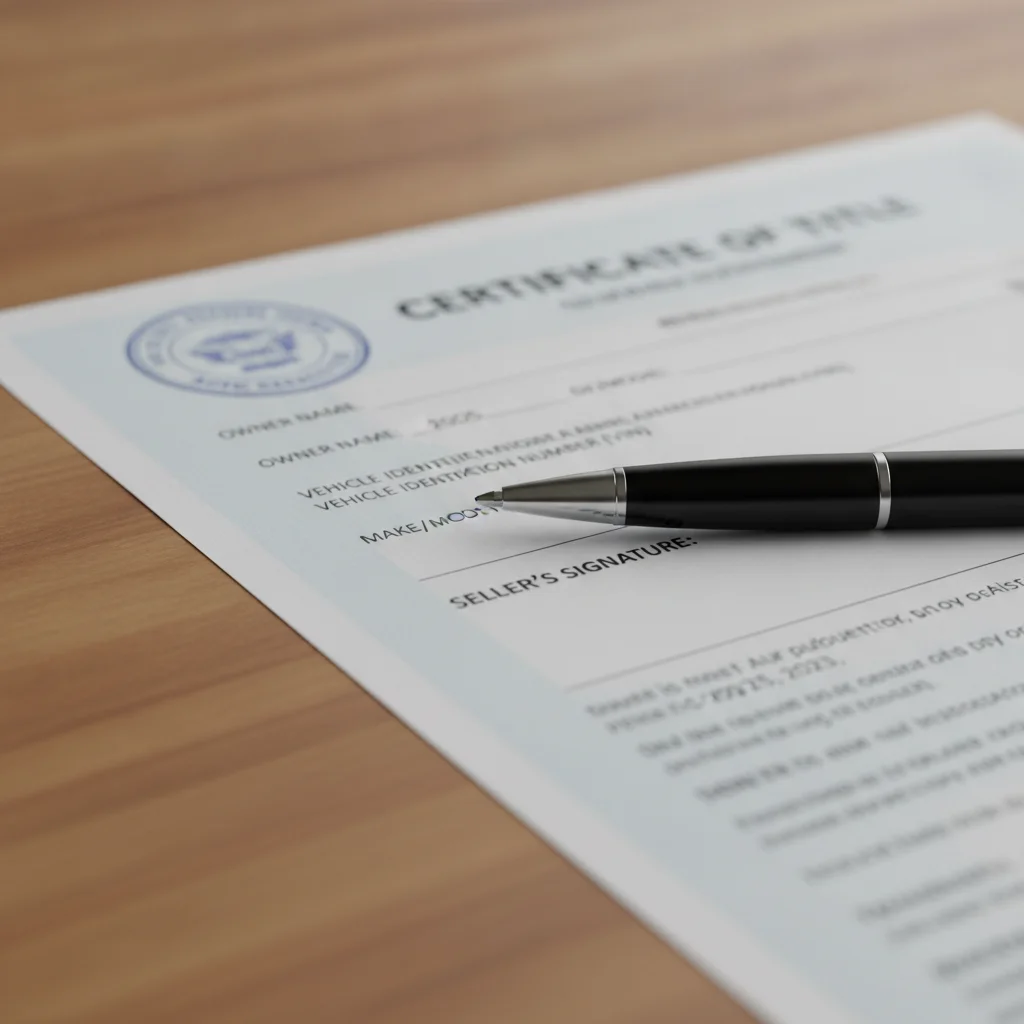
1. Certificate of Title (Signed Over to the Buyer)
The title is the single most critical document. It proves you legally own the car and authorizes the transfer of ownership. When you sign the title over, you must complete the seller section fully — including odometer reading, sale price, date of sale, and your signature exactly as it appears on the front of the title. Leave nothing blank. An incomplete title is the number-one reason DMV transfers get rejected.
- Lien on the title? You must pay off the loan and obtain a lien release letter from the lender before or at the time of sale. The buyer cannot register the car until the lien is cleared.
- Lost title? Apply for a duplicate through your state DMV before closing the deal. This typically takes one to three weeks.
- Electronic titles: Several states (including Florida and Texas) issue electronic titles. Your DMV will print a paper title for private sales — request one before listing.
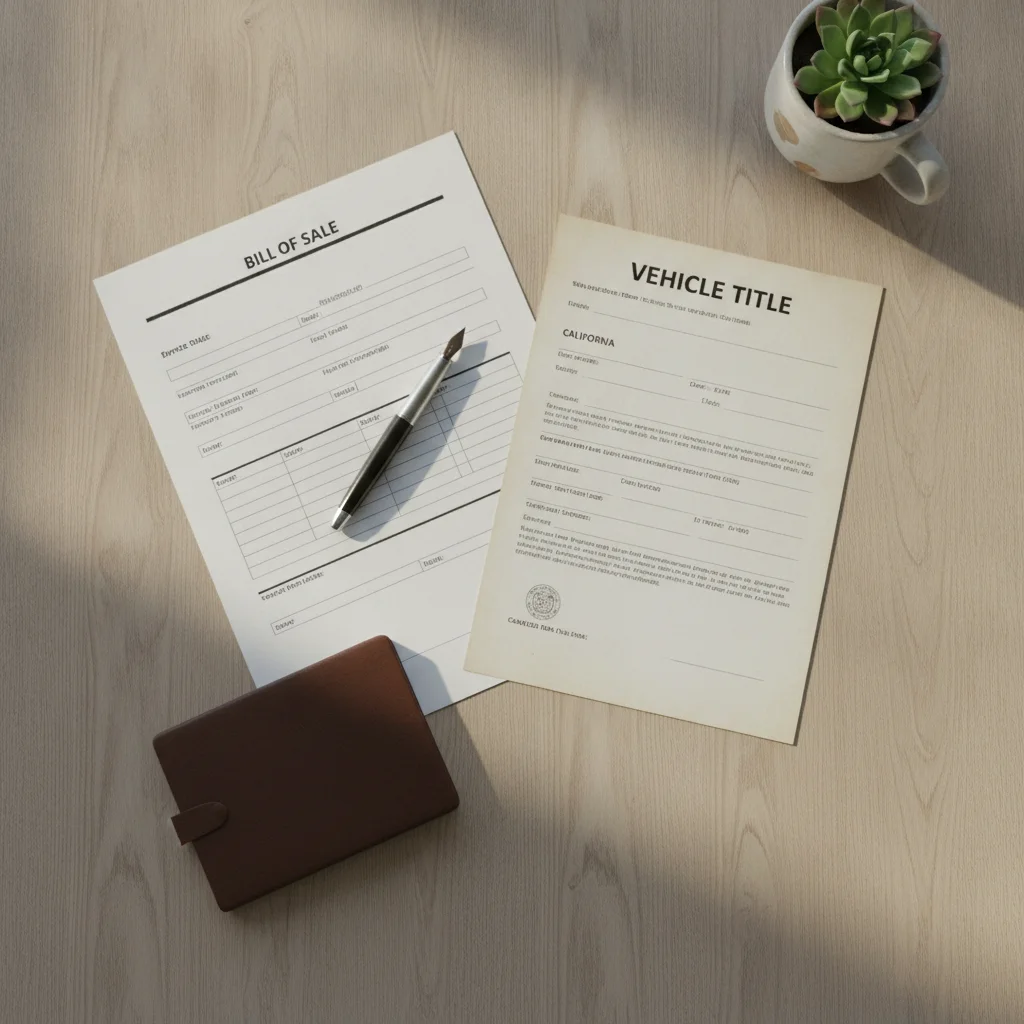
2. Bill of Sale
A bill of sale documents the transaction details: buyer and seller names and addresses, vehicle identification number (VIN), year/make/model, odometer reading, sale price, payment method, and date. Some states mandate a specific bill of sale form; others accept any written document. Either way, create two signed copies — one for you, one for the buyer.
Even in states that don't require it, a bill of sale protects you if the buyer gets a ticket or is involved in an accident before registering the car. Without it, law enforcement may tie that incident back to your name. See our complete legal private sale guide for a full walkthrough of what the bill of sale should cover.
3. Odometer Disclosure Statement
Federal law (the Truth in Mileage Act) requires sellers to disclose the odometer reading for most vehicles under 10 years old. Many states fold this into the title itself — there's a dedicated section on the back — so you may not need a separate form. But if your title doesn't include an odometer certification, you'll need a standalone disclosure. Check your state's DMV website to confirm which format is required.
4. Release of Liability
A release of liability notifies your state DMV that you are no longer the responsible party for the vehicle after the sale. In California, it's called a Notice of Transfer and Release of Liability and must be submitted online within five days of the sale. Many other states have equivalent forms. Filing this immediately is not optional — it's your protection against parking tickets, toll violations, and accident claims that occur after the car changes hands.
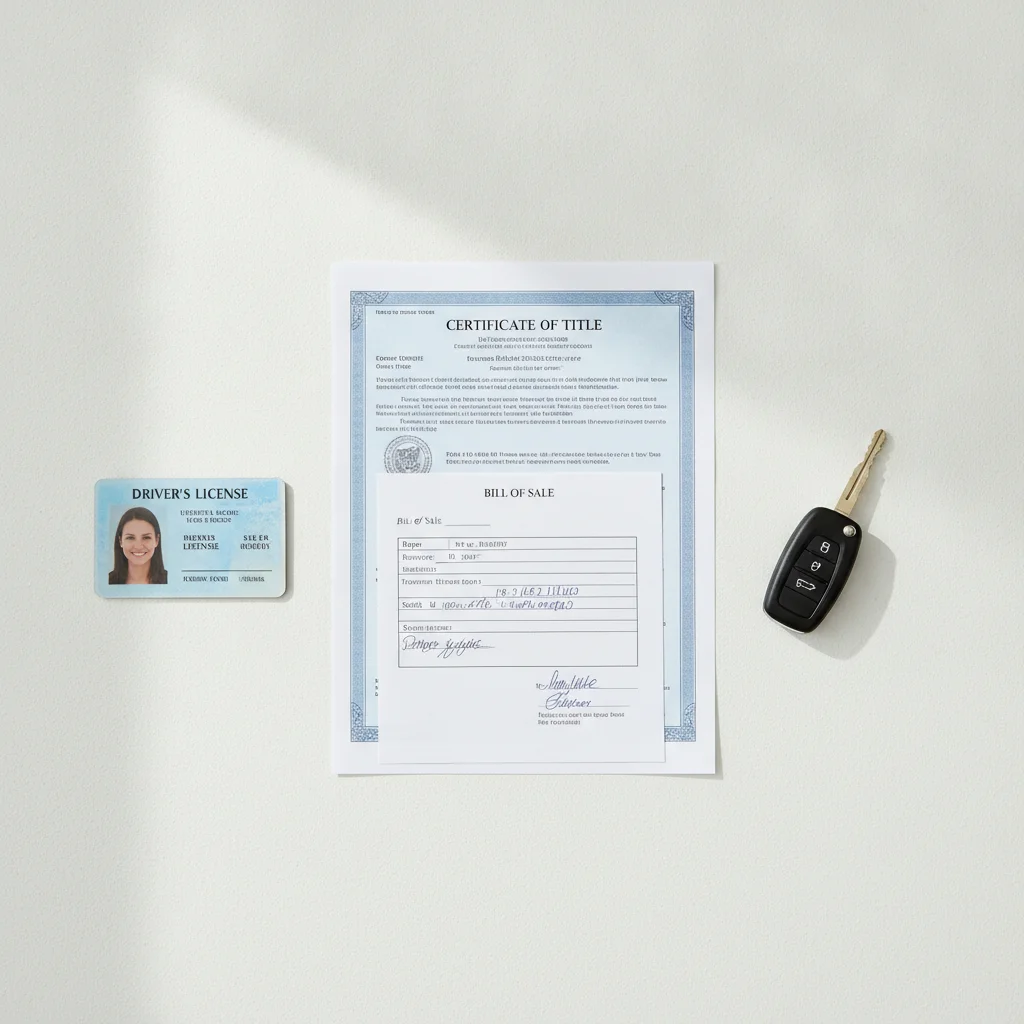
5. Valid Government-Issued ID
Bring your driver's license to the signing. The buyer will want to verify your identity matches the name on the title, and you should verify theirs as well. Photograph their ID before handing over keys — this creates a record of who took possession of the vehicle.
Situation-Specific Documents You May Also Need
Beyond the core stack, certain situations require additional paperwork. Skipping these when they apply is where sellers run into real trouble.
$300–$1,000
Premium for documented maintenance history
Vehicles with full service records typically command significantly more than identical cars without documentation in private sales.
5 days
California deadline to file release of liability
California DMV requires sellers to submit a Notice of Transfer and Release of Liability within five days of the sale.
10–30 days
Typical lien release processing time
Most lenders issue a lien release letter within 10 to 30 days of loan payoff, though some provide temporary proof immediately.
#1
Most common DMV title rejection reason
Incomplete or incorrectly completed title paperwork is the leading cause of rejected vehicle transfer applications at state DMVs.
$200–$500+
Cost to replace a missing smart key
Including a spare key set when selling can meaningfully increase buyer confidence and perceived vehicle value.
Lien Release Letter
If you still owe money on the car, your lender holds the title (or is listed as a lienholder). Before transferring ownership, you need a lien release — a letter from your lender confirming the loan is paid in full. Many lenders send this within 10–30 days of payoff; some provide a temporary letter immediately. Coordinate with your lender early if you plan to use sale proceeds to pay off the loan — some buyers and sellers use an escrow service for exactly this scenario.
Power of Attorney (POA)
If the registered owner cannot be physically present at the signing — due to illness, military deployment, or living out of state — a notarized power of attorney authorizes someone else to sign the title on their behalf. Most DMVs have a specific motor vehicle POA form. A generic POA is often rejected.
Death Certificate and Probate Documents
Selling a vehicle from a deceased person's estate involves additional steps: a death certificate, probate court documentation, and sometimes a court order authorizing the sale. This process varies significantly by state and estate value. Consult your state DMV's estate transfer guidelines before proceeding.
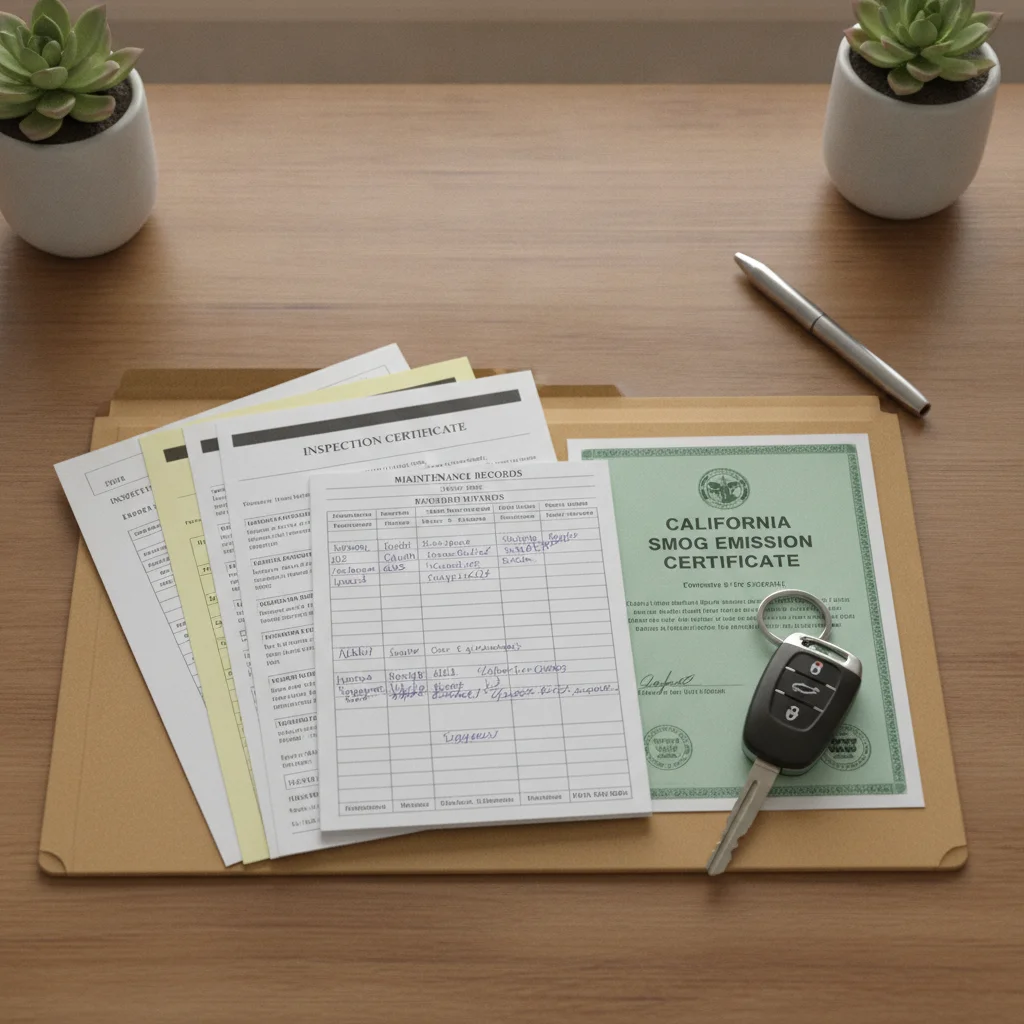
Smog Certificate or Emissions Test Results
States like California, Colorado, and parts of Texas require a valid smog or emissions certificate as a condition of title transfer. In California, the seller must provide a smog certificate obtained within 90 days of the sale (with limited exceptions for newer vehicles). Failure to provide this document legally blocks the buyer from registering the car.
Safety Inspection Certificate
A handful of states — including Missouri, Virginia, and Pennsylvania — require a valid state safety inspection certificate before the title can transfer. Verify your state's requirements at the DMV before listing. See our state-by-state paperwork overview to confirm what your state specifically mandates.
Warranty Documentation (If Applicable)
If the vehicle is still under a transferable manufacturer's warranty, include the warranty booklet or documentation. Some powertrain warranties transfer automatically to a new private owner; others require formal notification to the manufacturer. Check the warranty terms and include the paperwork — it adds tangible value and can justify a higher asking price.
As-Is Documentation
In most private sales, the car is sold "as-is" — meaning you make no warranty about its condition. In states like Louisiana, a specific as-is disclosure may be required. Even where it isn't, include an as-is statement in your bill of sale. This language limits your exposure if the buyer discovers a mechanical problem after the sale and tries to claim you misrepresented the vehicle.
For a complete rundown of what to assemble before you even list the car, see every document you need before listing your car for sale.
Documents That Aren't Required But Help You Sell Faster
These records aren't legally mandatory, but they shorten negotiation time and support your asking price. Serious buyers ask for them; not having them creates doubt.
Certificate of Title
The legal document issued by a state that proves ownership of a motor vehicle. The seller must sign the title over to the buyer to legally transfer ownership.
Bill of Sale
A written record of a vehicle transaction listing the buyer, seller, vehicle details, sale price, and date. It protects both parties and serves as proof of the transaction.
Lien Release
A document from a lender confirming that a vehicle loan has been paid in full and the lender relinquishes any claim to the vehicle. Required to transfer a clean title.
Release of Liability
A form filed with the state DMV by the seller after a sale, officially notifying the state that the seller is no longer responsible for the vehicle.
Odometer Disclosure
A federally required statement of a vehicle's mileage at the time of sale. It may appear on the title itself or as a separate form, depending on the state.
Floating Title
A title that has been signed by the seller but not yet filled in with a buyer's name. This is illegal in many states and creates significant fraud risk.
Power of Attorney (Motor Vehicle)
A notarized form authorizing one person to sign vehicle title documents on behalf of the registered owner when the owner cannot be present.
As-Is Sale
A transaction in which the seller makes no warranty about the vehicle's condition. The buyer accepts the vehicle in its current state with no legal recourse for post-sale defects.
Maintenance and Service Records
Oil change receipts, timing belt replacements, brake jobs — a folder of service records demonstrates the car was maintained properly. Vehicles with documented maintenance history routinely sell for $300–$1,000 more than identical cars without records, depending on the segment. If you used a dealership or chain shop, they can often print a service history summary.
Vehicle History Report
Pull a Carfax or AutoCheck report before listing, not after a buyer requests one. This gives you time to understand what's in the report and address any issues upfront — rather than being blindsided during negotiations. Buyers who pull their own report mid-negotiation are more likely to use negative findings as leverage. Controlling the narrative is worth the $40–$50.
Original Window Sticker (Monroney Label)
For newer or premium vehicles, the original window sticker showing factory options and MSRP can justify pricing and build buyer confidence. Some manufacturers allow you to reprint the Monroney label from their website using the VIN.
Owner's Manual and Extra Keys
Technically not documents, but buyers notice when they're missing. Replacement smart keys can cost $200–$500 or more. If you have a spare, include it. If you don't have the owner's manual, many automakers offer free digital downloads — print the relevant sections at minimum.
For perspective on what the buyer will need to complete their end of the transaction, see documents required to register a car in any state. Knowing their checklist helps you anticipate their questions.
State Requirements Vary Significantly
No two states have identical private sale requirements. California, for example, requires an online release of liability and a smog certificate. Texas requires a signed title and odometer disclosure but no mandatory bill of sale form. Always verify your specific state's requirements at the official DMV website before finalizing any transaction. Our <a href="/selling-your-car/sale-channels/private-party-sales/private-sale-paperwork-a-state-by-state-overview-of-key-requirements">state-by-state paperwork overview</a> is a useful starting point.
Don't Cancel Insurance Before the Keys Change Hands
A common seller mistake is canceling auto insurance as soon as the buyer agrees to purchase. Keep coverage active until the title is signed and the car physically leaves your possession. If the buyer has an accident during a test drive and you have no insurance, your liability exposure can be significant depending on your state's laws.
How to Handle the Paperwork at the Time of Sale
Knowing which documents you need is half the job. Executing the exchange correctly is the other half. Errors made at signing can require costly corrections or create title defects that follow the buyer for years.
Sign the Title Correctly — Every Field
Review the back of the title before the buyer arrives. The seller section typically includes: odometer reading, sale price, date, seller's printed name, seller's signature, buyer's name and address. Sign exactly as your name appears on the title. If your name is misspelled on the title, do not just sign the correct spelling — contact your DMV for a corrected title first.
Do not sign the title in advance. Signed blank titles (sometimes called "floating titles") are a fraud risk and are illegal in many states. Sign only in the presence of the buyer at the time of sale.
Collect Payment Before Handing Over the Title
This sequence matters: confirm payment is cleared, then sign and hand over the title. For cash, count it in person. For cashier's checks, verify with the issuing bank before signing anything — counterfeit cashier's checks are the most common private sale scam. Wire transfers are the safest option for high-value vehicles.
Submit Your Release of Liability the Same Day
Don't leave this for later. File the release of liability with your state DMV the same day you sign the title over. Many states allow online submission in under five minutes. This step formally ends your legal connection to the vehicle. See the Paperwork & Title hub for state-specific guidance on where and how to file.
Cancel Your Insurance — After the Sale Is Final
Keep your insurance active until the title is signed and the car has physically left your possession. Do not cancel coverage in advance. Once the buyer drives away, notify your insurer immediately to stop coverage and avoid paying premiums on a car you no longer own. If you have other vehicles on the policy, your rates may drop; if this was your only vehicle, your policy will close.
State Requirements Vary Significantly
No two states have identical private sale requirements. California, for example, requires an online release of liability and a smog certificate. Texas requires a signed title and odometer disclosure but no mandatory bill of sale form. Always verify your specific state's requirements at the official DMV website before finalizing any transaction. Our <a href="/selling-your-car/sale-channels/private-party-sales/private-sale-paperwork-a-state-by-state-overview-of-key-requirements">state-by-state paperwork overview</a> is a useful starting point.
Don't Cancel Insurance Before the Keys Change Hands
A common seller mistake is canceling auto insurance as soon as the buyer agrees to purchase. Keep coverage active until the title is signed and the car physically leaves your possession. If the buyer has an accident during a test drive and you have no insurance, your liability exposure can be significant depending on your state's laws.
Understanding the buyer's perspective helps you anticipate their needs. The Paperwork & Contracts hub for car buyers covers what buyers expect to receive when they close a private sale.
State DMV Locator (USA.gov)
Find your state's official DMV website to download required bill of sale forms, release of liability forms, and confirm current title transfer requirements.
Carfax Vehicle History Report
Pull a vehicle history report before listing your car to understand what buyers will see and address any issues that could derail negotiations.
DMV.org Bill of Sale Template
A straightforward, state-adaptable bill of sale template that covers all essential transaction details for a legally sound private sale.
NADA Guides Vehicle Valuation
Determine a defensible asking price for your vehicle based on condition, mileage, and local market data before entering negotiations.

All claims are backed by peer-reviewed research. Sources on request.