Key Takeaways
Summary
24 items · 20–45 minutes to review and verify
Why Documents Tell the Real Story
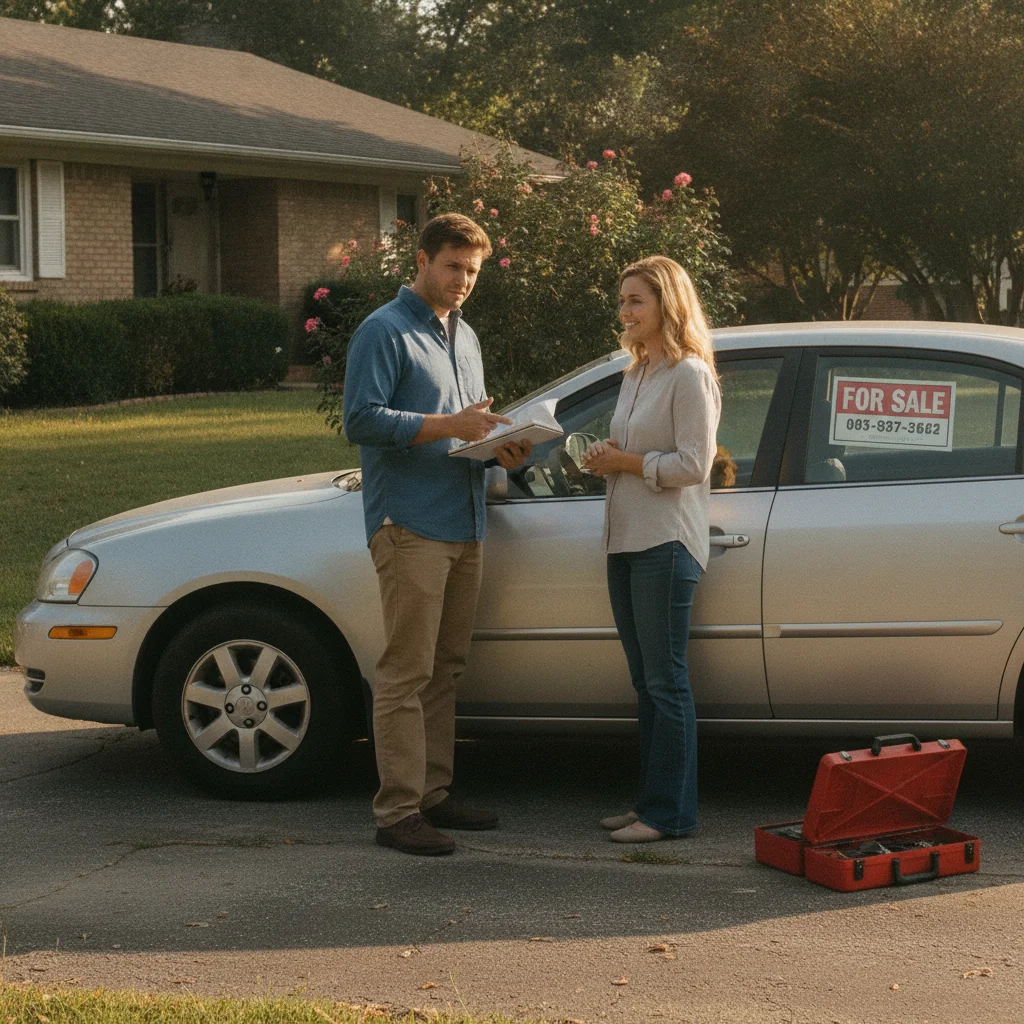
A used car's condition is only half the picture. The other half lives in a folder — or, too often, doesn't exist at all. Before you spend a dollar on a pre-purchase inspection, before you even negotiate price, you should be asking the seller to lay out every document they have. What's present, what's missing, and what looks off will shape everything that follows.
This isn't busywork. Missing or altered paperwork is the most common thread running through bad used car deals. A rebuilt title disclosed in the fine print. Odometer rollback caught only after comparing two service invoices. An open recall the seller never mentioned. These aren't edge cases — they happen in private party sales and at small dealers alike.
The checklist below covers every document worth requesting before you sign anything. Use it as a literal checklist at the seller's kitchen table or a dealership desk. Print it, screenshot it, or run through it on your phone. For a broader look at how documents flow throughout the entire buying process, see the complete paperwork map from first quote to final title.

Tools You'll Need to Do This Right
You don't need anything exotic to run a thorough document check. Most of what matters below is free or costs under $50. Have these ready before you sit down with the seller.
CarFax or AutoCheck (VIN history report)
Pulls title history, odometer readings, accident reports, and ownership count from a single VIN lookup.
NHTSA Recall Database (nhtsa.gov)
Free government lookup that shows all open and completed recalls tied to a specific VIN.
NMVTIS Vehicle History Report
National Motor Vehicle Title Information System — a government-backed alternative to commercial VIN reports that catches title brands commercial services sometimes miss.
Smartphone camera
Photograph every document the seller presents so you have your own copies before signing anything.
State DMV title check tool
Many state DMV websites let you verify whether a title is clear of liens before you meet the seller.
Independent pre-purchase inspection mechanic
Confirms mechanical condition after documents check out — budget $100–$200 for a thorough inspection at a shop of your choosing.
The Full Document Checklist
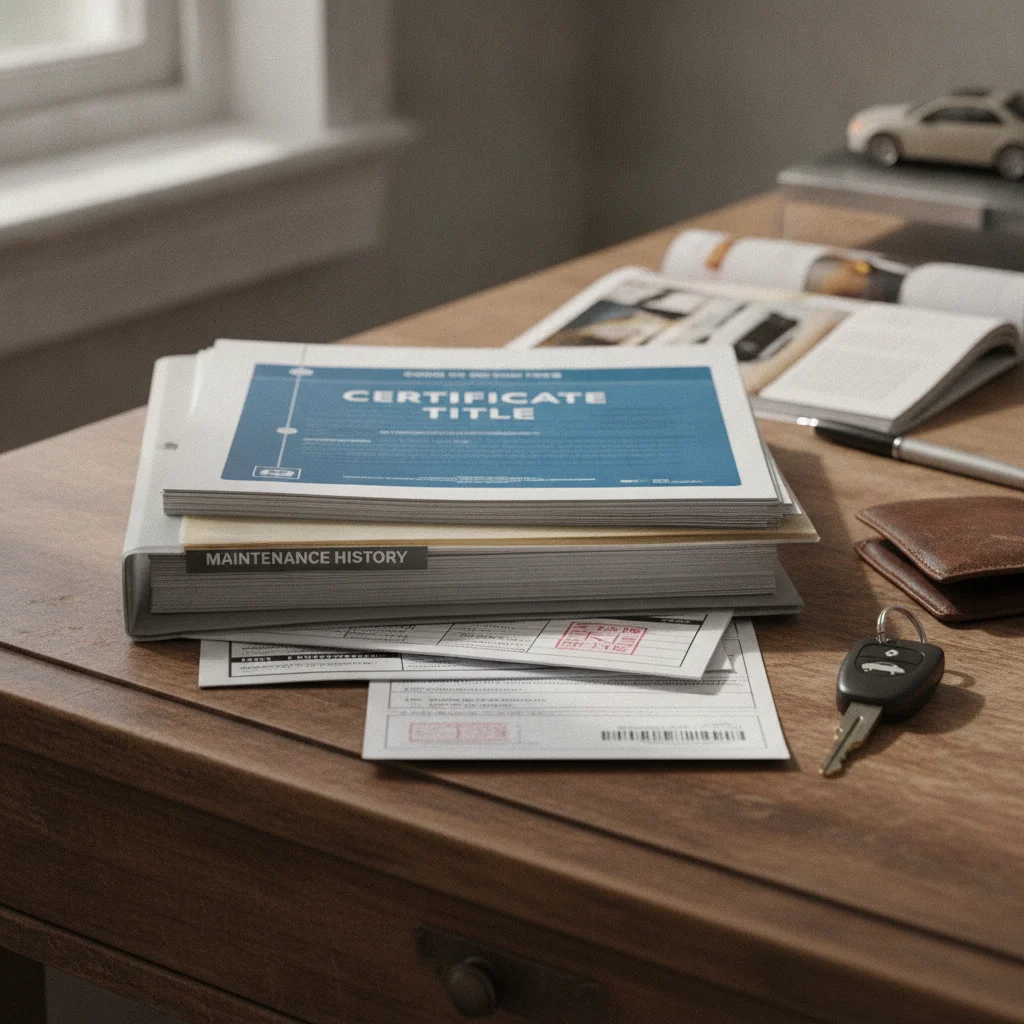
Work through these groups in order. Title and ownership documents come first because there's no point digging deeper if the title has a problem that kills the deal. From there, move into history, maintenance, compliance, and finally the paperwork specific to finalizing a private party or dealer transaction.
Title and Ownership Documents
Vehicle History Report
Service and Maintenance Records
Emissions and Inspection Certificates
Open Recalls and Technical Service Bulletins
Warranty Documentation
Sellers Who 'Lost' Their Records
A seller with no service records isn't automatically hiding something — records genuinely do get lost, especially across multiple owners. But no records shifts risk entirely onto you. Price the car as if it received the minimum possible maintenance, and budget for a full inspection and any deferred service items you discover. A mechanic's inspection becomes even more important when documentation is thin.
Rebuilt Titles and Insurance Surprises
Many standard auto insurance carriers will not write comprehensive or collision coverage on a rebuilt-title vehicle. Others will insure it but at a reduced payout value. If you're financing the purchase, most lenders won't touch a rebuilt title at all. Find out your insurer's policy before you fall in love with a car — don't discover the limitation after you've already bought it.
Out-of-State Purchases Need Extra Scrutiny
Title brands recognized in one state aren't always reflected in another state's records. A 'clean' title issued in a state with lax title branding laws may disguise a history that would have been branded in your home state. NMVTIS and commercial VIN reports both aggregate data across state lines, which is why running your own report — not relying on the seller's — is non-negotiable.
Reading Between the Lines: What the Documents Actually Reveal
Collecting documents is step one. Understanding what they tell you — and what they hide — is where buyers either protect themselves or miss critical details.
Service records and ownership alignment
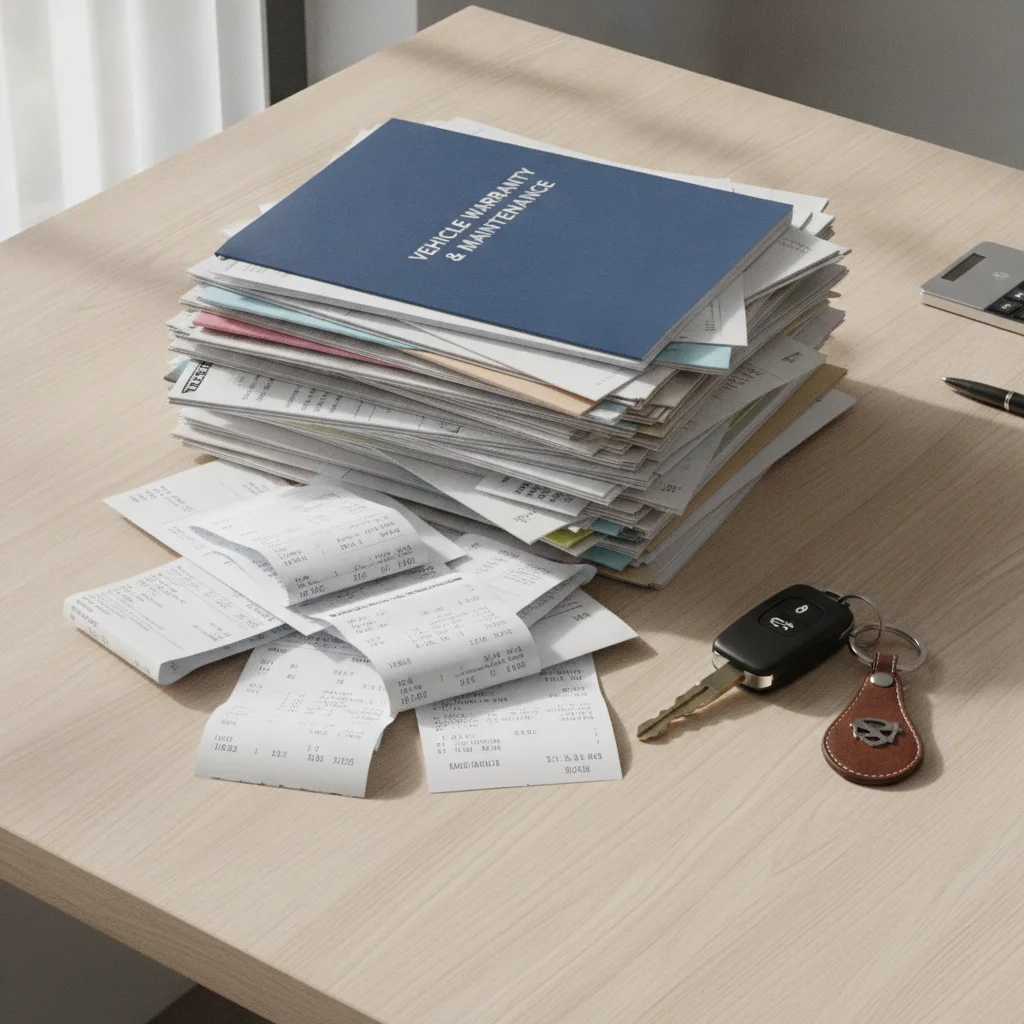
A seller who claims to have owned a car for six years but produces only two oil change receipts from the last 18 months has a gap to explain. Either maintenance was deferred, records were lost, or the ownership story doesn't hold up. Cross-reference what the seller tells you verbally with what the records actually show. If they don't align, push back politely but directly. The right questions aren't accusatory — they're practical. For more on how to structure that conversation, questions worth asking the seller during every test drive gives you a ready-made framework.
Odometer consistency across documents
Every document with a mileage entry is a data point. Pull out every service receipt, the most recent registration, and the CarFax or AutoCheck report side by side. Mileage should increase in a logical, consistent arc. A sudden drop — or a period of stagnation followed by a jump — warrants an explanation. Odometer fraud is less common than it was a decade ago, but it hasn't disappeared.
Title brand vs. accident history
A clean title does not mean a clean accident history. A car can sustain significant damage and be repaired without triggering a salvage or rebuilt title designation, particularly if the insurance claim was kept below the total-loss threshold or paid out of pocket. Your VIN history report will catch insurance-reported incidents the title won't. A car with three moderate accidents and a clean title is fundamentally different from a car with zero incidents — price it accordingly.
Recall status and what it means for you
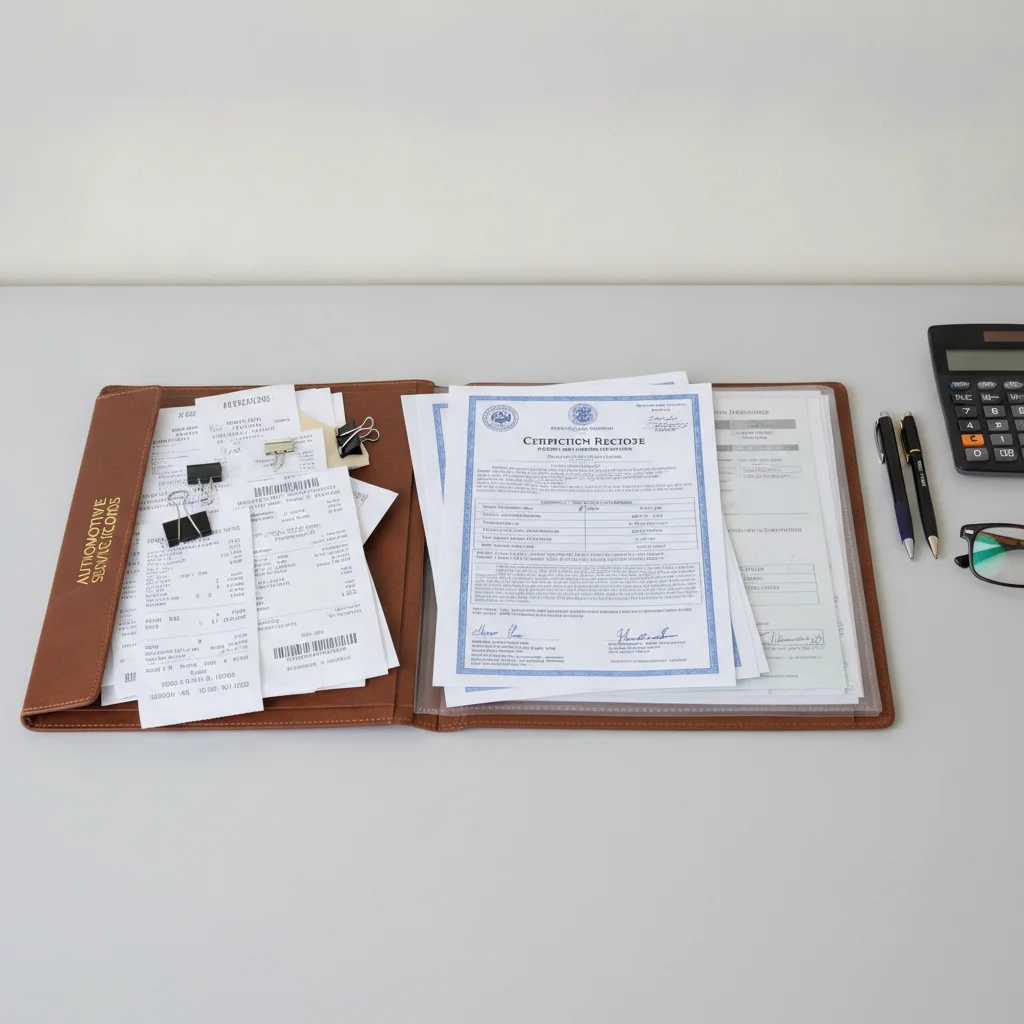
Open recalls are repaired at no cost at a franchised dealership. That sounds like a free fix — and it is — but there are catches. Parts availability can stretch repairs out by weeks or months. Some recalls affect drivability or safety in the interim. And a few recalls, particularly older ones, may have expired repair programs. Check NHTSA's recall database using the VIN directly; don't take the seller's word for it.
Never Pay Before Verifying the Title Is Clear
An active lien on the title means a lender — not the seller — holds legal interest in the vehicle. If you pay the seller and they don't use the funds to pay off the lien, that lender can legally repossess the car from you. Always confirm lien status in writing before money changes hands, and consider using an escrow arrangement for private party sales involving large sums.
Open Safety Recalls Are the Seller's Disclosure Responsibility
Federal law requires dealers to disclose open safety recalls on used vehicles in most contexts, but private party sellers operate in a grayer legal space. Regardless of who's selling, an unresolved recall — particularly on safety systems — is a liability you'll inherit the moment you sign. Don't assume a recall will be quick to fix; parts shortages for some recalls stretch into months. Get confirmation of recall status in writing before closing.
What sellers with nothing to hide look like
Organized sellers — whether private parties or small dealers — who have maintained a car properly tend to have their paperwork ready before you ask. They'll hand you a service folder, show you the original title, and let you photograph everything without hesitation. That confidence is itself a signal. Reluctance to produce records, vague answers about previous owners, or pressure to skip the document review and just take the car for a drive are the opposite signal. Trust both.
After You've Verified Everything
Once you've reviewed every document and run a VIN check, you're positioned to negotiate from fact rather than guesswork. A car with a thin service history, one prior accident, and an upcoming scheduled maintenance item isn't necessarily a bad buy — but each of those factors has a dollar value, and you should negotiate accordingly.
Sellers who present complete, consistent documentation are also telling you something about how they maintained the car. That history has real leverage value — just as it does when you eventually go to sell or trade in the same car. Start building your own file the day you take ownership.
For sellers reading this from the other side: assembling your paperwork before you list isn't just about compliance — it directly affects what buyers will offer you. And once the sale closes, the documents you retain afterward are what protect you from liability claims.
The paperwork review doesn't replace a mechanical inspection — it informs it. A pre-purchase inspection by a trusted independent mechanic is still worth every dollar, especially on higher-mileage vehicles. But walk into that inspection knowing what the documents already told you, and your mechanic can target their time on the areas that matter most. Know the right questions to ask your mechanic so you walk out with a complete picture, not just a thumbs-up or thumbs-down.

All claims are backed by peer-reviewed research. Sources on request.