Key Takeaways
Our Verdict
The repairs that reliably pay off share one trait: they eliminate buyer objections at inspection without costing more than the value they restore. Safety items, clean fluids, working lights, and solid detailing belong in every pre-sale checklist. High-ticket mechanical overhauls and collision repairs almost never pencil out — buyers expect a discount regardless, and you'll rarely recover what you spend. The most practical approach is to fix what's cheap and visible, price honestly for what isn't, and let valuation data guide every decision.
| Best for | Recommended |
|---|---|
| Sellers on a tight budget who need maximum return per dollar spent | Detailing, fluid top-offs, and minor safety items |
| Sellers with a mechanically sound car that just needs cosmetic polish | Detailing, chip/crack repair, and tire replacement if worn |
| Sellers facing major mechanical or structural issues | Honest disclosure with an appropriately adjusted asking price |
| Sellers trading in rather than selling privately | Skip most repairs and negotiate on the trade-in price instead |
Why Not Every Repair Makes Financial Sense Before a Sale
When you're preparing to sell a car, the instinct is to fix everything — to hand over something clean and worry-free. That's a generous impulse, but it's not always a profitable one. The hard truth is that buyers don't pay dollar-for-dollar for the work you put in. They pay what the market says the car is worth, adjusted for condition.
That dynamic creates a straightforward rule: a repair is worth making only if the cost is clearly less than the price bump it will generate — or if it removes a deal-killing objection at inspection. Everything else is either neutral or a net loss for you as the seller.
Before you decide what to fix, spend a few minutes with reliable pricing data. Tools covered in our valuation tools guide will show you what your car is worth in "good" versus "fair" condition — and that gap is your repair budget ceiling. If fixing the brakes costs $400 and moves you from "fair" to "good" valuation by $600, you do the repair. If repainting a door costs $1,200 but only recovers $500 in buyer perception, you don't.
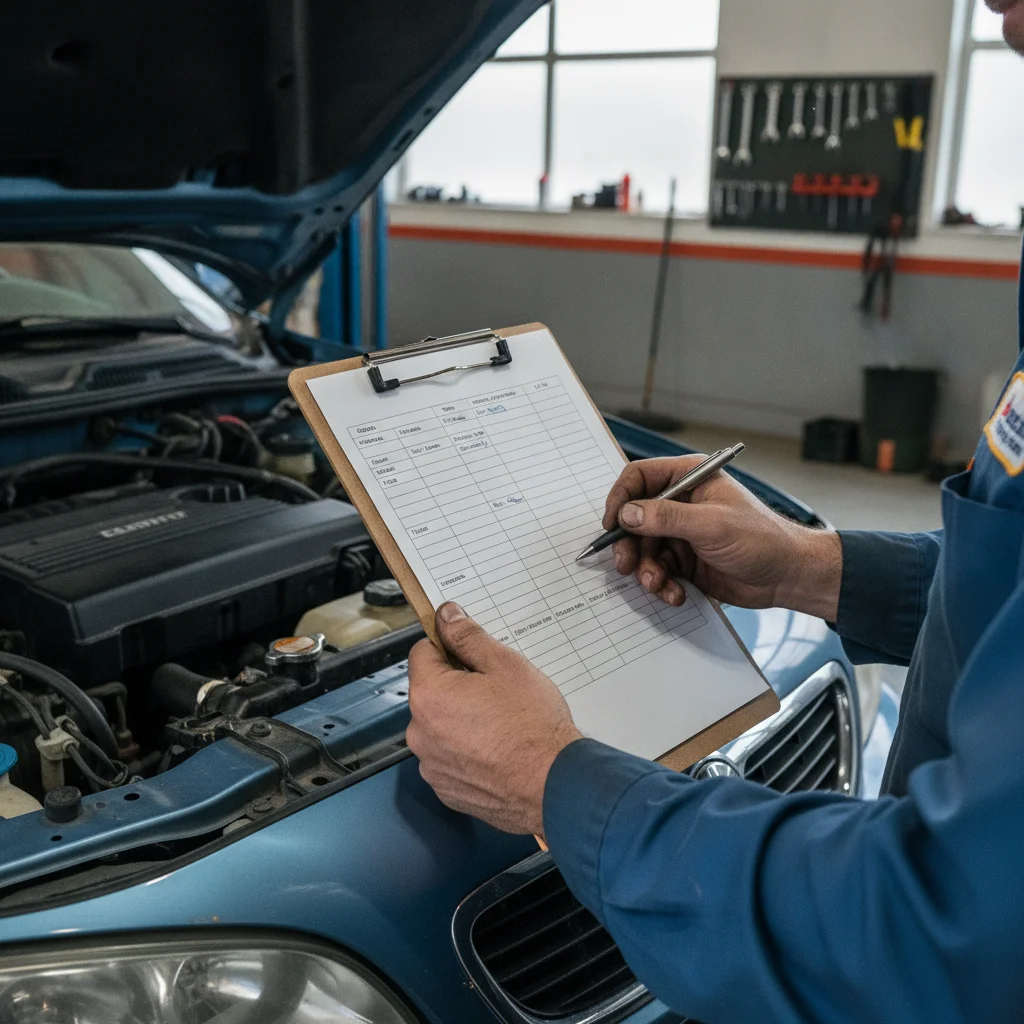
The sections below break down the most common pre-sale repairs and where each one lands on that return-on-investment spectrum.
Repairs That Almost Always Pay Off
These are the fixes that consistently remove buyer objections, survive inspection scrutiny, and cost far less than the price concessions you'd otherwise grant. Think of them as table-stakes items — buyers expect them to be addressed, and if they're not, negotiations will go south fast.
Brake Pads and Rotors
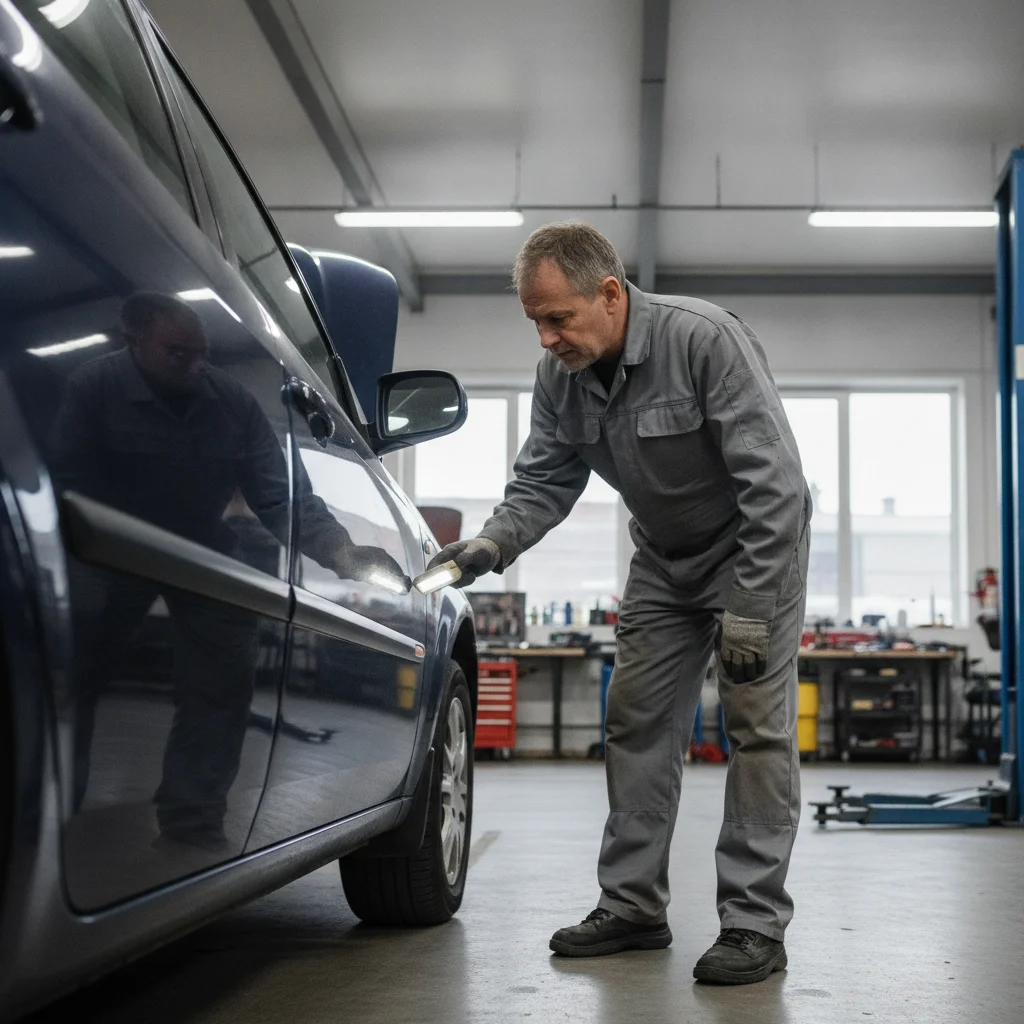
Brakes are the single most inspected safety item on any used-car checklist. A test drive that produces grinding, pulsing, or a soft pedal will send buyers straight to their phones to recalculate what they're willing to pay — or walk away entirely. A standard front brake job typically runs $150–$300 at an independent shop, and it can preserve $500–$800 in asking price. That's a reliable return.
Tire Replacement When Tread Is Low
Tires below 4/32" of tread are a visible, measurable problem. Buyers can check tread depth with a quarter in the parking lot. If your tires are borderline, a set of budget all-season tires ($400–$600 installed) will hold up far better at negotiation than the $1,000-plus discount a savvy buyer will demand for "needing tires soon."
Windshield Chip and Crack Repair
A small chip can be professionally repaired for $50–$80 and is nearly invisible afterward. Left unaddressed, that chip signals neglect — and buyers mentally add it to a growing list of concerns. If the crack has spread beyond 6 inches, a full replacement may be needed, but even that often pays for itself in private-party sales where buyers expect to drive off without immediate repairs.
Warning Lights — Especially the Check Engine Light
Nothing kills buyer confidence faster than a lit check engine light. Even if the underlying cause is minor — a loose gas cap, a failing O2 sensor — buyers can't know that. Many will assume the worst and either walk or demand a $1,000-plus discount to account for the unknown. Diagnosing and clearing a simple code costs $100–$250 at most shops. That's money well spent.
Fluid Top-Offs and Minor Leaks
Engine oil, coolant, brake fluid, and transmission fluid should all be at proper levels and reasonably clean before any test drive. An inspection that turns up black sludge in the oil reservoir or a low coolant warning immediately shifts leverage to the buyer. Top everything off, change the oil if it's overdue, and address any active — even slow — leaks. Minor leak repairs are often $100–$300 and prevent deal-killing red flags during a pre-purchase inspection.
Exterior Lighting
Burned-out brake lights, headlights, or turn signals are a legal issue as much as a cosmetic one. Replacing a bulb costs $10–$30 and takes 15 minutes. There is no scenario where leaving this unaddressed makes financial sense.
Check Your Valuation Gap First
Before spending a dollar on repairs, look up your car's "good" and "fair" condition values on KBB or Edmunds. The difference between those two figures is the maximum you should consider spending on prep work in total. Any single repair that eats more than half that gap deserves serious scrutiny before you commit.
Time Your Detail Close to Listing Day
A professional detail done three weeks before you list often looks ordinary by the time buyers arrive. Schedule it within a few days of your listing going live so the impact is still fresh — clean carpets, polished paint, and an odor-free interior make the strongest impression in photos and in person.
If your car has high miles or an older model year, prioritize items a buyer will verify during a pre-purchase inspection. Mechanical safety issues are almost always caught — and used against you in negotiation.
Cosmetic Fixes With Solid Returns
First impressions matter more than sellers tend to assume. Research consistently shows that a clean, well-presented car commands 5–10% more than an identical car in poor cosmetic condition. These are the detailing and minor cosmetic repairs worth prioritizing.
Professional Detailing
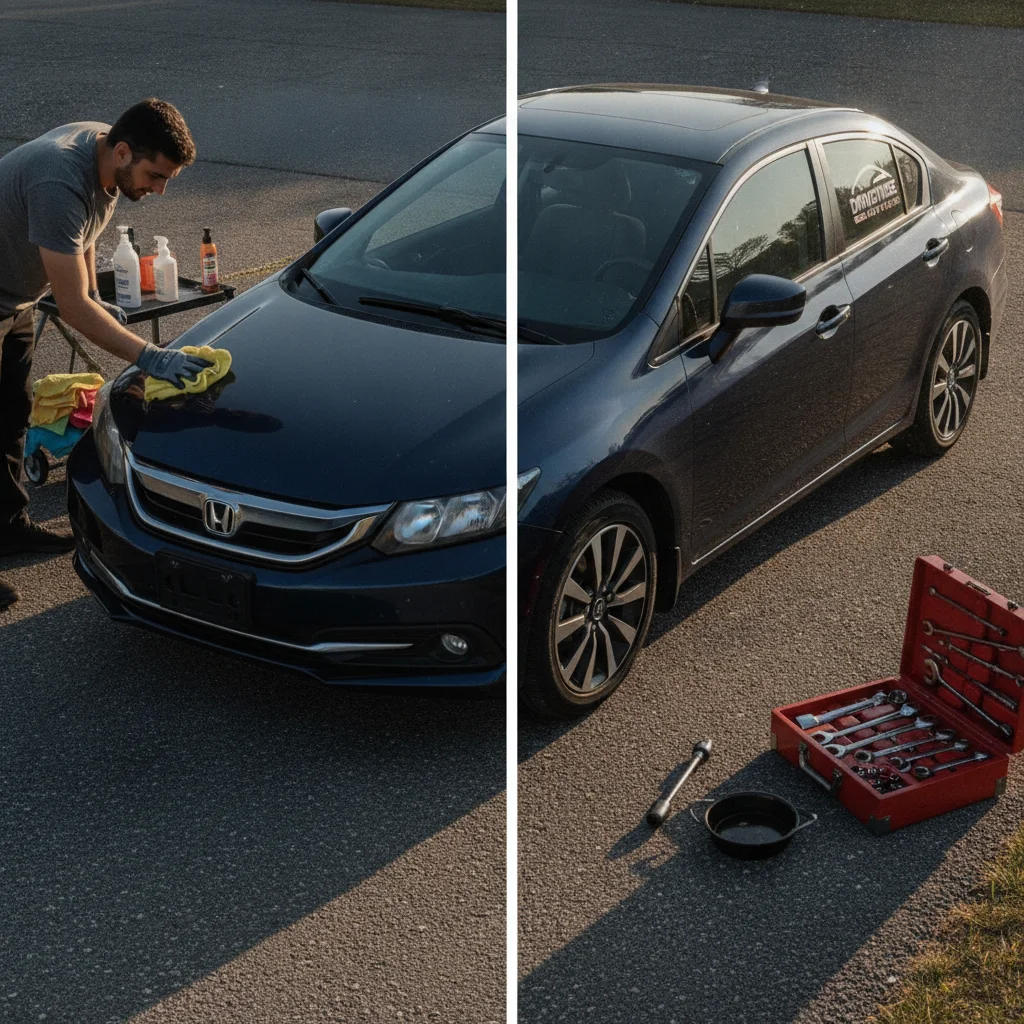
A full interior and exterior detail — including steam cleaning carpets, conditioning leather, and machine-polishing paint — typically runs $150–$300. The psychological effect on buyers is outsized. A car that smells clean and looks cared-for signals broader mechanical reliability, whether that's true or not. It's one of the highest-ROI investments a seller can make. Our guide on detailing versus minor repairs for private sales goes deeper on where exactly those dollars perform best.
Paintless Dent Repair (PDR) for Small Dents
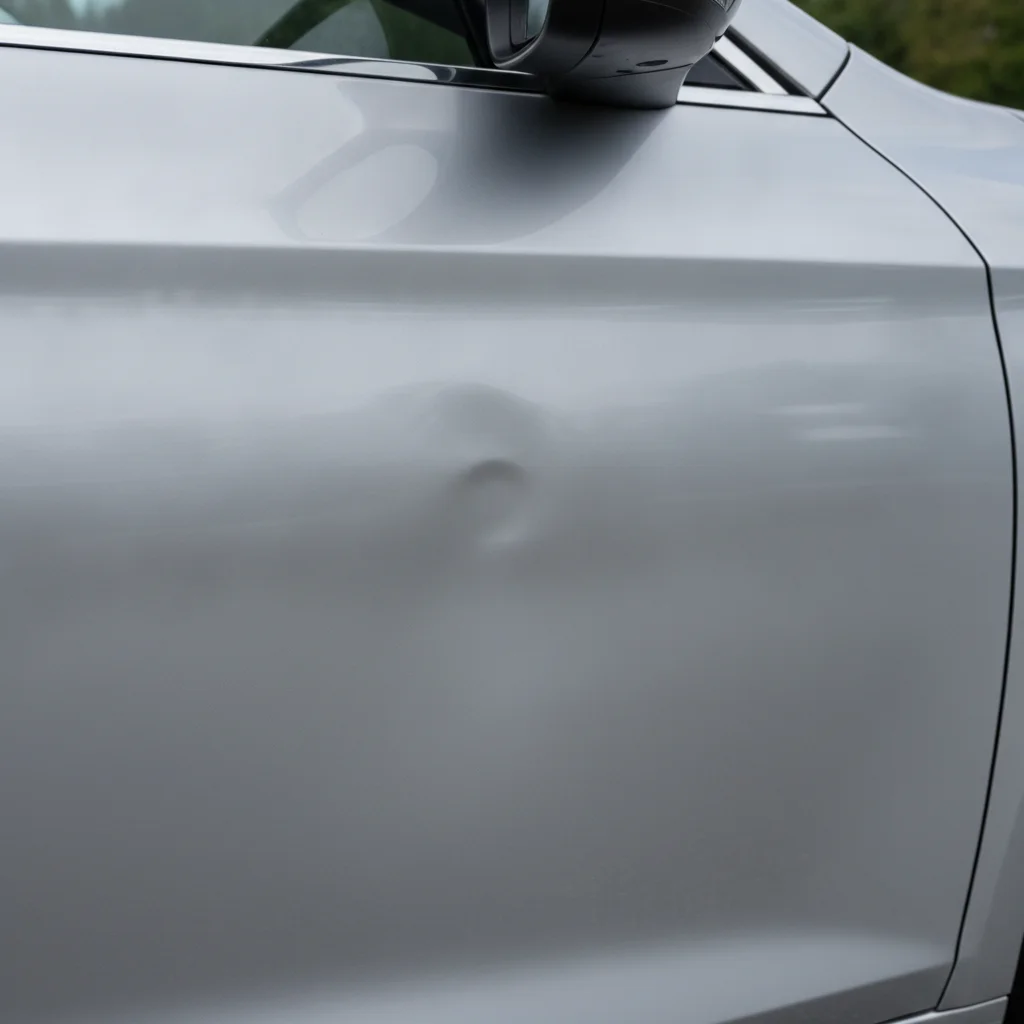
Small dents without paint damage — from shopping carts, door dings, hail — are ideal candidates for paintless dent repair. PDR typically costs $75–$200 per dent and leaves no trace. These blemishes are disproportionately off-putting to buyers relative to their actual structural significance. Fixing two or three dents before listing can meaningfully improve how buyers perceive overall condition. For a more detailed breakdown of when PDR makes sense versus disclosing, see our piece on small dents and dings: fix them or disclose them.
Headlight Restoration
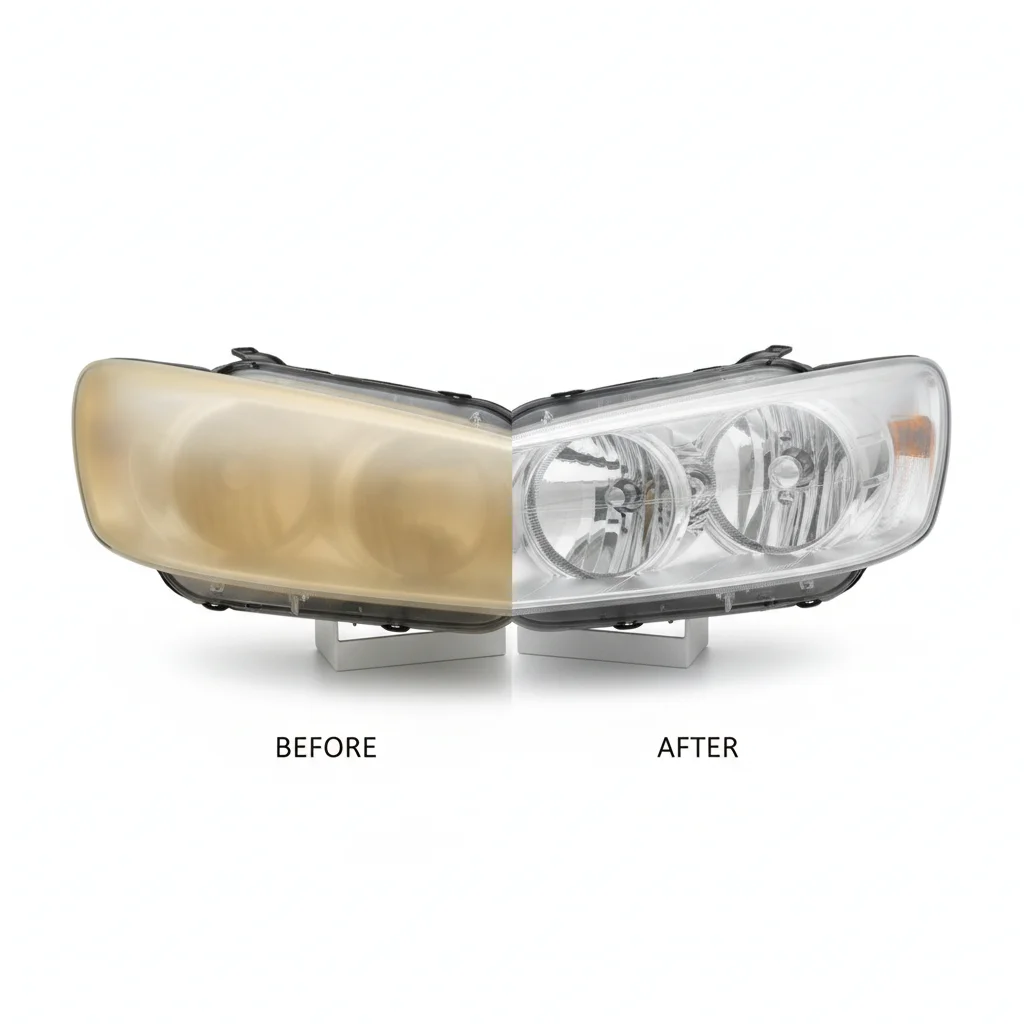
Yellowed, fogged headlights are a common issue on cars older than seven or eight years. A restoration kit costs $20–$40 and takes an hour. A professional restoration runs $50–$100. Either way, the result is a car that looks years younger and — importantly — passes safety scrutiny. This is one of the best value-per-dollar cosmetic upgrades available.
Interior Odor Elimination
Smoke, pet odors, and mildew smells are buyer repellents. Ozone treatment at a detailing shop costs $75–$150 and can fully eliminate embedded odors that air fresheners merely mask. Buyers who detect a strong odor at first sit will assume the worst — and they'll negotiate accordingly.
Repairs That Rarely Pay Off
This category covers repairs that sellers frequently consider — sometimes even complete — only to discover that buyers' offer prices don't reflect what was spent. These are the ones to approach with serious skepticism.
| Repair Type | Typical Cost | Likely Price Recovery | ROI Rating | Best Action | |
|---|---|---|---|---|---|
| Brake pads/rotors | $150–$300 | $400–$800 | High | Fix it | |
| Professional detailing | $150–$300 | $300–$700 | High | Fix it | |
| Windshield chip repair | $50–$80 | $100–$300 | High | Fix it | |
| Check engine light (minor code) | $100–$250 | $500–$1,000 | High | Fix it | |
| Paintless dent repair | $75–$200/dent | $150–$400/dent | Moderate–High | Usually fix it | |
| Tire replacement (worn) | $400–$600 | $400–$700 | Moderate | Fix if near bald | |
| Full repaint / collision repair | $800–$5,000+ | $200–$1,500 | Low | Disclose instead | |
| Engine or transmission overhaul | $1,500–$5,000+ | $500–$2,000 | Very Low | Disclose and price down | |
| Interior re-upholstery | $800–$2,000+ | $200–$600 | Very Low | Detail instead | |
| Full suspension rebuild | $1,000–$2,500 | $300–$800 | Very Low | Fix safety items only |
Engine or Transmission Overhauls
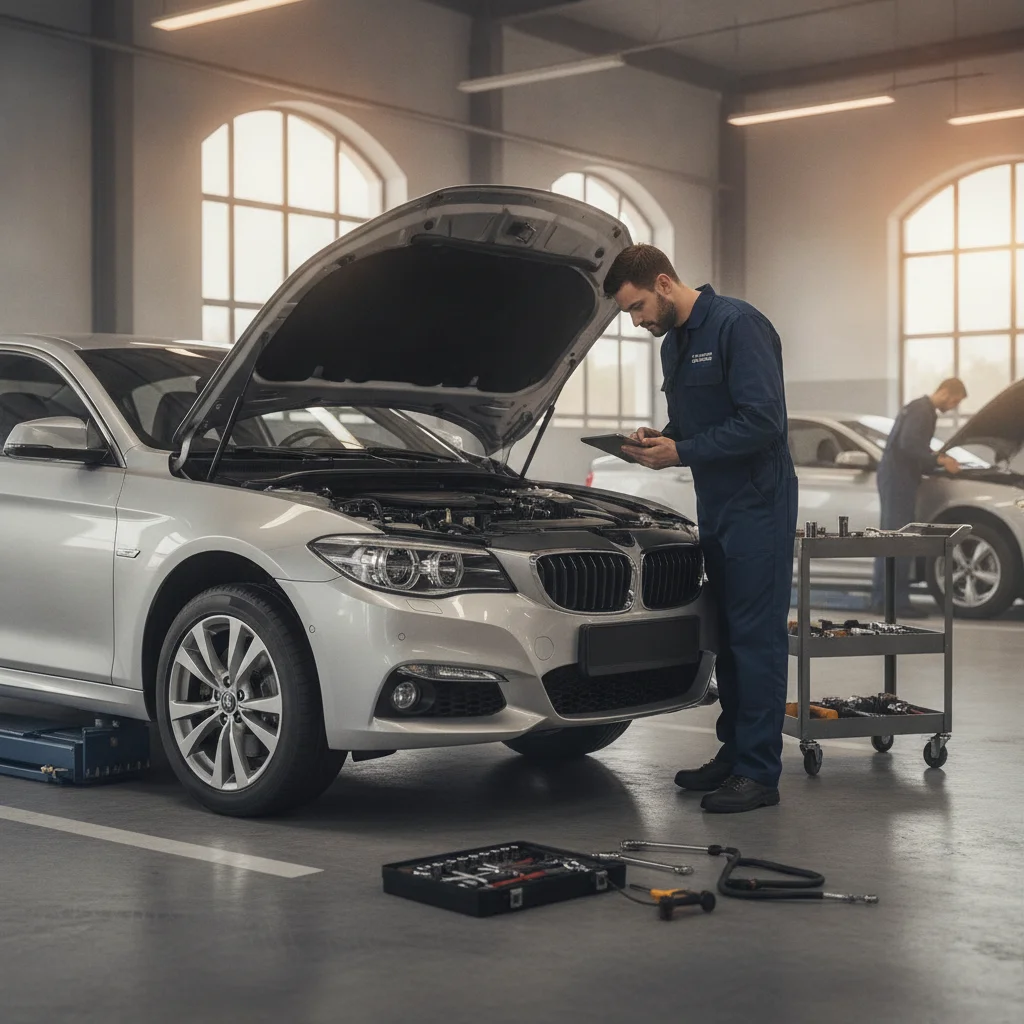
If your car needs a rebuilt transmission or a significant engine repair — timing chain, head gasket, or worse — the cost is likely $1,500–$5,000 or more. In almost no private-party scenario does that recover fully in sale price. Buyers price completed major repairs as though they might fail again, and dealer trade-in departments barely acknowledge them at all. The better path is usually to price the car honestly as a mechanically impaired vehicle, disclose the known issues, and let buyers decide. See our related guide on whether to repair before trading in for the trade-in angle on this same decision.
Full Repaint or Collision Repair
A quality single-panel repaint starts around $500–$800 at a reputable shop. A full respray can run $3,000–$10,000. Buyers will still notice color-matching issues, check Carfax for accident history, and often have their own body shop estimate ready. High collision repair costs almost never recover in sale price — and if the incident is already on the vehicle history report, you're paying for an improvement that buyers will discount regardless. Smaller cosmetic fixes (PDR, scratch touch-up) are a better use of money.
New Upholstery or Carpet Replacement
Replacing a driver's seat or re-carpeting an interior sounds like it should add value. In practice, buyers look at the overall package — if everything else is worn, a new seat just looks out of place. Full interior replacement easily exceeds $1,000 and rarely moves the needle on sale price. A thorough detail and targeted repairs (torn seat covers patched, carpet spot-treated) deliver far better ROI.
Suspension and Steering Overhauls
If your car has worn control arm bushings, failing ball joints, or damaged struts, buyers will feel it immediately on a test drive. But a full suspension rebuild at $1,000–$2,500 often doesn't recover fully either. The better strategy is to address whatever a competent shop identifies as a safety concern (worn ball joints, for instance, can be dangerous) and disclose the rest with a price that reflects it. For cars that pull or handle poorly, our piece on why your car pulls to one side can help you pinpoint the actual cause before committing to expensive guesswork.
Don't Over-Repair a High-Mileage Vehicle
The higher the mileage, the lower the ceiling on what buyers will pay — period. Investing $2,000 in repairs on a 180,000-mile car rarely changes where the market prices it. Set a hard budget proportional to the car's realistic sale value, and stick to it. Our guide on <a href="/selling-your-car/preparing-to-sell/detailing-and-repairs/when-to-walk-away-from-a-pre-sale-repair">when to walk away from a pre-sale repair</a> outlines exactly where that line tends to fall.
Completed Repairs Don't Erase Accident History
If your car has a Carfax or AutoCheck record showing prior collision damage, paying for expensive bodywork won't make that history disappear. Buyers who pull the report will still see the incident and negotiate accordingly. In most cases, disclosing the repair and pricing appropriately is more cost-effective than an expensive respray that buyers will discount anyway.
The Smart Alternative: Disclose and Price Accordingly
For every repair that doesn't pencil out, there's a legitimate alternative that costs you nothing in shop bills: honest disclosure paired with realistic pricing. This approach works better than sellers expect for a few reasons.
First, buyers who know what they're getting into tend to complete the transaction. Deals fall apart most often when a buyer discovers something during inspection that wasn't disclosed. Pricing the car accurately for its condition upfront avoids that late-deal negotiation when buyers feel deceived.
Second, the market is reasonably efficient. Private-party buyers are often mechanically savvy or bring someone who is. A disclosed issue priced appropriately is less concerning than an undisclosed issue discovered during a pre-purchase inspection — the latter creates distrust that cascades into much steeper offers or no deal at all.
Third, disclosure protects you legally. Many states hold sellers liable for known defects that weren't disclosed. That's a risk worth avoiding entirely.
Our guide on when to walk away from a pre-sale repair outlines the specific financial logic for drawing that line — including a simple formula for deciding whether a repair is worth it before you call the shop.
5–10%
Price premium for well-presented cars
Industry data from iSeeCars and similar platforms consistently shows that clean, well-detailed vehicles sell for 5–10% more than mechanically identical cars in poor cosmetic condition.
$150–$300
Typical cost of a full professional detail
According to detailing industry surveys, a full interior and exterior professional detail averages $150–$300 — one of the highest-return investments a seller can make before listing.
63%
Buyers who request a pre-purchase inspection
A 2023 CarGurus survey found that nearly two-thirds of private-party used-car buyers either request a pre-purchase inspection or intend to — meaning mechanical issues are very likely to surface.
$1,000+
Average discount demanded for check engine light
Used-car negotiation data from Edmunds and consumer surveys suggests buyers typically demand $1,000 or more off asking price when a check engine light is present and unexplained.
A Practical Pre-Sale Repair Framework
Rather than evaluating repairs one by one in isolation, use a simple three-question framework before committing to any fix:
- Will a buyer see or feel this issue on a test drive or inspection? If yes, it's worth addressing — either by fixing or disclosing.
- Does the repair cost less than the likely buyer discount if left unfixed? If the repair is $200 and buyers would reasonably subtract $500–$700 for the issue, fix it. If the repair is $2,000 and buyers might subtract $1,500, don't.
- Does this repair remove a safety concern that could become a legal or liability issue? Safety-critical items — brakes, tires, lighting — should almost always be addressed regardless of strict ROI math.
If you're comfortable doing some of the simpler work yourself, our DIY repairs hub covers the maintenance tasks that home mechanics can handle safely without a shop — saving you labor costs on exactly the kinds of prep work that do pay off. Just be careful not to overestimate your skill level; as our guide on common DIY mistakes that turn small jobs into big bills shows, a botched home repair can cost far more than what a professional would have charged.

The goal is to arrive at a car that presents well, passes a basic pre-purchase inspection without surprises, and is priced to reflect its actual condition. That combination sells cars. Expensive repairs on high-mileage vehicles rarely do.

All claims are backed by peer-reviewed research. Sources on request.