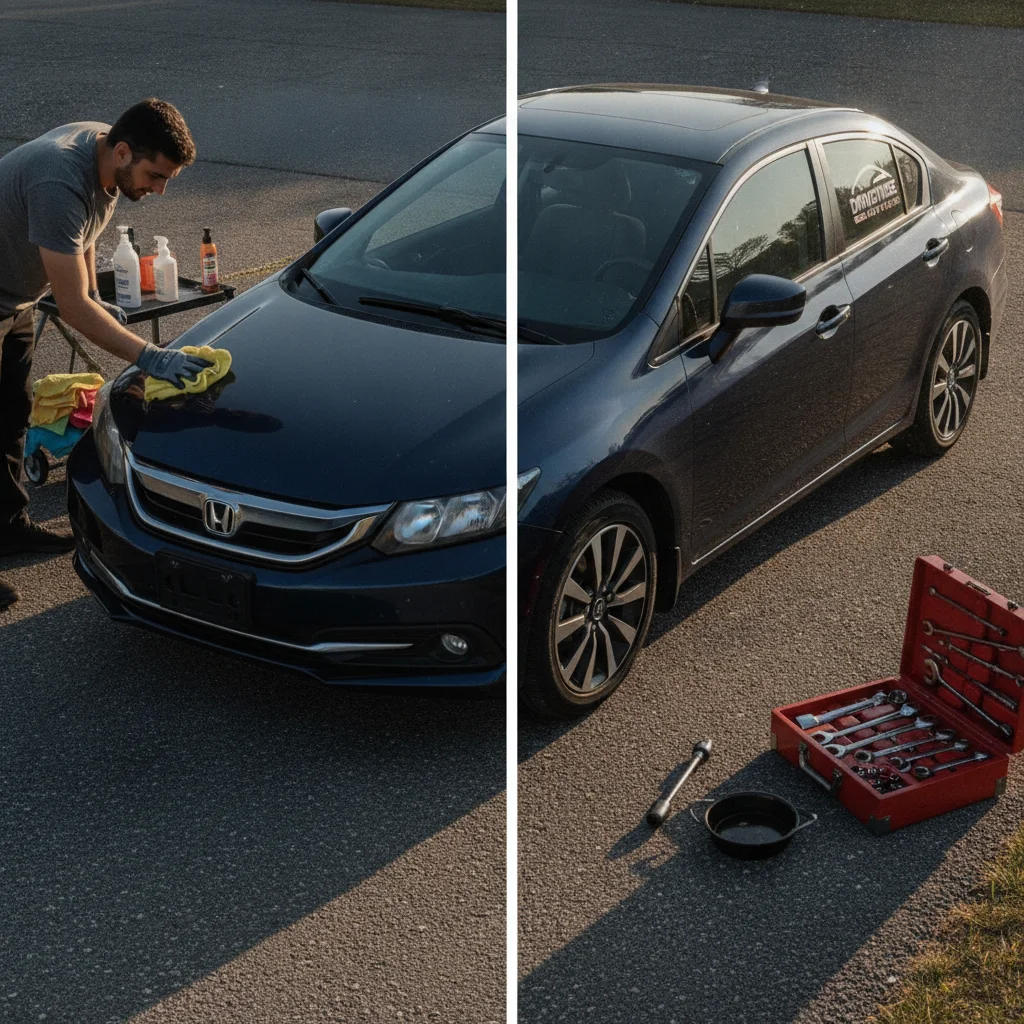
Key Takeaways
Clears warning lights that disproportionately suppress offers
A check engine light can trigger deductions of $500–$1,500 even when the fix costs $50–$200. Resolving cheap fault codes before an appraisal is one of the few pre-trade repairs with a clearly positive ROI.
Expands the dealer's resale options for your car
A car in safe, drivable condition can be retailed directly — a more profitable outcome for the dealer that often translates to a higher offer. Cars requiring significant work get routed to auction at a steep discount.
Removes high-uncertainty deductions from the appraisal
Appraisers penalize ambiguous problems at the worst-case cost. A documented, resolved repair eliminates that uncertainty and forces a more accurate — and often lower — deduction.
Strengthens your negotiating position with documentation
Completing and documenting a repair gives you a concrete paper trail showing the work was done professionally. This limits the dealer's room to apply subjective, inflated condition deductions.
May allow you to qualify for a higher condition tier
Valuation tools like KBB and Black Book use condition tiers — Fair, Good, Very Good, Excellent. Moving up one tier by resolving key mechanical issues can increase your baseline value by several hundred dollars.
Retail repair costs rarely return full value on trade-in
Dealers price reconditioning at their own contracted rates, which are a fraction of what you pay at a retail shop. A $400 bodywork repair may add only $100–$150 to your offer — a net loss of $250 or more.
Dealers recon every trade-in regardless of your prep
Standard reconditioning — detailing, fluid top-offs, minor cosmetic fixes — is factored into the dealer's offer as a cost they'll incur. Paying for it yourself doesn't eliminate their deduction; it just means you paid twice.
Major repairs almost never recover their full cost
Repairs costing $1,000 or more — transmissions, timing chains, head gaskets — rarely add equivalent value to a trade-in offer. Disclosure with a written repair quote is typically a better financial strategy.
Risk of over-investing in a depreciating asset
Money spent on a vehicle you're trading away is gone. Pouring $800 into repairs on a car you'll receive $6,000 for makes no financial sense if the appraisal bump is only $300.
Cosmetic repairs provide almost no measurable return
Paint touch-ups, dent repairs, and upholstery fixes are consistently poor investments before a dealer trade-in. Appraisers apply standardized condition deductions that cosmetic work rarely eliminates entirely.
Repair delays slow down your trade-in timeline
Waiting for a shop to complete repairs adds days or weeks to your trade-in timeline, during which your car continues depreciating and interest rates on your new purchase may shift.
Our Verdict
Repairing your car before a trade-in is sometimes smart and often wasteful — it depends entirely on which repairs we're talking about. Mechanical problems that affect driveability or trigger warning lights are worth resolving because they disproportionately suppress appraisal offers. Cosmetic work, on the other hand, almost never returns full cost at a dealer trade-in because dealers use their own vendors at wholesale rates. The disciplined approach is to fix what affects function, disclose what affects appearance, and pocket the savings.
Best for car owners trading in a vehicle with known mechanical issues, a check engine light, or safety-related problems — not for those considering purely cosmetic upgrades before handing over the keys.
Why This Decision Is More Nuanced Than It Looks
The standard advice you'll hear — "fix it up before you trade it in" — sounds reasonable on the surface. But it's the kind of advice that can cost you hundreds or even thousands of dollars if you follow it blindly. Having spent years on the finance side of a dealership, I can tell you exactly what happens to your car after it leaves the appraisal lot: it goes to auction or gets wholesaled, and the dealer has already priced in every scratch, every warning light, and every worn tire at their cost to fix — not yours.
The real question isn't whether to repair your car. It's which repairs will actually move the needle on your offer and which ones you'll spend money on just to watch the dealer pocket the savings. That distinction can swing the math by $500 to $2,000 on a typical trade-in.
The dealer trade-in process operates on a logic that most sellers don't fully understand. Appraisers work from a damage-adjusted baseline, factoring in every issue at a dealer's bulk repair cost — not a retail shop rate. When you spend $400 at your body shop fixing a parking lot ding, the appraiser may only add back $150 to the offer. You've just given away $250.
That said, there are real scenarios where repairs make financial sense before a trade-in. The key is knowing how to tell them apart.
Repairs That Actually Move the Appraisal Needle
Not all repairs are created equal in a dealer's eyes. Here's where pre-trade-in money is most likely to work in your favor.
Check Engine Light and Diagnostic Codes
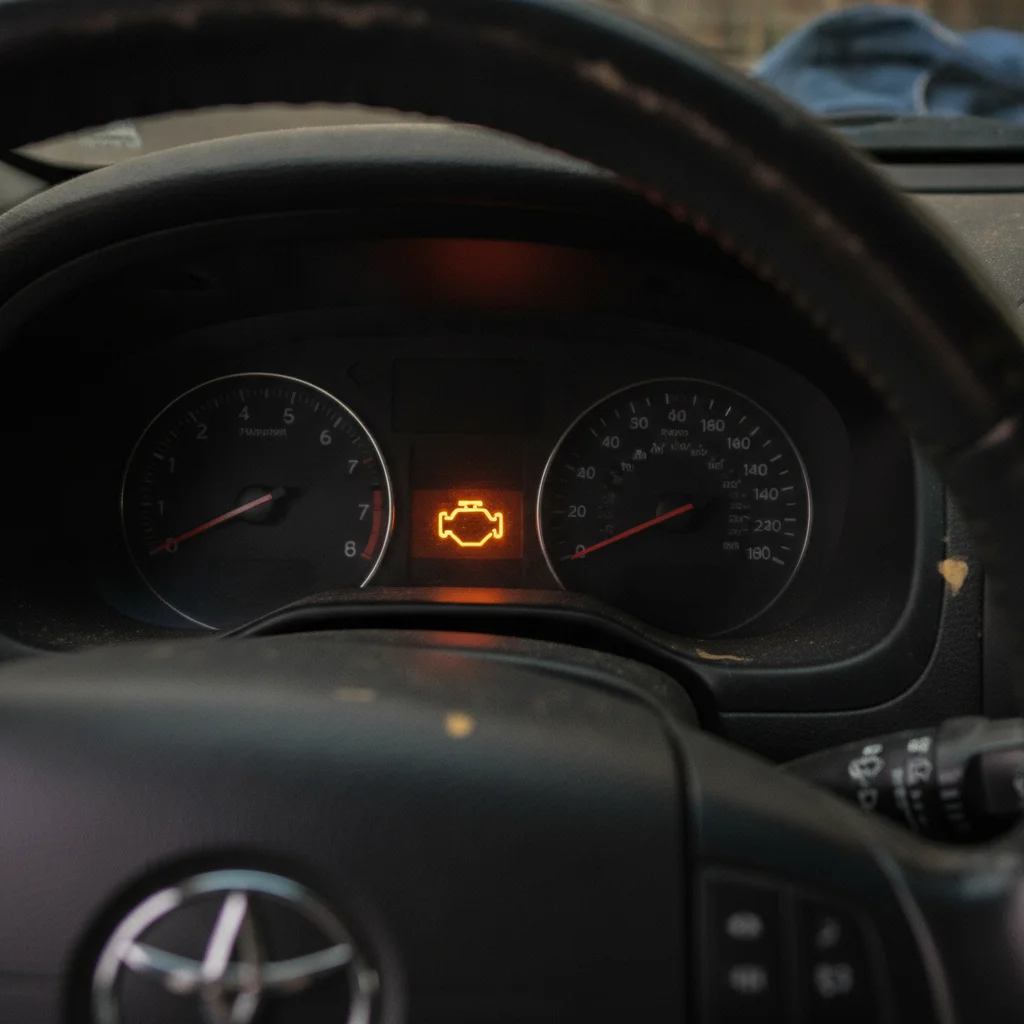
A lit check engine light is one of the single most expensive problems you can bring to an appraisal — not because the underlying issue is always serious, but because it signals unknown risk to the appraiser. Dealers routinely deduct $500 to $1,500 from offers on vehicles with active fault codes, even when the fix is a $30 gas cap or an O2 sensor. If a shop quote confirms the repair is cheap relative to that deduction, clearing the light before your appraisal is almost always worth it.
Safety-Related Mechanical Issues
Brake problems, worn tires, suspension noise, and non-functional lights all send red flags to an appraiser. These are items that affect whether the dealer can legally resell the car or must wholesale it immediately. A car that can't be put on the lot as-is gets valued at auction prices — and auction prices are brutal. Bringing a car to appraisal in safe, drivable condition meaningfully expands the pool of buyers the dealer can sell it to, and that's reflected in the offer.
Fluid Leaks and Engine Oil Condition
Active fluid leaks — particularly oil or coolant — are immediate red flags during a walk-around. A fresh oil change and a check for visible leaks costs very little but removes a line-item deduction from the appraiser's worksheet. This is one of the highest-ROI prep steps you can take.
$500–$1,500
Typical appraisal deduction for check engine light
Industry appraisers routinely apply this range to vehicles with active fault codes, regardless of the actual repair cost, according to dealer reconditioning guidelines.
~30–50%
Portion of retail repair cost returned on trade-in
Consumer automotive research consistently finds that dealers recover cosmetic and mechanical repair costs at their vendor rates, returning less than half the seller's retail cost in offer increases.
$1,200+
Average difference between retail and auction pricing
Vehicles routed to auction due to condition issues typically sell $1,000–$2,000 below what a dealer would pay for a retail-ready unit, according to Manheim auction market data.
Before spending anything on mechanical work, get a written quote from a trusted independent shop. Then pull competing appraisals from multiple sources — Carmax, a dealer, and an online tool like KBB Instant Cash Offer. The spread between your pre-repair and post-repair offers across those sources tells you exactly what the fix is actually worth in real money, not theory.
Repairs You Can Almost Always Skip
This is where most sellers get burned. They spend real money trying to make the car look perfect, and the dealer's appraiser gives them a fraction of it back — if anything at all.
Paintwork and Body Repairs
Dealers have dedicated body shops or long-term contracts with independent shops at rates you simply can't access as a retail customer. A door ding repair that costs you $300 at a body shop might cost the dealer $80 through their vendor. They're not going to add $300 to your trade-in value for a repair they can do for $80. Minor scratches, small dents, and parking lot damage almost never return full retail repair cost on a trade-in appraisal.
Interior Repairs and Detailing
Dealers detail every trade-in before it hits the lot. That cost is already baked into their reconditioning estimate, which is subtracted from your offer. If you pay $200 for a detail before the appraisal, the dealer may still apply their standard recon deduction — because they'll detail it again with their own team anyway. Save the detailing money. A clean, vacuumed interior you do yourself for free is sufficient. See what prep actually moves the needle for a full breakdown.
Tires (In Most Cases)
New tires on a trade-in almost never return their full cost. A $700 set of tires might add $200 to an appraisal offer. The exception is when tires are dangerously worn and the car would need to be wholesaled rather than retailed — in that edge case, budget tires to bring tread to a passable level may be worth it.
High-Cost Mechanical Repairs
Transmission issues, timing chain problems, failing head gaskets — repairs that cost $1,500 or more rarely recover their full cost in an appraisal bump. For major mechanical work, disclosure is usually a better strategy than repair. Get the repair quoted in writing, then disclose the issue and present the quote during negotiation. It shows good faith and gives the dealer a concrete number rather than a vague worst-case assumption.
Disclosure Is a Strategy, Not a Weakness
Many sellers assume they must fix every problem before an appraisal or risk being lowballed. In practice, a written diagnostic report disclosing a known issue — along with a shop quote for the repair — often results in a smaller deduction than showing up with an undiagnosed problem. Appraisers assume the worst when they can't quantify a defect. Giving them a concrete number limits their room to over-penalize. Pair your disclosure with competing cash offers to establish a floor the dealer must beat.
Pros of Repairing Before Trading In
There are genuine advantages to arriving at your appraisal with a mechanically sound, well-maintained vehicle. Here's where pre-trade repairs legitimately pay off.
Clears warning lights that disproportionately suppress offers
A check engine light can trigger deductions of $500–$1,500 even when the fix costs $50–$200. Resolving cheap fault codes before an appraisal is one of the few pre-trade repairs with a clearly positive ROI.
Expands the dealer's resale options for your car
A car in safe, drivable condition can be retailed directly — a more profitable outcome for the dealer that often translates to a higher offer. Cars requiring significant work get routed to auction at a steep discount.
Removes high-uncertainty deductions from the appraisal
Appraisers penalize ambiguous problems at the worst-case cost. A documented, resolved repair eliminates that uncertainty and forces a more accurate — and often lower — deduction.
Strengthens your negotiating position with documentation
Completing and documenting a repair gives you a concrete paper trail showing the work was done professionally. This limits the dealer's room to apply subjective, inflated condition deductions.
May allow you to qualify for a higher condition tier
Valuation tools like KBB and Black Book use condition tiers — Fair, Good, Very Good, Excellent. Moving up one tier by resolving key mechanical issues can increase your baseline value by several hundred dollars.
Cons of Repairing Before Trading In
The case against pre-trade repairs is strong in most cosmetic and high-cost scenarios. Understanding these pitfalls can save you real money.
Retail repair costs rarely return full value on trade-in
Dealers price reconditioning at their own contracted rates, which are a fraction of what you pay at a retail shop. A $400 bodywork repair may add only $100–$150 to your offer — a net loss of $250 or more.
Dealers recon every trade-in regardless of your prep
Standard reconditioning — detailing, fluid top-offs, minor cosmetic fixes — is factored into the dealer's offer as a cost they'll incur. Paying for it yourself doesn't eliminate their deduction; it just means you paid twice.
Major repairs almost never recover their full cost
Repairs costing $1,000 or more — transmissions, timing chains, head gaskets — rarely add equivalent value to a trade-in offer. Disclosure with a written repair quote is typically a better financial strategy.
Risk of over-investing in a depreciating asset
Money spent on a vehicle you're trading away is gone. Pouring $800 into repairs on a car you'll receive $6,000 for makes no financial sense if the appraisal bump is only $300.
Cosmetic repairs provide almost no measurable return
Paint touch-ups, dent repairs, and upholstery fixes are consistently poor investments before a dealer trade-in. Appraisers apply standardized condition deductions that cosmetic work rarely eliminates entirely.
Repair delays slow down your trade-in timeline
Waiting for a shop to complete repairs adds days or weeks to your trade-in timeline, during which your car continues depreciating and interest rates on your new purchase may shift.
For a deeper look at which specific repairs tend to pay off and which don't, the comparison between repairs that pay off vs. those that rarely do is worth reviewing before you spend anything.
How to Make the Call: A Practical Decision Framework
Here's the process I'd run through before authorizing any pre-trade repair:
- Get two or three competing appraisals first — without doing any repairs. This establishes your baseline and tells you what the market thinks your car is actually worth right now, issues and all.
- Ask the appraiser directly what's suppressing your offer. Most will tell you if you ask. "What's your biggest concern with this vehicle?" is a question that can save you from guessing.
- Get repair quotes in writing for any issue the appraiser flags. A written quote from a reputable shop is a negotiating tool in itself — you can use it to push back on excessive deductions.
- Run the math explicitly: if a repair costs $X, will it add more than $X to your offer? Only proceed if the answer is clearly yes — and only for repairs where you can verify that with competing post-repair quotes.
- Consider the private-sale alternative for cars with expensive issues. A car with a $1,200 transmission issue might fetch $3,000 more in a private sale where you disclose the problem and price accordingly, versus a dealer trade-in where you fix it and recover $600. The private-sale repair calculus is entirely different from the trade-in calculus.

Also know when the math simply doesn't justify any repair. Walking away from a pre-sale repair is sometimes the most financially sound move available — especially when disclosure paired with a competitive cash offer closes the gap more efficiently than fixing and hoping.
Negotiating Around Repairs You Didn't Make
If you arrive at a dealer with known issues you've chosen not to fix, you're not at a disadvantage — as long as you come prepared. Disclosure with documentation actually puts you in a stronger negotiating position than many sellers realize.
Here's why: appraisers are trained to assume the worst when they see a problem they can't fully diagnose. A check engine light with no paperwork gets penalized at the high end of the possible repair range. The same light with a written diagnostic report showing a $180 sensor replacement gets penalized for $180, not $1,200.
"Bring documentation, not guesses. An appraiser's job is to protect the dealer's margin. Your job is to give them less room to assume the worst."
Pair your documentation with competitive offers. Walk in with a written Carmax offer or a KBB Instant Cash Offer printout. Dealers will often match or beat a documented competing bid — and they'll have less room to inflate their deductions when they know you have a floor price in hand.
Use the full trade-in negotiation checklist to make sure you've covered every step before you finalize anything. It's easy to leave money on the table during the appraisal conversation if you haven't prepared for the specific tactics dealers use to suppress offers.
And before you even drive to the lot, the steps in prepping your car for a dealer trade-in can help you present your vehicle in the best possible light without overspending on fixes that won't move the needle.

All claims are backed by peer-reviewed research. Sources on request.