Key Takeaways
Why Your Cooling System Deserves More Respect
Most drivers think about oil changes and tire rotations. Almost nobody thinks about coolant until steam is pouring from under the hood on the side of the highway. That's a shame — because the cooling system is one of the most consequential systems in your entire vehicle, and it almost always gives you fair warning before it fails catastrophically.
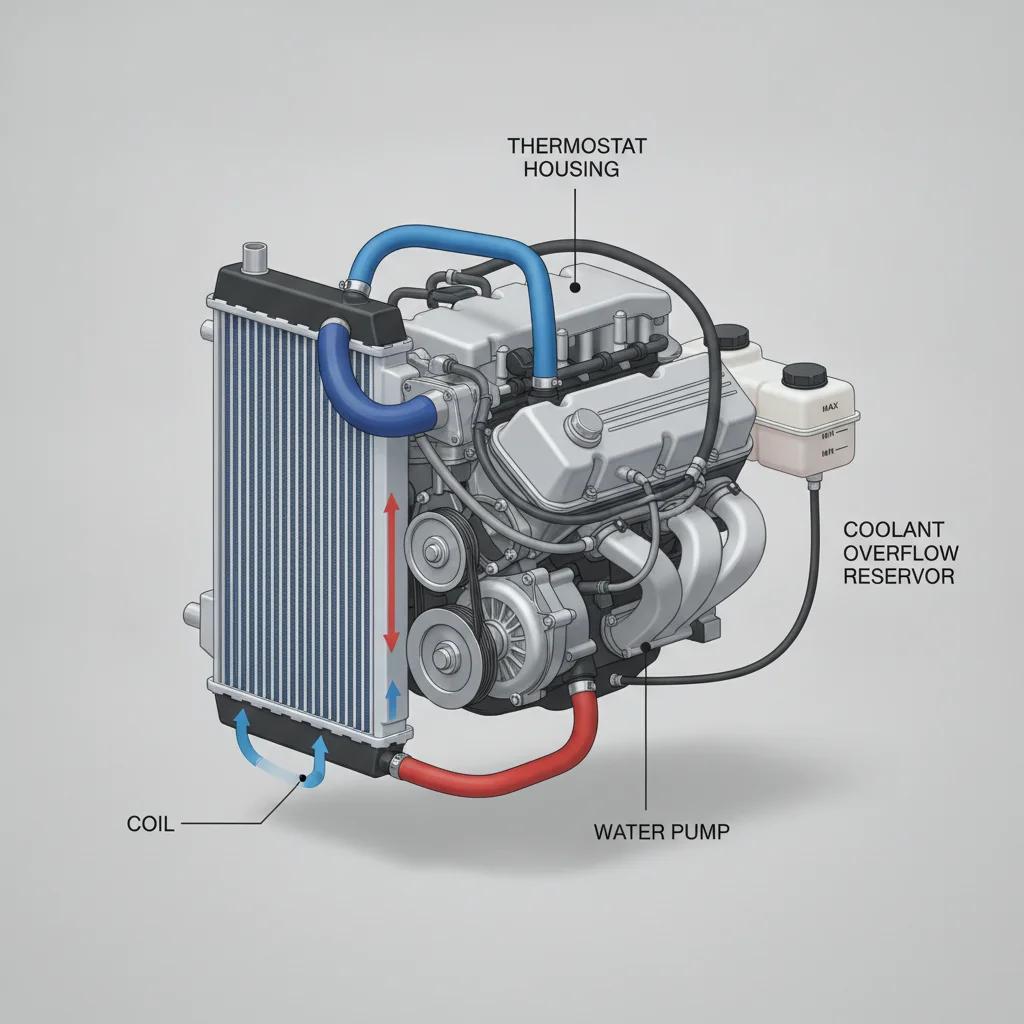
Your engine generates enough heat to destroy itself within minutes if left unmanaged. Coolant — also called antifreeze — absorbs that heat from the engine block and cylinder head, carries it to the radiator, and dumps it into the outside air. That cycle repeats thousands of times per trip. When something disrupts it, even slightly, the consequences compound fast.
The good news: cooling systems don't fail silently. They telegraph their distress through a predictable set of symptoms. Learning to read those signals is the difference between a $150 repair and a $3,000 engine rebuild. Think of it like a slow drip in your house — ignore it for a week and you're fine; ignore it for six months and you've got mold in the walls and warped subfloor.
This guide walks you through the most reliable warning signs, what each one means mechanically, and exactly what you should do about it. For a broader look at how cars communicate problems before they worsen, see Reading Your Car Before It Breaks Down.
The Warning Signs You Should Never Ignore
Coolant trouble tends to show up in one or more of these distinct ways. None of them are dramatic on their own — that's exactly why drivers brush them off. Don't.
Check your coolant level and color monthly — before the engine warms up
Coolant loss is gradual. By the time you notice a problem on a single trip, the level may have been dangerously low for weeks. Monthly checks create a baseline so you notice declining levels before they become critical. Color changes also reveal internal contamination that a level check alone won't catch.
Take the sweet smell seriously — never dismiss it as irrelevant
Ethylene glycol, the main ingredient in most coolants, has a distinctly sweet, almost syrupy odor. That smell outside the car after parking, or inside the cabin near the vents, means coolant is escaping somewhere and contacting hot surfaces or entering the HVAC system. The source could be a pinhole leak in a hose, a seeping reservoir cap, or a weeping heater core — all fixable early, all destructive if left alone.
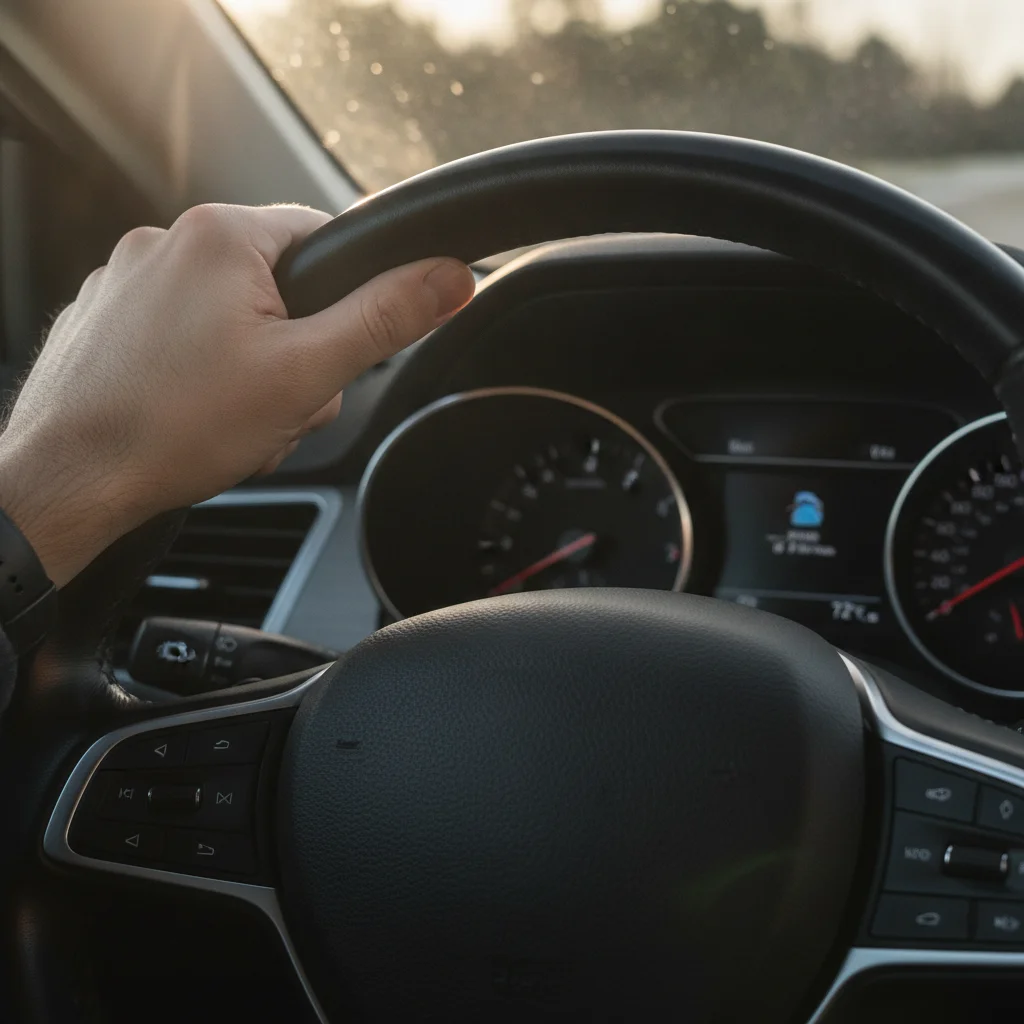
Monitor your temperature gauge on every drive — not just when the warning light appears
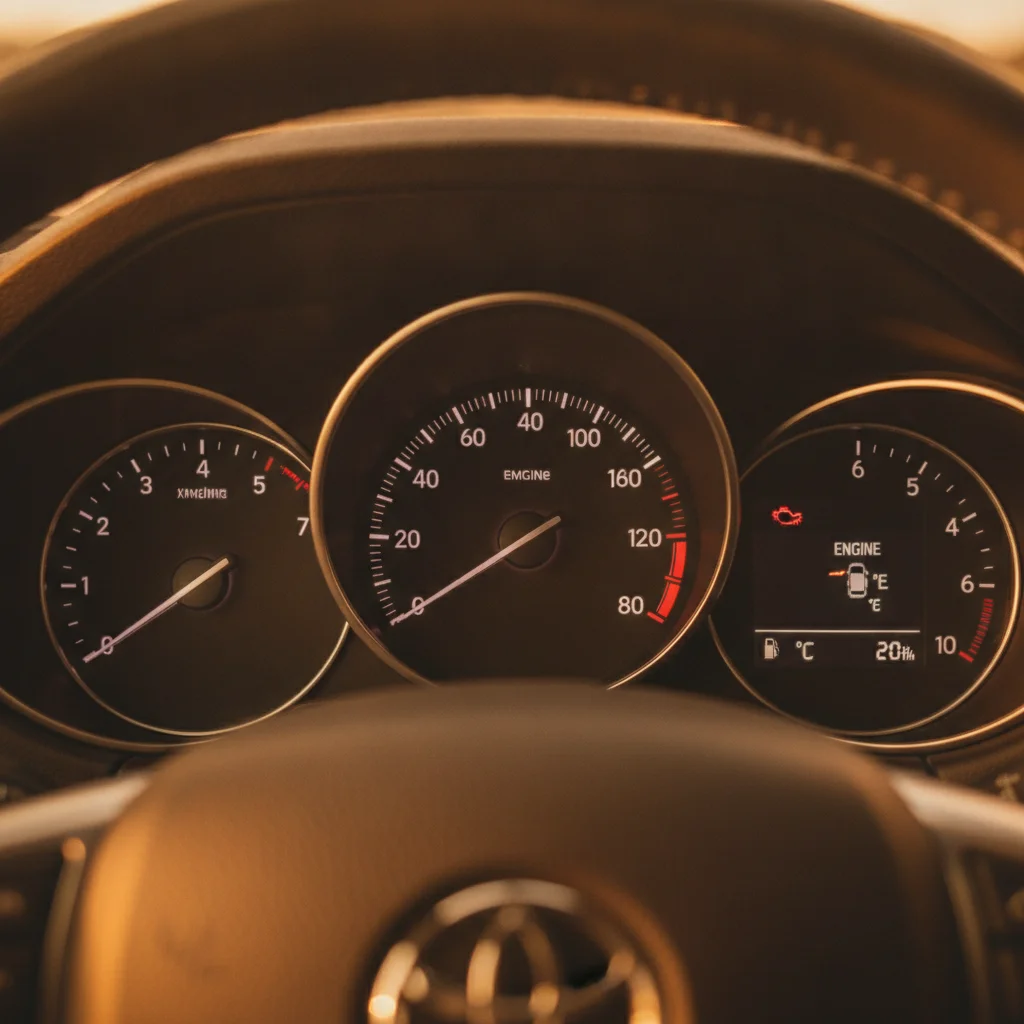
Most temperature warning lights don't activate until the engine is already dangerously hot — well past the point where damage begins. The gauge itself is your early warning system. Learn where it normally sits for your vehicle (typically just below the midpoint) and treat any deviation — particularly a gradual upward creep — as a signal worth investigating.
Treat white exhaust smoke as an emergency — not an oddity to watch
Light condensation vapor from your exhaust on a cold morning is normal and disappears quickly. Thick white smoke that persists after the engine warms up — especially with a sweet smell — almost always means coolant is burning in the combustion chamber through a failing head gasket. This is an active, worsening failure that destroys engine components with every mile driven.
Replace coolant on schedule — don't wait until it looks bad
Coolant contains corrosion inhibitors that degrade over time even if the fluid level stays constant. As those inhibitors break down, the fluid becomes acidic and actively corrodes aluminum components, water pump seals, and radiator passages from the inside. Most manufacturers recommend a flush every 30,000–50,000 miles or every two to five years — check your owner's manual for the specific interval.
Look for puddles under your car — and know what the color means
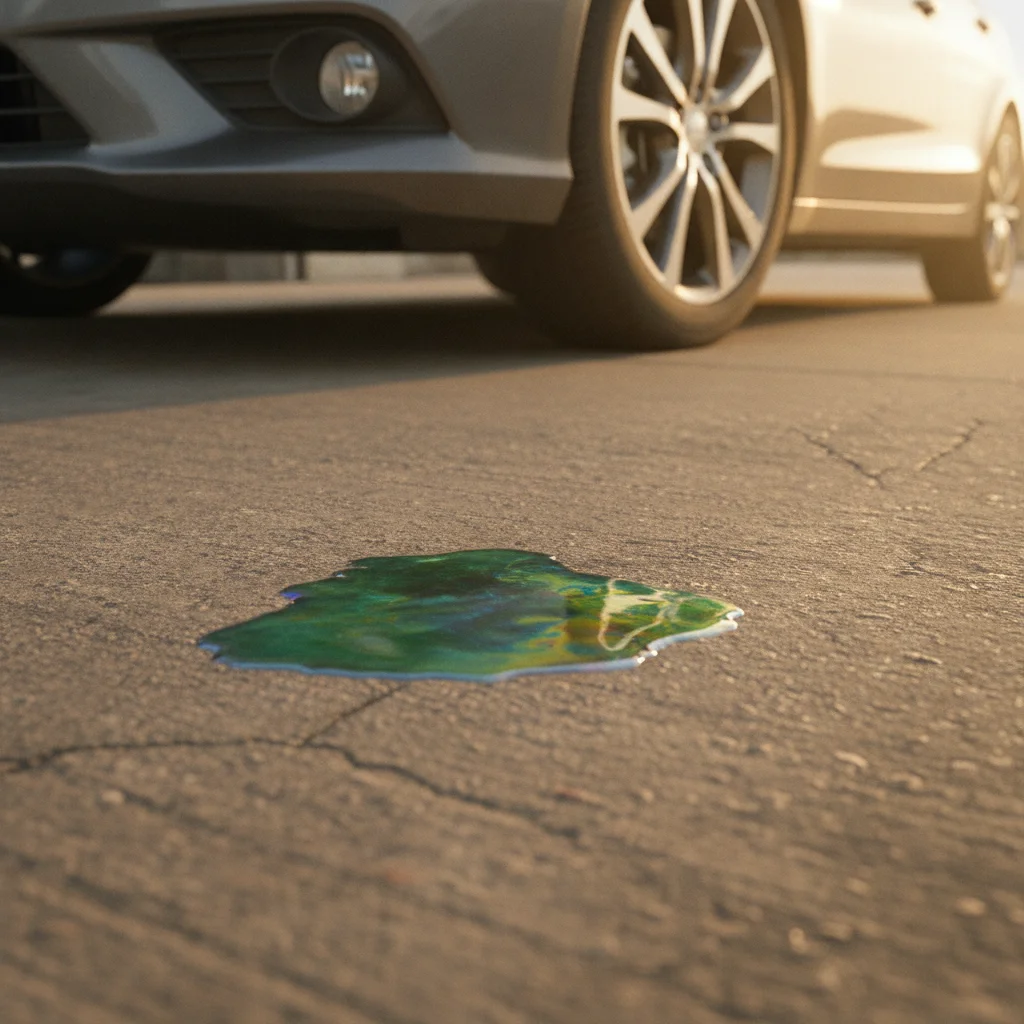
Coolant puddles are typically bright green, orange, or pink depending on the formulation, and they have a slightly oily, slick feel. They appear most often under the front of the vehicle, near the radiator or engine block. Confusing coolant with water (which is normal condensation from the air conditioning) leads many drivers to dismiss genuine leaks. If you're unsure, put a white paper towel under the drip — water is clear, coolant is colored.
Pay attention to cabin heat performance — a heater problem can indicate coolant trouble
Your cabin heater uses engine coolant routed through a small radiator called the heater core. If coolant level drops significantly, flow through the heater core weakens and heat output drops noticeably. Suddenly weak cabin heat — especially without any change in outside temperature — is a reliable early indicator that coolant is low or that circulation is compromised.
Coolant vs. Antifreeze: Same Thing
The terms "coolant" and "antifreeze" are often used interchangeably, but antifreeze technically refers to the concentrated glycol product you buy in a jug. Coolant is the diluted mixture (typically 50% antifreeze, 50% distilled water) that actually runs through your system. Most products sold today are pre-mixed at the correct ratio. If you're topping off, use pre-mixed coolant — never straight water and never straight antifreeze concentrate unless you're doing a complete flush and refill.
Electric Vehicles Have Cooling Systems Too
Battery electric vehicles don't have traditional combustion engines, but they do use liquid cooling systems to regulate battery pack and power electronics temperatures. EV coolant follows a similar maintenance schedule and can develop the same types of leaks and degradation. If you drive an EV, don't assume the cooling system is maintenance-free — consult your owner's manual for the recommended inspection and flush intervals.
Emergency Coolant Top-Off in a Pinch
If you're stranded with a low coolant level and no coolant available, clean tap water is an acceptable emergency top-off to get you safely to a shop. Water alone reduces boiling protection and corrosion resistance, so this is strictly a short-term measure. Drive directly to a mechanic after any emergency water addition and explain what you added so they can flush and refill the system correctly.
Under the Hood: What to Check Yourself
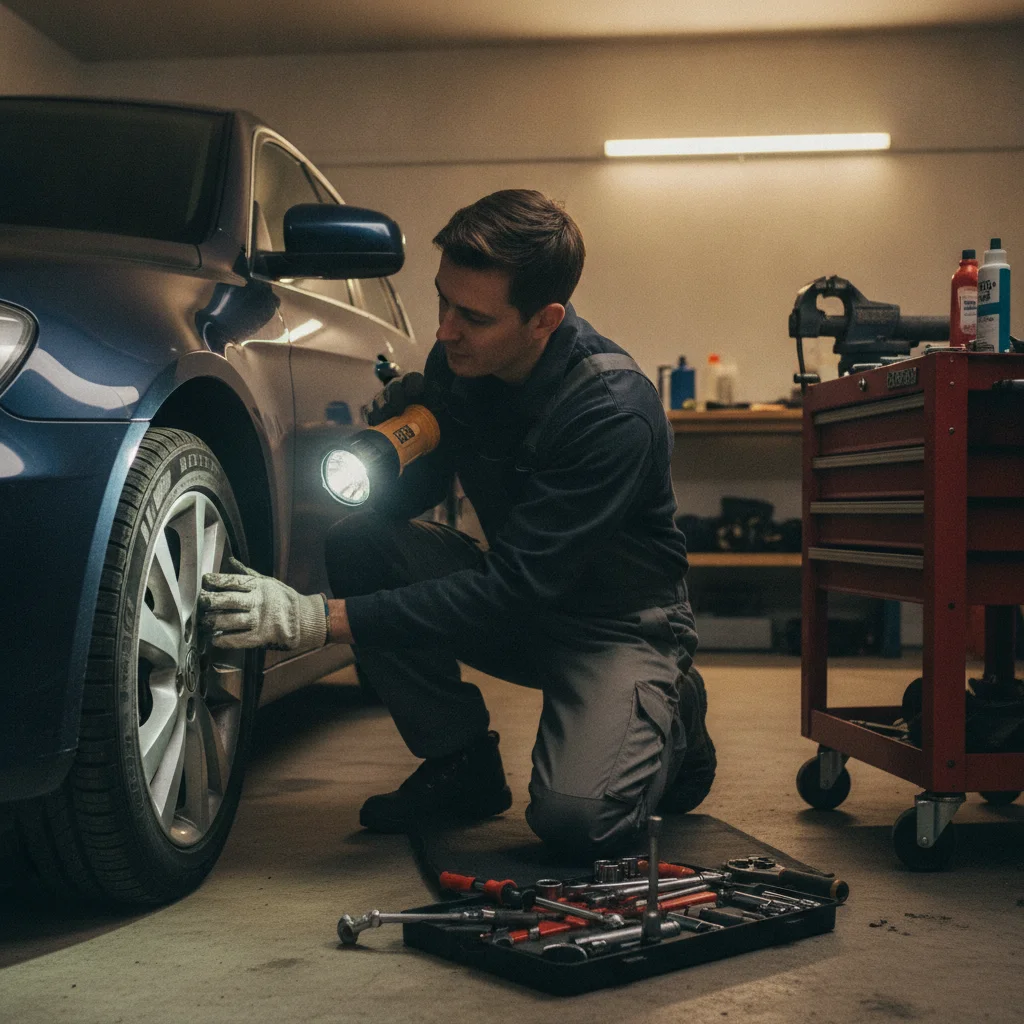
You don't need a mechanic to perform a basic coolant system inspection. A five-minute walkthrough once a month can catch problems weeks before they become serious. Here's what to look for when the engine is cold — never open a hot radiator cap.
Coolant Level in the Reservoir
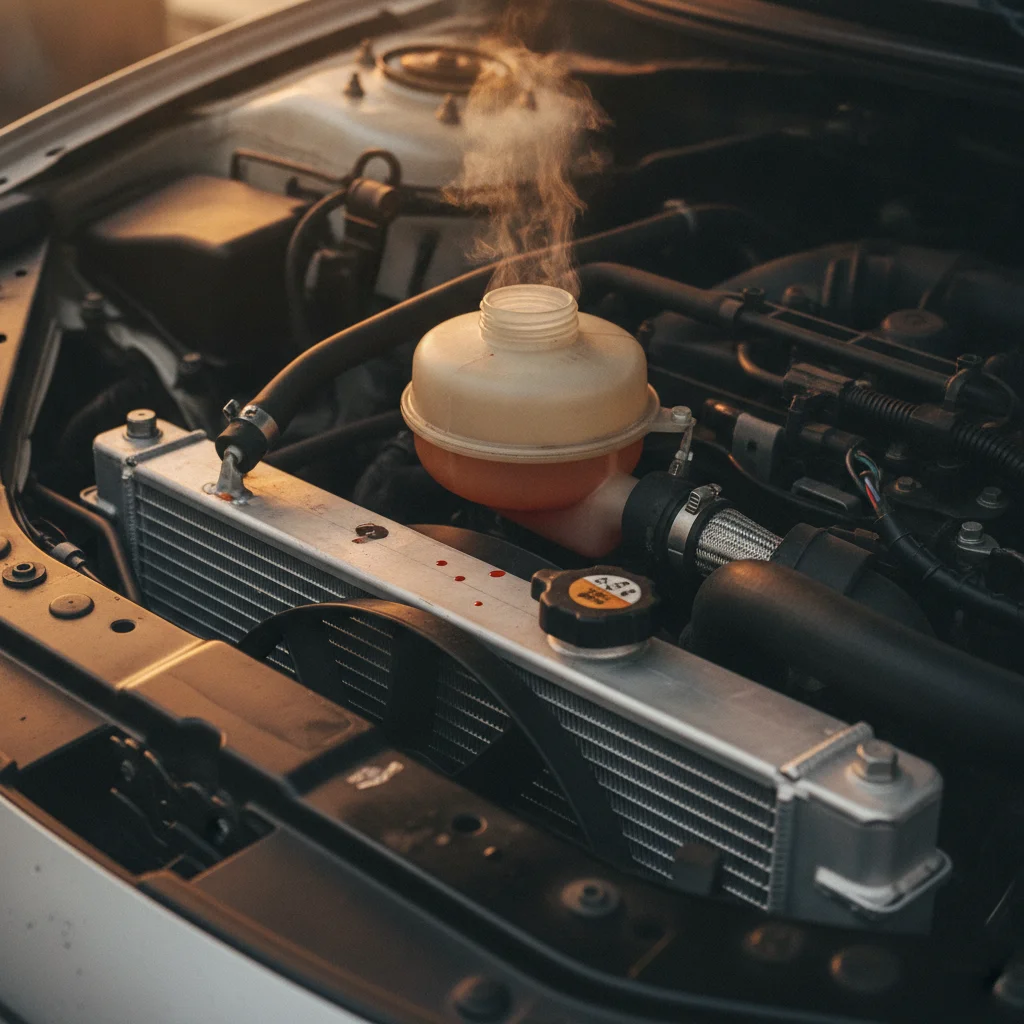
The translucent plastic overflow tank near the radiator has MIN and MAX markings on the side. Your coolant should sit between them. If it's consistently dropping between checks even with no visible leak, coolant is escaping somewhere — either externally or internally into the combustion chamber. Both are serious.
Coolant Color and Condition
Fresh coolant is typically bright green, orange, pink, or blue depending on the formula. Old or contaminated coolant turns brown, rusty, or develops a milky, sludgy appearance. Brown coolant means rust and scale are circulating through your system, clogging passages and reducing heat transfer. Milky coolant almost always means oil contamination from a failing head gasket — that's an emergency.
Hoses and Connections
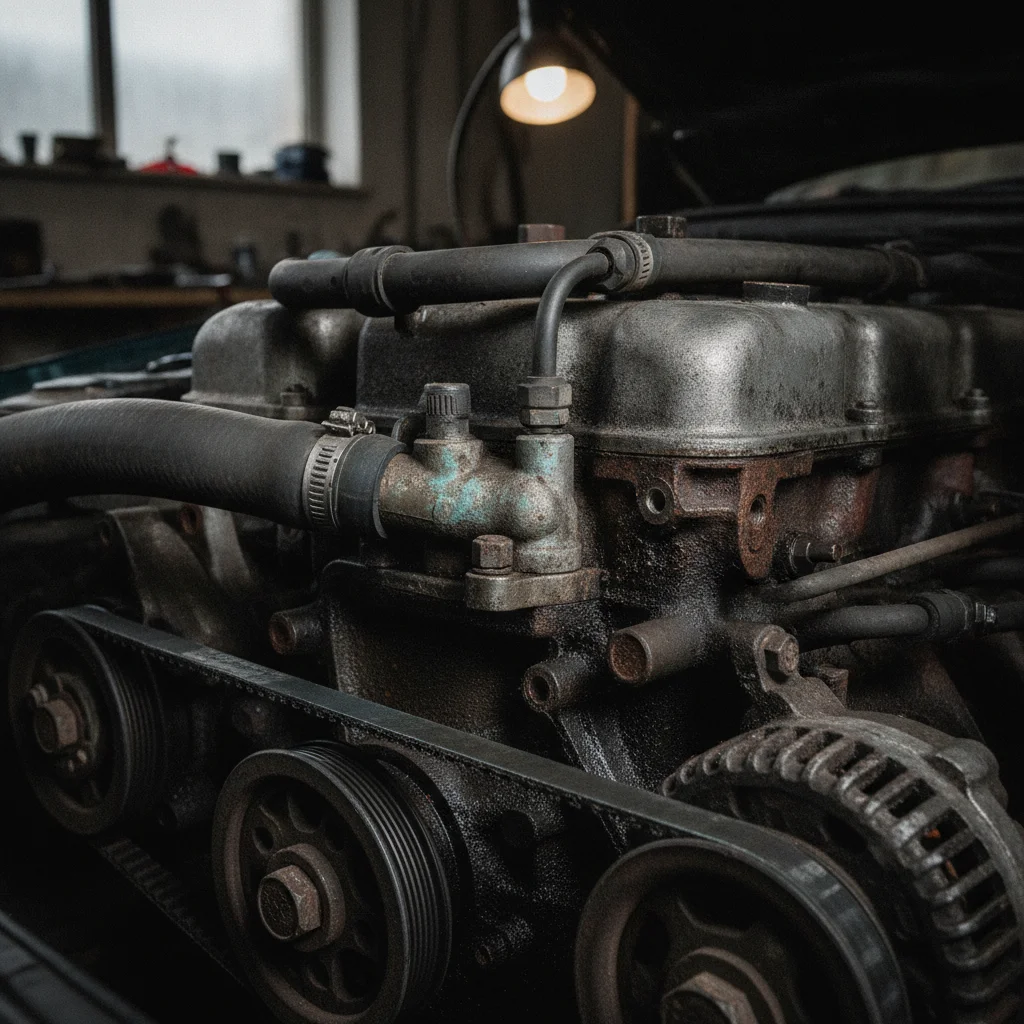
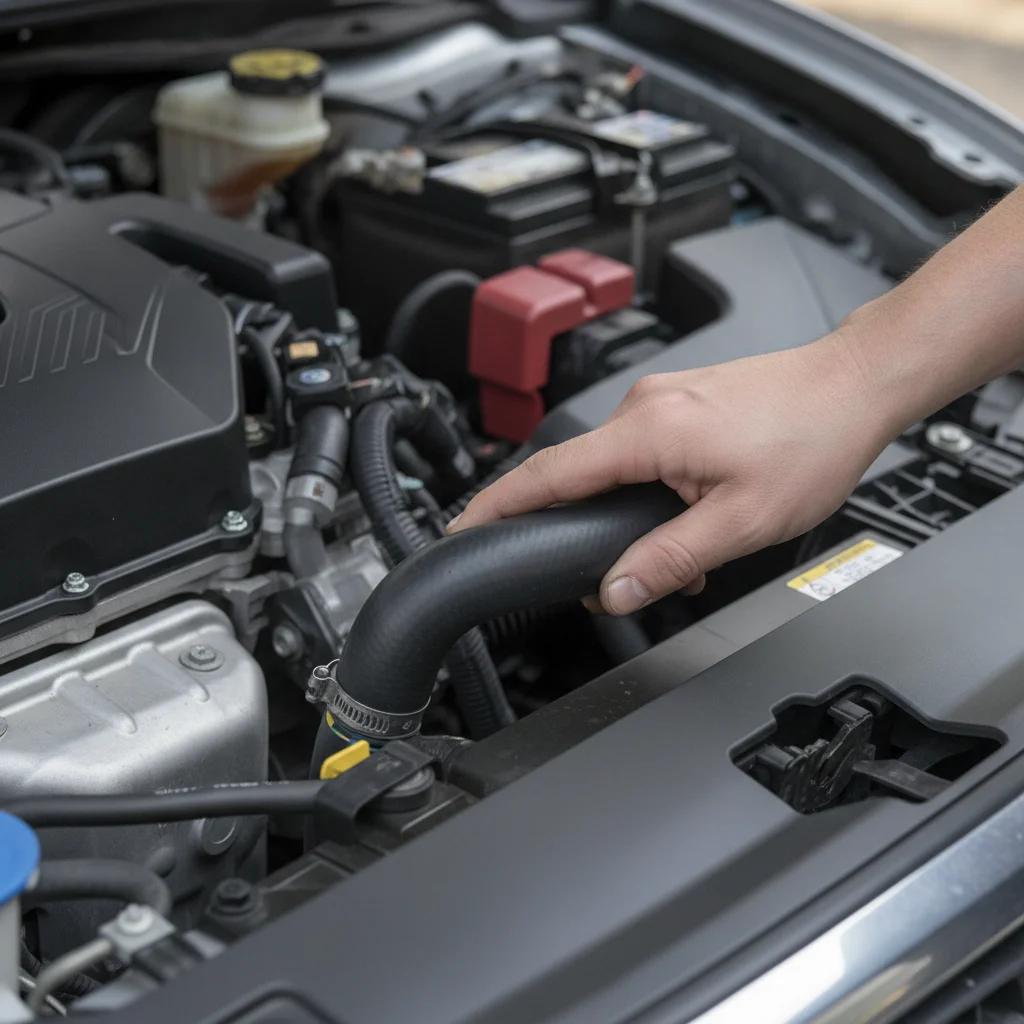
Squeeze the large radiator hoses when the engine is cold. They should feel firm but slightly pliable — like a garden hose under pressure. Soft, spongy, or rock-hard hoses are near failure. Look for cracks, bulges, or any crusty white or green residue at connection points, which signals a slow seeping leak.
The Radiator Itself
Look at the front face of the radiator (the honeycomb-looking aluminum or plastic component behind your grille). Bent fins, corrosion, or greenish crusty buildup indicate coolant has been escaping. A flashlight helps here. Even minor radiator damage reduces cooling efficiency meaningfully.
For a full walkthrough of DIY vehicle inspection — including fluids, belts, and beyond — How to Inspect Your Own Car for Early Warning Signs gives you a systematic approach any driver can follow.
Always Inspect When the Engine Is Cold
Coolant is pressurized and scalding hot when the engine is running or recently stopped. Opening the radiator cap or reservoir cap on a warm engine can cause pressurized coolant to spray and cause serious burns. Wait at least 30–45 minutes after driving before touching any part of the cooling system. If the upper radiator hose is still firm to the touch, the system is still pressurized — wait longer.
Don't Mix Different Coolant Types
Modern vehicles use specific coolant formulations — green (IAT), orange or red (OAT), or yellow/pink (HOAT). Mixing incompatible types causes the inhibitors to react, forming a gel-like sludge that clogs your radiator and water pump passages. Always check your owner's manual or cap label before adding coolant. When in doubt, use distilled water as a temporary top-off until you can flush and refill with the correct type.
Document Any Symptom With a Date and Mileage
When you notice something unusual — a smell, a gauge deviation, a new puddle — write it down immediately with the date and odometer reading. This timeline is invaluable when communicating with a mechanic, and it helps you spot patterns (does the gauge only spike on hot days? Only after highway driving?) that pinpoint the most likely cause.
The Real Cost of Waiting
Let's talk dollars. This is where understanding the progression of cooling system failure really drives the point home.
$3,000+
Average cost of a head gasket replacement
RepairPal estimates head gasket repairs range from $1,624 to $3,400 depending on vehicle make and labor rates, with luxury and European vehicles often exceeding that range.
2 min
Time needed to check coolant level monthly
A basic visual coolant check — level and color — requires no tools and takes under two minutes on a cold engine, making it one of the highest-ROI maintenance habits available.
65%
Of roadside breakdowns involve overheating or cooling issues
According to AAA, engine overheating and cooling system failures are among the top causes of roadside service calls in summer months across the United States.
$120
Typical cost of a coolant flush service
A preventive coolant flush every 30,000–50,000 miles typically costs $100–$150 at an independent shop, a fraction of the corrosion damage it prevents to water pumps and radiators.
5 min
Engine-safe window before irreversible damage when overheating
Engineering studies and field data from engine rebuilders suggest sustained overheating above design thresholds can begin warping aluminum cylinder heads in as little as five minutes of continued operation.
A failed thermostat — often the culprit behind a temperature gauge that runs high — costs roughly $150–$250 to replace at a shop, including parts and labor. A leaking radiator hose is $75–$200. A small radiator leak, caught early, might be a $300–$500 repair.
Now here's what happens when you don't act: that same small coolant leak causes the engine to run hot repeatedly. Heat cycling stresses the head gasket — the seal between the engine block and cylinder head. Once that gasket fails, coolant enters the combustion chamber. You get white smoke, a rough idle, and a repair bill between $1,500 and $3,500 depending on your vehicle. On some engines, sustained overheating warps the cylinder head itself, turning a $2,000 gasket job into a $4,000+ machine-shop repair or an engine replacement.
Older and higher-mileage vehicles are especially vulnerable because seals, hoses, and the water pump all degrade together. If your vehicle is past 100,000 miles, the calculus for acting on early warning signs shifts even more decisively in favor of immediate inspection. High-Mileage Car Warning Signs That Deserve Extra Attention covers which symptoms to prioritize as your car ages.
“The most expensive repair I do every week isn't complicated — it's a head gasket on an engine that overheated because someone ignored the temperature gauge or a slow coolant leak for too long. The parts and labor are straightforward. The tragedy is that almost every one of those jobs could have been a $200 fix if the driver had come in when the first symptom appeared.”
— Mike Spinelli, ASE Master Certified Technician with 25 years of engine repair experience
What to Do Right Now: Quick Wins for Cooling System Health
You don't need a shop visit to take meaningful action today. These are the highest-leverage steps any driver can take immediately to get ahead of cooling system trouble.
When to Pull Over Immediately
Sometimes warning signs escalate before you can act on them. Knowing when to stop driving is the difference between a repair and a totaled engine. Pull over safely and shut off the engine immediately if you observe any of the following:
- Temperature gauge in the red or all the way to the maximum marker — you may have minutes before permanent damage begins.
- Steam or smoke rising from under the hood — coolant is actively boiling over or burning on hot engine surfaces.
- A sudden, strong sweet smell inside the cabin — coolant may be leaking near or into the HVAC system.
- Loss of cabin heat combined with a rising temperature gauge — the system may be so low on coolant that flow has stopped entirely.
- Any warning light combined with rising temperature — the combination of signals means multiple systems are stressed.
Once stopped, do not open the hood immediately if you see steam — wait at least 15–20 minutes. Never open a hot radiator cap; pressurized boiling coolant causes severe burns. Call for a tow if the temperature gauge was in the red — driving even a short distance on an overheated engine risks warping the cylinder head.
Understanding how to read and respond to your temperature gauge in real time is a critical skill. Why Ignoring the Temperature Gauge Is One of the Costliest Mistakes Drivers Make explains exactly what each position on that gauge means and how to respond.
Coolant vs. Antifreeze: Same Thing
The terms "coolant" and "antifreeze" are often used interchangeably, but antifreeze technically refers to the concentrated glycol product you buy in a jug. Coolant is the diluted mixture (typically 50% antifreeze, 50% distilled water) that actually runs through your system. Most products sold today are pre-mixed at the correct ratio. If you're topping off, use pre-mixed coolant — never straight water and never straight antifreeze concentrate unless you're doing a complete flush and refill.
Electric Vehicles Have Cooling Systems Too
Battery electric vehicles don't have traditional combustion engines, but they do use liquid cooling systems to regulate battery pack and power electronics temperatures. EV coolant follows a similar maintenance schedule and can develop the same types of leaks and degradation. If you drive an EV, don't assume the cooling system is maintenance-free — consult your owner's manual for the recommended inspection and flush intervals.
Emergency Coolant Top-Off in a Pinch
If you're stranded with a low coolant level and no coolant available, clean tap water is an acceptable emergency top-off to get you safely to a shop. Water alone reduces boiling protection and corrosion resistance, so this is strictly a short-term measure. Drive directly to a mechanic after any emergency water addition and explain what you added so they can flush and refill the system correctly.
Getting the Most From Your Mechanic Visit
If you've spotted one or more of these warning signs, you're already ahead of the game — you caught something early. Now your job is to communicate it clearly so your mechanic can diagnose it efficiently and accurately.
Before you call the shop, write down:
- When the symptom first appeared (specific trip, weather conditions, mileage)
- How frequently it happens — every time? Only on long drives? Only at idle?
- Any recent changes — new fluids added, recent repairs, new sounds that appeared around the same time
- Your current coolant level and what it looked like when you checked
This kind of specific documentation saves diagnostic time and protects you from unnecessary parts replacements. A vague description of "runs hot sometimes" leaves the tech guessing. "Temperature gauge climbs to three-quarters at idle after 20 minutes, drops when I accelerate, coolant level is at the MIN line" points directly at a failing thermostat or a partially blocked radiator.
For a full framework on preparing for a shop visit — including how to describe sounds, smells, and behavior patterns — see Diagnosing a Warning Sign Yourself Before Visiting a Mechanic.
The bottom line is simple: your cooling system wants to keep your engine alive. It'll tell you when it needs help. Your job is to listen — and act before the situation forces your hand.
Always Inspect When the Engine Is Cold
Coolant is pressurized and scalding hot when the engine is running or recently stopped. Opening the radiator cap or reservoir cap on a warm engine can cause pressurized coolant to spray and cause serious burns. Wait at least 30–45 minutes after driving before touching any part of the cooling system. If the upper radiator hose is still firm to the touch, the system is still pressurized — wait longer.
Don't Mix Different Coolant Types
Modern vehicles use specific coolant formulations — green (IAT), orange or red (OAT), or yellow/pink (HOAT). Mixing incompatible types causes the inhibitors to react, forming a gel-like sludge that clogs your radiator and water pump passages. Always check your owner's manual or cap label before adding coolant. When in doubt, use distilled water as a temporary top-off until you can flush and refill with the correct type.
Document Any Symptom With a Date and Mileage
When you notice something unusual — a smell, a gauge deviation, a new puddle — write it down immediately with the date and odometer reading. This timeline is invaluable when communicating with a mechanic, and it helps you spot patterns (does the gauge only spike on hot days? Only after highway driving?) that pinpoint the most likely cause.

All claims are backed by peer-reviewed research. Sources on request.