Key Takeaways
What the Temperature Gauge Is Actually Telling You
Most drivers treat the temperature gauge the same way they treat a smoke detector in a restaurant kitchen — they assume it's someone else's problem until it's screaming at them. That's a costly mindset. The temperature gauge is one of the most direct lines of communication your engine has with you, and understanding what it's saying can literally save your engine.
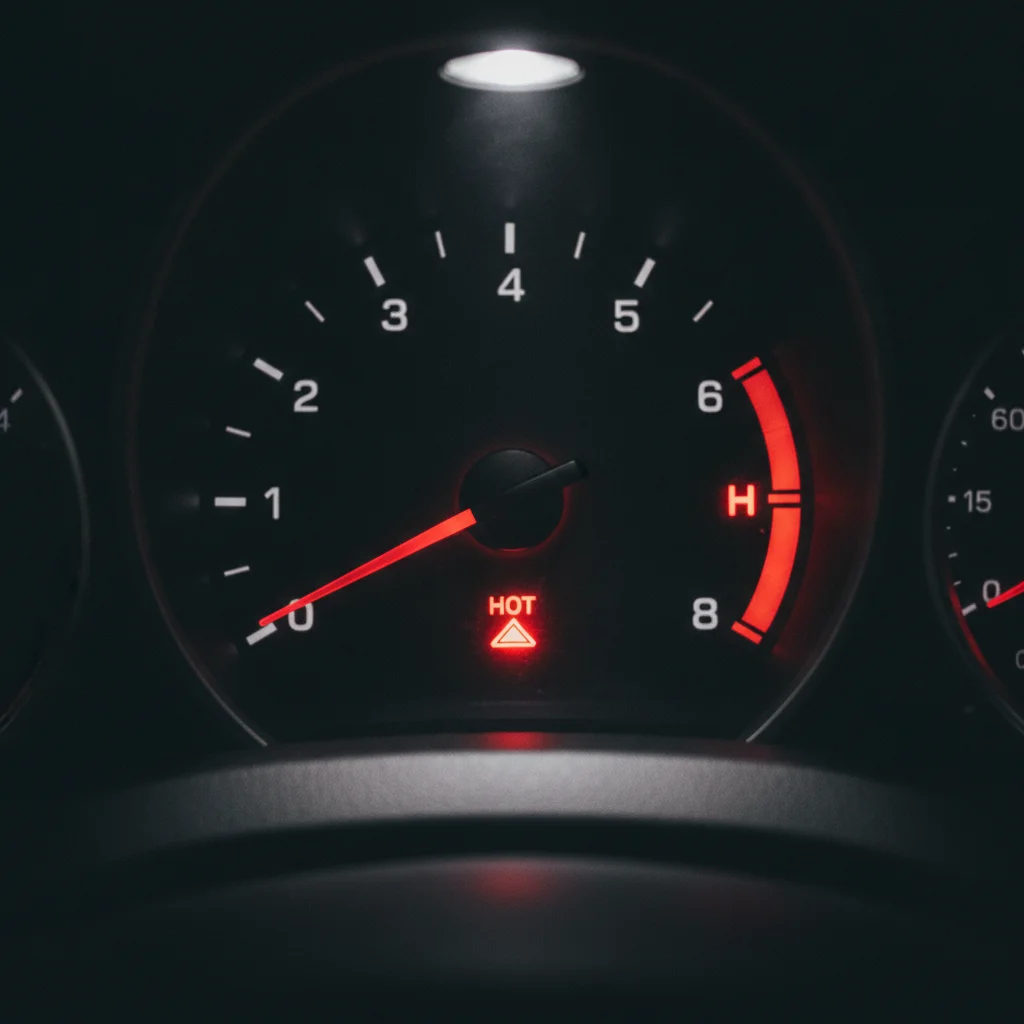
Under normal conditions, your gauge should settle into the middle range after a few minutes of driving — roughly 195°F to 220°F depending on the vehicle. That's the sweet spot where your engine's combustion, lubrication, and emissions systems all run at designed efficiency. When the needle climbs above that band, something in the cooling system has broken down. When it climbs into the red, you have a narrow window — measured in minutes, not miles — to respond before serious damage occurs.
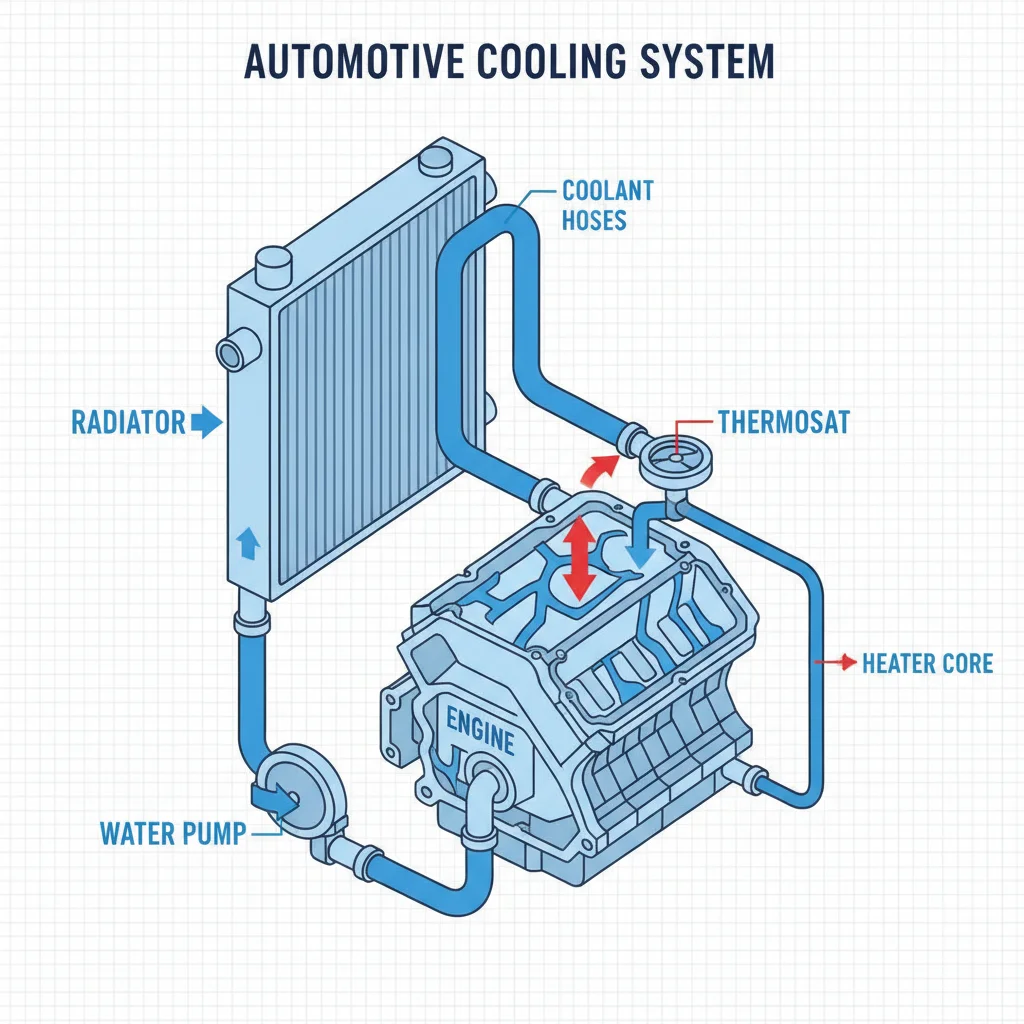
The cooling system is elegantly simple: a water pump circulates coolant through the engine block, the coolant absorbs heat, travels to the radiator where airflow strips that heat away, and then cycles back. Break any link in that chain — a split hose, a stuck thermostat, a failing water pump, a low coolant level — and heat starts building with nowhere to go. The gauge is simply reporting that fact. Ignoring it doesn't make the problem go away; it makes the repair bill grow.
It's also worth knowing that a gauge that runs too cold for too long signals a stuck-open thermostat, which hurts fuel economy and can cause engine wear. If your gauge never reaches the normal midpoint even after 10 minutes of driving, that's a problem worth diagnosing too. For more on how operating habits affect engine health, see what extended idling does to your engine.
The Most Costly Mistakes Drivers Make with the Temperature Gauge
Over years in the shop, I've watched the same patterns repeat. Drivers who end up with destroyed engines almost never set out to ignore a problem — they just didn't know what they were looking at, or they made a series of small misjudgments that compounded. Here are the mistakes that do the most financial damage.
Assuming the gauge will come back down on its own and continuing to drive.
Why it happens: Drivers often rationalize that temperature spikes are temporary — maybe from sitting in traffic — and will self-correct once the car gets moving. Sometimes they do, but continuing to drive on a genuinely failing cooling system accelerates damage exponentially.
Topping off the coolant reservoir with water as a permanent fix and driving on.
Why it happens: Water is available at any gas station, it works in a pinch, and it makes the temperature gauge behave normally again — which feels like the problem is solved. It isn't. Water lacks the corrosion inhibitors, boiling point elevation, and freeze protection that coolant provides.
Opening the radiator cap immediately after the engine overheats.
Why it happens: The instinct is to check what's going on under the hood as soon as you stop. Most drivers don't realize that coolant can be at 250°F or higher under pressure, and releasing that pressure suddenly can cause violent steam and boiling liquid to spray outward.
Ignoring the 'low coolant' warning light because the car seems to be running fine.
Why it happens: Modern cars often have a low coolant indicator that triggers before the temperature gauge actually rises. Drivers see it, note that the car feels normal, and defer the issue. The low coolant condition is exactly what causes the temperature gauge to rise later — often suddenly.
Skipping coolant flushes because the car 'seems fine.'
Why it happens: Unlike an oil change, there's no obvious color change or audible signal when coolant has gone bad. Degraded coolant can look acceptable but have become acidic enough to corrode aluminum components and leave deposits that restrict flow.
Confusing the normal warm-up period with an actual overheating problem — and panicking prematurely.
Why it happens: Drivers who've just learned to watch the gauge sometimes see it rise on a cold start and assume something is wrong. In reality, engines are designed to warm up, and the gauge climbing from cold to the normal midpoint is expected and healthy.
It's worth noting that high-mileage vehicles are disproportionately vulnerable to cooling system failures. Hoses become brittle, coolant degrades, and water pumps wear. If your car has significant miles on it, the warning signs in aging vehicles deserve extra scrutiny — including any temperature fluctuations you might otherwise dismiss as minor.
$3,000–$10,000
Average engine replacement cost
Engine replacement following catastrophic overheating damage typically falls in this range according to repair industry data from AAA and major shop networks.
3–5 min
Time to severe engine damage at critical overheating
Automotive engineers and repair specialists consistently note that sustained overheating at extreme temperatures can warp cylinder heads or seize pistons within minutes.
40%
Of roadside breakdowns tied to cooling system
AAA reports that cooling system failures are among the leading causes of roadside breakdowns and non-collision tows in the United States.
$150–$350
Typical thermostat replacement cost
A faulty thermostat — one of the most common causes of overheating — is among the least expensive cooling system repairs when caught before engine damage occurs.
The Real Financial Damage of an Overheated Engine
Let's put numbers to this, because the gap between a $150 repair and a $6,000 repair is exactly the distance between pulling over promptly and driving another five miles hoping things will sort themselves out.
| Scenario | Typical Repair Cost | Preventable? |
|---|---|---|
| Coolant top-off / hose replacement | $50–$250 | Yes, with routine inspection |
| Thermostat replacement | $150–$350 | Yes, with early diagnosis |
| Water pump replacement | $300–$750 | Yes, at scheduled intervals |
| Radiator replacement | $400–$900 | Often, if leaks caught early |
| Head gasket repair | $1,500–$3,500 | Yes, if overheating stopped promptly |
| Warped cylinder head replacement | $2,000–$5,000 | Yes, if engine shut off in time |
| Engine replacement (severe damage) | $4,000–$10,000+ | Usually, if gauge had been heeded |
The pattern is clear: the longer the engine runs hot, the more components are affected and the more those costs compound. A blown head gasket doesn't just mean a new head gasket — it often means a machined cylinder head, new head bolts, coolant flush, timing work, and labor that stretches into days. On an older car, that repair cost frequently exceeds the vehicle's market value.
A Blown Head Gasket Often Looks Like a Minor Symptom
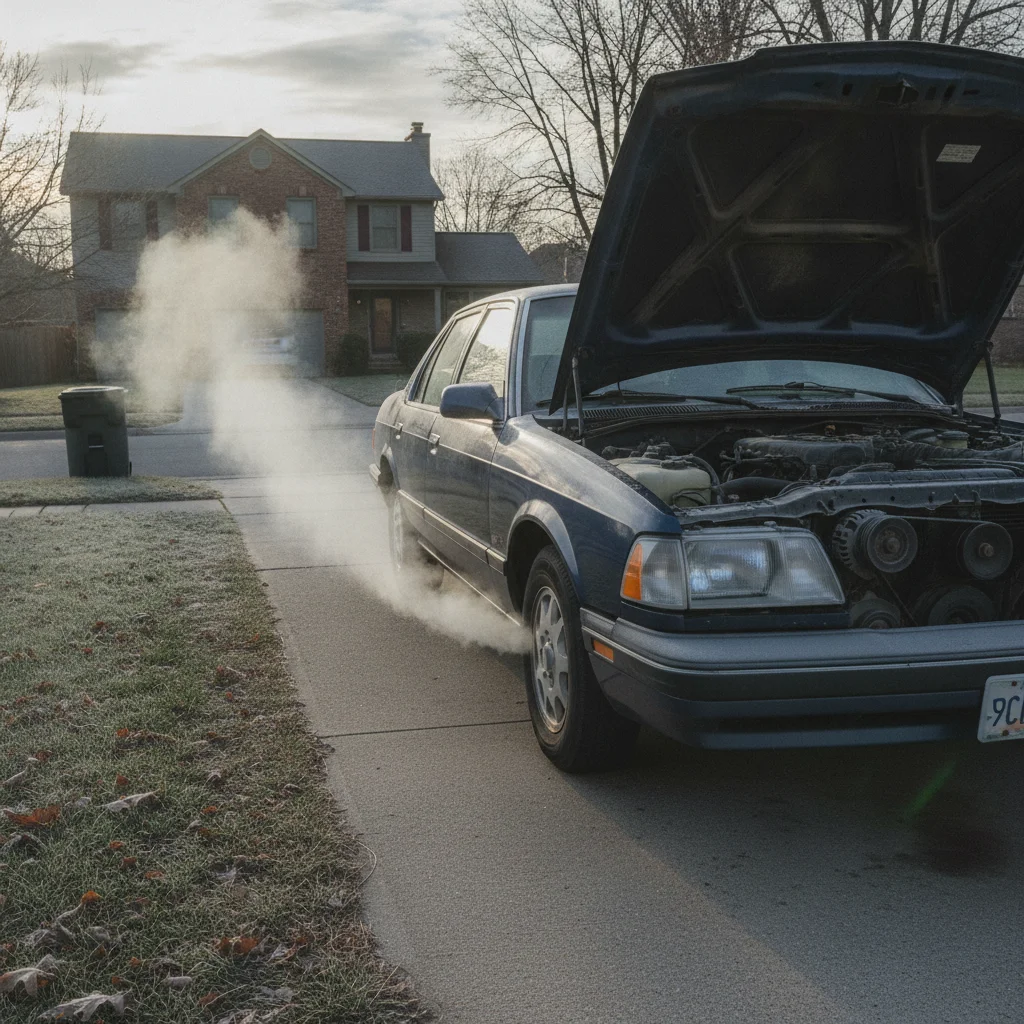
White exhaust smoke, a slowly rising temperature gauge, and milky oil are easy to dismiss individually — but together they signal a blown head gasket, one of the most expensive repairs a car can need. Many drivers drive for weeks on a failing head gasket, each mile widening the damage to the cylinder head and engine block. If you notice any combination of these symptoms, stop driving the car and have it inspected immediately. The difference between catching it early and catching it late can be $3,000 or more.
There's also an insurance angle worth considering. Standard auto insurance doesn't cover mechanical breakdown — that's the territory of extended warranties or mechanical breakdown insurance. If your engine is destroyed by overheating, you're paying for that repair out of pocket unless you have separate coverage. Drivers who've already made deductible and coverage mistakes in their policies are doubly exposed. Review how underinsuring your car compounds financial risk to make sure you're not carrying unnecessary exposure elsewhere in your policy.
What to Do When the Gauge Spikes — Step by Step
Panic is the enemy of good decisions, so let's make this a reflex rather than a thought process. The moment your temperature gauge enters the red or you see the warning light illuminate, follow this sequence:
- Turn off the air conditioning immediately. The A/C compressor puts significant additional load on the engine. Shutting it off reduces strain and can buy you a minute or two of margin.
- Turn the heater to maximum heat and maximum fan. This sounds counterintuitive, but your heater core is essentially a small secondary radiator. Blasting heat pulls thermal energy out of the coolant and into the cabin. It's uncomfortable but effective in an emergency.
- Look for a safe place to pull over — now, not at the next exit. A parking lot, a wide shoulder, anywhere you can stop safely within the next 30–60 seconds. Don't drive to a more convenient location.
- Shut the engine off. Once stopped, turn the ignition off. Don't let it idle in hopes it'll cool down — if the cooling system is compromised, idling won't help and may accelerate damage.
- Do not open the radiator cap. The cooling system is pressurized and the coolant will be scalding hot. Wait at least 30–45 minutes before touching anything under the hood.
- Assess and call for help. Once the engine has cooled, you can check coolant level in the translucent overflow reservoir (not the radiator cap). If it's empty, you have a leak. Call for a tow — don't try to top it off with water and drive home.
Never Add Cold Water to a Hot Engine
Pouring cold water into an overheated engine — whether into the radiator or directly on the block — risks thermal shock, which can crack the engine block or cylinder head. These are irreparable in most cases. If the engine needs coolant while still hot, let it cool first, or add room-temperature water or coolant very slowly if you have no other option and must move the vehicle to safety.
Don't Run the Engine to 'Test' If the Fix Worked
After topping off coolant or tightening a loose hose clamp, it's tempting to run the engine for a few minutes to confirm the gauge stays normal. If the underlying problem hasn't been fully resolved, this just puts the engine at risk again. Have a shop confirm the repair before relying on the vehicle for normal driving.
After the engine cools, a shop will need to identify the root cause before you drive again. Topping off coolant and hoping for the best is a temporary patch that leads to repeat overheating — and repeat overheating is exponentially more destructive than a single event.
Preventive Habits That Keep the Gauge Where It Belongs
The best version of this story is the one where overheating never happens in the first place. That comes down to a handful of consistent habits that cost very little relative to what they prevent.
Follow Your Coolant Service Interval
Coolant doesn't last forever. Over time it becomes acidic, loses its corrosion inhibitors, and starts attacking the very metal it's supposed to protect — radiator tubes, water pump impellers, thermostat housings. Most manufacturers specify a coolant flush every 30,000 to 50,000 miles, though long-life coolants in newer vehicles can extend that interval. Check your owner's manual rather than guessing.
Inspect Hoses Annually
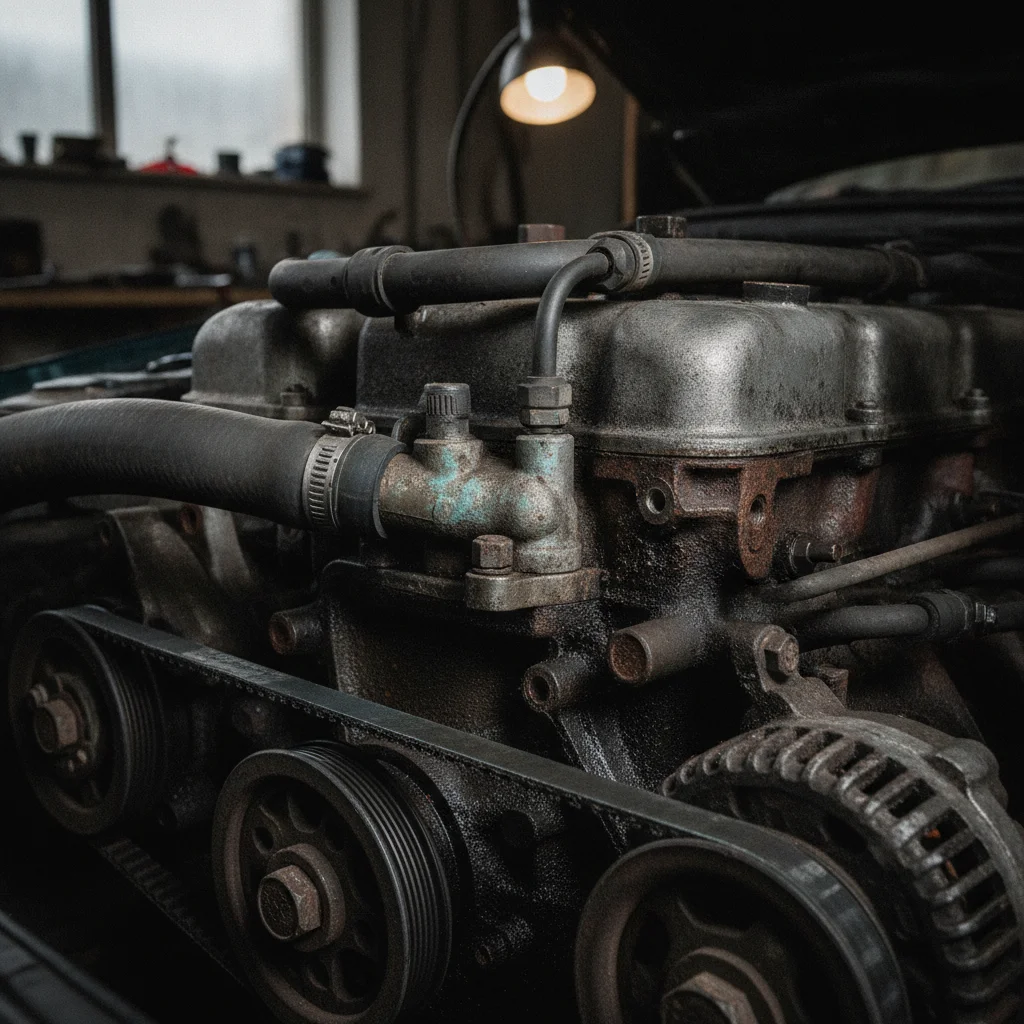
Radiator hoses and heater hoses are the arteries of your cooling system. Squeeze them when cold — they should feel firm but pliable. If a hose feels brittle, spongy, or has visible cracking near the clamps, replace it before it splits on you in traffic. A hose costs $20–$60. A tow and the cascading damage from a sudden coolant loss costs far more.
Check the Coolant Level Monthly
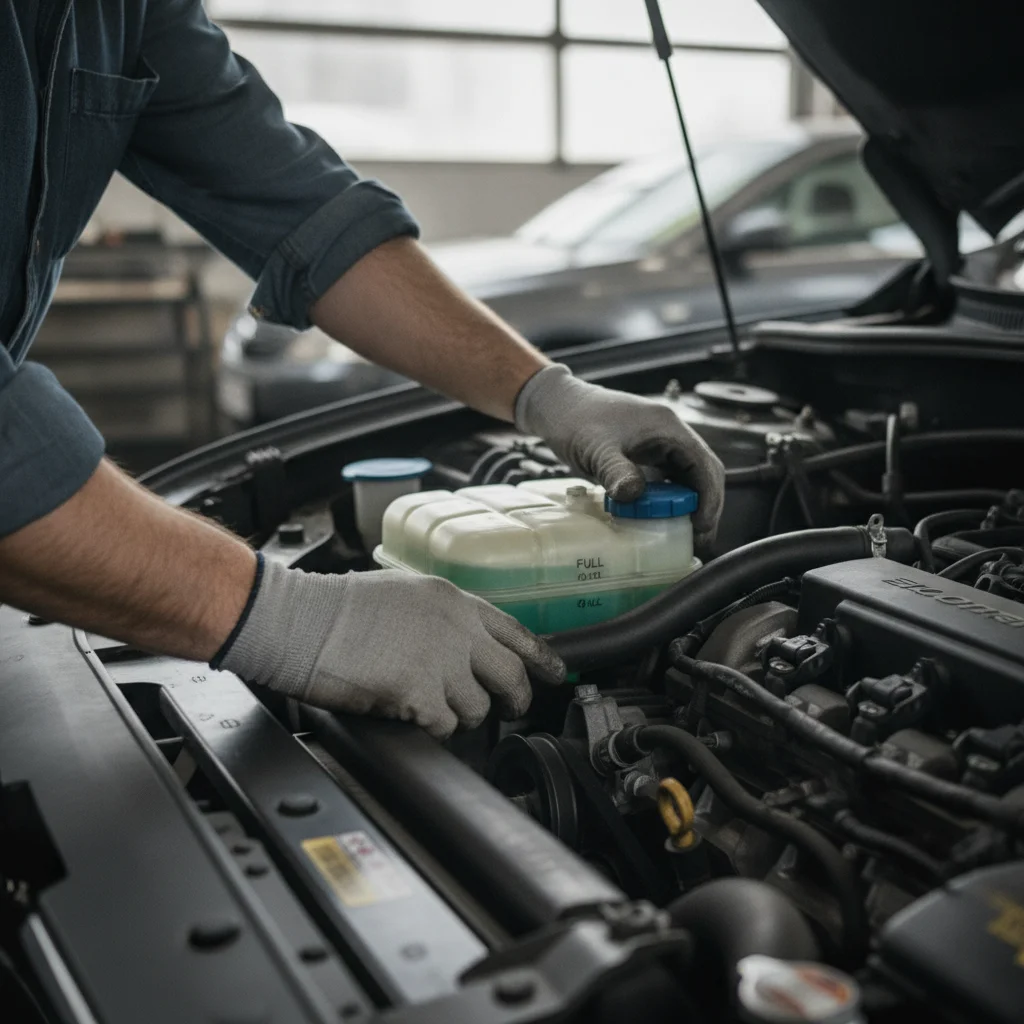
This takes about 15 seconds. Look at the translucent overflow reservoir — the coolant level should fall between the MIN and MAX marks when the engine is cold. A slow, steady drop in level over weeks is a sign of a small leak somewhere in the system. Find it early.
Don't Ignore Small Leaks
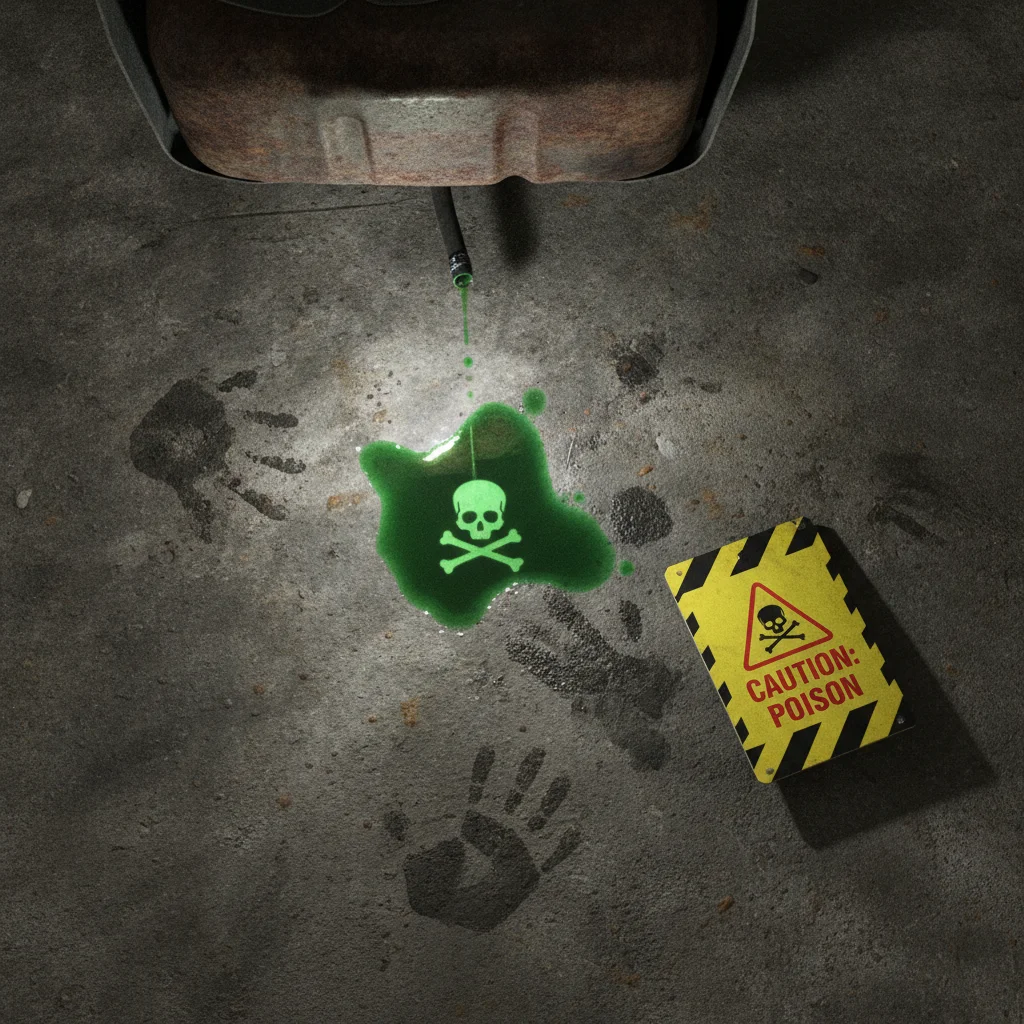
A pea-sized puddle of coolant under your car after parking is a warning, not a curiosity. Coolant is typically green, orange, pink, or blue depending on the formulation and tends to have a slightly sweet smell. Any visible leak under the hood or on the ground deserves diagnosis within a week, not eventually.
Watch the Gauge, Every Drive
Build the habit of glancing at your temperature gauge the same way you glance at your mirrors — just part of your driving routine. It takes a fraction of a second and it means you'll catch a rising temperature before it reaches the red. Early detection is where thousands of dollars are saved.
Smart maintenance decisions connect directly to smarter ownership costs overall. Just as fuel efficiency myths cost drivers real money, neglecting the cooling system bleeds money slowly through poor performance and suddenly through catastrophic repair bills.
Buying a Car? Check the Cooling System First
If you're in the market for a used vehicle, the cooling system deserves deliberate scrutiny — not a quick glance. Overheating damage is among the most common things sellers attempt to obscure, and it can be difficult to spot without knowing what to look for.
Signs of Previous Overheating on a Used Car
- White or milky residue under the oil cap — a telltale sign of coolant mixing with engine oil, which almost always means a blown head gasket at some point
- White smoke from the exhaust when warm — coolant burning in the combustion chamber
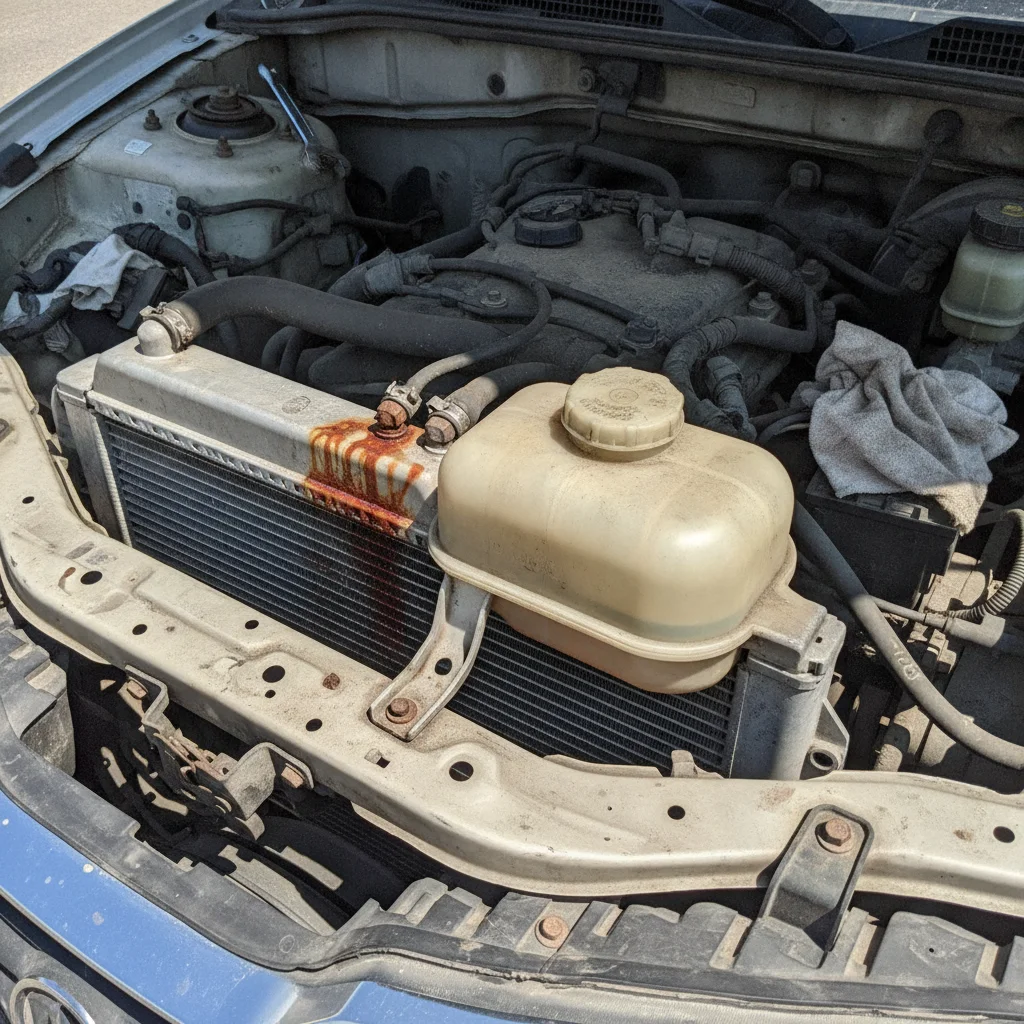
- Rust or discoloration around the radiator, overflow tank, or hose connections — signs of coolant leaks that were repeatedly topped off rather than repaired
- Bubbling in the coolant reservoir when the engine is idling — combustion gases entering the cooling system, classic blown head gasket indicator
- Unusual mineral deposits or scaling on the radiator fins — suggests the system ran low and was refilled with plain water repeatedly
A pre-purchase inspection by an independent mechanic — costing $100–$200 — should always include a cooling system pressure test and a combustion gas test (using an inexpensive block tester dye). These catch problems that look invisible on a clean, freshly detailed car.
Buying decisions involve more timing sensitivity than most buyers realize. Making the right call on a used car purchase — including spotting hidden mechanical issues — is the kind of discipline covered in our look at timing mistakes that cost car buyers thousands. Rushing into a deal without proper inspection is a version of the same problem: acting without the information you need.
The temperature gauge is a small instrument that represents a very large financial stake. Drivers who pay attention to it, understand it, and respond to it quickly put themselves in a fundamentally different financial position than those who don't. The cost of pulling over is almost always zero. The cost of not pulling over can be the engine itself.

All claims are backed by peer-reviewed research. Sources on request.