Key Takeaways
Why High-Mileage Cars Play by Different Rules
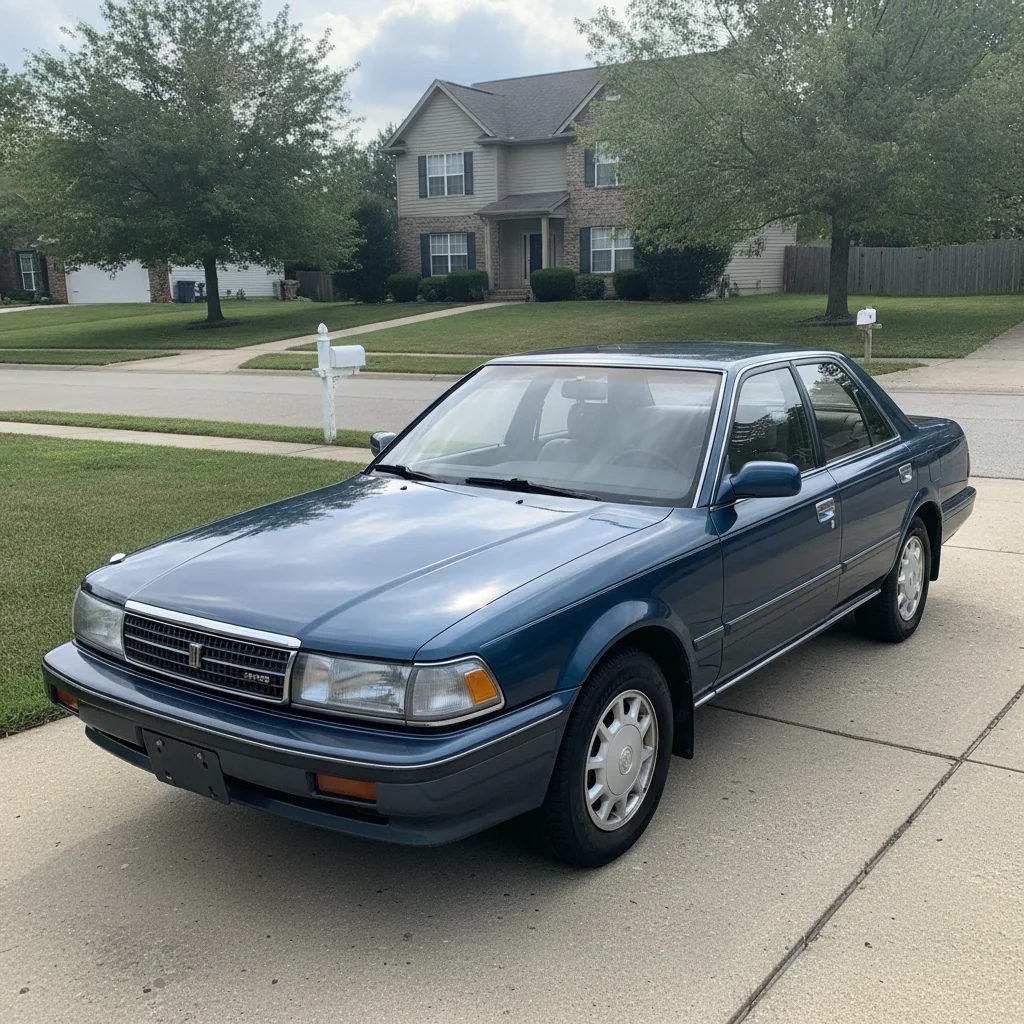
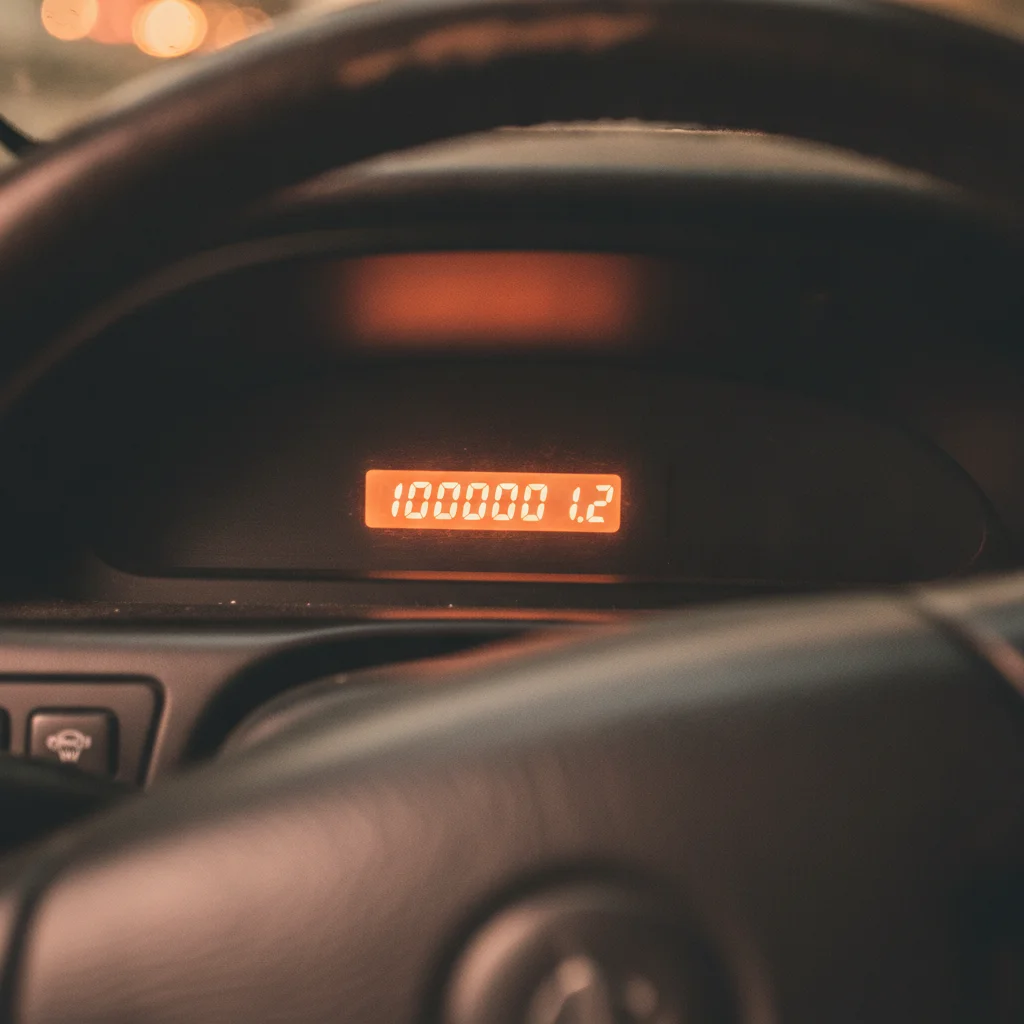
A car with 110,000 miles on the odometer is not simply an older version of the same car you drove off the lot. It has experienced hundreds of heat cycles in the engine, thousands of miles of vibration through every rubber bushing and seal, and years of thermal expansion and contraction in every metal joint. The wear patterns that emerge past 100,000 miles are qualitatively different from what you see at 40,000 or even 80,000 miles.
That distinction matters because the symptoms you encounter at high mileage can be deceptive. A small oil spot under the car might be a nuisance on a newer vehicle. On a high-mileage engine, the same spot could signal the beginning of accelerating seal failure. Context changes everything, and mileage is context.
Odometer readings tell part of the story, but how and where those miles were accumulated matters just as much. Highway miles are gentler than city stop-and-go driving. A well-maintained 130,000-mile vehicle often outlasts a neglected one at 80,000. The warning signs below are the ones that most reliably indicate genuine mechanical stress in vehicles that have passed the six-figure mark — and the ones that most often get dismissed until they become expensive.
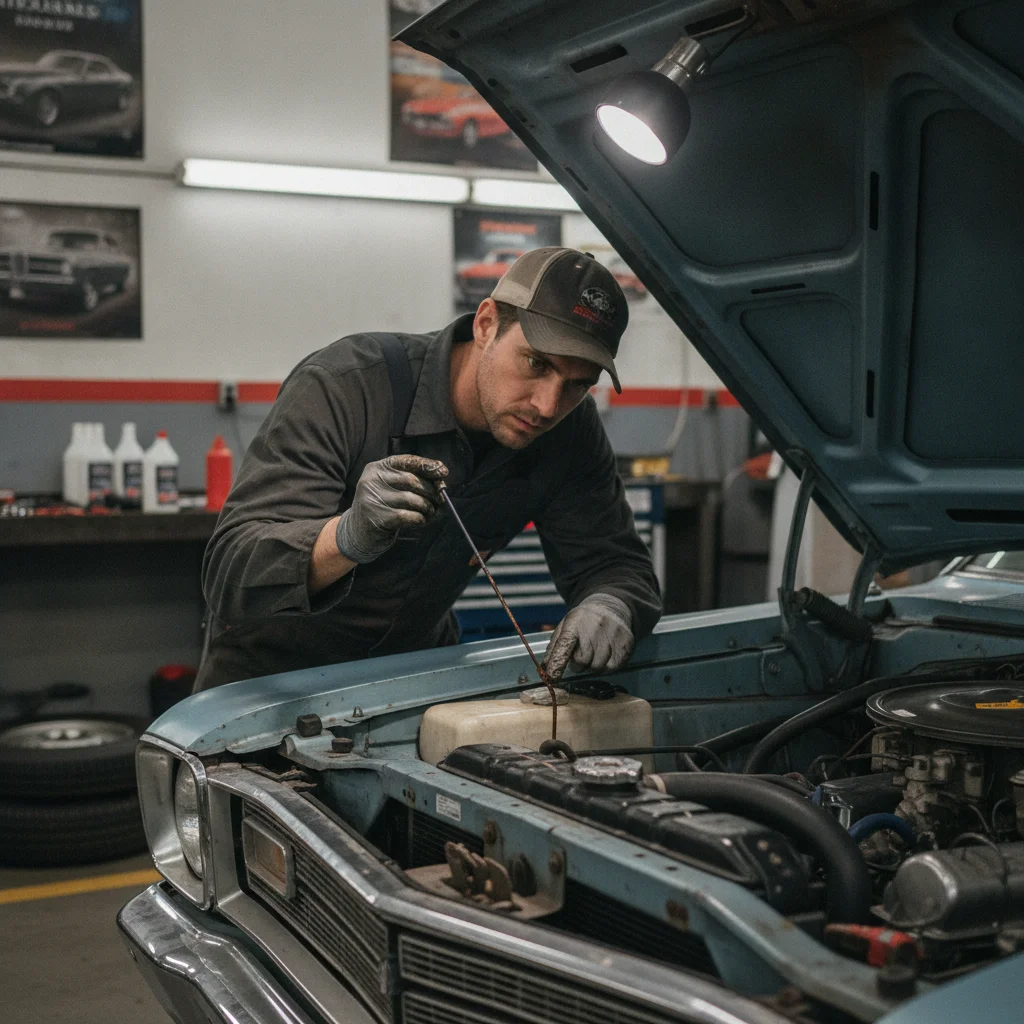
Blue or Gray Smoke from the Exhaust at Startup
A puff of white vapor on a cold morning is normal condensation burning off. Blue or gray smoke is an entirely different matter, especially when it appears consistently on startup and then clears as the engine warms. This pattern points directly to valve stem seals that have hardened and shrunk with age, allowing engine oil to seep past them and into the combustion chamber overnight when the engine sits.
At high mileage, valve stem seals and piston rings have endured years of thermal cycling. The rubber loses its pliability, and small seepage turns into noticeable oil consumption. Left unaddressed, you may find yourself adding a quart of oil every 1,000 miles or fewer — an expensive habit that also risks fouling your oxygen sensors and catalytic converter, two components that carry their own steep replacement costs.
Check your oil level on the dipstick at every other fill-up once you pass 100,000 miles. If the level is dropping between changes without any visible leak under the car, internal oil burning is almost certainly happening. A compression test and leak-down test can tell a mechanic whether the issue lies with the rings, the valve seals, or both, and help you make an informed decision about repair versus continued monitoring. For a broader picture of what performance changes can indicate, see engine performance symptoms decoded.
Blue smoke at startup signals oil burning — catch it early before it destroys your catalytic converter.
Transmission Shudder or Delayed Engagement
When you shift from Park into Drive or Reverse and feel a clunk, hesitation, or a brief shudder before the car moves, that delay is the transmission taking longer than it should to build hydraulic pressure and engage the clutch packs. On a vehicle with significant mileage, this symptom is one of the clearest early warnings of transmission wear.
Automatic transmissions rely on precise hydraulic pressure managed through small passages and solenoids. Over time, clutch material degrades and leaves fine particles in the fluid. Those particles clog passages, wear solenoids, and reduce the transmission's ability to shift cleanly. The shudder you feel is slip — the clutches briefly failing to grip before they catch.
[in_content_images:1]The good news is that in many cases, a fresh transmission fluid service — including a filter change where the design allows — can noticeably improve shift quality if the internal wear is not yet severe. The bad news is that many high-mileage owners skip transmission service for too long, and by the time the shudder appears, some permanent wear has already occurred. If you are noticing any shift hesitation, slipping, or strange sounds, do not delay — our transmission warning signs guide walks through the full range of symptoms and what each one likely means.
A delayed shift or clunk when engaging a gear is your transmission asking for immediate attention.
Coolant Loss Without an Obvious External Leak
If you are topping off your coolant reservoir regularly but cannot find any puddle under the car or obvious drip from a hose, you have a mystery leak — and on a high-mileage engine, the most common culprit is either a leaking intake manifold gasket or the early stages of a head gasket failure. Both allow coolant to enter the combustion chamber, where it burns away invisibly, or to mix with engine oil, where it creates a milky, caramel-colored contamination.
Check the underside of your oil filler cap. If you see a white, frothy residue there, coolant and oil are mixing inside the engine. That is a head gasket problem until proven otherwise, and it requires immediate attention — an overheating engine with a compromised head gasket can warp the cylinder head within minutes, turning a $1,500 repair into a $4,000 one.
Coolant system components — hoses, water pump seals, thermostat housings — also become increasingly prone to seepage past 100,000 miles as the rubber and plastic components age. Early coolant warning signs are subtle but consistent, and recognizing them protects you from the far more serious consequences described in why ignoring the temperature gauge is so costly.
Coolant disappearing without a visible leak often means an internal gasket failure — check your oil cap immediately.
Knocking or Tapping Noises from the Engine
Engine noises exist on a spectrum. A light, rhythmic ticking from the top of the engine that disappears after the oil warms up may simply indicate that your hydraulic lifters need a moment to pressurize — manageable with fresh oil and an oil viscosity appropriate for a higher-mileage engine. But a deeper knock from lower in the engine is a fundamentally different situation.
A rod knock — a heavy, metallic knocking that gets louder under load and faster with engine speed — means a connecting rod bearing has worn to the point where there is excessive clearance between the rod and the crankshaft journal. Oil is no longer creating a sufficient hydrodynamic film between the surfaces, and metal is contacting metal. This failure is usually progressive and terminal. Continuing to drive on a rod knock risks a broken connecting rod punching through the engine block, which is a complete engine loss.
The distinction matters financially. A ticking lifter might be a $200–$500 repair or even a fluid change fix. A rod knock is typically a $2,500–$5,000 engine rebuild or replacement, and that cost only rises if you keep driving on it. Use a mechanic's stethoscope or even a long screwdriver pressed against engine components to localize where the sound originates — location tells you a great deal about severity.
A deep engine knock under load is not something to monitor — it signals imminent and expensive failure.
Power Steering Groan or Stiffness at Low Speeds
High-mileage vehicles with hydraulic power steering systems develop a characteristic groan when turning, particularly at low speeds or when the wheel is held near its full lock position. This symptom almost always points to either a low fluid level, a worn power steering pump, or deteriorating high-pressure hoses that are allowing fluid to seep past internal seals.
The power steering pump on a high-mileage vehicle has cycled through millions of pressure strokes. The internal vanes or gears wear, reducing the pump's ability to maintain adequate pressure, especially when the system is cold. The groan you hear is cavitation — the pump struggling to move fluid efficiently. Ignoring this for too long can accelerate pump wear to the point of failure, leaving you with very heavy steering — a genuine safety concern at highway speeds.
Check the power steering fluid reservoir. If the fluid is dark, gritty, or noticeably low, a fluid flush and top-off is the first step. If the pump continues to groan after service, it is likely nearing end of life. Pump replacement costs typically run $200–$500 in parts and labor — far less than the rack and pinion damage that can result from a pump running dry. Vehicles with electric power steering do not have this specific issue, but may develop their own motor or sensor faults at high mileage.
A groaning power steering pump at low speeds warns of imminent failure — a safety issue, not just a nuisance.
Rough Idle or Misfires That Come and Go
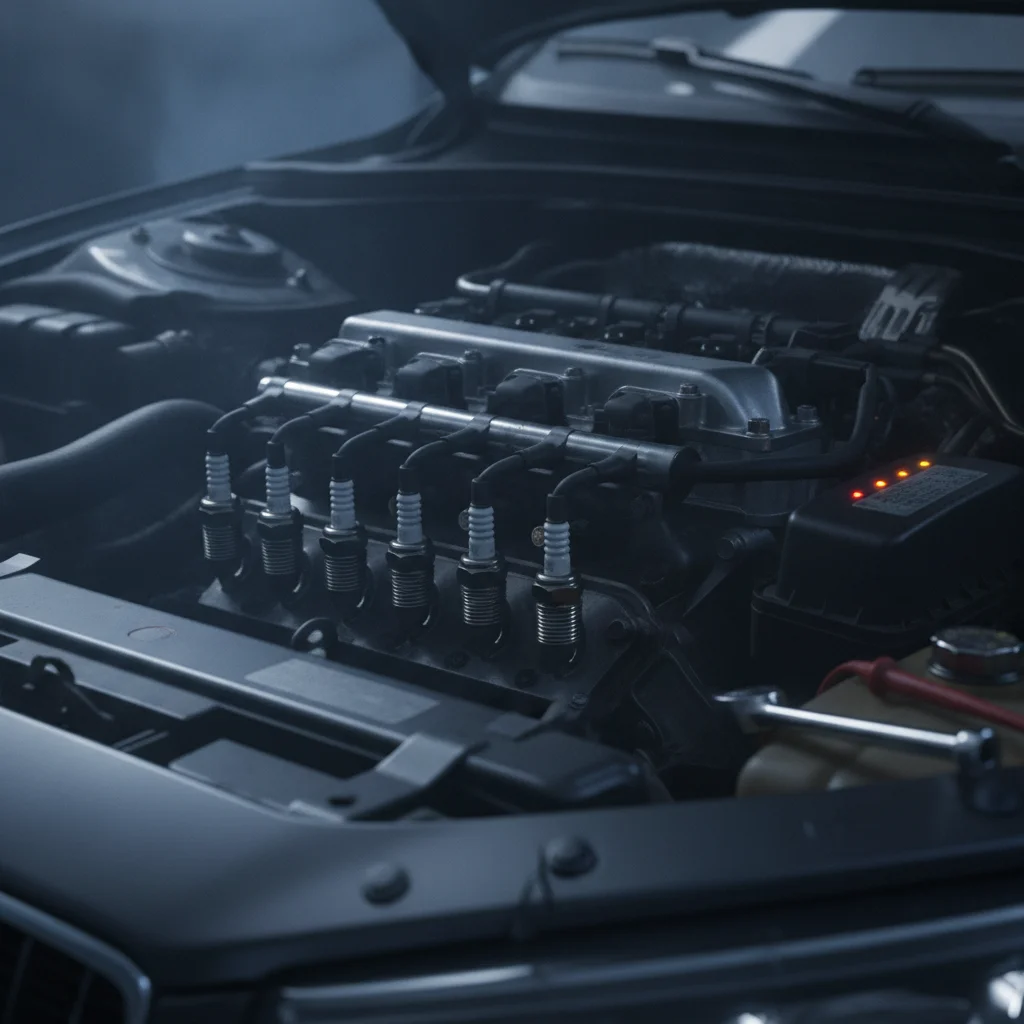
An engine that runs smoothly at highway speed but stumbles, shakes, or misfires at idle is telling you that its combustion efficiency is inconsistent. On high-mileage vehicles, the most common culprits are ignition components — spark plugs, ignition coils, and plug wires — that have reached or exceeded their service life, along with fuel injectors that have accumulated carbon deposits reducing their spray pattern precision.
Spark plugs should typically be replaced every 30,000–60,000 miles for copper-tipped versions, or up to 100,000 miles for iridium or platinum designs. On a 120,000-mile car that has never had plug service, the plugs alone can cause misfires that stress the catalytic converter, oxygen sensors, and the coils themselves. When a misfire allows unburned fuel into the exhaust, it can melt catalytic converter substrate — a $1,000+ repair triggered by a $40 set of spark plugs.
Modern vehicles will typically illuminate the Check Engine light with a misfire code (P0300 through P0308 for specific cylinders). An inexpensive OBD-II scanner can pull these codes at home and point you toward the exact cylinder misfiring, which narrows diagnosis considerably. Learning to read your car's subtle signals before the Check Engine light appears is even more valuable — intermittent misfires often precede the light by weeks.
Spark plugs overdue by 40,000 miles can trigger a misfire that destroys a $1,000 catalytic converter.
Soft, Spongy, or Gradually Worsening Brake Pedal Feel
Brake feel changes slowly on high-mileage vehicles, which is exactly what makes this symptom dangerous — drivers adapt to the gradual degradation without recognizing that their stopping distance has increased. A pedal that requires noticeably more pressure to achieve the same deceleration, or one that feels slightly spongy rather than firm, is indicating that the hydraulic brake system has lost efficiency.
The most common cause on vehicles with significant mileage is moisture contamination in the brake fluid. Brake fluid is hygroscopic — it absorbs water vapor over time through the hoses and reservoir. As water content increases, the boiling point of the fluid drops, and under heavy braking, the fluid can partially vaporize, compressing in a way that hydraulic fluid should not. The result is reduced pedal firmness, particularly after sustained braking on hills. Brake fluid should typically be replaced every two to three years regardless of mileage for this reason.
A gradually deepening pedal — one where you now push noticeably further before braking begins — suggests worn brake pads, but can also indicate a master cylinder that is beginning to bypass internally, allowing fluid to slip past its seals under pressure. Both situations demand inspection. Brake failure is among the most serious safety risks a high-mileage vehicle presents, and this is not an area where deferred maintenance makes financial sense.
Moisture-contaminated brake fluid lowers its boiling point — a pedal that fades under sustained braking is a safety emergency.
Oil Leaks That Appear or Worsen Suddenly
It is not unusual to see a small oil stain under a high-mileage vehicle. What deserves genuine concern is a leak that appears suddenly, grows noticeably larger over a short period, or appears in a location where none existed before. Sudden-onset leaks on older engines often indicate that a seal or gasket has crossed from marginal to failing — a distinction that carries real urgency.
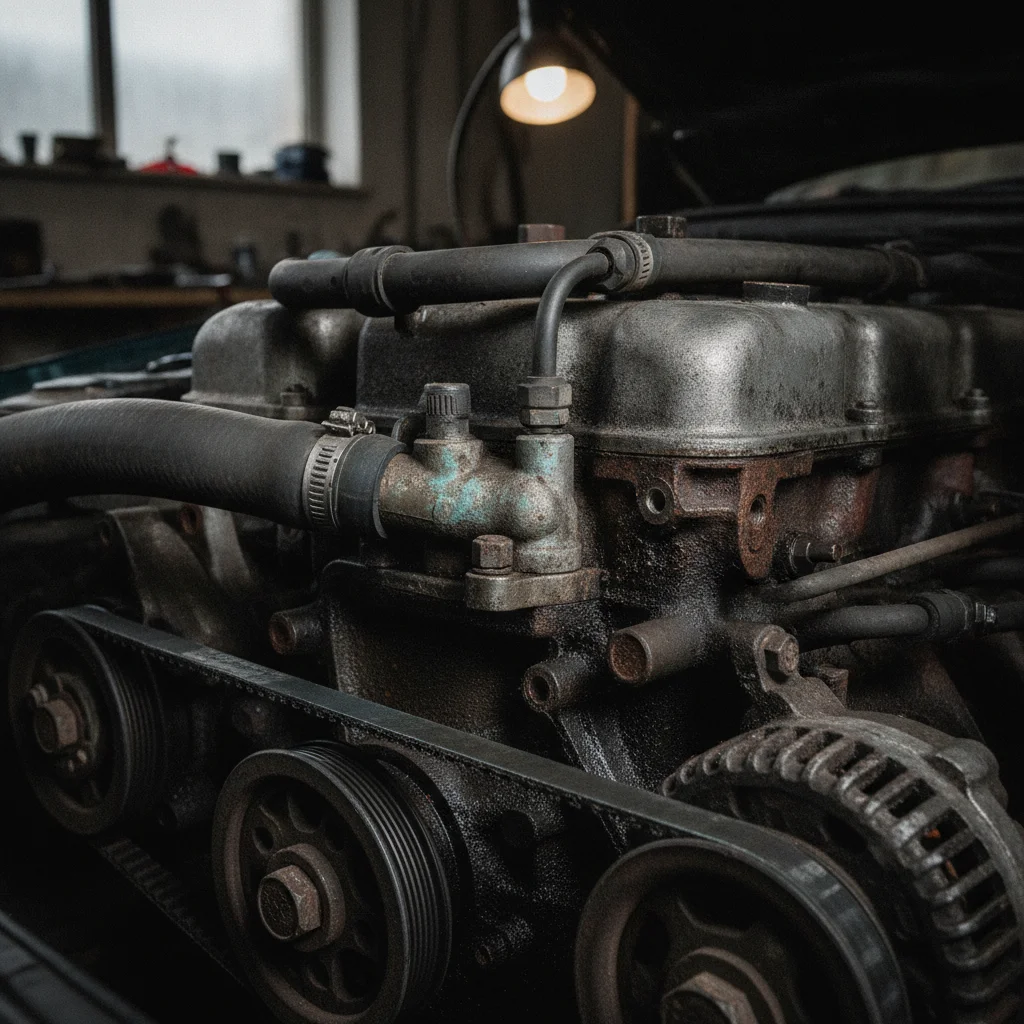
The valve cover gaskets, rear main seal, and oil pan gasket are the most common sources of external leaks on high-mileage engines. These rubber and cork components harden and shrink with age, eventually losing their ability to contain oil under the pressure and heat of normal operation. The rear main seal in particular sits where the crankshaft exits the back of the engine, and when it fails, oil can drip onto the exhaust system — a fire risk, not merely a maintenance issue.
[in_content_images:2]Lay a piece of cardboard under the vehicle overnight to map where the leak originates from front to back. A leak directly under the center of the engine is more likely an oil pan gasket. One near the firewall end of the engine is more concerning and warrants a mechanic's inspection. Most valve cover and oil pan gasket replacements run $150–$400 in labor — very manageable costs compared to what deferred repair can lead to. If you are considering selling the vehicle, addressing visible leaks is one of the highest-return prep steps, as detailed in preparing a high-mileage car for sale.
A rear main seal leak dripping onto hot exhaust is a fire risk, not just a fluid management problem.
Suspension Clunks Over Bumps or Uneven Tire Wear
Suspension components — ball joints, control arm bushings, sway bar end links, and strut mounts — are made of rubber, steel, and grease. Every one of those materials degrades over time and mileage. When a clunk or knock appears from the front end over bumps, railroad tracks, or dips, it is almost always announcing that one of these components has worn to the point where there is mechanical play in a joint that should be tight.
This matters beyond ride comfort. Worn ball joints can affect steering precision in ways that only become apparent in emergency maneuvers. A ball joint that separates completely — a real possibility in severely worn examples — causes an immediate and catastrophic loss of vehicle control. Recognizing the clunk early and addressing it is both the financially sound and the safe choice.
Uneven tire wear is a related indicator that is easier to spot during routine inspection. Wear concentrated on the inside or outside edge of a tire almost always points to alignment issues caused by worn suspension components changing the geometry of the wheel. Camber or toe problems that are not corrected will consume tires in 15,000–20,000 miles instead of 40,000+, adding several hundred dollars per set to your annual ownership cost. Have the suspension inspected by a mechanic whenever you notice irregular wear, and always request a four-wheel alignment after suspension repairs.
A worn ball joint that clunks over bumps today can separate without warning tomorrow — inspect it promptly.
Check Engine Light Combined with Reduced Fuel Economy
A Check Engine light is almost always treated as background noise by high-mileage car owners who have lived with it for years. That familiarity breeds the wrong kind of comfort. While a single, stable code for something like an evaporative emissions leak may indeed be low priority, a Check Engine light appearing alongside a noticeable drop in fuel economy is a combination that warrants immediate diagnosis.
The pairing typically points to a malfunctioning oxygen sensor, a failing mass airflow sensor, or a partially clogged catalytic converter — all components that affect how efficiently the engine manages its air-fuel ratio. When these sensors malfunction, the engine management computer may default to a rich fuel mixture (more fuel than needed), which reduces economy and can further damage the catalyst over time. The degradation compounds itself if ignored.
Modern vehicles log condition-based data that a technician can read to understand how the engine has been operating. Pulling the OBD-II codes at an auto parts store is free and takes five minutes. The code alone does not tell you everything — a P0420 (catalyst efficiency below threshold) could mean a bad oxygen sensor, a leaking exhaust, or a genuinely failing catalyst — but it tells you where to focus the diagnosis. Acting on a fuel economy drop early is almost always cheaper than waiting until performance also degrades. For a full list of symptoms that require immediate attention, see warning signs you should never ignore while driving.
A Check Engine light plus falling fuel economy is not background noise — it is a compounding problem asking to be solved.
Staying Ahead of the Curve
The difference between a high-mileage car that runs reliably for another 50,000 miles and one that leaves you stranded is almost always the owner's willingness to pay attention. The warning signs above are not inevitable death sentences — they are the car's way of asking for attention before a small, manageable problem becomes a large, unmanageable one.
Build a Simple Inspection Routine
Set a reminder to check five things every time you fill up with gas: oil level, coolant level, tire pressure, any new warning lights, and a quick look under the car for fresh spots. This five-minute habit catches most high-mileage problems at their earliest and least expensive stage. Pair it with a <a href="/maintenance-and-ownership/vehicle-maintenance/warning-signs/reading-your-car-before-it-breaks-down">broader awareness of your car's sounds and smells</a>, and you will rarely be surprised by a major repair.
If you are currently evaluating a used vehicle and want to understand what these symptoms mean in that context, the test drives and inspections process gives you the framework to spot these issues before you buy. And if you are planning to sell a high-mileage vehicle, knowing which problems actually move the needle with buyers can save you from over-spending on prep work — see our guide on selling a high-mileage car for specifics.
The next step for many high-mileage owners is adjusting their service schedule to match the car's actual needs. Maintenance that made sense at 60,000 miles may no longer be sufficient at 120,000. For a practical breakdown of what changes and when, see our article on service adjustments that keep high-mileage vehicles running. Small investments in attention now are almost always cheaper than the alternative.
High-Mileage Vehicles and Insurance Costs
As a vehicle ages and accumulates mileage, its market value decreases — which can change the calculus on what coverage level makes financial sense. Carrying comprehensive and collision coverage on a vehicle worth $4,000 may cost more annually than the benefit it provides. Review your coverage levels against the current market value of your high-mileage vehicle to make sure your insurance spend is proportionate. Check <a href="/buying-a-car/new-vs-used-cars/buying-used-cars">buying used cars</a> resources for context on how mileage affects valuation.
Electric Vehicles Follow Different Rules
If you own or are considering a high-mileage electric vehicle, many of the warning signs above do not apply in the same way. EVs have no engine oil, no transmission fluid, no spark plugs, and no exhaust system. However, they develop their own distinct wear patterns past 100,000 miles, particularly around battery capacity degradation and thermal management systems. See our guide on <a href="/electric-vehicles/ev-ownership-costs/ev-maintenance-basics/ev-maintenance-for-high-mileage-drivers-what-changes-after-100000-miles">EV maintenance after 100,000 miles</a> for a parallel breakdown of what to watch for.

All claims are backed by peer-reviewed research. Sources on request.