Key Takeaways
Multi-Point Inspection
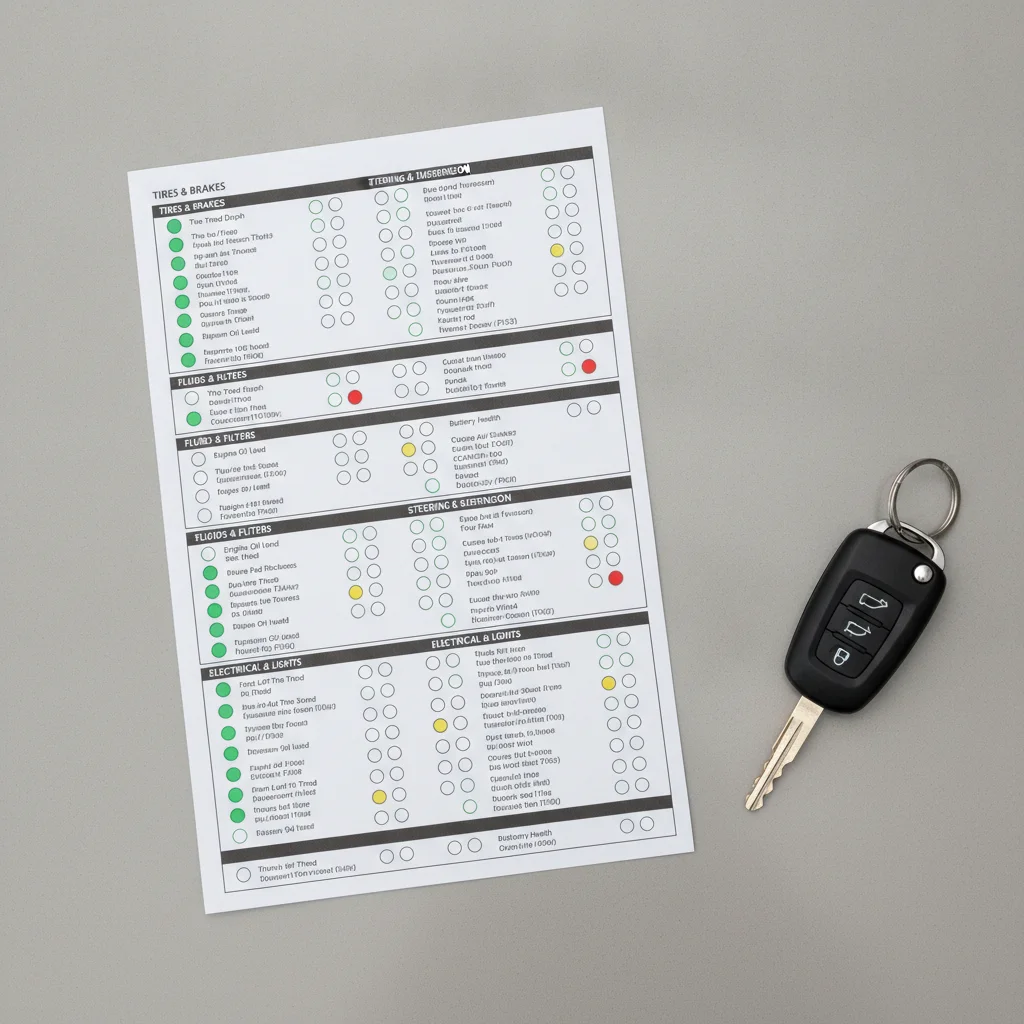
A multi-point inspection (MPI) is a standardized visual and operational check performed by a dealership or service center, typically during a routine visit like an oil change. Technicians work through a printed or digital checklist covering several dozen vehicle systems and components, then rate each as acceptable, marginal, or needing attention. The results are usually handed to the customer as a report — often color-coded — along with repair recommendations.
An MPI is not a diagnostic scan or a certified safety inspection. It relies primarily on visual assessment and basic functional checks, not electronic fault code analysis or component disassembly.
Why Multi-Point Inspections Exist — and Who Benefits
Walk into almost any franchise dealership service department for an oil change, and you'll walk out with a color-coded printout rating your vehicle across 30 to 50 checkpoints. That's a multi-point inspection. They became standard practice in the 1990s as manufacturers pushed dealers to standardize service experiences and build customer trust — and as service departments recognized that inspections were also an effective tool for generating additional repair revenue.
That dual purpose is worth keeping in mind. MPIs genuinely help drivers catch emerging problems before they become expensive failures. Catching a cracking serpentine belt or brake pads approaching the wear limit during a routine oil change visit is exactly the kind of early warning a conscientious owner wants. At the same time, the recommendations that come out of an MPI directly feed a service department's upsell pipeline.
Neither of those realities cancels the other out. The inspection can deliver real value — as long as you understand what it actually covers and what it doesn't. Most drivers never question the scope of the checklist they receive. They should.

It's also worth distinguishing an MPI from other inspection types. Unlike a pre-purchase inspection, which is conducted by an independent mechanic on behalf of a buyer, a multi-point inspection is performed by the dealership's own technicians, often on vehicles the dealer owns or services. The objectives, scope, and independence are all different.
What a Standard MPI Actually Covers
The exact checklist varies by brand and shop, but most multi-point inspections follow a broadly consistent structure. The National Institute for Automotive Service Excellence (ASE) and individual automaker service programs have helped standardize categories, even if the depth of each check differs. Here's what you can typically expect to be assessed:
Tires and Wheels
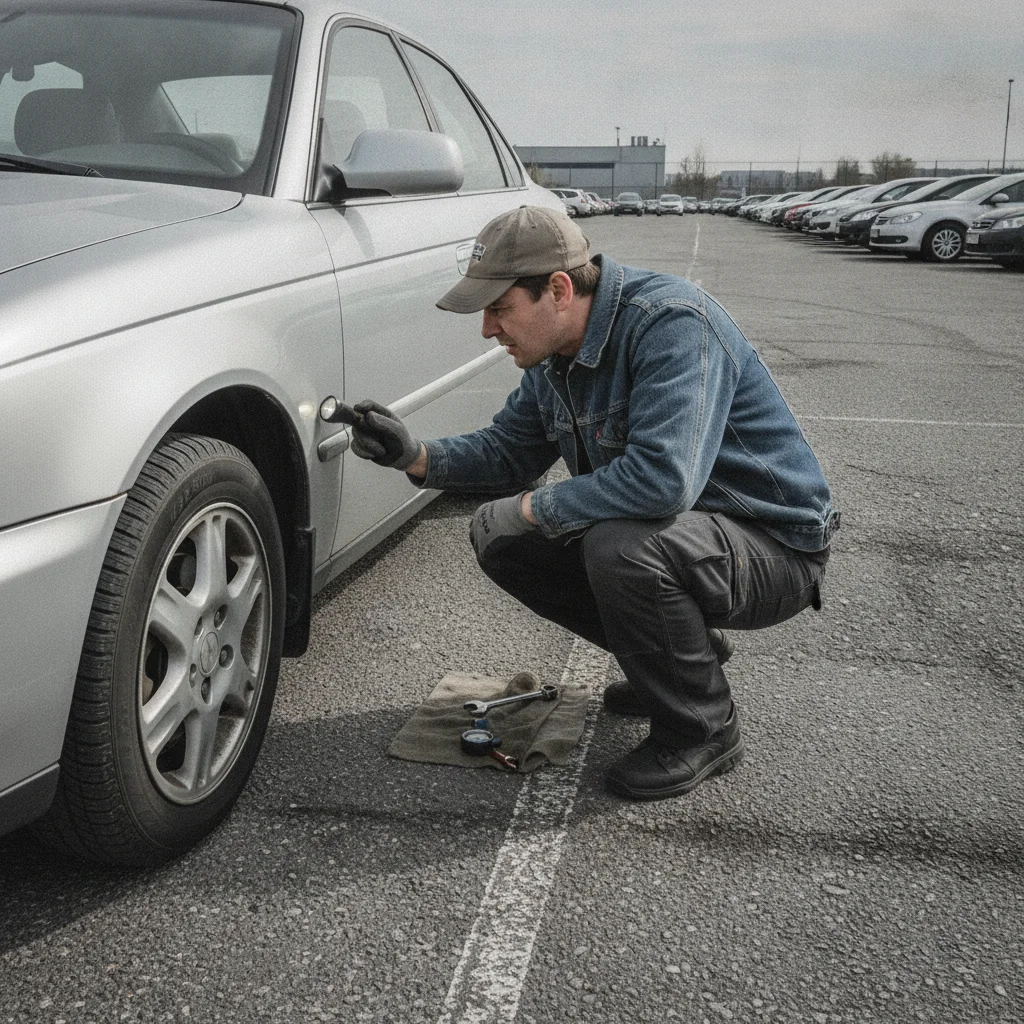
Tread depth is measured using a gauge or tread-wear indicators. Technicians also look at inflation pressure, uneven wear patterns (which can signal alignment or suspension issues), and visible sidewall damage. Wheel condition is noted visually — bent rims or obvious damage will usually be flagged.
Brakes
Pad thickness is checked — again, visually or with a measuring tool — and rotor condition is assessed for scoring, warping, or rust. Brake fluid condition may be noted, though a full brake fluid moisture test is less common. Parking brake function is sometimes tested.
Fluids
Engine oil (already changed if that's why you're there), coolant level and condition, power steering fluid, brake fluid, and windshield washer fluid are typically checked. Transmission fluid may be noted but is often omitted unless the technician has easy access. Differential and transfer case fluids are rarely checked in a standard MPI.
Belts and Hoses
The serpentine belt, timing belt (if externally accessible), and major coolant hoses are inspected visually for cracking, fraying, or wear. This is one area where a trained eye genuinely adds value — belt failure at highway speed is a serious and preventable problem.
Lights and Electrical
Headlights, taillights, brake lights, turn signals, and hazard lights are checked for function. Battery condition — usually assessed with a load tester — is increasingly part of standard MPIs, particularly in colder climates. Some shops check the alternator output at the same time.
Filters
Engine air filter and cabin air filter are typically pulled and inspected visually. Condition is rated and replacement is recommended based on appearance, though manufacturers' mileage-based replacement intervals are the more reliable guide.
Steering and Suspension (Visual)
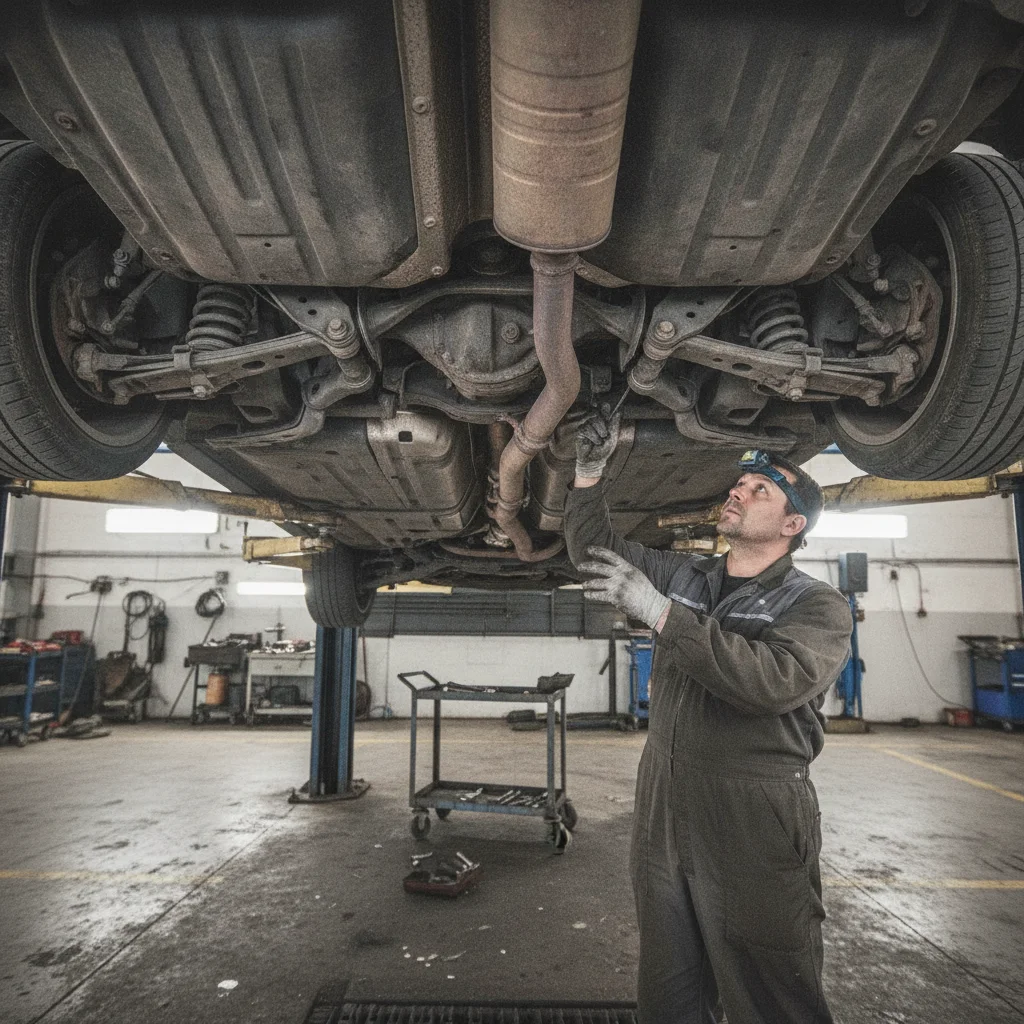
Shock absorbers, struts, and steering linkage components are inspected visually from below the vehicle. Technicians look for visible leaks, obvious damage, or excessive play. This is a surface-level check — a detailed suspension assessment requires hands-on testing of individual components.
30–50
Checkpoints on a typical MPI report
Most franchise dealership MPI checklists cover between 30 and 50 individual items, though the depth of each check varies significantly by brand and shop.
15–30 min
Typical time added to a service visit
Because MPIs are usually performed alongside other work, the incremental time added to a standard service appointment is generally 15 to 30 minutes.
$0
Cost at most franchise dealerships
Multi-point inspections are offered at no charge at the majority of new car dealerships, typically bundled with oil changes or routine maintenance visits.
2mm
Brake pad thickness typically rated red
Industry convention flags brake pads at or below 2–3mm as requiring immediate replacement, though individual dealer thresholds can vary.
Exhaust
The exhaust system is examined visually for rust, holes, or loose hangers. Catalytic converter condition is not typically assessed beyond a visual check for physical damage.
MPI Standards Vary by Brand and Shop
There is no single industry-wide standard that governs what must be included in a multi-point inspection. Manufacturers like Ford, GM, and Toyota each publish their own MPI formats for franchise dealers, and independent shops may use their own versions. This means the checklist you receive at one dealership may cover noticeably more — or less — than the one at a competing shop across town. Always ask what's included before assuming coverage.
Digital MPIs Are Becoming Standard
Many dealerships have shifted from paper checklists to tablet-based MPI systems that include photos of the inspected components. If your service department uses a digital MPI, ask to receive the photo documentation along with the ratings — images of your actual brake pads or tire tread depth are far more useful than a color rating alone. This also makes it harder for a shop to dispute findings later.
What a Multi-Point Inspection Does Not Cover
This is the section most service advisors won't volunteer. The gaps in MPI coverage are significant — not because inspections are poorly designed, but because the format is inherently limited to what can be seen or quickly tested without disassembly or specialized equipment.
Internal Engine and Transmission Condition
An MPI won't tell you anything meaningful about engine wear, valve condition, or piston ring health. Similarly, transmission internals — clutch packs, solenoids, valve body — are invisible to a visual inspection. If you suspect driveline problems, you need a dedicated diagnostic, not a checklist.
OBD-II Fault Codes
Unless your check engine light is on, many standard MPIs won't include an electronic scan of the vehicle's onboard diagnostic system. Pending fault codes — those that haven't yet triggered a warning light — can be sitting in your car's computer right now and won't surface on most MPI reports. Some dealers have integrated a quick scan into their MPI process, but it's not universal.
AC System and Refrigerant Level
Air conditioning performance and refrigerant charge are almost never part of a standard MPI. AC diagnosis requires specific equipment and is usually a separate service, particularly for checking refrigerant levels.
Fuel System
Fuel injectors, fuel pressure, and fuel pump condition are not checked. Fuel filter condition (on vehicles with external, serviceable filters) may or may not be included depending on the shop.
Detailed Suspension Measurement
An MPI may note that a shock absorber looks worn, but it won't measure wheel alignment angles, camber, or caster. Alignment checks require a dedicated alignment rack and are a separate service. Many suspension problems that cause tire wear or handling issues won't be identified in a visual-only inspection.
Rust and Structural Integrity
While undercarriage rust may be visually noted, MPIs don't include a structural assessment of the frame, unibody, or subframe. This matters especially on older vehicles or those from rust-belt regions. A proper structural evaluation requires more time and expertise than a routine inspection allows.
This is one reason why an MPI is a fundamentally different tool than the pre-purchase vehicle inspection checklist a buyer should use before committing to a used car purchase. The scopes simply don't overlap enough to be interchangeable.
Ask for Your MPI Report in Writing Every Time
Even if the service advisor only mentions results verbally, request the printed or digital report before you leave. These records are valuable for tracking wear trends, supporting warranty claims, and documenting vehicle condition if you sell the car privately. Most dealers are required to provide one — it just doesn't always get handed over proactively.
Use the MPI as a Maintenance Budget Tool
If your MPI shows several yellow-rated items, use that as a 6-to-12-month planning horizon for upcoming maintenance costs. Getting price quotes in advance — before items turn red and become urgent — gives you time to shop, save, and avoid making rushed decisions at the service counter under pressure.
Reading the Color-Coded Report: Green, Yellow, and Red
Most dealership MPI reports use a traffic-light color system to communicate urgency. Understanding what each color actually means — and what it doesn't — helps you respond appropriately rather than reflexively.
- Green (OK/Acceptable): The component passed the visual or functional check and appears to be in satisfactory condition. This doesn't mean "perfect" — it means no action is required at this time based on what the technician could observe.
- Yellow (Monitor/Marginal): The component is approaching wear limits or showing early signs of degradation. This is a heads-up, not an emergency. Yellow items often become action items within the next service interval or 6,000 to 12,000 miles.
- Red (Immediate Attention): The component is at or past its service limit, or a safety-related issue has been identified. Red items warrant prompt attention, though "prompt" is context-dependent — a red-rated cabin air filter is not the same urgency as red-rated brake pads at 2mm.
One important nuance: the rating thresholds aren't always standardized across dealers or technicians. Two shops might rate the same 4mm brake pads differently — one as yellow, one as red — based on internal policies or individual judgment calls. If a recommendation surprises you, ask the technician to show you the measurement or component.
“A multi-point inspection is only as good as the technician performing it and the time allotted to do it. When a shop has six cars in the queue and 45 minutes per bay, you're getting a glance, not an evaluation.”
— John Nielsen, Former Managing Director, AAA Automotive Engineering and Repair
It's also worth noting how MPI results differ from what a dealer assesses when evaluating a trade-in. The dealer's trade-in inspection process is driven by resale value calculations, not owner safety — a meaningfully different lens even when some of the same components are examined.
How to Use MPI Results Without Overpaying
The MPI report is a starting point, not a repair authorization. Here's how to treat it like the tool it's meant to be.
Prioritize by Category, Not Color Alone
Red on a safety-critical system — brakes, steering, tires — warrants immediate follow-up. Red on a cosmetic or comfort item can often wait. Think in terms of what failure would actually mean: a failed headlight is a fix-it ticket; a failed serpentine belt is a tow truck and a stranded schedule.
Ask to See the Evidence
Any reputable shop will show you the component in question, point to the wear indicator, or show you the measurement on the gauge. If a service advisor resists that request, that's a red flag about the recommendation.
Price-Check Before Authorizing
Use the MPI report as a shopping list. Get the part number and labor description from the service writer, then check pricing from independent shops in your area. Independent mechanics typically charge meaningfully less per hour than dealership service departments, and parts markup varies widely.
Track Results Over Time
Save your MPI reports. If a technician rated your rear shocks as yellow six months ago and they're now red, that progression is useful information. If an item has been rated yellow for three consecutive visits without change, ask why it hasn't degraded further — or why the threshold for red hasn't been reached.
Recognize the Limits Before Buying a Used Car
If a dealer tells you a used car "passed our multi-point inspection," that phrase should prompt questions, not reassurance. An MPI is not designed to assess hidden mechanical issues in a used vehicle. For a used car purchase, insist on an independent pre-purchase inspection by a qualified mechanic. The difference in scope is substantial — and the difference in incentive structure is even more significant.
Similarly, be aware that certified pre-owned vehicles go through a different — and more comprehensive — process. See how CPO inspections compare to standard MPIs if you're evaluating that purchase path.
When an MPI Is Enough — and When You Need More
For routine maintenance management on a car you already own and know well, a multi-point inspection is a genuinely useful tool. It creates a documented record of component condition at each service interval, catches visible wear before it escalates, and keeps you engaged in your vehicle's maintenance cycle. For most owners doing regular oil changes at a franchise dealer, the MPI report is one of the better pieces of information they receive.
But there are situations where the MPI's limitations become material:
- Before buying any used vehicle: Always get an independent inspection. The inspection process differs between private sellers and dealerships, but neither scenario should rely on an MPI as the sole evaluation tool.
- When a warning light is on: An MPI won't reliably diagnose fault codes. You need an OBD-II scan and potentially further diagnostic work by a qualified technician.
- After an accident: Structural damage, airbag system status, and suspension geometry changes require specialized assessment, not a visual checklist.
- On high-mileage vehicles: Cars beyond 100,000 miles have wear patterns and failure modes that an MPI checklist won't reliably surface. A more comprehensive inspection — including compression testing and fluid analysis — provides better insight.
- When buying a car: Use a full test drive and inspection process alongside an independent mechanic's report, not dealer paperwork alone.
A multi-point inspection is not a substitute for mechanical expertise applied with full access and appropriate tools. It's a snapshot — taken quickly, at a glance — of the most visible and measurable aspects of a vehicle's condition. Used correctly, it's a valuable piece of an owner's maintenance picture. Used as a proxy for a genuine mechanical evaluation, it leaves significant gaps.
Ask for Your MPI Report in Writing Every Time
Even if the service advisor only mentions results verbally, request the printed or digital report before you leave. These records are valuable for tracking wear trends, supporting warranty claims, and documenting vehicle condition if you sell the car privately. Most dealers are required to provide one — it just doesn't always get handed over proactively.
Use the MPI as a Maintenance Budget Tool
If your MPI shows several yellow-rated items, use that as a 6-to-12-month planning horizon for upcoming maintenance costs. Getting price quotes in advance — before items turn red and become urgent — gives you time to shop, save, and avoid making rushed decisions at the service counter under pressure.

All claims are backed by peer-reviewed research. Sources on request.