Key Takeaways
CPO Multi-Point Inspection
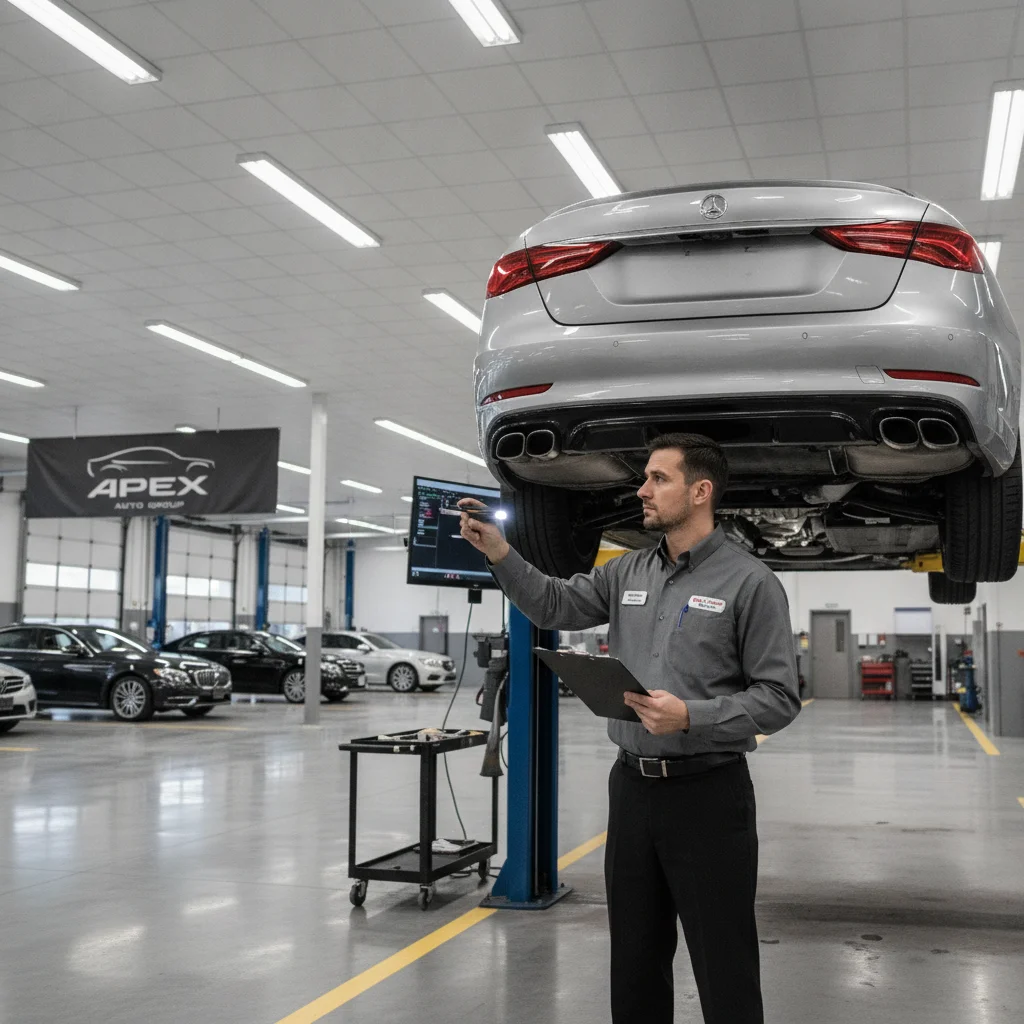
A certified pre-owned (CPO) multi-point inspection is a structured checklist that dealership technicians use to evaluate a used vehicle before it earns a manufacturer's CPO designation. The checklist typically covers 100 to 200 individual items spanning the engine, transmission, brakes, suspension, electrical systems, and interior. Passing the inspection means the car meets the manufacturer's minimum standards for certification — and qualifies for the accompanying warranty.
The inspection is performed by a franchised dealership technician, not an independent third party. Standards, passing thresholds, and what counts as an 'inspected' item vary significantly between automaker CPO programs.
Why the Point Count Is Mostly Marketing
Walk onto any franchise dealership lot and you'll see windshield stickers touting a "150-point inspection" or even a "172-point inspection." The numbers sound precise and reassuring. But here's what the marketing doesn't tell you: the way automakers count inspection points varies enormously. One brand might count every individual lug nut torque check as a separate point. Another might list "engine oil" as a single point that covers checking level, color, and condition. Same task, very different point counts.
What actually matters is not the number but the categories covered and the pass/fail standards applied. A genuine CPO inspection should evaluate five core areas:
- Powertrain and mechanical systems — engine, transmission, drivetrain
- Safety-critical components — brakes, tires, steering, lighting
- Electrical and technology systems — battery, alternator, infotainment, sensors
- Exterior and interior condition — glass, body panels, upholstery, seals
- Road test performance — acceleration, shifting, noise, vibration
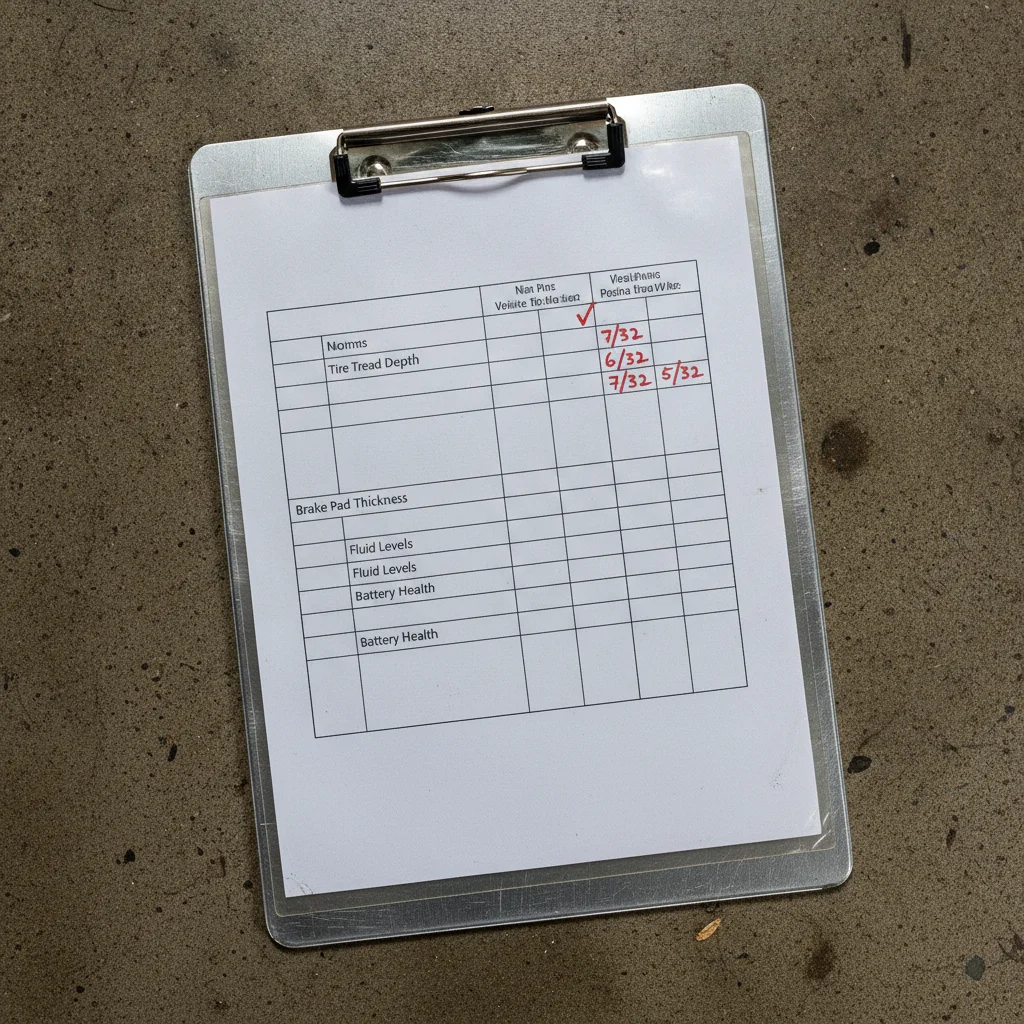
If a checklist covers all five areas with measurable standards, a 100-point inspection can be more rigorous than a 175-point one that pads the count with trivial checks. Before you trust the badge, ask the dealer to hand you the completed checklist — not just the marketing brochure. You have every right to see exactly what was inspected and what the findings were.
For a broader view of how CPO programs differ by brand, see our guide on how certified pre-owned inspections work and their limits.
What's Actually on the Checklist: A Category-by-Category Breakdown
1. Engine and Powertrain
This is the most consequential section of any CPO inspection. Technicians check engine oil level and condition, coolant level and freeze point, transmission fluid, differential fluid, and power steering fluid. They look for external leaks at gaskets, seals, and hose connections. The battery is load-tested — not just visually checked — to confirm it can hold a charge under demand. Belts and hoses are inspected for cracking, fraying, or swelling.
On vehicles with a timing chain or belt, technicians should note the service interval status. If the timing belt is overdue, a properly run CPO program either replaces it or discloses the mileage threshold prominently. Ask specifically about this if you're buying a vehicle with more than 60,000 miles.
$1,000–$3,500
Typical CPO price premium over non-certified
Consumer Reports analysis of CPO vs. comparable non-certified used vehicle transaction prices shows buyers routinely pay this premium for the certified designation.
~70%
CPO vehicles sold by franchised dealers
According to Edmunds market data, roughly 70% of all CPO vehicles are sold through franchised new-car dealerships operating manufacturer-backed programs.
4/32"
Minimum tire tread depth most CPO programs require
Most manufacturer CPO programs set a 4/32" minimum tread depth standard, though some luxury brands require 6/32" or more for certification.
2–7 years
Powertrain warranty extension range across CPO brands
Manufacturer CPO powertrain warranty extensions range from as little as 2 additional years (some budget brands) to 7 years from the original sale date (Toyota, Hyundai).
2. Brakes and Tires
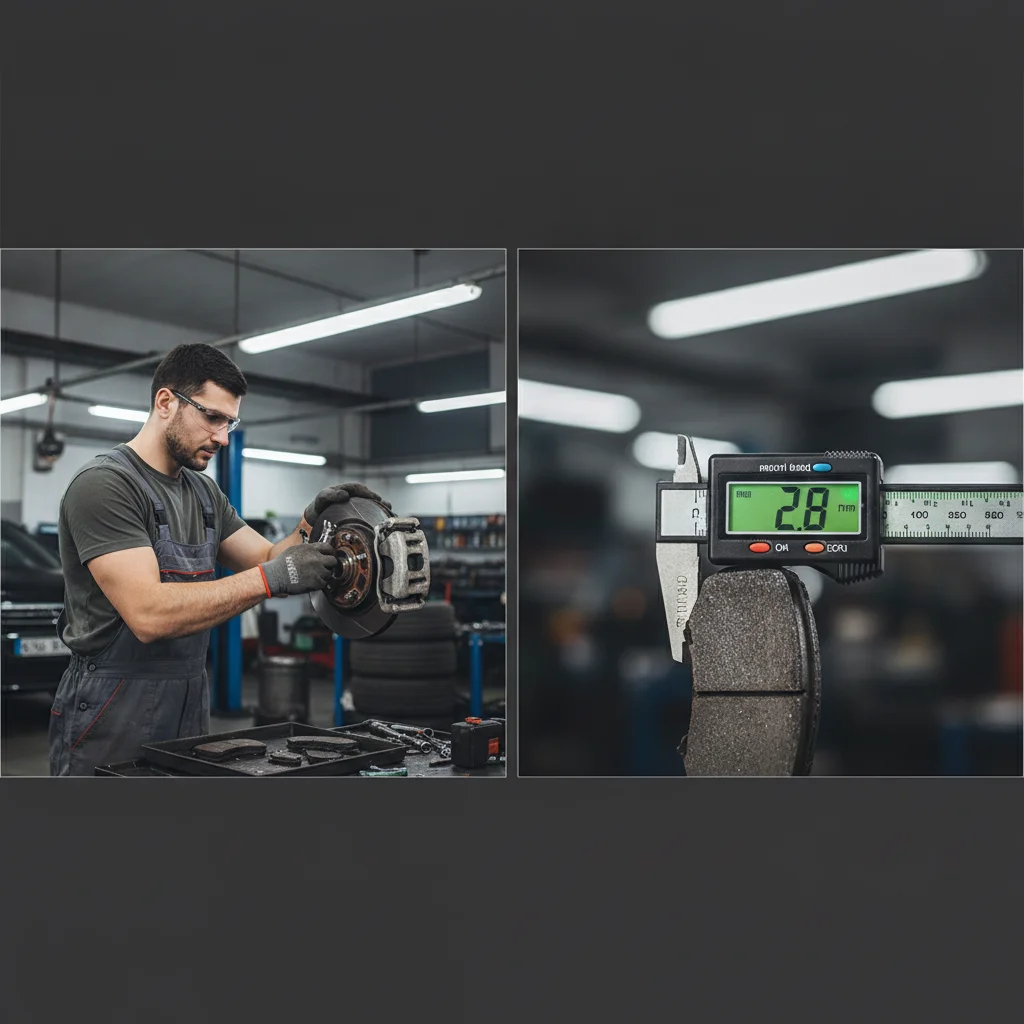
Brake pad thickness is measured in millimeters against the manufacturer's minimum. Most CPO programs require at least 3–4mm of pad remaining; some luxury brands set the bar at 5mm or more. Rotors are inspected for thickness, scoring, and warping. Brake fluid is tested for moisture contamination, which can lower its boiling point and compromise stopping performance under hard braking.
Tires are measured for tread depth with a gauge — not just a visual check — and inspected for uneven wear patterns that suggest alignment or suspension problems. Most programs require a minimum of 4/32" to 6/32" of remaining tread. Uneven wear on the inner or outer edges is a red flag for alignment or camber issues that the dealer should correct before certification.
3. Steering and Suspension
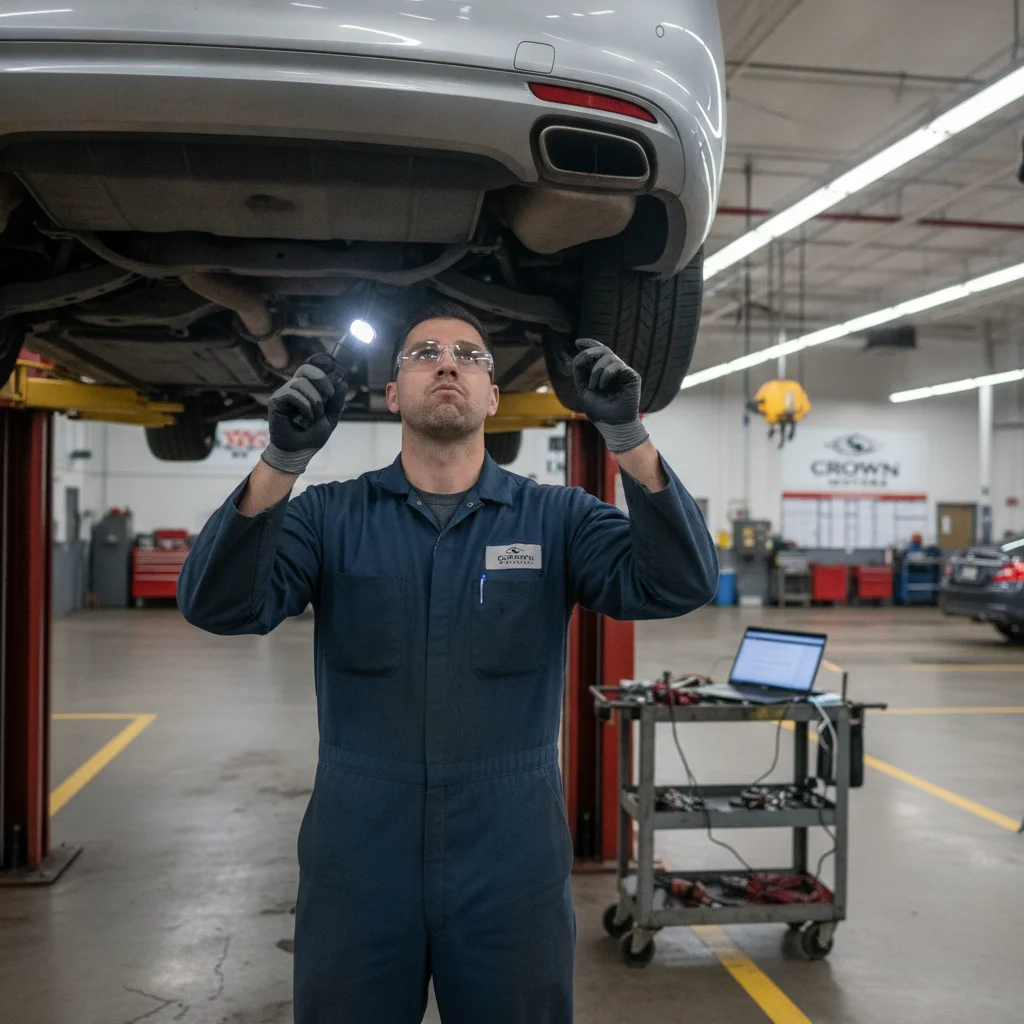
With the vehicle on a lift, technicians check ball joints for play, tie rod ends for looseness, and control arm bushings for cracking or deterioration. Shock absorbers and struts are checked for leaking fluid and bounce response. Wheel bearings are checked for noise and play. These components matter because worn suspension parts affect both safety and tire wear — and they're expensive to replace after purchase.
“The inspection checklist is a floor, not a ceiling. It tells you the minimum the car had to meet — it doesn't tell you how much life is actually left in any given component.”
— John Nielsen, Former Managing Director of Automotive Engineering and Repair, AAA
4. Electrical Systems and Technology
Modern vehicles have dozens of electronic control modules, and a CPO inspection should verify that none are throwing stored fault codes — even codes that haven't triggered a warning light yet. All exterior lights, interior lights, power windows, power locks, heated seats, infotainment, navigation, backup cameras, and driver-assistance systems should be function-tested. Air conditioning performance is checked, including the compressor clutch engagement and vent temperature.
This section is where CPO inspections often fall short on newer vehicles loaded with ADAS (Advanced Driver Assistance Systems) features like lane-keep assist, adaptive cruise control, and automatic emergency braking. Verifying these systems work correctly requires specific calibration tools that not all dealership service bays have readily available.
5. Exterior, Interior, and Structural Condition
Paint thickness is sometimes measured with a gauge to detect repainted panels — a potential indicator of prior collision repair. Glass is checked for chips and cracks. Door seals, trunk seals, and sunroof drains are inspected for wear or blockage. Body panels are checked for gaps, misalignment, and evidence of prior bodywork.
Inside, upholstery, carpet, headliner, and trim pieces are assessed for wear or damage within the program's acceptable tolerances. Odors — mold, smoke, or water intrusion — should be noted. This is the section where CPO standards are most subjective; what one program flags as unacceptable another might pass with a cosmetic credit.
Manufacturer CPO vs. Dealer-Certified: A Critical Difference
Not all 'certified' used cars carry the same weight. Manufacturer-backed CPO programs (Toyota Certified, Honda Certified, BMW Certified Pre-Owned, etc.) require franchised dealers to follow standardized inspection protocols set by the automaker. Dealer-only certifications are developed and administered by individual dealerships with no manufacturer oversight. Always confirm which type of certification applies to the vehicle you're considering, and read the warranty documentation carefully.
ADAS Calibration Is a Growing Gap
Modern vehicles with advanced driver-assistance features — automatic emergency braking, lane-keep assist, adaptive cruise control — require specialized calibration equipment to verify correct operation after any sensor adjustment or windshield replacement. Many franchise dealership service bays lack this equipment for vehicles outside their brand. If you're buying a CPO vehicle with ADAS features, ask specifically how those systems were tested and whether calibration was verified.
The Inspection Reflects One Point in Time
A CPO inspection documents the vehicle's condition on the day it was inspected. Mechanical conditions change — a battery that passed a load test in February may struggle to start a car in January. The inspection is a useful baseline, not a perpetual guarantee. Factor this into your expectations of what the CPO label actually promises.
6. The Road Test
A CPO road test is more than a lap around the parking lot. Technicians should verify smooth cold-start behavior, transmission shift quality through all gears, absence of steering pull or brake pulsation, and proper engagement of four-wheel drive or all-wheel drive systems if equipped. Noise, vibration, and harshness (NVH) issues — rattles, clunks, driveline vibration — should be noted and addressed.
The road test is the one part of the inspection that's hardest to fake on paper, because real driving behavior reveals issues that a static bay check won't catch.
What Happens When a Car Fails a Checkpoint
When an item fails the inspection threshold, the dealer has two options: repair it or remove the car from CPO consideration. In practice, dealers almost always choose to repair, because a certified car commands a significant price premium — typically $1,000–$3,000 more than a comparable non-certified used vehicle, depending on the brand and model.
This creates an important incentive to understand. The same entity inspecting the car (the dealer) also profits from certifying it. This isn't necessarily a problem — franchised dealers must follow manufacturer protocols to maintain their certification authority — but it means you should not treat the inspection as equivalent to an independent evaluation.
Always Request the Physical Checklist
Before agreeing to purchase any CPO vehicle, ask the dealer to print the completed inspection checklist — not a summary sheet, but the actual technician's report with measurements and findings. If the dealer says it's proprietary or unavailable, that's a significant concern. Legitimate manufacturer CPO programs document their inspections and can produce the records.
Consider an Independent Inspection Anyway
Even on a manufacturer-backed CPO vehicle, a $100–$200 independent pre-purchase inspection from a third-party mechanic is money well spent. An independent technician has no financial stake in certifying the car and may catch issues that a dealership inspector — consciously or not — has reason to overlook. See our <a href="/buying-a-car/car-buying-process/test-drives-and-inspections">test drives and inspections hub</a> for guidance on finding qualified independent inspectors.
Check the Inspection Date Relative to Purchase
A CPO inspection performed four months ago on a car that's been sitting on the lot may no longer reflect current condition — particularly for battery charge state and tire pressure. Ask when the inspection was completed and whether a fresh road test or battery check was performed recently. Many dealers will re-inspect on request.
Here's a practical example of how repair decisions work. Suppose a technician finds front brake pads at 3mm on a program that requires 4mm minimum. The dealer replaces the front pads — cost to them, roughly $80–$150 in parts and labor at internal rates — and the car passes. That repair cost is built into the pricing model. You get newer brake pads. But you might not get disclosure that the car was close to the threshold on other items that technically passed.
This is why requesting the completed inspection report matters. You want to see actual measurements, not just checkmarks. A brake pad reading of 4.2mm on a 4mm minimum tells you something different than a reading of 6mm.
What the Inspection Typically Won't Catch
Even a thorough inspection has structural blind spots. Understanding them helps you decide whether to trust the CPO badge alone or add your own due diligence.
- Intermittent electrical faults: A fault code that clears itself won't appear on the scan tool during a one-time inspection. Issues that appear only under specific temperature or load conditions can pass undetected.
- Early-stage internal engine wear: A compression test or oil analysis can reveal internal wear that a visual inspection misses entirely. Most CPO inspections don't include these.
- Frame or unibody damage: Paint thickness gauges can suggest a resprayed panel, but they can't tell you whether the underlying structure was repaired correctly after a collision. A professional frame measuring inspection requires specialized equipment.
- Water intrusion history: A car that experienced flood exposure and was dried out can pass a visual inspection. Moisture in the spare tire well, under the rear seat, or in the trunk corners is easy to miss if you're not specifically looking.
- Odometer fraud: CPO programs run title history checks, but odometer fraud that predates the first title transfer may not appear in those records.
For a detailed look at what routinely slips through even rigorous CPO programs, read our article CPO cars still have problems: what the inspection won't catch.
The practical takeaway: a CPO inspection is a strong baseline, not a guarantee. It tells you the car met minimum standards on one day, inspected by one technician. It does not tell you everything the car has been through.
Manufacturer CPO vs. Dealer-Certified: A Critical Difference
Not all 'certified' used cars carry the same weight. Manufacturer-backed CPO programs (Toyota Certified, Honda Certified, BMW Certified Pre-Owned, etc.) require franchised dealers to follow standardized inspection protocols set by the automaker. Dealer-only certifications are developed and administered by individual dealerships with no manufacturer oversight. Always confirm which type of certification applies to the vehicle you're considering, and read the warranty documentation carefully.
ADAS Calibration Is a Growing Gap
Modern vehicles with advanced driver-assistance features — automatic emergency braking, lane-keep assist, adaptive cruise control — require specialized calibration equipment to verify correct operation after any sensor adjustment or windshield replacement. Many franchise dealership service bays lack this equipment for vehicles outside their brand. If you're buying a CPO vehicle with ADAS features, ask specifically how those systems were tested and whether calibration was verified.
The Inspection Reflects One Point in Time
A CPO inspection documents the vehicle's condition on the day it was inspected. Mechanical conditions change — a battery that passed a load test in February may struggle to start a car in January. The inspection is a useful baseline, not a perpetual guarantee. Factor this into your expectations of what the CPO label actually promises.
How to Read a CPO Inspection Report Like an Expert
When you ask for the completed inspection report, here's what to look for:
- Actual measurements vs. checkmarks: Look for brake pad thickness in millimeters, tire tread depth in 32nds, battery cold-cranking amp test results. Checkmarks alone tell you very little. Numbers tell you where the car sits within the acceptable range.
- Items listed as 'adjusted' or 'reconditioned': These signal that something failed and was addressed. That's not necessarily bad — it means you're getting a repaired item — but you want to know what was done. Ask the service advisor to explain every line item marked with a repair action.
- What's listed as not applicable: If a section is marked N/A, confirm why. Sometimes technicians skip sections that don't apply to the vehicle's equipment level, but sometimes N/A is used incorrectly to bypass a difficult check.
- The technician signature and date: A valid CPO inspection should be signed by a certified technician and dated. If the inspection was completed months ago and the car has been sitting on the lot, some of those readings — especially battery and tires — may no longer reflect current condition.
If the dealer can't produce a completed report with actual measurements, treat that as a significant red flag. You can also cross-reference findings against our complete pre-purchase vehicle inspection checklist to make sure nothing was overlooked.
Always Request the Physical Checklist
Before agreeing to purchase any CPO vehicle, ask the dealer to print the completed inspection checklist — not a summary sheet, but the actual technician's report with measurements and findings. If the dealer says it's proprietary or unavailable, that's a significant concern. Legitimate manufacturer CPO programs document their inspections and can produce the records.
Consider an Independent Inspection Anyway
Even on a manufacturer-backed CPO vehicle, a $100–$200 independent pre-purchase inspection from a third-party mechanic is money well spent. An independent technician has no financial stake in certifying the car and may catch issues that a dealership inspector — consciously or not — has reason to overlook. See our <a href="/buying-a-car/car-buying-process/test-drives-and-inspections">test drives and inspections hub</a> for guidance on finding qualified independent inspectors.
Check the Inspection Date Relative to Purchase
A CPO inspection performed four months ago on a car that's been sitting on the lot may no longer reflect current condition — particularly for battery charge state and tire pressure. Ask when the inspection was completed and whether a fresh road test or battery check was performed recently. Many dealers will re-inspect on request.
Is the CPO Premium Worth It?
The CPO price premium typically ranges from $1,000 to $3,500 over a comparable non-certified used vehicle. Whether that's worth it depends on three factors:
- The brand's CPO program quality
- Manufacturer CPO programs — Toyota, Honda, BMW, Mercedes-Benz, Chevrolet — are backed by the automaker and follow standardized protocols. Independent dealer-certified programs (not backed by the manufacturer) use their own standards, which vary enormously. Always confirm you're buying a manufacturer-backed CPO, not a dealer-only certification.
- The warranty terms
- A CPO program that extends powertrain coverage to 100,000 miles with no deductible provides real financial value. One that adds only 12 months of limited coverage on top of an expired factory warranty provides much less. Calculate the coverage cost per year against what you'd pay for extended coverage independently.
- The vehicle's history and condition
- A two-year-old vehicle with 18,000 miles that still has most of its factory warranty intact gets less added value from CPO certification than a four-year-old vehicle with 48,000 miles where factory coverage has expired. Think about how much of the CPO warranty you actually need.
For a structured approach to your buying decision, see our CPO buyer's pre-purchase checklist — it walks through warranty terms, inspection records, and title history in detail before you sign anything.
The bottom line: CPO certification adds real value when the program is manufacturer-backed, the warranty terms are substantive, and the inspection report shows concrete measurements. It adds less value when you're paying $2,500 more for a marketing label backed by a checklist of checkmarks. Do the math specific to the car in front of you — don't let the badge do your thinking.


All claims are backed by peer-reviewed research. Sources on request.