Key Takeaways
Spark Plug
A spark plug is a small electrical device threaded into each cylinder of a gasoline engine. Its job is to ignite the compressed air-fuel mixture at precisely the right moment, creating the controlled explosion that drives the piston and produces power. Without a functioning spark plug, a cylinder cannot fire — and the engine either misfires or fails to run entirely.
Spark plugs operate under extreme conditions: electrode temperatures can reach 1,472°F (800°C) and firing voltages range from 12,000 to 45,000 volts depending on engine design and plug type.
What a Spark Plug Actually Does Inside Your Engine
Every time you turn the key or press the start button, your engine depends on a precisely timed electrical spark to transform gasoline and air into motion. That spark comes from the plug — a deceptively simple component screwed into the top of each cylinder in your engine.
Here's the basic sequence: the piston compresses a mixture of air and fuel, the ignition coil sends a high-voltage electrical pulse down the spark plug wire or coil-on-plug connector, and the plug fires a spark across a small gap between two electrodes. That spark ignites the mixture, forcing the piston downward and turning the crankshaft. This happens thousands of times per minute, in every cylinder, in a carefully coordinated rhythm.
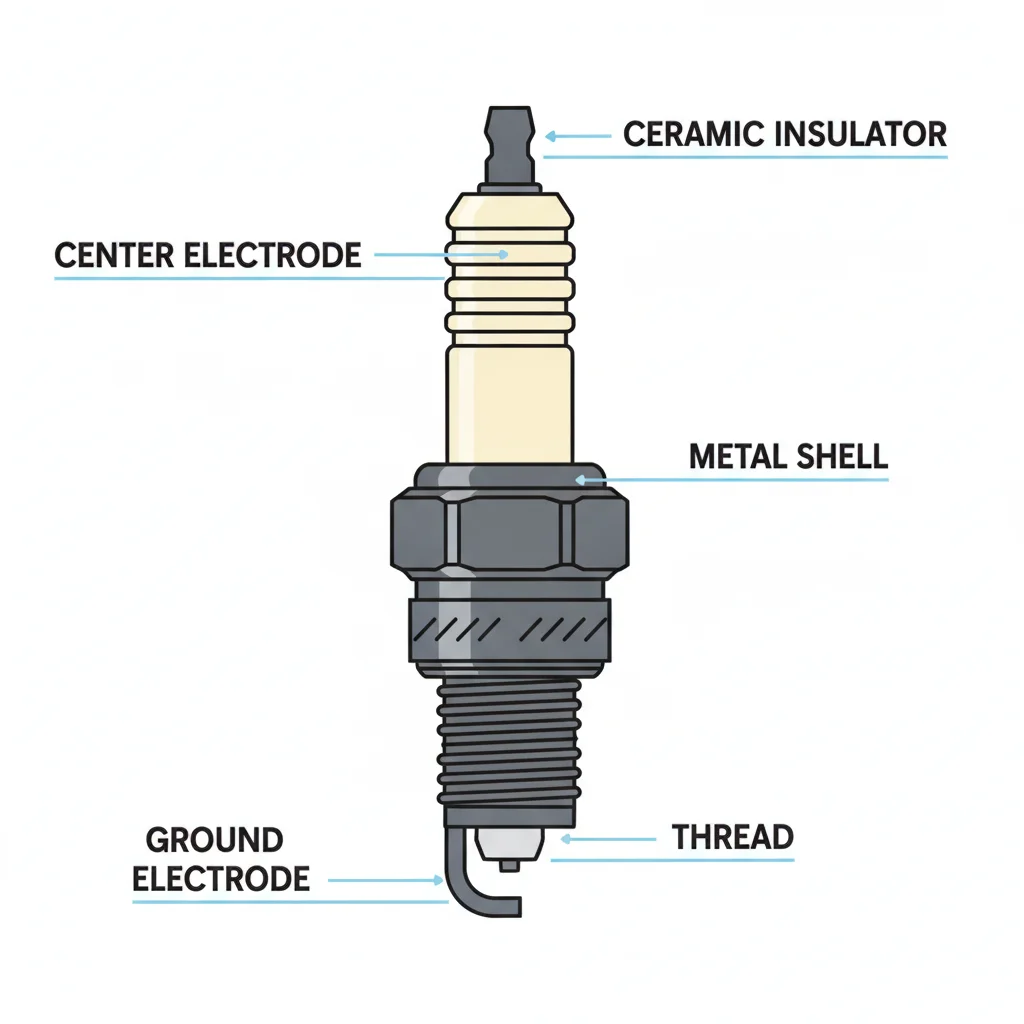
The gap between the electrodes — typically between 0.028 and 0.060 inches depending on the engine — is critical. Too narrow, and the spark is weak. Too wide, and it may not fire reliably at all. As a plug ages, the electrodes erode from repeated high-voltage discharges and extreme heat, slowly widening that gap and degrading performance.
Modern engines have one spark plug per cylinder. A four-cylinder engine has four plugs; a V8 has eight. Some performance engines use two plugs per cylinder to achieve more complete combustion — but even standard configurations mean the plugs collectively fire millions of times before they're due for replacement.
Types of Spark Plugs and How Long They Last
Not all spark plugs are built the same way, and the material used for the electrode makes a significant difference in both performance and longevity. Understanding plug types helps explain why service intervals vary so widely from one vehicle to another.
Copper Core Plugs
The most traditional design uses a copper core with a nickel alloy electrode. Copper is an excellent conductor and provides a strong, consistent spark — but nickel wears relatively quickly. Copper plugs are the least expensive option, typically lasting 20,000 to 30,000 miles. They're common in older vehicles and some budget-oriented applications.
Platinum Plugs
Platinum is harder than nickel and resists electrode erosion more effectively. Single-platinum plugs last around 60,000 miles; double-platinum designs — which plate both the center and ground electrodes — can reach 100,000 miles in ideal conditions. Many vehicles from the 1990s and 2000s came factory-equipped with platinum plugs.
Iridium Plugs
Iridium is among the hardest metals used in automotive applications. Iridium plugs feature a very fine center electrode — sometimes just 0.4mm in diameter — that concentrates the spark for more reliable ignition. They typically last 60,000 to 100,000 miles and are now standard equipment in most modern vehicles. Their higher upfront cost is offset by the extended replacement interval.
Up to 30%
Fuel economy loss from misfiring plug
The U.S. Department of Energy and EPA have cited misfiring spark plugs as capable of reducing fuel efficiency by as much as 30% in affected cylinders.
100,000 mi
Maximum interval for iridium plugs
Most manufacturer specifications for iridium spark plugs range from 60,000 to 100,000 miles, depending on engine design and operating conditions.
$900–$2,500
Catalytic converter replacement cost
Sustained misfires from worn plugs can destroy a catalytic converter; replacement costs vary widely by vehicle make, model, and whether OEM or aftermarket parts are used.
$80–$250
Typical spark plug service cost (4-cyl)
Parts and labor combined for a four-cylinder vehicle with iridium plugs at an independent repair shop, based on industry labor rate averages.
One important rule: always replace plugs with the type specified for your vehicle. Installing copper plugs in a vehicle designed for iridium may save money upfront but will dramatically shorten the service interval and can reduce performance. Your owner's manual — or the placard under the hood — will list the correct specification.
Buy Plugs in a Complete Set
Even if only one plug appears worn or causes a misfire, replace the entire set at once. The other plugs have the same mileage on them and will fail at similar intervals. Replacing them together saves a second labor charge and ensures consistent combustion across all cylinders.
Check Your Interval Before Assuming
Don't assume a 100,000-mile plug interval applies to your vehicle just because it has iridium plugs. Turbocharged engines, high-performance applications, and vehicles that spend significant time idling may require more frequent replacement. Your owner's manual is the authoritative source — not the plug box.
The Warning Signs That Your Spark Plugs Are Worn
Spark plug degradation is gradual enough that many drivers don't notice a single dramatic failure — they simply adapt to a car that runs slightly worse than it used to. Knowing what to look for makes it easier to catch the problem before it cascades into something costlier.
Engine Misfires
A misfire occurs when a cylinder fails to ignite its air-fuel mixture properly. You may feel it as a brief hesitation, a stumble, or a shudder — especially under acceleration or at idle. Modern vehicles are equipped with knock and misfire sensors that will trigger a check-engine light (typically code P0300–P0308) when a misfire is detected. A misfiring cylinder sends unburned fuel into the exhaust, which can quickly damage the catalytic converter.
Rough or Unstable Idle
When you're stopped at a light and the engine feels like it's vibrating or surging slightly, worn spark plugs are a common culprit. The engine is struggling to maintain consistent combustion across all cylinders, leading to an uneven power output at low RPM.
Hard Starting
A weak or inconsistent spark makes cold starts particularly difficult. If your car cranks longer than usual before catching — especially on cold mornings — worn plugs may be contributing to the problem alongside other potential causes like a weak battery.
Declining Fuel Economy
Incomplete combustion is inherently inefficient. When plugs are worn, the engine may not fully burn the fuel in each cylinder, wasting energy and increasing consumption. The EPA has noted that a misfiring spark plug can reduce fuel economy by as much as 30%. That's a meaningful hit at today's pump prices. For a broader look at how maintenance affects your MPG, see which maintenance steps restore the most fuel economy.
Sluggish Acceleration
If your car feels less responsive than it used to — particularly when merging onto a highway or climbing a grade — worn plugs could be sapping power. Combustion efficiency directly affects how much energy the engine can extract from each firing event.
Check Engine Light Doesn't Always Mean Plugs
A P0300-series misfire code points to a cylinder not firing correctly, but the cause could be an ignition coil, a fuel injector issue, or a compression problem — not just a worn plug. A visual inspection of the old plug and a coil resistance test can help isolate the actual fault before parts are ordered.
What Old Plugs Can Tell You
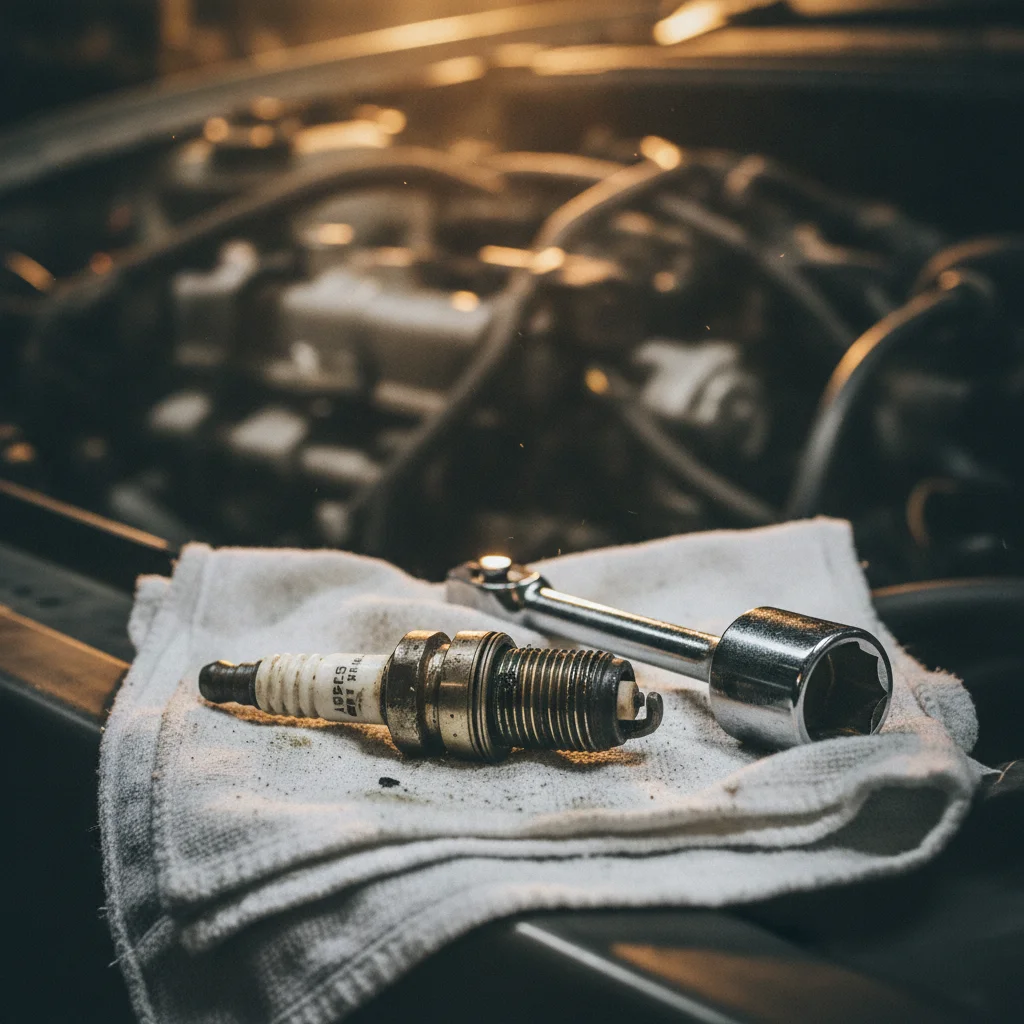
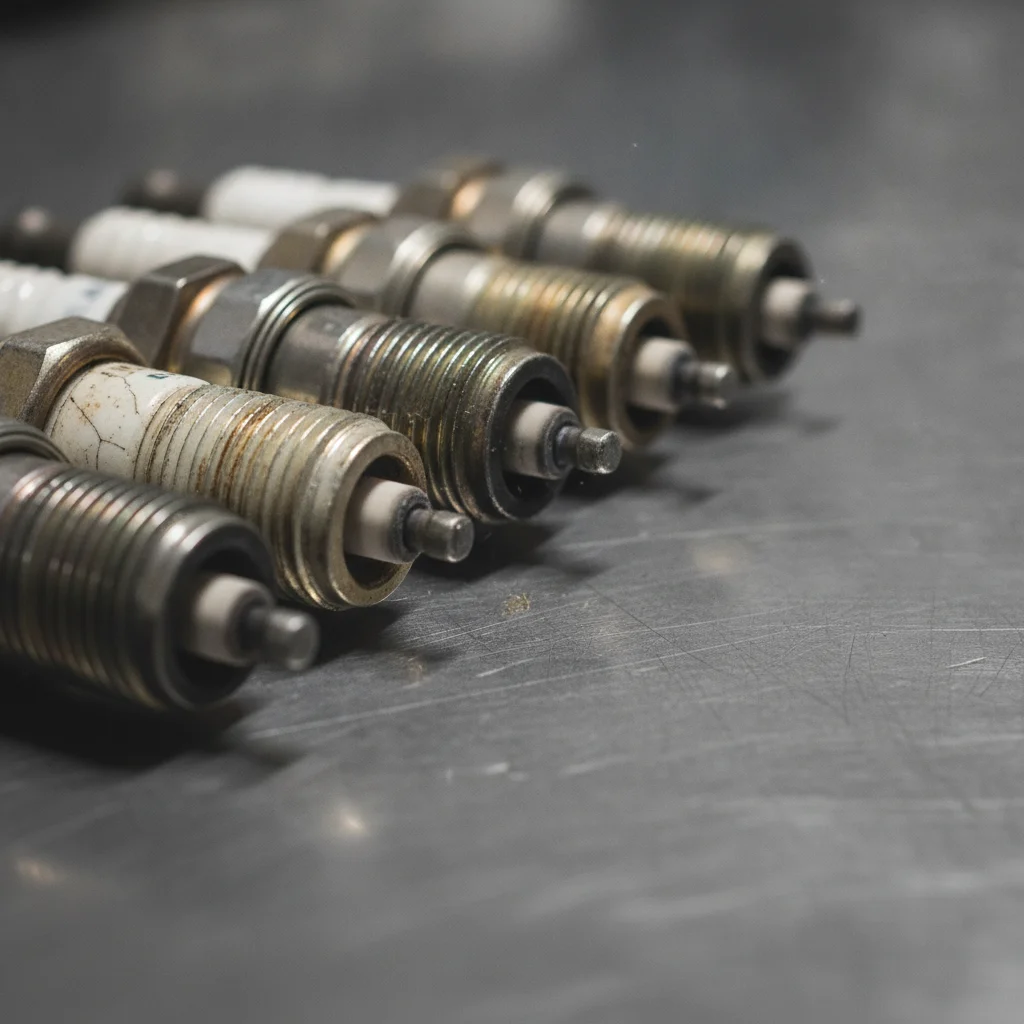
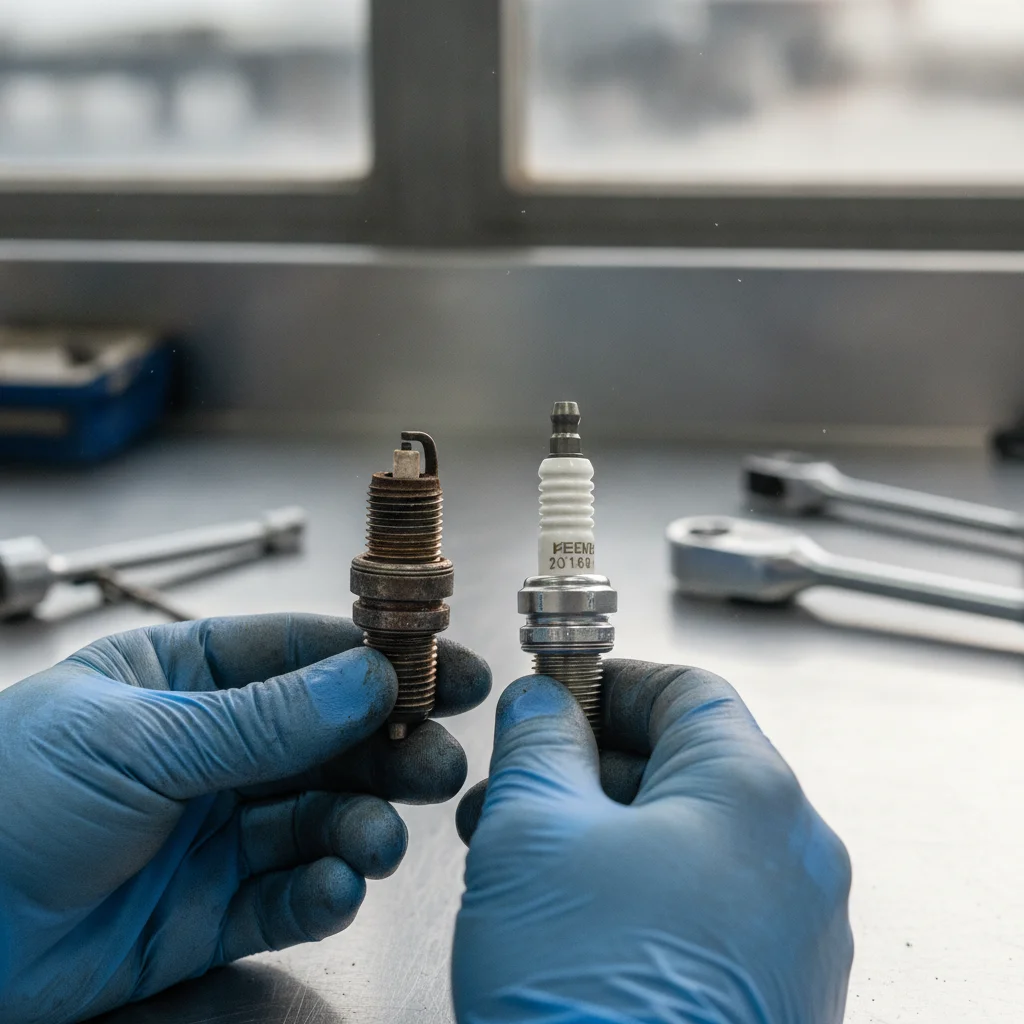
A skilled technician reads pulled plugs like a diagnostic report. Light tan or grayish deposits are normal; black sooty buildup suggests a rich fuel mixture or oil burning; white or chalky deposits indicate possible coolant intrusion. These findings can prompt further diagnostics that catch larger engine problems before they escalate.
Why Replacing Spark Plugs Is Worth It
Spark plug replacement is one of the most cost-effective maintenance items on any service schedule. The parts are inexpensive — a set of iridium plugs for a four-cylinder engine might run $40 to $80 at retail — and for most engines, the job is straightforward enough that a competent DIYer can complete it in under an hour.
“Spark plugs are the most overlooked maintenance item in the modern service schedule. They're designed to last so long that most drivers simply forget about them — until something goes wrong that costs ten times more to fix.”
— Donnie Smith, ASE Master Certified Technician and automotive educator
The greater financial argument, though, is what happens when replacement is deferred. Misfiring cylinders push unburned hydrocarbons into the exhaust stream, where they ignite inside the catalytic converter. The converter isn't designed for that heat load, and sustained misfires can destroy it. A catalytic converter replacement on a modern vehicle typically costs between $900 and $2,500 — easily 20 to 50 times the cost of a spark plug service. The companion article on the real cost of skipping spark plug replacement walks through the financial math in detail.
There's also the reliability dimension. A car that starts reliably, idles smoothly, and accelerates cleanly is a car that won't strand you — or require a tow. Spark plug replacement is a scheduled maintenance item, not a surprise repair, and treating it as such keeps larger costs predictable.
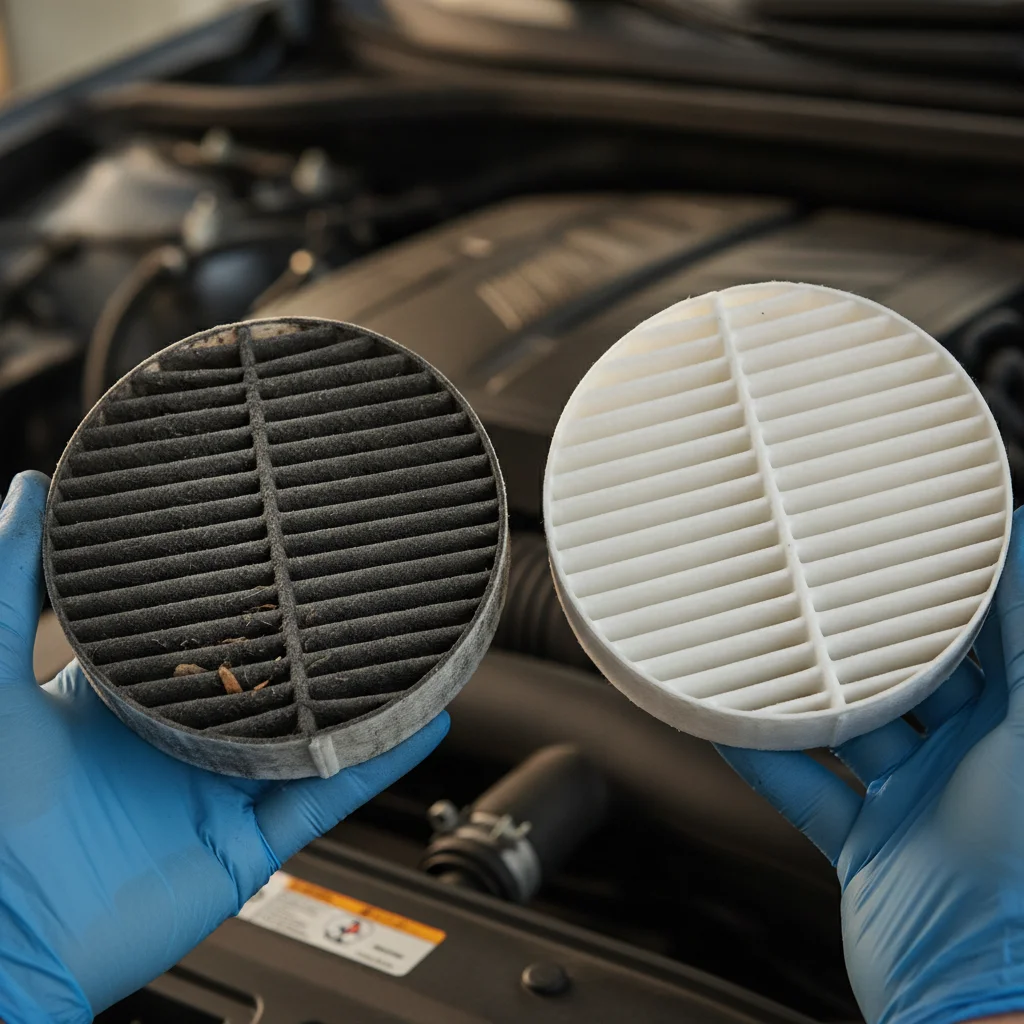
Spark plugs don't exist in isolation, either. A well-maintained ignition system works alongside a clean air filter to support complete combustion. If you haven't checked your air filter recently, here's how a clogged air filter affects engine efficiency — and why both items are worth addressing together.
What to Expect at Service: Costs, Process, and Timing
If you're taking your vehicle to a shop for spark plug replacement, the experience varies based on engine type and plug accessibility. Most four- and six-cylinder engines are reasonably accessible, and a competent technician can complete the job in 30 to 60 minutes. Some V6 and V8 engines — particularly those with coil-on-plug designs or transversely mounted engines where half the plugs face the firewall — can take two to three hours, driving up labor costs.
Typical Cost Ranges
| Plug Type | Parts Cost (4-cyl) | Labor Cost | Total Range |
|---|---|---|---|
| Copper | $8–$20 | $40–$100 | $48–$120 |
| Platinum | $20–$50 | $40–$150 | $60–$200 |
| Iridium | $40–$100 | $40–$150 | $80–$250 |
V6 and V8 engines with more cylinders — or harder-to-reach plug locations — will push costs higher. Always ask for a quote before authorizing the work.
What the Technician Should Check
A thorough spark plug service isn't just a swap. A skilled technician will inspect the old plugs for signs that point to other problems: oil-fouled plugs suggest a leaking valve seal; black, sooty deposits indicate a rich fuel mixture or oil burning; white or blistered insulators point to detonation or a lean-running engine. Each of these conditions has a root cause beyond the plug itself.
Check Engine Light Doesn't Always Mean Plugs
A P0300-series misfire code points to a cylinder not firing correctly, but the cause could be an ignition coil, a fuel injector issue, or a compression problem — not just a worn plug. A visual inspection of the old plug and a coil resistance test can help isolate the actual fault before parts are ordered.
What Old Plugs Can Tell You
A skilled technician reads pulled plugs like a diagnostic report. Light tan or grayish deposits are normal; black sooty buildup suggests a rich fuel mixture or oil burning; white or chalky deposits indicate possible coolant intrusion. These findings can prompt further diagnostics that catch larger engine problems before they escalate.
Service Intervals by Plug Type
- Copper: Every 20,000–30,000 miles
- Platinum (single): Every 60,000 miles
- Platinum (double) / Iridium: Every 60,000–100,000 miles
Check your owner's manual for the manufacturer's specific recommendation — some turbocharged engines call for more frequent changes because of higher combustion pressures and temperatures. Engine displacement also plays a role in how hard your plugs work; understanding how engine size affects real-world performance helps put those demands in context.
Buy Plugs in a Complete Set
Even if only one plug appears worn or causes a misfire, replace the entire set at once. The other plugs have the same mileage on them and will fail at similar intervals. Replacing them together saves a second labor charge and ensures consistent combustion across all cylinders.
Check Your Interval Before Assuming
Don't assume a 100,000-mile plug interval applies to your vehicle just because it has iridium plugs. Turbocharged engines, high-performance applications, and vehicles that spend significant time idling may require more frequent replacement. Your owner's manual is the authoritative source — not the plug box.
Spark Plugs in the Context of Your Full Maintenance Schedule
Spark plugs are one piece of a larger maintenance picture. They work in concert with ignition coils, the fuel system, the air intake, and the engine management computer. When plugs are worn, the engine control unit (ECU) can compensate — adjusting fuel trim, timing, and other parameters — but there's a limit to how much the software can overcome degraded hardware.
A useful way to think about spark plug service: it belongs in the same category as oil changes and air filter replacements — routine items with documented, measurable effects on efficiency and reliability. Unlike oil, though, plugs don't require attention every few thousand miles. That extended interval is also what makes them easy to forget.
If you've recently purchased a used vehicle and don't have service records, it's worth having the plugs inspected or proactively replaced if the mileage is within range. You won't necessarily feel the difference between 50% and 100% worn plugs day-to-day — but the gap in combustion efficiency and component stress is real.
For drivers who have made the switch to an electric vehicle, spark plugs are one maintenance item you've permanently left behind — along with oil changes and timing belts. But EVs aren't maintenance-free. See which wear items EVs still require for a complete rundown of what you'll still need to replace.

For gasoline-powered vehicles, the spark plug remains one of the most reliable investments in engine health. Small part, predictable cost, significant payoff — that's the case for staying current on plug service.

All claims are backed by peer-reviewed research. Sources on request.