Key Takeaways
Clogged Engine Air Filter
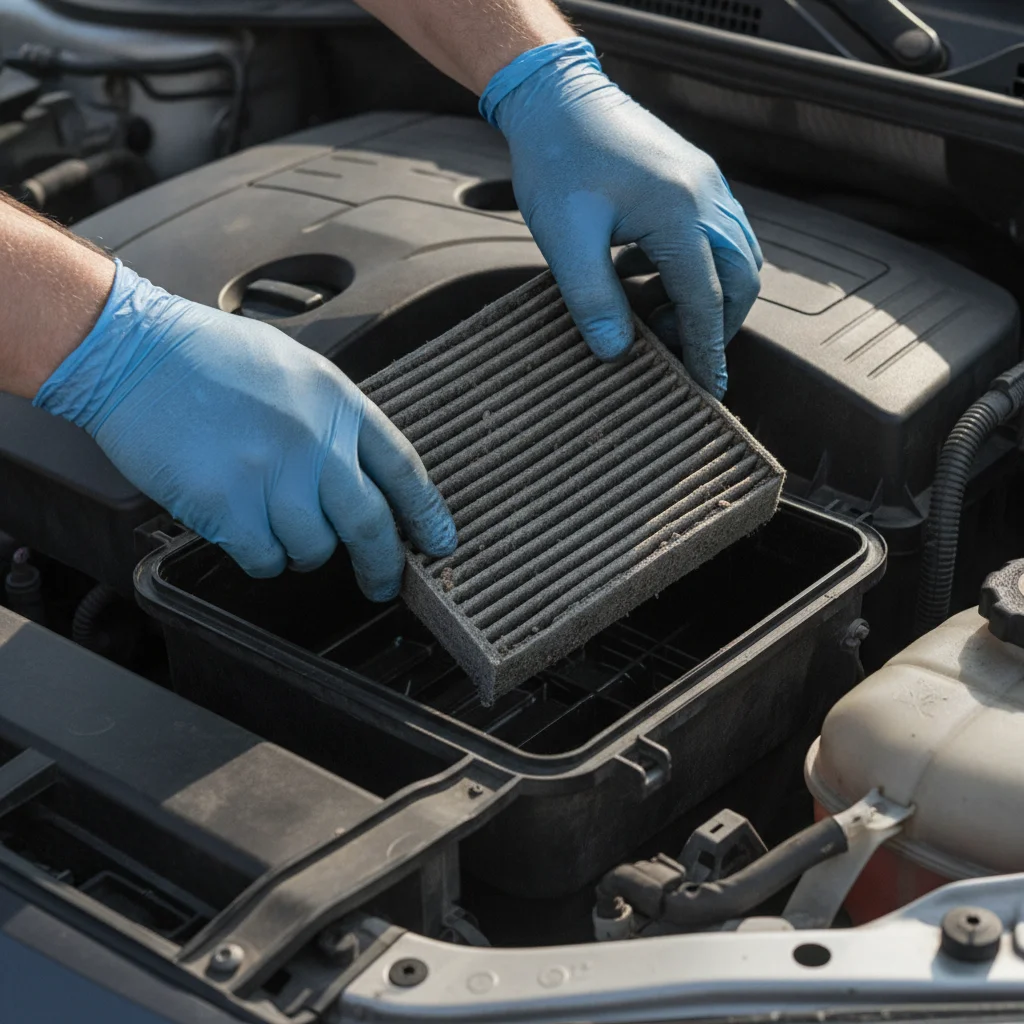
An engine air filter removes dust, dirt, and debris from the air before it enters the engine. Over time, that trapped material builds up and restricts airflow. A clogged air filter forces the engine to work harder to pull in the air it needs for combustion, which can reduce power and fuel efficiency.
Modern fuel-injected engines use oxygen sensors and mass airflow (MAF) sensors to compensate for restricted airflow by adjusting the fuel mixture — but this compensation has limits and still carries efficiency costs.
What an Air Filter Actually Does
Before we talk about what happens when it fails, it's worth being clear about what an engine air filter is doing every second your car is running. Your engine is essentially an air pump — it pulls in enormous volumes of air, mixes that air with fuel, and ignites the mixture to generate power. For a typical 2.0-liter engine running at highway speeds, that means ingesting somewhere between 500 and 1,000 cubic feet of air every hour.
All of that air passes through a filter element — usually a pleated paper or synthetic media — before it enters the intake manifold. The filter's job is to trap dust, pollen, road grit, and other particulates that would otherwise enter the engine. Without it, abrasive particles would accelerate wear on cylinder walls, piston rings, and other precision-machined surfaces.
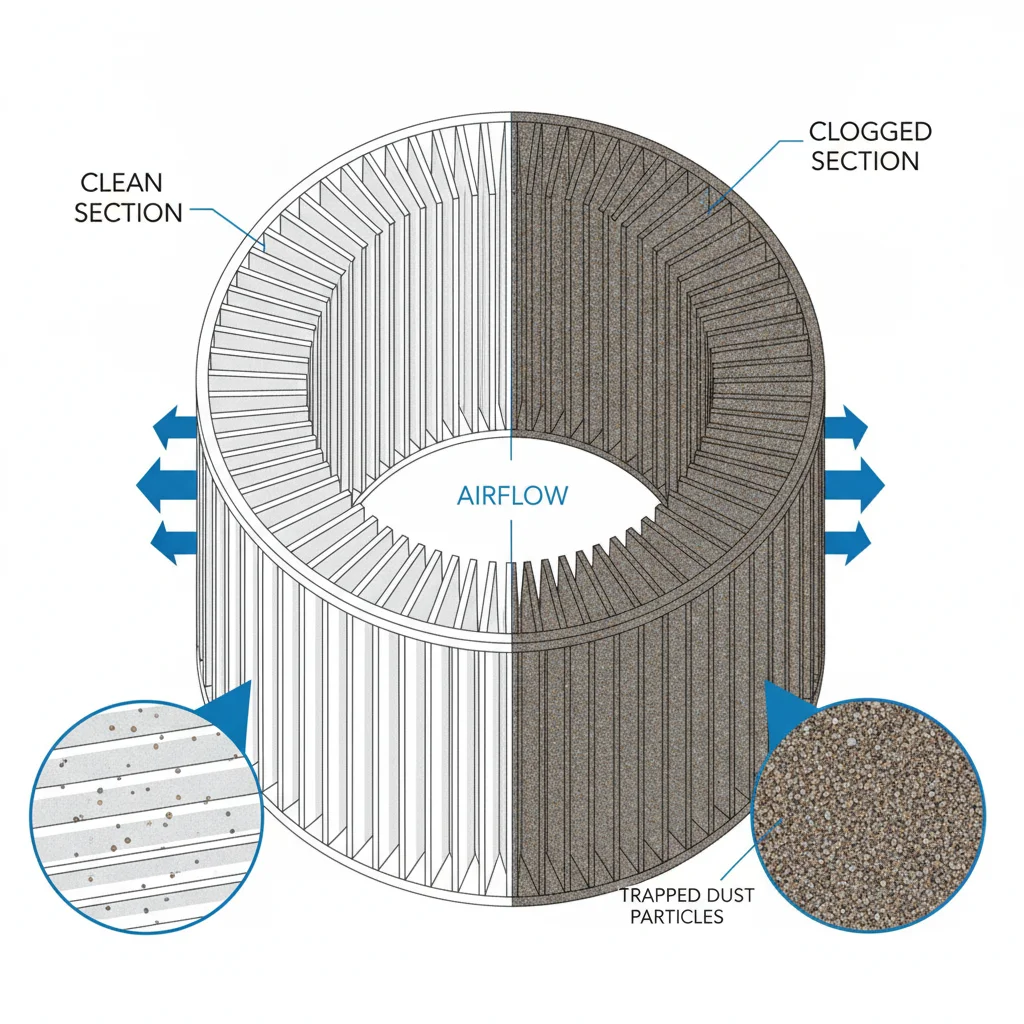
The filter is a consumable. Every gram of dirt it traps is a gram it holds onto permanently, and as it fills up, airflow through the media becomes increasingly restricted. Think of it like breathing through a cloth that gradually gets coated in dust — eventually, it takes more effort to pull air through.
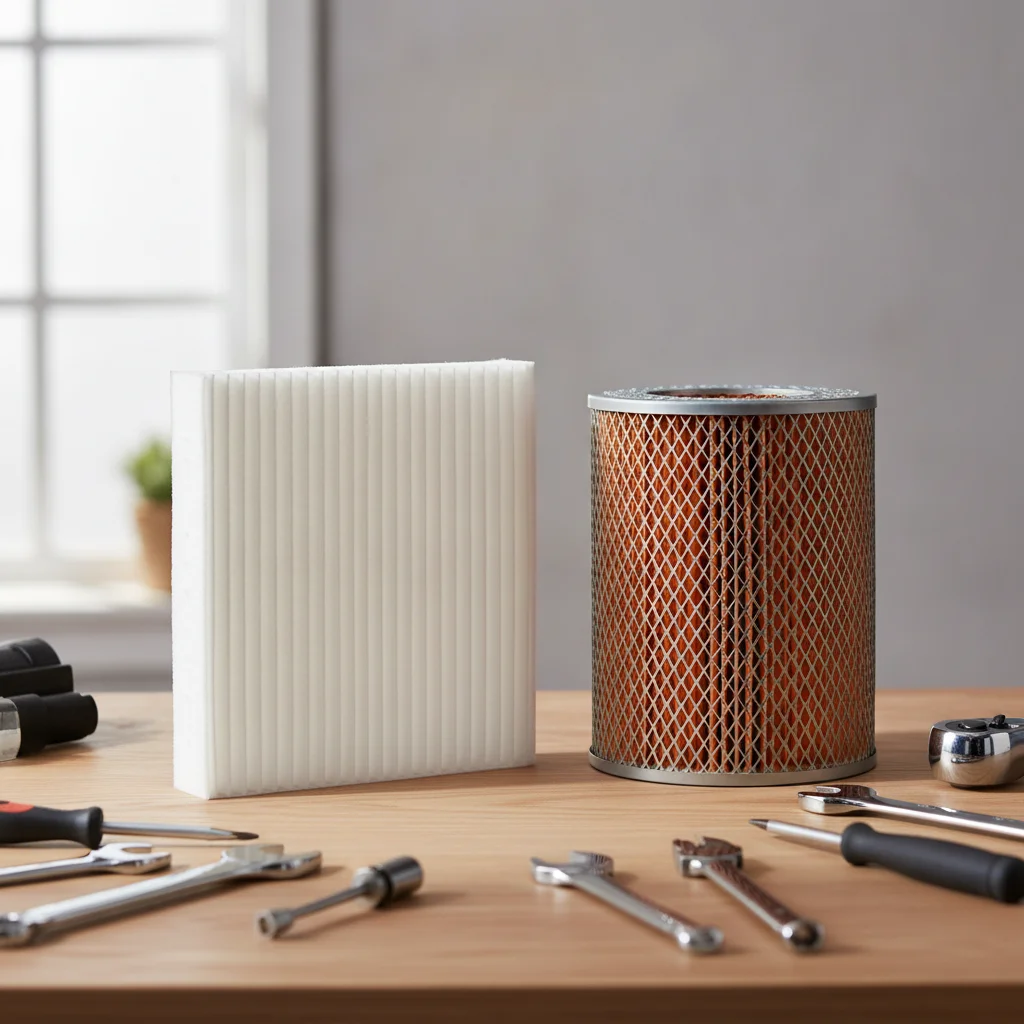
If you've ever wondered how your engine air filter compares in function to your cabin air filter, our explainer on cabin air filters vs. engine air filters covers exactly that distinction.
How a Clogged Filter Affects Combustion Efficiency
Combustion requires a precise ratio of air to fuel — known as the stoichiometric ratio — to work efficiently. For gasoline engines, that ideal ratio is approximately 14.7 parts air to 1 part fuel by weight. When airflow is restricted, the engine gets less air than it needs for the fuel being injected, and the mixture tips toward being fuel-rich.
In older carbureted engines, this would immediately cause poor fuel economy, black smoke from the exhaust, and sluggish performance — the engine simply ran rich with no mechanism to correct it. Modern fuel-injected engines are considerably smarter.
14.7:1
Ideal air-to-fuel ratio for gasoline combustion
Known as the stoichiometric ratio, this is the target mixture modern ECUs constantly work to maintain, even as air filter restriction increases.
2–10%
Estimated fuel economy loss from a dirty filter
U.S. Department of Energy research and automotive testing indicate fuel efficiency losses in this range, with larger impacts during high-demand driving.
15,000–30,000 mi
Typical air filter replacement interval
Most vehicle manufacturers recommend this range under normal driving conditions, though dusty or unpaved road environments can cut it significantly shorter.
$15–$25
Average cost of a replacement engine air filter
OEM-spec replacement filters are widely available at auto parts retailers; the filter cost is almost always less than the fuel wasted by leaving a dirty filter in place.
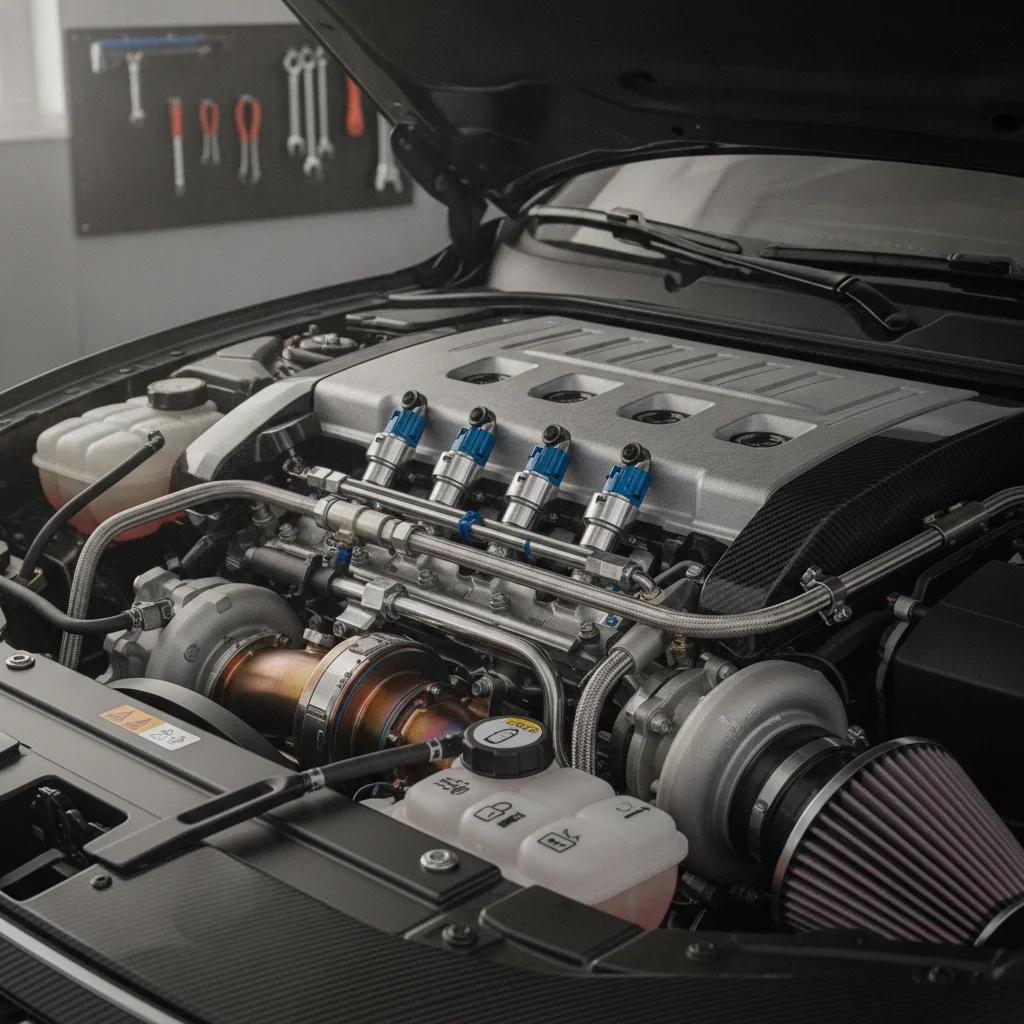
Today's engines use a network of sensors — primarily the mass airflow (MAF) sensor and the oxygen sensors in the exhaust — to constantly measure the actual air entering the engine and the ratio of oxygen remaining after combustion. The engine control unit (ECU) uses that data to trim the fuel injection in real time, pulling back on fuel delivery to maintain the correct air-to-fuel ratio even as intake restriction increases.
This is the reason you won't notice an immediate, dramatic drop in fuel economy when your filter starts getting dirty. The ECU is quietly compensating. But that compensation isn't free — and it has a ceiling.
Why Modern Cars Hide the Problem
The same sensor technology that makes modern engines so efficient also makes it easy to miss a deteriorating air filter. Because the ECU compensates for restricted airflow automatically, there's often no single moment where the car obviously feels wrong. This is why scheduled, interval-based replacement is smarter than waiting for symptoms — by the time you notice something, efficiency has already been compromised for some time.
Dusty Climates Change the Math
Standard replacement intervals assume typical mixed driving in moderate conditions. If you live in an arid region, near agricultural operations, or in an area with frequent wildfires or dust events, your filter can load up in a fraction of the normal interval. In these environments, inspecting every 6,000–8,000 miles is a reasonable precaution, and some drivers keep a spare filter on hand for a quick swap.
For a deeper look at how your car's fuel management systems work together, the article on understanding your car's fuel systems gives a solid grounding in the technologies behind efficient combustion.
The Real Efficiency Cost — And Its Limits
Here's the honest picture: the fuel economy impact of a moderately dirty air filter in a modern fuel-injected car is real but not dramatic. Research from the U.S. Department of Energy and various automotive studies has found efficiency losses in the range of 2–10%, with the larger losses occurring during high-demand driving — highway passing, merging at speed, or carrying heavy loads.
Those numbers matter in context. If your car normally achieves 35 mpg and you've lost 7% efficiency, you're now getting closer to 32.5 mpg. Over 15,000 miles, that's roughly 25 extra gallons of fuel burned — at current prices, that's a real cost that far exceeds the $15–25 a replacement filter costs.
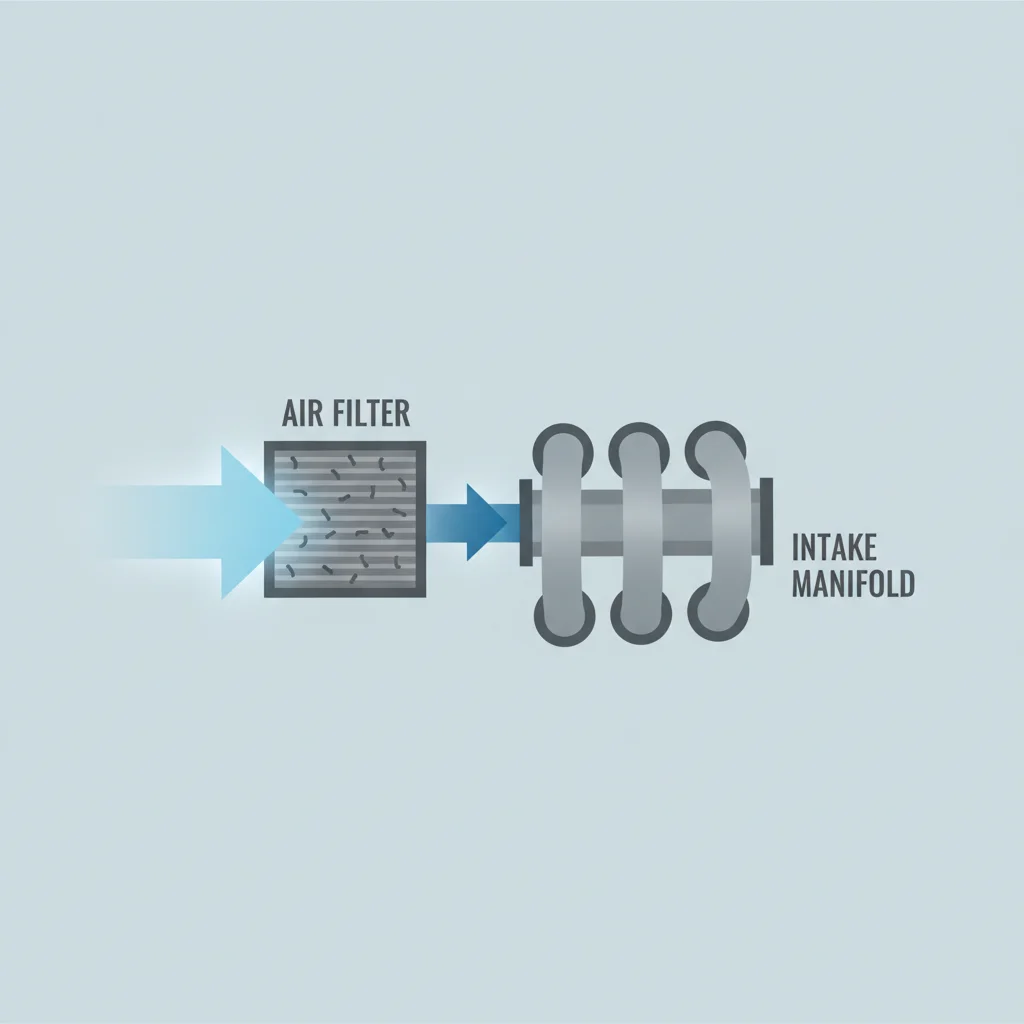
The efficiency hit becomes more meaningful the harder the engine works. At steady, moderate speeds, the engine draws a relatively small volume of air and the restriction matters less. At wide-open throttle — when the engine needs maximum airflow — a clogged filter becomes a genuine bottleneck. The ECU can only compensate so far before it simply cannot maintain the fuel mixture it wants, and power output drops noticeably.
It's also worth noting that a clogged filter makes your engine management system work harder. Sensors that are constantly compensating for intake restriction can accumulate errors over time, and in extreme cases, a severely restricted filter can trigger a Check Engine light via the MAF sensor. Keeping the filter clean keeps the entire intake system operating in the range it was designed for.
“The engine control unit is remarkably good at compensating for a dirty air filter — but 'compensating' and 'running efficiently' are not the same thing. You're asking the system to work around a problem instead of solving it.”
— John Ibbotson, Chief Mechanic, Consumer Reports Auto Test Center
Symptoms That Suggest Your Filter Is Overdue
The gradual nature of filter clogging means most drivers don't notice a single moment where something obviously goes wrong. Instead, symptoms accumulate slowly — which is exactly why scheduled replacement makes more sense than waiting for a warning sign. That said, there are several things worth paying attention to:
- Reduced acceleration response: If your car feels hesitant when you press the accelerator, especially from a stop or during passing maneuvers, restricted airflow limiting peak power is a plausible cause.
- Rough or uneven idle: A heavily restricted filter can make idle unstable, particularly on cold starts when the engine is still calibrating its fuel mixture.
- Fuel smell from the exhaust: Running rich — even partially — can produce a noticeable fuel odor, especially at startup. This is the ECU losing the compensation battle.
- Decreased fuel economy: If you track your mileage and notice a creeping decline that isn't explained by weather, tire pressure, or driving habits, a dirty filter is worth investigating.
- Check Engine light: A MAF sensor reading that's consistently out of range can trigger a fault code. This doesn't always mean the filter is the culprit, but it's worth checking first — it's the cheapest and easiest thing to rule out.
Check Before You Diagnose
If your car develops a rough idle, hesitation, or a Check Engine light, pull the air filter out and inspect it before booking a diagnostic appointment. It takes two minutes and costs nothing. A clogged filter is one of the most common — and most overlooked — causes of minor drivability issues, and ruling it out first can save you a shop visit.
Pair Filter Replacement With an Oil Change
Checking the air filter at every oil change is an easy habit that prevents you from ever losing track of its condition. Most oil change services include a visual inspection — ask them to show you the filter rather than just telling you it needs replacing. Seeing it yourself makes the decision straightforward.
After Replacement, Give the ECU Time to Adapt
If your engine has been running with a restricted filter for a while, don't be surprised if fuel economy doesn't immediately snap back after replacement. Modern ECUs learn and store fuel trim adjustments over time. After a clean filter is installed, driving a few varied cycles — city and highway — gives the system time to re-calibrate to the restored airflow.
Worth noting: none of these symptoms are exclusive to a clogged air filter. A rough idle could point to spark plugs, fuel injectors, or a vacuum leak. If replacing the filter doesn't resolve a drivability issue, the next logical step is looking at your spark plugs, which have their own outsized influence on combustion quality and fuel economy.
When to Replace — and Why Intervals Vary
The standard guidance of 15,000–30,000 miles between air filter replacements is a reasonable starting point, but it's a wide range for a reason. Filter life is almost entirely driven by the amount of particulate matter in the air, not by time or miles alone.
A driver who commutes on paved highways in a city will find their filter in decent condition at 20,000 miles. A driver who regularly travels unpaved rural roads or drives through construction zones could be looking at a filter that's done at 8,000–10,000 miles. The environment matters far more than the calendar.
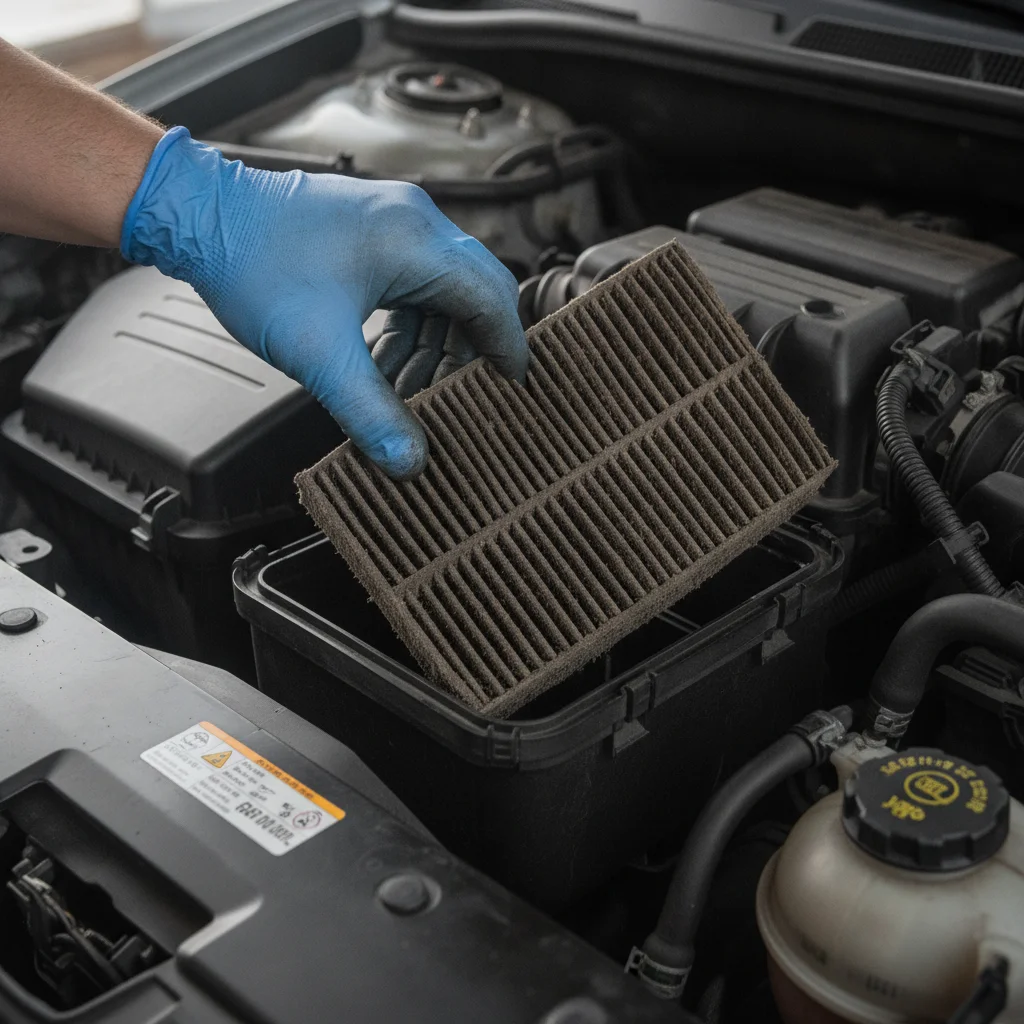
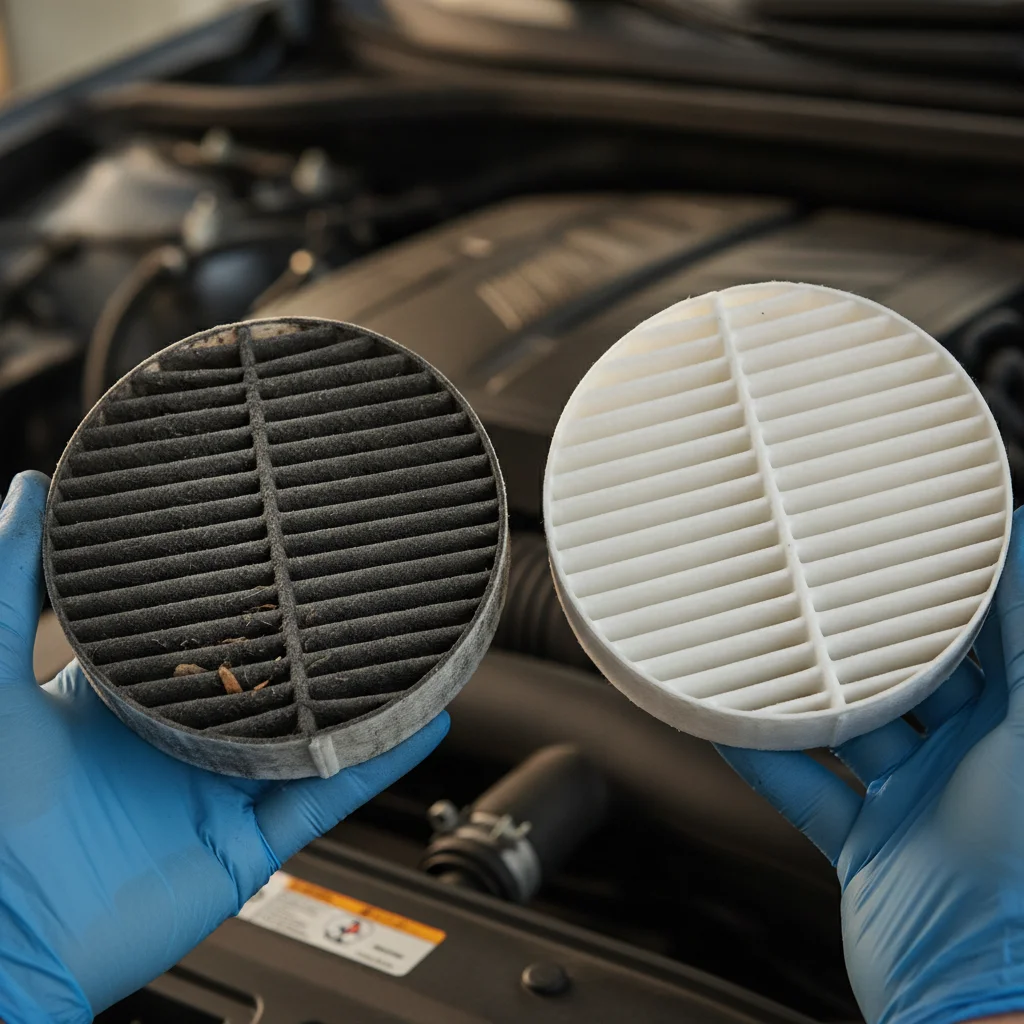
A simple visual inspection takes about two minutes. On most vehicles, the air filter sits in a plastic housing on top of or beside the engine — it's usually secured by clips or a single bolt. Pull it out and hold it up to the light. A clean filter is white or light gray. A filter that needs replacement is noticeably dark, with visible debris caked into the pleats. When in doubt, replace it — filters are inexpensive, and the cost-benefit calculation almost always favors swapping it out.
If you want to make this part of your routine, checking the air filter at every oil change is a sensible habit. Most shops will inspect it and show you its condition; you can decide whether to have them replace it or pick one up at an auto parts store and do it yourself. The DIY route is genuinely straightforward — our guide to changing your engine air filter in under 10 minutes covers everything you need to know.
Why Modern Cars Hide the Problem
The same sensor technology that makes modern engines so efficient also makes it easy to miss a deteriorating air filter. Because the ECU compensates for restricted airflow automatically, there's often no single moment where the car obviously feels wrong. This is why scheduled, interval-based replacement is smarter than waiting for symptoms — by the time you notice something, efficiency has already been compromised for some time.
Dusty Climates Change the Math
Standard replacement intervals assume typical mixed driving in moderate conditions. If you live in an arid region, near agricultural operations, or in an area with frequent wildfires or dust events, your filter can load up in a fraction of the normal interval. In these environments, inspecting every 6,000–8,000 miles is a reasonable precaution, and some drivers keep a spare filter on hand for a quick swap.
Getting the Most From This Small Maintenance Item
An engine air filter is one of those maintenance items where the value-to-effort ratio is almost unmatched. A $15–25 part, replaced every year or two with minimal effort, keeps your engine's air supply unrestricted and your fuel management system operating in its intended range. That's a compelling return on investment compared to, say, an injector cleaning service or an intake system diagnostic.
It's also worth understanding what a filter replacement doesn't fix. If your car has been running with a severely clogged filter for an extended period, the filter change restores normal airflow — but accumulated issues like carbon buildup on intake valves or sensor drift may not resolve immediately. In those cases, a bit of patience (the ECU will re-learn its fuel trims over several drive cycles) or a professional diagnostic may be warranted.
Check Before You Diagnose
If your car develops a rough idle, hesitation, or a Check Engine light, pull the air filter out and inspect it before booking a diagnostic appointment. It takes two minutes and costs nothing. A clogged filter is one of the most common — and most overlooked — causes of minor drivability issues, and ruling it out first can save you a shop visit.
Pair Filter Replacement With an Oil Change
Checking the air filter at every oil change is an easy habit that prevents you from ever losing track of its condition. Most oil change services include a visual inspection — ask them to show you the filter rather than just telling you it needs replacing. Seeing it yourself makes the decision straightforward.
After Replacement, Give the ECU Time to Adapt
If your engine has been running with a restricted filter for a while, don't be surprised if fuel economy doesn't immediately snap back after replacement. Modern ECUs learn and store fuel trim adjustments over time. After a clean filter is installed, driving a few varied cycles — city and highway — gives the system time to re-calibrate to the restored airflow.
Drivers of electric vehicles should note that while there's no engine air filter to worry about, cabin air filtration is still important — particularly for air quality and HVAC efficiency. The dynamics are different but the maintenance logic is similar. If you drive an EV, the article on cabin air filter replacement in EVs is worth a read.
The broader lesson here is a simple one: engines run best when they get clean air, clean fuel, and reliable ignition. An air filter is the first link in that chain. Keeping it clean is an easy way to make sure the rest of the system doesn't have to compensate for something that costs less than a tank of gas to fix.

All claims are backed by peer-reviewed research. Sources on request.