Key Takeaways
Option A
Mileage-Based Service Reminders
The straightforward, time-tested approach.
Best for: Drivers who want simple, predictable service schedules without relying on onboard computer algorithms.
Option B
Condition-Based Monitoring (Oil Life Systems)
The intelligent, adaptive alternative.
Best for: Drivers who want their vehicle to dynamically calculate when service is actually needed based on real driving conditions.
If you drive a pre-2010 vehicle or a basic economy car without an oil life monitor
Mileage-Based Service Reminders
Older vehicles weren't designed around adaptive algorithms. Following the manufacturer's fixed interval in the owner's manual is your most reliable guide.
If you drive a modern vehicle equipped with an onboard oil life monitoring system
Condition-Based Monitoring (Oil Life Systems)
Your car's computer accounts for temperature swings, engine load, and driving cycles — giving you a more precise service window and potentially saving money on unnecessary oil changes.
If you frequently tow, haul heavy loads, or drive in extreme heat or cold
Condition-Based Monitoring (Oil Life Systems)
Harsh operating conditions accelerate oil breakdown. A condition-based system adjusts automatically, alerting you sooner than a fixed interval would.
If you drive infrequently or make mostly short trips under five miles
Mileage-Based Service Reminders
Short-trip driving accumulates moisture and fuel dilution in the oil faster than the odometer reflects. A time-based mileage cap (e.g., every six months regardless of mileage) protects the engine in this use case.
If you want the simplest possible maintenance routine with no dashboard monitoring required
Mileage-Based Service Reminders
Jotting down your next service mileage on a windshield sticker requires zero technology. For drivers who prefer a low-tech approach, fixed intervals are perfectly adequate when followed consistently.
How Each System Decides When to Alert You
Every car on the road needs periodic oil changes, filter replacements, and fluid checks — but not every car decides when those services are needed in the same way. Two distinct philosophies govern service reminder systems in American passenger vehicles, and understanding the difference helps you respond correctly when a dashboard light or a calendar reminder fires.
Mileage-based systems are exactly what they sound like: the vehicle tracks odometer readings and alerts you — via a simple dashboard lamp, a sticker on your windshield, or a notation in your owner's manual — at predetermined intervals. Common benchmarks are every 3,000, 5,000, 7,500, or 10,000 miles depending on the automaker and model year. The system doesn't know how the miles were accumulated; highway cruising and stop-and-go city driving log the same odometer distance even though they stress the engine oil very differently.
Condition-based monitoring — also called an Oil Life Monitoring (OLM) system or, on European brands, Condition Based Service (CBS) — takes a fundamentally different approach. Rather than counting miles, the vehicle's onboard computer continuously samples data: engine temperature, RPM patterns, idle time, cold starts, and ambient temperature. It uses this data to model how quickly the oil is actually degrading and calculates a remaining oil life percentage. When that percentage drops to a threshold — typically 15% on most GM vehicles, 5% on many Hondas — the system alerts the driver.
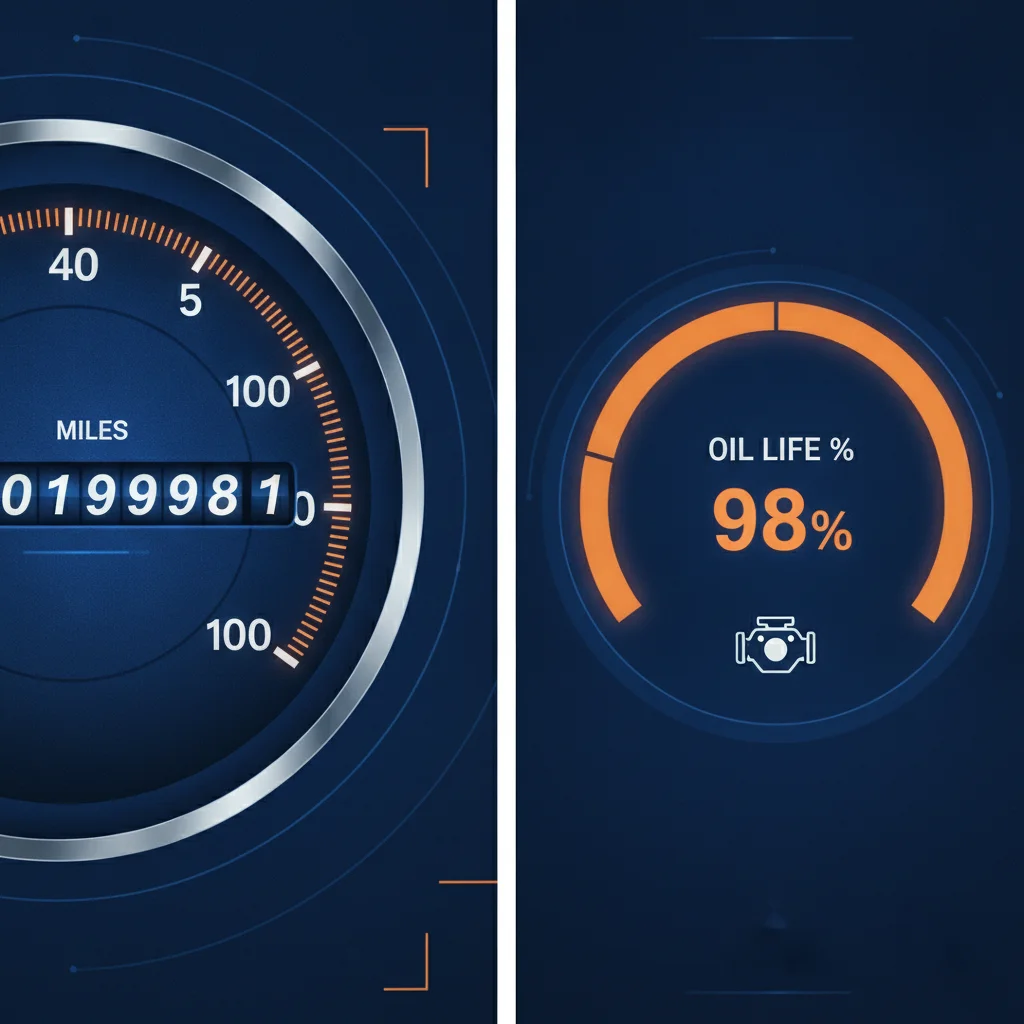
The distinction matters because two drivers can put 5,000 miles on identical cars and arrive at very different oil conditions. The commuter who idles in stop-and-go traffic every morning, cranks the heater in January, and never gets the engine fully up to temperature will have dirtier, more degraded oil than the driver who covers those same 5,000 miles on the interstate at steady highway speeds. Only a condition-based system captures that difference.
The Engineering Behind Oil Life Algorithms
General Motors introduced the first mass-market oil life monitoring system in 1988 on the Oldsmobile Cutlass Supreme. The technology has since spread across most major manufacturers, each with proprietary algorithms but shared underlying principles.
The core of any oil life system is a predictive model grounded in the Arrhenius equation — the same chemistry formula that describes how temperature accelerates reaction rates. Because oil oxidation (one of the primary degradation pathways) roughly doubles in speed with every 18°F increase in temperature, an algorithm that tracks engine temperature over time can estimate how much chemical life the oil has consumed. Modern systems layer on additional variables:
- Cold-start events: Starting a cold engine forces unprotected metal surfaces to rub before oil pressure builds — a disproportionate wear event that good algorithms weight heavily.
- Idle time: Extended idling keeps oil temperatures low, preventing the burn-off of moisture and fuel that would otherwise occur at highway temperatures. This accelerates sludge formation.
- High-load operation: Towing or steep climbing spikes oil temperatures and shear stress. Systems that can detect sustained high engine load respond by reducing the estimated oil life more aggressively.
- Short-trip frequency: If most trips are under five miles, the engine never fully reaches operating temperature, and condensation accumulates in the crankcase. Some systems penalize this pattern.
| Criterion | Mileage-Based Reminders | Condition-Based Monitoring |
|---|---|---|
| How it works | Fixed odometer intervals (e.g., every 5,000 mi) | Algorithm calculates oil degradation from sensor data |
| Accounts for driving style | No — same interval for all drivers | Yes — severe driving shortens the interval automatically |
| Accounts for climate/temperature | No | Yes — cold starts and high temps reduce oil life estimate |
| Technology required | None — sticker or manual log suffices | Onboard computer and sensor suite required |
| Risk of over-servicing | Moderate — may prompt changes on healthy oil | Low — extends intervals when conditions allow |
| Risk of under-servicing | Moderate under severe conditions | Low — but possible if monitor isn't reset or oil is wrong grade |
| Typical vehicle age | Pre-2010 and many budget models | Most vehicles 2010 and newer |
| Cost implication | May lead to unnecessary service visits | Can reduce service frequency and annual cost |
| Direct oil quality measurement | No | No — predictive model only, not a direct sensor |
Because these algorithms are models — not direct oil-quality sensors — they carry assumptions. They assume the oil in the crankcase matches what was specified, that the correct volume was added, and that no external contamination occurred. A coolant leak, for example, can ruin oil long before the algorithm predicts degradation. That's why a monthly under-hood inspection remains valuable even for drivers whose cars have sophisticated monitoring systems.
44%
Drivers who still follow the 3,000-mile rule
A 2019 AAA survey found that nearly half of American drivers still change oil every 3,000 miles, despite most modern vehicles requiring changes at 5,000–10,000 miles.
10,000 mi
Maximum OEM oil change interval (many modern vehicles)
Many automakers including GM, Ford, and Honda specify 10,000-mile or one-year intervals for normal driving when full-synthetic oil is used.
~$11B
Annual spending on unnecessary oil changes (U.S.)
AAA estimates Americans spend approximately $11 billion per year on oil changes that are not yet needed, driven largely by outdated interval advice.
1988
Year GM introduced the first mass-market oil life monitor
General Motors debuted the Oil Life System on the 1988 Oldsmobile Cutlass Supreme, pioneering condition-based monitoring in mainstream vehicles.
2x
Oil oxidation rate increase per 18°F temperature rise
The Arrhenius equation, which underpins most oil life algorithms, predicts that oil oxidation roughly doubles with every 18°F increase in operating temperature.
Real-World Accuracy: Where Each System Falls Short
Neither system is perfect in every scenario. Understanding the failure modes of each helps you compensate.
Mileage-Based Weaknesses
The main problem with fixed-interval mileage schedules is their inflexibility. A 5,000-mile interval assumes average driving in average conditions — a statistical midpoint that may not represent your actual situation at all. Manufacturers who recommend 7,500- or 10,000-mile intervals typically base that on normal driving cycles that include meaningful highway mileage. If your commute is five miles each way through dense city traffic, you're operating in what the industry classifies as severe service, and the standard interval may be too long.
Conversely, some drivers following aggressive 3,000-mile interval advice (a figure perpetuated by quick-lube chains for decades) change oil that is still in perfectly adequate condition. The American Automobile Association (AAA) has noted that modern full-synthetic oils and tight manufacturing tolerances have rendered the 3,000-mile interval obsolete for most passenger vehicles — a point reinforced by virtually every major automaker's current owner's manual. See our detailed breakdown of oil change intervals for a manufacturer-by-manufacturer perspective.
Condition-Based System Weaknesses
Oil life monitors are models, not sensors. They cannot directly measure viscosity, total base number (TBN) depletion, or metal particle contamination. A car running the wrong oil grade, a vehicle with a slow coolant seep into the crankcase, or an engine burning oil between changes — none of these scenarios register in the algorithm. The system will still display a healthy oil life percentage even as actual oil condition deteriorates.
There's also a reset risk. If a technician forgets to reset the oil life monitor after a service, the system will continue counting from where it left off — potentially triggering a reminder far later than appropriate. Always confirm the reset was performed after any oil change, whether you did it yourself or paid a shop.
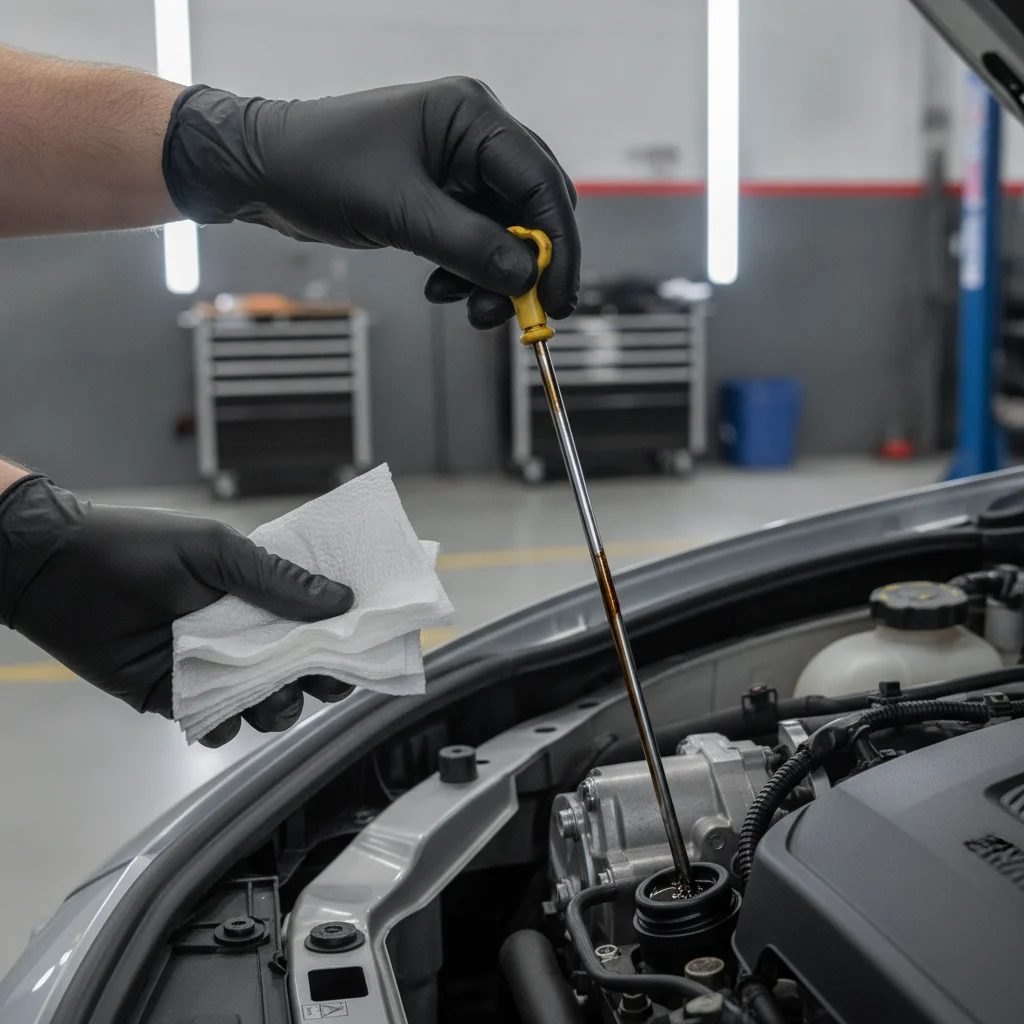
For high-mileage vehicles, this limitation deserves special attention. Engines with more than 100,000 miles may develop increased oil consumption, minor seal weeping, or combustion blow-by that contaminates oil faster than the algorithm anticipates. If your car falls into this category, consider pairing your condition-based reminder with awareness of high-mileage warning signs and periodic dipstick checks between alerts.
Oil Life Monitors Don't Measure Oil Directly
Despite the name, no mass-market oil life monitor contains a physical sensor that measures oil chemistry. These systems are predictive algorithms — sophisticated ones, but models nonetheless. They calculate expected degradation based on engine operating data, not actual oil viscosity or contamination levels. For most drivers under normal conditions, the model is accurate enough. But any time you suspect a coolant leak, notice unusual oil consumption, or add a different oil grade than specified, don't rely solely on the percentage display — pull the dipstick and consider a lab oil analysis if you're concerned.
Which System Does Your Vehicle Actually Use?
Determining which type of service reminder your car uses takes about two minutes with your owner's manual.
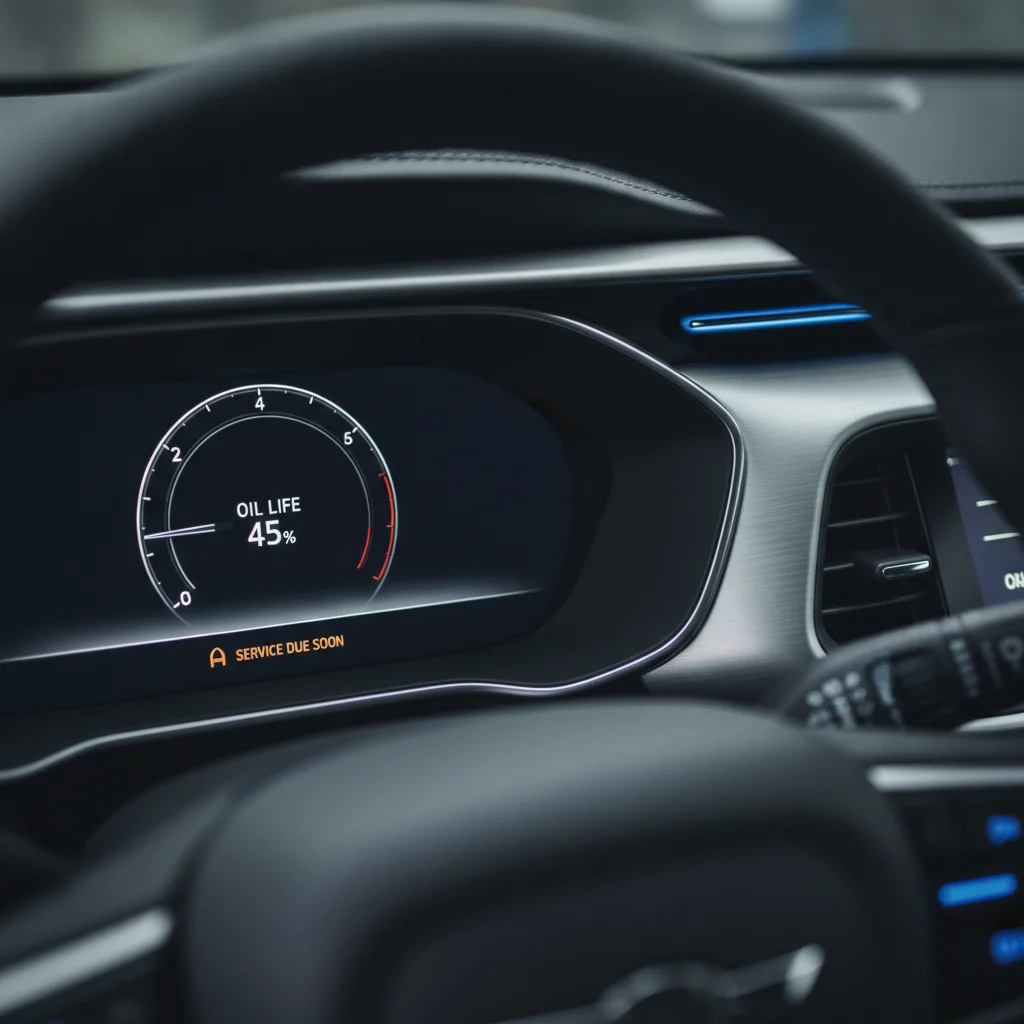
If your dashboard has a display that shows an oil life percentage or uses language like "Oil Life: 47%" or "Change Engine Oil Soon" triggered by an algorithm rather than an odometer count, you have a condition-based system. GM's Oil Life System (used across Chevrolet, Buick, GMC, and Cadillac), Honda's Maintenance Minder, Ford's Intelligent Oil-Life Monitor, Chrysler/Ram's Electronic Vehicle Information Center oil reminders, and BMW's Condition Based Service are all examples of this category.
If your car simply shows a wrench icon or a "Service Due" message that trips at fixed mileage points — or if you rely entirely on a windshield sticker — you have a mileage-based system. Older vehicles from the 1990s and early 2000s, and many budget-segment models even today, fall into this bucket.
Some vehicles blend both approaches: they use a condition-based oil monitor but also track time-based reminders for other services like tire rotations, cabin air filters, and transmission fluid. BMW's CBS system is particularly comprehensive in this regard, flagging individual components separately as they approach their service thresholds.
Electric vehicles represent a different paradigm entirely. Without an internal combustion engine, there's no oil to monitor — though EVs still require periodic checks of brake fluid, coolant (for thermal management systems), and cabin filters. EV maintenance needs follow their own distinct schedule, which can be significantly lighter on routine servicing than comparable gas vehicles.
Severe Service: When Standard Intervals Need Adjusting
Regardless of which reminder system your vehicle uses, automakers define two service tiers in virtually every owner's manual: normal service and severe service. Severe service conditions include:
- Frequent short trips under 5 miles, especially in cold weather
- Towing, hauling heavy loads, or driving in mountainous terrain
- Sustained high-speed driving in hot ambient temperatures
- Driving on dusty, sandy, or salt-treated roads
- Prolonged idling (delivery drivers, law enforcement, rideshare waiting)
Under severe service conditions, many manufacturers recommend shortening oil change intervals by 30–50% relative to normal service recommendations. If your vehicle uses a well-calibrated condition-based system, this adjustment may happen automatically — the algorithm will deplete the projected oil life faster when it detects patterns consistent with severe use. If you're on a fixed mileage schedule, the adjustment is your responsibility.
It's also worth noting that odometer readings alone can mislead. A vehicle that shows 60,000 miles of mostly highway commuting is in a fundamentally different state than a 60,000-mile fleet vehicle that spent its life making short urban deliveries. Odometer readings don't always reflect actual wear — a reality that matters equally when evaluating a used car purchase and when calibrating your own service expectations.

For drivers who've crossed the 100,000-mile threshold, service adjustments for high-mileage vehicles go beyond just oil changes. Transmission fluid, differential fluid, and coolant all have service lives that the oil life monitor won't track — making it important to maintain a separate service log even if your oil reminders are fully automated.
Getting the Most from Either System
The most important rule, regardless of which type of system your car uses: respond when it tells you to. Research consistently shows that deferred maintenance — not imperfect maintenance schedules — is the leading cause of premature engine wear and avoidable repair bills. An oil change done 500 miles late twice a year is almost always harmless. A 5,000-mile delay, repeated across multiple service intervals, is not.
Practical Tips for Mileage-Based Systems
- Note the exact odometer reading at each oil change and calculate your next service mileage. Write it on a sticker inside the driver's door jamb or the windshield corner.
- If you drive fewer than 7,500 miles per year, change oil by time — at minimum every six months — even if the mileage threshold hasn't been reached. Oil degrades through oxidation and moisture absorption even while sitting.
- Check your owner's manual for the severe service interval if any of the conditions above apply to your driving patterns.
Practical Tips for Condition-Based Systems
- Never ignore a low oil life alert. When the system drops to 0%, it doesn't mean the oil has failed — it means the algorithm's confidence in the oil's protective quality has run out. Service within a few days.
- Confirm the monitor reset after every oil change. On most vehicles this involves holding a button on the instrument cluster for several seconds while the ignition is on. Your owner's manual will show the exact procedure.
- Use the oil grade specified in the owner's manual. The algorithm was calibrated for a specific viscosity; substituting a different grade undermines its accuracy.
- Don't rely solely on the monitor. Check the dipstick monthly — oil level and oil condition are two separate things, and most OLM systems don't track consumption directly.
Neither system exempts you from awareness of what's happening under the hood. The warning signs hub covers dashboard alerts, abnormal noises, and fluid irregularities that should prompt attention between scheduled service intervals. A well-maintained car combines good reminder habits with active observation — and that combination, more than any specific monitoring technology, is what keeps vehicles running reliably for 150,000 miles and beyond.

All claims are backed by peer-reviewed research. Sources on request.