

Key Takeaways
Oil Change Interval
An oil change interval is the recommended mileage or time period between draining old motor oil and replacing it with fresh oil and a new filter. This interval varies by vehicle, driving conditions, and oil type. Following it correctly helps prevent engine wear, sludge buildup, and costly mechanical failures.
Modern engines with oil life monitoring systems calculate intervals dynamically using algorithms that factor in engine temperature cycles, RPM loads, and elapsed time — not just mileage.
Why Oil Change Intervals Matter More Than You Think
Engine oil is your car's circulatory system. It lubricates moving metal surfaces, carries heat away from the combustion chamber, suspends microscopic contaminants, and helps keep seals pliable. But oil degrades. Heat cycles break down its base stock; combustion byproducts acidify it; moisture from short cold trips dilutes it. Left in place too long, it transitions from protective fluid to abrasive sludge.
The oil change interval exists to replace oil before that degradation becomes damaging. Get it right, and your engine can run cleanly for hundreds of thousands of miles. Get it wrong — in either direction — and you're either wasting money on unnecessary service calls or gambling with a repair bill that could total more than the car is worth.
The challenge is that no single interval applies to every vehicle. Driving patterns, engine design, oil type, and even local climate all push the ideal window earlier or later. That's why understanding the factors behind the recommendation matters more than memorizing any one number.
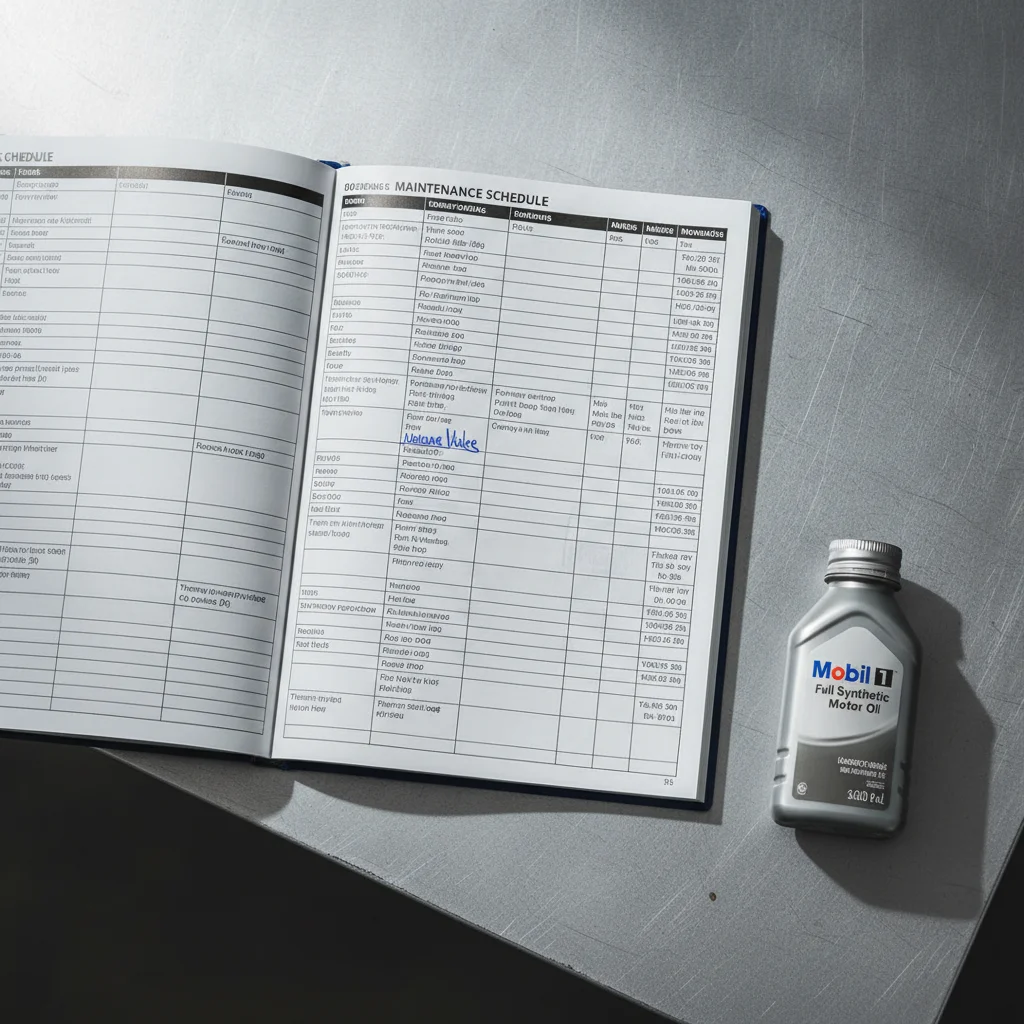
For a broader look at how oil changes fit into the full picture of scheduled maintenance, see our plain-language guide to your car's service schedule.
The Death of the 3,000-Mile Myth
For decades, the 3,000-mile oil change was treated as automotive gospel. Quick-lube chains plastered it on reminder stickers, and drivers obliged without question. The rule wasn't wrong for its era — it was built around carbureted engines running conventional petroleum oil in the 1970s and 1980s. But engines and lubricants have changed dramatically since then.
5,000–10,000 mi
Typical synthetic oil change interval for modern vehicles
Most major automakers, including Toyota, Honda, Ford, and GM, now recommend full synthetic oil changes in this range for normal driving conditions.
~150M gallons
Estimated annual unnecessary used oil from premature changes
The California Department of Resources Recycling and Recovery attributed a large share of waste oil generation to drivers changing oil far more frequently than required.
~2x
Extra cost of following 3,000-mile vs. 7,500-mile intervals
A driver averaging 15,000 miles per year pays for roughly five oil changes annually at 3,000 miles versus two at 7,500 — a significant difference over a typical ownership period.
15,000 mi
Maximum interval for some European luxury vehicles
Brands such as BMW and Mercedes-Benz specify extended intervals of up to 15,000 miles using OEM-approved full synthetic oils with specific additive certifications.
Over 60%
New vehicles shipped with oil life monitoring systems
According to industry estimates, the majority of new passenger vehicles sold in the U.S. now include some form of algorithmic or condition-based oil life monitoring.
Modern engines feature tighter manufacturing tolerances, more efficient combustion management, and positive crankcase ventilation systems that significantly reduce contamination from blowby gases. Synthetic motor oils, meanwhile, are engineered with uniform molecular chains that resist thermal breakdown far better than refined crude oil. The result: an interval that once made sense now sends millions of drivers to the shop far earlier than necessary.
The California Department of Resources Recycling and Recovery has estimated that unnecessary oil changes generate more than 150 million gallons of used oil annually in the U.S. — a significant environmental and financial waste driven largely by outdated habits.
“The 3,000-mile oil change is a myth that the quick-lube industry has been very good at perpetuating. Modern synthetics and engine engineering have made it completely unnecessary for most drivers.”
— John Nielsen, Former Director of Engineering and Repair, AAA
This doesn't mean oil changes can be ignored or indefinitely postponed. It means the correct interval is specific to your vehicle and situation — not a round number inherited from a different generation of cars.
What Actually Determines Your Correct Interval
Four primary factors govern when your engine oil needs to be replaced:
1. The Type of Oil Your Engine Uses
Conventional motor oil typically supports intervals of 3,000 to 5,000 miles. Full synthetic oil — now standard in most new vehicles — is generally rated for 7,500 to 15,000 miles depending on the engine and manufacturer. Synthetic blend oils fall somewhere in between. The type of oil matters enormously, and using the wrong grade or specification can invalidate the manufacturer's interval guidance entirely.
For a detailed comparison of oil types and what your engine actually requires, our guide to conventional vs. synthetic oil breaks it down clearly.
2. Your Driving Conditions
Every owner's manual includes two maintenance schedules: normal and severe. Severe conditions include:
- Frequent trips shorter than five miles (oil never fully warms up to burn off moisture)
- Towing or hauling heavy loads regularly
- Sustained driving in very high or very low temperatures
- Prolonged idling or stop-and-go traffic
- Dusty or unpaved road driving
Drivers who fit the severe profile — which is more common than most people assume — should follow the shorter interval listed in the manual, even if their oil life monitor hasn't yet triggered a warning.
3. Your Vehicle's Engine Design
Turbocharged engines run hotter than naturally aspirated ones and place greater thermal stress on oil. High-performance engines with higher compression ratios similarly degrade oil faster. Some manufacturers — BMW and Porsche, for example — spec oils with specific viscosity ratings and additive packages that extend intervals within tightly controlled parameters. Using a cheaper substitute can shorten the effective interval dramatically.
4. Mileage-Based vs. Oil Life Monitoring Systems
Older vehicles use fixed mileage intervals; newer ones use algorithmic oil life monitoring (OLM) systems that calculate remaining oil life based on engine operating data. These systems are generally accurate and well-tested, but they work correctly only when the oil type and viscosity specified by the manufacturer is actually in the engine.

To understand which system your vehicle uses and how to interpret its signals, see our explainer on mileage-based vs. condition-based service reminders.
Your Manual Overrides Everything
No quick-lube sticker, no auto parts store employee, and no well-meaning friend should override what your owner's manual specifies for oil type and change interval. The manual reflects actual engineering data for your specific engine. If someone recommends a dramatically different interval without citing your manufacturer, treat that advice with skepticism.
Frequency Isn't the Only Variable
Even perfectly timed oil changes can fail to protect your engine if the wrong oil specification is used. European vehicles in particular often require oils certified to ACEA or manufacturer-specific standards (such as VW 504.00 or BMW LL-04). Using a generic oil that doesn't meet these specifications can accelerate wear and void powertrain warranty coverage.
Manufacturer Recommendations by Vehicle Type
While individual models vary, some general patterns hold across the industry:
| Vehicle Type | Typical Oil Type | Common Interval Range |
|---|---|---|
| Older vehicles (pre-2000s) | Conventional or blend | 3,000–5,000 miles |
| Modern mainstream sedans/SUVs | Full synthetic | 7,500–10,000 miles |
| Luxury/European brands | Full synthetic (OEM spec) | 10,000–15,000 miles |
| Turbocharged engines | Full synthetic | 5,000–7,500 miles (often shorter) |
| High-mileage vehicles (100k+) | High-mileage synthetic blend | 5,000–7,500 miles |
These are general ranges, not absolutes. A 2023 Honda CR-V with a turbocharged 1.5-liter four-cylinder, for instance, calls for full synthetic oil every 5,000 miles — shorter than many non-turbo vehicles — because of heat stress on the smaller engine. Meanwhile, a 2023 Toyota Camry with a naturally aspirated 2.5-liter four-cylinder can go 10,000 miles between changes under normal driving conditions.
Always Read the Severe Schedule Too
Most drivers skip straight to the normal maintenance schedule without realizing they actually qualify for the severe one. Read both sections of your owner's manual and honestly assess your driving patterns. If you regularly make short trips, drive in extreme temperatures, or tow frequently, the severe interval protects your engine better.
Keep Your Oil Change Records
A simple log — date, mileage, oil brand and viscosity — takes seconds to maintain and pays dividends at resale. Documented service history is one of the most effective tools for justifying asking price on a used vehicle, and it helps a mechanic spot patterns if engine issues ever arise.
Drivers of high-mileage vehicles face additional considerations. Worn seals, accumulated deposits, and reduced oil pressure mean that older engines often benefit from more frequent service even when a monitoring system suggests otherwise. Our guide to maintaining high-mileage vehicles covers the specific adjustments worth making after 100,000 miles.
What Happens When You Wait Too Long
Degraded motor oil doesn't fail all at once. The process is gradual, which makes it easy to dismiss — until the damage becomes irreversible.
As oil ages and oxidizes, its viscosity changes. It may thicken in cold temperatures and thin excessively under heat, losing its ability to maintain the protective film between metal surfaces. Antioxidant additives are depleted, allowing acids to form from combustion byproducts. Detergent additives are consumed, leaving varnish deposits on pistons and valve components.
The most feared outcome is sludge. Engine sludge — a gelatinous, tar-like substance — forms when severely degraded oil combines with moisture and combustion contaminants. It blocks oil galleries, starves critical components of lubrication, and can cause catastrophic engine failure even in relatively low-mileage vehicles. Toyota, Volkswagen, and Chrysler have all faced consumer complaints and, in some cases, extended warranties or settlements tied to sludge issues in specific engine families — all traceable to extended intervals or incorrect oil types.
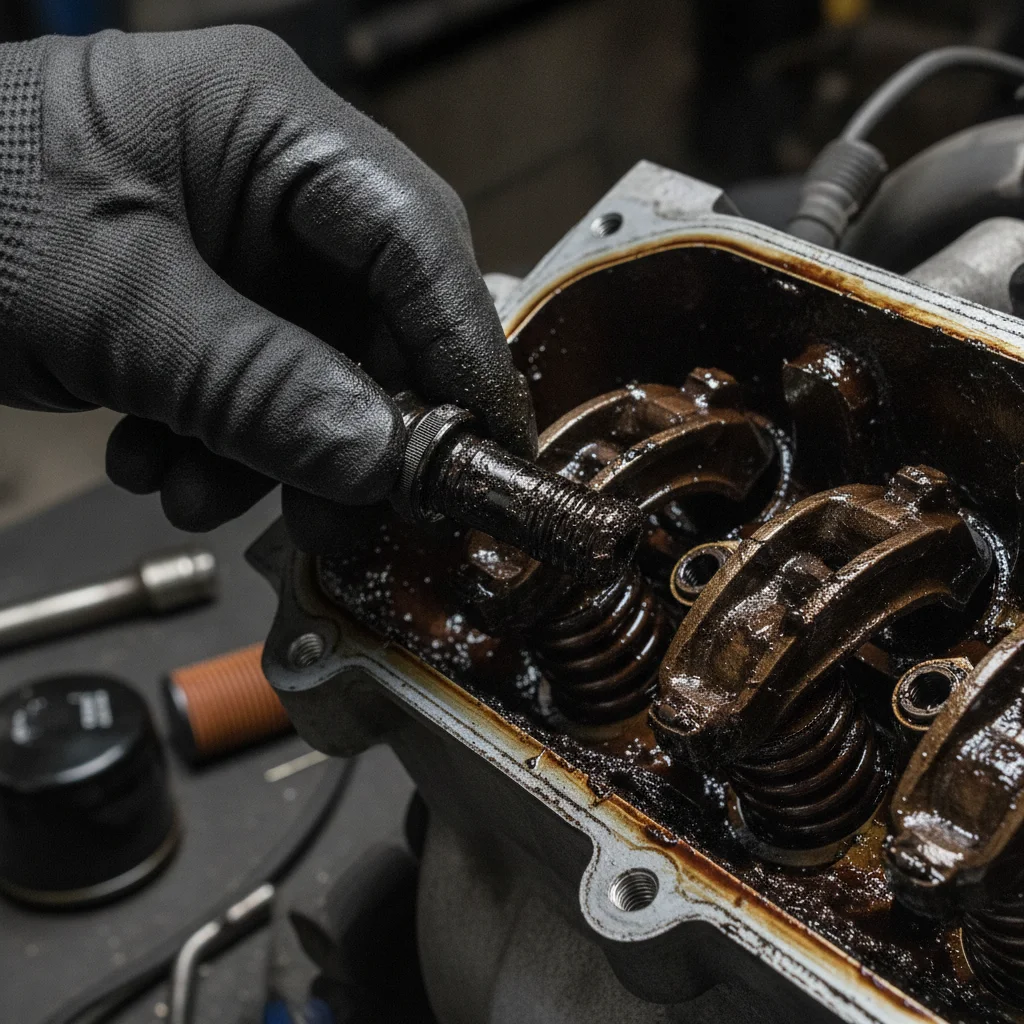
The fix, once sludge takes hold, is rarely simple. Chemical flushes may help in mild cases. In advanced cases, engine teardown and cleaning — or outright replacement — become the only options.
The Case Against Changing Oil Too Early
Over-servicing sounds like a harmless precaution, but it carries real costs. Changing oil every 3,000 miles when your manufacturer recommends 7,500 means you're spending roughly twice as much annually on a service your engine doesn't need. Over a five-year ownership period, that's potentially hundreds of extra dollars — plus the environmental cost of disposing of oil that still had useful life remaining.
There's also a subtler risk: each oil drain and refill introduces opportunities for error. A stripped drain plug, a cross-threaded oil filter, or a missed torque spec on the drain bolt can create leaks that go unnoticed until the engine is already damaged. More service visits aren't inherently safer; they multiply the number of chances for a mistake.
Your Manual Overrides Everything
No quick-lube sticker, no auto parts store employee, and no well-meaning friend should override what your owner's manual specifies for oil type and change interval. The manual reflects actual engineering data for your specific engine. If someone recommends a dramatically different interval without citing your manufacturer, treat that advice with skepticism.
Frequency Isn't the Only Variable
Even perfectly timed oil changes can fail to protect your engine if the wrong oil specification is used. European vehicles in particular often require oils certified to ACEA or manufacturer-specific standards (such as VW 504.00 or BMW LL-04). Using a generic oil that doesn't meet these specifications can accelerate wear and void powertrain warranty coverage.
The goal isn't to stretch intervals recklessly — it's to follow them accurately. Your manufacturer's recommendation is backed by engineering testing under real-world conditions. Trusting it is rational, not risky.
How to Find the Right Interval for Your Car
The definitive answer is always in your owner's manual. Look for the maintenance section and locate the oil change schedule — most manuals list both a normal and severe service interval. If you've lost your manual, the manufacturer's website typically provides a digital version by VIN or model year.
Beyond the manual, consider these practical steps:
- Check your oil life monitor — if your vehicle has one, trust it as your primary signal, but reset it properly after every change. An unreset monitor gives meaningless readings.
- Assess your driving honestly — if most of your driving is short cold-weather trips in a city, you likely fall into the severe category even if your commute feels routine.
- Match the oil specification exactly — using the viscosity and certification the manufacturer specifies (e.g., dexos1, ACEA C3) preserves both engine protection and the validity of the interval.
- Keep records — a simple log of dates, mileage, and oil type used gives you a clear maintenance history that protects resale value and helps identify patterns if problems develop.
If you're considering handling the service yourself, our balanced look at DIY oil changes lays out the trade-offs honestly. And if you want to go deeper on the full suite of scheduled maintenance beyond oil, the complete service schedule explainer is worth bookmarking.
Always Read the Severe Schedule Too
Most drivers skip straight to the normal maintenance schedule without realizing they actually qualify for the severe one. Read both sections of your owner's manual and honestly assess your driving patterns. If you regularly make short trips, drive in extreme temperatures, or tow frequently, the severe interval protects your engine better.
Keep Your Oil Change Records
A simple log — date, mileage, oil brand and viscosity — takes seconds to maintain and pays dividends at resale. Documented service history is one of the most effective tools for justifying asking price on a used vehicle, and it helps a mechanic spot patterns if engine issues ever arise.


All claims are backed by peer-reviewed research. Sources on request.