Key Takeaways
What the Check Engine Light Is Actually Doing
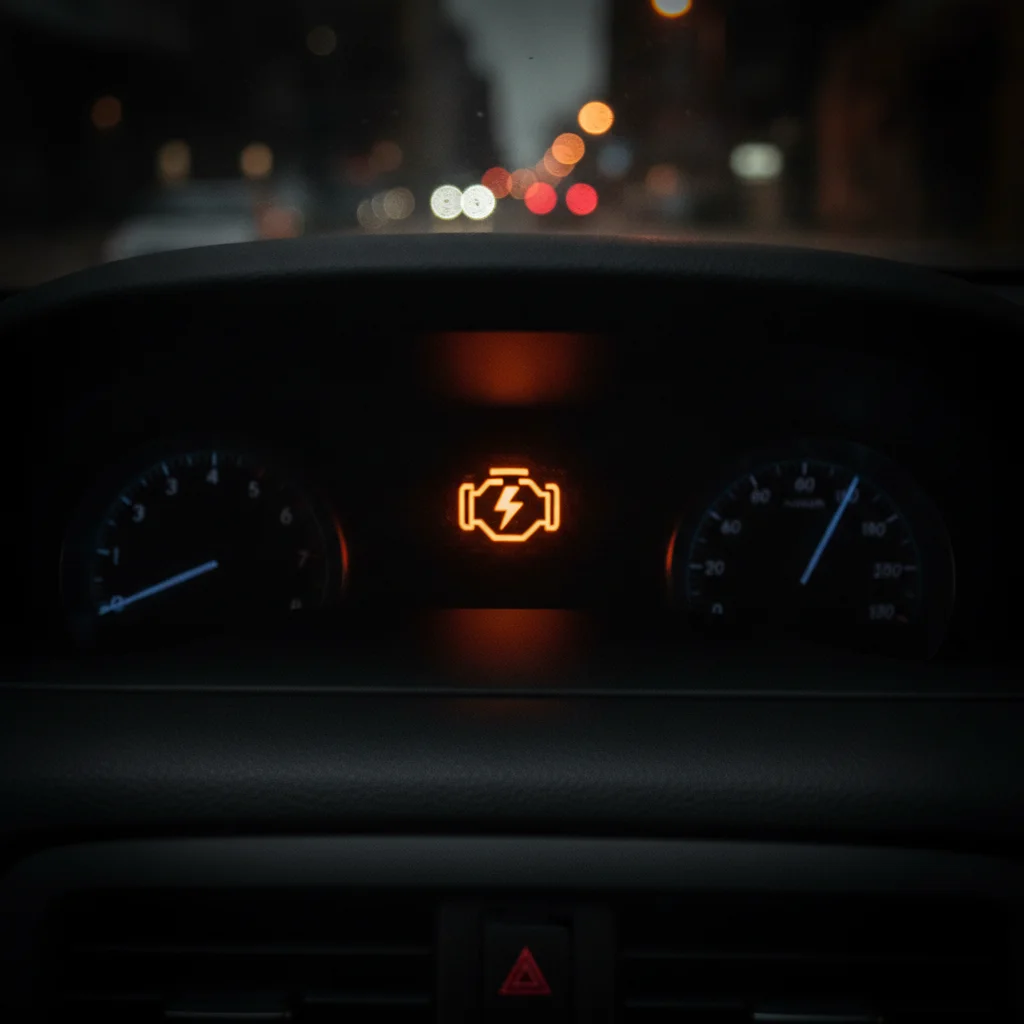
Your car's OBD-II system — mandated on every vehicle sold in the U.S. since 1996 — runs a continuous self-check on dozens of systems: engine, transmission, emissions, fuel delivery, and more. When any sensor reading falls outside its expected range, the system logs a diagnostic trouble code (DTC) and lights up that amber icon on your dash.
The light itself is just a messenger. It doesn't tell you how bad things are any more than your phone's notification badge tells you whether the message is a fire drill or a birthday greeting. The actual story lives in the stored DTC, and that's retrievable without a trip to the shop. See our guide to reading your own OBD-II codes for the full walkthrough.
For a broader look at every warning symbol on your dash and what each one actually demands from you, the dashboard warning lights reference guide is worth bookmarking.
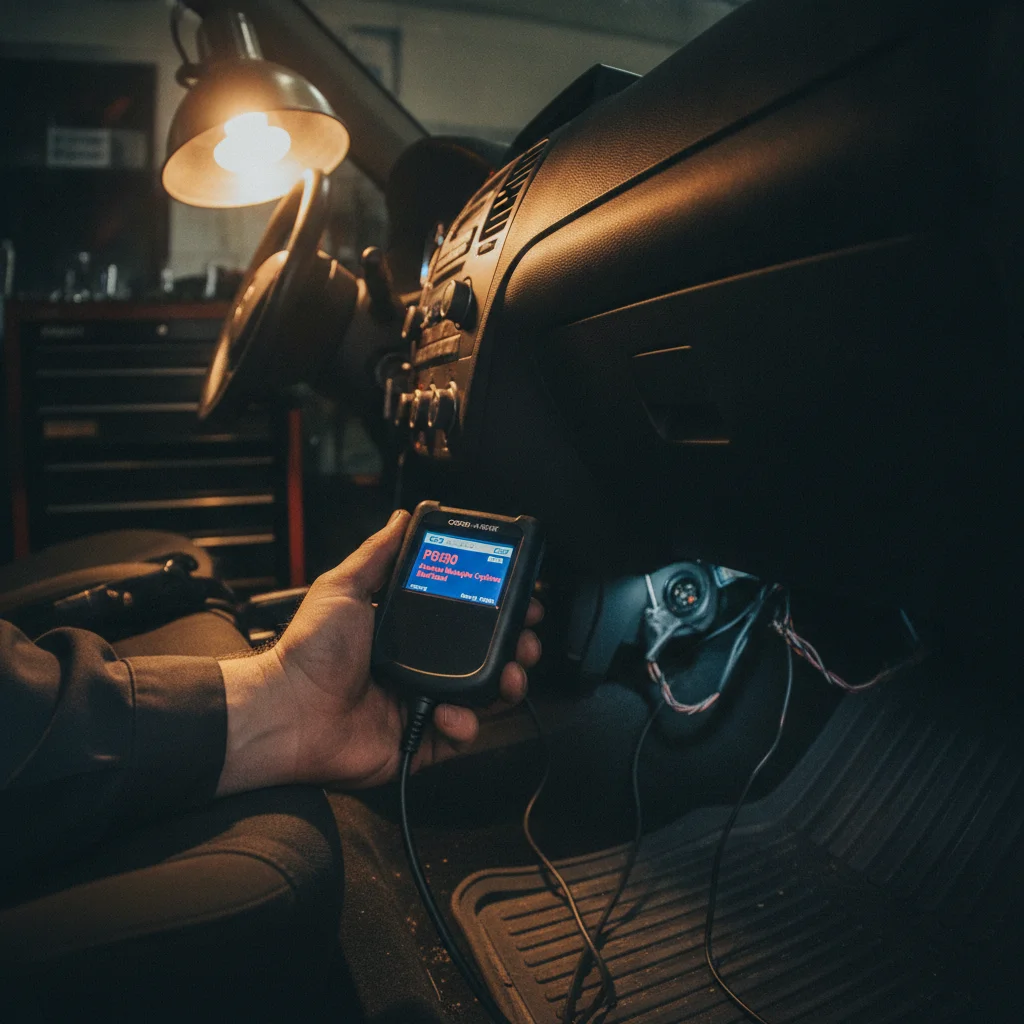
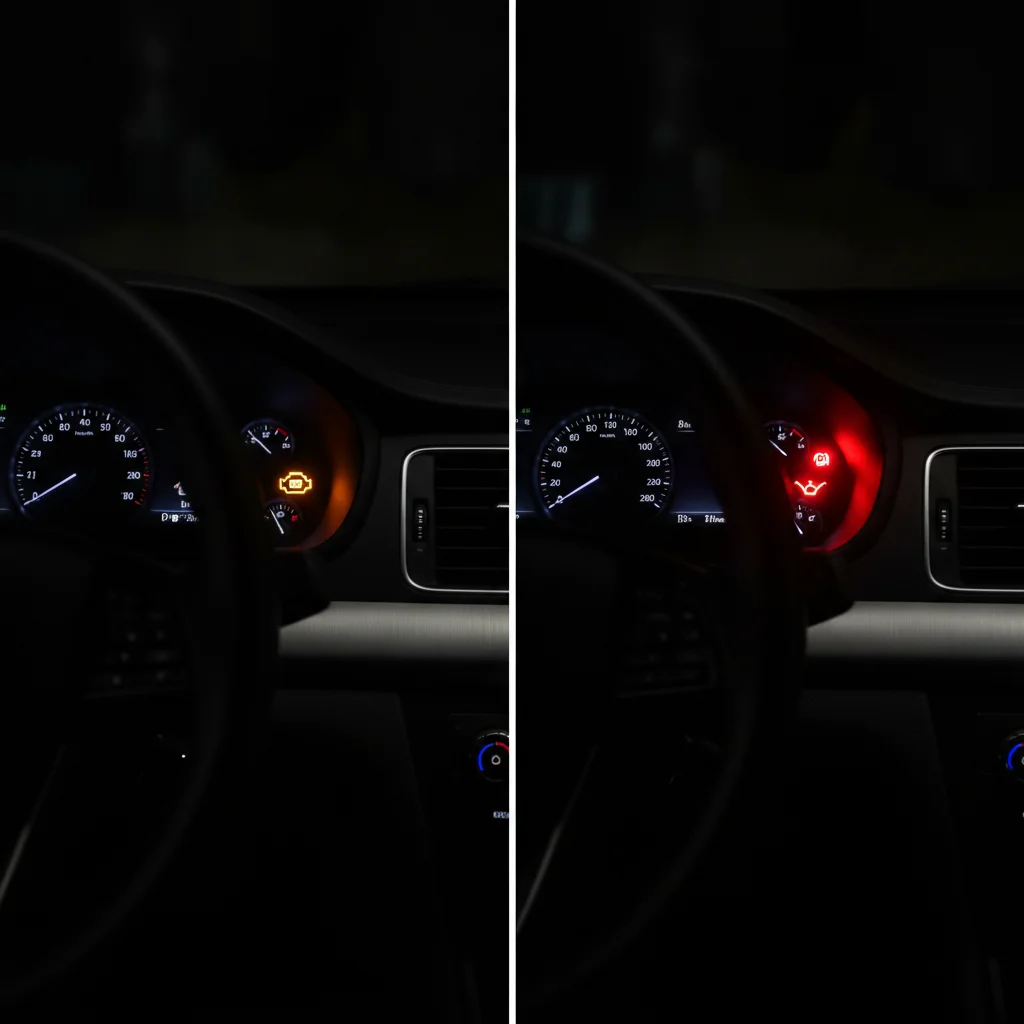
The key distinction the light itself does give you: solid vs. flashing. A steady light means the computer detected a fault but the engine is still running within safe parameters. A flashing or blinking light — especially while the engine is running rough — almost always indicates an active misfire that can physically damage your catalytic converter within minutes. That one warrants immediate action. Everything else? You've got time to think.
The Most Common Causes (Most of Which Aren't Scary)
Here's the honest breakdown of what triggers the majority of check engine lights on the road:
- Loose or faulty gas cap — Accounts for roughly 10–15% of all check engine lights. Fuel vapor escapes the sealed system, the evaporative emissions monitor flags it, light comes on. Cost to fix: $0 if you just tighten it, under $15 for a new cap.
- Oxygen sensor failure — O2 sensors wear out over time, especially past 100,000 miles. They measure exhaust oxygen content to fine-tune the fuel mixture. A bad one hurts fuel economy and can eventually damage the catalytic converter if left long enough.
- Catalytic converter degradation — Usually a downstream result of ignored O2 sensor or misfire codes. On its own it's not a breakdown risk, but replacement is expensive ($800–$2,500+), so don't let it slide.
- Mass airflow sensor issues — The MAF sensor tells the engine how much air is coming in. Dirty sensors can be cleaned with MAF-safe spray; faulty ones need replacement.
- Spark plugs and ignition coils — Worn plugs cause misfires. This is a legitimate DIY job on most vehicles and one of the best maintenance investments you can make.
- Thermostat or coolant temp sensor — If the engine doesn't reach operating temp fast enough, or the sensor gives a false reading, the check engine light follows.
Myth
A check engine light means your engine is about to fail and you should pull over immediately.
Fact
A steady check engine light rarely indicates imminent failure. It signals a logged fault code that needs investigation — not an emergency stop.
The check engine light covers an enormous range of fault types, from a loose gas cap to an early-stage catalytic converter issue. The vast majority of triggers don't affect drivability at all. Your engine is running fine — the emissions and sensor monitoring systems simply detected something outside of normal parameters.
The real emergency signal is a flashing check engine light, which indicates an active engine misfire. That one warrants getting off the road soon. But a solid, steady amber light on an otherwise normal-running car? Read the code before you panic.
Myth
You need to go to a dealership or mechanic just to find out why the light is on.
Fact
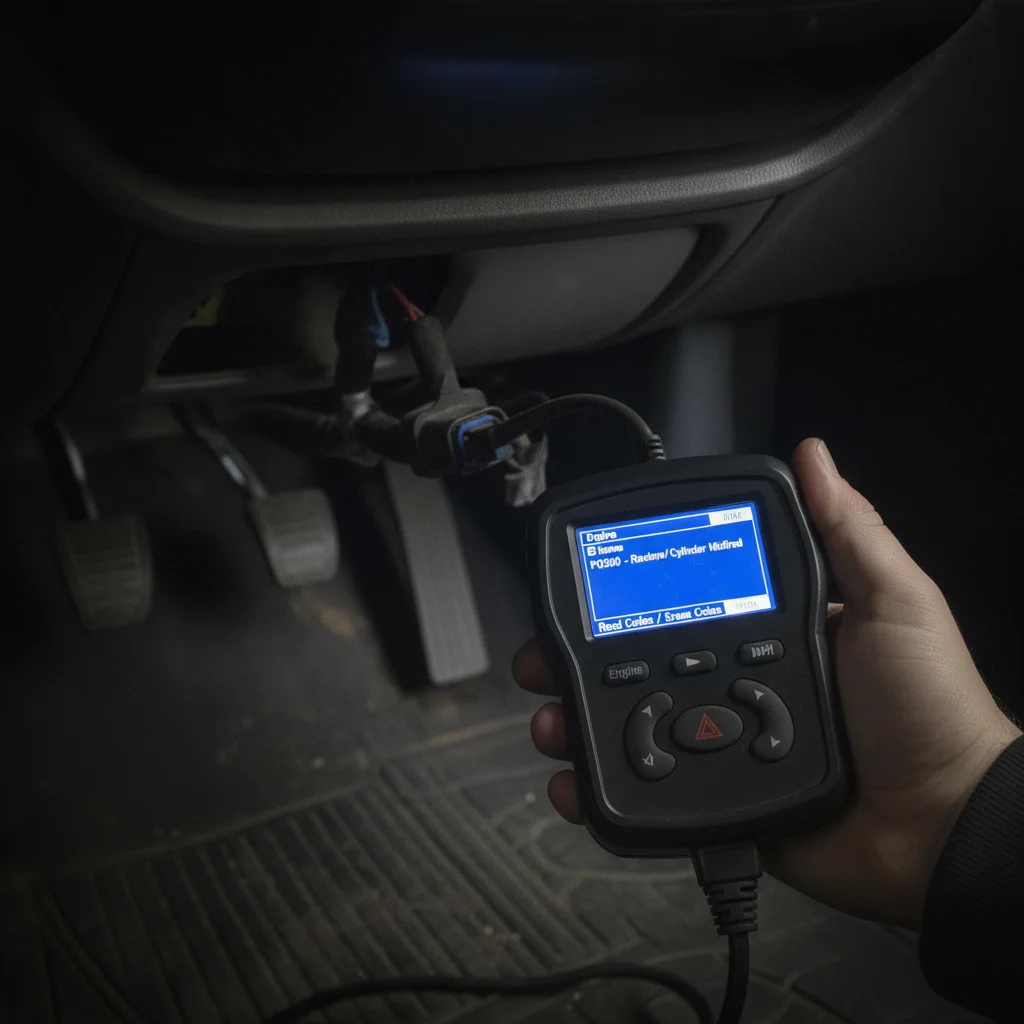
A $25 OBD-II scanner plugged into your car's diagnostic port will show you the exact fault code in under a minute — no shop visit required.
Every vehicle sold in the U.S. since 1996 has a standardized OBD-II diagnostic port. Any compatible scanner — and there are dozens available for under $30 — will read the stored codes and display them on a screen or in a phone app via Bluetooth.
Shops charge $75–$150 for a diagnostic scan that takes them about the same amount of time it takes you. The code itself is just information — knowing it before you call a shop means you can have an informed conversation instead of starting from zero. Many auto parts chains will also pull codes for free if you'd rather not buy a scanner.
Myth
Once the check engine light comes on, driving the car will make the damage worse.
Fact
In most cases, a steady check engine light doesn't require you to stop driving. Continuing to drive normally while you arrange diagnosis is typically fine.
This myth keeps a lot of people stranded unnecessarily. For the majority of fault codes — failed O2 sensors, evap system leaks, mild fuel trim issues — the car is operating within safe parameters. You can drive it to work, drive it to the parts store, and drive it to the shop when you're ready.
The exceptions are real: a flashing light during rough running means stop soon. A check engine light accompanied by an oil pressure warning or temperature warning changes the calculus entirely. But a lone steady light on an otherwise smooth-running car? Drive it. Just don't pretend the light isn't there.
Myth
Clearing the code with a scanner means the problem is fixed.
Fact
Clearing a code only erases the logged fault — it doesn't fix whatever caused it. If the underlying problem persists, the light will return.
A lot of people buy a scanner, clear the code, and feel relieved when the light goes off. Then it comes back in two days and they're frustrated. Clearing the code is a diagnostic step — it resets the monitors so you can see if the fault recurs — not a repair.
There's one legitimate use case for clearing codes: after you've made a repair, clear the code and drive normally to confirm the fix worked. If the light doesn't come back after a full drive cycle, you're good. If it does, you either fixed the wrong thing or didn't fix it completely.
Also worth knowing: clearing codes wipes your readiness monitors, which means your car may fail an emissions test immediately after clearing. Most states require several drive cycles of clean monitors before the car will pass inspection.
Myth
The check engine light and the oil pressure warning light are basically the same level of urgency.
Fact
These two lights are categorically different. The oil pressure warning demands immediate action; a check engine light usually does not.
This is a dangerous misconception. The oil pressure warning light — typically a red icon that looks like an oil can — means your engine may be operating without adequate lubrication right now. Running an engine with low oil pressure can cause permanent, irreparable damage within seconds to minutes. That light means pull over as soon as it's safe to do so.
The check engine light is an amber emissions and system monitoring light. It's reporting a fault that was logged, but in most cases the engine is still protected and running within safe parameters. Treating these two lights as equivalent urgency will either leave you stranded unnecessarily (if you overreact to a check engine light) or destroy your engine (if you underreact to an oil pressure warning).
Myth
If the car is running fine, the check engine light is probably just a glitch and can be ignored.
Fact
Cars can run smoothly while storing fault codes for problems that are silently causing long-term damage or reducing fuel efficiency.
A degrading oxygen sensor, for example, may not cause any noticeable drivability change early on — the engine compensates. But over time it causes the fuel mixture to run rich or lean, stresses the catalytic converter, and drops your fuel economy by 10–40% according to EPA estimates. You won't feel it. You'll just spend more at the pump.
Similarly, early-stage evaporative emission leaks (P0440 range codes) release fuel vapor into the atmosphere without affecting how the car drives at all. No symptom, real problem. The check engine light caught something your senses couldn't. That's the system working correctly — don't override it by choosing to ignore the alert.
Notice that catastrophic engine failure isn't on that list. It can trigger a check engine light, but if your engine were truly failing you'd know from noise, smoke, heat, or power loss long before the light was your only clue.
How to Actually Diagnose It: The $25 Solution
A basic OBD-II scanner plugs into the diagnostic port under your dash — usually near the steering column, always within three feet of the driver's seat on U.S. vehicles. Once plugged in, it reads any stored codes in seconds.
10–15%
Check engine lights caused by loose gas caps
Industry estimates from OBD-II diagnostic data consistently show fuel cap issues as one of the top causes of check engine lights across all vehicle types.
$25
Minimum cost of a basic OBD-II scanner
Entry-level Bluetooth OBD-II scanners paired with free phone apps provide the same basic code-reading functionality as shop-grade tools for simple diagnostics.
40%
Potential fuel economy loss from a faulty O2 sensor
The U.S. Department of Energy notes that a malfunctioning oxygen sensor can reduce fuel economy by up to 40% — one of the most fuel-costly unfixed faults.
$1,200+
Average catalytic converter replacement cost
RepairPal data shows catalytic converter replacement averaging $800–$2,500 depending on vehicle — often the downstream result of ignored upstream fault codes.
Codes follow a standard format. The first character tells you which system: P for powertrain, B for body, C for chassis, U for network. The second digit — 0 or 1 — indicates whether it's a generic code (shared across all manufacturers) or a manufacturer-specific one. The remaining three digits pinpoint the fault.
So P0420 means: Powertrain, generic, catalyst system efficiency below threshold (Bank 1). That's catalytic converter territory. P0171? System running lean on Bank 1 — could be a vacuum leak, a dirty MAF, or a lazy O2 sensor. Neither of those codes means pull over immediately.
Once you have the code, a quick search — or a site like the NHTSA's technical service bulletin database — will tell you how common that fault is on your specific make and model, what typically causes it, and what the fix costs. You'll walk into any shop conversation armed with actual information instead of anxiety.
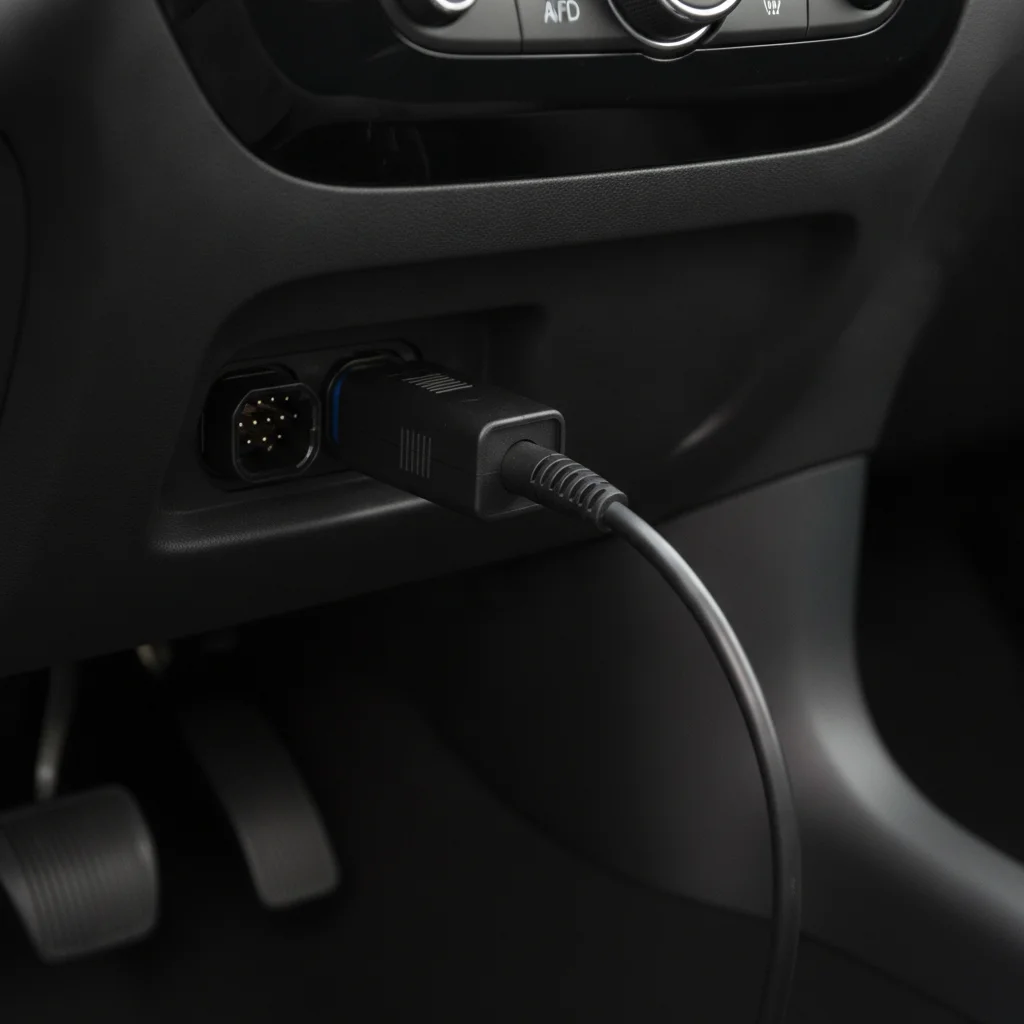
If you want to skip the scanner entirely and get a free reading right now, most AutoZone, O'Reilly Auto Parts, and Advance Auto Parts locations will pull codes for free. Just know they'll also suggest parts — that's their business model. The code itself is neutral information; what you do with it is up to you.
For help deciding whether a given alert means you should keep driving or pull over, check out when to pull over vs. when to drive to a shop.
When It Actually Is Serious
Let's be straight: some check engine light triggers are serious. The light is non-specific by design, which means occasionally it's flagging something that genuinely needs prompt attention.
Flashing Check Engine Light: Act Now
A blinking or flashing check engine light while the engine is running is not the same as a steady light. It almost always indicates an active engine misfire, which forces unburned fuel into the catalytic converter and can destroy it within a few miles of driving. Ease off the throttle, reduce speed, and find a safe place to stop. Do not ignore a flashing check engine light or assume it will sort itself out.
Don't Clear Codes Before an Emissions Test
If you're due for an emissions inspection, clearing your OBD-II codes resets the vehicle's readiness monitors. Most state inspection programs require those monitors to be complete before the car can pass. Clear codes before a test and you'll likely fail — not because of the fault, but because the monitors haven't run yet. Fix the problem, drive normally for several days, then go in for inspection.
Two Warning Lights at Once Changes Everything
A check engine light on its own usually isn't urgent. But if it appears alongside an oil pressure light, a temperature warning, or any red dashboard indicator, treat it as serious immediately. Multiple simultaneous warnings suggest compounding issues that may require you to stop driving the vehicle right away.
Watch for these combinations — a check engine light paired with any of the following means don't wait:
- Flashing/blinking light — Active misfire in progress. Ease off the throttle and get off the road soon.
- Rough running, shaking, or power loss — Misfires, fuel delivery failure, or timing issues. Driving hard on a misfiring engine will destroy your catalytic converter within miles.
- Oil pressure or temperature warning simultaneously — Two warning lights at once is the engine telling you it's in distress. The oil pressure light especially — that one means stop now. Contrast this with the check engine light: see what the oil pressure warning light is actually telling you to understand why that light is categorically different.
- Smoke from the hood or burning smell — Self-explanatory. Pull over.
Outside of those red flags, a steady check engine light on an otherwise normally running vehicle generally means: don't ignore it, but you have time to investigate properly before panicking or paying a diagnostic fee.
Also keep in mind that the check engine light isn't your car's only early warning system. Strange sounds, smells, and handling changes often show up before any light does. Why your check engine light isn't the only warning sign worth watching covers those other signals in detail.
DIY Fixes That Are Genuinely Safe for Non-Mechanics
Once you know the code, some fixes are legitimately within reach for anyone who's comfortable using basic tools. Here's where I'd feel comfortable telling a friend to handle it themselves:
Tighten or Replace the Gas Cap
Turn it clockwise until you hear it click. Clear the code with your scanner (or just drive a few days and the light will clear itself once the system sees the evap leak is gone). If the cap is cracked or stripped, a replacement is about $10–$15 at any parts store — just match your vehicle's spec.
Replace Spark Plugs
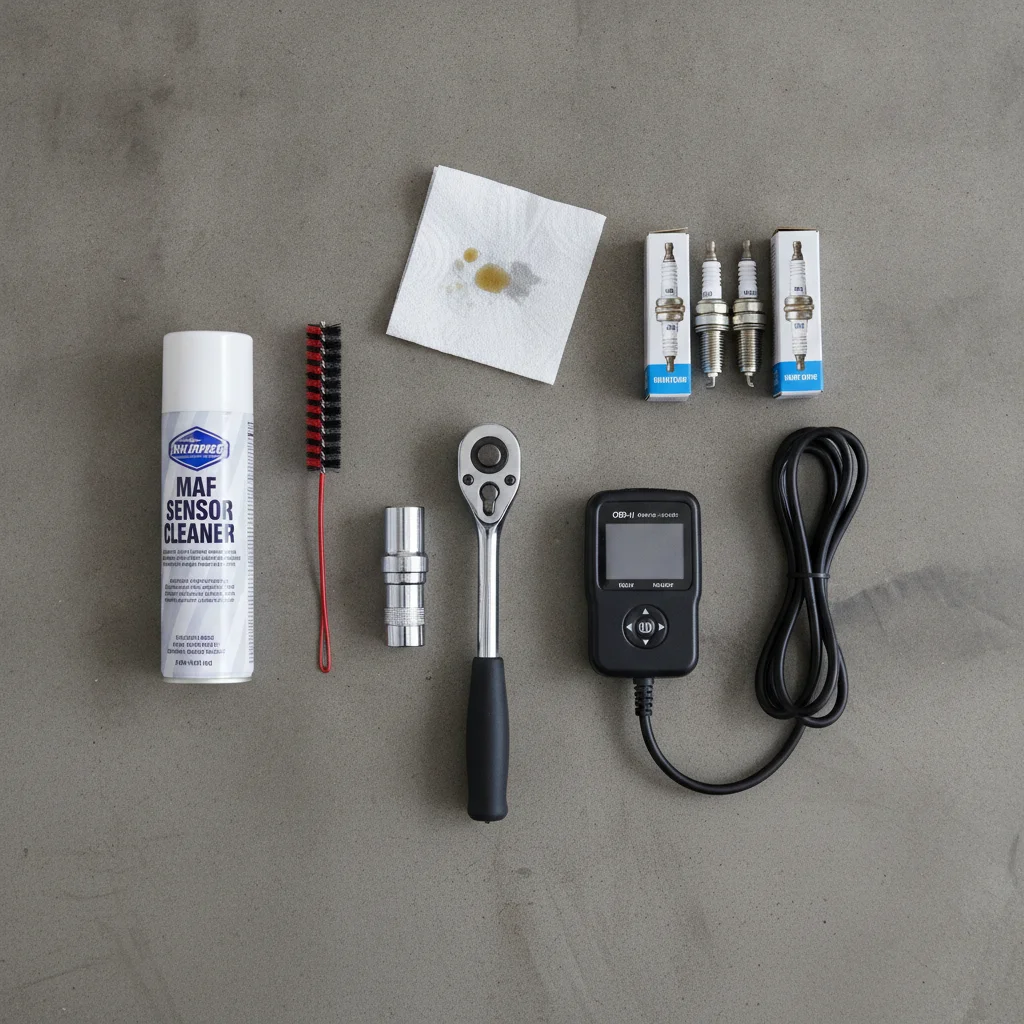
On most 4-cylinder engines, this is a 30-minute job with a socket set and a spark plug socket. The procedure varies more on V6 and V8 engines — rear-bank plugs on some transverse-mounted engines require removing intake components. Know before you start. But on a straightforward inline-4? This is entry-level DIY and one of the best things you can do for engine health and fuel economy simultaneously.
Clean a Dirty MAF Sensor
A can of CRC MAF Sensor Cleaner is about $8. The sensor is typically in the air intake tube between the air filter box and the throttle body. Disconnect it, spray the sensing wires gently, let it dry completely before reinstalling. This resolves a surprising number of P0100-range codes.
Replace an O2 Sensor
More involved, but doable. You'll need an O2 sensor socket (slotted for the wire), penetrating oil if the sensor has been in there for years, and patience. The repair itself is mechanical — it's mostly about access and breaking a corroded sensor loose without snapping it. Budget an hour and watch a model-specific video first.
What you shouldn't DIY without experience: catalytic converter replacement (involves exhaust work and proper gaskets), anything touching the fuel injection system beyond sensor swaps, or any repair where the diagnostic points to internal engine or transmission components. Those warrant a professional diagnosis before any wrench turns.
For a deeper look at what comes next once your light's on, The Check Engine Light Is On — Now What? walks through the full decision tree from light-on to resolution.
Never Ignore a Flashing Check Engine Light
A steady check engine light gives you time to investigate. A flashing one does not. Active misfires detected by a blinking light can damage your catalytic converter — a $1,000+ part — within miles. If your check engine light is flashing while the engine is running rough or hesitating, safely reduce speed and pull over as soon as possible. This is the one scenario where the check engine light genuinely is urgent.
Diagnosis First, Parts Second
Don't let a parts store employee talk you into buying components based on a code readout alone. A P0420 code (catalyst efficiency) can come from a bad O2 sensor, an exhaust leak, a contaminated converter, or an actual worn-out catalytic converter — and the right fix is different for each cause. Read the code, research your specific vehicle, and confirm the diagnosis before spending money on parts. Throwing parts at an unconfirmed diagnosis is one of the most expensive mistakes a DIYer can make.
The Real Cost of Ignoring It
Here's what I see happen regularly: someone's check engine light comes on for a $40 O2 sensor. They ignore it for six months. The bad O2 sensor causes the engine to run rich (too much fuel), which coats the catalytic converter in unburned fuel, which kills the converter. Now they're looking at a $1,200 repair instead of a $40 part and an hour of their Saturday.
That's the actual risk of a check engine light — not that the car is about to blow up, but that a small, cheap problem turns into a large, expensive one when ignored. The light is your early warning system doing exactly what it's supposed to do. The only wrong response is ignoring it entirely.
From a resale standpoint, a check engine light at trade-in time is a red flag for any dealer or private buyer. They'll either walk away or knock $500–$1,500 off their offer to account for unknown repairs. A $25 scanner and a $40 part could save you that at sale time — and protect your powertrain in the meantime.
The warning signs hub is a good resource for staying ahead of the other alerts your car might throw at you down the road. The check engine light is just one of many systems talking to you — knowing what they're all saying puts you firmly in control of your ownership costs.

All claims are backed by peer-reviewed research. Sources on request.