Key Takeaways
What OBD-II Is and Why It Matters to You
Since 1996, every car sold in the United States has been required to include an On-Board Diagnostics II (OBD-II) system. It's a standardized network of sensors and a central computer — called the ECU or ECM — that constantly monitors your engine, transmission, emissions system, and more. When something falls outside acceptable parameters, the system logs a Diagnostic Trouble Code (DTC) and turns on the check engine light.
Here's the thing shops don't advertise: that data is sitting right there, accessible through a universal port in your car, waiting for anyone with a $25 scanner to read it. You don't need a master technician's scan tool. You don't need a $150 diagnostic appointment. You just need the right inexpensive tool and a few minutes.
Understanding your own codes doesn't mean you'll always be able to fix the problem yourself — but it means you'll walk into any shop knowing exactly what they know, which is a genuinely powerful position to be in. As I always say: an informed car owner is a hard one to rip off. For a broader look at what the check engine light can mean and how serious different triggers are, see The Check Engine Light Is On — Now What?.
What You Need Before You Start
The gear list here is short and cheap. You do not need to buy a professional-grade scan tool. The same standardized port and protocol that shops use is the exact same one your budget scanner will plug into.
OBD-II scanner (handheld)
Reads and clears diagnostic trouble codes directly from the vehicle's ECU via the OBD-II port.
Bluetooth OBD-II adapter + smartphone app
An alternative to a handheld scanner — pairs wirelessly with apps like Torque Pro or Car Scanner for code reading and live data.
Pen and paper or phone notepad
For recording the exact codes displayed before clearing or researching them.
Vehicle owner's manual
Helps locate the OBD-II port and confirm your vehicle's ECU compatibility.
What you will need
One quick note on scanner types: handheld scanners with a built-in screen are the simplest — plug in, read codes, done. Bluetooth adapters (like ELM327-based dongles) pair with a free app on your phone and often give you more live data, but require a few extra setup steps. Either works fine for code reading. If you have an older vehicle near the 1996 cutoff, double-check your owner's manual to confirm OBD-II compatibility — a small number of 1994–1995 vehicles were early adopters.
Step-by-Step: Reading Your OBD-II Codes
This process takes less time than waiting in a shop lobby. Follow each step in order and you'll have the code — and a clear sense of what to do next — within about 10 minutes.
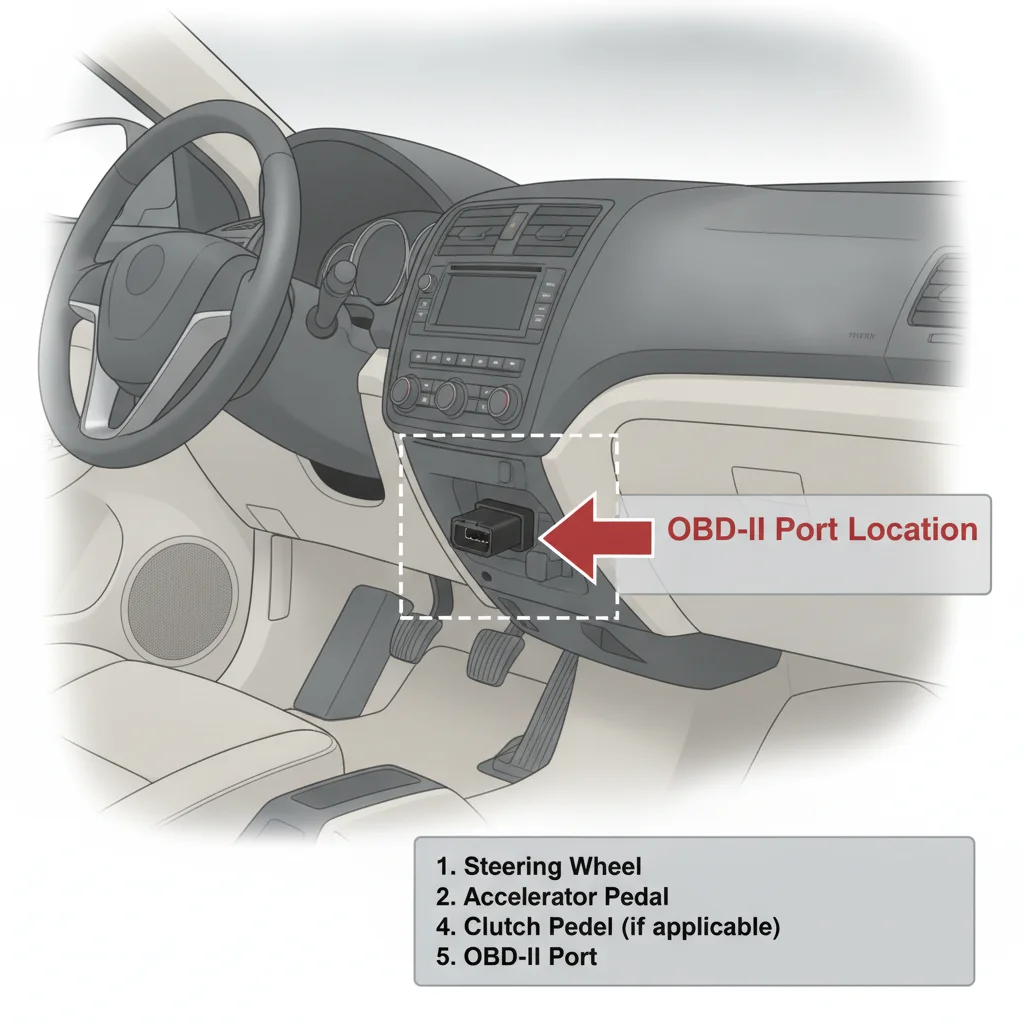
Locate the OBD-II port in your vehicle
The OBD-II diagnostic port is a 16-pin trapezoid-shaped connector. By law, it must be within 3 feet of the steering wheel and accessible without tools. In the vast majority of vehicles, it's under the dashboard on the driver's side — sometimes exposed, sometimes behind a small plastic cover that pops off with your fingers.
Common hiding spots: directly below the steering column, to the left of it near the kick panel, or inside the lower dashboard trim. Check your owner's manual if you can't find it within 60 seconds — the location is always listed.
Plug in your scanner with the ignition off
With the car off (not in accessory mode, fully off), plug your scanner or Bluetooth adapter firmly into the OBD-II port. You should feel it click into place. If you're using a Bluetooth adapter, open the companion app on your phone now and pair the device — this usually happens automatically once the dongle is powered.
Turn the ignition to the 'On' position without starting the engine
Turn your key to the second position — where the dashboard lights illuminate but the engine doesn't crank. On push-button start vehicles, press the start button without pressing the brake pedal. This powers the ECU and allows the scanner to communicate with it.
Your scanner should light up or show a connection indicator. Bluetooth adapters typically show a solid LED once connected to the ECU.
Run a code scan and read the results
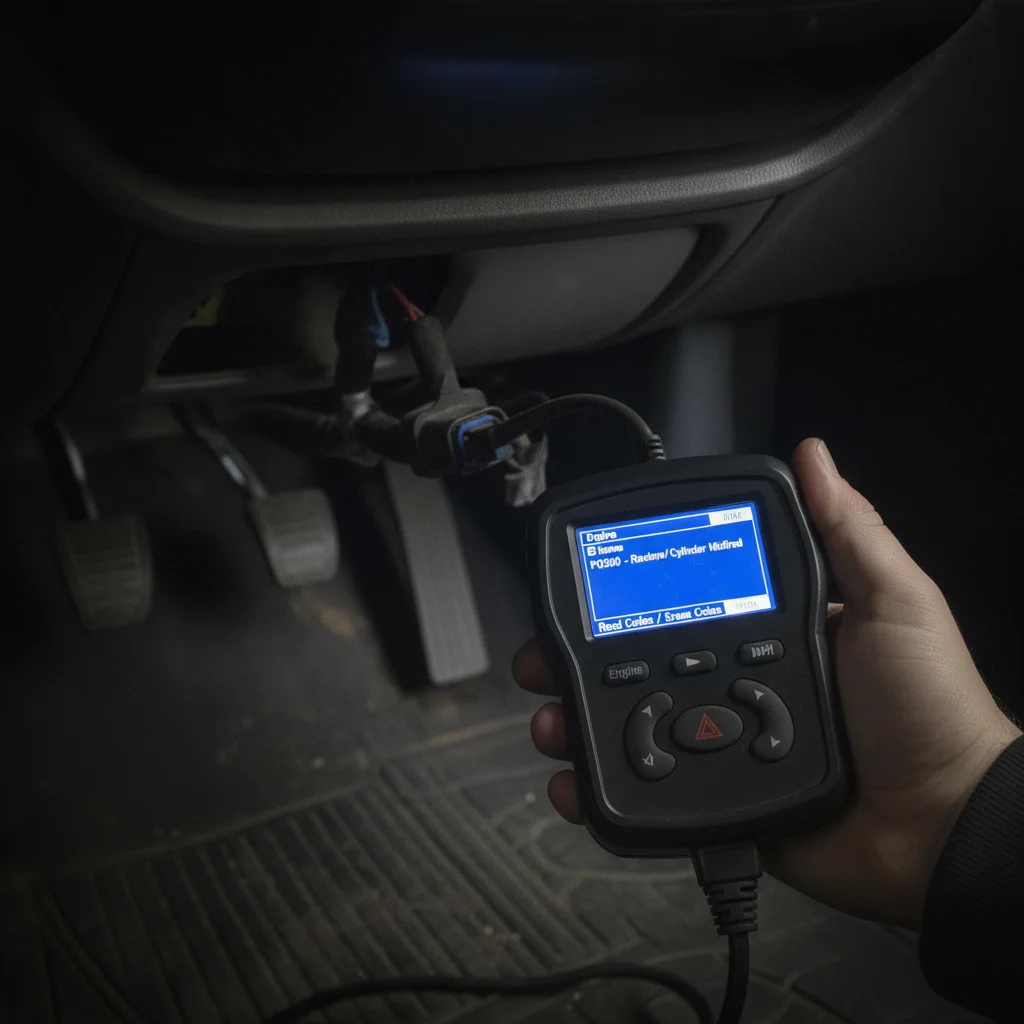
On a handheld scanner, navigate to Read Codes or Diagnostic Trouble Codes — the menu labels vary slightly by brand but the function is the same. Press enter and wait 10–20 seconds for the scan to complete.
The scanner will display one of three results:
- No codes found — The ECU has no stored faults. If the light is on, it may have been triggered by something intermittent that resolved, or the scanner couldn't communicate with a specific module.
- Stored/confirmed codes — Active faults the ECU has confirmed through repeated failure. These are your primary concern.
- Pending codes — Faults the ECU has detected once but not yet confirmed. Worth noting; they may become stored codes soon.
Record the codes and look them up
Write down the exact code or codes (e.g., P0420, P0171). Then look them up using a reliable source. Good free resources include the NHTSA database, your scanner manufacturer's code lookup, and established automotive forums for your specific make and model.
Be specific in your search: searching "P0420 2018 Toyota Camry" will get you more useful results than just "P0420" — because some codes have brand-specific causes or known issues with certain model years.
Once you have your codes written down, the real diagnostic work begins. The code is a starting point, not a diagnosis. The next section explains what the codes actually mean and how to interpret them without a background in automotive engineering.
Decoding What the Codes Actually Mean
OBD-II codes follow a consistent naming structure. Once you know the pattern, you can parse any code at a glance — even a new one you've never seen before.
Every code is five characters: one letter followed by four digits.
- P — Powertrain (engine, transmission) — the most common category
- B — Body (airbags, power windows, climate control)
- C — Chassis (ABS, stability control, steering)
- U — Network/Communication (wiring, module communication)
The second character tells you whether the code is standardized or manufacturer-specific:
- 0 — Generic (SAE standard, same meaning across all brands)
- 1, 2, or 3 — Manufacturer-specific (meaning varies by brand)
The third digit narrows the system:
| Digit | System |
|---|---|
| 1 | Fuel and air metering |
| 2 | Fuel and air metering (injector circuit) |
| 3 | Ignition system |
| 4 | Emissions controls |
| 5 | Vehicle speed and idle control |
| 6 | ECU and outputs |
| 7 or 8 | Transmission |
The last two digits are a specific fault number within that system. So P0420 breaks down as: Powertrain (P) → Generic (0) → Emissions (4) → Catalyst system efficiency below threshold (20). That's the classic catalytic converter code — one of the most common ones you'll encounter.
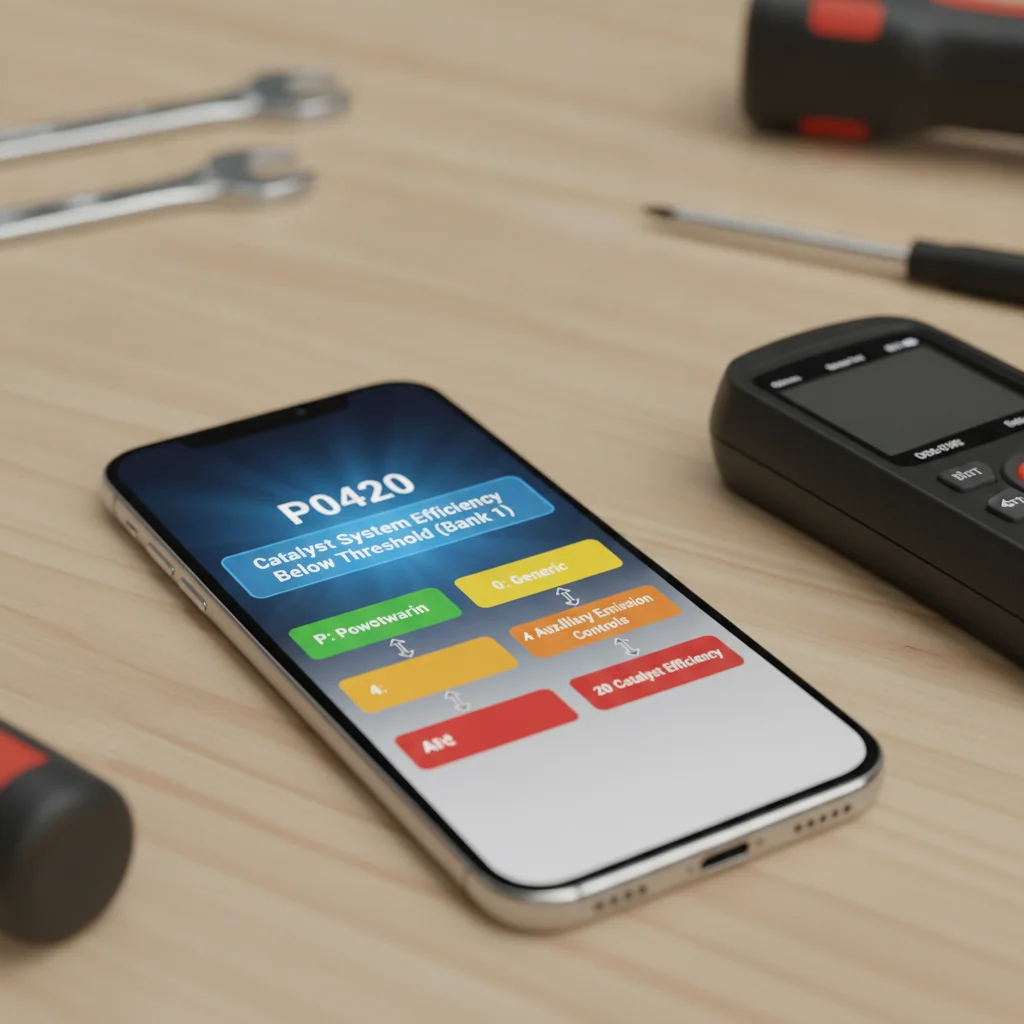
A few codes you're very likely to run into:
- P0171 / P0174 — System too lean (bank 1 / bank 2). Often a vacuum leak, dirty MAF sensor, or failing oxygen sensor.
- P0300–P0308 — Misfire detected. P0300 is random; P0301 is cylinder 1, P0302 is cylinder 2, and so on. Often spark plugs, ignition coils, or fuel injectors.
- P0420 / P0430 — Catalyst efficiency below threshold. Usually points to a failing catalytic converter, though a bad O2 sensor can falsely trigger it.
- P0442 / P0455 — EVAP system leak (small or large). A loose or cracked gas cap is the first thing to check.
- P0128 — Coolant temperature below thermostat regulating temperature. A failing thermostat, usually a straightforward fix.
Start With the Lowest-Numbered Code
When you have multiple codes, resist the urge to research all of them simultaneously. The lowest-numbered P0 code is most often the root fault. Fix that one first and rescan — secondary codes frequently disappear on their own once the primary issue is resolved.
Free Scans at Auto Parts Stores
AutoZone, O'Reilly, and most regional auto parts chains will read your codes for free at the counter. It's a solid option if you just need a quick one-time read. The downside: you're standing in a parking lot, not in your own driveway, and they may push parts sales based on what they find.
If the scanner shows multiple codes at once, start with the lowest numbered P0xxx code — it's often the root cause that triggered the others downstream. Chasing secondary codes before fixing the primary one wastes time and money.
After You Have the Code: What to Do Next
Reading the code is step one. Deciding what to do with it is where good judgment matters. Here's a realistic framework:
A Flashing Check Engine Light Is Urgent
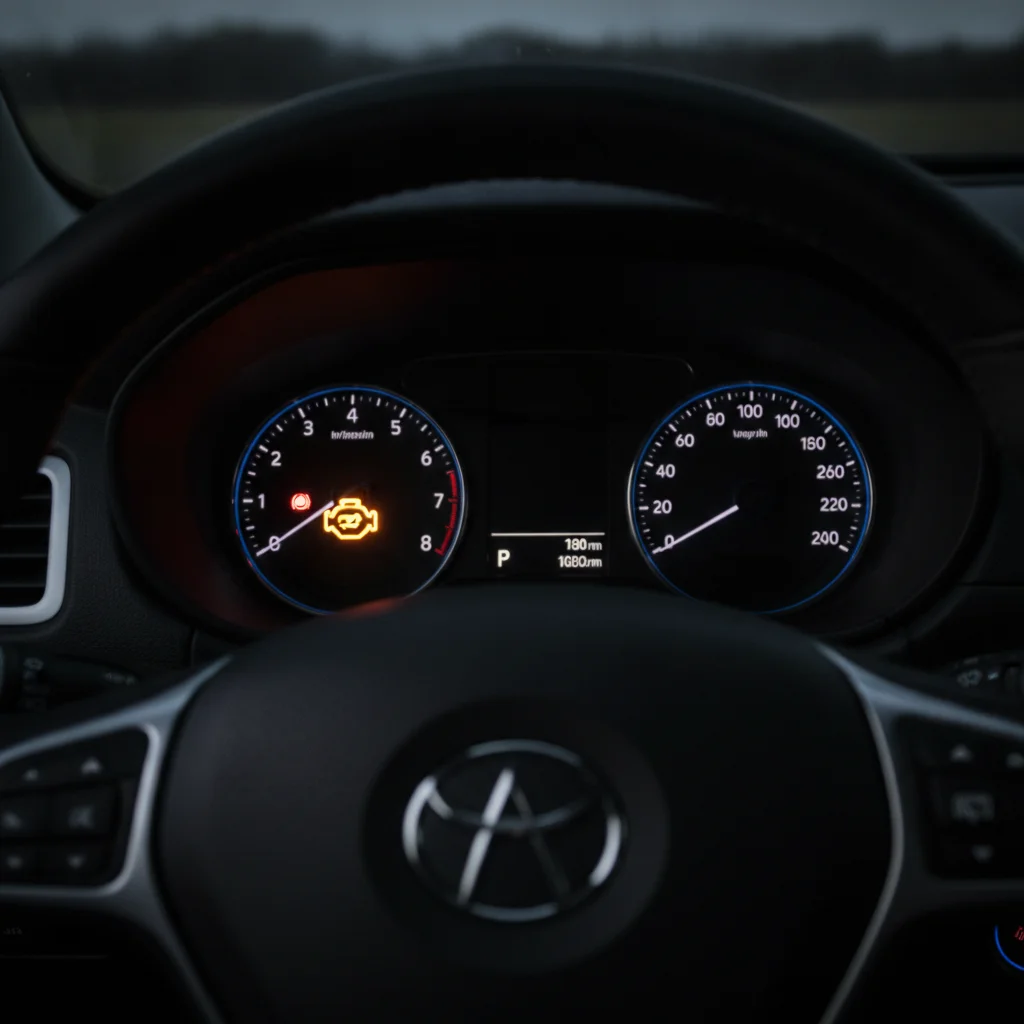
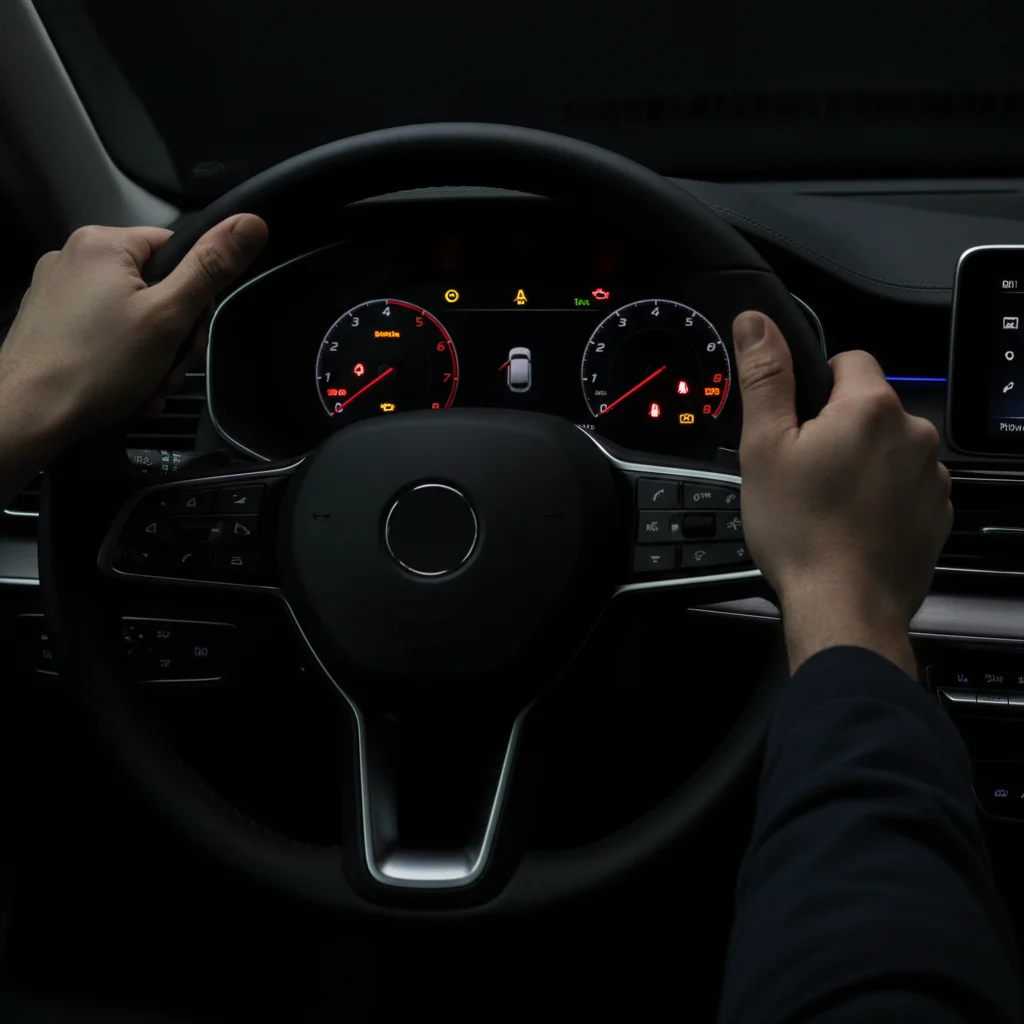
A steady check engine light means there's a stored fault worth investigating soon. A flashing or blinking check engine light means an active misfire is happening right now — one severe enough to damage your catalytic converter within minutes of continued driving. If the light is flashing, reduce speed immediately and get the car off the road. This is not a drive-home-and-deal-with-it situation.
DIY-friendly codes are generally those tied to consumable parts with straightforward access: spark plugs (P030x), a loose gas cap (P0442), a dirty MAF sensor (P0101), or a coolant thermostat (P0128). If the repair involves removing a sensor, swapping a coil pack, or tightening a clamp — and you're comfortable with basic hand tools — these are reasonable weekend jobs.
Codes that warrant a shop visit include anything touching the transmission (P07xx range), ABS or stability systems (C-codes), airbag systems (B-codes), or symptoms that pair with rough driving behavior, overheating, or strange smells. A code that makes the check engine light flash — not glow steadily — almost always means an active misfire severe enough to damage your catalytic converter. Pull over safely and get it looked at.
Before you head to a shop, take a few minutes to document what you found and what the car has been doing. Diagnosing a Warning Sign Yourself Before Visiting a Mechanic walks you through how to observe and communicate symptoms clearly — which saves time at the appointment and makes it much harder for a shop to pad the bill.
Never Clear Codes Without Fixing the Root Cause
Clearing a code without repairing the underlying problem is a temporary fix that accomplishes nothing. The light will return, often within one or two drive cycles. Worse, if you're selling the car and clear codes right before showing it, a buyer with their own scanner will see incomplete readiness monitors — a red flag that screams "something was just hidden." Fix first, then clear.
Also worth knowing: the check engine light is only one of many signals your car sends. Dashboard lights grab attention, but a lot of serious issues announce themselves through sounds, smells, and how the car feels under you. Why Your Check Engine Light Isn't the Only Warning Sign Worth Watching covers the full picture. And if you want a structured approach to spotting problems before they even set a code, How to Inspect Your Own Car for Early Warning Signs is a solid companion read.
Clearing Codes and Understanding Drive Cycles
Most scanners give you a "clear codes" or "erase codes" button. Use it wisely.
Clearing a code erases the stored fault and turns off the check engine light — but it does not fix whatever caused the code. If the underlying problem is still there, the code will return within one to three drive cycles, sometimes immediately. Shops call this "code and clear" — and some unscrupulous ones use it to appear as though a repair worked when it didn't.
There's also a legitimate reason to clear codes: after you've actually fixed the problem, clearing the code and driving normally confirms the repair held. If the light stays off through a complete drive cycle — typically highway and city driving that allows the ECU to run all its readiness monitors — you're good.
One practical warning: if you're about to take your car for a state emissions inspection and you clear codes right before going, the ECU's readiness monitors will show as incomplete. Most states will fail you for that, even if the light is off. Drive the car for a week normally after any code clear before heading to emissions testing.
For resale purposes, a clean OBD readiness status and no stored codes genuinely matters. A used car buyer or dealer running a pre-purchase inspection will pull these codes. A car with pending or active faults — even minor ones — gives them leverage to negotiate the price down. Staying on top of your codes is a small habit with real financial upside when it's time to sell.

All claims are backed by peer-reviewed research. Sources on request.