Key Takeaways
Our Verdict
Detailing is forgiving, teachable, and a great entry point for any car owner who wants to take ownership of their vehicle's upkeep. Basic mechanical jobs like oil changes, cabin filters, and wiper blades sit in a manageable middle ground — worth learning with the right resources. But structural, safety-critical, or electrical work belongs with trained hands unless you genuinely know what you're doing. The risk isn't just to your wallet; it's to your safety and the safety of everyone sharing the road with you.
| Best for | Recommended |
|---|---|
| Car owners who want to save money on appearance upkeep | DIY Detailing |
| Confident beginners ready to learn basic maintenance | DIY Mechanical (Beginner Tasks) |
| Anyone dealing with safety systems or complex electrical faults | Professional Mechanic |
| Sellers prepping a vehicle without a mechanical background | DIY Detailing + Shop for Mechanicals |
Why the DIY Line Matters More Than You Think
There's a real difference between "I can probably figure this out" and "I can do this safely." For a lot of car owners, those two things get blurred together when they're watching a YouTube video at 11 p.m. and feeling confident. I'm not here to discourage you from working on your own car — I think it's genuinely valuable. But I am here to be straight with you about where the stakes change.
Detailing — washing, claying, polishing, waxing, vacuuming, treating leather — is almost entirely forgiving. The worst realistic outcome is a swirl mark in the clear coat or an interior trim piece that smells too strongly of conditioner for a week. You can learn your way through it. Mechanical repairs are a different animal. Some of them are almost as forgiving as detailing. Others are not forgiving at all, and a misstep doesn't just cost you money — it can put you in danger.
If you're new to working on vehicles, our first-time DIY primer is a good starting point before you dive into anything under the hood. And before any repair, run through a pre-repair safety checklist — it takes five minutes and can save you from a serious mistake.
Detailing: What DIY Looks Like Here
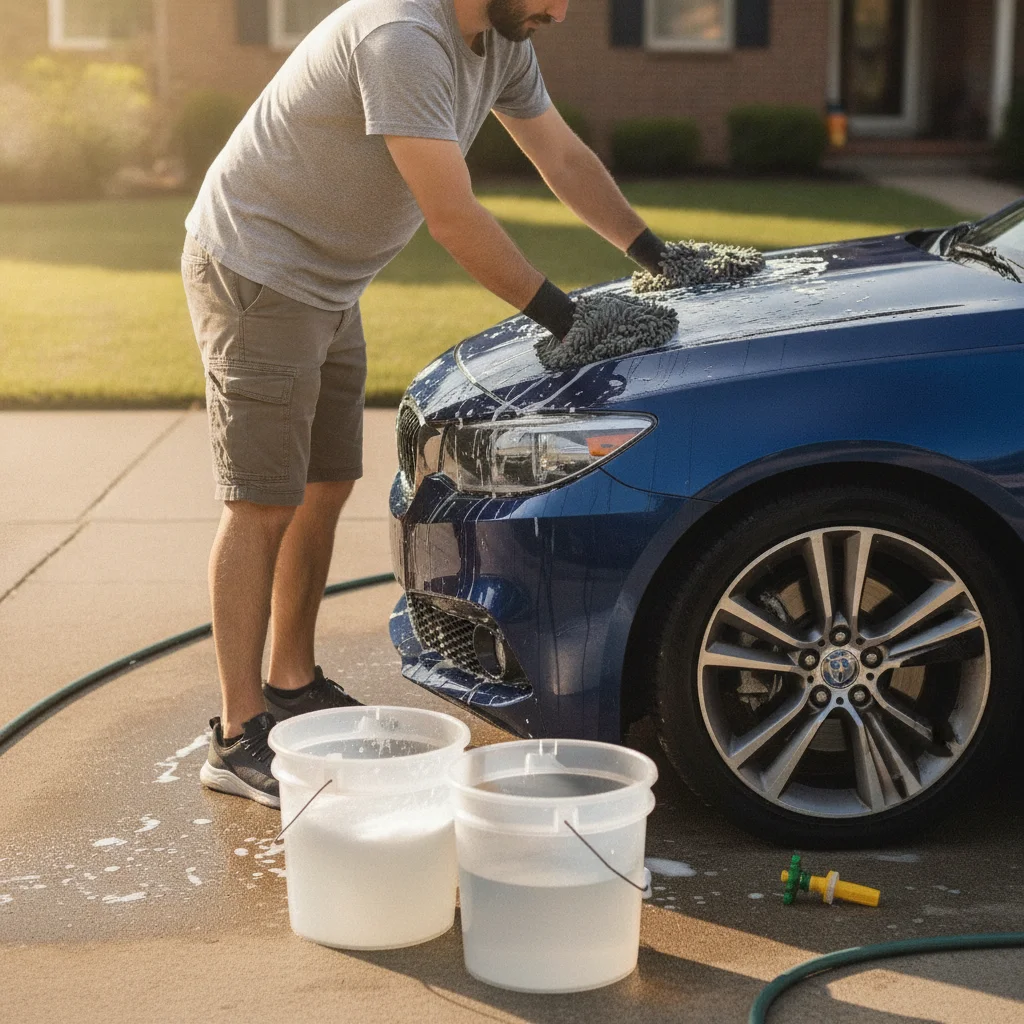
Detailing sits firmly in DIY territory for most people, and for good reason. The techniques are learnable, the tools are affordable, and the consequences of doing it wrong are almost always reversible or cosmetic. Let's break down what that actually covers.
Exterior Detailing
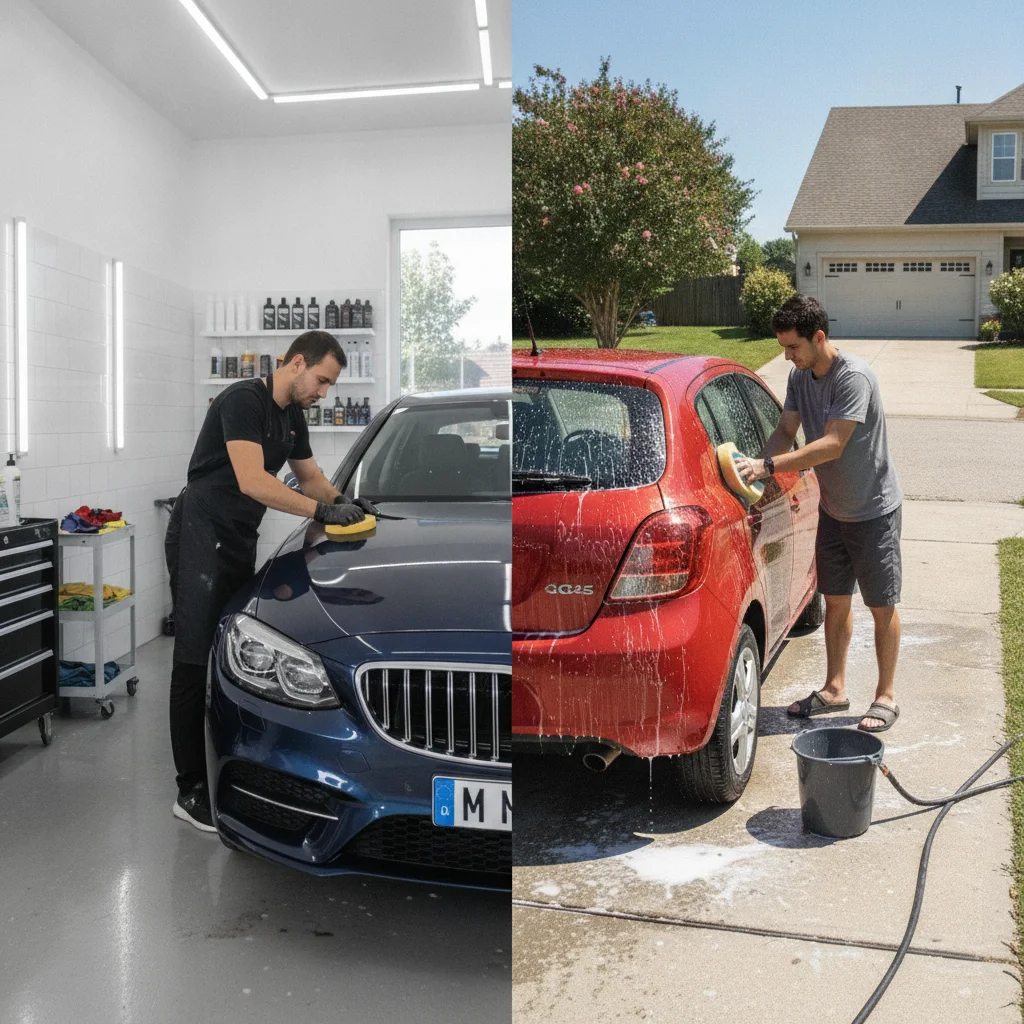
- Washing and drying: Two-bucket method, grit guards, microfiber mitts — this is table stakes. Anyone can learn this in an afternoon.
- Clay bar treatment: Removes bonded contaminants from paint before polishing. Requires some feel but nothing dangerous.
- Paint correction (light to moderate): Machine polishing to remove swirl marks and light scratches. A dual-action polisher is the tool here — it's far more forgiving than a rotary. Start slow, use the right pads and compounds.
- Waxing and paint sealants: Straightforward protection. Hard wax takes a little practice to buff off cleanly, but there's no real risk.
- Ceramic coatings: This is where I'd pump the brakes for most beginners. Consumer-grade ceramic coatings are more forgiving than professional ones, but surface prep has to be flawless or you'll lock in defects permanently. If your paint isn't corrected first, a ceramic coat just seals in the problems.
Interior Detailing
- Vacuuming and shampooing carpet and upholstery — totally DIY-safe
- Cleaning and conditioning leather or vinyl — easy, but use the right product for your material
- Dashboard and trim cleaning — avoid anything silicone-based on surfaces near the windshield (glare hazard)
- Odor treatment with an ozone generator — effective, but follow instructions carefully; ozone machines require you to leave the car and allow off-gassing time before re-entry
If you're prepping a car for sale, our guide on professional detailing vs. DIY before a sale will help you decide when it's worth paying someone else to do it instead.
Machine Polishing for Beginners: Start Safe
If you're new to paint correction, start with a dual-action (DA) polisher rather than a rotary. DAs are far less likely to burn through clear coat on a flat or curved panel. Work in small sections, keep the pad flat against the surface, and use moderate speed until you understand how your paint responds. A test spot in an inconspicuous area first is never a bad idea.
Build Skills in Order, Not in Confidence
Confidence comes from success, and success comes from tackling jobs in the right sequence. Master the easy wins first — oil changes, filters, wipers — and let each completed job teach you how your car is put together. When you eventually face a harder repair, you'll have context that makes the service manual make sense. Jumping straight to complex jobs because they seem well-documented online is how most avoidable mistakes happen.
Mechanical Repairs: The Spectrum From Easy to Expert-Only
Mechanical work isn't monolithic. There's a massive gap between swapping a cabin air filter and replacing a timing chain. The mistake most people make is treating mechanical repairs as a single category rather than a spectrum. Here's how I think about it.
| DIY Detailing | DIY Basic Mechanical | DIY Advanced Mechanical | Professional Shop | |
|---|---|---|---|---|
| Skill required | Beginner-friendly | Some learning curve | Significant expertise needed | Trained technician |
| Safety risk if done wrong | Very low (cosmetic) | Low to moderate | High (can cause accidents) | Managed professionally |
| Typical cost to DIY | $20–$150 in supplies | $20–$100 in parts | $50–$300+ in parts/tools | Labor + parts markup |
| Risk of secondary damage | Minimal | Moderate if rushed | High without experience | Covered by warranty/liability |
| Tools needed | Basic detail kit | Standard hand tools | Specialized equipment | Shop-grade equipment |
| Resale value impact | Positive (clean presentation) | Neutral to positive | Variable — risk of reducing value | Positive if documented |
| Learning value | High for car care basics | High for maintenance habits | High but risk is real | Low (you're not doing it) |
| Best for sellers? | Yes — strong ROI | Situationally yes | Rarely worth the risk | Yes for documented repairs |
The Approachable End: Low-Stakes Mechanical Jobs
These are jobs that involve minimal safety risk, don't require specialized equipment, and where a mistake usually means the job just doesn't work rather than causing additional damage.
- Cabin air filter replacement: Usually behind the glove box. Takes five minutes. No tools required on most vehicles.
- Engine air filter: A few clips or screws, done in minutes. Critical for engine health and fuel economy.
- Wiper blade replacement: Completely safe, very easy, inexplicably overpriced at shops.
- Battery replacement: Manageable on most vehicles, but some modern cars require a battery registration step through an OBD-II scanner — skip it and your charging system may not work correctly.
- Oil and filter changes: Genuinely worth learning. See our breakdown of what DIY oil changes actually involve — including the trade-offs most tutorials gloss over.
The Middle Ground: Manageable With Research and Patience
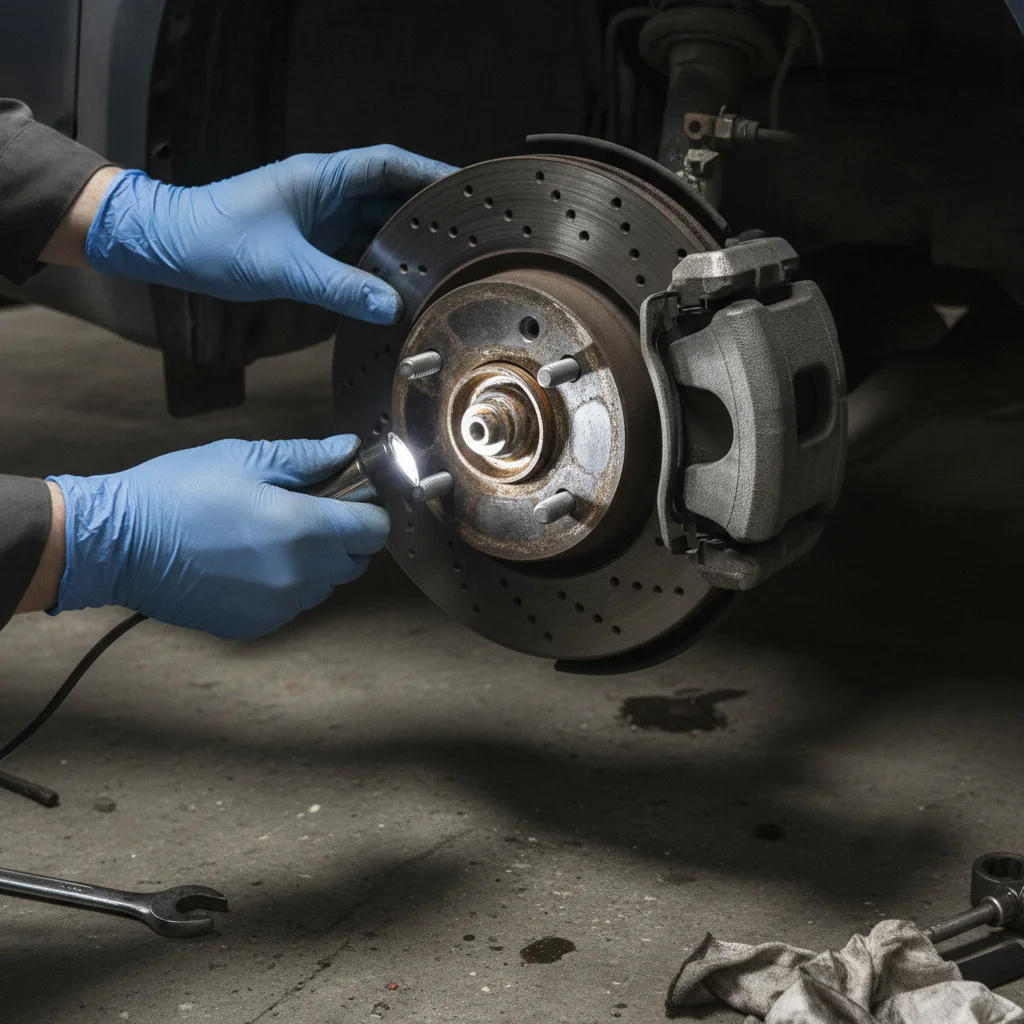
- Brake pad replacement (front): Doable for a careful beginner with the right tools and a solid service manual. That said, brakes are safety-critical, and there are enough ways to get this wrong — improperly seated caliper pistons, contaminated rotors, missing hardware — that I always tell people to double-check their work with a knowledgeable friend before driving.
- Spark plug replacement: Easy on older, simpler engines. On some modern turbocharged or direct-injection engines with tight engine bays, this becomes a frustrating and technically demanding job.
- Thermostat replacement: Moderate. Involves draining and refilling coolant, which adds a layer of mess and the need to bleed air from the cooling system properly.
- Serpentine belt: Often straightforward with the right diagram and a breaker bar, but tensioner tools are sometimes required and routing errors can cause belt failure.
Leave It to the Pros: High-Stakes, High-Skill Repairs
- Brake lines and hydraulics: Air in the brake lines or a fitting that isn't fully seated can cause total brake failure. Do not DIY this without proper training.
- Suspension and steering components: Alignment specs, torque sequences, and geometry matter here. Improperly installed ball joints or tie rod ends can cause loss of control.
- Timing belt or chain: One tooth off on the timing and you can bend valves or destroy the engine. No room for guesswork.
- Fuel system repairs: Pressurized fuel, flammable vapors, fire risk. Not a beginner space.
- ABS, airbag, and other safety electronics: These systems have specific diagnostic requirements and can be permanently damaged — or dangerously armed — by uninformed intervention.
- Transmission work: Complex, precision-dependent, and expensive to fix if you make a mistake.
For a straight-up cost comparison across common jobs, check out our analysis of DIY vs. shop repair costs across 10 jobs.
Brakes Are Not a Learning Project
Brake pad replacement is often positioned as a beginner DIY job, and it can be — but only if you follow the full process correctly. Improperly compressed caliper pistons, contaminated brake fluid, missing anti-rattle hardware, and rotors that aren't within spec are all common errors that can lead to brake fade or failure. If you're doing brakes for the first time, have someone with direct experience check your work before you drive the car.
Modern Cars Complicate 'Simple' Jobs
Battery replacement on a late-model European or Asian vehicle often requires a scan tool to register the new battery with the car's battery management system. Skip that step and your alternator may overcharge or undercharge the new battery, shortening its life or causing electrical problems. Always look up your specific year, make, and model before assuming a job is as simple as it looks on a generic tutorial.
The Risk Calculus: What's Actually at Stake
Here's how I frame the risk for anyone who asks me whether they should tackle a job themselves: ask what's the realistic worst-case outcome if you get this wrong.
For detailing, worst-case is usually cosmetic — a scratch, a stain that didn't fully come out, a trim piece that looks a little off. Annoying and sometimes costly to fix, but nobody gets hurt.
For beginner mechanical jobs done correctly, worst-case is that the repair doesn't hold and you have to redo it or take it to a shop. Frustrating, but manageable.
For safety-critical mechanical repairs — brakes, steering, suspension, fuel systems — worst-case is a crash. That changes the math entirely.
35%
DIY repairs that create additional damage
Industry surveys of independent repair shops suggest roughly 1 in 3 DIY jobs arrives at the shop having introduced a secondary problem beyond the original fault.
$400–$1,500
Typical cost to fix a botched brake job
A incorrectly installed brake system that causes rotor damage, caliper failure, or brake line issues can run into hundreds or thousands to professionally correct.
$0–$80
Typical DIY savings on an oil change
According to consumer cost tracking sites, the average full-service oil change at a shop runs $70–$150; DIY materials typically cost $30–$60 depending on oil type.
The other thing to factor in is secondary damage. A lot of DIY mechanical errors don't just fail to fix the original problem — they create new ones. Over-torqued bolts strip threads. Wrong fluids contaminate systems. Improperly bled brakes corrode calipers. These cascading failures are exactly what our related piece covers in depth: the DIY mistakes that turn small jobs into big repair bills.
The honest answer is that the risk calculation is personal. It depends on your actual mechanical aptitude, your tools, your workspace, and whether you have a knowledgeable resource to check your work. Be honest with yourself about where you land on that scale.
Detailing Before a Sale vs. Mechanical Repairs Before a Sale
This is a situation where the detailing vs. mechanical question gets really practical. If you're selling a car, you're weighing what prep work will actually move the needle on your sale price versus what just costs you money.
Detailing almost always pays off in a private sale context. A clean car photographs better, shows better, and signals to buyers that it's been cared for. You don't need to spend $300 at a detail shop — a thorough DIY detail with good products can get you 80% of the result at a fraction of the cost.
Mechanical repairs before a sale are trickier. Minor issues that are easy to spot — a cracked headlight housing, a missing trim piece — are worth fixing because they drag down first impressions and give buyers negotiating ammunition. Significant mechanical repairs are a different story. You're rarely going to recoup the full repair cost in a higher sale price, and if you DIY a repair poorly, you've just handed the next owner a liability.
Our guide on when to DIY detailing vs. hire a pro before a sale gets into the specifics of that decision. And for dent-related decisions, understanding what paintless dent repair can actually fix is worth a read before you book anything.
The broader prep-for-sale picture — including which fix-up steps have the best ROI — is covered in our Detailing & Repairs hub.
Building Your Skills Over Time Without Getting in Over Your Head
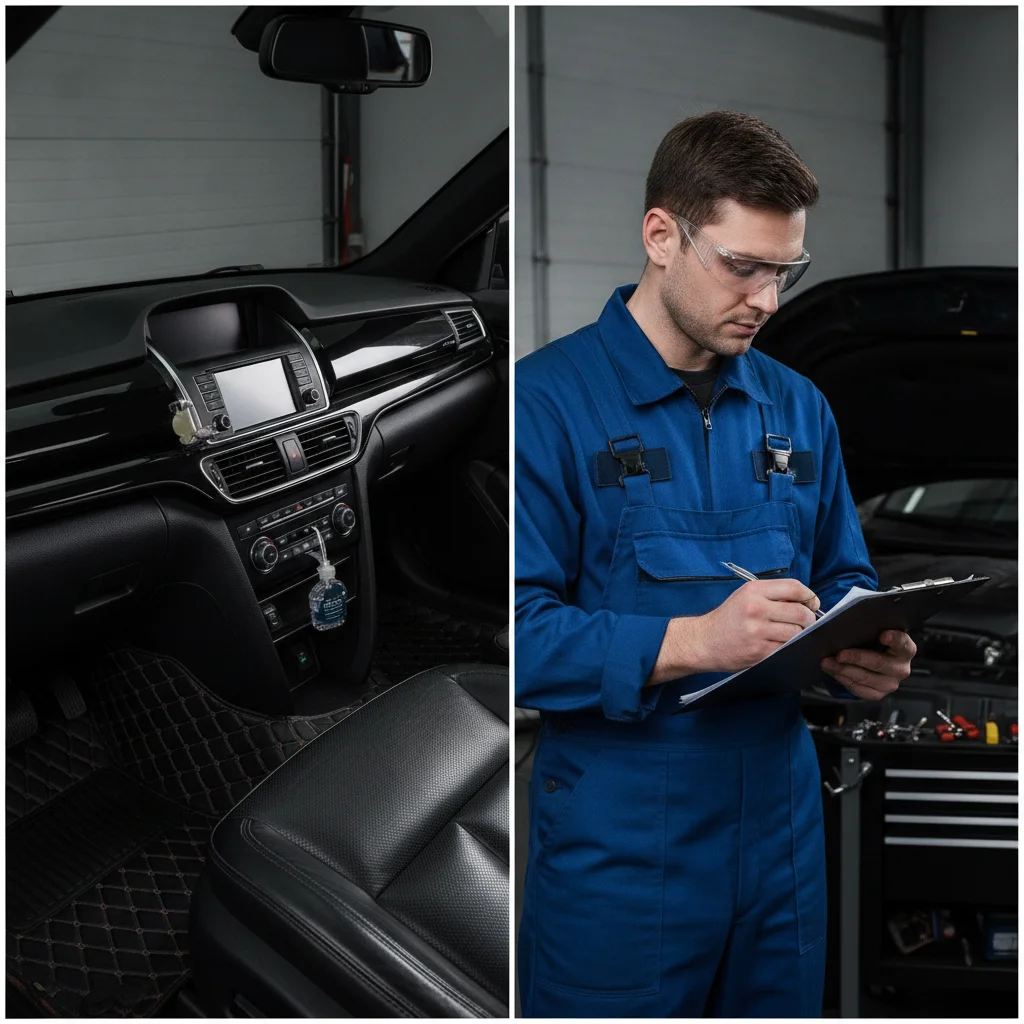
The goal for most people shouldn't be to become a full-service mechanic overnight. It should be to build competence gradually, starting with low-stakes jobs and working up. Here's a reasonable progression:
- Start with maintenance items: Oil changes, filters, wiper blades, tire pressure checks. These build tool confidence and mechanical familiarity without real risk.
- Move to consumables: Brake pads (with careful research and a helper to check your work), spark plugs on an accessible engine, coolant flushes.
- Invest in the right resources: A factory service manual or a vehicle-specific repair guide is worth far more than a generic YouTube video. Torque specs, fluid capacities, and component sequences vary significantly by make and model.
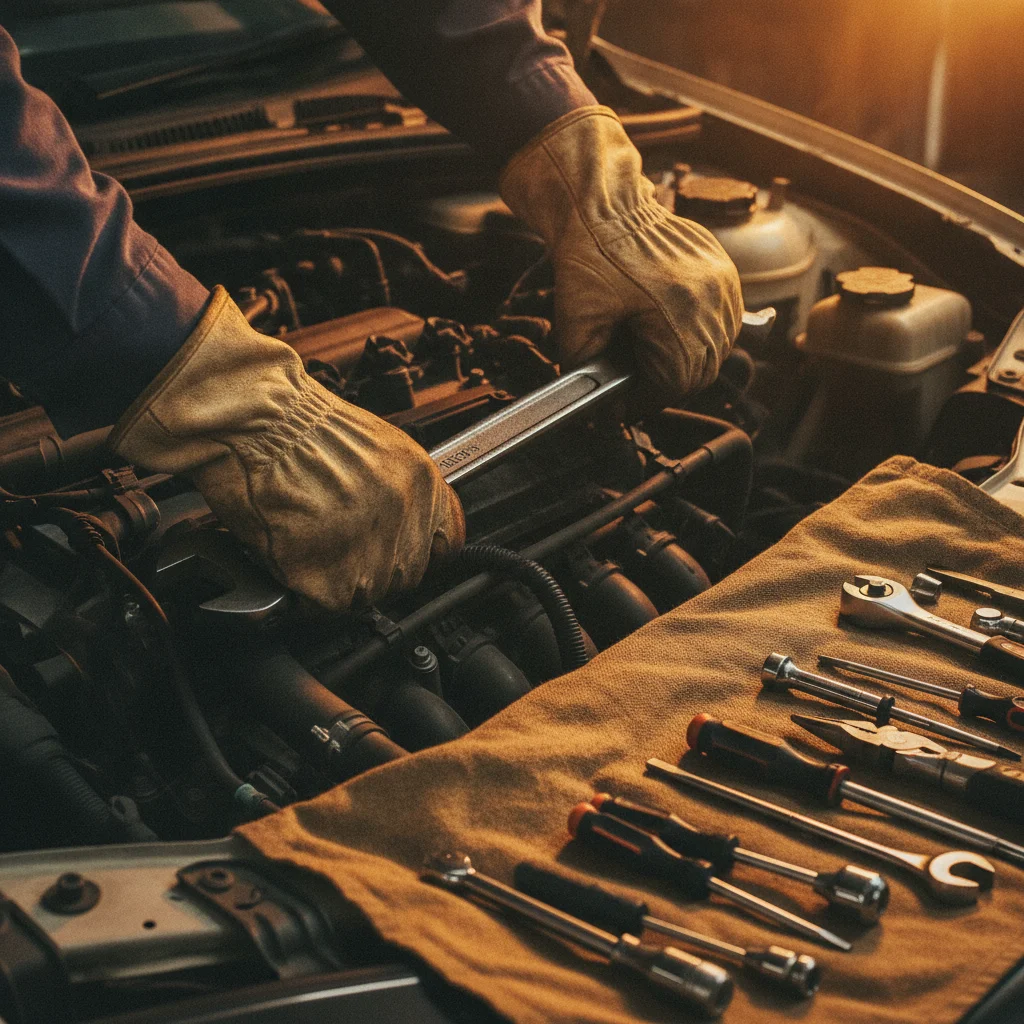
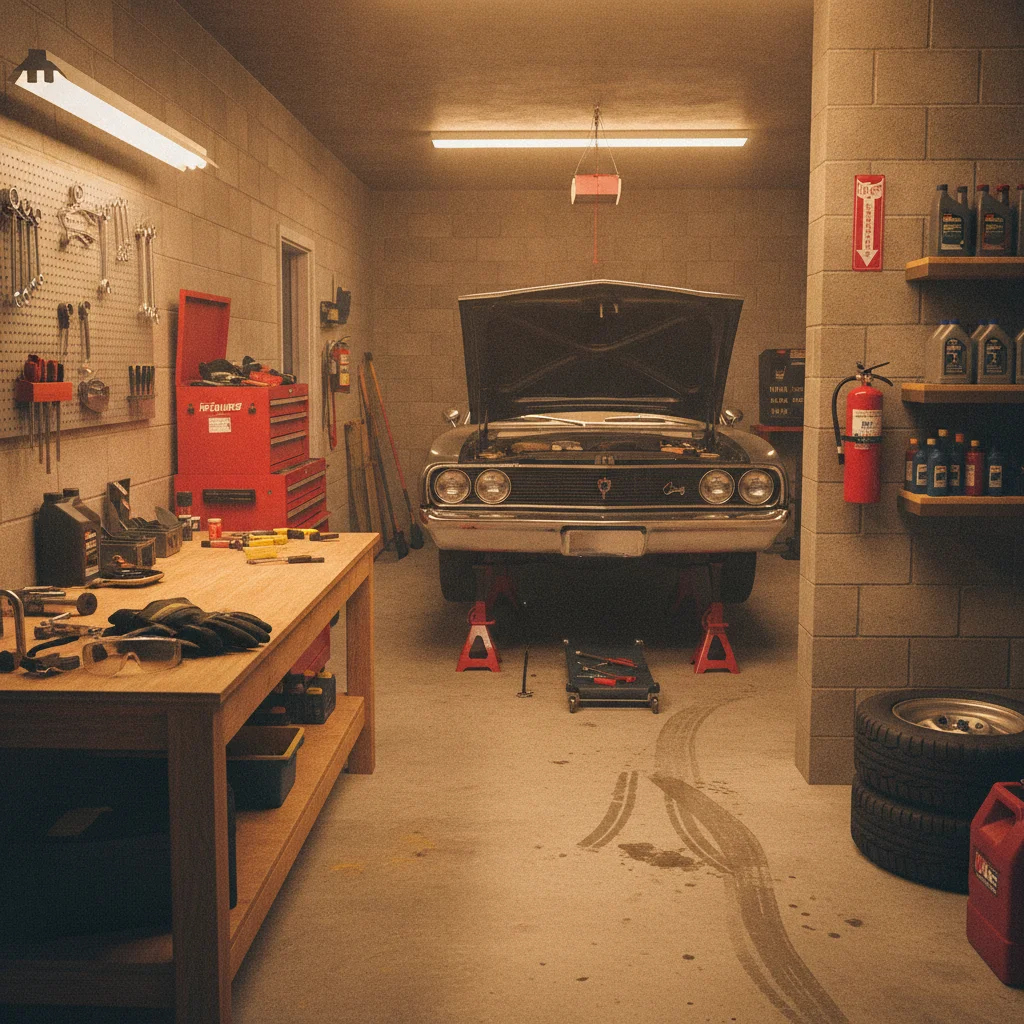
- Build your tool collection deliberately: You don't need everything at once. A quality floor jack and jack stands, a torque wrench, and a set of combination wrenches get you through most beginner jobs. Add specialized tools as specific jobs require them.
- Know when to call it: If a job reveals something unexpected — a seized bolt, a cracked component, wiring that doesn't match any diagram you can find — stop and reassess. Pushing through uncertainty is how small jobs become expensive ones.
There's real satisfaction in working on your own car, and real financial benefit too. Just earn that confidence one job at a time rather than skipping steps because a tutorial made something look easy.
Machine Polishing for Beginners: Start Safe
If you're new to paint correction, start with a dual-action (DA) polisher rather than a rotary. DAs are far less likely to burn through clear coat on a flat or curved panel. Work in small sections, keep the pad flat against the surface, and use moderate speed until you understand how your paint responds. A test spot in an inconspicuous area first is never a bad idea.
Build Skills in Order, Not in Confidence
Confidence comes from success, and success comes from tackling jobs in the right sequence. Master the easy wins first — oil changes, filters, wipers — and let each completed job teach you how your car is put together. When you eventually face a harder repair, you'll have context that makes the service manual make sense. Jumping straight to complex jobs because they seem well-documented online is how most avoidable mistakes happen.
Tools and Supplies: What Each Discipline Actually Requires
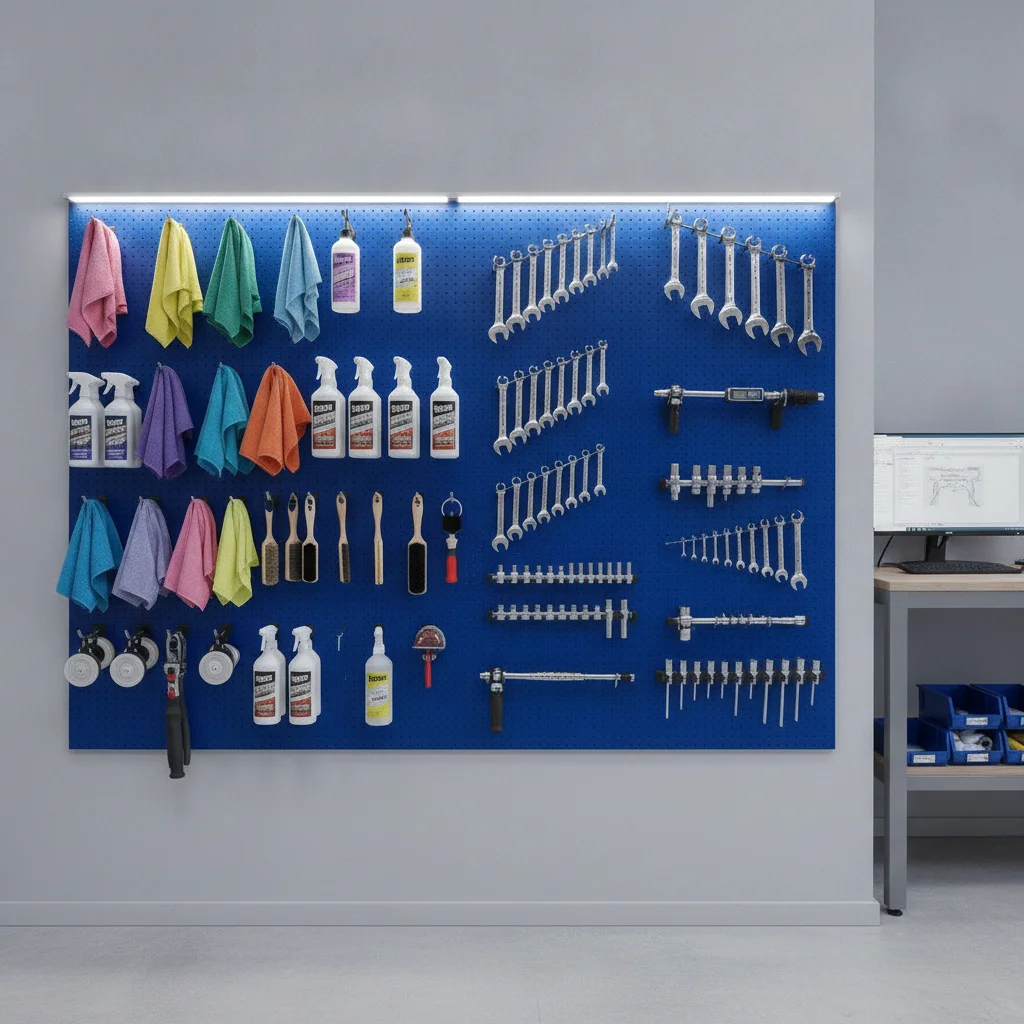
One underrated way to gauge whether a repair is in your wheelhouse is to look at what it requires in terms of tools and equipment. If the tool list for a job includes things you don't own and can't reasonably rent, that's a signal worth paying attention to.
Detailing Tool Baseline
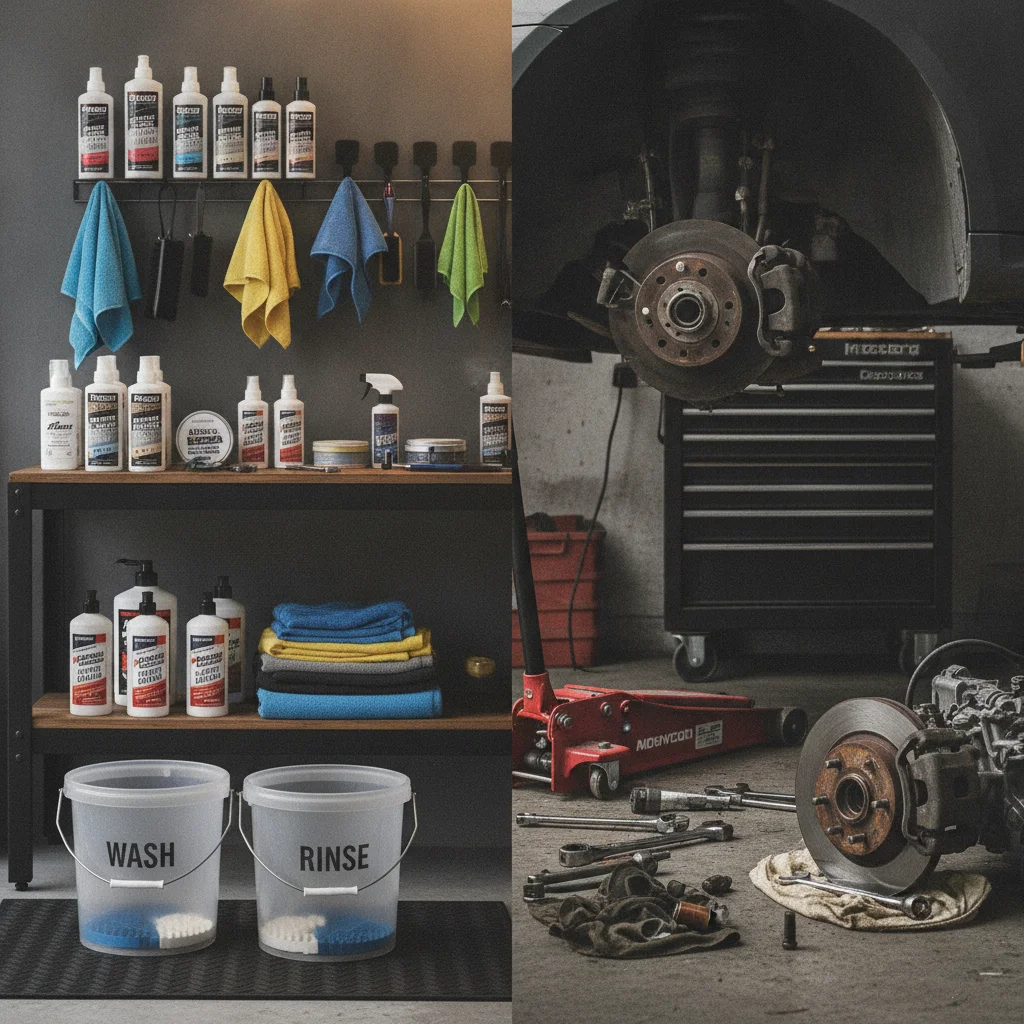
- Two wash buckets with grit guards
- Microfiber wash mitts and drying towels
- Clay bar or clay mitt with lubricant
- Dual-action polisher with appropriate pads and compounds
- Foam applicators and microfiber applicator pads for wax or sealant
- Wet/dry vacuum with attachments for interior
- Steam cleaner (optional but effective for interior deep cleaning)
Mechanical Tool Baseline (Beginner)
- Quality floor jack and a pair of jack stands rated for your vehicle weight
- 3/8" and 1/2" socket sets with metric and SAE coverage
- Combination wrench set
- Torque wrench (critical — do not skip this)
- Oil filter wrench
- Drain pans for fluids
- OBD-II scanner for reading and clearing codes
- Nitrile gloves, safety glasses, and wheel chocks
Total startup cost for a solid detailing kit runs $150–$400. A beginner mechanical toolkit runs $300–$700 depending on quality and whether you already own anything. The OBD-II scanner alone is worth owning even if you never do your own repairs — it lets you know what a warning light means before you drive to the shop and walk in blind.
If you're thinking about buying a car and want to understand what ownership and maintenance costs will actually look like, the paperwork and contracts section is a useful reference for factoring maintenance costs into your total cost of ownership picture.

All claims are backed by peer-reviewed research. Sources on request.