Key Takeaways
Start here
Why DIY Car Repairs Are Worth Learning
Build your foundation
The Mindset That Keeps You Safe and Sane
Get equipped
Tools You Actually Need to Get Started
Take action
Your First Jobs: Where to Begin
Stay safe
Safety Basics That Are Non-Negotiable
Level up
Knowing When to Stop and Call a Pro
Why DIY Car Repairs Are Worth Learning
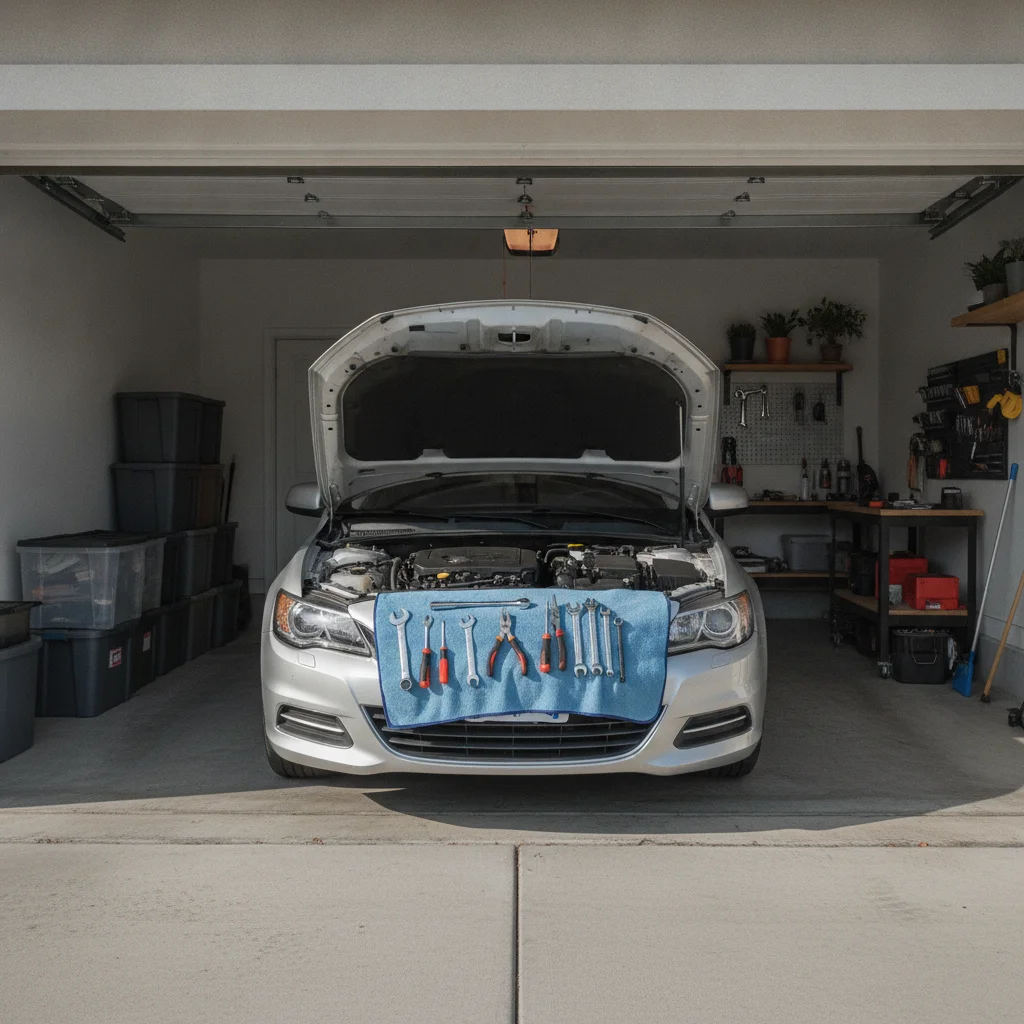
Let me be straight with you: labor is where the money goes at a shop. A competent mechanic earns their rate — I'm not knocking anyone's trade — but when you're paying $120 an hour for a job that takes 20 minutes and $15 in parts, you start doing the math pretty fast. Learning to handle even a handful of routine maintenance tasks yourself can realistically save you $500 to $1,500 a year, depending on what you drive and how often you service it.
That's the financial side. The other side is that knowing your car builds a real relationship with it. You notice things. A fluid that's darker than it should be. A belt that looks cracked. A battery terminal fuzzy with corrosion. None of that jumps out at you when you're just handing your keys to someone else twice a year.
And here's the resale angle, because I care about this stuff: a car that's been consistently maintained holds its value dramatically better than one that hasn't. We'll get into that more later, but the habit you build under the hood today shows up in the offer you get when it's time to sell. See the Complete At-Home Car Maintenance Playbook for a full picture of what consistent DIY care looks like over a car's life.
The Mindset That Keeps You Safe and Sane
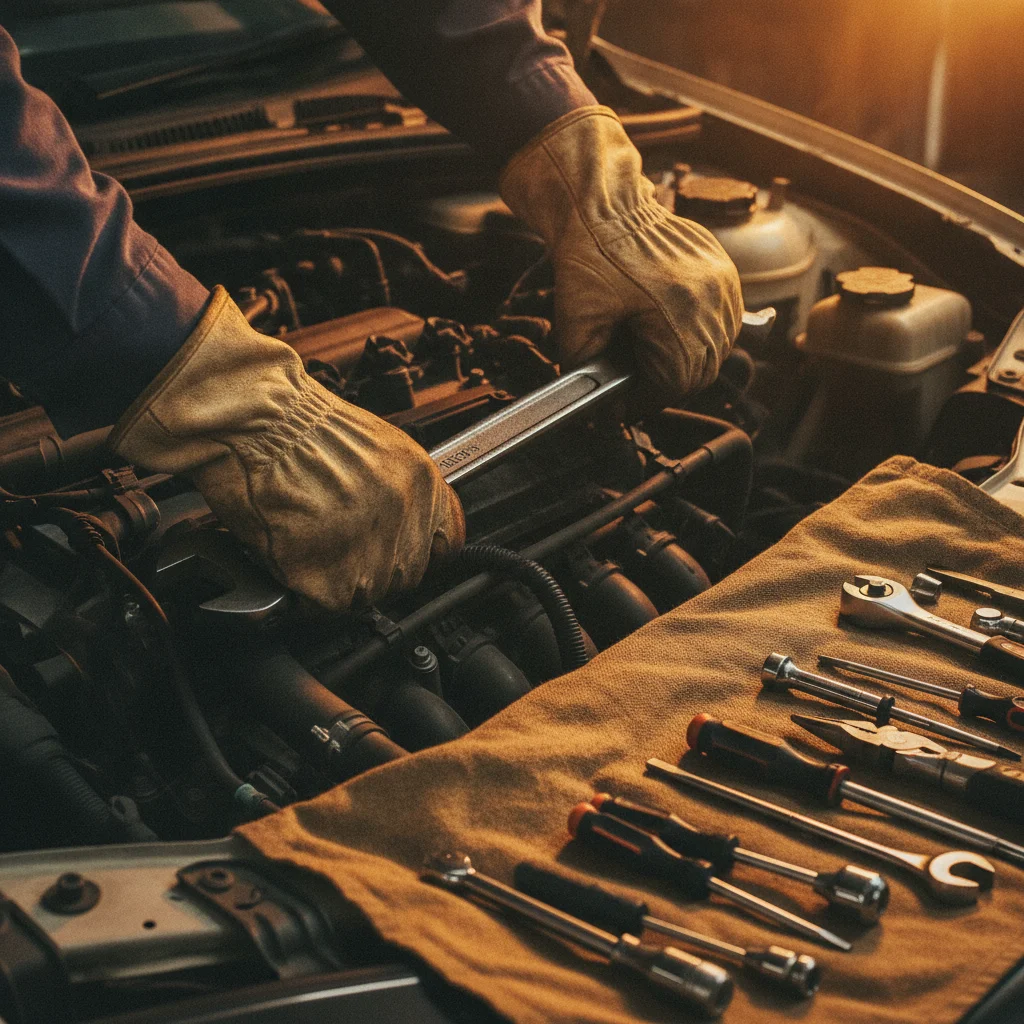
I've seen confident people make expensive mistakes because they moved too fast, and I've seen nervous people do beautiful work because they were methodical. Skill matters, but mindset matters more at the beginning.
Here's what I mean by the right mindset:
- Read before you touch anything. Pull up your owner's manual, a Haynes manual for your model, or a solid walkthrough before you open the hood. Knowing what you're going to do — in order — prevents most beginner mistakes.
- Slow is smooth, smooth is fast. Forcing a bolt, skipping a step, or assuming something will work the way you expect it to is a recipe for a stripped thread or a part broken in the dumbest possible way. Take your time.
- Ask for help early, not late. If you hit a point where you're not sure — stop. A quick forum search or a YouTube video takes five minutes. Pressing forward when uncertain takes a lot longer to undo.
- Honest self-assessment is a skill. There's no shame in recognizing that a job is beyond where you are right now. Electrical systems, timing chains, anything involving the fuel system under pressure — those aren't beginner territory, and knowing that protects you.
Service manual
A detailed technical guide for a specific vehicle make, model, and year. It contains specifications, procedures, and diagrams for nearly every repair and maintenance task.
Torque spec
The precise amount of rotational force required to tighten a fastener correctly. Too loose and it can back out; too tight and you can strip threads or crack a part.
Jack stands
Metal stands placed under a vehicle after it's been raised with a floor jack. They hold the car safely at height so you can work underneath without relying on the hydraulic jack alone.
OEM parts
Original Equipment Manufacturer parts — components made to the same specifications as what came on the car originally. They tend to fit and perform reliably but often cost more than aftermarket alternatives.
Aftermarket parts
Replacement parts made by companies other than the original manufacturer. Quality varies widely — reputable brands offer great value, but the cheapest options can introduce new problems.
Maintenance log
A written or digital record of every service performed on your vehicle, including the date, mileage, what was done, and what parts or fluids were used. It's valuable for resale and for tracking what's due next.
Viscosity
How thick or thin a motor oil is. Your owner's manual specifies the correct viscosity (like 5W-30) for your engine — using the wrong grade can affect fuel economy and engine protection.
Negative terminal first
The standard safety rule when disconnecting a car battery: always remove the negative (black) cable before the positive (red). This prevents accidental shorts when the wrench contacts the chassis.
The best first-time DIYers I've ever watched work are the ones who treat every step like it matters, because it does. That mindset carries you a long way.
Tools You Actually Need to Get Started
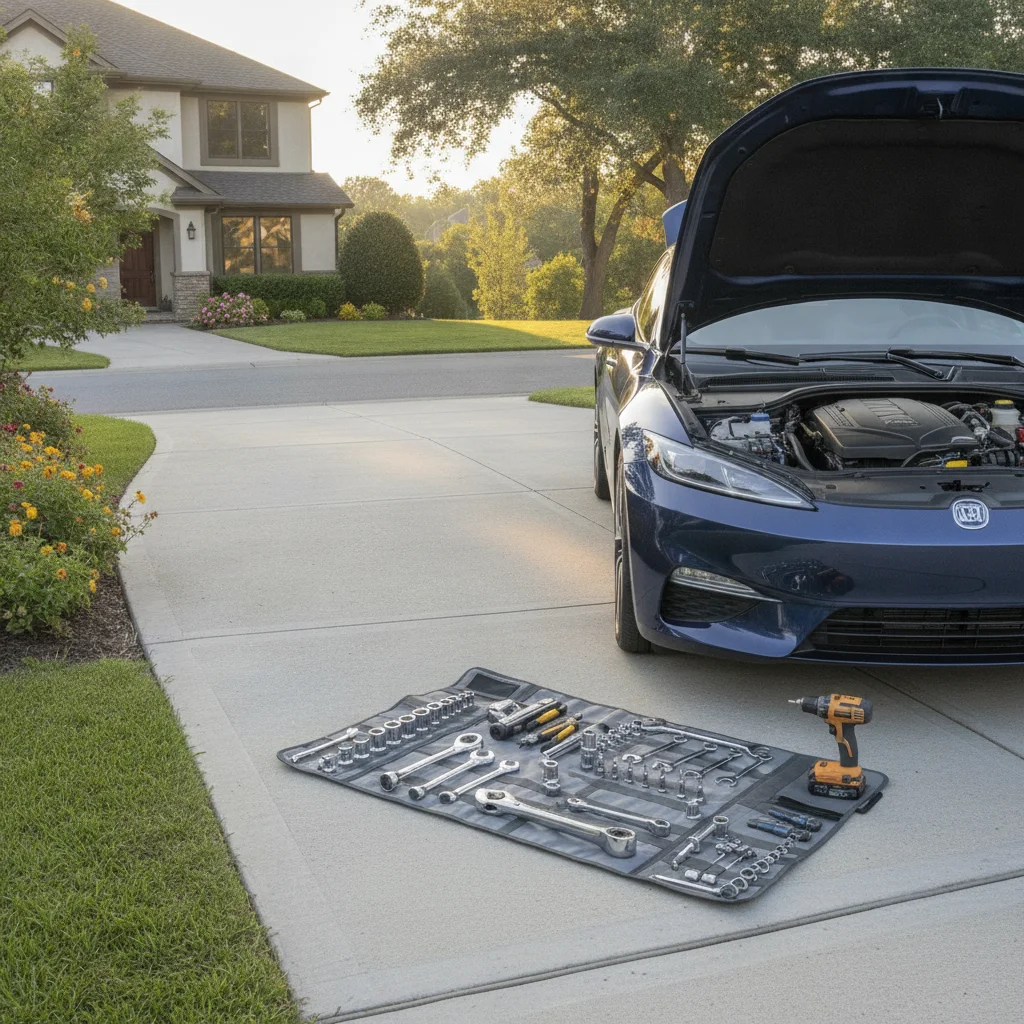
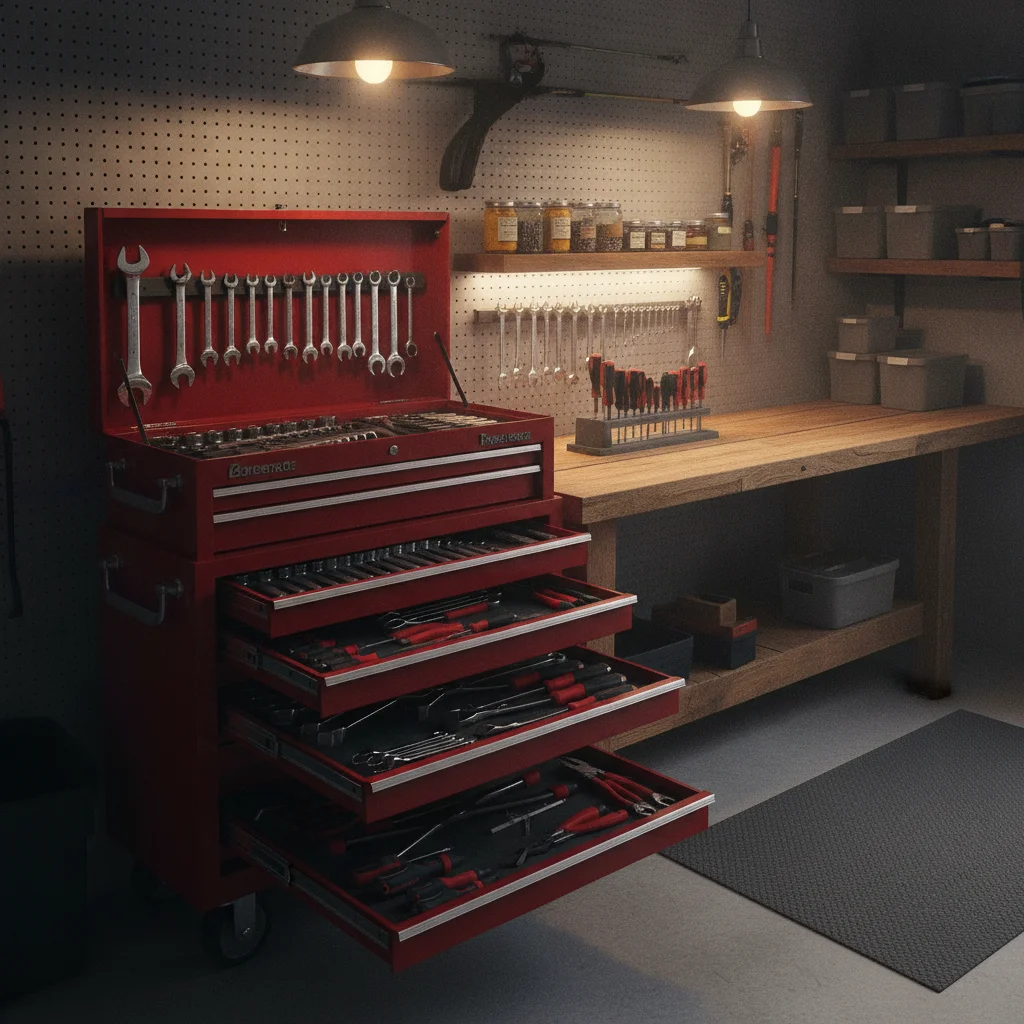
You do not need a fully stocked shop to begin. Here's the honest starter list — the tools that cover probably 80% of basic maintenance work:
- Socket set (metric and SAE, 3/8" drive): You'll use this constantly. Get a decent set from a reputable brand — not the bargain bin.
- Combination wrenches (metric and SAE): For when a socket won't fit. A set that runs from 8mm to 19mm handles most jobs.
- Pliers (slip-joint and needle-nose): Indispensable for hoses, clips, and small fasteners.
- Rubber mallet: For persuading things that need gentle encouragement without marring surfaces.
- Floor jack and jack stands: The jack lifts the car; the stands hold it safely. Never work under a car supported only by a floor jack.
- Drain pan: Catches oil, coolant, and other fluids during changes.
- Torque wrench: Critical for fasteners that specify a tightening value — oil drain plugs, lug nuts, spark plugs. Guessing torque costs you engines and wheels.
- Oil filter wrench: Makes removal much easier when the filter was put on by a machine at the last shop.
- Funnel, rags, and nitrile gloves: Keep things clean and keep chemicals off your skin.
See the full DIY mechanic toolkit guide for a deeper breakdown with brand recommendations. Don't buy everything at once — buy what the next job requires, and your kit grows naturally.
Build Your Kit Job by Job
Resist the urge to buy a massive tool kit all at once — most of it will sit unused for years. Instead, identify the first job you want to do, buy exactly what that job requires, and repeat. Within six months you'll have a focused, well-used toolkit without a drawer full of tools you've never touched.
Your Owner's Manual Is Free and Underused
Almost everything you need to know about fluid specs, filter locations, and service intervals is already in the glove box. If you've lost your physical copy, your vehicle manufacturer's website almost always offers a free PDF download. Search '[your make and model] owner's manual PDF' and it'll come right up.
Your First Jobs: Where to Begin
Pick jobs that are genuinely forgiving for a first-timer. These are tasks where the consequences of a small mistake are low, the steps are well-documented, and the skills transfer to more complex work later.
1. Engine Air Filter Replacement
This is the easiest win in DIY maintenance. In most cars it's four clips and a box. The filter itself costs $15 to $30, and shops charge $40 to $60 in labor for a five-minute job. Do this one first — it builds confidence without any real risk.
2. Cabin Air Filter Replacement
Usually behind the glove box or under the dash. Even if it's a little awkward to reach, it's still a simple swap. Your owner's manual will show you exactly where it is.
3. Wiper Blade Replacement
Not glamorous, but important for safety. Most auto parts stores will let you cross-reference your vehicle in-store to get the right fit. The blades snap in and out without tools on most modern cars.
4. Battery Replacement
Remove the negative cable first, positive second. Install in reverse order. Simple, but pay attention: some newer vehicles have battery registration procedures that require a scan tool or dealer reset. Look this up for your specific car before buying a battery.
5. Oil and Filter Change
This is the cornerstone skill. Drain the old oil, replace the filter, refill with the correct spec and quantity of fresh oil. Your owner's manual specifies the oil weight and capacity — don't guess. Dispose of used oil properly at a parts store or recycling center.
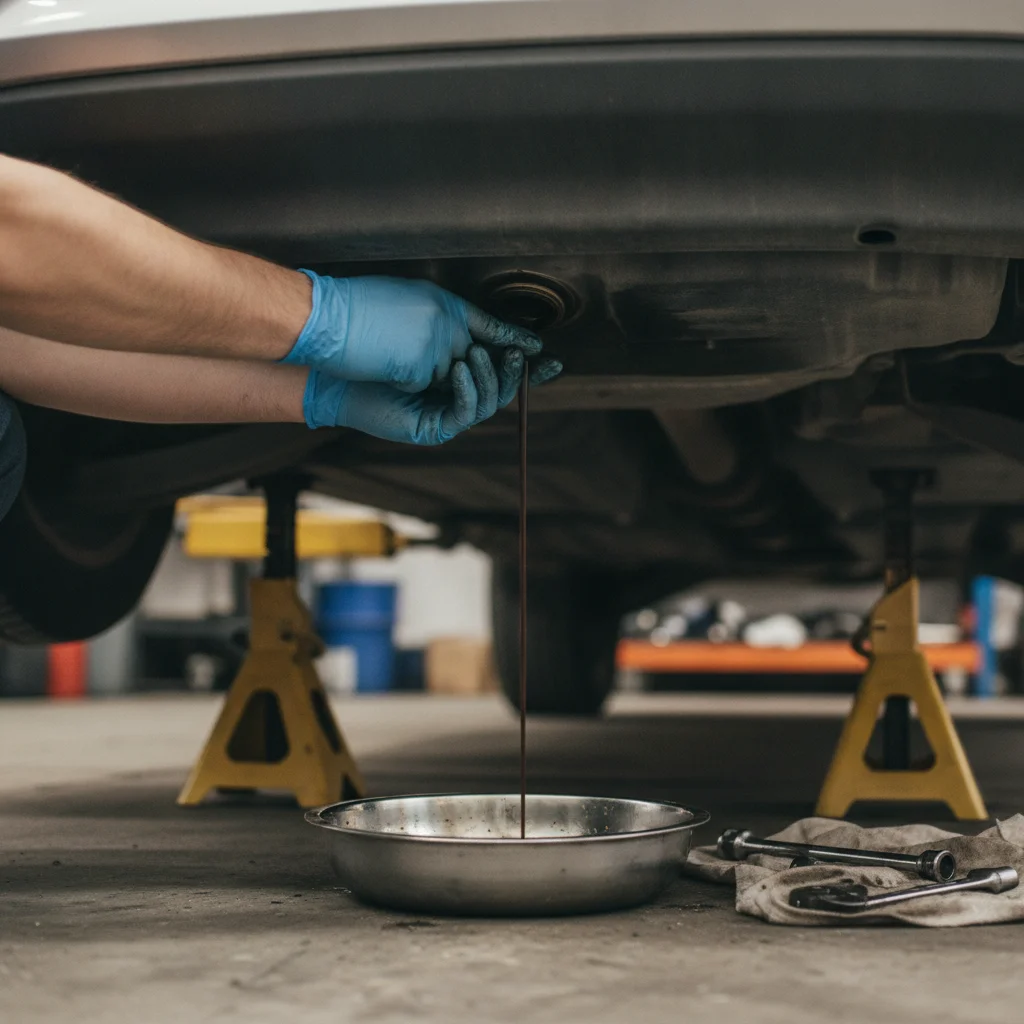
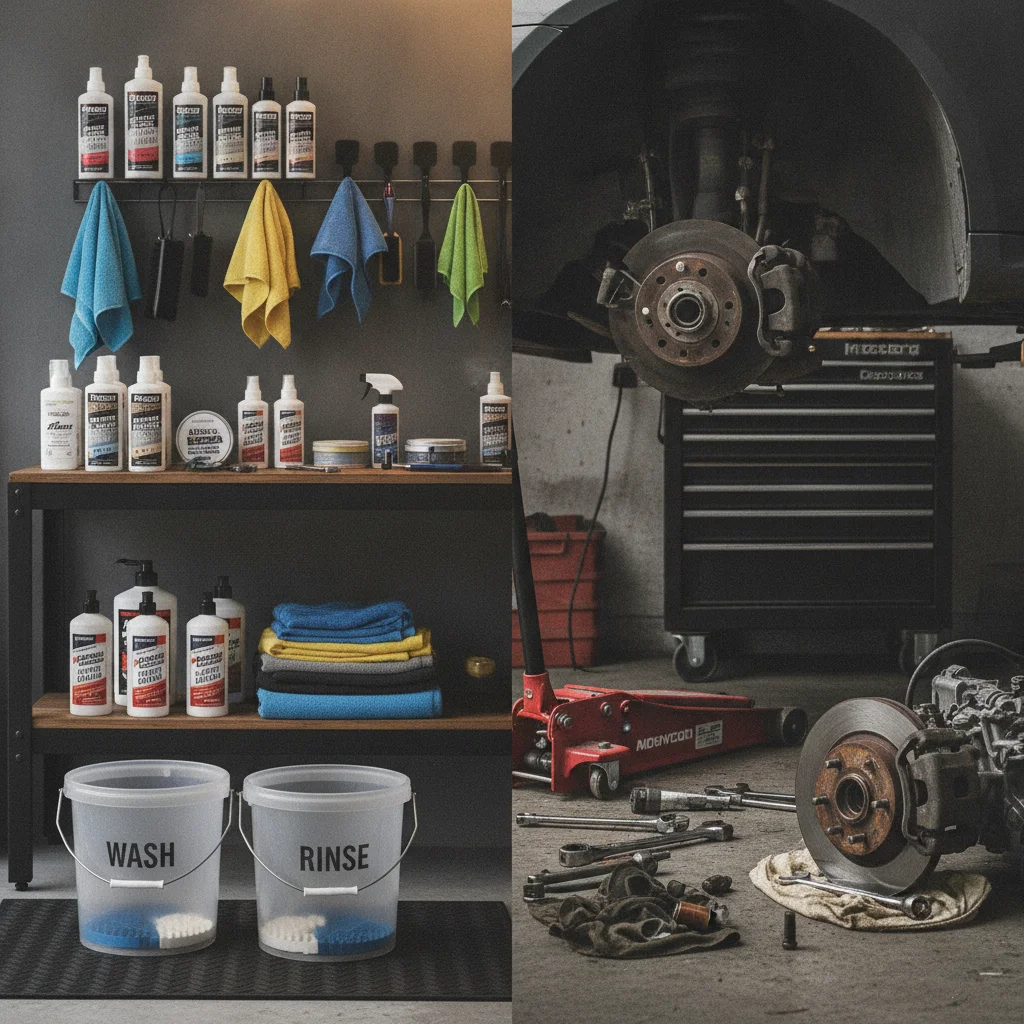
Once you're comfortable with these, brake pad replacement is the logical next step — it's within reach of a careful beginner, but deserves its own focused preparation. For a structured look at what's safe to tackle versus what isn't, check out Detailing vs. Mechanical Repairs for an honest breakdown.
Some Vehicles Require a Battery Registration Reset
Certain European makes (BMW, Mercedes, Audi, Volkswagen) and some newer domestic vehicles require the battery management system to be reset when a new battery is installed. Without this step, the car's charging system may not optimize correctly for the new battery. Look this up for your specific vehicle before you buy a battery — it may affect whether you do this job yourself or at a shop.
Safety Basics That Are Non-Negotiable
I'm going to be direct here: most shop injuries don't come from complicated jobs — they come from shortcuts on simple ones. These aren't suggestions.
- Work on a cold or cooled-down engine. Coolant and oil can be catastrophically hot after driving. For most fluid checks and changes, wait at least an hour after shutting off the engine — longer for hot climates.
- Use jack stands every time. A floor jack can fail. A car falling on you is not a survivable situation in many cases. Set the stands, lower the car onto them, and confirm the car is stable before going under.
- Disconnect the battery when working near electrical components. This prevents shorts and accidental airbag deployment.
- Work in a ventilated space. Running an engine in an enclosed garage produces carbon monoxide. Even running the engine briefly for a warm-up before an oil drain — do it outside.
- Keep a fire extinguisher nearby. Not paranoia. Fuel, hot components, and sparks occasionally meet in garages. An ABC-rated extinguisher takes up very little space.
- Wear eye protection. Fluids under pressure, springs under tension, and debris from rusted fasteners are all real hazards. Safety glasses are not optional.
Before any job, run through the pre-repair safety checklist — it covers your workspace, your tools, and your vehicle in a format you can actually use.
Never Use a Jack Alone as a Work Support
A hydraulic floor jack can and does fail — seals leak, valves slip, and cars fall. This is not a theoretical risk. Always lower the vehicle onto properly positioned jack stands before going underneath. Confirm the car doesn't shift before you put any part of your body under it.
Hot Fluids Can Cause Severe Burns
Coolant in a hot radiator is under pressure and can exceed 200°F. Engine oil retains heat for a long time after shutdown. Before draining any fluids or opening the coolant system, let the engine cool completely — at minimum 45 to 60 minutes, longer in summer heat.
How DIY Maintenance Protects Your Car's Value
Here's something that gets skipped in a lot of beginner guides: the work you do under the hood today has a direct line to the number you see on an appraisal or a private-party offer in three years.
Depreciation hits every car. But deferred maintenance accelerates it. An appraiser who pops the hood and sees a cracked belt, a visibly dirty air filter, or oil that's jet-black on the dipstick is going to dock that car's value — and rightfully so. Those are signals that the car hasn't been cared for.
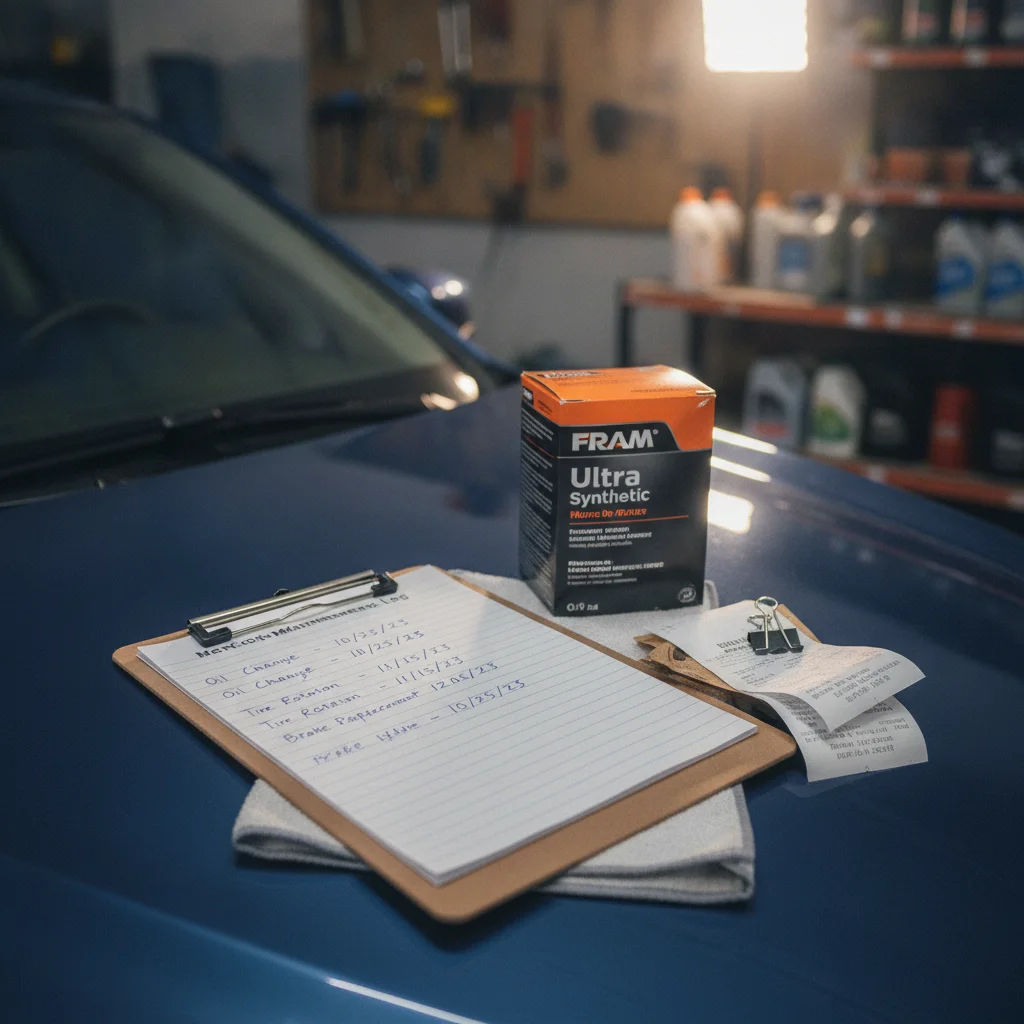
Conversely, a car with a documented service history — even if all that documentation is handwritten in a notebook with receipts clipped in — signals that someone paid attention. Private buyers and dealers both respond to that.
A few habits that pay off at resale time:
- Keep a maintenance log: date, mileage, what was done, what parts were used.
- Save your receipts for parts and fluids.
- Address small issues before they become visible problems — a cracked wiper that scratches the windshield, a battery terminal with heavy corrosion that stresses the alternator.
If you're preparing a car to sell, the Detailing & Repairs hub walks through which fix-ups actually move the needle on your sale price versus which ones are a waste of money before a sale.
Knowing When to Stop and Call a Pro
This might be the most important section in the whole article. Good DIY mechanics aren't the ones who fix everything themselves — they're the ones who know exactly where their lane ends.
Here's a clear line to draw: if a mistake in the repair could cause a loss of control of the vehicle, fire, or injury to you or someone else, that job demands professional verification at minimum. Specifically:
- Brake hydraulics: Brake lines, master cylinders, ABS modules. Brake pads are beginner-accessible; anything involving the hydraulic circuit is not.
- Steering components: Tie rod ends, ball joints, and rack-and-pinion work require precise torque specs and alignment checks that need a shop.
- High-voltage EV systems: If you drive a hybrid or electric vehicle, the high-voltage battery system and related components are strictly professional territory. The voltages involved are lethal.
- Airbag systems: Any work near airbag components or wiring. Accidental deployment is extremely dangerous.
- Fuel system repairs under pressure: Fuel injectors, fuel lines, and fuel pumps involve flammable fuel at pressure. One mistake creates a fire hazard.
- Timing systems: Timing belt or chain replacement requires precise alignment and has catastrophic failure consequences if done wrong.
When in doubt, get a second opinion from a trusted shop or post detailed questions in a vehicle-specific forum before proceeding. There's no shame in calling it — it's just smart resource allocation. For a broader look at which categories of work are DIY-appropriate versus which carry real risk, see Detailing vs. Mechanical Repairs: Knowing Where DIY Ends and Risk Begins.
Haynes Repair Manuals
Vehicle-specific repair manuals written for home mechanics. Available in print and online, they cover step-by-step procedures with diagrams for your exact make, model, and year.
NHTSA Safety Recalls Database
Before starting any repair, check whether your vehicle has an open recall. The NHTSA database lets you search by VIN and shows any unresolved safety recalls that should be handled by a dealer at no cost.
AutoZone or O'Reilly Free Loaner Tool Program
Both national chains offer a loaner tool program — you pay a deposit, borrow specialty tools like a ball joint press or brake caliper wind-back tool, and get your deposit back when you return them. Ideal for one-off jobs.
The Complete At-Home Car Maintenance Playbook
Once you're comfortable with the basics, this end-to-end guide covers every maintenance task a non-expert can safely handle at home — from oil changes to brake pads to electrical fuses.
iATN (International Automotive Technicians Network) Forums
A professional-grade community where experienced techs discuss repair procedures. Useful when you want to understand how a job is typically approached before attempting it yourself.

All claims are backed by peer-reviewed research. Sources on request.