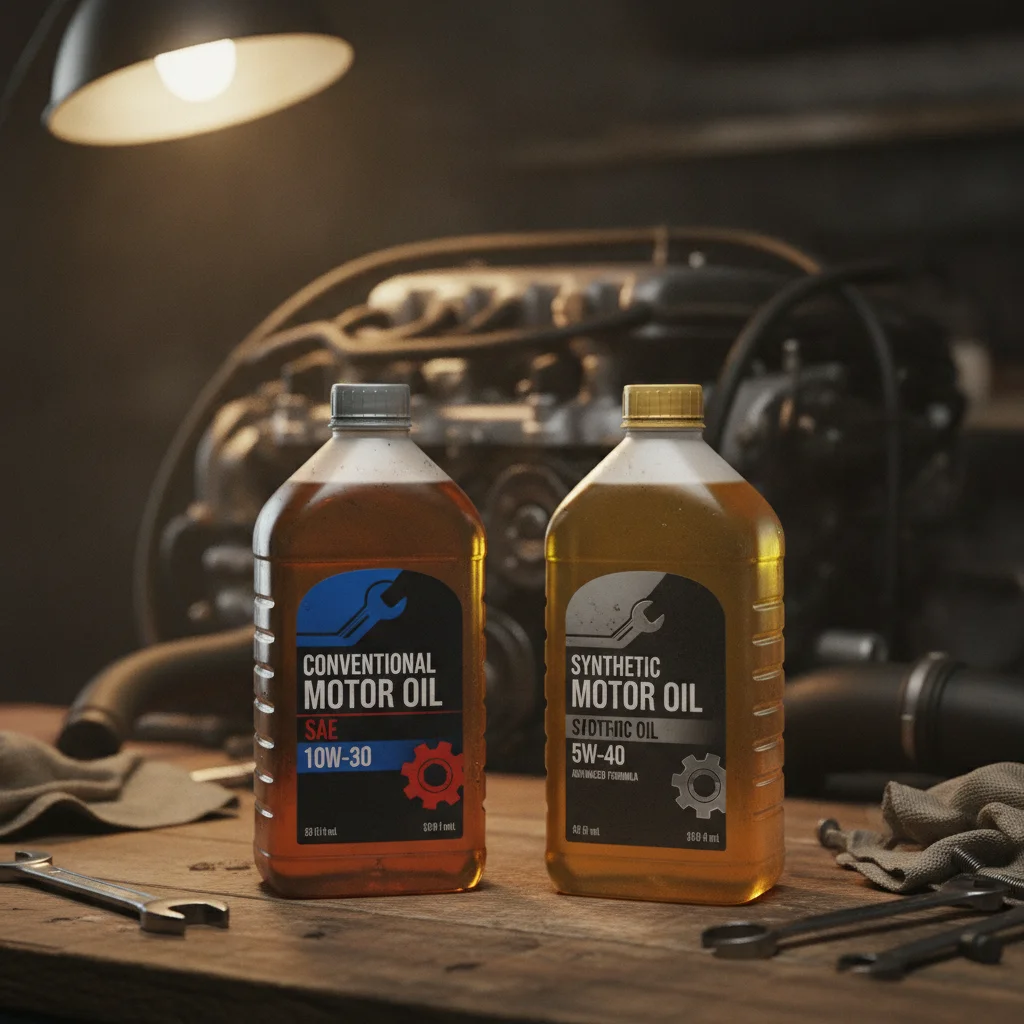

Key Takeaways
Significant cost savings on each service visit
A full-synthetic DIY oil change typically costs $35–$50 in materials versus $80–$120 at a dealership, meaning savings of $45–$75 per change that compound over the life of the vehicle.
You control exactly what oil and filter go in
Buying your own oil and filter eliminates any ambiguity about what product was used, which matters for owners of performance vehicles or those who've researched specific oil formulations for their engine.
Routine under-vehicle inspection at no extra cost
Every oil change puts you underneath the car, giving you a natural opportunity to spot leaking seals, worn boots, rust, or exhaust issues that might otherwise go unnoticed until they become expensive problems.
No wait time or appointment scheduling required
You can change your oil when it suits your schedule, without waiting in a service queue or coordinating a drop-off and pick-up — a meaningful convenience for drivers with unpredictable schedules.
Builds mechanical familiarity with your vehicle
Regularly performing basic maintenance increases your comfort level with your car's systems and makes you a better-informed advocate when you do take it to a shop for more complex work.
Improper technique can cause serious engine damage
A stripped drain plug, cross-threaded filter, or incorrect oil capacity can lead to oil leaks, pressure loss, or catastrophic engine failure — all of which cost far more to repair than any lifetime of shop visits.
Used oil disposal requires extra planning and effort
Used motor oil is a federally regulated hazardous waste. Improper disposal is illegal and environmentally damaging; drivers must store it and transport it to an approved collection site, adding a step most shop visits eliminate.
Upfront tool costs reduce short-term savings
A functional DIY setup — drain pan, filter wrench, jack stands — costs $60–$100 if you start from scratch, erasing one to two oil changes worth of savings before you reach break-even.
Some vehicles make DIY access genuinely difficult
Certain models require removing undertray panels, using specialized sockets, or working around exhaust components, turning a 20-minute job into an hour-long project that negates most of the convenience argument.
Warranty documentation requirements add responsibility
While federal law protects your right to DIY service, you must use the correct oil specification and maintain purchase records to protect your warranty coverage in the event of an engine-related claim.
Time investment may not justify savings at longer intervals
Drivers on extended synthetic schedules changing oil twice a year save roughly $100–$120 annually — a modest return for the time, mess, and planning required, especially without an established workspace.
Our Verdict
DIY oil changes make financial sense for drivers who already own basic tools, have safe access to their vehicle's undercarriage, and are willing to handle used oil disposal responsibly. The savings are real, but so are the risks — a stripped drain plug or wrong viscosity can cost far more than any quick-lube visit ever would. For high-mileage vehicles, those on extended synthetic intervals, or anyone without a reliable workspace, a shop visit often delivers better value than the savings suggest.
Best suited to hands-on owners with mechanical confidence, a proper workspace, and vehicles with straightforward oil change access — particularly those doing frequent oil changes on conventional oil schedules.
Why Drivers Still Change Their Own Oil
Despite the proliferation of $30 quick-lube shops on nearly every commercial strip in America, a significant share of car owners still crawl under their vehicles with a drain pan and a filter wrench. The reasons vary — cost control, distrust of fast-service shops, a preference for knowing exactly what goes into their engine — but the practice has endured for decades and shows no signs of disappearing.
Understanding why requires looking honestly at both sides. Changing your own oil is not inherently better or worse than taking it to a shop. It depends on what you're driving, how often you change it, what tools you have, and how much your time is worth. This breakdown covers all of it, so you can make a decision grounded in your actual situation rather than automotive mythology.
Before diving into the trade-offs, it's worth noting that the frequency question and the DIY question are closely linked. If you're running a modern engine on full synthetic oil and your manufacturer recommends 7,500- to 10,000-mile intervals, the math looks different than if you're running conventional oil on a 5,000-mile schedule. See Oil Change Intervals: What Every Driver Actually Needs to Know for how to determine the right schedule for your specific vehicle.
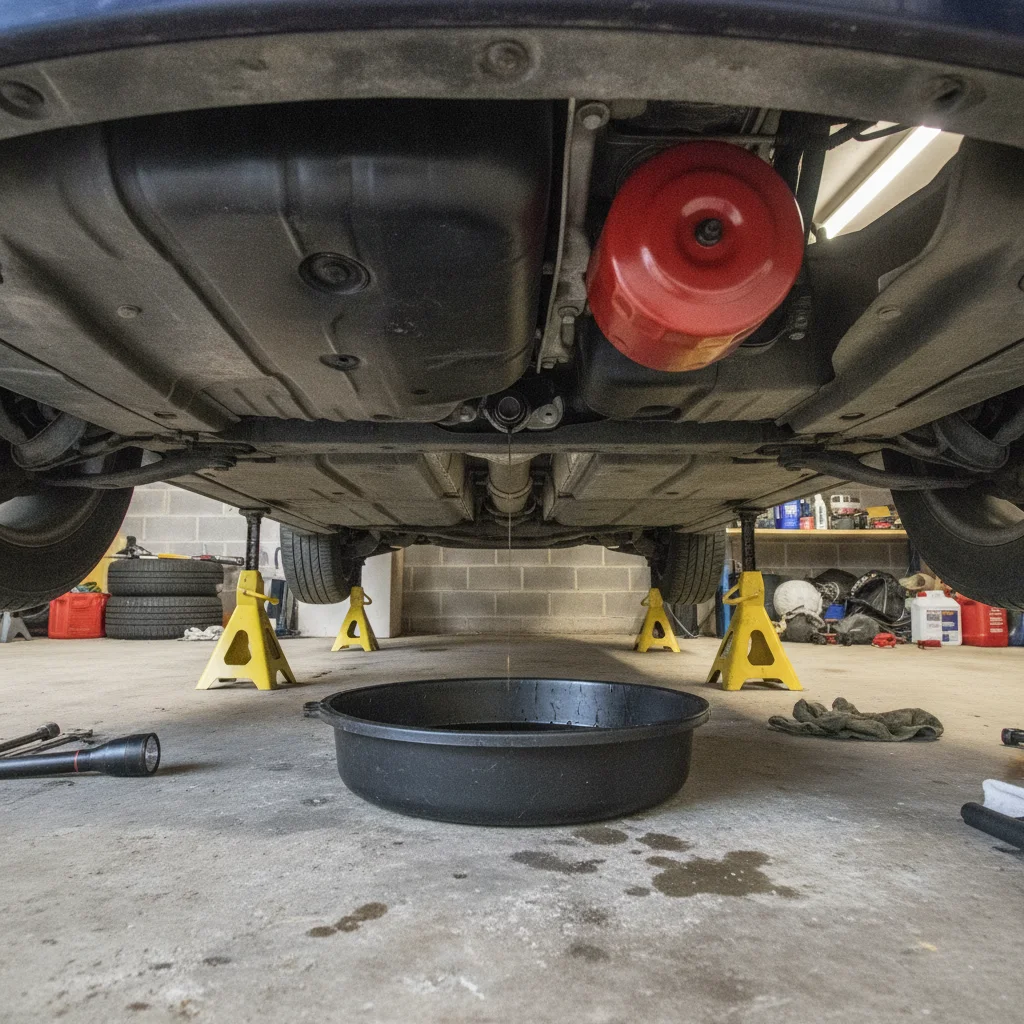
The Real Advantages of Doing It Yourself
Let's start with the case in favor, because it's genuinely solid for the right driver.
Significant cost savings on each service visit
A full-synthetic DIY oil change typically costs $35–$50 in materials versus $80–$120 at a dealership, meaning savings of $45–$75 per change that compound over the life of the vehicle.
You control exactly what oil and filter go in
Buying your own oil and filter eliminates any ambiguity about what product was used, which matters for owners of performance vehicles or those who've researched specific oil formulations for their engine.
Routine under-vehicle inspection at no extra cost
Every oil change puts you underneath the car, giving you a natural opportunity to spot leaking seals, worn boots, rust, or exhaust issues that might otherwise go unnoticed until they become expensive problems.
No wait time or appointment scheduling required
You can change your oil when it suits your schedule, without waiting in a service queue or coordinating a drop-off and pick-up — a meaningful convenience for drivers with unpredictable schedules.
Builds mechanical familiarity with your vehicle
Regularly performing basic maintenance increases your comfort level with your car's systems and makes you a better-informed advocate when you do take it to a shop for more complex work.
$45–$75
Savings per synthetic oil change vs. dealership
Based on national average pricing comparisons between DIY material costs and full-synthetic dealer service pricing as of 2024.
1M gallons
Freshwater contaminated by one gallon of used oil
According to the U.S. Environmental Protection Agency, improper disposal of used motor oil is one of the most common sources of urban water contamination.
10,000 mi
Recommended interval for many modern synthetics
Many automakers now specify 7,500- to 10,000-mile oil change intervals for vehicles running full-synthetic oil under normal driving conditions.
$60–$100
Estimated starter tool kit for DIY oil changes
Covers a drain pan, filter wrench, jack stands, and wheel chocks — the minimum equipment for a safe and complete home oil change.
Beyond the numbers, there's an informational advantage that shops rarely mention. Every time you change your oil, you're underneath your car — and that gives you a firsthand look at what's going on. Leaking seals, cracked CV boots, rust formation, and loose exhaust components are all visible from below. That kind of routine visual inspection is something most drivers never get unless they're paying for a full service check, and even then, shops vary wildly in how thoroughly they actually look.
There's also the matter of product control. When you buy your own oil and filter, you know exactly what's going in. Quick-lube shops often upsell upgraded oils or push filters of varying quality, and it's not always easy to verify what was actually used. Doing it yourself removes that variable entirely. For drivers who've invested in a high-performance or older vehicle that benefits from a specific oil formulation, that control is meaningful. When Synthetic Oil Is Worth It — and When It Isn't breaks down when the premium product actually earns its price.
The Risks You Can't Afford to Ignore
The honest counterargument is just as important. A shop's liability for a botched oil change is theirs to bear. Yours is yours.
Improper technique can cause serious engine damage
A stripped drain plug, cross-threaded filter, or incorrect oil capacity can lead to oil leaks, pressure loss, or catastrophic engine failure — all of which cost far more to repair than any lifetime of shop visits.
Used oil disposal requires extra planning and effort
Used motor oil is a federally regulated hazardous waste. Improper disposal is illegal and environmentally damaging; drivers must store it and transport it to an approved collection site, adding a step most shop visits eliminate.
Upfront tool costs reduce short-term savings
A functional DIY setup — drain pan, filter wrench, jack stands — costs $60–$100 if you start from scratch, erasing one to two oil changes worth of savings before you reach break-even.
Some vehicles make DIY access genuinely difficult
Certain models require removing undertray panels, using specialized sockets, or working around exhaust components, turning a 20-minute job into an hour-long project that negates most of the convenience argument.
Warranty documentation requirements add responsibility
While federal law protects your right to DIY service, you must use the correct oil specification and maintain purchase records to protect your warranty coverage in the event of an engine-related claim.
Time investment may not justify savings at longer intervals
Drivers on extended synthetic schedules changing oil twice a year save roughly $100–$120 annually — a modest return for the time, mess, and planning required, especially without an established workspace.
The disposal issue deserves special emphasis because it catches a lot of first-timers off guard. Used motor oil is classified as a hazardous waste under federal and state law — pouring it down a drain, into a storm sewer, or even onto your lawn carries real legal and environmental consequences. Many auto parts retailers (AutoZone, O'Reilly, Advance Auto Parts) accept used oil for free, as do some municipal waste facilities. But it does require an extra step, and forgetting about it or treating it casually is not an option.
There's also a nuanced warranty consideration. Your vehicle's powertrain warranty does not require you to use a dealership for oil changes, thanks to the Magnuson-Moss Warranty Act. But it does typically require that you use oil meeting the manufacturer's specifications and that you keep records. If you can't document that you used the right oil at the right interval, a warranty claim related to engine lubrication could be complicated. Keep your receipts.
Magnuson-Moss and Your Warranty Rights
Under the Magnuson-Moss Warranty Act, a manufacturer cannot void your vehicle warranty simply because you performed your own oil changes. However, the law does require that you use oil and filters meeting the manufacturer's specifications and that you maintain documentation. If your engine experiences a failure and you can't demonstrate correct oil use and interval adherence, a warranty dispute becomes significantly harder to win. Keep every receipt and log every change.
Check Your Owner's Manual First
Oil viscosity grades and API specifications vary by engine design, climate, and use case. Your owner's manual lists the exact grade required — not just what's stamped on the engine cover or recommended by the parts store clerk. Using the wrong viscosity can affect cold-start protection, fuel economy, and long-term engine wear. When in doubt, the manual wins.
For a broader look at where home repair saves money and where it introduces unacceptable risk, Detailing vs. Mechanical Repairs: Knowing Where DIY Ends and Risk Begins is worth reading before you take on anything more involved than routine maintenance.
What the Job Actually Requires
If you've decided to move forward, success depends on having the right materials and a clear process before you start — not after.
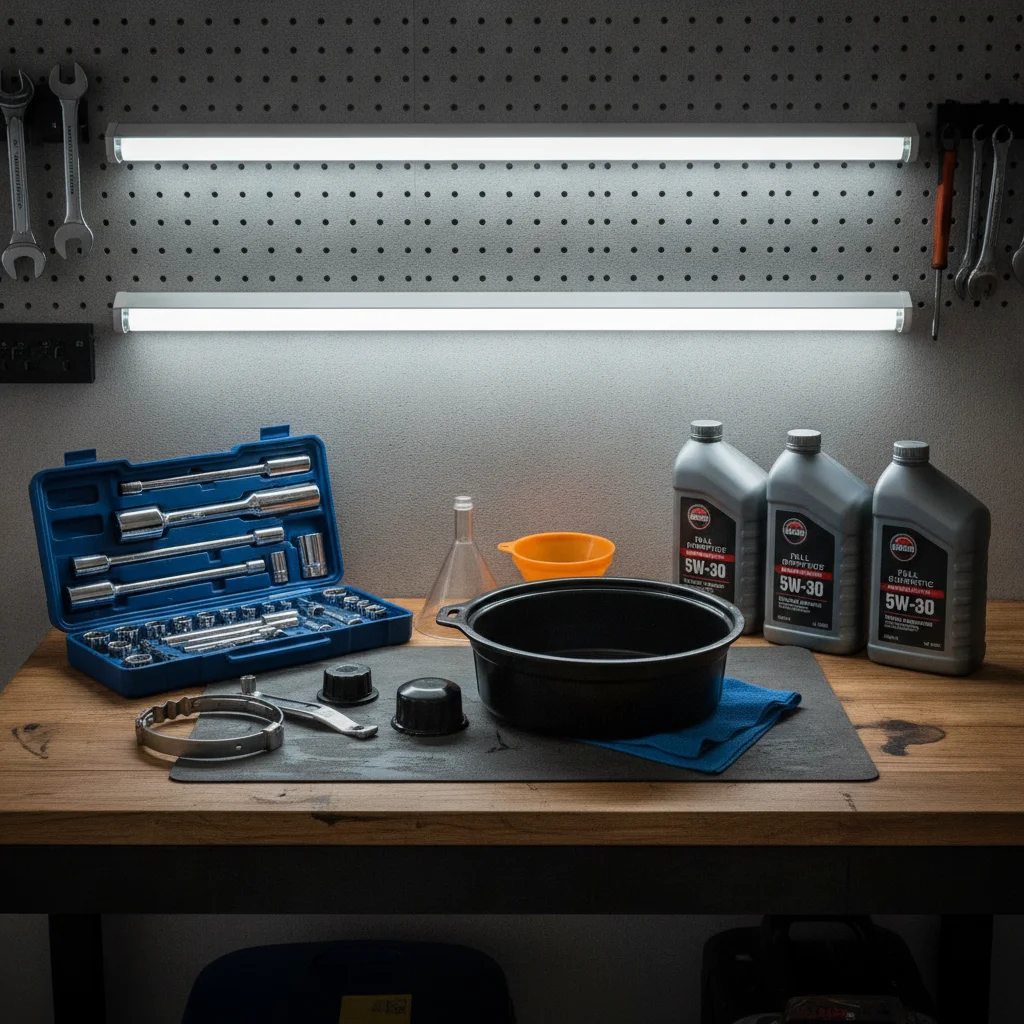
Tools and Supplies
- Oil drain pan — minimum 8-quart capacity; non-spill models with a cap make transport easier
- Oil filter wrench — cup-style or band-style depending on your filter's location
- Socket set and ratchet — for the drain plug, typically 14mm–19mm
- Car jack and jack stands — never work under a vehicle supported only by a floor jack
- Wheel chocks — critical for safety on any incline
- Funnel — prevents overfill and spills at the top
- Rags and gloves — oil burns if the engine is hot; always let it cool 20–30 minutes
- New oil filter — match to your specific engine, not just your car model
- Correct oil — grade (5W-30, 0W-20, etc.) and specification (API, ILSAC) as stated in your owner's manual
Common Beginner Mistakes
- Over-tightening the drain plug — strips the threads and can crack the oil pan. Snug plus a quarter-turn by hand is typically sufficient.
- Not pre-lubricating the filter gasket — rub a thin layer of fresh oil on the rubber O-ring before installation to get a proper seal.
- Checking the dipstick immediately after refill — run the engine for 30 seconds, shut it off, wait two minutes, then check. Oil needs to settle from the new filter.
- Using the wrong capacity — your owner's manual specifies quarts exactly. Overfilling is not benign; it creates pressure and can damage seals.
For a complete, step-by-step walkthrough of the full procedure, The DIY Oil Change: What You Save, What You Risk, and How to Do It Right covers the process from drain to dipstick verification.
Running the Numbers: Is It Actually Cheaper?
The cost comparison is the most commonly cited argument for DIY, and it holds up — with important caveats.
A conventional oil change at a quick-lube shop typically runs $40–$60, including the filter. A full-synthetic service at a dealership often runs $80–$120. Doing it yourself, you'll spend roughly $25–$45 for five quarts of synthetic oil and a quality filter. That's a savings of $35–$75 per change if you're comparing against a shop's synthetic service.
But the break-even calculation should also account for the initial tool investment. A basic set — drain pan, filter wrench, jack stands — runs $60–$100 if you don't own anything. That upfront cost erases one or two oil changes worth of savings before you're actually ahead. After that, though, the savings compound with every subsequent service.
Where the math gets more complicated: modern synthetic oils and extended drain intervals mean many drivers are only changing oil twice a year. The annual savings on two changes — perhaps $100–$120 — may not justify the time, mess, and disposal logistics for every driver. The Real Cost of DIY vs. Shop Repairs Across 10 Common Jobs puts the oil change in context alongside brake pads, filters, and other common services so you can see where your DIY time is best spent.
| Service Type | Shop Price Range | DIY Cost Range | Estimated Savings |
|---|---|---|---|
| Conventional oil change | $40–$60 | $20–$30 | $20–$30 |
| Synthetic blend oil change | $55–$80 | $28–$38 | $25–$45 |
| Full synthetic oil change | $80–$120 | $35–$50 | $45–$75 |
Vehicles That Make DIY Harder (or Not Worth It)
Not every car is built with the home mechanic in mind, and the ease of a DIY oil change varies significantly by make and model.
Some vehicles, particularly certain European models and crossovers, position the oil filter in locations that require removing undertray panels, using specialized filter cap sockets, or working around exhaust components that retain heat. Others have drain plugs that are difficult to access without a lift. In these cases, the time investment and difficulty often undercut the financial case for doing it yourself.
Hybrid vehicles add another wrinkle. While the oil change procedure itself is conventional, hybrids go far longer between changes due to reduced engine cycling — and some, like the Toyota Prius, have specific oil specifications that matter more than on standard ICE engines. Getting the spec wrong on a hybrid engine is a higher-stakes mistake.
Diesel engines require different oil classifications (look for CK-4 or FA-4 designations) and may have more complex filter configurations. If you're driving a diesel pickup and haven't changed your own oil before, a shop with diesel experience is a reasonable starting point.
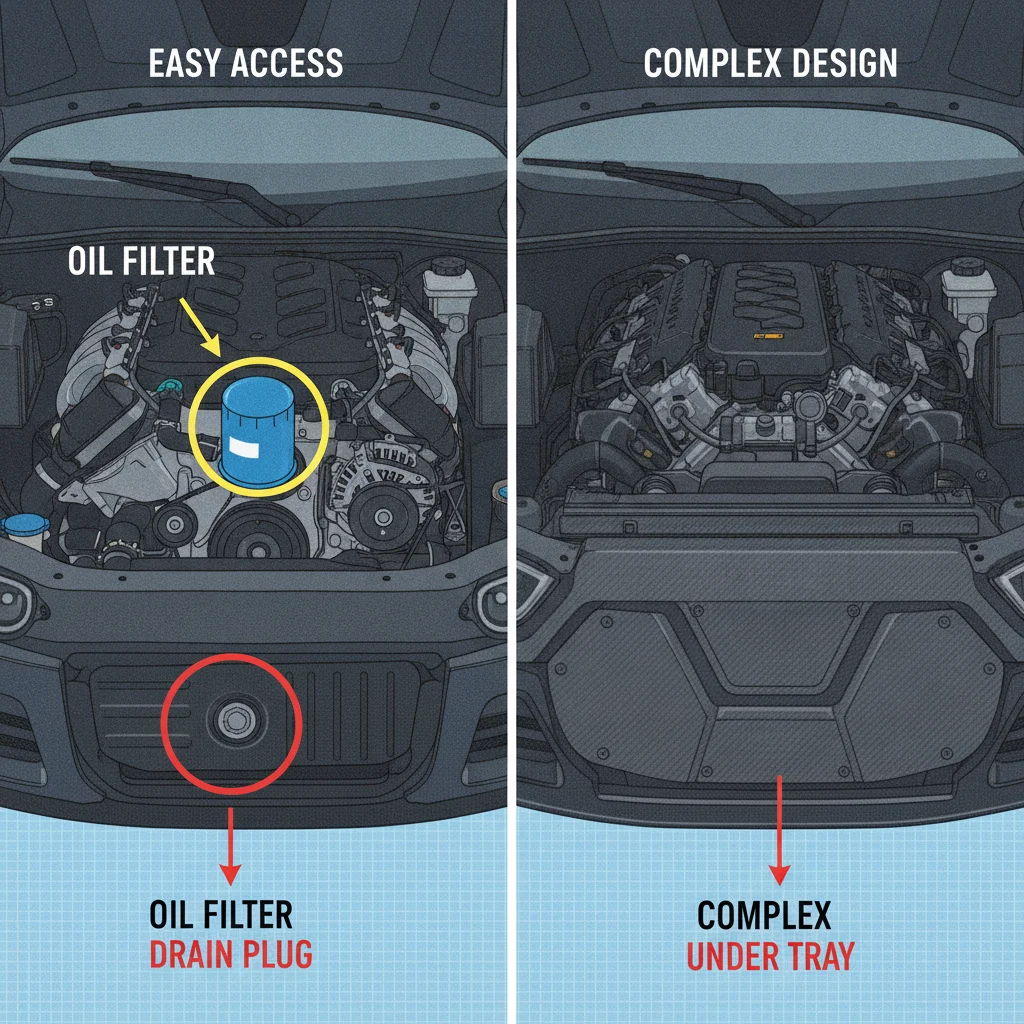
Before committing to DIY, search your specific make, model, and year alongside "oil change difficulty" or consult owner forums. You'll quickly learn whether your vehicle is a 20-minute straightforward job or a project that requires planning.
Safety, Disposal, and the Legal Fine Print
A few non-mechanical considerations matter here and are often underweighted by new DIYers.
Working Safely Under a Vehicle
Every year, people are seriously injured or killed by vehicles falling from inadequate support. A hydraulic floor jack alone is not a safe working platform — it can fail or be inadvertently released. Always use rated jack stands, set on solid ground, at approved lift points specified in your owner's manual. Wheel chocks prevent the vehicle from rolling while you work. These aren't optional safety steps.
Used Oil Disposal
One gallon of used motor oil can contaminate up to one million gallons of fresh water. Federal law under the Resource Conservation and Recovery Act governs its disposal, and most states have additional regulations. The practical solution is simple: store your used oil in a sealed container (the original oil containers work well) and drop it off at any auto parts retailer that participates in collection programs. Call ahead to confirm, as some locations have capacity limits.
Warranty Documentation
As noted earlier, the Magnuson-Moss Warranty Act protects your right to service your own vehicle without voiding the manufacturer's powertrain warranty — provided you use the correct oil specification and maintain records. Keep all receipts from oil and filter purchases, and log the date and mileage of each change. A simple spreadsheet or even a note in your glovebox is sufficient. If you ever face a warranty dispute related to lubrication, documentation is your defense.
Magnuson-Moss and Your Warranty Rights
Under the Magnuson-Moss Warranty Act, a manufacturer cannot void your vehicle warranty simply because you performed your own oil changes. However, the law does require that you use oil and filters meeting the manufacturer's specifications and that you maintain documentation. If your engine experiences a failure and you can't demonstrate correct oil use and interval adherence, a warranty dispute becomes significantly harder to win. Keep every receipt and log every change.
Check Your Owner's Manual First
Oil viscosity grades and API specifications vary by engine design, climate, and use case. Your owner's manual lists the exact grade required — not just what's stamped on the engine cover or recommended by the parts store clerk. Using the wrong viscosity can affect cold-start protection, fuel economy, and long-term engine wear. When in doubt, the manual wins.

All claims are backed by peer-reviewed research. Sources on request.