Key Takeaways
Following Distance
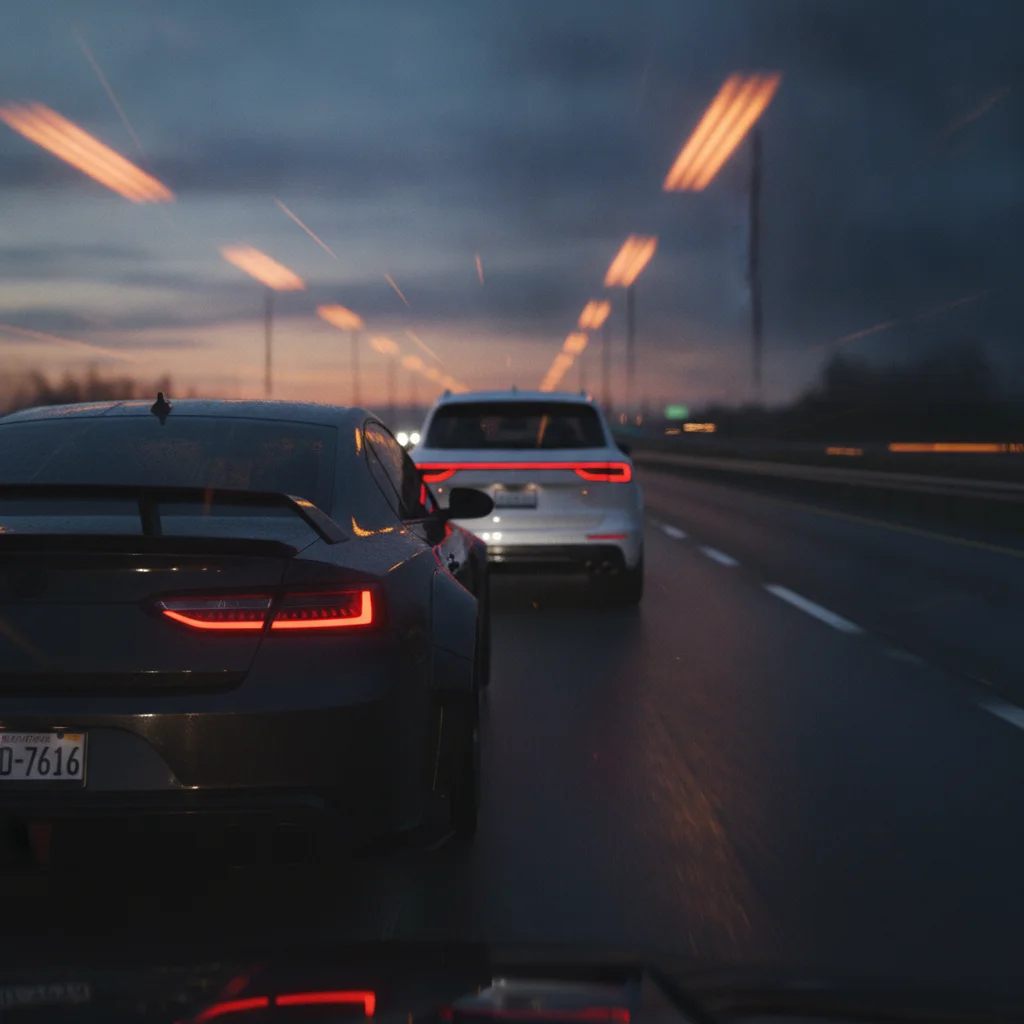
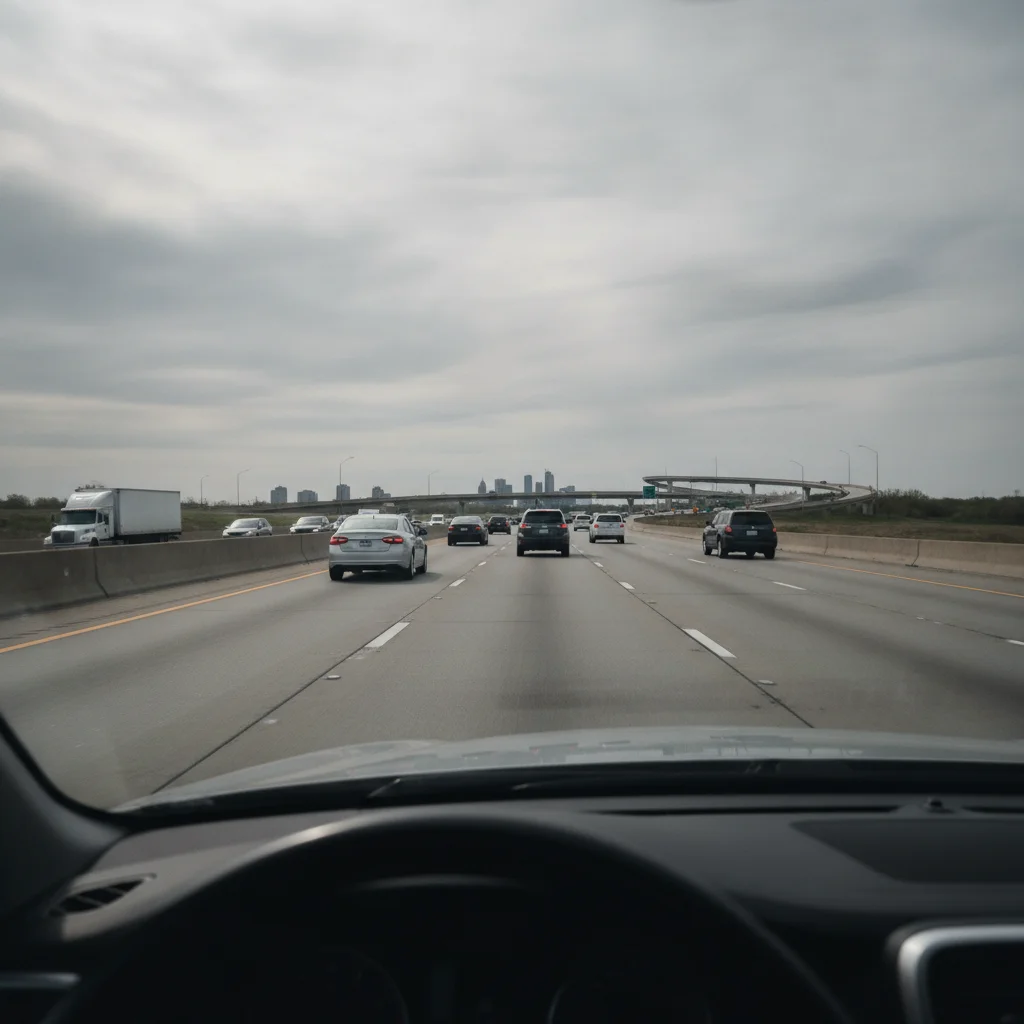
Following distance is the gap between the front of your vehicle and the rear of the vehicle ahead of you. It's most usefully measured in time — seconds — rather than car lengths, because the physical space you need to stop safely grows dramatically as speed increases. The widely taught 3-second rule is a minimum baseline for ideal conditions, not a universal safety guarantee.
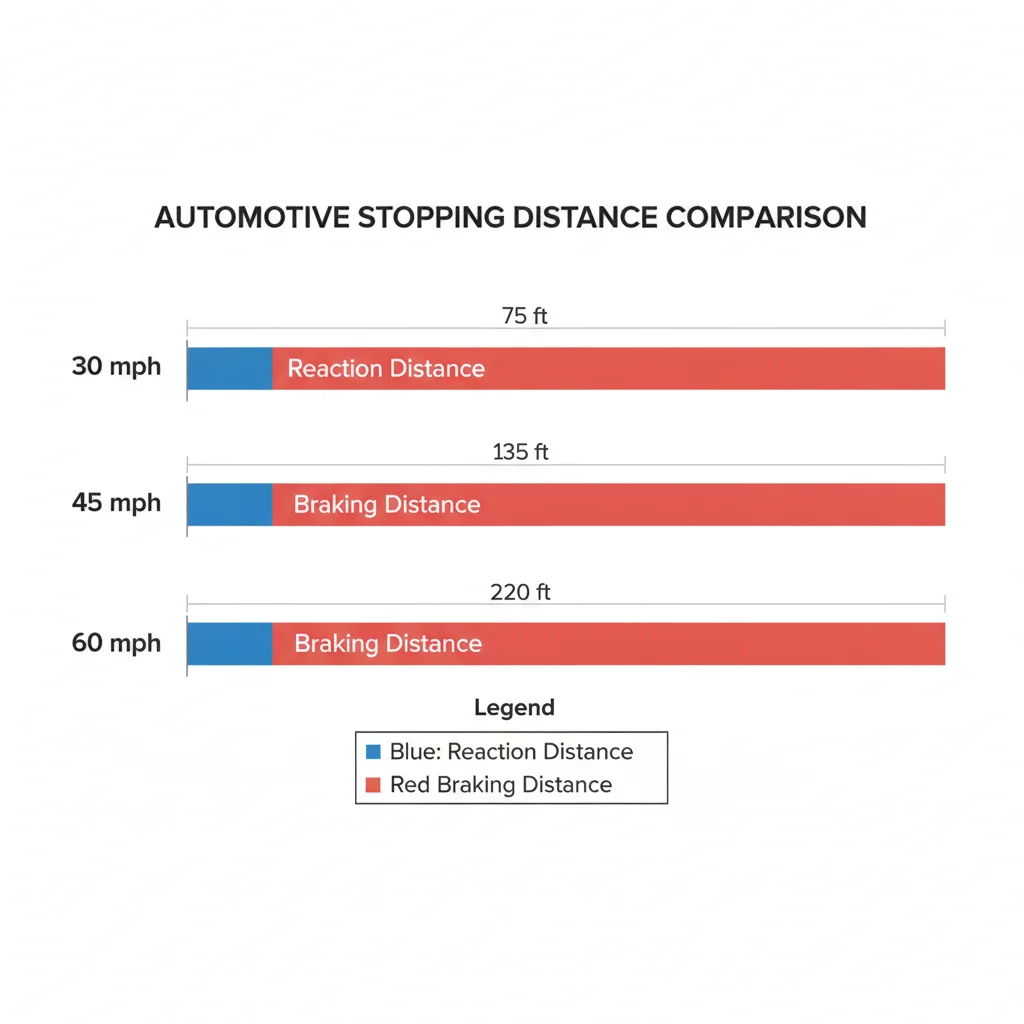
Stopping distance is the sum of reaction distance (distance traveled during perception and brake application) and braking distance (distance traveled while decelerating). At 60 mph, total stopping distance for a typical passenger vehicle exceeds 300 feet, which corresponds to roughly 3.4 seconds of travel time — already beyond the standard 3-second rule.
Where the 3-Second Rule Comes From
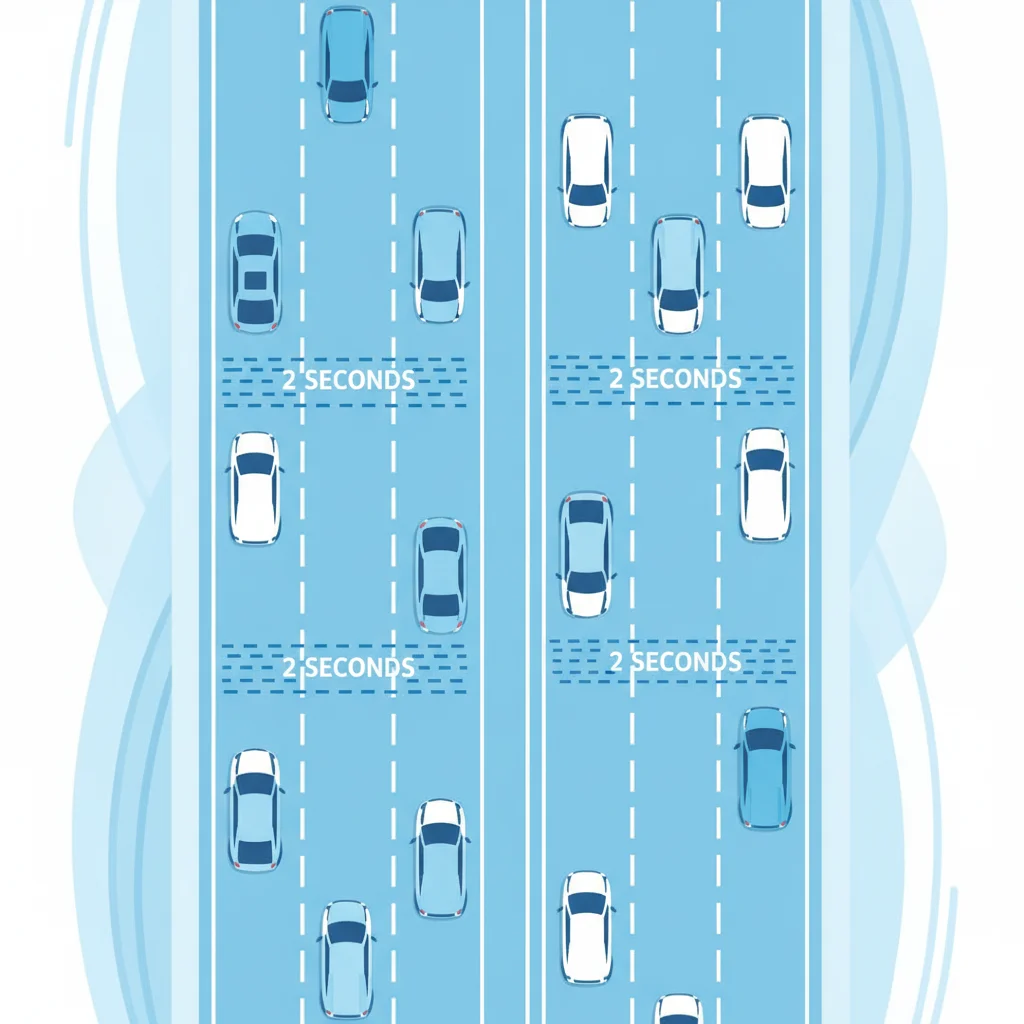
The 3-second rule entered driver education curricula in the United States during the 1970s and 1980s as a simplified heuristic — a way to make following distance teachable without requiring drivers to do mental math at 65 mph. The method is elegantly simple: pick a fixed object on the road, watch when the car ahead passes it, then count how many seconds elapse before your front bumper reaches that same point. Three seconds meant you had a survivable margin of error.
The rule has genuine virtues. It adjusts automatically for speed — at 30 mph, three seconds equals roughly 132 feet; at 60 mph, it expands to about 264 feet. That's a meaningful improvement over the older "one car length per 10 mph" guidance, which produced dangerously compressed gaps at highway speeds.
But the rule was always a teaching simplification, not a physics-derived safety threshold. It was calibrated around average reaction times on dry pavement, average braking capability of vehicles from that era, and alert, unimpaired drivers. Most real-world drives involve at least one factor that erodes that margin — and often several at once.
As vehicle speeds have increased on American roads, and as distraction has become a pervasive reality rather than an edge case, transportation researchers have quietly shifted toward recommending a higher baseline. The 3-second rule didn't become wrong — it became insufficient for the conditions most drivers actually face.
The Physics of Stopping: Why the Numbers Are Worse Than You Think
To understand why following distance matters more than intuition suggests, it helps to break down what actually happens between the moment a hazard appears and the moment your car stops moving.
Perception-Reaction Time
Before your foot ever touches the brake, time passes. You have to perceive the threat, process it cognitively, and initiate a physical response. Research from the Transportation Research Board and studies cited by the National Highway Traffic Safety Administration (NHTSA) consistently put average perception-reaction time at 1.5 seconds for an alert driver — and up to 2.5 seconds or more for a distracted or fatigued one.
At 60 mph, 1.5 seconds of reaction time equals 132 feet of travel with zero deceleration. Your car is still moving at full speed while your brain catches up.
~300 ft
Total stopping distance at 60 mph
NHTSA and AAA safety data estimate that a typical passenger car traveling 60 mph requires approximately 300 feet to stop — combining reaction distance and braking distance on dry pavement.
29%
Share of all U.S. crashes that are rear-end collisions
According to NHTSA crash data, rear-end collisions consistently account for roughly 29% of all crashes annually, making them the most common crash type on American roads.
1.5 sec
Average driver perception-reaction time
Transportation Research Board studies place average perception-reaction time for an alert, unimpaired driver at approximately 1.5 seconds — time during which the vehicle travels at full speed before braking begins.
4x
Braking distance increase when speed doubles
Because braking distance scales with the square of velocity, doubling your speed roughly quadruples the distance required to stop — a relationship that makes high-speed following distance especially critical.
20–40%
Average insurance rate increase after at-fault rear-end crash
Industry rate analysis from sources including the Insurance Information Institute indicates at-fault rear-end collisions typically trigger renewal surcharges of 20–40% depending on state and insurer.
Braking Distance
Once you've applied the brakes, the laws of physics take over. Braking distance scales with the square of your speed — meaning it grows exponentially, not linearly. A vehicle traveling at 60 mph doesn't need twice the braking distance of one traveling at 30 mph. It needs roughly four times as much. On dry pavement with modern ABS brakes in good condition, a passenger vehicle traveling 60 mph requires approximately 180 feet of braking distance after brake application. Combined with reaction distance, total stopping distance approaches 310–330 feet.
Three seconds at 60 mph covers about 264 feet — which is shorter than the total stopping distance the physics requires. Even in ideal conditions, the 3-second rule provides less margin than most drivers assume.
ABS Doesn't Shorten Stopping Distance on Dry Roads
A common misconception is that anti-lock braking systems (ABS) significantly reduce stopping distance on dry pavement. ABS is primarily designed to maintain steering control during hard braking and to reduce stopping distance on slippery surfaces — on dry pavement, it provides minimal improvement over a skilled driver using threshold braking. Following distance should not be adjusted based on ABS availability alone.
Fog, Rain, and Perception Distance
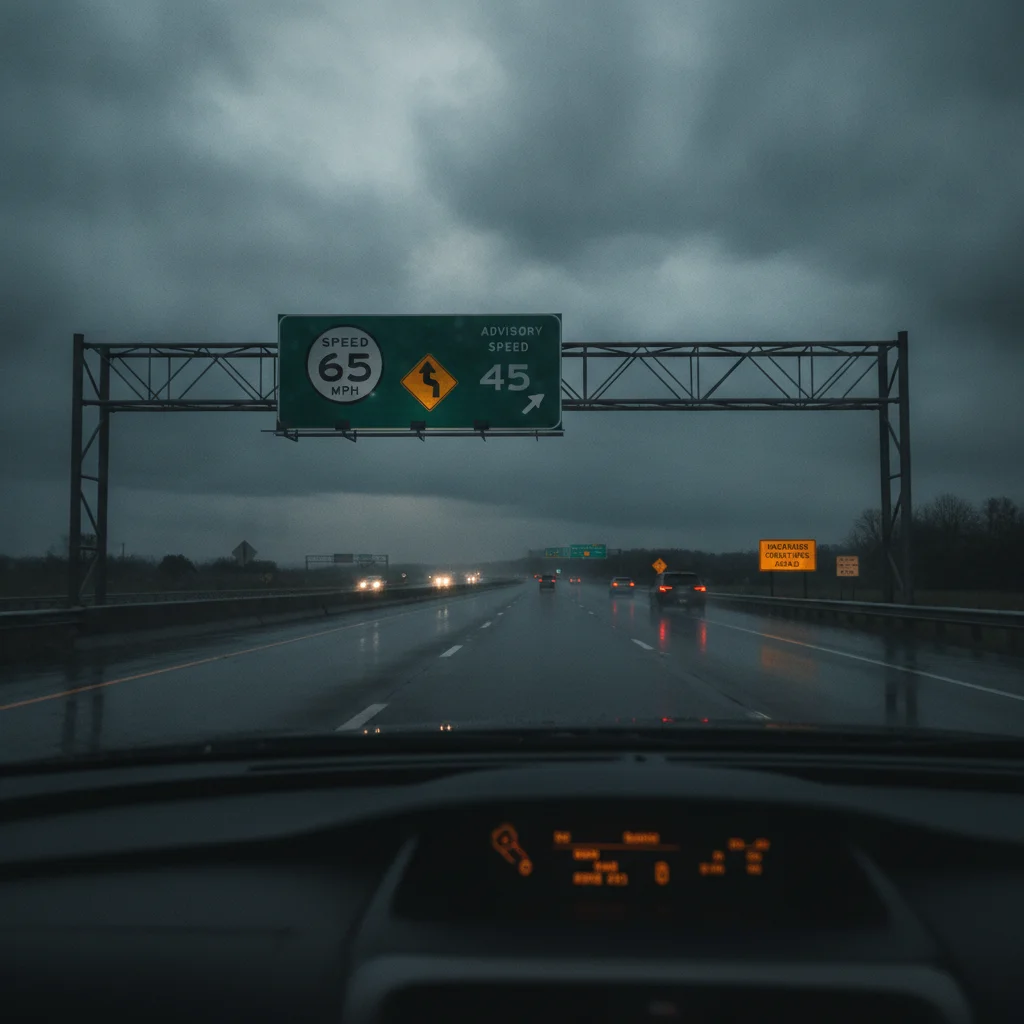
In foggy or heavy rain conditions, the practical limit on your safety is your perception distance — how far ahead you can actually see a hazard. If your following distance is longer than your visibility range, that's a meaningful safety indicator. Transportation safety experts recommend slowing down until your stopping distance falls within the distance you can see, regardless of what other traffic is doing.
The Compound Effect of Speed
This exponential relationship is why speed and following distance are inseparable topics. A driver following at 3 seconds on an interstate at 75 mph has physically less stopping margin than a driver following at 3 seconds on a city street at 35 mph — not because the gap in feet is smaller, but because the energy involved in stopping is so much greater. For a deeper look at how posted limits interact with actual safe speeds, see how safe speed diverges from the speed limit.
What Research Actually Recommends
Traffic safety researchers and organizations including the AAA Foundation for Traffic Safety, NHTSA, and various academic transportation engineering programs have examined crash data and braking physics to develop more nuanced guidance than the classroom 3-second rule.
“The 3-second rule is a good starting point, but it assumes an alert driver with good tires on dry pavement — conditions that describe a minority of real-world driving situations. Four seconds is a more honest baseline for everyday highway driving.”
— David Yang, Executive Director, AAA Foundation for Traffic Safety
The emerging consensus from that body of research points to several practical conclusions:
- 4 seconds is a more defensible minimum for highway driving in good conditions for an alert, unimpaired driver in a well-maintained vehicle.
- 5 to 6 seconds is appropriate when any single risk factor is present: wet roads, reduced visibility, heavy traffic, or mild fatigue.
- 8 to 10 seconds — or more — is appropriate in severe weather, on ice, or when towing a trailer or driving a heavily loaded vehicle.
These figures account for the compounding effect of real-world variables rather than treating dry-pavement physics as the universal baseline. They also reflect stopping-distance data across the actual fleet of vehicles on American roads, including older vehicles with degraded brake systems and tires, not just new cars tested under optimal conditions.
It's also worth noting that following distance interacts with what speed limit signs actually communicate — posted limits reflect idealized conditions, and when conditions degrade, your gap should grow even if your speed hasn't changed significantly.
Use 4 Seconds as Your Highway Default
For most highway driving in normal conditions, setting your mental default to 4 seconds rather than 3 adds meaningful stopping margin with almost no practical cost to travel time. The adjustment is especially valuable at speeds above 55 mph, where the gap between the 3-second rule and actual stopping physics is largest.
Following Distance Protects Your Insurance Rate
Maintaining adequate following distance isn't just a safety practice — it's a financial one. An at-fault rear-end collision can raise your insurance premium by 20–40% at renewal and may stay on your record for 3–5 years depending on your state and insurer. A consistent 4-second gap costs you nothing in premiums and almost nothing in commute time.
The Variables That Quietly Extend Your Stopping Distance
The gap you need isn't fixed — it's a moving target shaped by conditions that change from trip to trip, and sometimes minute to minute.
Tire Condition and Road Surface
Tire tread depth directly affects wet-road grip. The legal minimum tread depth in most states is 2/32 of an inch, but studies show stopping distances increase significantly once tread depth falls below 4/32 of an inch on wet pavement. A vehicle with marginal tires can require 30–40% more stopping distance on a wet road than a vehicle with fresh tires on the same surface.
Vehicle Weight and Load
Heavier vehicles require longer stopping distances. A pickup truck loaded with construction materials or a family SUV loaded for a road trip has meaningfully different brake performance than the same vehicle unloaded. Drivers who adjust following distance based on how their vehicle handles when empty frequently underestimate their actual stopping distance when carrying loads.
Brake System Condition
Worn brake pads, degraded brake fluid, or warped rotors each reduce braking efficiency. These are gradual changes that drivers often don't perceive until performance has already degraded substantially. Regular brake inspections are particularly important for drivers who plan to use following distance data to calibrate their safety margins.
Distraction and Cognitive Load
Reaction time is not fixed at 1.5 seconds. Drivers engaged with a hands-free phone call have been shown in research by the University of Utah to have reaction times 20% slower than baseline. Glancing at a navigation display, changing a radio station, or managing a conversation each add measurable reaction time — and those fractions of a second translate directly into feet of unbraked travel.
For drivers who believe they can brake faster than average or compensate for a shorter gap with heightened attention, it's worth examining the tailgating myths that crash research consistently debunks.
Weather Conditions: The Multiplier Effect
Wet, icy, or low-visibility conditions don't just add a fixed increment to stopping distance — they multiply it. Rain reduces tire grip, increases hydroplaning risk, and cuts the effectiveness of ABS systems. Ice can reduce road friction so severely that stopping distances increase by a factor of four or more compared to dry asphalt.
Fog and heavy rain also compress the gap between your perception of danger and the actual hazard. If you can't see more than 200 feet ahead, following at a 4-second gap doesn't help if the hazard is already within that distance before you can see it.
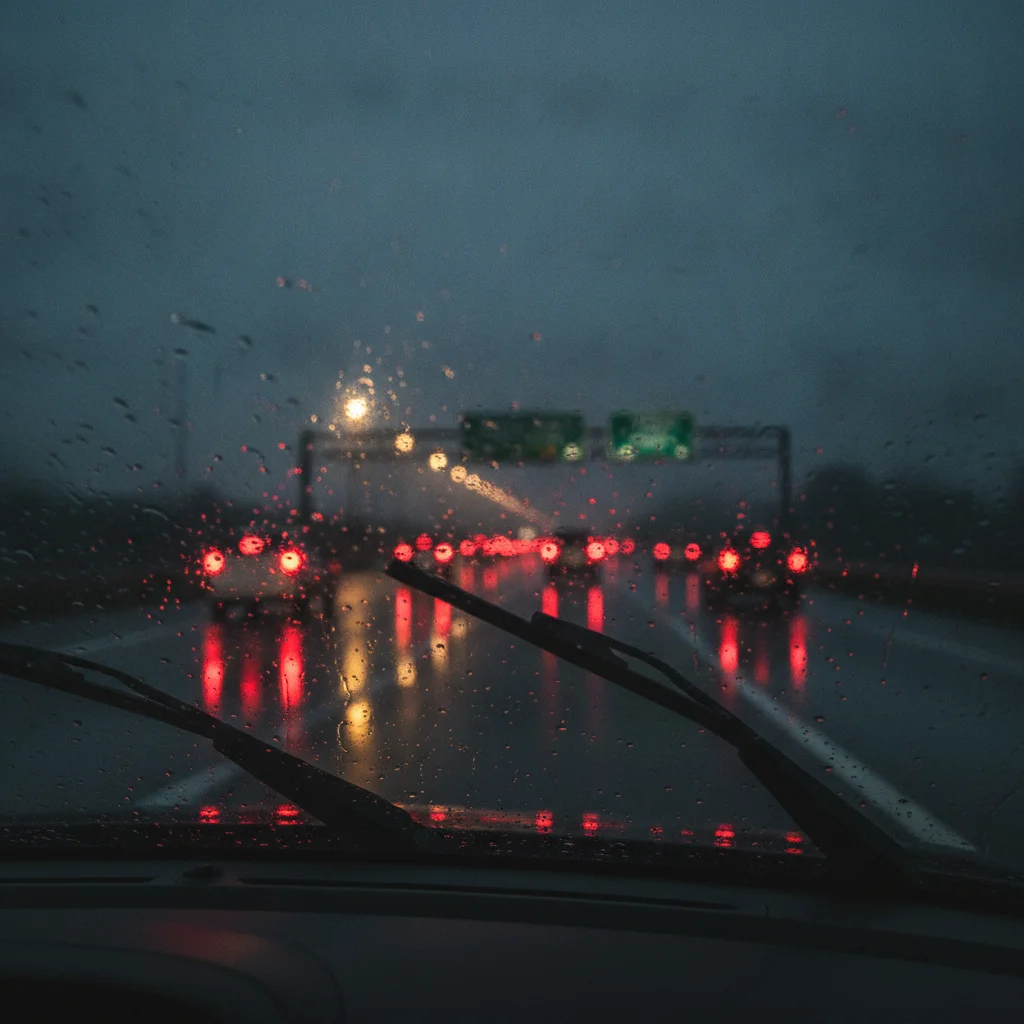
The practical approach used by traffic safety professionals is to ask: "Can I stop within the distance I can see?" In reduced-visibility conditions, that means slowing down and extending following distance simultaneously — not one or the other. A fuller treatment of condition-specific recommendations is covered in safe following distance in rain, fog, and snow.
ABS Doesn't Shorten Stopping Distance on Dry Roads
A common misconception is that anti-lock braking systems (ABS) significantly reduce stopping distance on dry pavement. ABS is primarily designed to maintain steering control during hard braking and to reduce stopping distance on slippery surfaces — on dry pavement, it provides minimal improvement over a skilled driver using threshold braking. Following distance should not be adjusted based on ABS availability alone.
Fog, Rain, and Perception Distance
In foggy or heavy rain conditions, the practical limit on your safety is your perception distance — how far ahead you can actually see a hazard. If your following distance is longer than your visibility range, that's a meaningful safety indicator. Transportation safety experts recommend slowing down until your stopping distance falls within the distance you can see, regardless of what other traffic is doing.
Following Distance, Liability, and Your Insurance
There's a practical legal dimension to following distance that most drivers don't fully consider until after a crash. Rear-end collisions are presumptively the following driver's fault in the vast majority of U.S. states — the legal doctrine being that you should have maintained sufficient distance to stop safely regardless of what the vehicle ahead did.
This presumption matters for insurance purposes. A rear-end collision where you are the striking driver will typically result in a fault determination against you, which can trigger a rate increase averaging 20–40% at renewal depending on your insurer and state. In some jurisdictions, following too closely is also a chargeable moving violation independent of whether a crash occurs — officers have discretion to cite drivers they observe with insufficient gaps, even absent an accident.
Understanding the legal exposure that comes with tailgating helps reframe following distance from a courtesy issue into a liability management issue. A four-second gap doesn't just protect you physically — it protects you financially.
Use 4 Seconds as Your Highway Default
For most highway driving in normal conditions, setting your mental default to 4 seconds rather than 3 adds meaningful stopping margin with almost no practical cost to travel time. The adjustment is especially valuable at speeds above 55 mph, where the gap between the 3-second rule and actual stopping physics is largest.
Following Distance Protects Your Insurance Rate
Maintaining adequate following distance isn't just a safety practice — it's a financial one. An at-fault rear-end collision can raise your insurance premium by 20–40% at renewal and may stay on your record for 3–5 years depending on your state and insurer. A consistent 4-second gap costs you nothing in premiums and almost nothing in commute time.
From a practical standpoint, the cost-benefit calculation is straightforward. Maintaining adequate following distance on a 30-mile commute at 60 mph adds, at most, a few seconds to your travel time if you're occasionally delayed behind a slow vehicle. The cost of a rear-end collision — in damage, liability, increased premiums, and potential injury — is orders of magnitude higher. Adequate following distance is one of the highest-return safety habits available to any driver, requiring no equipment and no expense.
Building the Habit: Making Distance Feel Natural
The challenge with following distance is that it doesn't feel instinctive. American road culture normalizes close following. When drivers maintain a 4-second gap on a busy highway, other drivers frequently fill the space — which creates frustration and a perceived disincentive to maintain margin. Overcrowded roads amplify the social pressure to close up.
Research on driver behavior suggests the most effective approach is to reframe the mental model: instead of thinking about distance as space that other drivers will steal, think of it as buffer that exists for your benefit regardless of what others do. If a driver merges into your gap, simply ease back to restore the buffer. The time cost is negligible.
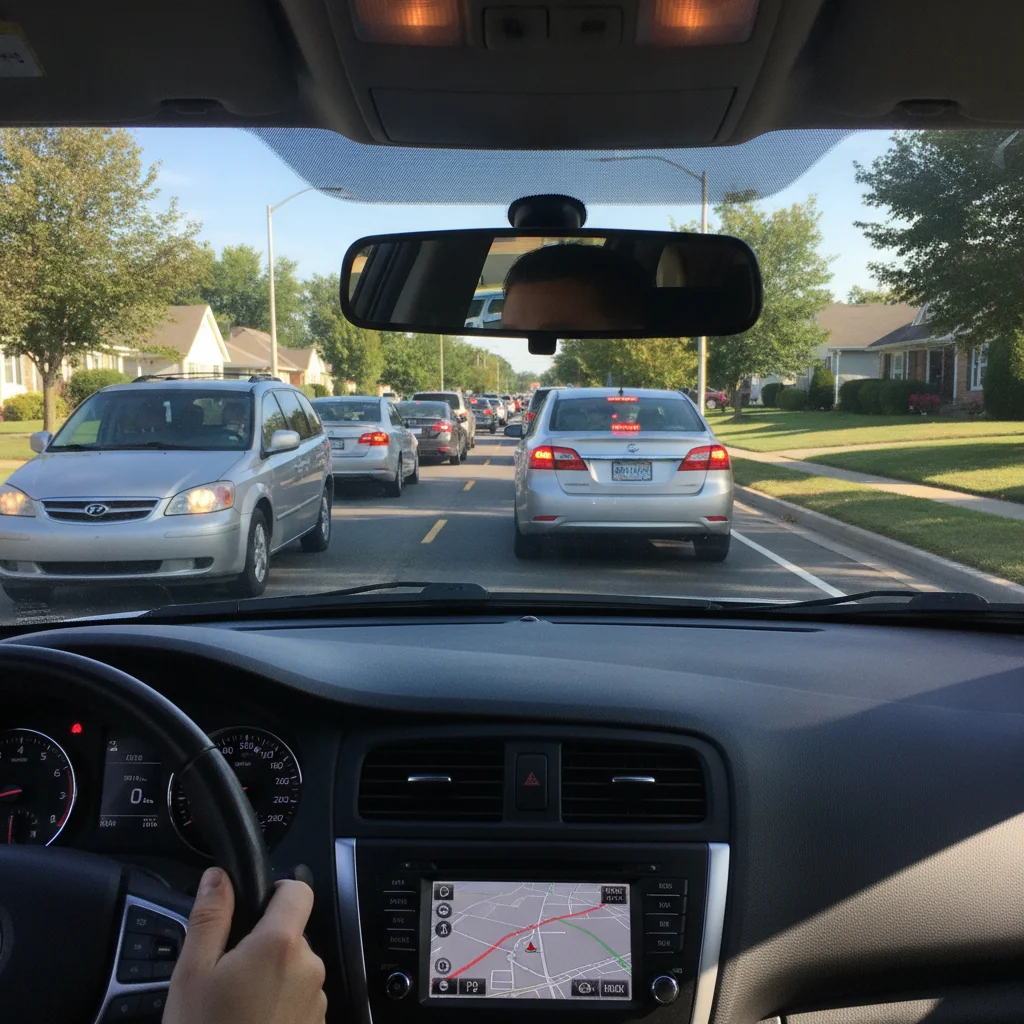
Practical techniques that help drivers build the habit:
- Use the count method consistently. Pick a fixed reference — an overpass, a sign, a shadow line — every few minutes during a drive and verify your count. Spot-checking builds calibration.
- Start with 4 seconds as the default. Treat 3 seconds as the absolute floor for the most favorable conditions possible, not as normal operating behavior.
- Adjust explicitly for conditions. When it begins to rain, when visibility drops, or when you recognize you're more fatigued than usual, consciously add seconds rather than waiting for conditions to improve.
- Be aware of the "accordion effect" in heavy traffic. Stop-and-go conditions create dynamic risk because vehicles at the front slow before vehicles at the back perceive it. More following distance in congested traffic, not less, is the safer approach.
The 3-second rule was never intended to be a ceiling. Its longevity in driver education is a testament to its teachability, not to its sufficiency. The science of stopping distance suggests that for most American drivers in typical daily conditions, four seconds is a more honest minimum — and the flexibility to go higher when conditions call for it is what separates skilled drivers from merely adequate ones.

All claims are backed by peer-reviewed research. Sources on request.