Key Takeaways
Safe Speed vs. Posted Speed Limit
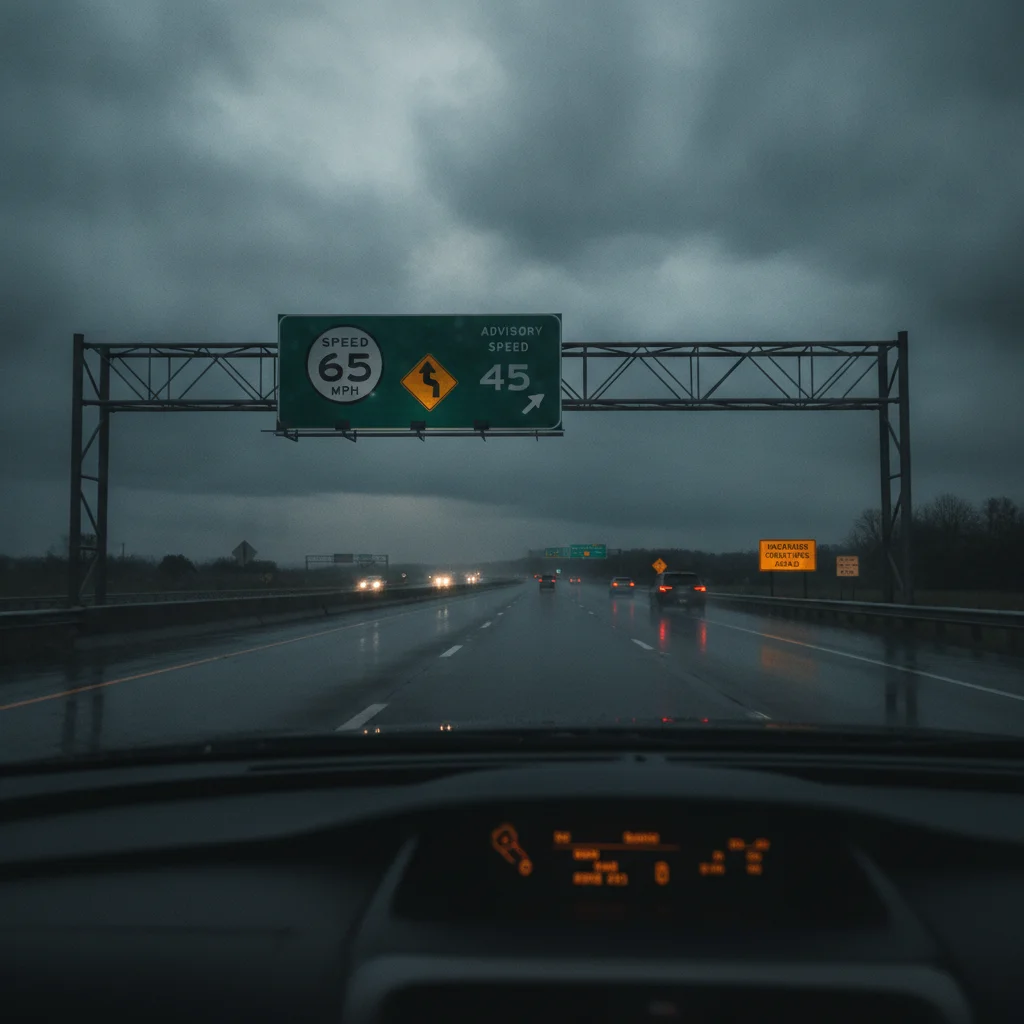
A posted speed limit is the maximum legal speed under ideal conditions — dry pavement, good visibility, normal traffic. The safe speed is the actual speed at which a driver can maintain full control given the real-world conditions present at that moment. These two numbers are often the same, but rain, fog, construction, curves, or heavy traffic can make the safe speed significantly lower than the sign suggests.
Under the legal doctrine of 'basic speed law,' present in most U.S. states, a driver can be cited for driving unsafely even if they are at or below the posted limit. The standard is whether speed was 'reasonable and prudent' for prevailing conditions.
How Speed Limits Are Actually Set
If you've ever driven a rural highway and thought the limit seemed arbitrarily high — or crept through a stretch of urban road wondering why it's posted at 45 — you're reacting to something real. Speed limits in the U.S. are set through a process that is more scientific than most drivers realize, but also more constrained.
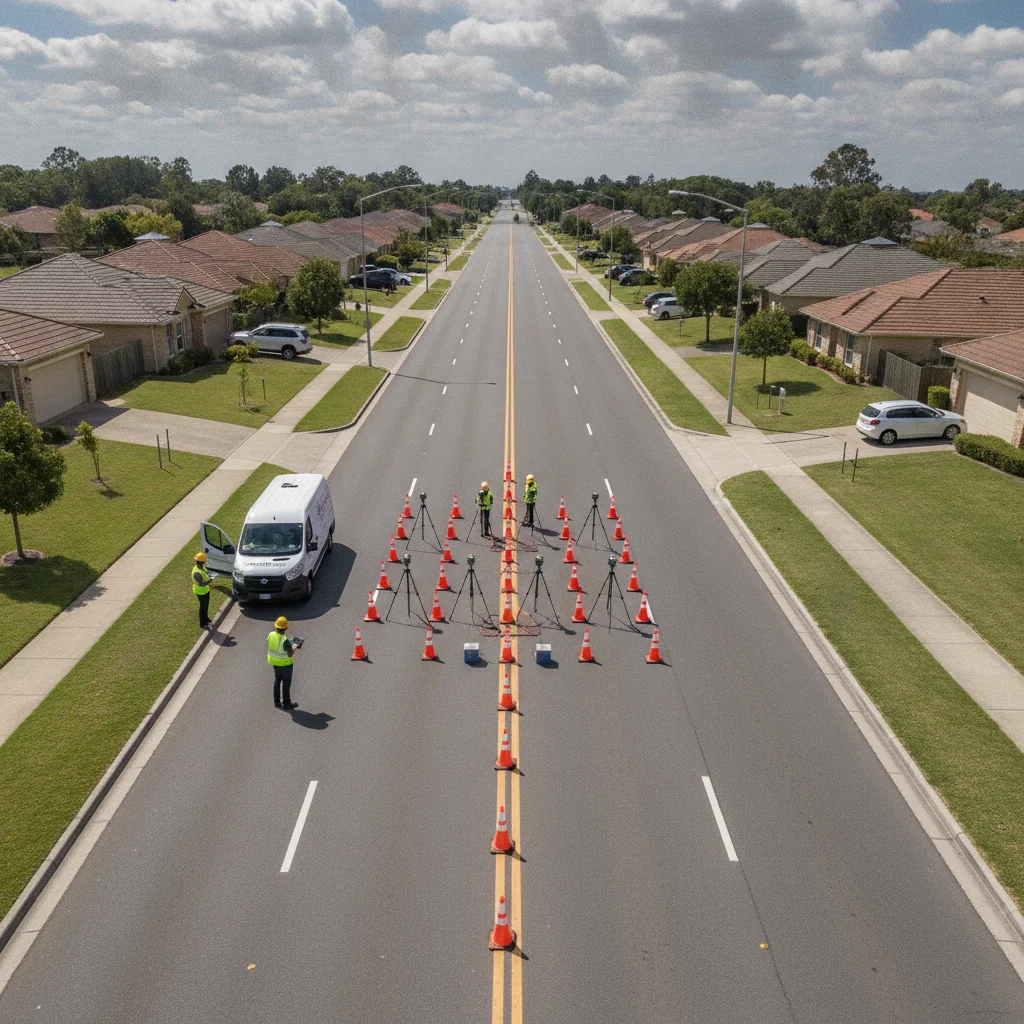
The dominant methodology is the 85th percentile rule. Traffic engineers conduct speed studies on a given road segment under free-flow conditions — meaning good weather, light traffic, dry pavement — and record how fast drivers naturally travel. The speed at or below which 85% of those drivers operate becomes the baseline for setting the limit. The logic is that this represents a speed most drivers consider comfortable and safe under ideal conditions.
That word ideal is doing a lot of work. The 85th percentile study doesn't happen in a January ice storm. It doesn't account for the school buses that queue near that intersection every morning, or the deer that wander across that particular stretch at dusk. The posted limit reflects a kind of average-case maximum, not a dynamic safe speed for all conditions.
Political and community pressure can also influence where limits land. Local governments sometimes set limits below the engineering recommendation in response to neighborhood concerns — or above it on roads where freight movement is prioritized. The result is a patchwork system where the number on the sign is a reasonable starting point, but never the whole story.
For more on the legal nuances behind what posted signs actually communicate, see Speed Limit Signs Don't Tell the Whole Story.
The Basic Speed Law: When the Limit Isn't a Defense
Here's a legal reality most American drivers don't know: in virtually every U.S. state, you can receive a speeding ticket while driving at or below the posted limit.
This is possible under what's called the basic speed law — a statute that requires drivers to travel at a speed that is "reasonable and prudent" for existing conditions. It's distinct from absolute speed limits, which simply make driving above a specific number illegal regardless of conditions. The basic speed law operates as a floor on safe behavior, not just a ceiling on legal behavior.
Basic Speed Law Varies by State
While the basic speed law principle is present in the vast majority of U.S. states, the exact language and enforcement standards differ. Some states use 'reasonable and prudent' as the statutory standard; others phrase it as 'safe for conditions.' A small number of states have absolute speed limits in all zones, where the posted number is the definitive standard. Check your state's traffic code if you want to understand the specific legal standard that applies where you drive.
Advisory Speed Signs Are Not Speed Limits
The yellow diamond-shaped advisory speed signs you see before curves or special road features are not legally enforceable speed limits — they are engineering recommendations based on road geometry. However, if you enter a curve at a speed significantly above the advisory and lose control, the advisory sign can be introduced as evidence that you were operating unsafely. Practically speaking, treat advisory signs as strong guidance, not mere suggestions.
Condition-Based Driving Is a Learned Skill
Research on driver expertise consistently shows that experienced drivers don't just drive faster — they read road conditions more accurately and adjust speed more fluidly than novice drivers. New drivers in particular tend to over-rely on posted limits as their primary speed cue. Deliberate practice of condition-based observation — checking surface, visibility, traffic density before adjusting speed — can accelerate the development of this judgment significantly.
In practice, this means that driving 55 mph on a highway posted at 65 mph during a whiteout blizzard could still be citable — and arguably reckless. Officers have discretion to evaluate whether your speed was appropriate for the visibility, road surface, traffic density, and other factors they observe at the scene.
The inverse also applies: traffic law often holds drivers to a higher standard than they assume. The legal framework around speed is built on reasonableness, not just numbers.
How Weather Changes the Safe Speed Equation
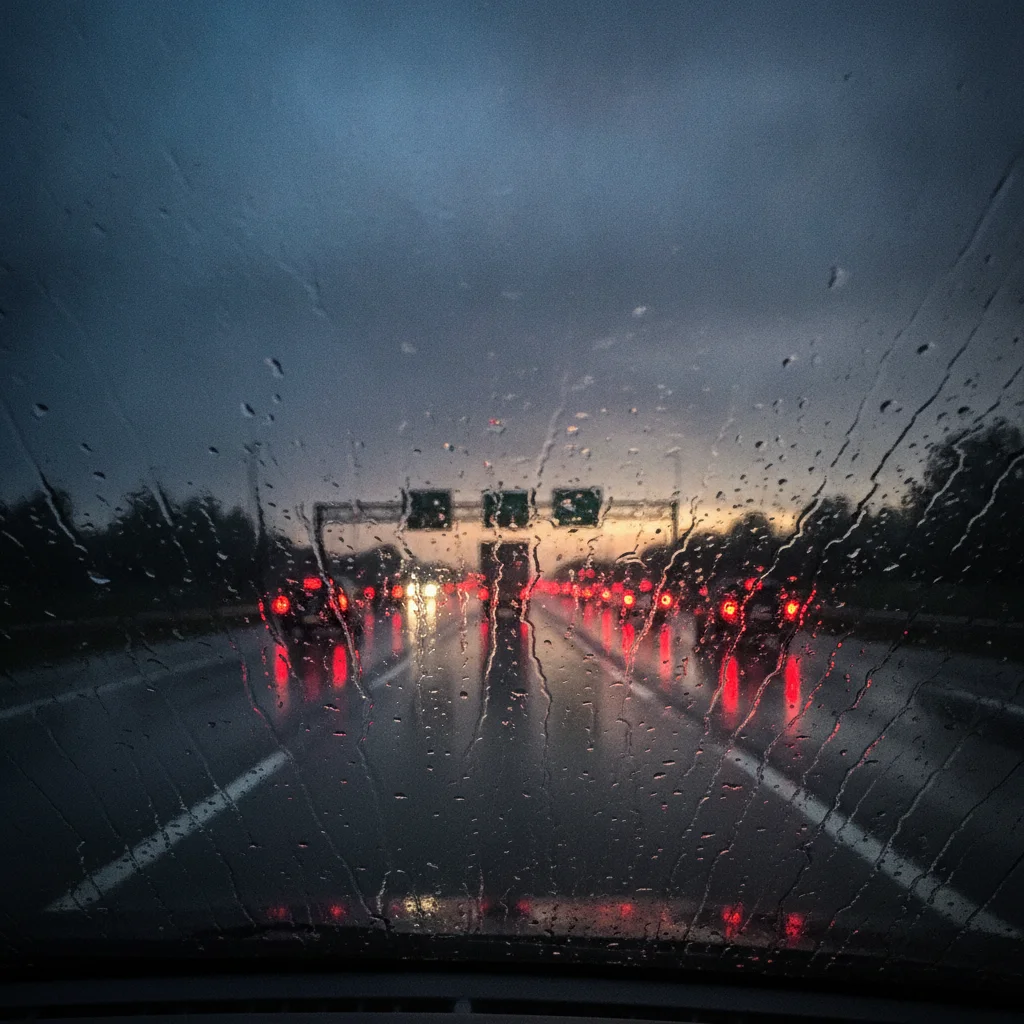
Weather is the most consequential variable between the posted limit and a genuinely safe speed. The physics are unambiguous: wet, icy, or snow-packed roads reduce tire friction, extend stopping distances, and can make a vehicle's handling feel dramatically different from dry-pavement performance.
3x
Stopping distance increase from 30 to 60 mph
Based on dry-pavement stopping distance calculations from the NHTSA and Highway Code equivalents, stopping distance nearly triples when speed doubles.
33%
Recommended speed reduction in rain
The National Safety Council advises drivers to reduce speed by at least one-third on wet road surfaces to maintain safe stopping distances.
10x
Stopping distance increase on ice vs. dry pavement
According to AAA research, stopping distance on packed ice can be up to 10 times longer than on dry pavement at the same speed.
85%
Pedestrian fatality rate at 40 mph impact
Research cited by the AAA Foundation for Traffic Safety found approximately 85% of pedestrians struck at 40 mph suffer fatal injuries, compared to about 10% at 20 mph.
85th %ile
Percentile used to set most U.S. speed limits
The Federal Highway Administration's standard traffic engineering practice uses the speed at or below which 85% of vehicles travel under ideal conditions as the primary input for posting speed limits.
Rain: The National Safety Council recommends reducing speed by one-third on wet roads. On a 60 mph highway, that means targeting approximately 40 mph during steady rainfall. Hydroplaning — where tires lose contact with pavement and skim across a film of water — can occur at speeds as low as 35 mph on worn tires. Tread depth matters as much as speed here.
Snow and ice: On snow-packed or icy roads, the recommended reduction is roughly half the posted limit. Traction control and all-wheel drive help with acceleration but offer limited help with stopping distance, which can be 10 times longer on ice than on dry pavement.
Fog: Visibility is the governing constraint in fog. A useful benchmark: you should be able to stop within the distance you can see. If your headlights illuminate 150 feet ahead in heavy fog and your stopping distance at 50 mph is around 250 feet, you're already in the danger zone. Reduce speed until those numbers align.
For a deeper breakdown on adjusting your buffer to the vehicle ahead during adverse weather, see Safe Following Distance in Rain, Fog, and Snow.
Check Your Tires Before Winter Driving
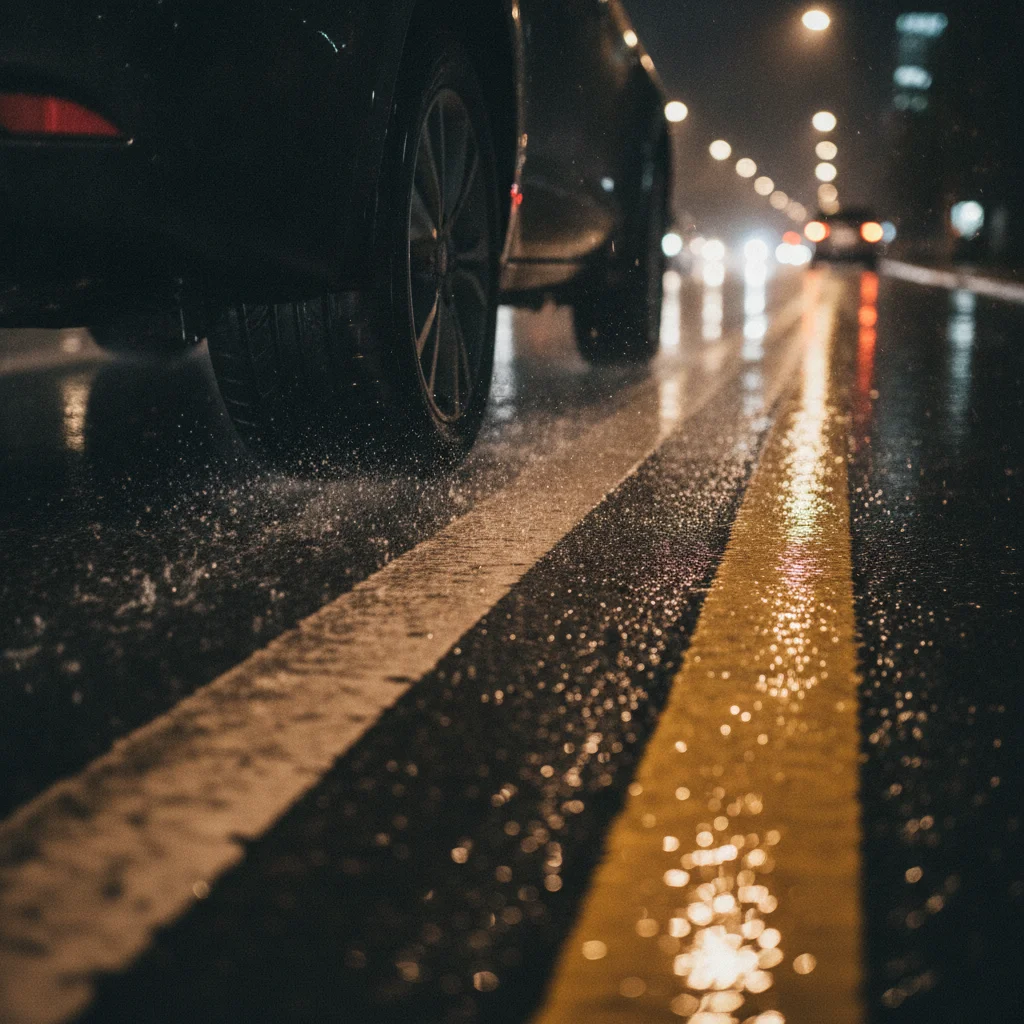
Tire tread depth is a critical variable in wet and cold-weather stopping distance. Use the penny test — insert a penny into the tread groove with Lincoln's head facing down. If you can see the top of Lincoln's head, tread depth is below 2/32 inches and the tire should be replaced. In winter conditions, many safety experts recommend replacing tires at 4/32 inches for adequate wet-road performance.
Use the Visibility Rule in Fog
In fog, a simple field test helps calibrate your speed: estimate how far ahead you can see clearly, then ask whether your current stopping distance is shorter than that distance. If you're going 50 mph, your dry-pavement stopping distance is already around 250 feet — most drivers can't see 250 feet in heavy fog. Slow until your stopping distance fits within your visible range.
Road Geometry: Curves, Hills, and Intersections
Road design is one of the least-discussed factors in safe speed judgment, despite being highly predictable. Engineers post advisory speeds on curves — the yellow diamond signs — specifically because the posted limit may not be safe through that turn. These advisory speeds are calculated based on the curve's radius and superelevation (banking), representing the speed at which a vehicle in average condition can navigate the turn without skidding.
Those advisory signs are not enforceable speed limits. But treating them as strong guidance is a reasonable interpretation of the physics involved. A curve posted at 35 mph advisory on a highway posted at 55 mph is telling you something measurable about the geometry of that arc.
“Speed limits represent a legal standard, not a safe-for-all-conditions standard. When we treat the posted number as a target rather than a ceiling, we've already made a cognitive error about what driving safely actually requires.”
— David Strayer, Cognitive neuroscientist and distracted driving researcher, University of Utah
Hills introduce two compounding factors. Cresting a hill reduces your sight line — if a stopped vehicle or debris is just over the rise, you may have only fractions of a second to react. Descending a steep grade under speed stresses brakes and can extend stopping distances significantly, especially for larger vehicles or those with worn brake pads.
Intersections — even controlled ones — require a mental speed recalibration. The fixed-hazard nature of a signalized intersection doesn't mean the surrounding environment is predictable. Pedestrians, cyclists, and cross-traffic entering on a yellow or running a red are real statistical threats. Reaction time at higher speeds shrinks your decision window dramatically — entering an intersection at 45 mph versus 30 mph isn't a minor difference.
Traffic Density and the Social Contract of Speed
Speed doesn't exist in isolation on a public road — it exists in relationship to the vehicles around you. This is why traffic engineers talk about "flow" as a concept distinct from individual vehicle speed. A driver traveling 80 mph on an empty interstate at 2 a.m. faces a fundamentally different risk profile than a driver going 80 mph in dense rush-hour traffic.
In congested conditions, safe speed is governed by two things: the gap you have to the vehicle ahead, and the predictability of those around you. When traffic is unpredictable — merging, lane-changing, sudden braking — the appropriate response is to increase following time and reduce speed, even if the posted limit is 65 mph and traffic is technically moving at 60.
The 3-second following rule has well-documented limits in exactly these scenarios. At highway speeds in heavy traffic, many safety researchers recommend 4–5 seconds of following time as a baseline, increasing further in poor visibility or on grades.
Speed choice in traffic also has a cooperative dimension. Driving significantly slower than surrounding traffic — without a condition-based reason — creates its own hazards by disrupting flow and forcing unexpected lane changes. Safe speed in traffic means matching the flow within reason, while maintaining the buffer and awareness needed to stop safely if the car ahead does.
Speed, Stopping Distance, and the Physics You Can't Argue With
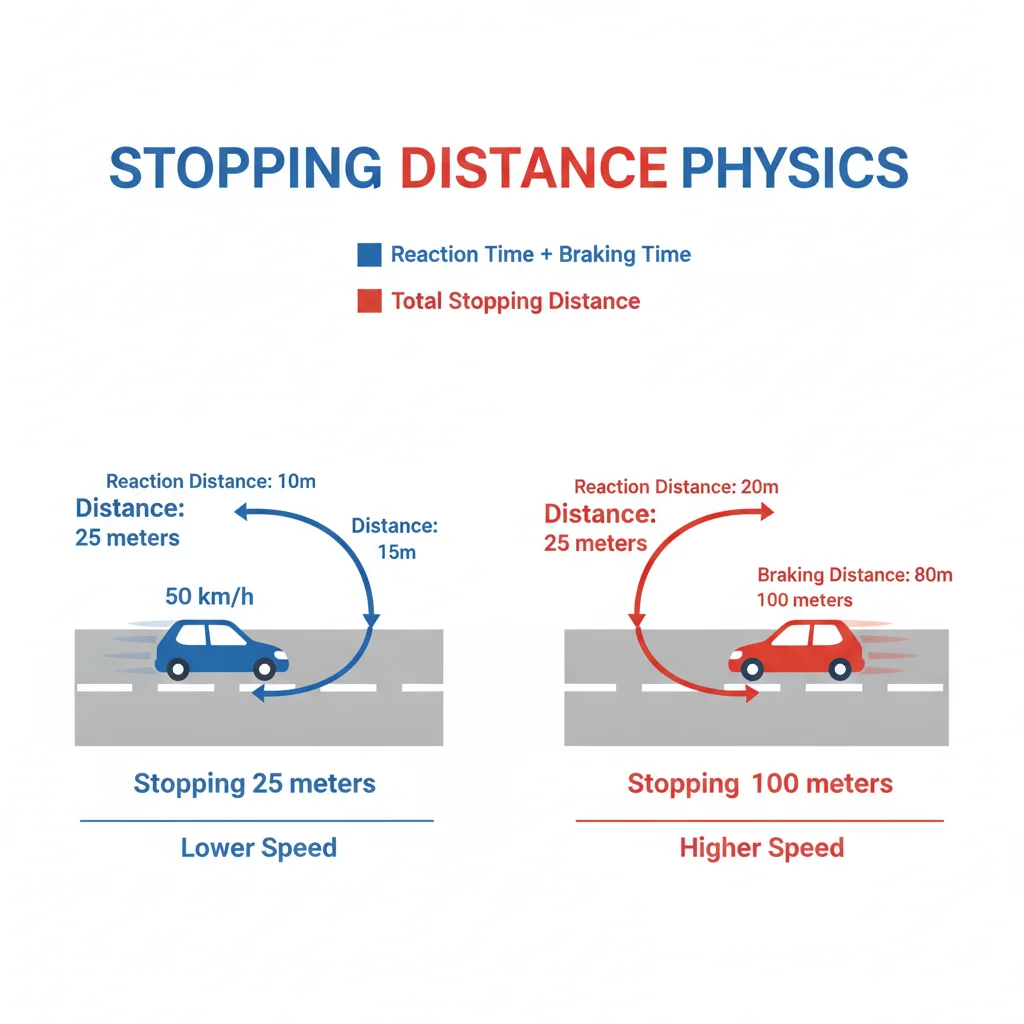
Speed's relationship to stopping distance is non-linear, and understanding that asymmetry is foundational to adjusting speed sensibly. Stopping distance has two components: reaction distance (how far you travel before your foot hits the brake) and braking distance (how far you travel once braking begins).
At 30 mph, a driver with average reaction time (roughly 1.5 seconds) travels about 66 feet before braking begins. Braking distance on dry pavement adds another 45 feet — a total of around 111 feet. At 60 mph, reaction distance nearly doubles to 132 feet, while braking distance quadruples to approximately 180 feet. Total stopping distance: roughly 312 feet — nearly three times as long, for twice the speed.
This exponential relationship means that modest speed reductions carry outsized safety benefits. Dropping from 60 to 50 mph — a 17% speed reduction — cuts stopping distance by more than 30% on dry pavement. In wet conditions, the gains from slowing down are even larger because braking distance extends further to begin with.
For EV drivers, speed management carries an added dimension: aerodynamic drag rises exponentially with velocity, which meaningfully cuts range. See how driving at 75 mph versus 65 mph affects EV range for a breakdown of that physics.
Check Your Tires Before Winter Driving
Tire tread depth is a critical variable in wet and cold-weather stopping distance. Use the penny test — insert a penny into the tread groove with Lincoln's head facing down. If you can see the top of Lincoln's head, tread depth is below 2/32 inches and the tire should be replaced. In winter conditions, many safety experts recommend replacing tires at 4/32 inches for adequate wet-road performance.
Use the Visibility Rule in Fog
In fog, a simple field test helps calibrate your speed: estimate how far ahead you can see clearly, then ask whether your current stopping distance is shorter than that distance. If you're going 50 mph, your dry-pavement stopping distance is already around 250 feet — most drivers can't see 250 feet in heavy fog. Slow until your stopping distance fits within your visible range.
Building a Habit of Condition-Based Speed Judgment
The practical challenge with safe speed is that it requires active judgment every time conditions shift — not just a one-time calibration when you merge onto a highway. Experienced defensive drivers develop a mental checklist that runs continuously: What is the road surface doing? What's my visibility horizon? How predictable is surrounding traffic? What are my vehicle's current limits?
A few concrete practices help make this more automatic:
- Set mental speed anchors for conditions: Know your personal rules before you need them. Rain = reduce by a third. Fog = match your visibility distance. Snow = cut speed in half. These aren't hard formulas, but they create a response pattern that doesn't require in-the-moment math.
- Watch pavement color changes: Darker, shinier pavement often indicates wetness. Bridges and overpasses ice before road surfaces. A pavement color shift is a cue to recalibrate.
- Reduce speed before you enter conditions, not after: Slowing down mid-curve or mid-skid is far less effective than entering the condition already at appropriate speed. If you see a fog bank or wet road ahead, decelerate early.
- Use your stopping distance as a speed test: At any given moment, ask whether you could stop safely within your visible range. If the answer is no, you're going too fast for conditions — regardless of what the sign says.
Basic Speed Law Varies by State
While the basic speed law principle is present in the vast majority of U.S. states, the exact language and enforcement standards differ. Some states use 'reasonable and prudent' as the statutory standard; others phrase it as 'safe for conditions.' A small number of states have absolute speed limits in all zones, where the posted number is the definitive standard. Check your state's traffic code if you want to understand the specific legal standard that applies where you drive.
Advisory Speed Signs Are Not Speed Limits
The yellow diamond-shaped advisory speed signs you see before curves or special road features are not legally enforceable speed limits — they are engineering recommendations based on road geometry. However, if you enter a curve at a speed significantly above the advisory and lose control, the advisory sign can be introduced as evidence that you were operating unsafely. Practically speaking, treat advisory signs as strong guidance, not mere suggestions.
Condition-Based Driving Is a Learned Skill
Research on driver expertise consistently shows that experienced drivers don't just drive faster — they read road conditions more accurately and adjust speed more fluidly than novice drivers. New drivers in particular tend to over-rely on posted limits as their primary speed cue. Deliberate practice of condition-based observation — checking surface, visibility, traffic density before adjusting speed — can accelerate the development of this judgment significantly.
Speed limit signs are a necessary part of a functioning road system, but they are not a substitute for driver judgment. The drivers who internalize this distinction — and treat the posted number as a starting point rather than a mandate — tend to be demonstrably safer over time. That's not opinion; it's what the data on crash causation consistently shows.

All claims are backed by peer-reviewed research. Sources on request.