Key Takeaways
Why Tailgating Myths Are So Persistent
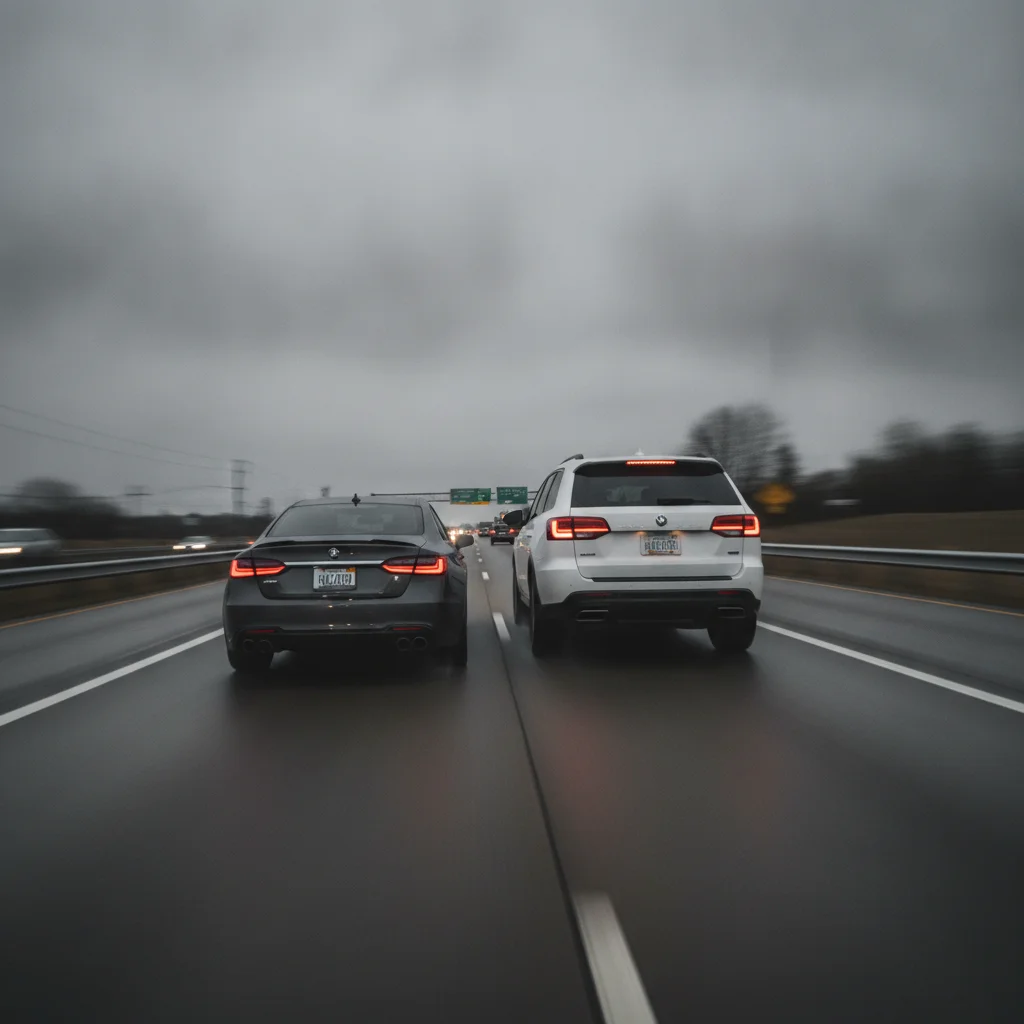
Most drivers consider themselves above average — a statistical impossibility that psychologists call the "illusory superiority" bias. When it comes to following distance, that overconfidence has real consequences. According to the National Highway Traffic Safety Administration (NHTSA), rear-end collisions account for approximately 32% of all reported crashes in the United States each year, and following too closely is among the top contributing behaviors cited by investigators.
Yet many drivers actively defend their tailgating habits. They believe they can brake in time. They believe the driver ahead is the real problem. They believe that closing the gap sends a useful social signal. These aren't fringe opinions — they're widespread, persistent, and demonstrably wrong.
This article works through the most common tailgating misconceptions one by one, grounded in crash biomechanics, traffic safety research, and the physical realities of stopping distance. If you've ever justified riding someone's bumper, at least one of these myths probably sounds familiar.

For a broader look at how overconfidence shapes dangerous decisions behind the wheel, see our coverage of driving behaviors that cause crashes even when drivers think they're being safe.
The Myths, Corrected
Below are seven of the most commonly held tailgating beliefs — and what the crash data and physics actually show.
Myth
I can always brake in time — I have fast reflexes.
Fact
Reaction time is only part of the stopping equation; braking distance itself at highway speeds can exceed 200 feet after the pedal is pressed.
This is the most common and most dangerous tailgating belief. Drivers conflate reaction time with total stopping distance, but those are two separate components. The average human reaction time — from perceiving a hazard to initiating a braking response — is approximately 1.5 seconds. At 65 mph, that means your vehicle travels roughly 143 feet before your foot even touches the brake pedal.
After braking begins, the vehicle still needs additional distance to decelerate to a stop. On dry pavement with good tires, a car traveling at 65 mph requires approximately 316 feet total to stop — more than the length of a football field. At 75 mph, that number climbs to roughly 414 feet. A tailgating driver following at one or two car lengths simply has no physical margin.
"Fast reflexes" can shave perhaps 0.2–0.3 seconds off that reaction window under ideal conditions. At 65 mph, that's about 19–29 fewer feet — not remotely sufficient to compensate for a dangerously short following gap.
Myth
Tailgating makes slow drivers speed up and clear the lane.
Fact
Research consistently shows that tailgating increases brake frequency in lead vehicles, raising the risk of accordion-effect collisions rather than prompting lane changes.
The social pressure theory of tailgating — that it's a legitimate communication tool that signals faster drivers to move over — is appealing but empirically unfounded for most real-world conditions. Studies of traffic flow dynamics show that when a following driver closes the gap aggressively, the lead driver most commonly reacts by braking more frequently, not by accelerating or moving over.
This creates what traffic engineers call a "phantom traffic wave" or accordion effect: the lead driver brakes, the tailgater brakes harder, the driver behind the tailgater brakes even harder, and a chain of unnecessary deceleration ripples backward through traffic. This pattern is a documented contributor to multi-vehicle rear-end pileups.
Additionally, many drivers who appear to be traveling slowly in the left lane are already at or near the speed limit, or are about to exit. Tailgating doesn't change their speed — it only reduces your available reaction margin.
Myth
If the car ahead brakes suddenly, it's their fault — not mine.
Fact
In the overwhelming majority of rear-end collisions, the following driver is found at fault, regardless of why the lead vehicle braked.
Traffic law in all 50 U.S. states places the duty on the following driver to maintain a safe distance. This is codified in statutes variously called "following too closely" or "assured clear distance ahead" laws. The legal reasoning is straightforward: the following driver has the responsibility to be able to stop safely given the road conditions ahead.
If the lead vehicle brakes suddenly — whether due to a pothole, a pedestrian, an animal, or anything else — and the following driver cannot stop in time, the collision is legally attributable to following distance, not to the lead driver's decision to brake. There are narrow exceptions, such as deliberate brake-checking, but these are difficult to prove and rarely alter the fundamental fault determination.
From an insurance standpoint, rear-end collisions carry one of the highest rates of at-fault determination for the following driver. The myths surrounding accident fault are numerous, but this one has particularly clear legal consistency across jurisdictions.
Myth
The 3-second rule is always enough following distance.
Fact
Three seconds is a minimum baseline for ideal conditions — wet roads, heavy vehicles, fatigue, and high speeds all require significantly more space.
The 3-second rule was developed as an accessible mnemonic for average drivers on dry roads at moderate speeds in average passenger vehicles with functioning brakes. It was never designed to be universally sufficient, and traffic safety researchers have long noted its limitations as a blanket rule.
On wet pavement, stopping distance increases by 40–50% due to reduced friction. On ice or packed snow, it can increase by 300–400%. Drivers of larger vehicles — SUVs, pickup trucks, vans — have higher centers of gravity and, in many cases, higher stopping distances than compact sedans of comparable weight. Fatigue impairs perception time, effectively extending the reaction component of the stopping equation.
At 75 mph, even 3 seconds of following distance equates to approximately 330 feet. That sounds like a lot until you calculate that total stopping distance at that speed is around 414 feet on dry pavement. The margins are tighter than most drivers appreciate, which is why defensive driving instructors routinely recommend 4–6 seconds in real-world conditions. The science behind following distance explains exactly where that baseline breaks down.
Myth
I'm a good enough driver that tailgating doesn't apply to me.
Fact
Skill level does not override physics; stopping distance is determined by speed, mass, and friction — not driver experience.
Driver self-assessment is notoriously unreliable. Studies published in traffic psychology literature consistently find that the majority of drivers rate themselves as above average — a statistical impossibility that reveals a systematic bias in how people judge their own abilities. Experienced drivers are not immune to this; in fact, high-mileage drivers often develop a false confidence born from years of near-miss survivorship.
No amount of skill changes the laws of physics governing your vehicle. A 4,000-pound car traveling at 65 mph has a specific kinetic energy value that must be dissipated through braking over a minimum distance. Reflexes help at the margin, but experienced drivers don't have brakes that work faster or tires with superior grip simply because they've logged more miles.
What experienced drivers can do — and should do — is apply that experience toward recognizing hazards earlier, maintaining larger buffers, and resisting the pressure to tailgate. That's the genuine safety dividend of driving experience: better hazard anticipation, not a shorter stopping distance.
Myth
Tailgating only matters at highway speeds — it's fine in city traffic.
Fact
Low-speed rear-end collisions cause significant injury, particularly to the cervical spine, and account for a large share of crash-related insurance claims.
The assumption that slow-speed tailgating is inconsequential doesn't hold up under injury research. Whiplash — a soft-tissue injury to the neck and upper spine — is one of the most commonly reported injuries from rear-end collisions, and it occurs most frequently at speeds below 15 mph. The physics of a low-speed impact concentrate energy into the occupant's head and neck, which snap forward and back faster than the torso can follow.
From an insurance claims perspective, low-speed rear-end collisions are among the most common and most disputed claim types. Medical costs from whiplash injuries can reach tens of thousands of dollars, even when vehicle damage appears cosmetic. Bodily injury liability claims from stop-and-go crashes are a significant driver of insurance premium calculations across the industry.
City traffic also introduces unique hazards that demand more following distance, not less: cyclists, pedestrians entering crosswalks, buses stopping unexpectedly, and vehicles double-parking. Tailgating in urban environments leaves no margin for any of these routine events.
Myth
Trucks and SUVs handle better and can stop faster than smaller cars.
Fact
Larger, heavier vehicles generally have longer stopping distances than lighter passenger cars — not shorter.
This myth is counterintuitive because larger vehicles often feel more stable and planted. But stopping distance is primarily a function of vehicle mass and the friction capacity of the tires. A heavier vehicle carries more kinetic energy at any given speed, requiring more force — and more distance — to bring to a full stop.
Modern large SUVs and trucks are equipped with advanced braking systems including ABS and electronic brake force distribution, which improve stability during braking. However, these systems do not overcome the fundamental physics of stopping a heavier vehicle. Independent testing by organizations like Consumer Reports and the Insurance Institute for Highway Safety routinely shows that full-size trucks and large SUVs have longer stopping distances than mid-size and compact passenger cars in equivalent conditions.
Drivers of trucks and SUVs who tailgate are therefore compounding their risk on two dimensions: they need more space to stop, and their vehicle delivers more crash energy to anything they hit. The combination is particularly dangerous in highway driving, where closing speeds between vehicles can be high.
If you've ever wondered whether the legal exposure from tailgating is as serious as the physical danger, the answer is yes. Tailgating carries real legal consequences in every state, including license points, fines, and insurance surcharges that can follow a driver for years.
What the Numbers Reveal About Following Distance
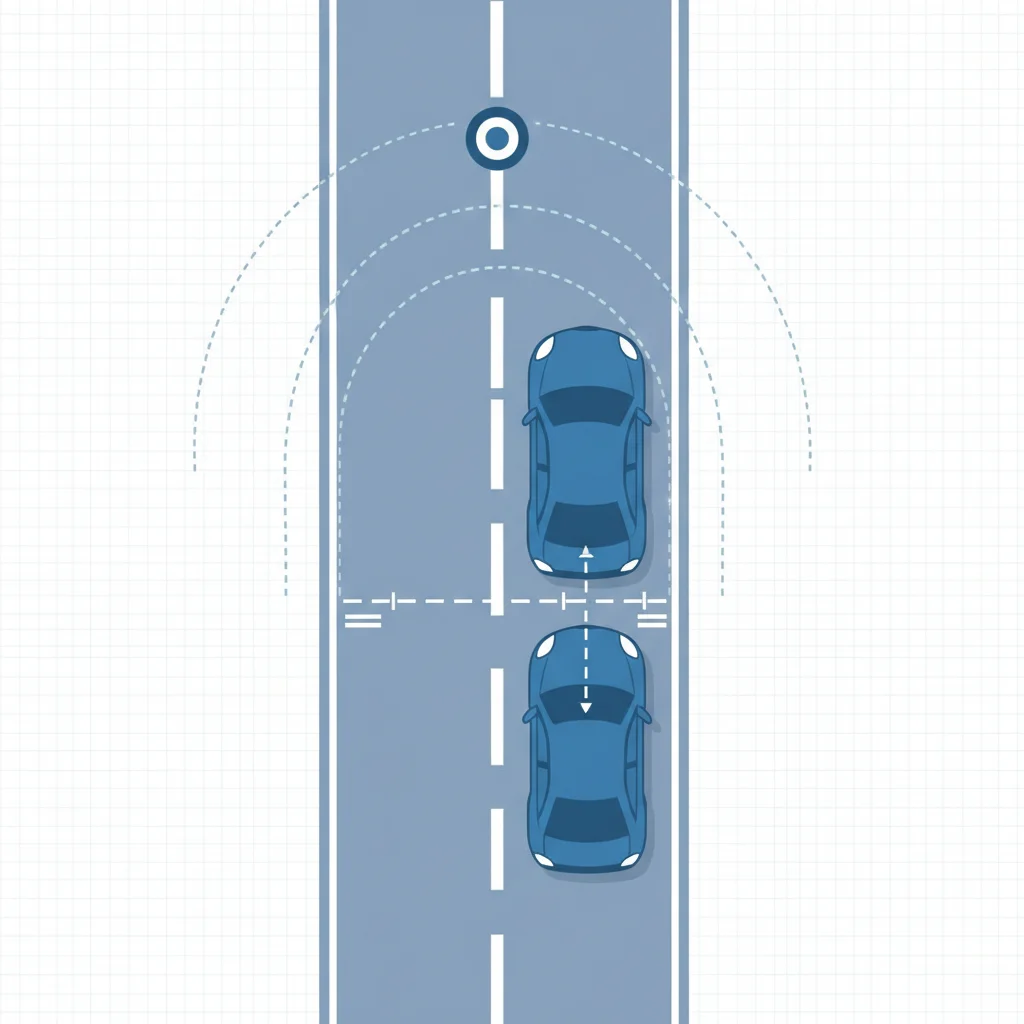
The familiar "3-second rule" — choosing a fixed object, waiting for the car ahead to pass it, then counting to three before you reach the same point — is a reasonable starting heuristic. But it was designed for ideal conditions: dry pavement, attentive drivers, daylight, and a passenger vehicle in good mechanical condition.
32%
Share of U.S. crashes that are rear-end collisions
According to NHTSA crash data, rear-end collisions consistently represent approximately one-third of all reported traffic crashes in the United States annually.
1.5 sec
Average human reaction time before braking begins
Traffic safety researchers use 1.5 seconds as the standard perception-reaction time for an alert, unimpaired driver under normal conditions.
316 ft
Total stopping distance at 65 mph on dry pavement
This figure combines a 1.5-second reaction distance of approximately 143 feet with an additional 173 feet of braking distance on dry asphalt with good tires.
40–50%
Increase in stopping distance on wet roads
The Federal Highway Administration notes that wet pavement dramatically reduces tire-road friction, extending stopping distances well beyond dry-road baselines.
525 ft
Stopping distance for a loaded semi-truck at 65 mph
The Federal Motor Carrier Safety Administration cites this figure for a fully loaded commercial truck under normal conditions — nearly two football fields.
Strip away any one of those ideal conditions and the math changes significantly. On wet roads, stopping distance can increase by 40–50%. In fog or heavy rain, where perception distance drops, a three-second gap may not allow the driver to even identify that a hazard exists before entering it. Research into stopping distance data shows why 3 seconds isn't always enough — especially at higher speeds and in adverse conditions.
Physics Doesn't Care How Confident You Feel
At 65 mph, your vehicle covers approximately 95 feet per second. A one-second lapse in attention — a glance at a phone, a sneeze, a moment of distraction — moves you 95 feet closer to the vehicle ahead before your brain has even registered the need to brake. No level of driving experience shortens that distance. Maintaining at least a 3-second gap, and more in adverse conditions, is the only reliable buffer against that reality.
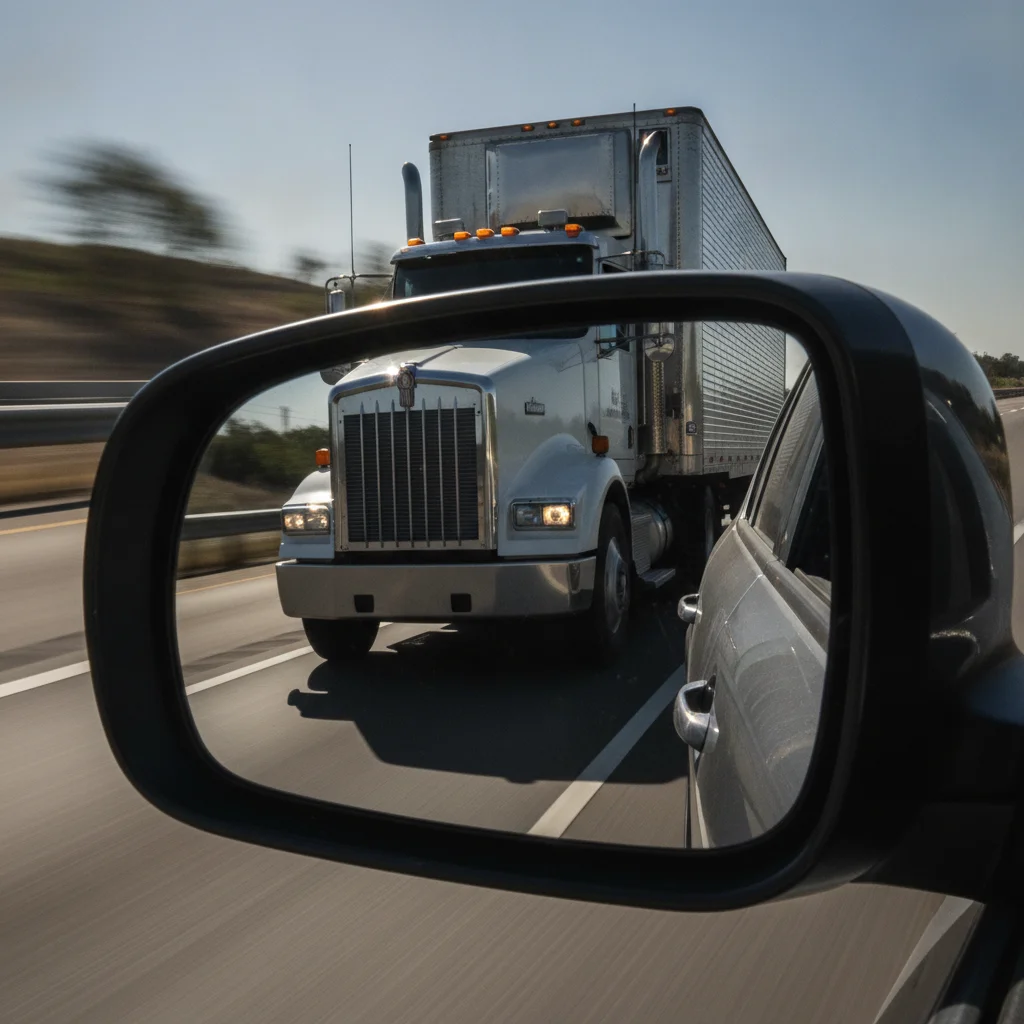
Heavy trucks compound the problem further. A loaded semi-truck traveling at 65 mph requires roughly 525 feet — nearly two full football fields — to come to a complete stop. Drivers of passenger cars who tailgate trucks are effectively trusting their survival to the truck driver's awareness and the car's ability to stop faster. That's a dangerous assumption.
The Legal and Insurance Fallout Most Drivers Don't Anticipate
Beyond the crash risk, tailgating carries financial and legal consequences that many drivers genuinely don't connect to the behavior until after an incident. In all 50 states, following too closely is a codified moving violation. Officers are trained to observe inter-vehicle spacing, and while exact enforcement thresholds vary, a demonstrably short gap — particularly if it results in a collision — is typically chargeable regardless of whether the lead driver contributed to the crash.
Tailgating Tickets Can Trigger Insurance Surcharges
A following-too-closely citation is a moving violation in every U.S. state. Depending on your insurer and state, a single chargeable moving violation can increase your premium by 15–30% at renewal. If the citation accompanies a rear-end collision in which you are found at fault, the rate impact can be significantly higher — and may persist for three to five years on your driving record.
Don't Confuse Familiarity With Safety
Drivers who regularly tailgate without incident often interpret that track record as proof that the behavior is safe. In reality, they are accumulating risk while benefiting from luck and the corrective actions of lead drivers who braked early enough. Crash research shows that most rear-end collisions involve drivers who had successfully tailgated in similar conditions many times before the collision that ended that streak.
From an insurance standpoint, a rear-end collision in which you are the following driver is statistically likely to result in a determination of fault against you. A fault determination, particularly a chargeable one tied to a moving violation, can trigger a rate increase at renewal. For drivers already in high-risk brackets, it can complicate policy renewal altogether.
These downstream consequences are explored in depth alongside common misconceptions about how fault actually gets assigned after a crash. The parallels to other misunderstood driving situations are striking — our breakdown of accident myths drivers still believe covers several scenarios where assumed fault doesn't match legal reality.
It's also worth connecting tailgating habits to your broader insurance picture. Many drivers are surprised to learn how dramatically driving behavior factors into premiums — a subject that intersects with other widely believed coverage myths covered in our guide to auto insurance myths that can cost you during a claim.
Building a Safer Following Distance Habit
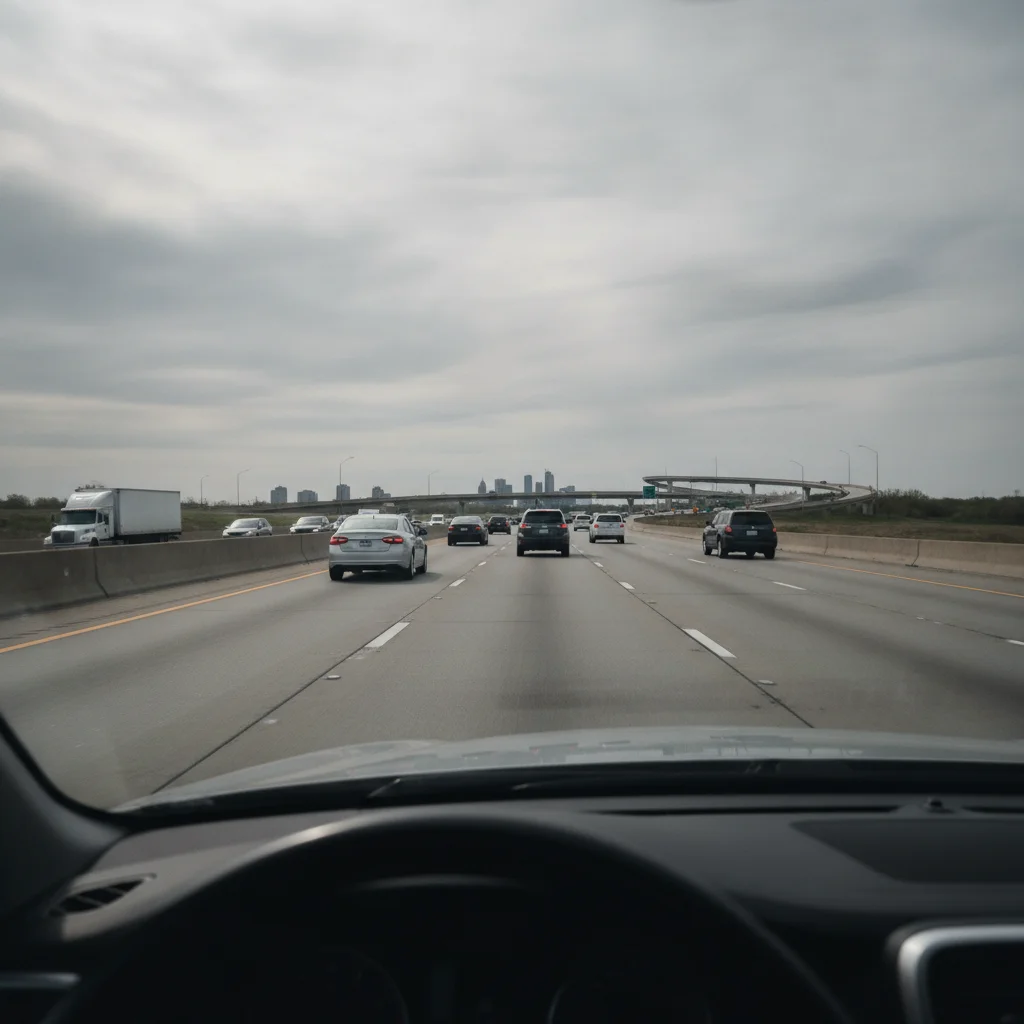
Changing a deeply embedded driving habit requires more than knowing the facts — it requires a practical, repeatable method. The 3-second rule remains the most accessible starting point for most highway driving, but safety researchers and defensive driving instructors generally recommend extending it under specific conditions:
- Wet or icy roads: Double your gap to at least 6 seconds.
- Following a heavy truck or bus: Add 2–3 additional seconds due to their longer stopping distance and your reduced sight lines.
- Nighttime driving: Increase to 4 seconds minimum, since your perception distance is reduced.
- High-traffic or stop-and-go conditions: Use the "one car length per 10 mph" rule as an alternative check.
- If you feel fatigued or distracted: Pull over, not closer.
One underappreciated benefit of maintaining proper following distance is improved fuel economy. A driver who rides close must accelerate and brake more frequently to match the lead vehicle's sudden movements. That cycle burns more fuel and accelerates brake wear. Maintaining space allows for smoother, more anticipatory driving — which research consistently links to lower operating costs over time.
The habit shift is simpler than most drivers expect: pick a road marker, count to three after the car ahead passes it, and adjust until you're consistently clearing that threshold. Over time, the gap starts to feel natural rather than excessive.
The Bottom Line on Tailgating
Tailgating myths persist because they feel intuitive. Of course you can brake in time — you've done it before. Of course you would have noticed a hazard — you're paying attention. Of course the slow driver is the problem — they're clearly holding up traffic. Each of these beliefs has a kernel of familiar logic wrapped around a factually wrong core.
The research doesn't leave much room for ambiguity. Following distance is one of the most directly controllable variables in crash risk. It costs nothing to increase it. It requires no new equipment, no advanced training, and no significant change to travel time. And it can be the single factor that separates a close call from a life-altering collision.
For drivers who want a complete picture of how everyday decisions translate into crash risk — and how to avoid the judgment errors that most drivers make without realizing it — the evidence base is clear and accessible. Beliefs that feel like common sense often aren't. Tailgating is one of the clearest examples of the gap between what drivers assume and what physics and data actually show.

All claims are backed by peer-reviewed research. Sources on request.