| Dry-weather following distance | 3 seconds (minimum) (NHTSA driver safety guidelines) |
| Wet-weather following distance | 6 seconds (minimum) (Federal Highway Administration recommendations) |
| Ice stopping distance increase | Up to 10× longer than dry pavement (AAA Foundation for Traffic Safety research) |
| Rear-end crash share of all U.S. crashes | ~29% (NHTSA crash statistics) |
| Winter tire stopping improvement | ~35% shorter on packed snow vs. all-seasons (Tire Rack independent testing) |
| Fog driving rule | Never exceed a speed where you can stop within visible distance (Federal Motor Carrier Safety Administration guidance) |
| Black ice formation | Commonly on bridges, overpasses, and shaded road sections |
| First rain hazard | Oil-water mix makes early rain especially slippery (FHWA road surface research) |
Why Your Dry-Weather Gap Isn't Enough
The three-second rule is the standard most American drivers learned — pick a fixed object, watch the car ahead pass it, count to three. If you reach the object before three seconds are up, you're following too closely. In dry conditions at highway speeds, this translates to roughly 200–300 feet of buffer, which is enough for most modern vehicles to brake safely.
But that buffer was engineered for ideal physics. It assumes dry asphalt, normal tire contact, standard brake response, and clear sightlines. Remove any one of those variables and the math changes quickly. Remove several at once — as happens in a heavy rain or a dense fog bank — and a three-second gap can become genuinely dangerous.
Road safety research consistently shows that following too closely is one of the top contributing factors in rear-end collisions, which account for roughly 29% of all crashes in the U.S. according to the National Highway Traffic Safety Administration (NHTSA). What makes weather-related rear-end crashes particularly preventable is that drivers usually know conditions are poor — they simply underestimate how much adjustment is required.
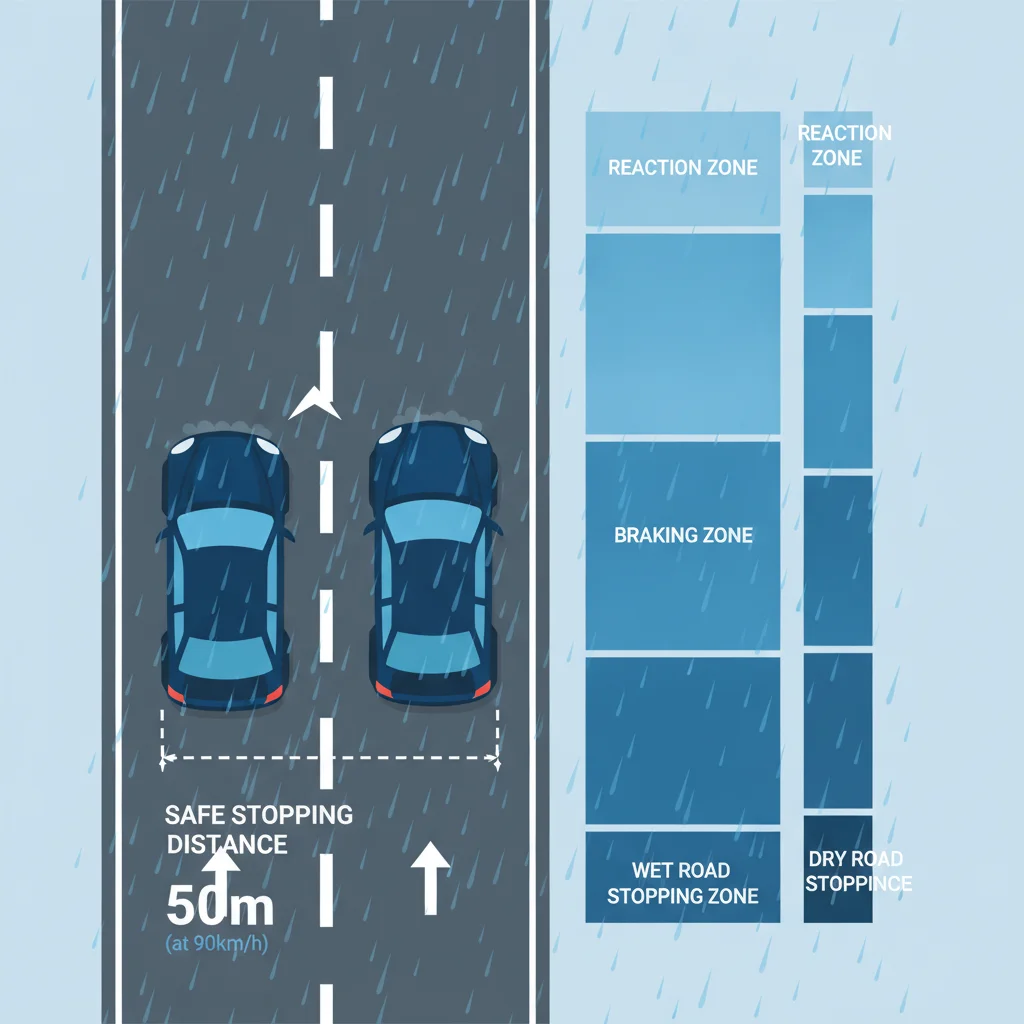
The core problem is stopping distance. It has two components: reaction distance (how far your car travels from the moment you perceive a hazard to the moment your foot hits the brake) and braking distance (how far the car travels while the brakes are actually working). Weather affects both. Reduced visibility slows perception. Reduced traction extends braking. The combination means you need significantly more space than you think.
For more on how road surface conditions change vehicle behavior, see our breakdown of rain, ice, black ice, and slush — a practical companion to this reference.
| Dry-weather following distance | 3 seconds (minimum) (NHTSA driver safety guidelines) |
| Wet-weather following distance | 6 seconds (minimum) (Federal Highway Administration recommendations) |
| Ice stopping distance increase | Up to 10× longer than dry pavement (AAA Foundation for Traffic Safety research) |
| Rear-end crash share of all U.S. crashes | ~29% (NHTSA crash statistics) |
| Winter tire stopping improvement | ~35% shorter on packed snow vs. all-seasons (Tire Rack independent testing) |
| Fog driving rule | Never exceed a speed where you can stop within visible distance (Federal Motor Carrier Safety Administration guidance) |
| Black ice formation | Commonly on bridges, overpasses, and shaded road sections |
| First rain hazard | Oil-water mix makes early rain especially slippery (FHWA road surface research) |
Rain: Doubling Your Distance Is the Baseline
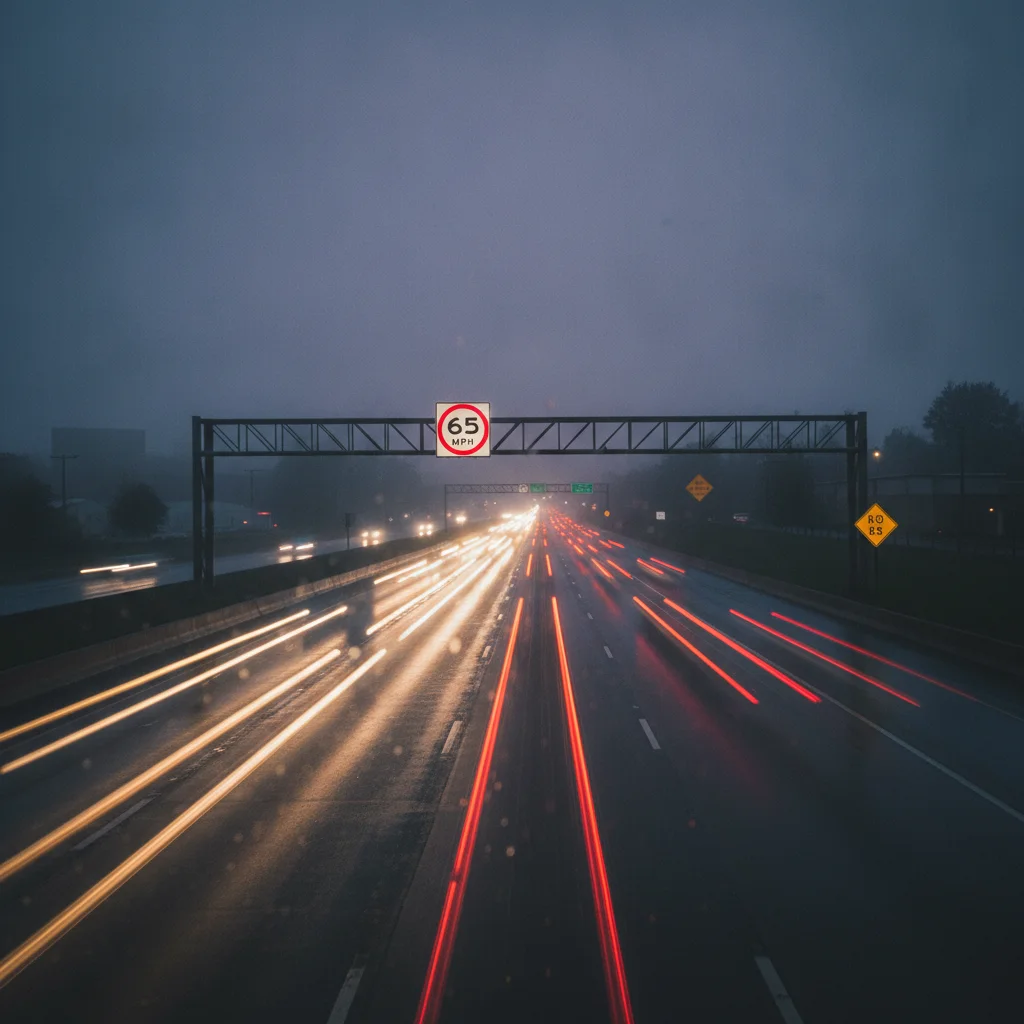
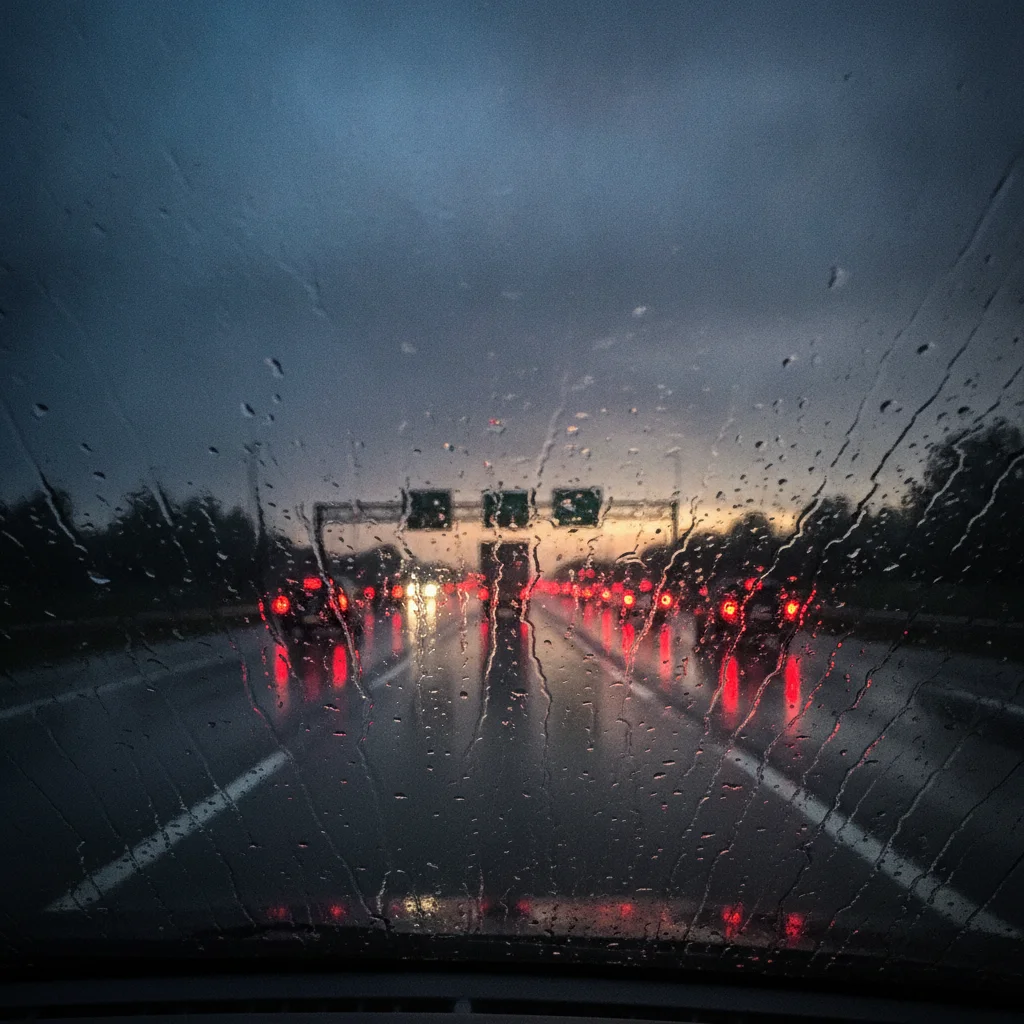
Rain reduces traction through a process called hydroplaning — where a thin film of water builds between tires and pavement, cutting contact and steering control — but even before hydroplaning begins, wet roads are meaningfully more slippery than dry ones. On wet asphalt, stopping distances for a vehicle traveling 60 mph increase by roughly 50–70% compared to dry pavement, depending on tire condition and road drainage.
50–70%
Increase in stopping distance on wet pavement at 60 mph
According to road surface friction research compiled by the Federal Highway Administration.
8–10×
Stopping distance increase on ice vs. dry pavement
Documented in AAA Foundation for Traffic Safety winter driving research.
29%
Share of all U.S. crashes that are rear-end collisions
According to NHTSA crash data, making following distance one of the highest-impact safety variables.
35%
Shorter stopping distance with winter tires on packed snow
Based on controlled testing by Tire Rack comparing winter tires to all-season tires.
160 ft
Approximate low-beam headlight illumination range
A key factor when combining fog or snow conditions with nighttime driving — overdriving this distance is a leading crash cause.
The standard guidance from traffic safety organizations, including the Federal Highway Administration (FHWA), is to at least double the following distance in rain. That means a minimum of six seconds in moderate rain. In heavy downpours — where visibility drops to under 200 feet — eight to ten seconds is more appropriate, and reducing speed significantly is equally important.
A few practical calibrations for rain:
- Light rain on dry roads: Increase to four seconds. The first rain after a dry spell often creates the slipperiest conditions because water mixes with accumulated oil deposits on the road surface.
- Steady moderate rain: Six seconds minimum. Use your low-beam headlights — not just daytime running lights — as required by law in most states.
- Heavy rain with spray from trucks or low visibility: Eight-plus seconds and consider exiting to wait it out. Passing trucks can create near-zero-visibility spray walls for several seconds.
Tire tread depth matters enormously here. A tire with 2/32" of tread — the legal minimum — takes substantially longer to stop on wet pavement than one with 6/32" or more. If your tires are worn, your wet-weather following distance needs to increase further.
Posted speed limits reflect ideal conditions — in rain, the safe speed may be 15–20 mph below posted, which also means your following-distance calculation needs to start from a lower speed baseline.
First Rain After a Dry Spell Is Especially Risky
Roads accumulate oil, rubber residue, and other substances during dry periods. When rain first begins, water mixes with this buildup to create a slick film that can be more treacherous than roads after sustained rainfall has washed the surface clean. Increase following distance and slow down earlier than you might expect to during the opening minutes of a rainstorm, particularly in summer after a prolonged dry stretch.
AWD Does Not Improve Braking on Ice
All-wheel drive and four-wheel drive systems distribute engine torque to improve grip during acceleration, but they have no effect on braking force, which depends entirely on tire-to-pavement friction. Many AWD drivers overestimate their stopping capability on ice and snow and follow too closely as a result. Tire type — specifically winter tires — is the single most effective factor in improving snow and ice braking performance.
Most State Laws Use Subjective Language
The majority of U.S. states define required following distance using terms like "reasonable and prudent" or "adequate space to stop safely" rather than specifying a number of seconds or feet. This means legal liability in a rear-end collision is typically assessed against what a reasonable driver should have known about conditions, making it difficult to use the posted speed limit or minimum distance rules as a defense if conditions were clearly adverse.
Fog: Visibility Defines Your Gap
Fog introduces a fundamentally different problem than rain: your stopping distance may exceed how far you can actually see. That's sometimes called overdriving your visibility, and it's one of the most dangerous driving errors possible. If you can see 150 feet ahead and your stopping distance at your current speed is 200 feet, there is no survivable gap — the physics simply don't allow enough room to stop for an obstacle that appears at the edge of visibility.
In fog, following distance should be governed by a simple rule: you must be able to stop within the distance you can see. This typically requires slowing to 25–40 mph in dense fog rather than simply adding seconds at highway speed, because no following distance is sufficient if you can't see the car ahead until you're already too close to stop.
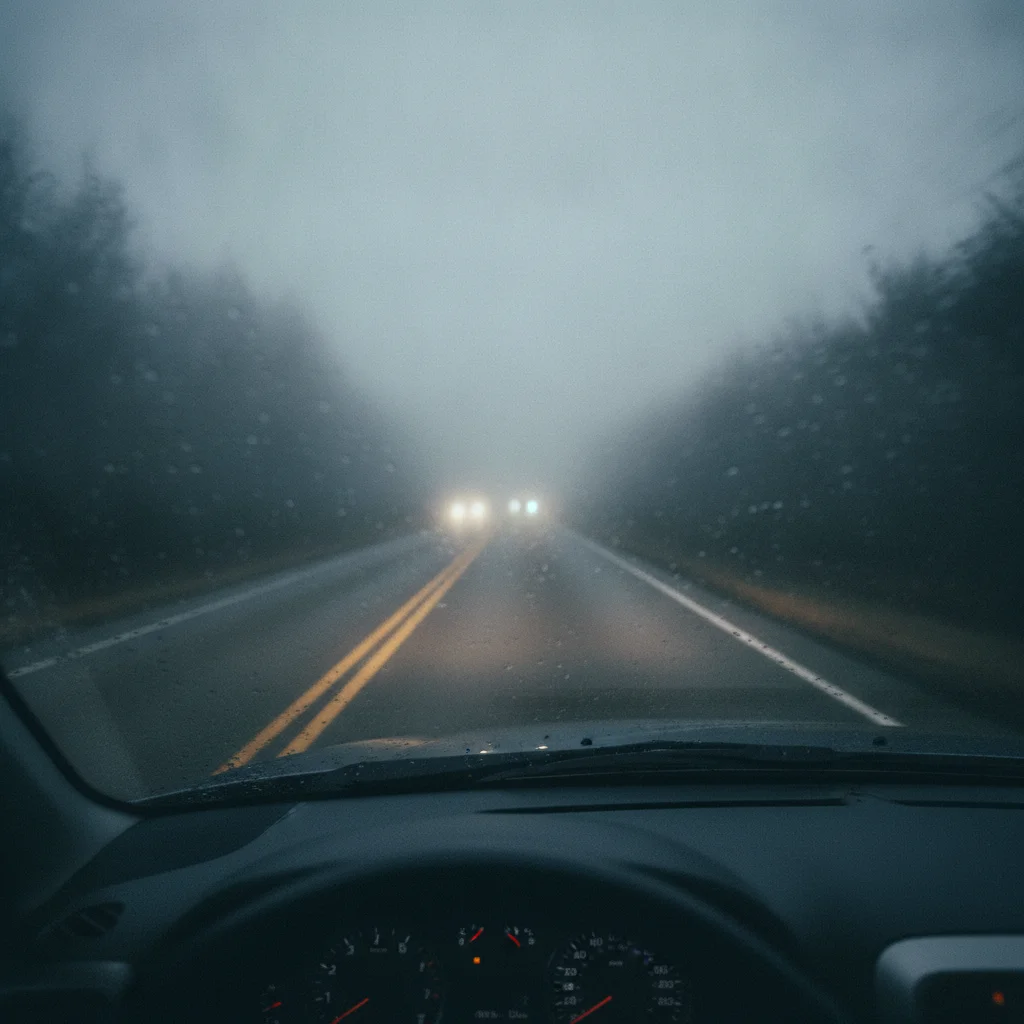
Fog also creates a dangerous perceptual distortion. Because the fog itself is moving and white, it can make stationary objects — a stopped car, a slow-moving truck, road debris — appear to be further away or even in motion. Drivers tend to unconsciously accelerate when they lose visual reference points, a phenomenon documented in accident reconstruction research. The solution is disciplined speed management, not just distance adjustment.
Key fog-driving guidance:
- Use low beams, not high beams. High beams scatter in fog and reduce visibility further by creating glare off suspended water droplets.
- Use fog lights if equipped — they project a wide, low beam that illuminates the road surface below the fog layer.
- Listen as well as look. In dense fog, sound cues — slowing engines, horns, or the absence of road noise from ahead — can provide warning time that visibility doesn't.
- If you must pull over, get completely off the road and turn off your lights to avoid attracting other disoriented drivers toward you.
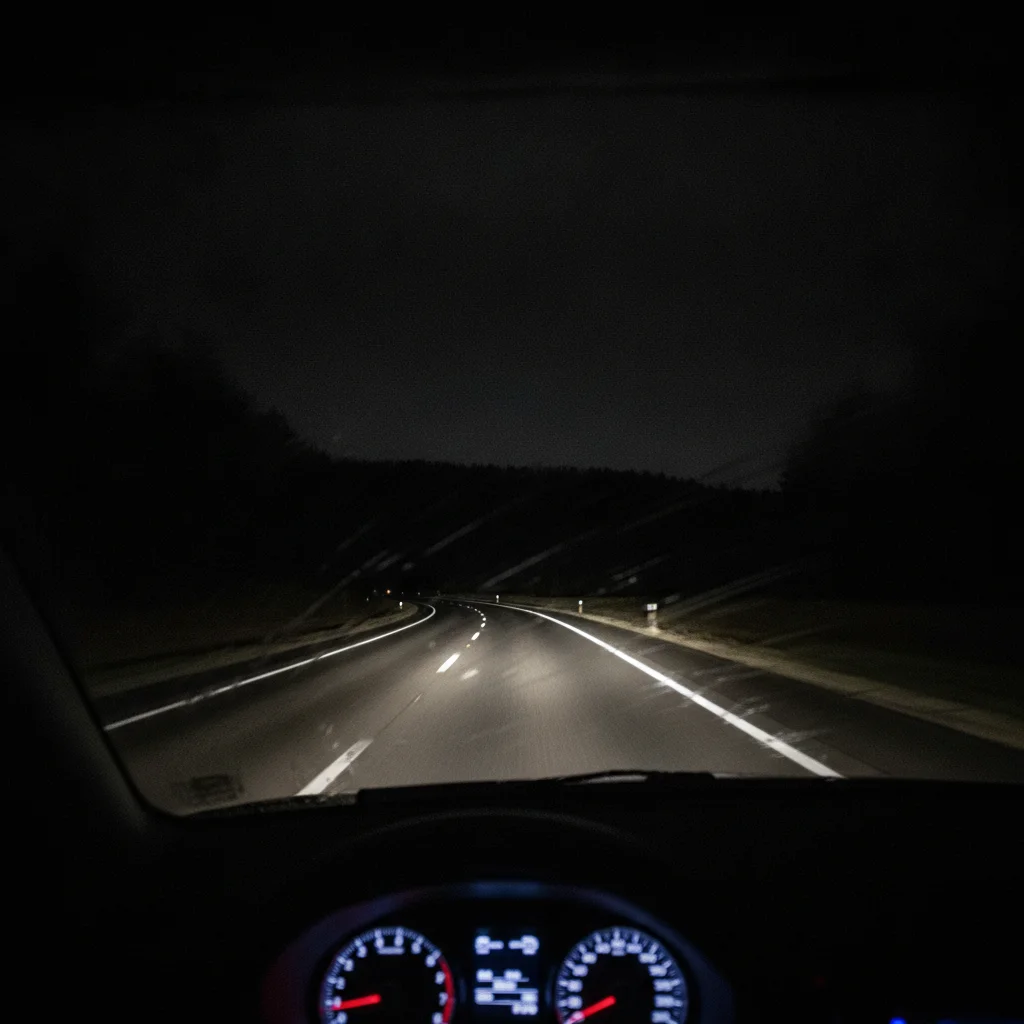
The same overdriving principle applies to nighttime driving — your headlights' effective range sets the outer limit of safe speed, regardless of the posted limit.
Hydroplaning
A condition where a layer of water builds between tires and road surface, causing the vehicle to lose contact with the pavement and reducing steering and braking effectiveness. Typically occurs at speeds above 35 mph on wet roads, and is worsened by worn tire tread.
Stopping distance
The total distance a vehicle travels from the moment a hazard is perceived to when the vehicle comes to a complete stop. It includes both reaction distance and braking distance, both of which increase significantly in adverse weather.
Black ice
A thin, nearly transparent layer of ice on a road surface that is difficult to see because it takes on the color of the pavement beneath it. It forms when moisture freezes rapidly on cold surfaces, most commonly on bridges and shaded sections of road.
Overdriving visibility
Driving at a speed where your stopping distance exceeds how far ahead you can see, making it physically impossible to avoid an obstacle that appears at the edge of visibility. Particularly dangerous in fog and nighttime conditions.
Following distance
The gap maintained between your vehicle and the vehicle directly ahead, typically measured in seconds using a fixed-point reference. The appropriate gap varies significantly based on speed, road conditions, and visibility.
Reaction distance
The distance traveled by a vehicle between the moment a driver perceives a hazard and the moment the brakes are applied. At 60 mph, a 1.5-second reaction time equates to approximately 132 feet of travel before braking begins.
Braking distance
The distance a vehicle travels from the moment the brakes are fully applied to a complete stop. On ice, braking distance can be eight to ten times longer than on dry pavement at the same initial speed.
Winter tires
Tires specifically engineered for cold-weather performance, using a softer rubber compound that remains pliable below 45°F and tread patterns designed to channel snow and bite into icy surfaces. Distinct from all-season tires in both materials and design.
Snow and Ice: The Rules Change Completely
On packed snow, stopping distances roughly double compared to dry pavement. On ice — particularly the near-invisible black ice that forms on bridges, overpasses, and shaded road sections — stopping distances can increase by eight to ten times. A vehicle traveling 30 mph on black ice may need over 400 feet to stop, a distance that equates to more than ten seconds of following gap at that speed.
The standard recommendation for snow is a minimum of eight to ten seconds of following distance. On icy roads, experienced winter drivers and safety researchers typically advise ten to twelve seconds or more, and many advocate for the simpler rule: leave as much space as traffic allows and drive at a speed where stopping in the visible distance ahead is always possible.
Several factors make snow and ice calculation more complex than rain:
- All-wheel drive is not all-wheel stop. AWD and 4WD improve acceleration traction on snow, but braking performance depends almost entirely on tire type and road surface. An AWD vehicle on all-season tires will not stop faster than a front-wheel-drive vehicle on dedicated winter tires.
- ABS behaves differently on ice. Anti-lock brake systems are designed to prevent wheel lockup, but on ice, a momentary wheel lock can actually reduce stopping distance on some surfaces. ABS will still function, but drivers should not expect the same performance as on dry pavement.
- Conditions change without warning. A road can be merely wet, then icy within a quarter mile — particularly on bridge decks which freeze well before the surrounding road surface.
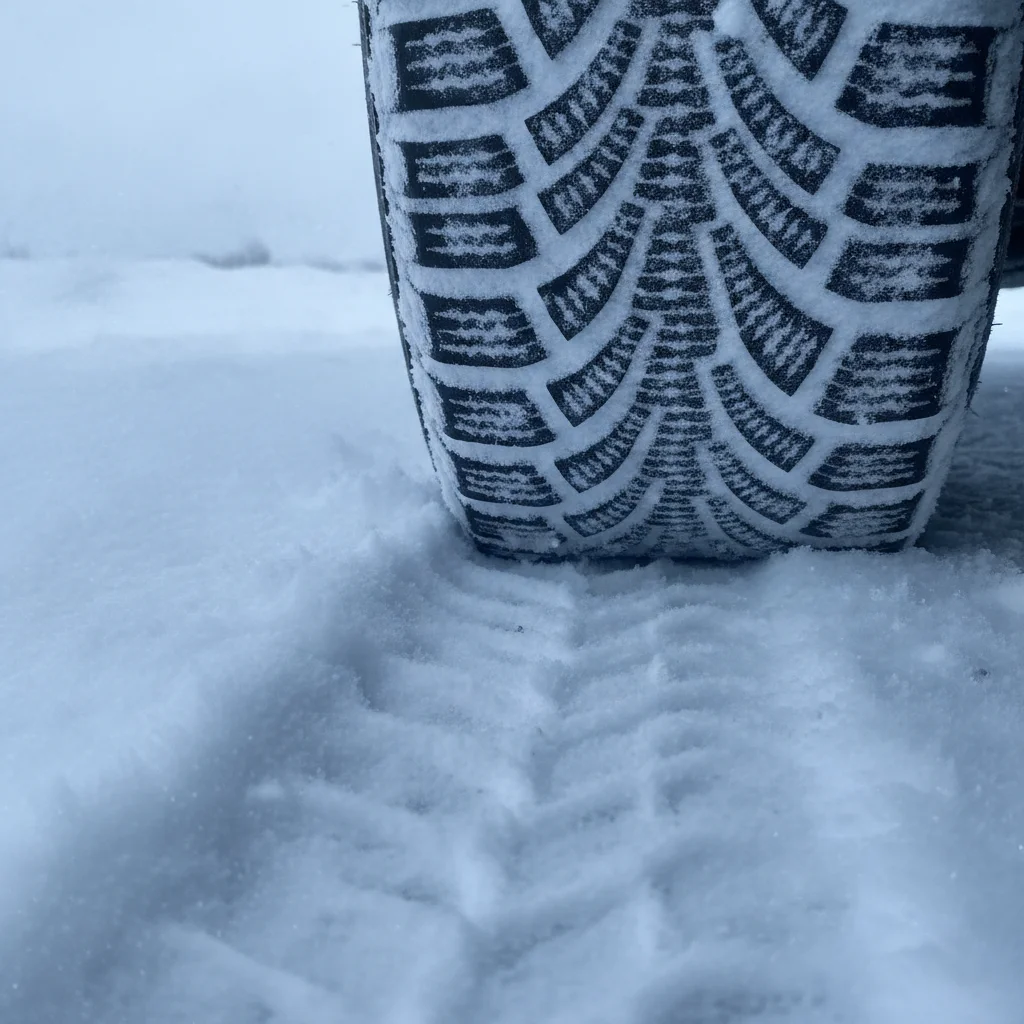
Winter tires (sometimes called snow tires) are worth noting here: they use a softer rubber compound and specific tread patterns that maintain grip below 45°F. On packed snow, vehicles equipped with winter tires stop in roughly 35% less distance than those on all-season tires, according to testing by the Tire Rack and similar independent organizations. If you drive regularly in snowy climates, the tire choice has more impact on your real-world stopping distance than almost any other variable.
For a complete picture of how vehicle dynamics shift on winter surfaces, our surface-by-surface guide covers the differences between slush, ice, and packed snow in detail.
Combined Conditions and Compounding Risk
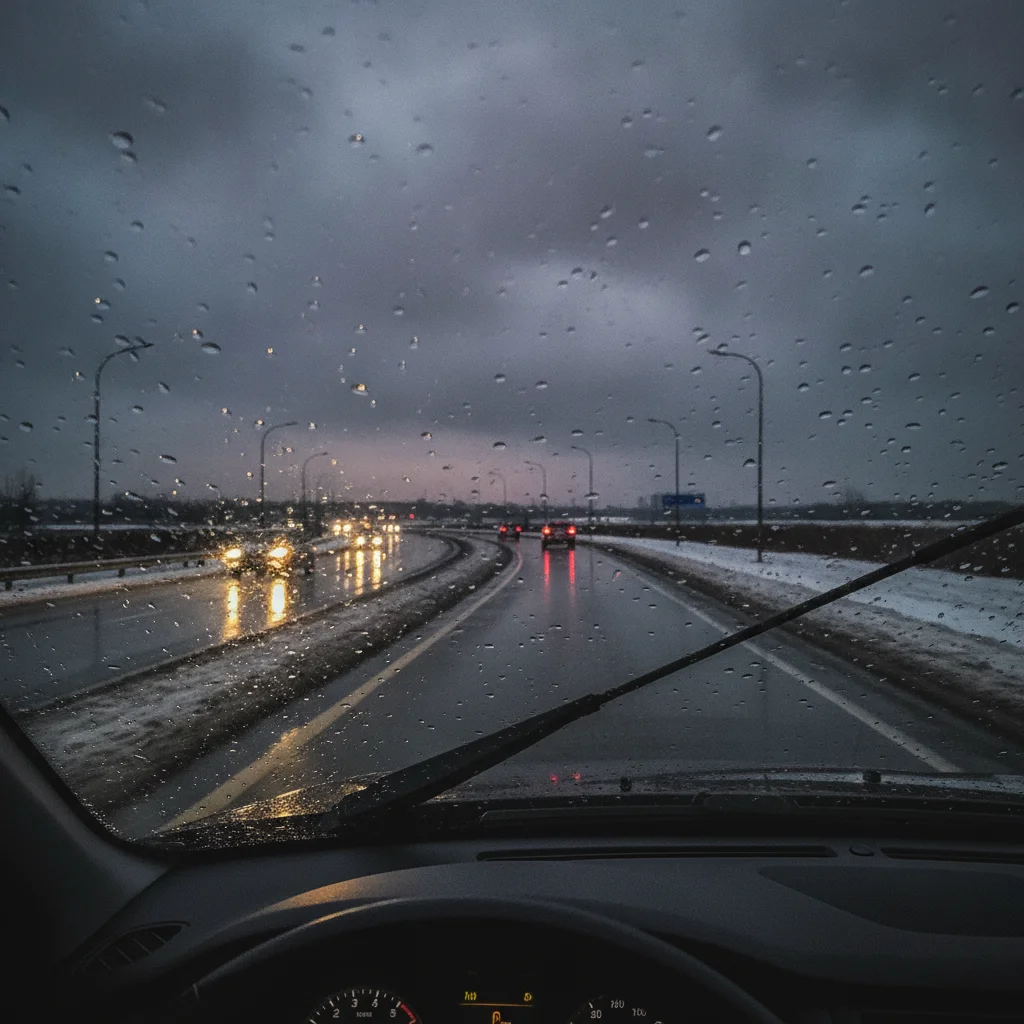
Weather rarely arrives in isolation. Fog and wet roads often appear together. Snow can transition to slush and then refreeze as ice. Rain at night combines reduced visibility with compromised traction and the added hazard of glare from oncoming headlights and wet pavement reflections.
When multiple conditions stack, following distance should reflect the most restrictive single condition present, not an average. If it's raining and foggy, apply fog rules — which typically call for the longest gap. If it's snowing at night, apply snow rules and also slow to a speed where your headlights illuminate a meaningful portion of your stopping distance.
The concept of situational awareness buffer also becomes more important in combined conditions. In normal driving, your three-to-four second gap gives you time to perceive a hazard, decide to brake, and execute. In combined adverse conditions, each of those steps takes longer: wet wipers can momentarily obscure vision, drivers are more cognitively loaded tracking multiple hazards, and brake application is less effective. A reasonable heuristic used by professional drivers is to add two seconds for each significant hazard present beyond one.
First Rain After a Dry Spell Is Especially Risky
Roads accumulate oil, rubber residue, and other substances during dry periods. When rain first begins, water mixes with this buildup to create a slick film that can be more treacherous than roads after sustained rainfall has washed the surface clean. Increase following distance and slow down earlier than you might expect to during the opening minutes of a rainstorm, particularly in summer after a prolonged dry stretch.
AWD Does Not Improve Braking on Ice
All-wheel drive and four-wheel drive systems distribute engine torque to improve grip during acceleration, but they have no effect on braking force, which depends entirely on tire-to-pavement friction. Many AWD drivers overestimate their stopping capability on ice and snow and follow too closely as a result. Tire type — specifically winter tires — is the single most effective factor in improving snow and ice braking performance.
Most State Laws Use Subjective Language
The majority of U.S. states define required following distance using terms like "reasonable and prudent" or "adequate space to stop safely" rather than specifying a number of seconds or feet. This means legal liability in a rear-end collision is typically assessed against what a reasonable driver should have known about conditions, making it difficult to use the posted speed limit or minimum distance rules as a defense if conditions were clearly adverse.
It's also worth revisiting the blind spot considerations that apply to all conditions — in rain, fog, or snow, the mirrors may be obscured, making lane changes and merges more dangerous just as the need to adjust speed and position increases.
Finally, consider how vehicle familiarity factors in. If you're behind the wheel of a rental car, a friend's unfamiliar truck, or a newly purchased vehicle, you don't yet have the instinctive feel for that car's braking behavior. Testing a vehicle in varied conditions is one way to build that knowledge — but in an unfamiliar vehicle in adverse weather, add extra buffer until you understand how the car responds.
NHTSA Crash Stats & Driving Safety Research
The National Highway Traffic Safety Administration publishes annual crash data and driver safety guidance, including specific research on following distance and rear-end collisions. A primary source for understanding how driving behavior links to crash risk.
Tire Rack Winter Tire Testing
Tire Rack conducts independent controlled testing comparing winter tires, all-season tires, and all-weather tires on snow and ice. Their published stopping distance results are a practical resource for understanding how tire choice affects your real-world safety margins.
AAA Foundation Winter Driving Research
The AAA Foundation for Traffic Safety produces research-backed guidance on winter driving hazards including black ice, reduced traction, and appropriate speed reduction. Useful for validating following-distance adjustments with documented stopping-distance data.
Federal Highway Administration Road Weather Management
FHWA's Road Weather Management program provides data on how precipitation and road surface conditions affect vehicle safety systems and crash rates. Their research underpins many of the wet-weather stopping distance figures cited by traffic safety organizations.
A Quick-Reference Summary by Condition
The table below consolidates the following-distance guidance from the sections above. All recommendations assume reasonable speed for conditions — if you're driving at or near the speed limit in severe weather, these distances alone may still be insufficient.
| Condition | Minimum Following Distance | Additional Action |
|---|---|---|
| Dry pavement | 3 seconds | Baseline; adjust for speed and vehicle size |
| Light rain / first rain after dry period | 4–5 seconds | Use headlights; reduce speed 5–10 mph |
| Moderate steady rain | 6 seconds | Use low beams; check wipers and tires |
| Heavy rain / low visibility | 8–10 seconds | Consider stopping; avoid trucks' spray zones |
| Fog (moderate) | 6–8 seconds at reduced speed | Low beams only; do not overdrive visibility |
| Dense fog | Stop within visible distance | Slow to 25–35 mph; pull over safely if needed |
| Packed snow | 8–10 seconds | Winter tires recommended; avoid sudden inputs |
| Ice / black ice | 10–12 seconds minimum | Reduce speed dramatically; expect limited ABS effectiveness |
| Multiple conditions stacked | Apply most restrictive rule | Add 2 seconds per additional significant hazard |
These figures are guidelines, not legal guarantees. State laws vary on required following distance language, and most use subjective terms like "reasonable and prudent." The responsibility to judge conditions accurately rests with the driver.
First Rain After a Dry Spell Is Especially Risky
Roads accumulate oil, rubber residue, and other substances during dry periods. When rain first begins, water mixes with this buildup to create a slick film that can be more treacherous than roads after sustained rainfall has washed the surface clean. Increase following distance and slow down earlier than you might expect to during the opening minutes of a rainstorm, particularly in summer after a prolonged dry stretch.
AWD Does Not Improve Braking on Ice
All-wheel drive and four-wheel drive systems distribute engine torque to improve grip during acceleration, but they have no effect on braking force, which depends entirely on tire-to-pavement friction. Many AWD drivers overestimate their stopping capability on ice and snow and follow too closely as a result. Tire type — specifically winter tires — is the single most effective factor in improving snow and ice braking performance.
Most State Laws Use Subjective Language
The majority of U.S. states define required following distance using terms like "reasonable and prudent" or "adequate space to stop safely" rather than specifying a number of seconds or feet. This means legal liability in a rear-end collision is typically assessed against what a reasonable driver should have known about conditions, making it difficult to use the posted speed limit or minimum distance rules as a defense if conditions were clearly adverse.

All claims are backed by peer-reviewed research. Sources on request.