Key Takeaways
Why Highway Merging Fails More Often Than You'd Think
For a maneuver most drivers perform without a second thought, highway merging carries a disproportionate share of freeway crash risk. According to the Federal Highway Administration, weaving and merging zones are among the highest-crash-frequency locations on the U.S. highway network. And while those crashes rarely make the headlines the way high-speed collisions do, they cause billions of dollars in damages annually — and a significant number of serious injuries.
The mechanics of why merging goes wrong are well understood. Two streams of traffic moving at different speeds must occupy the same lane within a compressed window of time and space. When drivers miscalculate speed, misjudge gaps, or simply freeze under pressure, the physics punish them quickly. A vehicle entering the highway at 40 mph into traffic moving at 70 mph creates a 30-mph differential — roughly equivalent to a rear-end collision in a parking lot, except at highway scale.
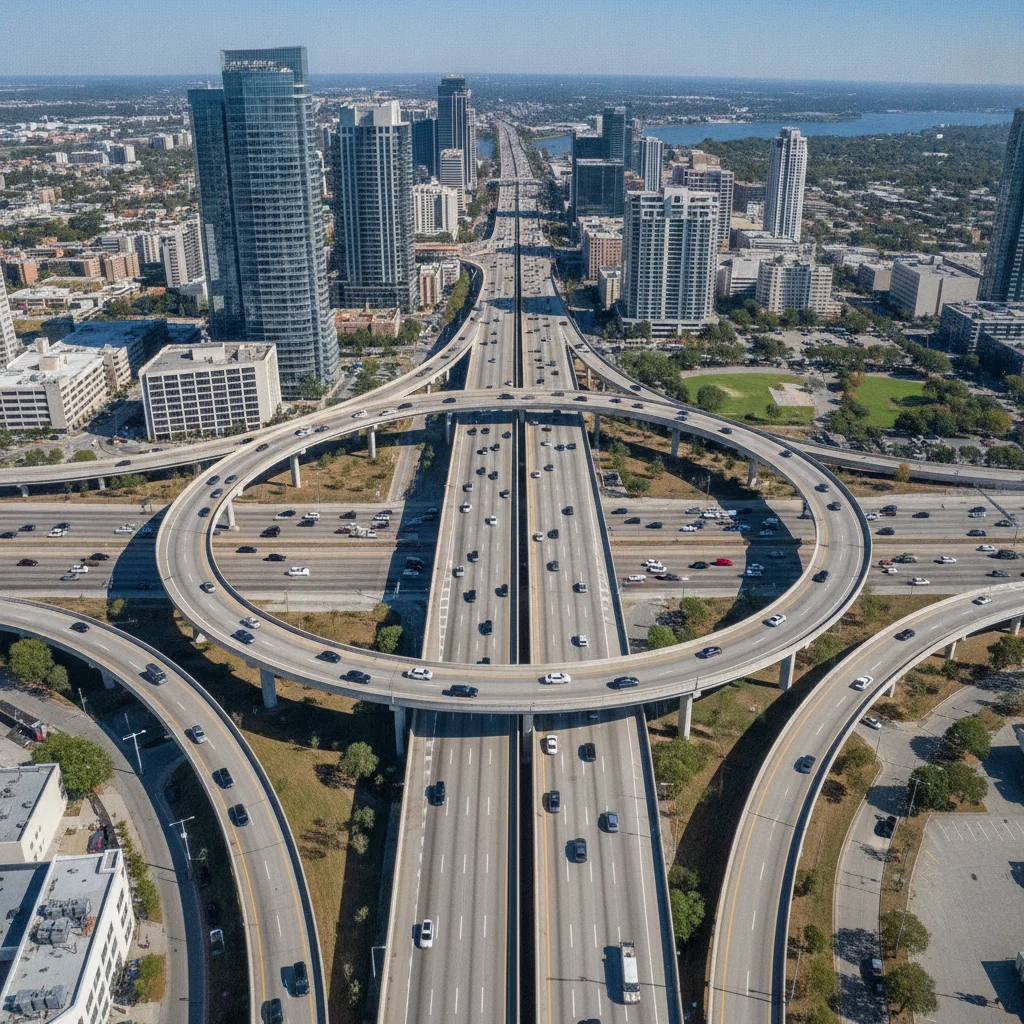
What's less discussed is the psychological side. Research on driver behavior — including studies highlighted by the National Highway Traffic Safety Administration — consistently shows that merging triggers anxiety responses in a large segment of drivers, particularly those who are less experienced or who learned to drive in low-traffic environments. That anxiety often translates into hesitation, which is precisely the wrong response when you're 200 feet from the end of an on-ramp. For a broader look at how subtle behavior patterns create crash risk, see this NHTSA behavior research summary.
The good news: every common merging mistake has a concrete, learnable correction. Understanding why these errors happen is the first step toward eliminating them.
The Most Common Merging Mistakes — and How to Fix Them
The following errors appear repeatedly in both crash reports and driving behavior research. Some are matters of physics, some of technique, and some of misunderstood traffic law. Taken together, they explain why merging is more dangerous than it should be on American highways.
Failing to match highway speed before the merge point.
Why it happens: Many drivers treat the acceleration lane as a transition zone rather than an active acceleration zone, and instinctively slow down near the yield line due to anxiety about entering fast traffic.
Coming to a complete stop at the end of the on-ramp when no immediate gap is visible.
Why it happens: Drivers who feel there's no safe gap often default to stopping as the 'safest' option — but this reflects a misunderstanding of how highway traffic operates and creates severe rear-end crash risk for vehicles behind them.
Merging into an occupied gap without checking the blind spot.
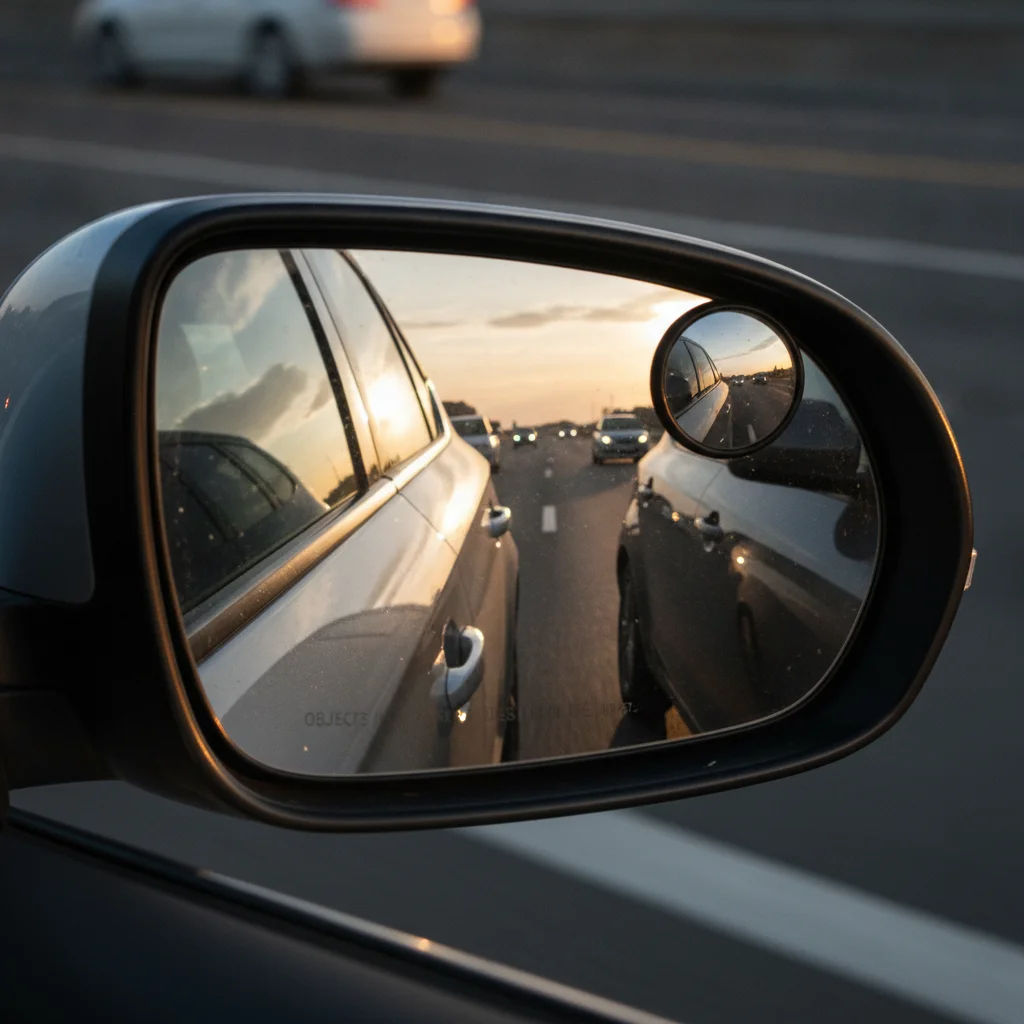
Why it happens: Drivers rely heavily on side mirrors and assume any vehicle they can't see in the mirror isn't there. Blind spots on most passenger vehicles obscure a full vehicle-length zone to the rear quarter.
Merging too early and cutting across the gore point or solid white line.
Why it happens: Drivers anxious about the merge attempt to enter the highway before the acceleration lane officially begins, often crossing over the painted gore area or solid line markers at the ramp split.
Signaling too late — or not at all — before merging.
Why it happens: Some drivers signal at the last second as a formality rather than as a communication tool, or skip it entirely when they feel the merge is 'obvious.' Others are simply in the habit of signaling and moving simultaneously.
Forcing a merge into a gap that's too small for the vehicle's current speed.
Why it happens: Pressure from vehicles behind on the ramp, or anxiety about running out of acceleration lane, pushes drivers to accept undersized gaps rather than waiting for a safe one.
Refusing to use zipper merging when a lane ends, queueing far before the merge point instead.
Why it happens: Early merging feels socially correct to most American drivers — using both lanes until the end seems like 'cutting.' This is a cultural norm rather than a safety-based behavior.
Looking only at the car directly ahead rather than scanning the full merge zone.
Why it happens: Drivers under stress tend to fixate on the nearest vehicle as the primary reference point, a phenomenon called target fixation. This narrows the field of awareness precisely when it needs to be widest.
One pattern worth noting: many of these mistakes compound each other. A driver who hasn't matched speed is also likely to misjudge the gap — and a driver who stops at the ramp end creates a hazard for every vehicle behind them. Addressing one bad habit often resolves several simultaneously.
Never Stop at the End of an On-Ramp
Coming to a full stop at the end of an acceleration lane is one of the most dangerous decisions a driver can make on the highway. Vehicles behind you on the ramp may be traveling at 40–50 mph and have no expectation of a stopped car ahead. This scenario is a leading cause of ramp rear-end collisions. Always keep moving — even slowly — while you search for a gap.
Blind Spot Checks Are Not Optional
Side mirrors alone cannot show you the full blind spot zone alongside your vehicle. This zone is large enough to hide a full-size sedan or a motorcycle, especially in adjacent lanes. Every merge maneuver — no matter how routine the route feels — requires a physical over-the-shoulder check before lateral movement begins. Skipping this step is a reliable path to a side-swipe collision.
Early Merging During Lane Closures Increases Crash Risk
When drivers ignore late-merge signage and queue early in a construction zone, they create high speed-differential interactions between the merging and through-lane traffic at multiple points rather than one controlled merge point. Transportation agencies in Minnesota, Kansas, and elsewhere have documented increased crash rates associated with early-merge behavior in construction zones. Follow posted signage — including late-merge instructions — even when it feels counterintuitive.
The Physics and Psychology Behind Safe Speed Matching
Of all the factors that determine whether a merge goes smoothly or catastrophically, speed differential is the most consequential. This is not a matter of opinion — it's kinetic physics. The energy involved in a collision scales with the square of the speed difference, meaning a 30-mph differential creates roughly four times the impact force of a 15-mph differential.
40%
Reduction in merge-zone backup length
Minnesota DOT research found zipper merging reduced highway backup lengths by up to 40% compared to early-merge behavior.
30 mph
Typical speed differential in merge crashes
When drivers enter the highway without matching speed, the resulting gap between merging and through-lane vehicles frequently exceeds 25–35 mph — comparable to a mid-speed highway rear-end impact.
~15%
Of freeway crashes involve weaving or merging
Federal Highway Administration analysis of freeway crash types consistently attributes approximately 15% of all freeway collisions to weaving, merging, or diverging maneuvers.
1,200–1,500 ft
Standard acceleration lane length on U.S. interstates
AASHTO design standards call for acceleration lanes between 1,200 and 1,500 feet — more than enough distance to reach full highway speed from a standing start if used correctly.
2 seconds
Minimum safe gap for highway merging
Traffic engineers and defensive driving programs agree that a minimum two-second headway gap — roughly 190 feet at 65 mph — is required for a safe merge maneuver.
Matching speed before the merge point — not during it, not after it — is the foundational technique. This means using the full length of the acceleration lane aggressively and purposefully. On a standard interstate on-ramp, you typically have between 1,200 and 1,500 feet from the yield point to the end of the acceleration lane. That's enough distance to reach highway speed from a complete stop, assuming you commit to acceleration. The problem is that many drivers treat the acceleration lane like a waiting zone rather than a launch ramp.
The psychological element matters here too. Drivers from rural areas or those with limited highway experience often report that matching speed feels aggressive or unsafe — that going faster seems to create risk rather than reduce it. In fact, the opposite is true. A vehicle traveling at highway speed is far easier for other drivers to accommodate than one traveling 20 mph slower. Speed parity reduces the cognitive load on both the merging driver and the through-lane driver who must react to them.
For a full walkthrough of highway entry and exit techniques supported by research, the highway driving safety guide from entry ramp to exit covers this in detail.
Speed Matching Is the Single Most Impactful Change
Every other merging technique — signaling, gap selection, blind spot checks — is secondary to speed matching. A vehicle entering the highway at or near traffic speed is orders of magnitude easier to integrate safely than one moving significantly slower. If you take nothing else from this article, commit to using the full acceleration lane aggressively on every highway entry. The physics of kinetic energy make this non-negotiable for safety.
Through-Lane Drivers Share Responsibility
Under most state traffic codes, through-lane drivers are not legally required to yield to merging vehicles — but they do share a practical responsibility for preventing crashes. Deliberately blocking a merge, or failing to notice and accommodate a merging vehicle when conditions allow, contributes to collision risk just as surely as the merging driver's errors do. If traffic permits, moving left to open the merge lane is both courteous and measurably safer for everyone in that zone.
Zipper Merging: The Research-Backed Method That Feels Wrong
If you've ever sat in a long merge-lane queue while drivers ahead of you filed dutifully into a single lane a mile before the lane actually ends, you've experienced one of the most well-intentioned — and inefficient — merging behaviors on U.S. roads. The instinct to merge early is deeply culturally ingrained; cutting to the front of the line feels rude, antisocial, even dangerous. But the research points in the opposite direction.
The zipper merge — sometimes called the late merge — instructs drivers to use both lanes fully until the point where they physically converge, then alternate one-for-one at the merge point, like the teeth of a zipper. Studies conducted by the Minnesota Department of Transportation found that zipper merging reduced the length of highway backups by up to 40% and improved safety by reducing the speed differential between lanes. Similar findings have emerged from research in Germany, where zipper merging is codified as the legal standard.
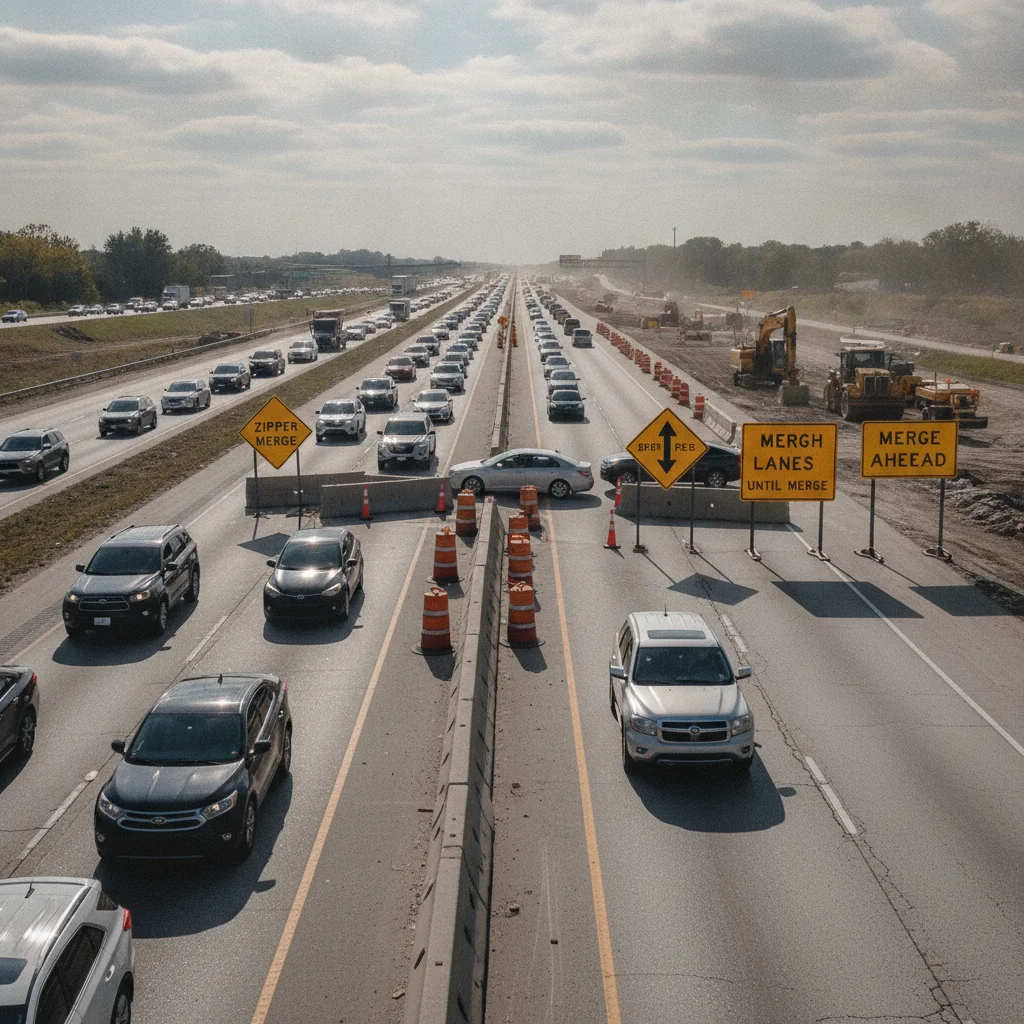
The technique works for two reasons. First, it distributes traffic across more road surface, reducing density in any single lane. Second, it creates a predictable, codified interaction at the merge point — drivers in both lanes know exactly what to expect, which eliminates the ambiguity that causes last-second braking and aggressive gap-closing.
Critics of zipper merging often cite the social friction it creates. Drivers who have queued early resent those who use the full merge lane. But this is a perception problem, not a safety problem. Transportation departments in Minnesota, Kansas, Missouri, and Washington state have all run public campaigns to normalize zipper merging — and post-campaign data showed meaningful improvements in driver acceptance. The behavior change requires understanding the system, not just the rule.
Choosing which lane to occupy during the approach also matters. For data on which highway lanes carry the lowest crash risk, see this lane position safety analysis.
What Through-Lane Drivers Get Wrong
Merging isn't solely the responsibility of the driver entering the highway. Through-lane drivers — those already traveling on the freeway — make mistakes during merge situations that are frequently underdiscussed because they don't show up in crash reports as clearly. Fault attribution in merge crashes is notoriously complex, and the merging driver is often assigned culpability by default, regardless of what the through-lane driver contributed.
The most common through-lane error is gap refusal: deliberately accelerating or holding position to prevent a merging vehicle from entering. Whether this is conscious or reflexive — some drivers experience merges as a form of queue-jumping — the behavior eliminates the space the merging driver needs to complete the maneuver safely. When a merging vehicle runs out of acceleration lane with no viable gap, the outcomes range from emergency braking to guardrail contact.
A closely related error is lane-holding without awareness. Drivers who aren't monitoring their mirrors or scanning the on-ramp as they pass it may be unaware that a merging vehicle is attempting to enter. This isn't necessarily aggressive behavior — it's inattention — but the effect is the same. A simple habit of checking the right mirror when passing a merge zone gives a through-lane driver the situational awareness to either hold speed, gently adjust, or move left when safe to do so.
Moving left to open the merge lane, when traffic conditions allow, is arguably the most courteous and safety-positive action a through-lane driver can take. It's the highway equivalent of the yield relationships that govern intersections and four-way stops — a topic explored in detail in this breakdown of right-of-way rules most drivers misread.
Speed Matching Is the Single Most Impactful Change
Every other merging technique — signaling, gap selection, blind spot checks — is secondary to speed matching. A vehicle entering the highway at or near traffic speed is orders of magnitude easier to integrate safely than one moving significantly slower. If you take nothing else from this article, commit to using the full acceleration lane aggressively on every highway entry. The physics of kinetic energy make this non-negotiable for safety.
Through-Lane Drivers Share Responsibility
Under most state traffic codes, through-lane drivers are not legally required to yield to merging vehicles — but they do share a practical responsibility for preventing crashes. Deliberately blocking a merge, or failing to notice and accommodate a merging vehicle when conditions allow, contributes to collision risk just as surely as the merging driver's errors do. If traffic permits, moving left to open the merge lane is both courteous and measurably safer for everyone in that zone.
Building Better Merging Habits: The Practical Checklist
Safe merging is a skill, not an instinct. Like most driving skills, it can be systematized into a repeatable sequence that becomes automatic with practice. The following checklist represents the consensus of traffic engineers, defensive driving instructors, and highway safety researchers on what a well-executed highway merge looks like.
- Assess traffic speed early. Begin reading traffic flow as soon as the on-ramp curves toward the highway. Identify a target speed and a target gap before you reach the acceleration lane.
- Use full throttle in the acceleration lane. Don't coast. The acceleration lane exists specifically to allow you to reach highway speed. Use it completely.
- Signal before you merge — not during. Activate your turn signal while still in the acceleration lane. This alerts through-lane drivers to your intentions with enough lead time to respond.
- Check mirrors, then blindspot, then merge. Use the mirror-signal-shoulder-check sequence. Relying on mirrors alone misses vehicles in your blind spot, particularly motorcycles and compact cars.
- Aim for a gap, not a space. Select a gap that already exists between vehicles in the through lane. Do not force a merge where no gap exists and expect drivers to create one for you.
- Never stop at the end of the acceleration lane. If no gap is available, reduce speed while continuing to move forward — scanning aggressively for any opportunity. A stopped vehicle at the end of a ramp is a serious hazard to every driver behind it.
- Once merged, match flow and move to center lane when safe. Immediately after entering the highway, avoid lingering in the right lane near active on-ramps. Move to the center travel lane once your speed is stable and conditions allow.
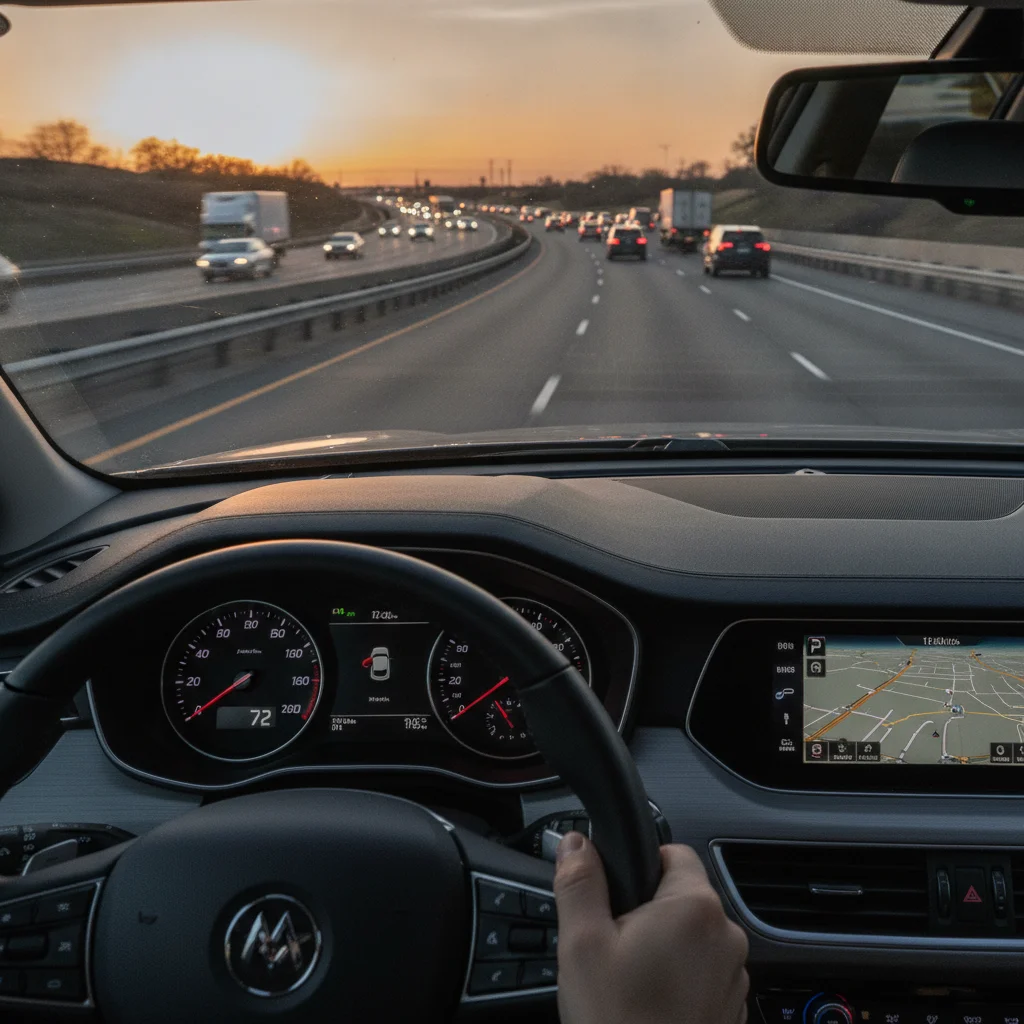
Even experienced drivers benefit from periodically reassessing these habits. Familiarity with a route can breed complacency — the same on-ramp driven 500 times can still produce a dangerous merge on the 501st if conditions change and habits override observation. For context on how lane position choices after the merge affect ongoing highway safety, see the research on safest highway lane positions.
Merging is one of those driving tasks that reveals a great deal about a driver's overall risk awareness. A driver who merges well — speed-matched, signaled, gap-selected, blind-spot checked — tends to carry those same habits through every other maneuver. The reverse is also true. For a broader look at how the driving patterns that cause crashes often feel safe in the moment, this NHTSA behavior research summary is worth reading alongside this one.

All claims are backed by peer-reviewed research. Sources on request.