Key Takeaways
Diminished Value
Diminished value is the reduction in a vehicle's market value that persists even after it has been fully repaired following an accident. Buyers and dealers will pay less for a car with an accident on its history report, regardless of repair quality. A diminished value claim is a formal request—either to the at-fault driver's insurer or your own—seeking compensation for that gap between what your car was worth before the accident and what it's worth after repairs.
Insurers typically recognize three types: inherent diminished value (the market stigma from accident history), repair-related diminished value (from substandard repairs), and immediate diminished value (the difference in value right before and right after the collision, before any repairs).
The Problem Nobody Tells You About After a Repair
You got into an accident. You weren't at fault, the other driver's insurance covered the repairs, and the shop did solid work. From the outside, the car looks exactly the same as before. So you're whole, right?
Not quite. The moment that collision shows up on a vehicle history report—whether through Carfax, AutoCheck, or dealer records—your car loses a slice of its market value permanently. Future buyers will offer less. Trade-in departments will mark it down. That loss doesn't disappear when the dents do.
That's the gap a diminished value claim is designed to fill. It's compensation for the difference between what your car was worth before the accident and what it's worth after repairs. It's a legitimate form of damages, and in many circumstances, you're legally entitled to pursue it.
The catch: most insurers won't volunteer this information, and the process requires you to take deliberate steps. This guide will walk you through how diminished value works, who qualifies, and what actually moves the needle when you're making a claim.
The Three Types of Diminished Value
Not all diminished value is created equal. Understanding the distinctions matters because insurers and courts treat each type differently.
Inherent Diminished Value
This is the most common type and the one most claims are based on. It reflects the market stigma attached to a vehicle that has an accident on its record—even if the repairs were perfect. Buyers simply don't want cars with accident histories if they can help it, and they'll pay less when they can't avoid it. This type of diminished value exists regardless of repair quality.
Repair-Related Diminished Value
This occurs when the repairs themselves are substandard—mismatched paint, improper frame alignment, aftermarket parts replacing OEM components. If the shop's work leaves your car in worse shape than it could have been, that additional loss is compensable on top of inherent diminished value. Keep all repair documentation and don't hesitate to get a second opinion from another qualified shop.
Immediate Diminished Value
This refers to the difference in market value between the moment before and the moment after the collision—before any repairs happen. It's the rarest basis for a claim and typically only arises in commercial or specialty contexts. For most drivers, inherent diminished value is the relevant category.
First-Party vs. Third-Party Claims
A first-party claim is filed against your own insurance policy. A third-party claim is filed against another driver's insurance. For diminished value, the distinction is critical: third-party claims (where the other driver was at fault) are far more likely to succeed. Most standard first-party policies explicitly exclude diminished value, so filing against your own insurer often goes nowhere unless state law requires it.
Georgia Is the Exception, Not the Rule
Georgia courts have ruled that insurers must compensate policyholders for diminished value even on first-party claims, making it an outlier among U.S. states. If you're in Georgia, you have stronger legal footing regardless of fault. Drivers in other states should check their specific state statutes or consult a local insurance attorney before assuming the same protections apply.
Who Actually Qualifies for a Diminished Value Claim
Qualification depends on three factors: fault, your state's law, and your vehicle's characteristics. Here's how they stack up.
Fault Is the Starting Point
The clearest path to a diminished value recovery is when the other driver was at fault. In that case, you file a third-party claim against their liability insurance. Their insurer owes you for your losses, and diminished value is a recognized category of loss in most states.
If you were at fault—or if the accident was a no-fault situation where you're relying on your own policy—the landscape is far less favorable. Most standard auto insurance policies explicitly exclude diminished value from first-party coverage. That exclusion is buried in policy language, which is one reason so many drivers never realize the limitation until it's too late. For context on why payouts often fall short of expectations, see why your claim payout may come in lower than expected.
State Law Matters
A handful of states legally require insurers to pay first-party diminished value claims. Georgia's courts have set a strong precedent here. Other states leave it to contractual language, meaning your policy terms govern whether you're covered. Check your state's insurance commissioner website or consult a claims attorney to confirm what applies in your jurisdiction.
Vehicle Characteristics That Affect Eligibility
Even when fault and law are on your side, not every vehicle will generate a meaningful diminished value claim. The factors that determine how much value you've actually lost include:
- Age and mileage: Newer, lower-mileage vehicles lose more in absolute dollar terms. A three-year-old car with 20,000 miles suffers a larger market stigma than a ten-year-old car with 150,000 miles.
- Pre-accident condition: A pristine vehicle with no prior damage loses more value than one that already had dings, prior claims, or deferred maintenance.
- Make and model: Luxury brands and vehicles with strong resale demand—think German sedans, popular pickup trucks, Japanese reliability stalwarts—tend to see greater diminished value losses because buyers in those segments are especially sensitive to accident history.
- Severity of damage: Minor cosmetic damage produces less diminished value than structural or airbag-related damage, which buyers and dealers treat as red flags regardless of repair quality.
10–25%
Resale value lost after accident history
Industry analyses consistently show vehicles with accident records sell for 10%–25% less than comparable clean-history vehicles, depending on damage severity and vehicle type.
17c
Insurer formula often used for DV calculations
The so-called 17c formula—derived from a Georgia state case—is widely used by adjusters and frequently underestimates true market loss compared to independent appraisals.
~$3,500
Average diminished value claim payout
According to data compiled from auto appraisal firms, the average settled diminished value claim ranges between $2,000 and $5,000 for mid-range vehicles with moderate accident damage.
2–3 years
Typical statute of limitations window
Most states allow two to three years from the accident date to file a diminished value claim, though some states allow up to six years.
How Diminished Value Is Calculated—and Why You Shouldn't Accept the Insurer's Math
There's no law mandating a single calculation method, and that ambiguity works in insurers' favor. The most common formula used by insurance adjusters is known as the 17c formula, named after a now-outdated Georgia case. It starts with 10% of the vehicle's pre-accident retail value, then applies two multipliers—one for damage severity and one for mileage. In practice, the multipliers frequently drag the payout down to a fraction of the real loss.
For example, on a $30,000 vehicle with moderate damage, the 17c formula might produce a diminished value estimate of $1,000 to $1,500. Independent appraisers working from comparable market sales often calculate two to three times that figure for the same vehicle and damage profile.

Your best move is to hire an independent certified auto appraiser before negotiating. Look for someone credentialed through the American Society of Appraisers or the International Automotive Appraisers Association. Their report should document:
- The vehicle's pre-accident market value based on comparable sales
- The post-repair market value using the same methodology
- The calculated diminished value with a clear rationale
This report becomes your anchor in negotiations. Understanding how adjusters evaluate damage will also help you anticipate where they'll push back and why.
Get the Appraisal Before Cashing Any Check
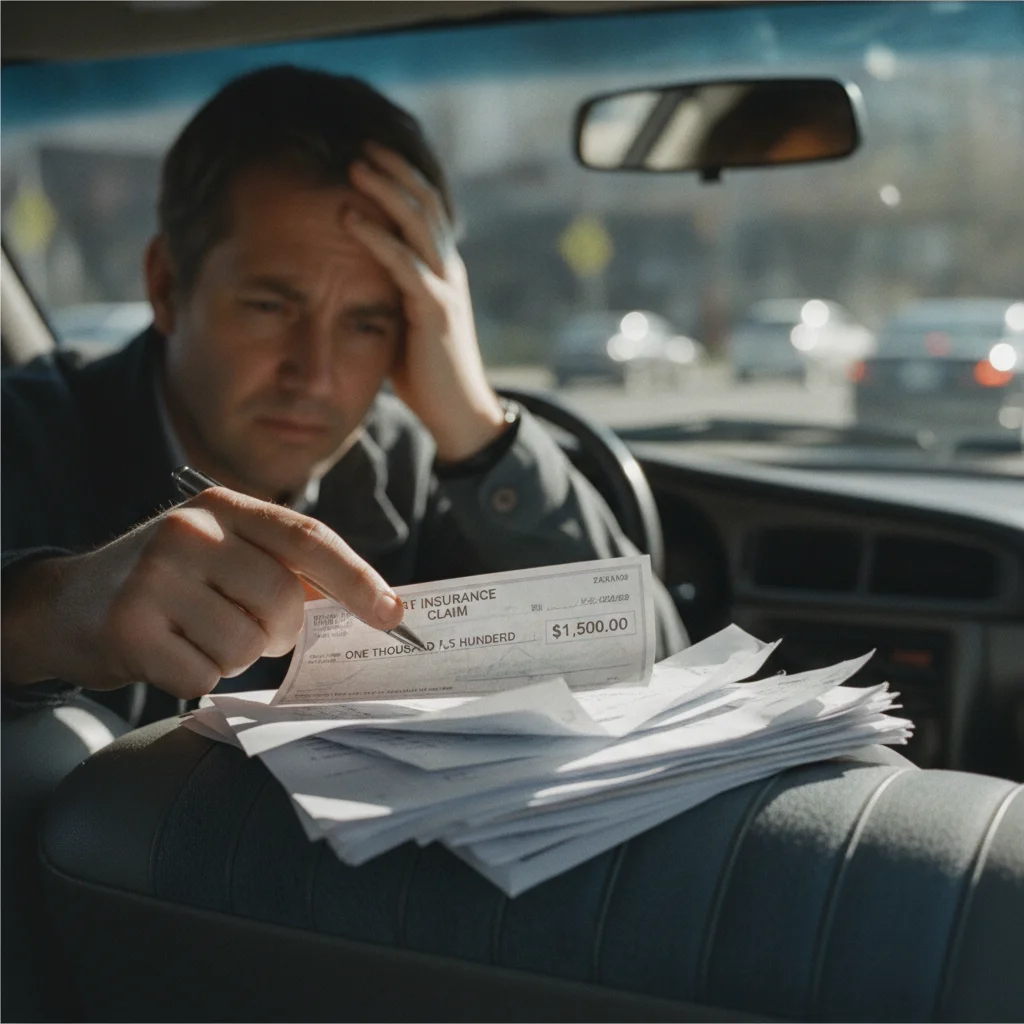
Once you endorse and cash a settlement check from an insurer, you may inadvertently sign away your right to pursue diminished value. Read any accompanying release language carefully before accepting payment. If the check arrives with a full-release form, do not sign until you've confirmed you're not waiving additional claims.
Small Claims Court Is a Realistic Option
If the at-fault driver's insurer refuses to negotiate in good faith and your claim is under your state's small claims limit (typically $5,000–$10,000), you can file without an attorney. Bring your accident report, repair records, and your independent appraisal. Judges are generally receptive to well-documented diminished value claims from private parties.
The Relationship Between Accident History and Resale Value
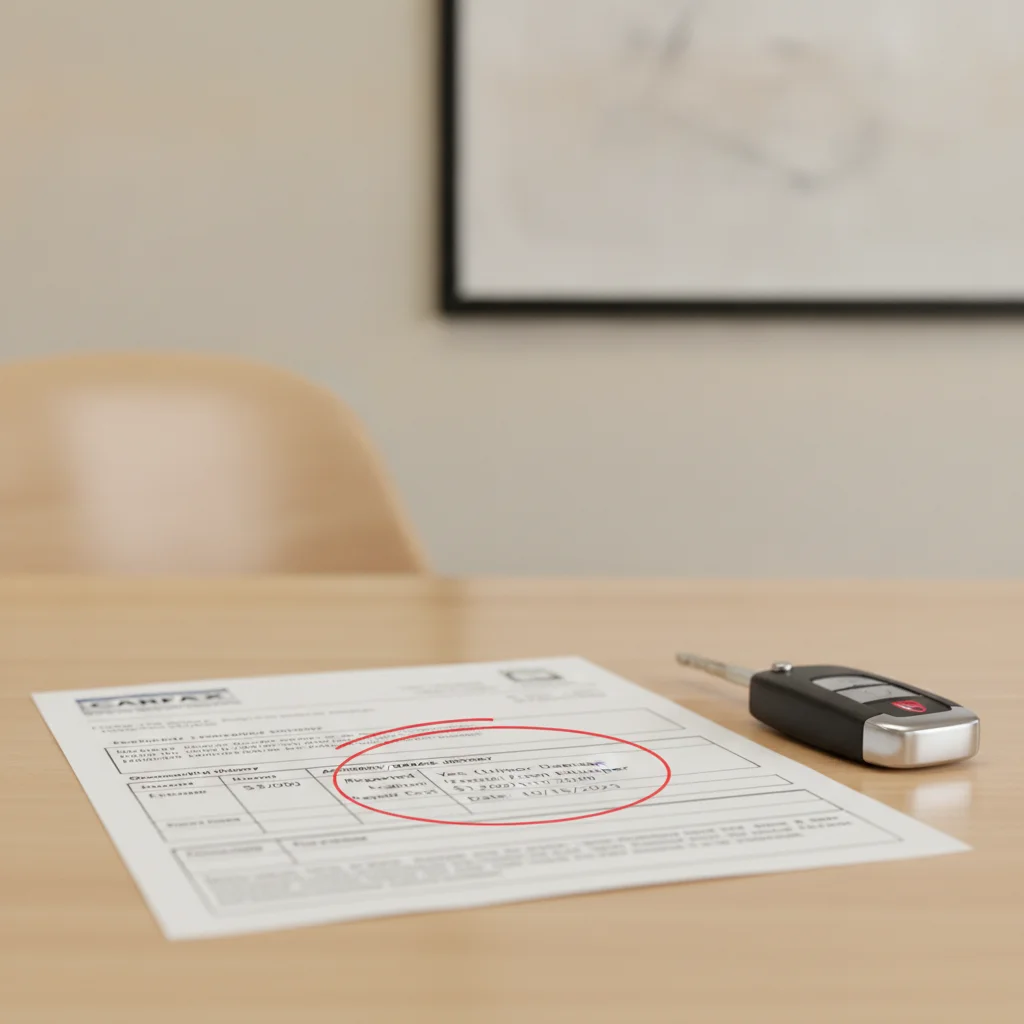
One thing worth understanding clearly: the market doesn't care how good the repairs were. Carfax and AutoCheck populate the moment a collision is reported to insurance, and that notation follows the VIN indefinitely. Dealers run vehicle history reports on every trade-in, and private buyers increasingly do too.
Research from industry analysts consistently shows that a single accident on a vehicle's history can reduce its trade-in and private-party sale value by 10% to 25%, depending on vehicle type and damage severity. For a $35,000 car, that's potentially $3,500 to $8,750 in lost value—value you already owned before the at-fault driver hit you.
Prior accidents on a vehicle's history don't just affect resale value—they can complicate future claims too. If you're buying a used vehicle and it has a prior accident, that history should factor into your offer. And if you own a vehicle that just got hit, that same dynamic is what you're recovering when you pursue a diminished value claim.
It's also worth noting how this differs from a total loss scenario. When an insurer declares your car a total loss, they pay actual cash value and take the vehicle. Diminished value only applies when you keep the repaired car—so the two claims are mutually exclusive.
Steps to Pursue a Diminished Value Claim
If you've confirmed you're eligible—the other driver was at fault, or your state law supports a first-party claim—here's how to move forward efficiently.
- Document everything before repairs: Photograph all damage thoroughly before the vehicle enters the shop. Get a pre-repair estimate in writing. This establishes your baseline.
- Preserve all repair records: Every invoice, parts list, and supplement from the shop is evidence. If OEM parts were substituted with aftermarket components, note it. This affects both inherent and repair-related diminished value.
- Get a pre-accident valuation: Use Kelley Blue Book, NADA, and comparable local listings to establish what your vehicle was worth before the accident. Save screenshots with dates.
- Commission an independent appraisal: Once repairs are complete, hire a certified appraiser to assess post-repair market value and produce a formal diminished value report. This is the most important step.
- Submit the claim in writing: Send a formal demand letter to the at-fault driver's insurer, citing the accident report, repair records, your pre-accident valuation, and the appraiser's report. State the specific dollar amount you're seeking.
- Negotiate from data, not emotion: The insurer will likely counter with a lower number. Respond with your appraiser's methodology, comparable market data, and written precedent from your state if available.
- Consider small claims court or an attorney: For claims under $10,000, small claims court is often viable and doesn't require a lawyer. For larger amounts, a personal injury or insurance attorney working on contingency can escalate the pressure.
For a more detailed walkthrough of the filing process itself, see our step-by-step guide to filing a diminished value claim. And if you want to understand how depreciation affects your vehicle's baseline value before any accident enters the picture, our depreciation basics hub covers the mechanics clearly.
“Diminished value is one of the most overlooked forms of compensation in auto insurance. Most policyholders don't know they can pursue it, and insurers certainly aren't going to bring it up voluntarily. Documentation and an independent appraisal are what separate a successful claim from a missed opportunity.”
— Rex Isham, Certified Auto Appraiser and Expert Witness, International Automotive Appraisers Association
Realistic Expectations and Common Pitfalls
Diminished value claims aren't a windfall, and going in with inflated expectations will lead to frustration. Here's what to keep in mind:
Not Every Claim Is Worth Pursuing
If your car is older, high-mileage, or suffered only minor cosmetic damage, the appraisal cost may approach or exceed the likely recovery. Get a rough estimate from an appraiser before committing to the full process. Many offer preliminary consultations.
Insurers Will Resist
Third-party insurers are not on your side. They will start with the lowest defensible number. That's expected. Your documentation and appraisal report are what shift the negotiation.
Settlements Are Common
Most diminished value claims settle before litigation. The insurer knows that a well-documented claim with an independent appraisal will be expensive to fight in court. Being persistent and organized is often enough to reach a fair settlement without filing a lawsuit.
Watch the Statute of Limitations
Acting quickly protects you. Most states give you two to three years from the date of the accident, but waiting makes evidence harder to gather and market comparables less reliable. Treat the statute of limitations as a hard deadline and aim to resolve the claim well before it.
Get the Appraisal Before Cashing Any Check
Once you endorse and cash a settlement check from an insurer, you may inadvertently sign away your right to pursue diminished value. Read any accompanying release language carefully before accepting payment. If the check arrives with a full-release form, do not sign until you've confirmed you're not waiving additional claims.
Small Claims Court Is a Realistic Option
If the at-fault driver's insurer refuses to negotiate in good faith and your claim is under your state's small claims limit (typically $5,000–$10,000), you can file without an attorney. Bring your accident report, repair records, and your independent appraisal. Judges are generally receptive to well-documented diminished value claims from private parties.

All claims are backed by peer-reviewed research. Sources on request.