Key Takeaways
Most Accidents Don't Need a Lawyer—But Some Absolutely Do
After a minor fender-bender with no injuries and clear liability, filing an insurance claim yourself is usually straightforward. You document the scene, exchange information, and let the adjusters sort it out. That process works fine until it doesn't.
Some accidents are legally and financially complex from the start. Others start simple and quietly become complicated—delayed injury symptoms, disputed fault, a totaled car, or an insurer stalling on a payout. In those situations, going it alone can cost you far more than any attorney's contingency fee.
This guide lays out the specific scenarios where hiring an attorney isn't just helpful—it's the smarter financial and legal move. Before diving in, make sure you've already covered your initial post-accident steps. What you do in the first 10 minutes after a crash can directly shape both your insurance outcome and any legal case you later build.

Here are the clearest warning signs that your situation has outgrown a standard insurance claim.
You sustained injuries that required medical treatment
This is the clearest dividing line between a claim you can handle yourself and one that needs professional legal support. The moment medical treatment enters the picture, the financial stakes escalate significantly—and so does the complexity.
Insurance companies calculate injury settlements based on medical bills, projected future treatment costs, lost wages, and pain and suffering. Each of those categories involves negotiation, documentation, and valuation methodologies that most people have never encountered. Adjusters use this asymmetry to their advantage.
If you've been to the ER, seen a specialist, or been told you'll need ongoing physical therapy or surgery, an attorney can ensure you don't settle for an amount that fails to cover future costs. One of the most damaging mistakes drivers make after an accident is accepting a quick settlement before the full scope of their injuries is known.
Key rule: Never accept a final settlement for an injury claim before you've reached maximum medical improvement (MMI)—the point at which your doctor determines your condition has stabilized. An attorney will enforce this boundary for you.Never settle an injury claim before your doctor confirms your condition has stabilized.
Fault is disputed or shared between multiple parties
When everyone agrees on who caused the accident, insurance negotiations are relatively contained. When fault is disputed, things get complicated fast—and the outcome determines who pays what.
In states with comparative fault rules, your compensation can be reduced by your percentage of responsibility. In contributory negligence states (a small minority), being even 1% at fault can bar you from recovery entirely. If the other driver's insurer is arguing that you share blame, you need someone in your corner who understands exactly how fault is calculated and contested in your state.
Multi-vehicle accidents add another layer. With three or more vehicles involved, multiple insurers are coordinating (or not coordinating) coverage responses, each trying to minimize their client's liability. Sorting that out without legal help is genuinely difficult.
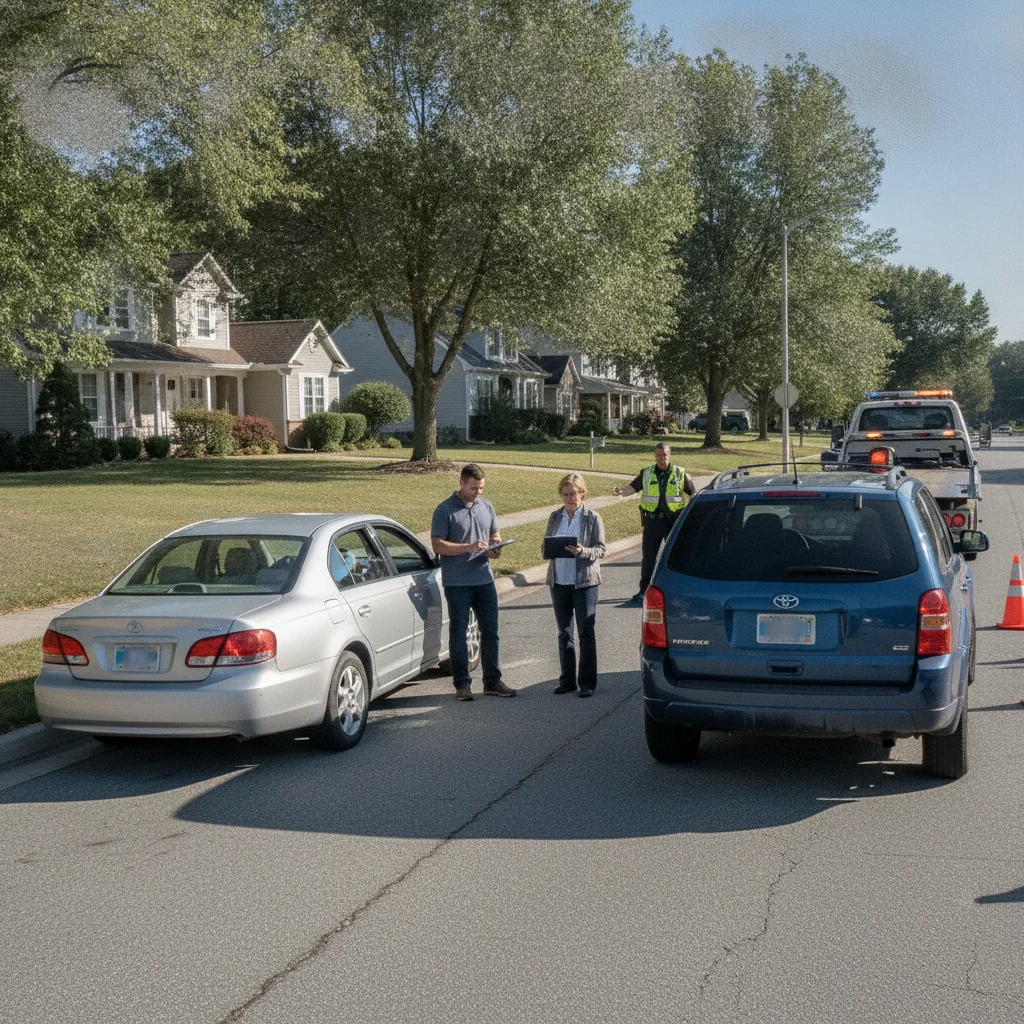
[in_content_images:1]An attorney who handles accident cases regularly will know how to gather and present evidence—police reports, traffic camera footage, witness statements, accident reconstruction if necessary—to establish liability clearly and protect your position.
Disputed fault means insurers are working against you; you need someone working for you.
The insurance company is offering a lowball settlement
Insurers make first offers quickly. They want to close claims before the full extent of your damages becomes clear—and before you start asking harder questions. If the offer landed in your hands within a few days of the accident, that's a flag worth taking seriously.
A lowball offer doesn't always look like one. Adjusters are trained to sound reasonable and fair while offering amounts well below what a case might actually be worth. If you haven't reviewed the offer with someone who handles these claims regularly, you have no baseline for comparison.
An attorney can assess what your claim is actually worth based on comparable cases, the severity of your injuries, your local jurisdiction's settlement history, and the policy limits in play. They can then negotiate from a position of actual knowledge rather than guesswork.
Understanding your filing options can also affect your leverage here. Filing against the at-fault driver's insurer versus using your own coverage involves different dynamics—and an attorney can help you identify which path maximizes your recovery.
A fast settlement offer from an insurer usually means they're trying to close before the real costs emerge.
The at-fault driver was uninsured or underinsured
Roughly one in seven drivers on U.S. roads carries no auto insurance. Many more carry state-minimum coverage that's nowhere near enough to compensate for a serious accident. When you're hit by one of these drivers, your own insurance policy becomes your primary resource—and navigating that process has its own complications.
Your uninsured/underinsured motorist (UM/UIM) coverage is designed for exactly this situation, but making a UM/UIM claim against your own insurer can be surprisingly adversarial. Your insurer has to pay out rather than recover from a third party, which changes their incentives.
An attorney experienced in UM/UIM claims knows how to document and present your damages in a way that maximizes your recovery within your policy limits. They also know when it makes sense to pursue the at-fault driver personally—a less common path, but relevant in cases where the driver has assets worth pursuing.
UM/UIM claims against your own insurer can be unexpectedly adversarial—legal help changes the dynamic.
A government entity or commercial vehicle was involved
If the accident involved a city bus, a municipality-owned vehicle, a rideshare driver, a delivery truck, or any commercial fleet vehicle, the legal landscape shifts substantially. These cases involve additional layers of liability, different insurance structures, and—when a government entity is involved—strict notice requirements and shortened filing windows that most people don't know exist.
Many jurisdictions require you to file a government tort claim within 60 to 180 days of an accident involving a public entity. Miss that window and you may lose your right to sue entirely, regardless of how strong your case is. This isn't a deadline most people discover on their own until it's too late.
Commercial trucking cases bring federal regulations into play, along with questions about the driver's employer, the trucking company's maintenance records, hours-of-service logs, and cargo manifests. These cases can involve multiple defendants—the driver, the company, the cargo loader, the vehicle manufacturer—and typically require aggressive early investigation to preserve evidence before it disappears.
Government tort claim deadlines can be as short as 60 days—missing them ends your case permanently.
Your injuries didn't appear immediately
Whiplash, soft tissue injuries, concussions, and certain spinal injuries often don't produce obvious symptoms right away. Adrenaline masks pain. Inflammation takes time to develop. Some neurological effects of a head injury don't manifest fully for days or even weeks after the accident.
This creates a real problem: if you've already given a recorded statement saying you feel fine, or if you've accepted a settlement, your ability to pursue additional compensation for those delayed injuries may be severely limited.
An attorney can advise you on how to document emerging symptoms properly, refer you to appropriate specialists, and ensure your medical records build a clear timeline connecting your injuries to the accident. They'll also counsel you on what not to say to adjusters during this period—including declining to give recorded statements before your medical picture is complete.
[in_content_images:2]See when to involve a lawyer in an auto insurance claim for a broader look at the signals that legal help is needed.
Accepting a settlement before delayed injury symptoms appear can permanently close your right to further compensation.
Your insurer denied your claim or is unreasonably delaying it
A denied claim isn't necessarily the end of the road—but it requires a deliberate response. Insurers deny claims for a range of reasons: alleged policy exclusions, disputed coverage, questions about the cause of the accident, or assertions that your injuries were pre-existing. Some of those reasons are legitimate. Some aren't.
If your claim was denied or you're facing extended delays without a clear explanation, an attorney can review the denial letter, assess whether the insurer acted in bad faith, and determine your options. In cases where an insurer unreasonably denies or delays a valid claim, bad faith insurance laws in most states allow additional damages beyond the original claim amount.
Make sure you've also filed a police report if required in your state—missing documentation is one of the most common grounds insurers use to complicate or deny claims. An attorney can help you identify whether any documentation gaps can still be addressed.
Insurers acting in bad faith on valid claims can face additional damages under most states' insurance laws.
You're being sued by the other driver
This scenario flips the situation: instead of pursuing a claim, you're defending against one. If another driver files a lawsuit against you after an accident, your insurance company will typically provide a defense attorney under your liability coverage. But you should understand the limits of that arrangement.
Your insurer's attorney represents the insurer's interests, which usually align with yours—but not always. If the damages claimed exceed your policy limits, for instance, your insurer may have incentive to settle at your policy cap even when fighting could produce a better outcome for you personally. The excess judgment becomes your problem, not theirs.
In that situation, retaining your own attorney—separate from the one your insurer provides—to represent your personal interests is a legitimate and sometimes necessary step. They can monitor the defense strategy and advise you on whether any settlement puts you at personal financial risk.
Your insurer's defense attorney protects the insurer's interests—not necessarily yours—when damages exceed policy limits.
The Bottom Line on When to Make the Call
Hiring an attorney after a car accident isn't about escalating conflict—it's about protecting yourself when the stakes outpace what an insurance claim process was designed to handle. Adjusters are professionals optimizing for their employer's bottom line. An attorney is the one professional in this process who works for you.
Statutes of Limitations Vary by State
Every state sets a deadline—called a statute of limitations—for filing a personal injury lawsuit after a car accident. Most range from one to three years from the date of the accident, but some states are shorter and exceptions apply in specific circumstances. Consulting an attorney early ensures you don't accidentally let this deadline pass. Once it does, even a strong case cannot be filed in court.
Most personal injury attorneys offer free initial consultations. If you're unsure whether your situation qualifies, that conversation costs you nothing and can clarify everything. Even if you don't hire someone, you'll leave with a clearer picture of your legal position.
It's also worth understanding your claims filing options before or alongside seeking legal advice. Filing directly with your insurer versus going through the at-fault driver's policy involves real trade-offs that an attorney can help you navigate. And if you're already deep into the process, review the most common post-accident mistakes that hurt claims to make sure you haven't unknowingly weakened your position.
Document Everything Before Consulting an Attorney
Before your consultation, gather all available documentation: the police report, photos from the scene, medical records and bills, any communications with the insurance adjuster, and a written timeline of events while they're fresh. The more organized your materials, the more productive—and faster—your attorney consultation will be. Many attorneys will give you a sharper assessment of your case's value when they can review specifics rather than generalities.
Contingency Fees Mean No Upfront Cost
Most personal injury attorneys who handle car accident cases work on contingency—typically 33% of the settlement if resolved before trial, higher if it goes to court. This means you pay nothing unless you win. The fee structure also aligns your attorney's incentives with yours: they earn more by getting you a better settlement. Always clarify the exact fee structure and what expenses (court costs, expert witnesses) are handled separately before signing a retainer.
The sooner you consult an attorney when red flags appear, the more options you'll have. Don't wait until a settlement offer is on the table—by then, your leverage may already be reduced.

All claims are backed by peer-reviewed research. Sources on request.